

Criteria For Choosing The Right App Design Agency
UI/UX design is the logical foundation of a system, not merely a visual element. Choosing the wrong partner will directly lead to technical debt, budget overruns, and disruptions in the development process. This article provides a 6-step evaluation framework and a list of operational risks, helping businesses eliminate subjective design advice and accurately assess agency capabilities based on developer handoff standards and practical business performance.
How Does AI in Banking Industry Impact the Future?
Artificial intelligence (AI) has transitioned from a supplementary tool to a core infrastructure of financial data management, optimizing profitability through real-time fraud detection, natural language processing (NLP), and high-speed credit scoring models. “Deploying AI in the financial sector requires more than just algorithmic accuracy, it demands a highly secure cloud architecture and rigorous data governance,” commented Nguyen Tien, co-founder of HomeNest Software. Why read this guide? We skip the theoretical jargon to focus entirely on technical implementation. Whether you’re evaluating a vendor or planning a system overhaul, this article will detail: Operational Efficiency: Automating unstructured data workflows at scale. Risk Architecture: Implementing real-time threat detection and AML compliance. Data ownership: The essential need for 100% ownership of the source code to ensure full algorithm auditability.
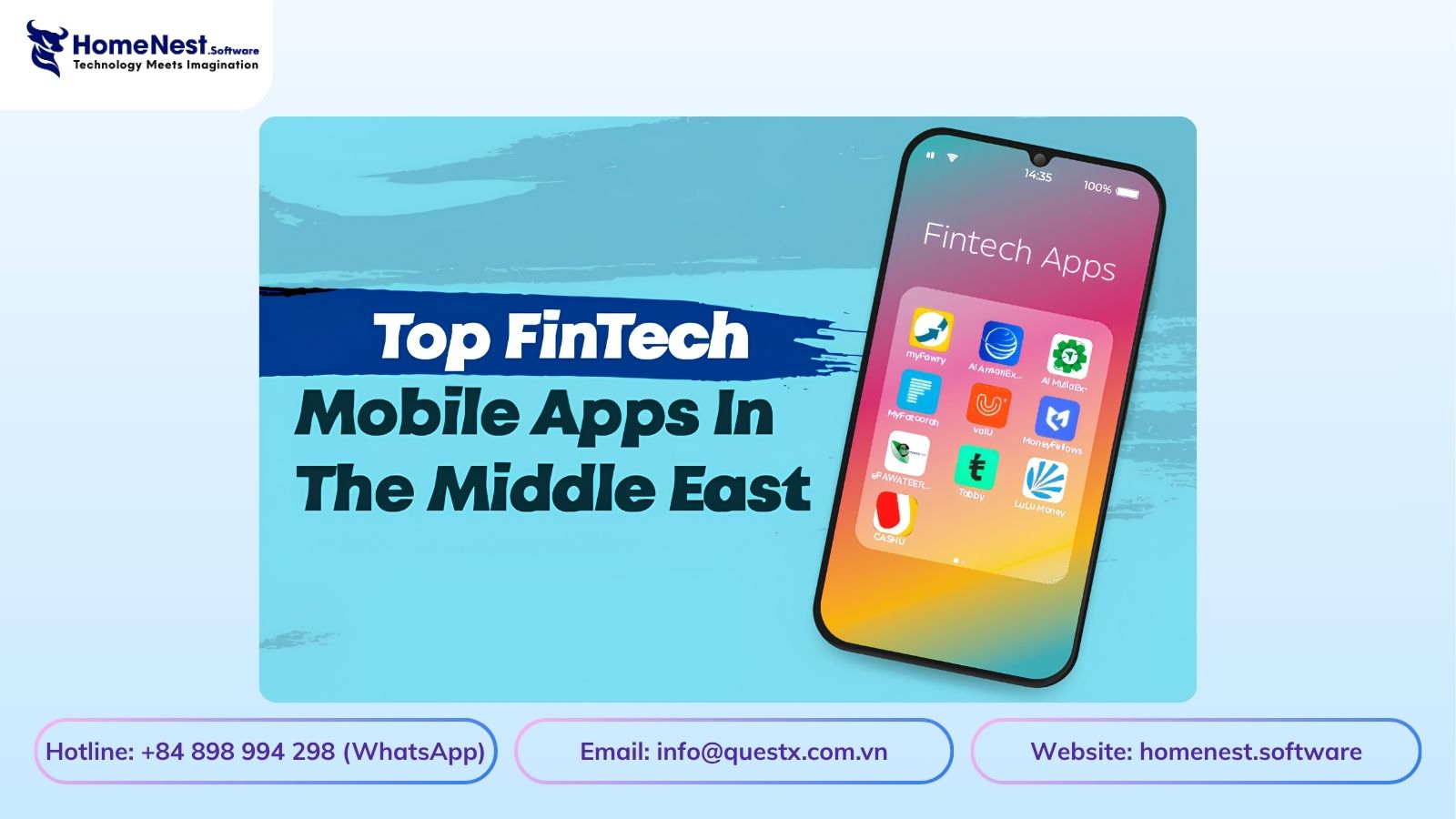
Top Fintech Apps in the Middle East and How to Build Your Own
Building a fintech app requires more than just a solid idea, it demands a strategic balance between functionality, security, and scalability. From defining the right features and understanding regulatory requirements to choosing the right development partner, every decision directly impacts the success of your product. Businesses that start with a clear roadmap, prioritize user experience, and invest in reliable technology are far more likely to launch a competitive and sustainable fintech solution in today’s fast-evolving digital finance landscape.
What is eMAR in Healthcare: Definition and Core Functions
eMAR systems are a critical component of modern healthcare, transforming medication management from manual, error-prone processes into a streamlined, data-driven workflow. By enabling real-time documentation, automated verification, and seamless integration with clinical systems, eMAR significantly improves patient safety, operational efficiency, and regulatory compliance. As healthcare continues to embrace digital transformation, adopting eMAR is no longer optional—it is a strategic step toward delivering safer, smarter, and more connected patient care.
AI and Machine Learning in Healthcare: Key Benefits and Real World Use Cases
This technical guide examines the transition of artificial intelligence in healthcare from theoretical concepts to core operational infrastructure. Bypassing generic industry hype, the article analyzes the practical implementation of machine learning in automating clinical documentation, accelerating diagnostic accuracy, and optimizing revenue cycles. Furthermore, HomeNest Software details the critical engineering frameworks required to overcome algorithmic bias and ensure strict regulatory compliance when deploying AI across enterprise medical networks.
How Does AI in Banking Industry Impact the Future?
Artificial intelligence (AI) has transitioned from a supplementary tool to a core infrastructure of financial data management, optimizing profitability through real-time fraud detection, natural language processing (NLP), and high-speed credit scoring models. “Deploying AI in the financial sector requires more than just algorithmic accuracy, it demands a highly secure cloud architecture and rigorous data governance,” commented Nguyen Tien, co-founder of HomeNest Software. Why read this guide? We skip the theoretical jargon to focus entirely on technical implementation. Whether you’re evaluating a vendor or planning a system overhaul, this article will detail: Operational Efficiency: Automating unstructured data workflows at scale. Risk Architecture: Implementing real-time threat detection and AML compliance. Data ownership: The essential need for 100% ownership of the source code to ensure full algorithm auditability.
Top Fintech Apps in the Middle East and How to Build Your Own
Building a fintech app requires more than just a solid idea, it demands a strategic balance between functionality, security, and scalability. From defining the right features and understanding regulatory requirements to choosing the right development partner, every decision directly impacts the success of your product. Businesses that start with a clear roadmap, prioritize user experience, and invest in reliable technology are far more likely to launch a competitive and sustainable fintech solution in today’s fast-evolving digital finance landscape.
What is eMAR in Healthcare: Definition and Core Functions
eMAR systems are a critical component of modern healthcare, transforming medication management from manual, error-prone processes into a streamlined, data-driven workflow. By enabling real-time documentation, automated verification, and seamless integration with clinical systems, eMAR significantly improves patient safety, operational efficiency, and regulatory compliance. As healthcare continues to embrace digital transformation, adopting eMAR is no longer optional—it is a strategic step toward delivering safer, smarter, and more connected patient care.
AI and Machine Learning in Healthcare: Key Benefits and Real World Use Cases
This technical guide examines the transition of artificial intelligence in healthcare from theoretical concepts to core operational infrastructure. Bypassing generic industry hype, the article analyzes the practical implementation of machine learning in automating clinical documentation, accelerating diagnostic accuracy, and optimizing revenue cycles. Furthermore, HomeNest Software details the critical engineering frameworks required to overcome algorithmic bias and ensure strict regulatory compliance when deploying AI across enterprise medical networks.