
How Does AI in Banking Industry Impact the Future?
Artificial intelligence (AI) has transitioned from a supplementary tool to a core infrastructure of financial data management, optimizing profitability through real-time fraud detection, natural language processing (NLP), and high-speed credit scoring models.
“Deploying AI in the financial sector requires more than just algorithmic accuracy, it demands a highly secure cloud architecture and rigorous data governance,” commented Nguyen Tien, co-founder of HomeNest Software.
Why read this guide? We skip the theoretical jargon to focus entirely on technical implementation. Whether you’re evaluating a vendor or planning a system overhaul, this article will detail:
- Operational Efficiency: Automating unstructured data workflows at scale.
- Risk Architecture: Implementing real-time threat detection and AML compliance.
- Data ownership: The essential need for 100% ownership of the source code to ensure full algorithm auditability.
Scope of Work
Artificial Intelligence is rapidly becoming a defining force in modern finance, transforming how banks operate and deliver services. This article explores how AI in the banking industry is shaping the future, as technology and finance continue to converge.
AI is no longer just a trend. It is a practical, high impact technology that is redefining banking operations. From automating routine processes to improving decision making, AI helps financial institutions increase efficiency, reduce costs, and enhance overall performance.
In this guide, we will examine how AI is influencing the future of banking, from chatbots improving customer interactions to machine learning models strengthening risk management, along with the growing importance of data driven strategies in financial decision making.
What Is AI in the Banking Industry?
Artificial intelligence (AI) in banking refers to the use of advanced technologies such as machine learning, natural language processing (NLP), and data analytics to automate and enhance financial services. It enables banks to process large volumes of data, improve decision making, and deliver more personalized user experiences.
Common applications of AI in banking include:
- Chatbots and virtual assistants for customer support
- Fraud detection and risk monitoring in real time
- Credit scoring and loan assessment
- Personalized financial recommendations
- Automation of internal operations
By leveraging AI, banks can increase efficiency, reduce operational costs, and provide faster, more accurate services. It also strengthens security and compliance by identifying suspicious activities and anomalies as they happen.
For businesses looking to integrate AI into digital banking solutions, partnering with a reliable mobile banking app development company can help ensure a secure, scalable, and future ready implementation.
AI in Banking Market Statistics
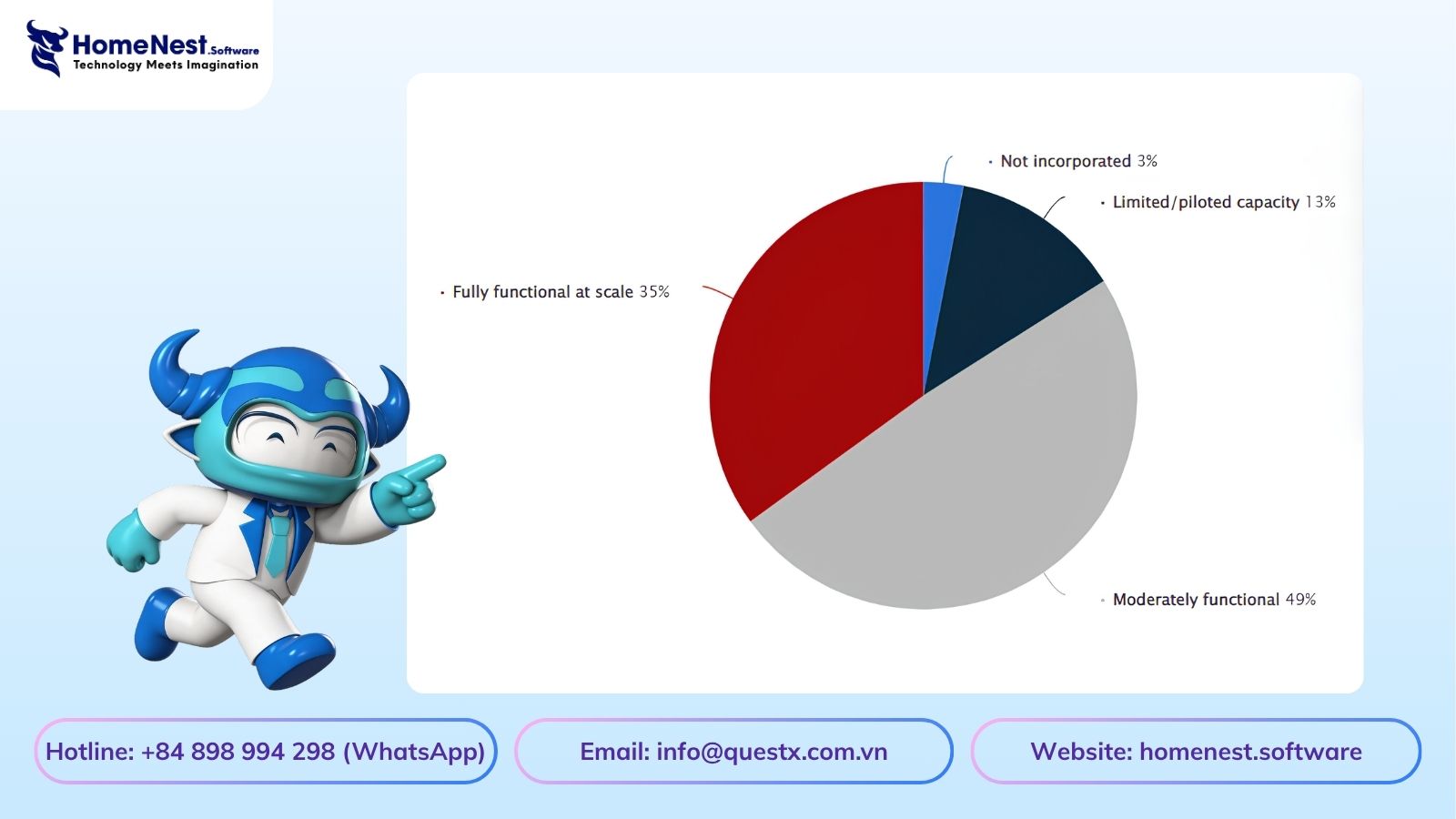
According to a report by Statista, the adoption of AI in banking is accelerating globally, driven by the need for smarter operations, enhanced security, and personalized customer experiences. Key market insights highlight this rapid growth:
- Around one third of organizations report fully integrating AI into their business operations
- The global AI in banking market is growing at a CAGR of 32.1%, increasing from $6.82 billion in 2022 to $9.00 billion in 2023
- By 2030, AI is expected to generate nearly $99 billion in value across the Asia Pacific region
- Predictive analytics (60%) and virtual assistants (58%) are among the most widely adopted AI technologies in banking
- North America accounted for over 37% of total market revenue in 2022, leading global adoption
- In 2019, Bank of Georgia introduced an AI powered retail banking system, demonstrating early innovation in the sector
These statistics clearly show that AI is becoming a core driver of transformation in the banking industry, offering both operational efficiency and new growth opportunities.
How Is AI Transforming the Banking Sector?
In a mature and highly competitive market, differentiation is limited. AI is changing that dynamic by giving banks new ways to innovate, compete, and grow. Institutions that effectively adopt AI can deliver smarter products, improve customer engagement, and expand their user base.
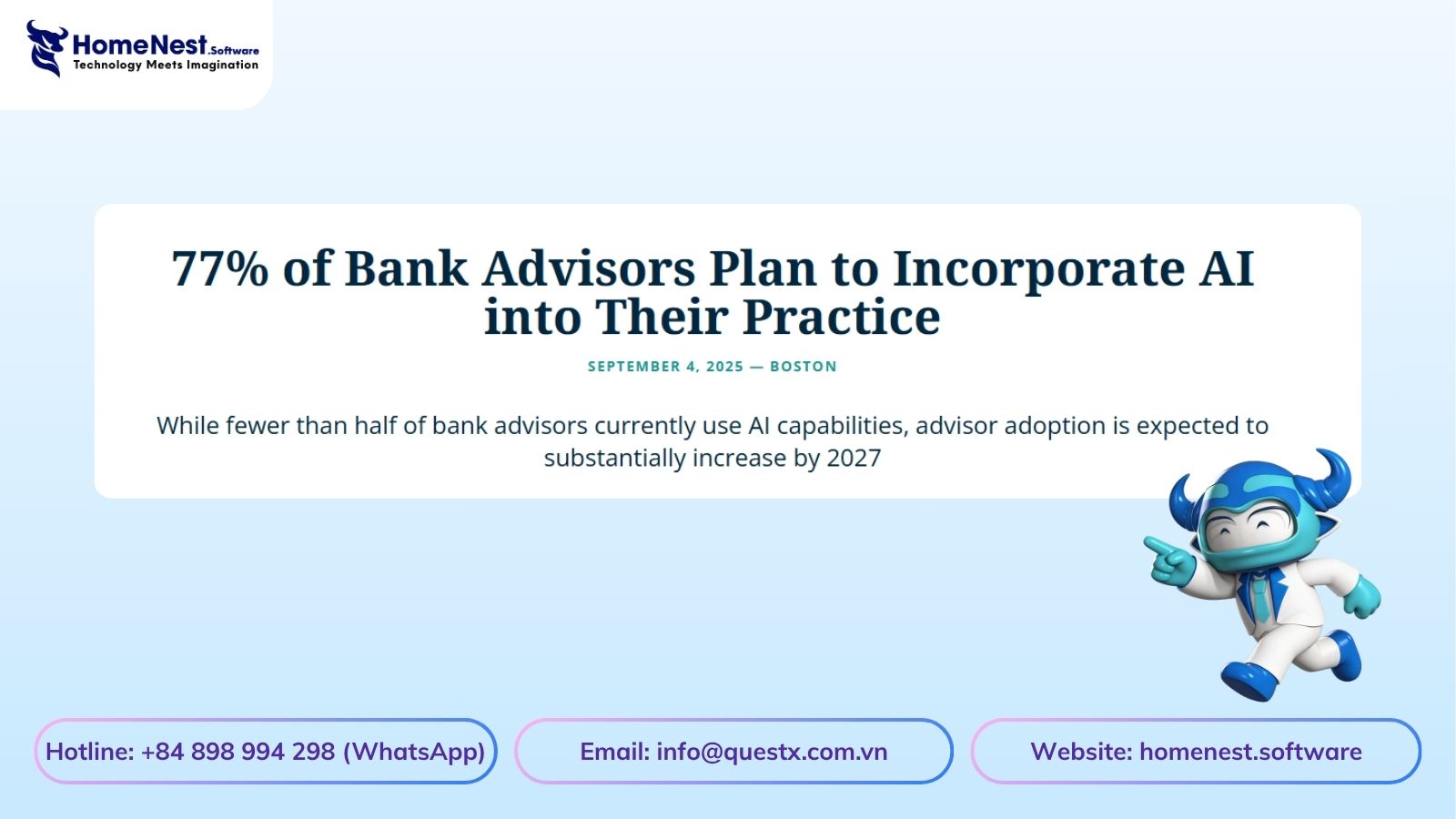
According to Cerulli’s research, recent insights show that 77% of respondents believe leveraging AI is critical for banks to remain competitive and survive in the long term.
AI enables banks to strengthen their strategies through:
- Cloud based infrastructure for scalability
- Advanced security and fraud detection
- Efficient data storage and processing
- Personalized customer experiences powered by large language models
For example, Deutsche Bank integrates AI into its mobile applications to support portfolio management. By analyzing user data and risk profiles, the system provides tailored financial recommendations that help customers make informed decisions.
Overall, AI is not just enhancing banking operations, it is redefining how financial institutions deliver value in a digital first world.
Top 5 Examples of AI Applications in Banking
AI is already powering some of the most innovative banking and fintech apps today. Below are five leading examples that demonstrate how artificial intelligence enhances financial services, improves user experience, and automates decision making.
AI Banking Apps Overview
| App | Platforms | Downloads | Rating |
|---|---|---|---|
| Chime | Android, iOS | 10M+ | 4.8 |
| M1 Finance | Android, iOS | 1M+ | 4.5 |
| Ally Bank | Android, iOS | 1M+ | 3.5 |
| Simple | Android, iOS | 1M+ | 3.1 |
| Qapital | Android, iOS | 500K+ | 4.4 |
1. Chime
Chime is a leading AI powered neobank focused on financial wellness. It analyzes user spending behavior and provides insights to help users manage their money more effectively. Features like automatic round up savings help users save or invest spare change effortlessly.
2. M1 Finance
M1 Finance uses AI driven algorithms to automate investing. Users can build customized portfolios based on their financial goals and risk tolerance. The platform automatically rebalances investments and offers Smart Transfers to move unused cash into investment accounts.
3. Ally Bank
Ally integrates AI through a virtual assistant that uses natural language processing (NLP) to interact with users. It helps answer queries, provide financial insights, and support transactions, making banking more intuitive and accessible.
4. Simple
Simple leverages AI to analyze spending patterns and deliver personalized financial insights. It helps users budget, save, and achieve financial goals by offering tailored recommendations based on their behavior.
5. Qapital
Qapital combines AI with behavioral science to encourage better saving habits. Users can set custom savings rules, such as rounding up transactions or saving based on spending patterns. The app also provides intelligent suggestions to improve financial discipline.
These examples highlight how AI is reshaping banking by making financial services more personalized, automated, and user centric.
Challenges in Adopting AI in the Banking Industry

While AI offers significant advantages, implementing it at scale in banking comes with real challenges. From data quality to security and transparency, financial institutions must address these issues carefully to ensure successful adoption.
Data Security
Banking systems handle highly sensitive financial data, making security a top concern. AI systems require access to large datasets, which increases the risk of breaches if not properly managed. Banks must invest in strong encryption, secure architectures, and work with experienced technology partners to safeguard customer information.
Lack of High Quality Data
AI models rely heavily on clean, structured, and reliable data for training and accuracy. Many banks still deal with fragmented or unstructured datasets, which can limit AI effectiveness. To overcome this, organizations often need to hire AI developers who can preprocess data, ensure compliance with privacy regulations, and prepare datasets for real world applications.
Lack of Explainability
AI systems can make quick and accurate decisions, but machine learning models are often considered “black boxes.” This lack of algorithmic transparency creates serious trust and compliance issues, particularly in critical financial processes such as credit risk assessment and anti-money laundering monitoring.
If AI models produce biased or inexplicable results, financial institutions face severe penalties from regulators. To address this, banks must maintain absolute control over their AI infrastructure instead of relying on closed-source vendor solutions.
Partnering with a development company committed to 100% source code transfer is crucial. Full source code ownership allows the bank’s internal IT and compliance departments to fully audit the algorithms, eliminating computational bias and maintaining data sovereignty. Decisions made by AI must be transparent, rigorously auditable, and compliant with financial regulations.
Benefits of AI in the Banking Industry
Once banks integrate AI into both backend operations and customer facing services, the impact is immediate and measurable. From smarter decisions to stronger security, AI is reshaping how financial institutions operate.
Better Decision Making
AI driven insights enable bankers, analysts, and financial managers to make more informed decisions. By analyzing large datasets in real time, AI helps minimize risk and identify new opportunities, even in volatile market conditions.
Personalized Customer Experiences
AI allows banks to deliver highly tailored experiences. Instead of generic services, customers receive personalized recommendations, instant support, and relevant financial insights across apps, websites, and digital channels.
Improved Efficiency
With the help of AI development services, banks can automate repetitive and time consuming tasks. This reduces operational bottlenecks, improves productivity, and allows staff to focus on higher value activities such as customer engagement and strategic planning.
Stronger Security
AI enhances security by continuously monitoring transactions and user behavior. It can detect suspicious activities in real time and prevent fraud before it escalates, helping protect both users and financial institutions.
Advanced Risk Management
AI improves risk assessment by analyzing complex financial data and predicting potential outcomes. This allows banks to proactively manage risks and make strategic decisions with greater confidence.
AI Assisted Regulatory Compliance
Compliance processes become more efficient with AI. Automated systems can monitor transactions, generate reports, and ensure adherence to financial regulations, reducing manual effort and minimizing the risk of penalties.
Enhanced Privacy
AI systems can be designed to respect user privacy by limiting data exposure and enabling users to control their personal information. This builds trust and creates a more secure digital banking environment.
By leveraging AI, banks can improve performance, reduce costs, and deliver smarter, more secure financial services in an increasingly competitive landscape.
Uses of AI in the Banking Industry
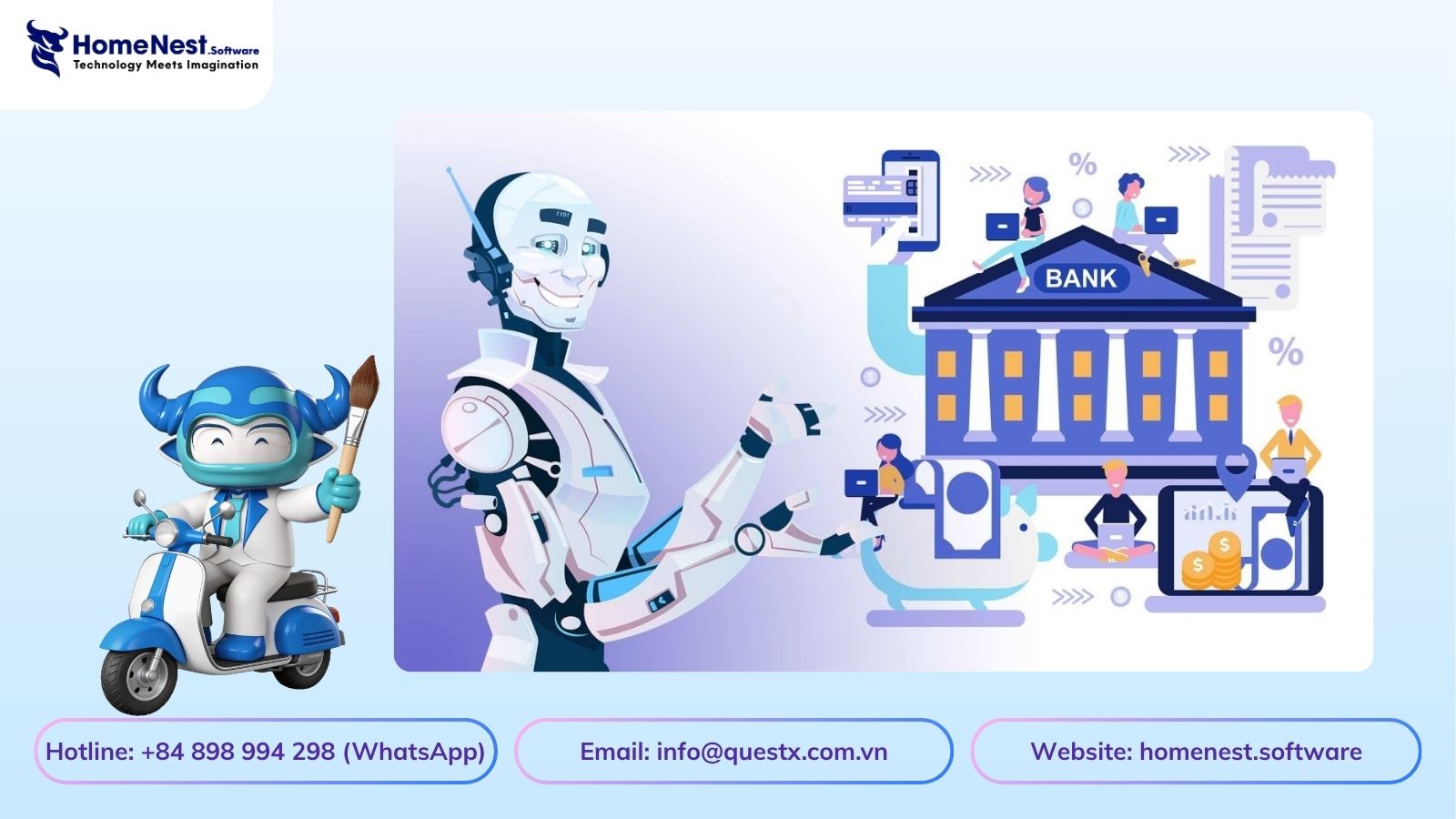
You might be wondering how AI is actually applied in banking. In reality, artificial intelligence is transforming nearly every aspect of financial services, from customer experience to risk management. Below are the most impactful use cases that highlight the true impact of AI in banking and finance.
1. Personalized Customer Experiences
AI powered chatbots and virtual assistants have changed how banks interact with customers. Using natural language processing, these systems provide instant, 24/7 support and handle a wide range of queries efficiently.
By analyzing user behavior and financial history, AI can also recommend personalized products and services. This not only improves customer satisfaction but also increases cross selling opportunities. Many businesses partner with a chatbot app development company to build tailored AI driven solutions.
2. Fraud Detection and Prevention
AI plays a critical role in identifying fraudulent activities. By analyzing large volumes of transaction data in real time, machine learning models can detect unusual patterns and flag suspicious behavior.
This enables banks to prevent unauthorized transactions, reduce fraud risk, and protect both customers and institutions more effectively.
3. Credit Risk Assessment
Traditional credit evaluation processes are often slow and limited. AI enhances this by analyzing a broader range of data sources, including behavioral and alternative data.
With support from a machine learning app development company, banks can assess creditworthiness more accurately and make faster, data driven lending decisions.
4. Algorithmic Trading
AI powered algorithms have transformed trading operations. These systems analyze market data, historical trends, and real time news to execute trades with speed and precision beyond human capability.
This leads to better portfolio optimization, improved risk management, and potentially higher returns.
5. Robotic Process Automation (RPA)
RPA uses AI driven bots to automate repetitive, rule based tasks such as data entry, reconciliation, and report generation. This reduces manual effort, minimizes errors, and improves operational efficiency.
As a result, banking staff can focus on more strategic and value driven activities.
6. Predictive Analytics for Customer Insights
AI uses predictive analytics to forecast customer behavior and preferences. Banks can leverage this data to create targeted marketing campaigns and deliver personalized product recommendations.
This deeper understanding of customer needs helps improve retention, engagement, and overall profitability.
7. Regulatory Compliance and Anti Money Laundering (AML)
Meeting regulatory requirements is a major challenge for banks. AI simplifies this by analyzing transaction data to detect suspicious activities linked to fraud or money laundering.
These systems reduce false positives, improve accuracy, and help institutions stay compliant while saving time and operational costs.
AI is not just enhancing banking operations, it is redefining how financial institutions deliver services, manage risks, and engage with customers in a digital first world.
Future of AI in the Banking Industry
Digital transformation is reshaping every industry, and banking is at the center of this shift. Technology is not only changing financial services but also redefining how banks operate, compete, and deliver value to customers.
As digitalization accelerates globally, banks face a critical challenge: how to serve more customers efficiently without significantly increasing costs. At the same time, customer expectations continue to rise. Today’s users are digitally savvy and expect fast, seamless, and personalized experiences across all channels.
Evolving Customer Expectations
Modern customers demand:
- Instant access to financial services
- Real time transactions
- Personalized recommendations
- Seamless digital experiences across devices
To meet these expectations, banks have expanded into areas like mobile banking, real time payments, and e banking, often integrating with IT and telecom ecosystems.
The Role of AI in Future Banking
As digital services grow, so do risks such as cyber threats and fraud. Handling sensitive financial data across virtual networks requires advanced protection and intelligent systems.
This is where AI becomes essential. Artificial intelligence helps banks:
- Understand customer behavior and expectations
- Deliver personalized financial solutions
- Detect and prevent fraud in real time
- Optimize operations without increasing costs
AI is increasingly used to prioritize customer needs, automate processes, and improve decision making. By analyzing large volumes of data, it enables banks to deliver smarter, faster, and more secure services.
What Lies Ahead
The future of banking will be driven by AI powered systems that balance efficiency, security, and personalization. Financial institutions that adopt AI effectively will be better positioned to scale, innovate, and build long term customer trust in an increasingly digital first world.
Conclusion
Artificial intelligence is set to redefine the future of banking. Its impact spans across customer experience, operational efficiency, and security. With AI driven personalization, real time fraud detection, and predictive analytics, financial institutions can manage risks more effectively while delivering highly tailored services.
The future of banking will be shaped by smarter systems, streamlined processes, and a stronger focus on customer needs. This shift will lead to a more advanced, efficient, and user centric financial ecosystem.
To fully unlock these benefits, partnering with an experienced Artificial Intelligence App Development Company enables banks and fintech businesses to implement AI effectively, scale their capabilities, and deliver innovative digital banking experiences.
FAQs About AI in the Banking Industry
What is AI in banking?
AI in banking refers to the use of technologies like machine learning, natural language processing, and data analytics to automate processes, enhance decision making, and improve customer experiences.
How is AI used in banking today?
AI is used for fraud detection, customer support chatbots, credit risk assessment, personalized recommendations, predictive analytics, and process automation.
What are the main benefits of AI in banking?
AI improves efficiency, reduces operational costs, enhances security, enables better decision making, and delivers personalized financial services.
Is AI safe for banking applications?
Yes, when implemented correctly. AI systems use advanced encryption, real time monitoring, and anomaly detection to enhance security and prevent fraud.
What challenges do banks face when adopting AI?
Common challenges include data quality issues, lack of transparency in AI decisions, high implementation costs, and regulatory compliance requirements.
Can AI replace human roles in banking?
AI is designed to assist, not replace. It automates repetitive tasks, allowing human employees to focus on strategic, high value activities.
How does AI improve fraud detection?
AI analyzes transaction patterns in real time and identifies unusual behavior, enabling banks to detect and prevent fraud quickly.
What is the future of AI in banking?
AI will continue to drive innovation through automation, hyper personalization, improved risk management, and smarter financial services.
Do banks need a development partner for AI integration?
Yes. Working with experts ensures proper implementation, security, scalability, and compliance with financial regulations.
Where can businesses implement AI solutions for banking?
You can collaborate with companies like HomeNest Software to build AI powered, secure, and scalable banking solutions.
Latest Articles
View All
GitHub vs GitLab – Architecture and Selection Guide
Managing source code requires stable infrastructure. Automating software releases requires reliable pipelines. Tool sprawl creates operational complexity. Engineering teams face friction when using fragmented DevOps tools. Selecting between GitHub and GitLab shapes long term development efficiency.

The True Cost of an Employee: A Complete Breakdown for Employers
This article reveals that the true cost of an employee is typically 25% to 40% higher than their base salary due to hidden expenses like taxes, benefits, workspace, and recruiting. To address this, the guide provides a detailed 7-step framework to accurately calculate total employer costs, alongside actionable strategies to optimize budgets and improve retention without reducing pay.

Essential Tips To Develop A Music Streaming App
Discover expert tips to develop a successful music streaming app with HomeNest Software. This guide covers essential features, legal licensing, and scalable technology stacks. Learn how to build a robust, cross-platform application with AI personalization to stand out in the 2026 competitive audio market.

How to Build a Language Learning App Like Cake
Discover how to build a successful language learning app like Cake with this comprehensive guide from HomeNest Software. We explore market research, essential MVP features, advanced AI integrations, tech stack selection, and estimated development costs. Partner with HomeNest Software to create a scalable, gamified, and highly engaging educational platform tailored to your business goals. Start your app development journey with us today.

How to Build an App Like TaskRabbit: Features, Cost, Tech Stack – Business Model
Building an app like TaskRabbit is more than replicating existing features—it’s about creating a trusted marketplace that seamlessly connects customers with skilled service providers. By combining an intuitive user experience, secure payment systems, scalable architecture, and the right business model, you can launch a competitive on-demand platform. Partnering with an experienced app development company like HomeNest Software ensures your product is built with the technology, flexibility, and long-term scalability needed to succeed in the rapidly growing gig economy.

How to Build a Meal Planning App: A Complete Step-by-Step Guide
Building a successful meal planning app goes beyond creating an attractive interface it requires a clear business strategy, personalized user experiences, and scalable technology. By combining essential features like AI-powered meal recommendations, nutrition tracking, grocery list automation, and wearable integration, businesses can deliver lasting value to users while capitalizing on the growing digital health market. Partnering with an experienced mobile app development company ensures your solution is secure, future-ready, and designed to succeed in an increasingly competitive health-tech industry.