
How to Build a Food Delivery App Like Menulog in Australia
Scope of Work
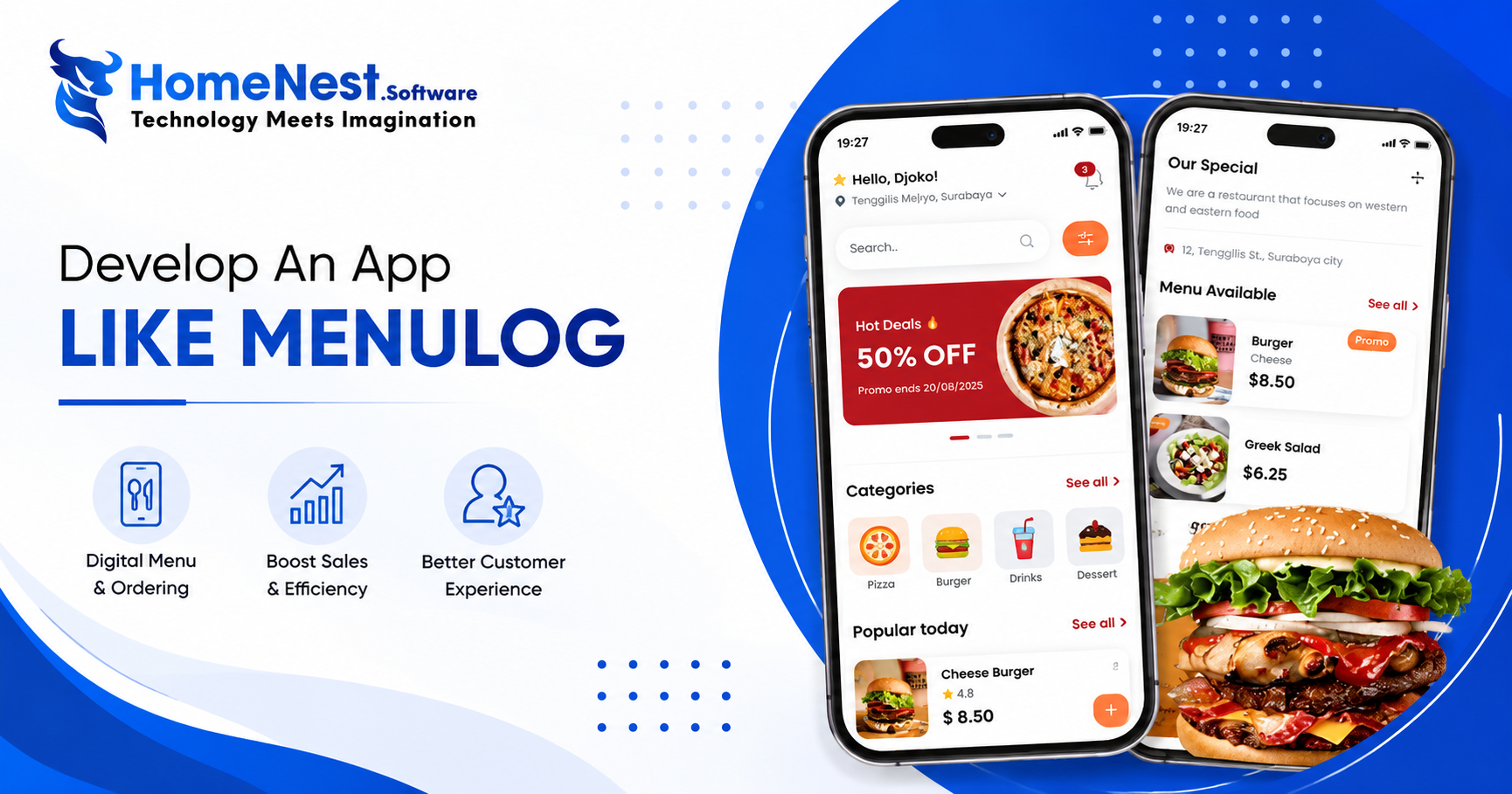
Australia’s food delivery market has experienced rapid growth in recent years, with Menulog emerging as one of the leading platforms in the space. By partnering with over 30,000 restaurants and serving millions of active users, Menulog has transformed how Australians order food online and set a strong benchmark for digital food delivery services.
For entrepreneurs and business owners looking to capitalize on this booming market, building a food delivery app like Menulog presents a clear and promising opportunity.
Online food delivery in Australia continues to expand at a remarkable pace and is projected to generate AUD 20.3 billion in revenue by 2033, driven by a 6.3% CAGR between 2026 and 2033. Key growth drivers include increasing urbanization, changing consumer lifestyles, and a growing demand for fast and convenient food ordering solutions.
These market trends clearly indicate that developing Menulog style food delivery apps can be a highly profitable investment. If you’re considering entering this space, this guide is designed specifically for you.
In this comprehensive guide, we provide a step by step roadmap to food delivery app development in Australia. You’ll learn about essential features, development costs, and all the critical considerations needed to build a competitive platform.
We’ll also explore Menulog’s business model, explain how the platform generates revenue, walk through the complete development process, and outline the must have features required to succeed in the Australian market.
Let’s get started!
Understanding the Menulog Business & Revenue Model
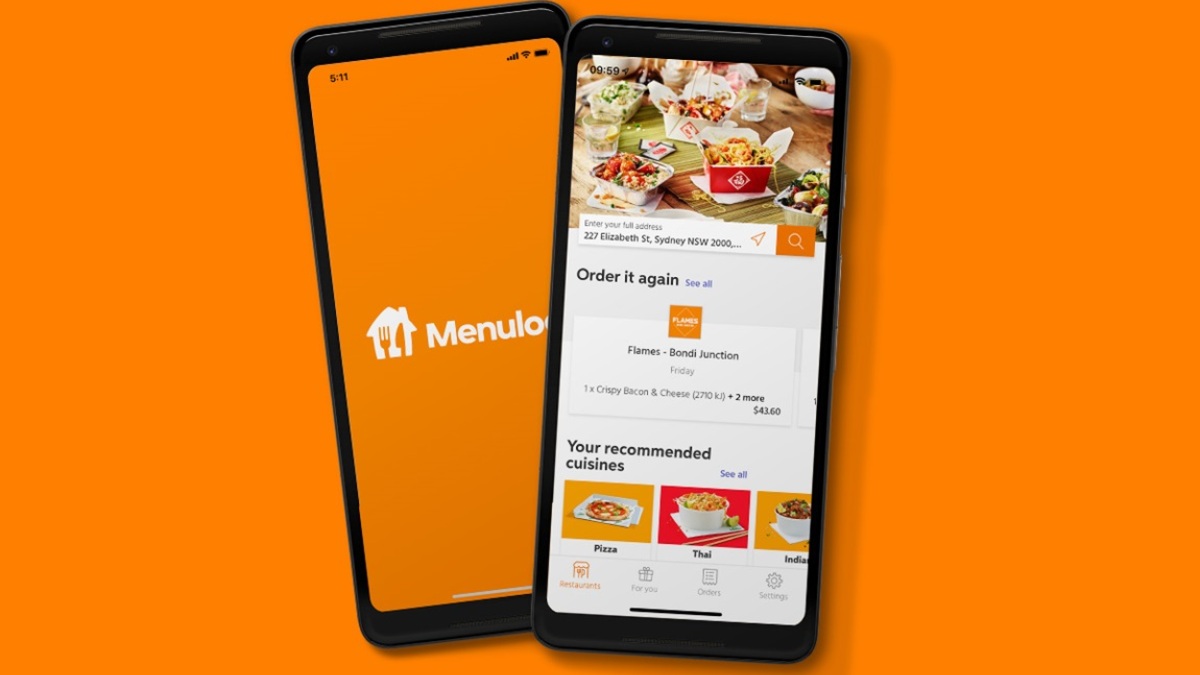
Menulog operates on a well structured and sustainable business model that balances the needs of restaurants, customers, and delivery partners while consistently generating strong revenue.
1. Core Business Components
Menulog functions as both a food delivery aggregator and a logistics provider, setting it apart from platforms that initially focused only on restaurant listings.
Key elements of its business model include:
-
Providing restaurants with enhanced visibility, analytics, and operational tools
-
Supporting both self delivery and Menulog managed delivery options
-
Expanding services into regional and suburban areas, not just major cities
-
Offering a diverse range of dining choices, from fast food chains to premium restaurants
This hybrid approach allows Menulog to serve a broader audience while creating value for restaurant partners of all sizes.
2. Primary Revenue Streams
Menulog generates revenue through multiple monetization channels:
-
Restaurant Commissions
Restaurants pay a commission ranging from 15% to 30% per order, depending on partnership type, delivery services, and order volume. -
Customer Delivery Fees
Customers are charged delivery fees, typically between $1 and $5, influenced by factors such as distance, demand, and delivery time (often around 10% of the order value). -
Restaurant Subscription Plans
Menulog offers optional monthly subscription packages with tiered pricing that help restaurants boost visibility, access marketing tools, and increase order volume. -
Sponsored Listings & Promotions
Restaurants can pay for featured placements and exclusive promotional campaigns within the app to gain greater exposure. -
Menulog Plus (Customer Subscription)
A premium subscription plan that provides customers with reduced delivery fees and exclusive offers, encouraging repeat orders and user loyalty.
3. Key Operational Components
To support this revenue model, Menulog relies on several operational pillars:
-
Efficient Delivery Network
A scalable delivery infrastructure that ensures timely order fulfillment across urban and regional areas. -
Partner Hub for Restaurants
A centralized dashboard that allows restaurant partners to manage menus, track performance data, handle promotions, and monitor orders in real time. -
Dynamic Service Fee Model
Delivery and service fees are calculated using demand, distance, and estimated delivery time to optimize efficiency and profitability. -
Data Analytics & Personalization
Advanced analytics power personalized recommendations for customers while providing actionable insights to restaurant partners.
Menulog’s success lies in its multi sided marketplace model, diversified revenue streams, and strong operational backbone. By combining logistics, technology, data, and subscriptions, it has built a scalable and profitable food delivery ecosystem making it an ideal blueprint for entrepreneurs looking to build a food delivery app in Australia.
Read more: How Much Does It Cost to Build an App in Australia?
Steps to Develop an App Like Menulog in Australia
Now that you understand the business model and revenue streams of Menulog, the next logical question is: how do you build a food delivery app like Menulog in Australia?
The answer is simple in principle but structured in execution. Developing a Menulog style food delivery app similar to DoorDash, Deliveroo, or Uber Eats requires a well defined, step by step approach, where each stage plays a critical role in the product’s success.
Let’s walk through the complete development process.
1. Conduct In Depth Market Analysis
The Australian food delivery market has unique characteristics, making market research a crucial first step.
Key focus areas include:
-
Understanding delivery behavior across urban, suburban, and regional areas
-
Analyzing Australian consumer preferences for takeaway vs delivery
-
Identifying underserved cuisines, regions, and customer segments
-
Reviewing Australian food safety regulations and delivery compliance requirements
-
Studying competitors such as Menulog, Uber Eats, DoorDash, and Deliveroo
This analysis helps uncover gaps and opportunities within the local market.
2. Define a Distinct Business Strategy
Differentiation is essential in Australia’s competitive food delivery ecosystem.
Your strategy should focus on:
-
Promoting popular Australian food trends such as Asian fusion and modern Australian cuisine
-
Offering eco conscious delivery options, including sustainable packaging and carbon neutral delivery
-
Designing loyalty programs tailored to local customer behavior
-
Building partnerships with restaurants, food suppliers, and local producers
-
Collaborating with independent eateries and regional food outlets
A clear value proposition sets your platform apart.
3. Choose the Right Technology Stack
Selecting the right technology stack directly impacts performance, scalability, and development costs.
Frontend
-
Web: React.js, Vue.js
-
Mobile: Flutter, React Native
Backend
-
Node.js
-
Python (Django)
-
Ruby on Rails
-
Java (Spring Boot)
Database
-
MongoDB (NoSQL)
-
PostgreSQL / MySQL (SQL)
Real Time Communication
-
WebSockets
-
Firebase
Payments
-
Stripe
-
PayPal
-
Razorpay
Maps & Location Services
-
Google Maps API
-
Mapbox
Cloud Infrastructure
-
AWS
-
Google Cloud
-
Microsoft Azure
4. Assemble the Right Development Team
A successful Menulog like app requires a cross functional team with food tech experience:
-
Project Manager with domain expertise
-
Business Analyst familiar with the Australian market
-
UI/UX Designers experienced in mobile apps
-
Mobile Developers (native or cross platform)
-
Backend Developers
-
DevOps Engineers
-
QA & Testing Engineers
A skilled team ensures faster development and fewer risks.
5. Design a Detailed Technical Architecture
Before development begins, define a robust technical blueprint covering:
-
Microservices based architecture for scalability
-
API gateway for service communication
-
Third party integrations
-
Real time order tracking and notifications
-
Secure data storage and processing
-
Data privacy and security frameworks
-
Analytics and reporting systems
This foundation ensures long term scalability and reliability.
6. Build a Functional MVP (Prototype)
Start with a Minimum Viable Product (MVP) to control costs and validate market demand.
Core MVP features include:
-
Restaurant discovery and search
-
Menu browsing and online ordering
-
Secure payment processing
-
Basic delivery tracking
-
Restaurant dashboard for order management
-
Admin panel with essential controls
-
AI powered search
-
AI driven food recommendations
An MVP allows faster launch and early user feedback.
7. Implement Comprehensive Testing
Ensure high quality through rigorous testing:
-
Device and OS compatibility testing
-
Performance and load testing
-
Payment and transaction security testing
-
UX and usability testing
-
Regulatory and compliance verification
Thorough testing minimizes post launch issues.
8. Plan a Market Focused Australian Launch
A successful launch strategy should include:
-
Partnerships with national chains and popular regional restaurants
-
Marketing campaigns highlighting local cuisine and convenience
-
Location based promotions and targeted advertising
A localized launch approach improves early adoption.
9. Set Up Local Operations & Support
Operational readiness is essential for scale:
-
Recruit and train delivery partners
-
Establish responsive customer support channels
-
Implement financial systems and regulatory compliance processes
Strong operations ensure smooth daily performance.
10. Post Launch Maintenance & Scaling
Continuous improvement is key to long term success.
-
Regular updates and bug fixes
-
Performance optimization
-
Feature enhancements
-
Technical support and monitoring
A reliable food delivery app development company can manage ongoing maintenance and help you scale efficiently.
Building an app like Menulog in Australia is a multi stage process that requires market understanding, strategic planning, robust technology, and ongoing optimization. By following these structured steps, entrepreneurs can launch a competitive, scalable food delivery platform tailored to the Australian market.
Key Features of Food Delivery Apps Like Menulog
Advancements in digital technology have transformed how customers interact with restaurants, making food ordering faster, smarter, and more convenient than ever. Leading platforms such as Menulog demonstrate how a well designed, multi app ecosystem can streamline the entire food delivery journey from browsing menus to doorstep delivery.
A Menulog style platform typically consists of four integrated applications, each designed to serve a specific user group while delivering a seamless end to end experience.
1. Customer App
The customer app is the primary interface where users discover food, place orders, and track deliveries.
Key Features:
-
Restaurant Discovery – Browse nearby restaurants based on location, cuisine, ratings, and offers
-
Digital Menu Access – View detailed menus with item descriptions, prices, and images
-
Order Placement & Customization – Select items, customize orders, and add to cart
-
Secure Online Payments – Pay using cards, digital wallets, or other supported methods
-
Real Time Order Tracking – Track order status and delivery progress via live map
-
Push Notifications – Receive updates for order confirmation, preparation, and delivery
-
AI Powered Recommendations – Analyze user behavior to suggest personalized dishes and cuisines
2. Restaurant App
The restaurant app helps partners manage orders and operations efficiently.
Key Features:
-
Order Reception – Receive incoming orders instantly
-
Order Management – Update order status (accepted, preparing, ready for pickup)
-
Menu Management – Create, edit, and update digital menus and pricing
-
Driver Communication – Coordinate pickups with delivery agents in real time
3. Delivery Agent App
The delivery app enables drivers to manage deliveries smoothly and efficiently.
Key Features:
-
Order Acceptance – Receive and accept delivery requests
-
GPS Navigation – Navigate to restaurant pickup and customer drop off locations
-
Live Delivery Updates – Update order status during transit
-
Earnings Dashboard – Track completed deliveries, payments, and incentives
4. Admin Panel (Web Based)
The admin panel acts as the central control system for the entire platform.
Key Features:
-
User Management – Manage customers, restaurants, and delivery partners
-
Restaurant Onboarding – Add, approve, and manage restaurant listings
-
Order Monitoring – Track all active, completed, and canceled orders
-
Payment Management – Handle payouts to restaurants and delivery agents
-
Analytics & Reporting – Access performance metrics, revenue data, and user insights
A successful food delivery platform like Menulog relies on a well integrated ecosystem of apps, each designed to optimize the experience for customers, restaurants, delivery partners, and administrators. By combining real time tracking, AI driven personalization, secure payments, and powerful analytics, such platforms deliver convenience, efficiency, and scalability key ingredients for success in the competitive food delivery market.
Cost to Develop a Restaurant App Like Menulog
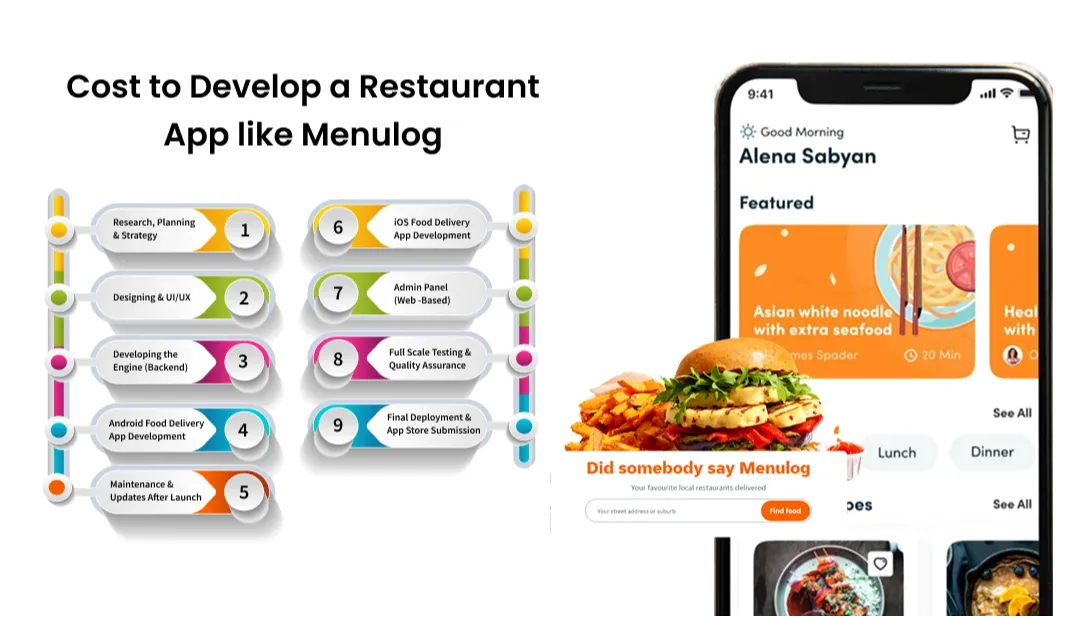
If you’re planning to build a food delivery app like Menulog in Australia, one of the first questions you’ll ask is about cost. There’s no single fixed price, as the final budget depends on multiple factors such as app complexity, features, platforms, and development scope.
That said, as a general estimate, the cost to develop a Menulog style food delivery app typically ranges between USD 20,000 and USD 80,000.
Cost Breakdown by App Complexity
Food delivery apps can generally be categorized into three levels based on functionality and technical depth:
| App Type | Estimated Cost (USD) |
|---|---|
| Basic App | $15,000 – $25,000 |
| Medium Complex App | $30,000 – $50,000 |
| Advanced App | $60,000+ |
How complexity affects cost:
-
Basic apps include essential features like restaurant listings, menu browsing, and order placement.
-
Medium complex apps add real time order tracking, payment gateways, and improved UI/UX.
-
Advanced apps include AI powered recommendations, advanced search, multi language support, multiple payment options, and robust analytics.
App complexity is one of the biggest drivers of Menulog like app development cost.
Cost Breakdown by Development Stages
Beyond app type, the total cost is also influenced by each stage of the development lifecycle from idea to launch.
| Development Stage | Estimated Cost Range (USD) |
|---|---|
| Research, Planning & Strategy | $2,000 – $5,000 |
| UI/UX Design | $6,000 – $12,000 |
| Backend Development (Core Engine) | $15,000 – $30,000 |
| Android App Development | $20,000 – $40,000 |
| iOS App Development | $20,000 – $40,000 |
| Admin Panel (Web Based) | $5,000 – $10,000 |
| Testing & Quality Assurance | $7,000 – $15,000 |
| Deployment & App Store Submission | $3,000 – $10,000 |
| Post Launch Maintenance & Updates | 15%–20% of total cost annually |
Important Note on Cost Estimates
The figures above represent ideal cost ranges based on industry benchmarks. The actual cost of developing a restaurant app like Menulog can only be determined after a detailed requirement analysis, including feature scope, target platforms, third party integrations, and scalability needs.
To get a precise estimate, it’s best to consult an experienced food delivery app development partner such as HomeNest Software. After evaluating your requirements, their experts can provide a tailored cost breakdown and development roadmap aligned with your business goals.
Building a Menulog style food delivery app is a significant but rewarding investment. With the right feature set, technology stack, and development partner, you can launch a scalable, competitive platform tailored to the Australian market while keeping costs transparent and under control.
Cost Influencing Factors for Menulog App Development
When estimating the budget to build a food delivery app like Menulog, it’s essential to understand the key components that directly influence development costs. Clearly defining these factors helps businesses allocate resources wisely and build a competitive, scalable platform.
App Features & Functionality
Features are the primary cost drivers. A basic app with essential capabilities such as user registration, restaurant listings, order placement, and payment processing requires a smaller investment. In contrast, advanced features like real time order tracking, AI powered recommendations, smart search, and analytics significantly increase development time and cost.
Platform Selection (iOS, Android, or Both)
Choosing to develop for iOS, Android, or both platforms directly impacts the budget. While building for both platforms requires additional resources, it also expands reach and accessibility, which can be critical for market penetration in Australia.
UI/UX Design Complexity
Design plays a crucial role in user adoption and retention. Investing in experienced designers to create an intuitive, visually appealing interface improves user experience but adds to the overall cost especially when custom animations, micro interactions, and branding are involved.
Backend Infrastructure & Scalability
A robust backend is essential for handling high traffic, processing orders efficiently, and maintaining seamless communication between users, restaurants, and delivery partners. Costs vary based on system architecture, scalability requirements, and server hosting choices.
Third Party Integrations
Integrating external services such as payment gateways, mapping and navigation tools, push notifications, and analytics adds complexity and cost. Each integration requires careful planning, testing, and ongoing maintenance by skilled developers.
Maintenance, Updates & Long Term Support
Ongoing maintenance is critical for long term success but is often underestimated. Regular updates, performance optimization, security patches, and feature enhancements ensure the app remains competitive and responsive to user feedback and technological changes.
By understanding these cost influencing factors, businesses can make informed decisions, optimize resource allocation, and maximize ROI when developing a Menulog like app.
Conclusion
Building a food delivery platform similar to Menulog in Australia requires a significant but strategic investment. Australia’s tech savvy population, strong delivery culture, and diverse food landscape present excellent opportunities for online food delivery businesses.
As outlined throughout this guide, success depends on combining market insight, technical expertise, and operational excellence. With the right idea and the right technology partner, your vision can be transformed into a high performing product.
As an experienced food delivery app development company in Australia, HomeNest Software is well positioned to help you succeed. With over a decade of experience building modern food delivery, grocery ordering, and restaurant apps, we specialize in creating scalable Menulog like solutions tailored to business goals.
👉 Share your idea with us today and start building your Menulog style food delivery app for the Australian market.
Contact HomeNest Software today for a free consultation and inquire about our all inclusive App Design package offers!
HomeNest Software – Empowering Long Term Growth for Modern Businesses.

Contact Information:
- Address: The Sun Avenue, 28 Mai Chi Tho Street, Binh Trung Ward, Ho Chi Minh City
- Hotline: +84 898 994 298 ( WhatsApp )
- Website: homenest.software
HomeNest Services: Website Design – App Design – Software Development – Digital Marketing.
Frequently Asked Questions (FAQ)
1. How much does it cost to build a Menulog like app in Australia?
The cost to develop a food delivery app like Menulog typically ranges from USD 20,000 to USD 80,000+, depending on app complexity, features, platforms (iOS/Android), integrations, and scalability requirements.
2. What are the biggest cost drivers in Menulog app development?
The major cost drivers include:
-
Feature set and functionality
-
Platform choice (Android, iOS, or both)
-
UI/UX design complexity
-
Backend infrastructure and scalability
-
Third party integrations (payments, maps, notifications)
-
Ongoing maintenance and updates
3. Can I reduce the cost of developing a Menulog like app?
Yes. You can optimize costs by:
-
Starting with an MVP instead of a full featured app
-
Using cross platform frameworks
-
Prioritizing essential features first
-
Outsourcing development to experienced teams
-
Using scalable cloud infrastructure
4. How long does it take to develop a food delivery app like Menulog?
Development timelines typically range from 3 to 6 months for an MVP and 6 to 10+ months for a fully featured, scalable platform depending on complexity and team size.5. Is ongoing maintenance necessary after launch?
Absolutely. Ongoing maintenance (usually 15–20% of the initial development cost annually) is essential for bug fixes, security updates, performance optimization, and adding new features to stay competitive.
6. Which platform should I launch first Android or iOS?
This depends on your target audience and budget. Many Australian startups launch with both platforms using cross platform development to maximize reach, while others start with a single platform to validate demand.
7. Is it possible to add advanced features like AI recommendations later?
Yes. Advanced features such as AI powered recommendations, smart search, or dynamic pricing can be added in later phases once your core platform is stable and user demand is validated.
8. Why choose HomeNest Software for Menulog like app development?
HomeNest Software offers end to end food delivery app development services with deep expertise in the Australian market. With 10+ years of experience, scalable architecture, transparent pricing, and a focus on ROI, they help businesses build secure, high performing Menulog style platforms.
Latest Articles
View All
How Much Does It Cost To Develop A Food Delivery App Like Zomato?
Discover the complete cost breakdown and technical roadmap to build a Zomato-like food delivery app with HomeNest Software. This guide explores budget tiers, the essential 4-panel architecture (Customer, Merchant, Driver, Admin), modern tech stack recommendations, and proven monetization strategies. Learn how HomeNest Software transforms your digital platform vision into a scalable, high-yielding business asset!
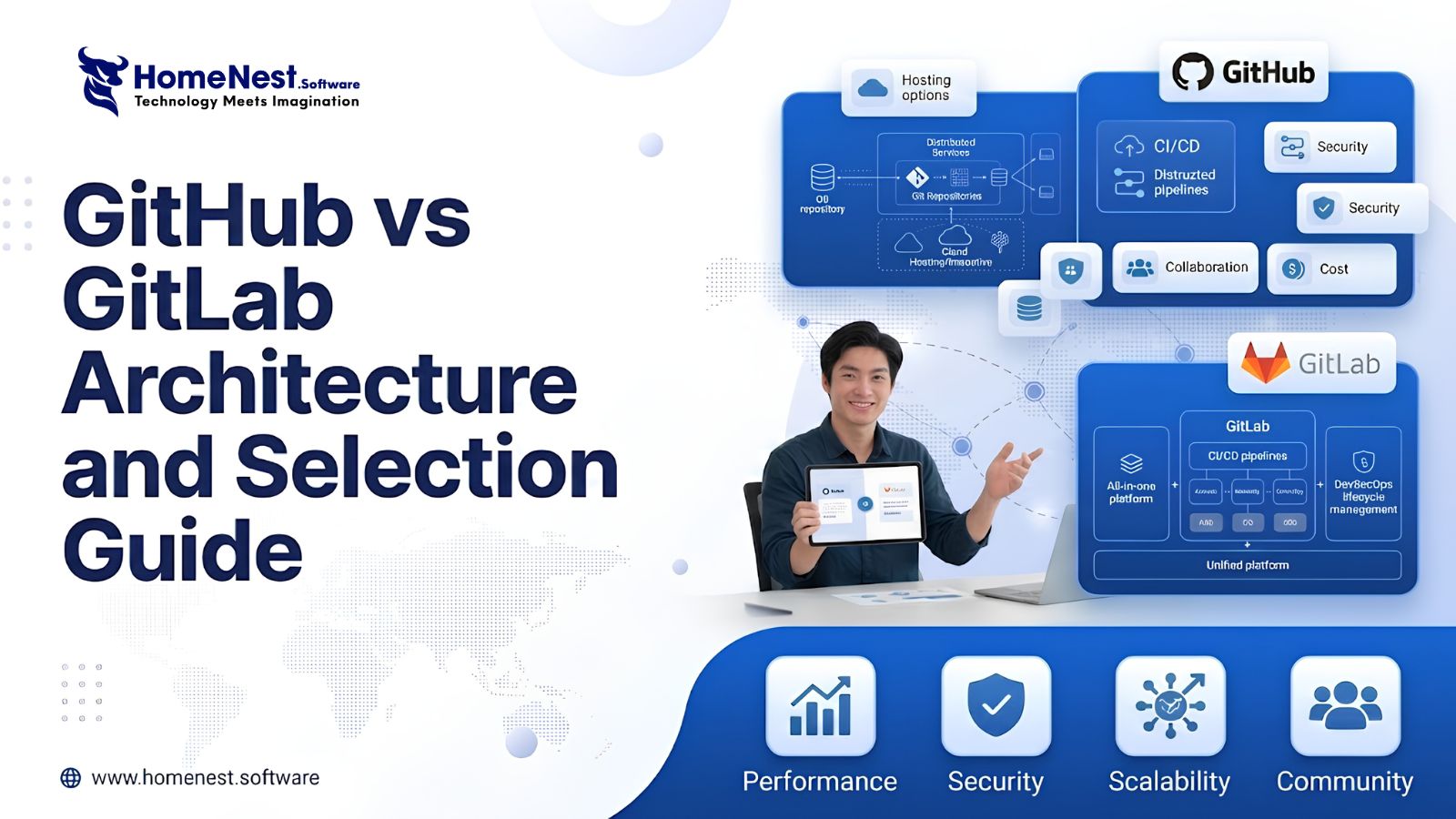
GitHub vs GitLab – Architecture and Selection Guide
Managing source code requires stable infrastructure. Automating software releases requires reliable pipelines. Tool sprawl creates operational complexity. Engineering teams face friction when using fragmented DevOps tools. Selecting between GitHub and GitLab shapes long term development efficiency.
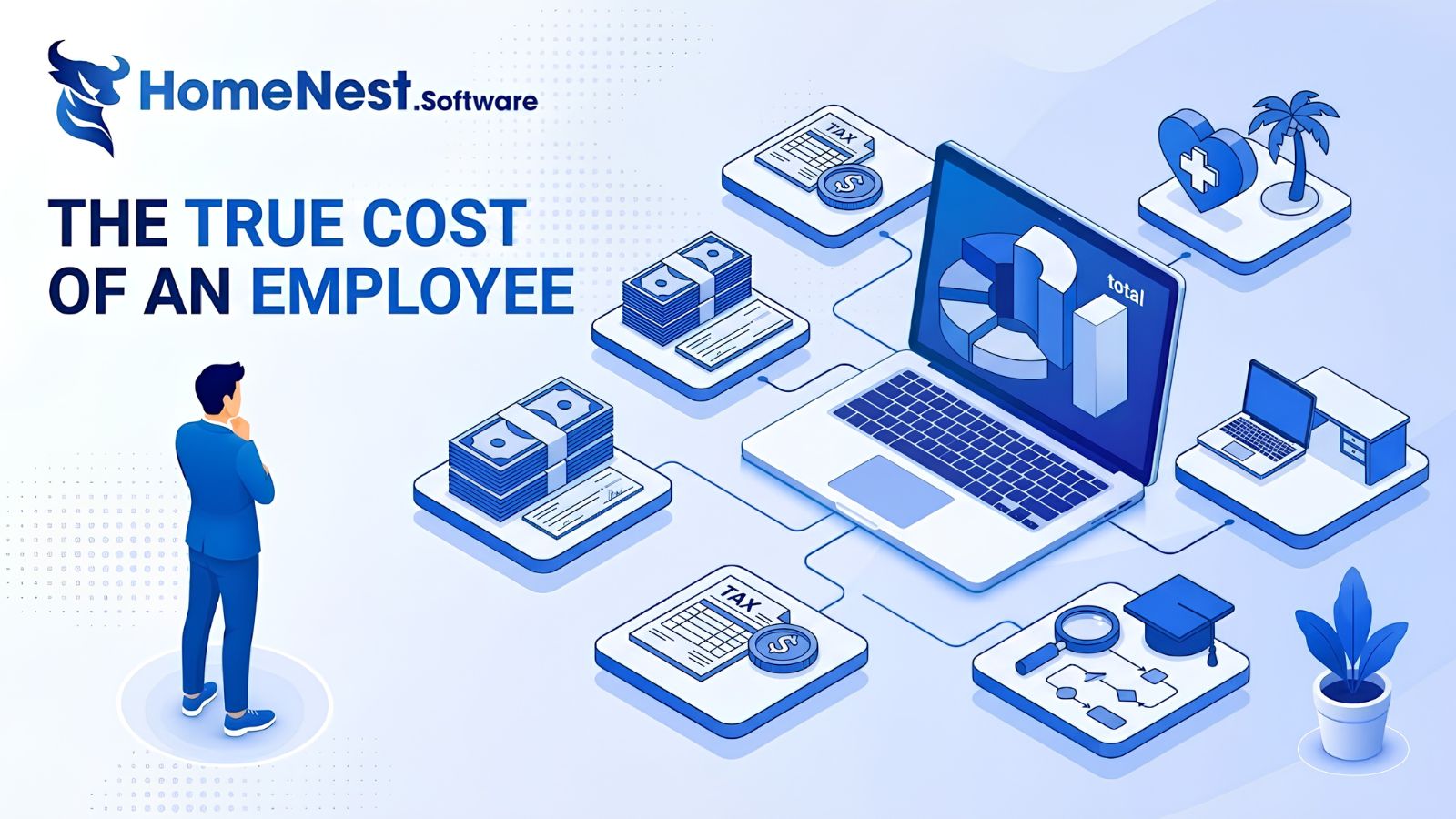
The True Cost of an Employee: A Complete Breakdown for Employers
This article reveals that the true cost of an employee is typically 25% to 40% higher than their base salary due to hidden expenses like taxes, benefits, workspace, and recruiting. To address this, the guide provides a detailed 7-step framework to accurately calculate total employer costs, alongside actionable strategies to optimize budgets and improve retention without reducing pay.
Essential Tips To Develop A Music Streaming App
Discover expert tips to develop a successful music streaming app with HomeNest Software. This guide covers essential features, legal licensing, and scalable technology stacks. Learn how to build a robust, cross-platform application with AI personalization to stand out in the 2026 competitive audio market.
How to Build a Language Learning App Like Cake
Discover how to build a successful language learning app like Cake with this comprehensive guide from HomeNest Software. We explore market research, essential MVP features, advanced AI integrations, tech stack selection, and estimated development costs. Partner with HomeNest Software to create a scalable, gamified, and highly engaging educational platform tailored to your business goals. Start your app development journey with us today.
How to Build an App Like TaskRabbit: Features, Cost, Tech Stack – Business Model
Building an app like TaskRabbit is more than replicating existing features—it’s about creating a trusted marketplace that seamlessly connects customers with skilled service providers. By combining an intuitive user experience, secure payment systems, scalable architecture, and the right business model, you can launch a competitive on-demand platform. Partnering with an experienced app development company like HomeNest Software ensures your product is built with the technology, flexibility, and long-term scalability needed to succeed in the rapidly growing gig economy.