
How to Build a Language Learning App Like Cake
Discover how to build a successful language learning app like Cake with this comprehensive guide from HomeNest Software. We explore market research, essential MVP features, advanced AI integrations, tech stack selection, and estimated development costs. Partner with HomeNest Software to create a scalable, gamified, and highly engaging educational platform tailored to your business goals. Start your app development journey with us today.
Scope of Work
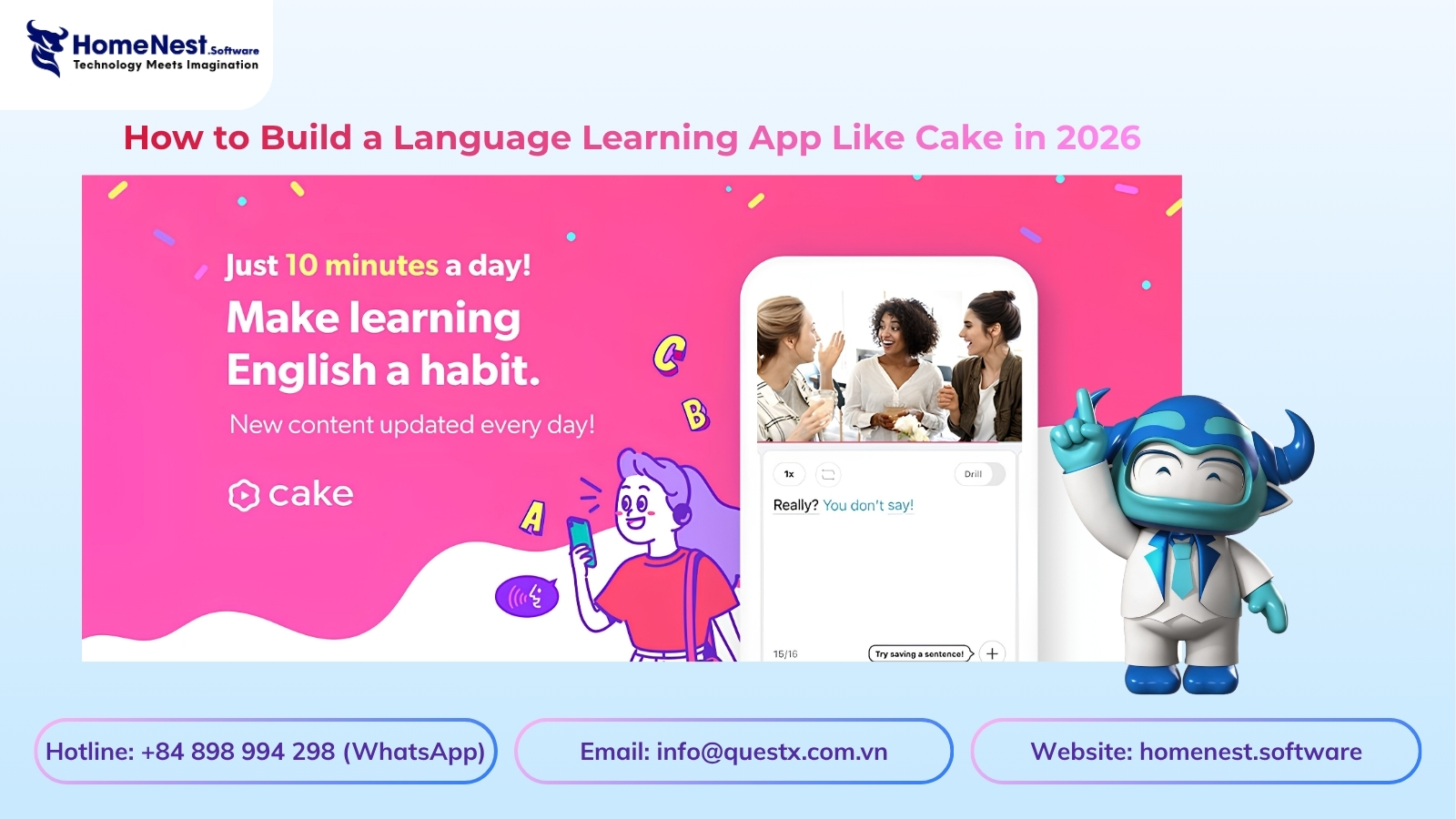
The digital language learning market is expanding rapidly. Valued at 3,147 million dollars in 2021, it is projected to reach 7,820 million dollars by 2027 with a 16.38 percent compound annual growth rate. This remarkable growth presents a highly lucrative opportunity for businesses investing in educational mobile applications.
In this article, HomeNest Software will introduce you to Cake a globally popular language-learning app. Let’s explore it together!
What is Cake?
Cake is a prime example of this success. Developed by South Korea’s Cake Corp, this popular application helps millions master English and Korean. Instead of traditional lessons, Cake uses short video clips from trending television shows and movies, real-life conversational scenarios, and artificial intelligence for pronunciation feedback to deliver an engaging, gamified learning experience.
If you want to build a similar platform, HomeNest Software is here to help. In this guide, HomeNest Software will outline the exact steps, core features, and technical requirements needed to build a scalable and successful language learning application.
Market Research and Conceptualization
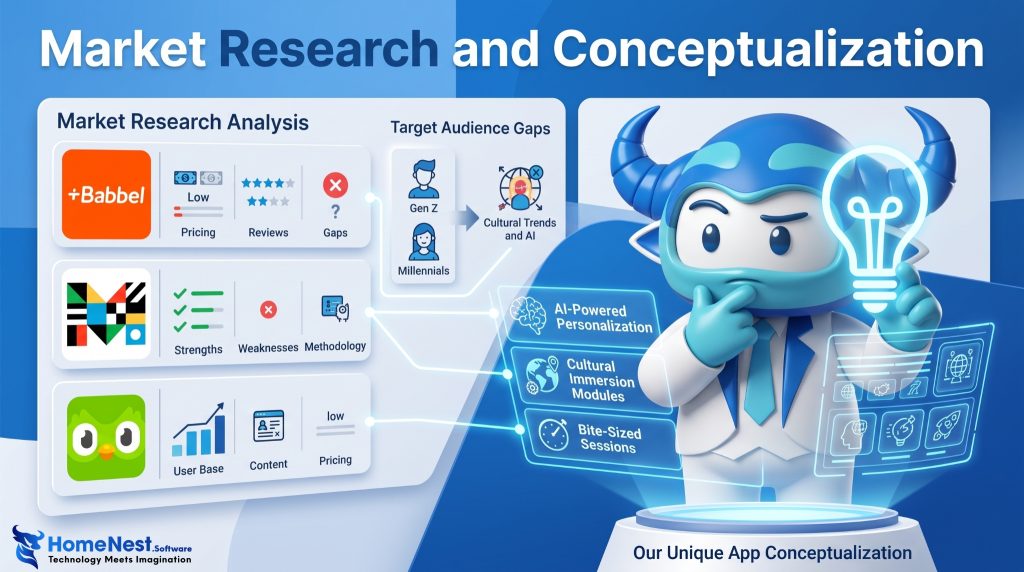
Before developing a language application, HomeNest Software recommends conducting thorough market research to define your scope and goals. Focus on these three core areas:
- Understand Your Target Audience: Identify your users’ demographics, habits, and motivations to tailor your features to their lifestyles. For instance, Cake successfully targets Gen Z and Millennials with quick, bite-sized sessions.
- Analyze Competitors: Evaluate established platforms like Duolingo, Babbel, and Mango Languages. By analyzing their user reviews, pricing, and weaknesses, you can identify valuable market gaps and build superior solutions.
- Define Your Unique Value Proposition: Stand out in a crowded market by giving your app a distinct identity. Whether through an innovative teaching methodology or a focus on popular cultural trends, a sharp UVP makes your app memorable and highly appealing.
Explore more: “Best Education App Development Companies in the USA”
Defining Core and Advanced Features
Choosing the right features dictates your application’s functionality and directly impacts your overall development cost. HomeNest Software recommends balancing essential elements with sophisticated upgrades to manage your budget while delivering a competitive product.
Essential Features for a Minimum Viable Product
Essential features for a minimum viable product
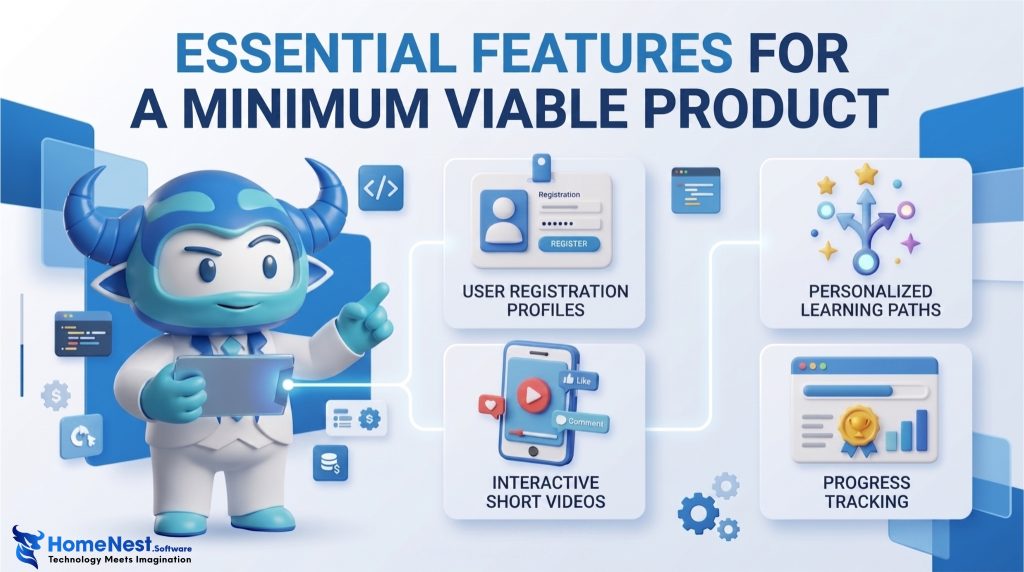
A Minimum Viable Product allows you to launch quickly and test the market. HomeNest Software identifies the following core features as mandatory for an initial release:
- User Registration and Profiles: Provide secure login methods and personalized dashboards that enable users to manage their accounts easily.
- Personalized Learning Paths: Integrate assessment systems that evaluate initial proficiency and automatically adjust course difficulty to match the user’s level.
- Interactive Short Videos: Deliver authentic, bite-sized media content. This serves as the core mechanism for modern language learning.
- Progress Tracking: Offer clear visual indicators of daily streaks and learning milestones to keep users aware of their development.
Advanced Features and 2026 Updates
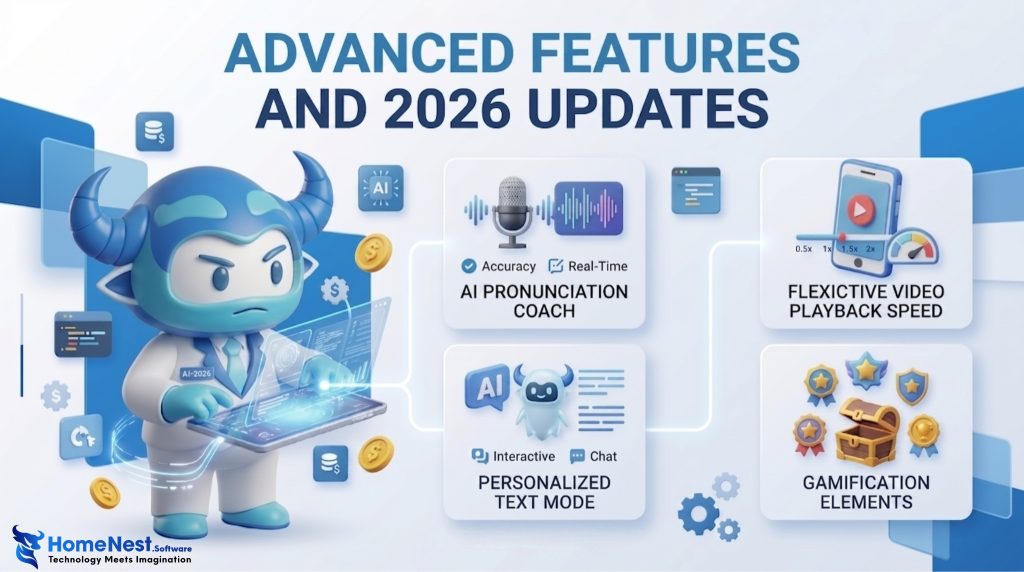
Advanced Features and 2026 Updates
To stand out in the current landscape, your application should incorporate advanced tools that match modern user expectations. HomeNest Software suggests including these highly effective capabilities:
- AI Pronunciation Coach: Utilize real-time voice analysis to evaluate user speech and correct accents instantly.
- AI Tutor Text Mode: Offer a text-based conversational interface. This feature gives users the flexibility to practice conversations by typing when speaking aloud is not convenient.
- Flexible Video Playback Speed: Give learners full control over audio and video playback speeds. This control greatly improves listening comprehension for difficult phrases.
- Gamification Elements: Incorporate reward systems, badges, and social learning communities to drive daily user engagement and foster peer support.
UI and UX Design Strategy
A well-designed interface is essential for user retention. HomeNest Software applies modern design principles to ensure your application is visually appealing and highly effective.
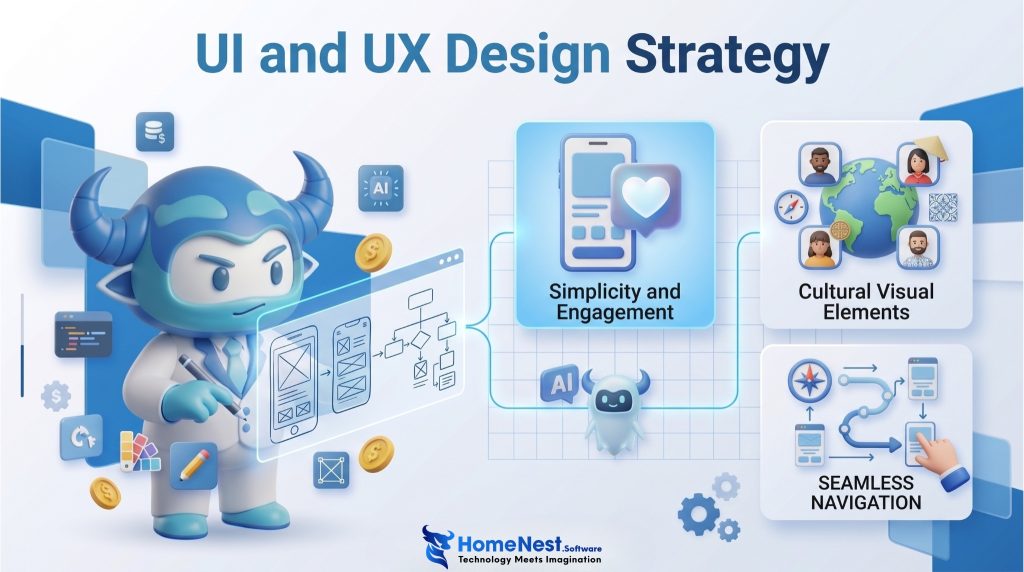
UI and UX Design Strategy
Simplicity and Engagement
HomeNest Software prioritizes clean and intuitive interfaces. We utilize generous white space and clear typography to reduce cognitive load and prevent user fatigue during study sessions. Every visual element serves a specific learning function to keep learners focused entirely on absorbing new vocabulary.
Cultural Visual Elements
Incorporating design elements that reflect the target language culture creates a more immersive experience. For example, adding visual cues inspired by South Korean pop culture or traditional Hangul aesthetics builds emotional connections and makes daily learning highly engaging.
Seamless Navigation
A logical structure is critical for consistent practice. HomeNest Software meticulously maps the user journey to ensure a frictionless flow from the main dashboard to specific video lessons and review quizzes. Implementing intuitive menus and clear progress indicators guides users effortlessly through their personalized curriculum.
Selecting the Right Technology Stack
Selecting a robust technology stack is vital to ensure application stability, security, and scalability. HomeNest Software recommends the following industry-proven technologies to build a high-performing language learning platform.
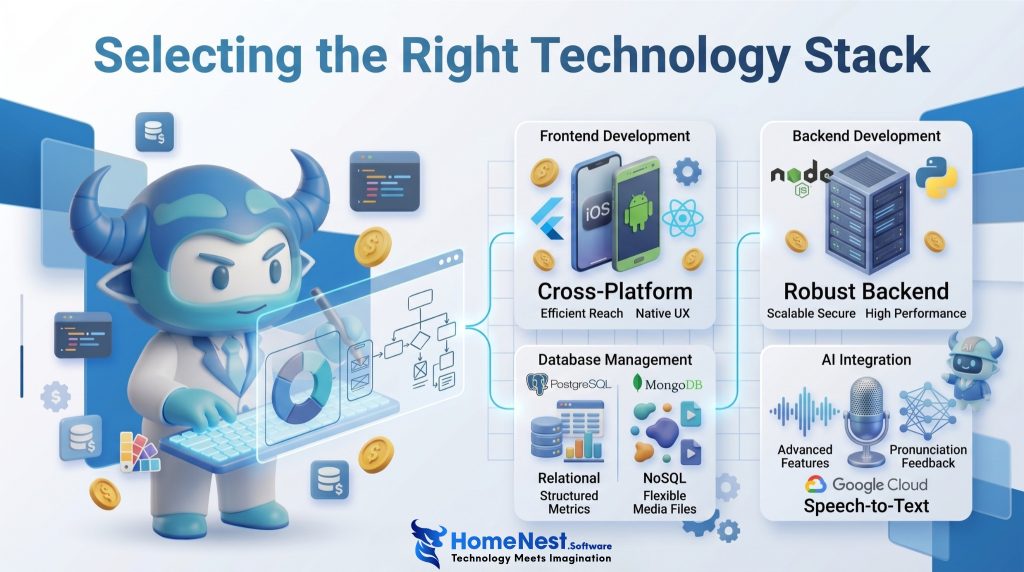
Selecting the Right Technology Stack
Frontend Development
To reach both iOS and Android users efficiently, we recommend cross-platform frameworks such as Flutter or React Native. These frameworks allow developers to deploy a single codebase across multiple platforms, which significantly reduces your overall development timeline and maintenance costs while maintaining a native user experience.
Backend Development
A reliable server-side environment is necessary to handle complex data and simultaneous user requests securely. HomeNest Software suggests using robust development environments like Node.js or Python. These technologies offer high performance, handle asynchronous operations efficiently, and scale easily as your user base grows.
Database Management
Secure and scalable data storage is critical for tracking user progress and managing multimedia content. We recommend using relational databases like PostgreSQL for structured data and user metrics. Alternatively, non-relational solutions like MongoDB are ideal for handling flexible data structures and media files.
Artificial Intelligence Integration
To power advanced features like pronunciation assessment and interactive chatbot functionalities, you must integrate specialized application programming interfaces. HomeNest Software utilizes cutting-edge solutions, including Google Cloud Speech-to-Text, to process user audio, deliver real-time voice feedback, and facilitate smooth conversational practice.
The Development and Testing Process
A rigorous development phase transforms a great concept into a robust, market-ready product. HomeNest Software emphasizes testing and ongoing maintenance to ensure long-term success.
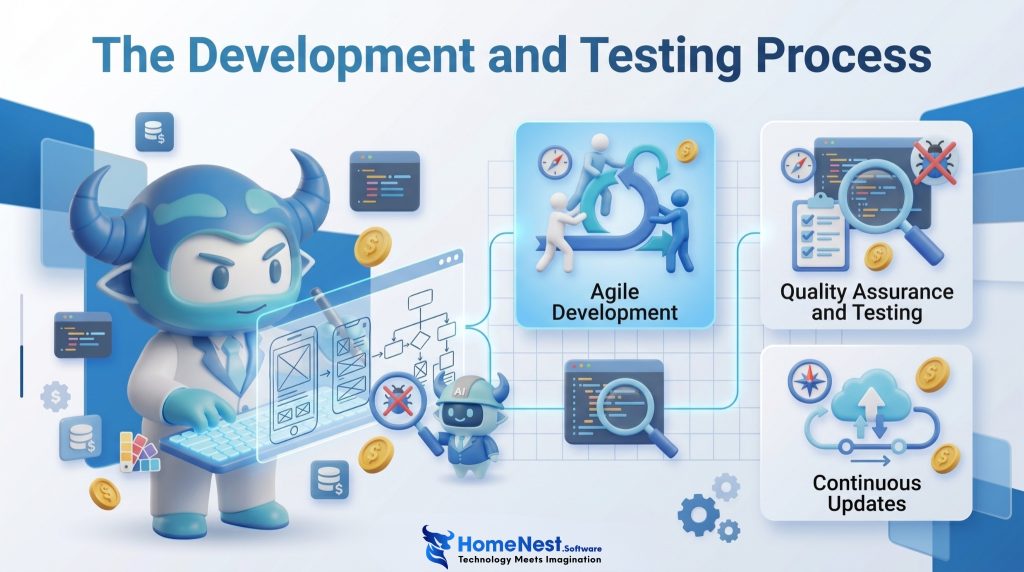
The Development and Testing Process
Agile Development
We recommend dividing the project into smaller sprints using an agile framework. This methodology allows development teams to build, test, and review individual features in short cycles. This ensures continuous improvement and fast adaptation to user feedback.
Quality Assurance and Testing
A flawless user experience is mandatory for modern digital learners. HomeNest Software strictly tests every application for hidden bugs, performance issues, and video loading speeds. Releasing an application with technical glitches severely harms user retention. Our dedicated testing ensures that all multimedia components load seamlessly across different mobile devices.
Continuous Updates
Launching the application is merely the first step. Ongoing maintenance is crucial for user satisfaction and retention. Regular bug fixes and content updates are necessary to maintain application stability. Committing to a consistent update schedule keeps your platform reliable, secure, and competitive in the educational market.
Estimated Costs and Development Timeline
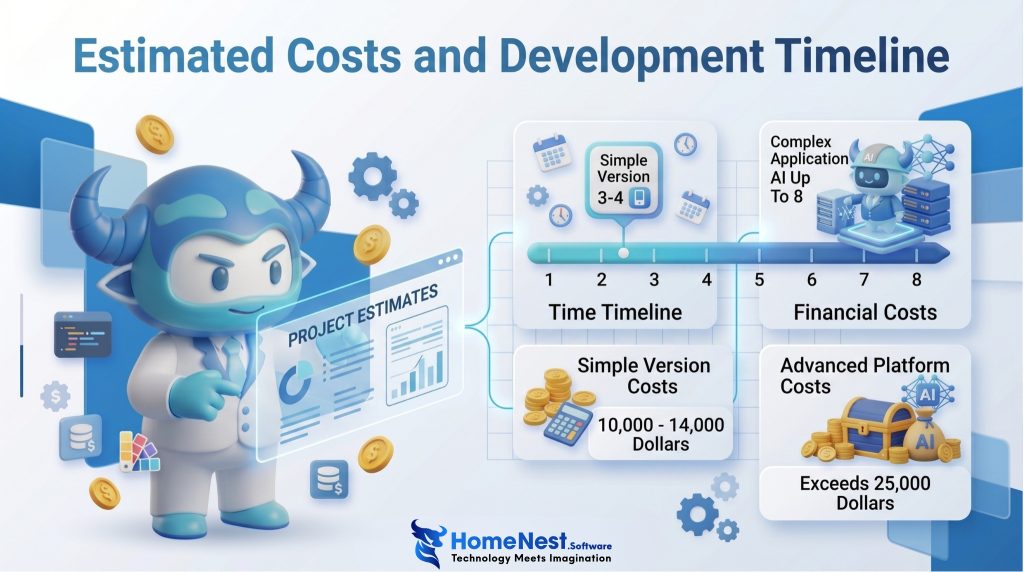
Estimated Costs and Development Timeline
Planning your budget and project schedule is essential for a smooth launch. HomeNest Software provides a realistic overview of the time and financial investment required to build your language learning application.
- Time Investment: Development timelines depend on product complexity. A basic version takes three to four months to complete. A complex application with advanced artificial intelligence features can take up to eight months.
- Financial Investment: Costs vary based on selected features. A simple application ranges from 10,000 to 14,000 dollars. An advanced platform with artificial intelligence can exceed 25,000 dollars.
Conclusion
The digital language education sector holds immense potential for rapid business growth. Capturing this expanding market requires a highly strategic development process, moving carefully from initial market research to rigorous testing and maintenance.
Are you ready to turn your educational app idea into reality? At HomeNest Software, our team of expert developers is ready to build a scalable, AI-powered language learning platform tailored to your business goals. Contact HomeNest Software today for a detailed consultation.
Contact Information:
- Head Office: SAV5 Tower – The Sun Avenue, 28 Mai Chi Tho Street, Binh Trung Ward, Ho Chi Minh City
- Branch: SAV4 Tower – The Sun Avenue, 28 Mai Chi Tho Street, Binh Trung Ward, Ho Chi Minh City
- Hotline: +84 898 994 298 ( WhatsApp )
Frequently Asked Questions About Building an App Like Cake
How much does it cost to build a language learning app like Cake?
Costs depend on your chosen features. A simple application ranges from 10,000 to 14,000 dollars. An advanced platform utilizing artificial intelligence can exceed 25,000 dollars. HomeNest Software helps you balance these features to match your budget perfectly.
How long does the development process take?
Timelines depend on product complexity. A basic version takes three to four months to complete. A complex application with advanced artificial intelligence features can take up to eight months.
Why does HomeNest Software recommend cross-platform development?
Frameworks like Flutter or React Native allow developers to deploy a single codebase for iOS and Android. This strategy significantly reduces your development timeline and maintenance costs while delivering a native user experience.
What features are mandatory for a Minimum Viable Product?
HomeNest Software identifies four core features for a quick market launch:
- User Registration and Profiles for secure account management.
- Personalized Learning Paths to automatically adjust course difficulty.
- Interactive Short Videos to deliver engaging educational content.
- Progress Tracking to show daily learning streaks.
What advanced artificial intelligence features should I include to stand out?
We suggest integrating an AI Pronunciation Coach to correct user accents instantly using real-time voice analysis. Additionally, an AI Tutor Text Mode allows users to practice conversations by typing when speaking aloud is not possible.
Latest Articles
View All
Essential Tips To Develop A Music Streaming App
Discover expert tips to develop a successful music streaming app with HomeNest Software. This guide covers essential features, legal licensing, and scalable technology stacks. Learn how to build a robust, cross-platform application with AI personalization to stand out in the 2026 competitive audio market.
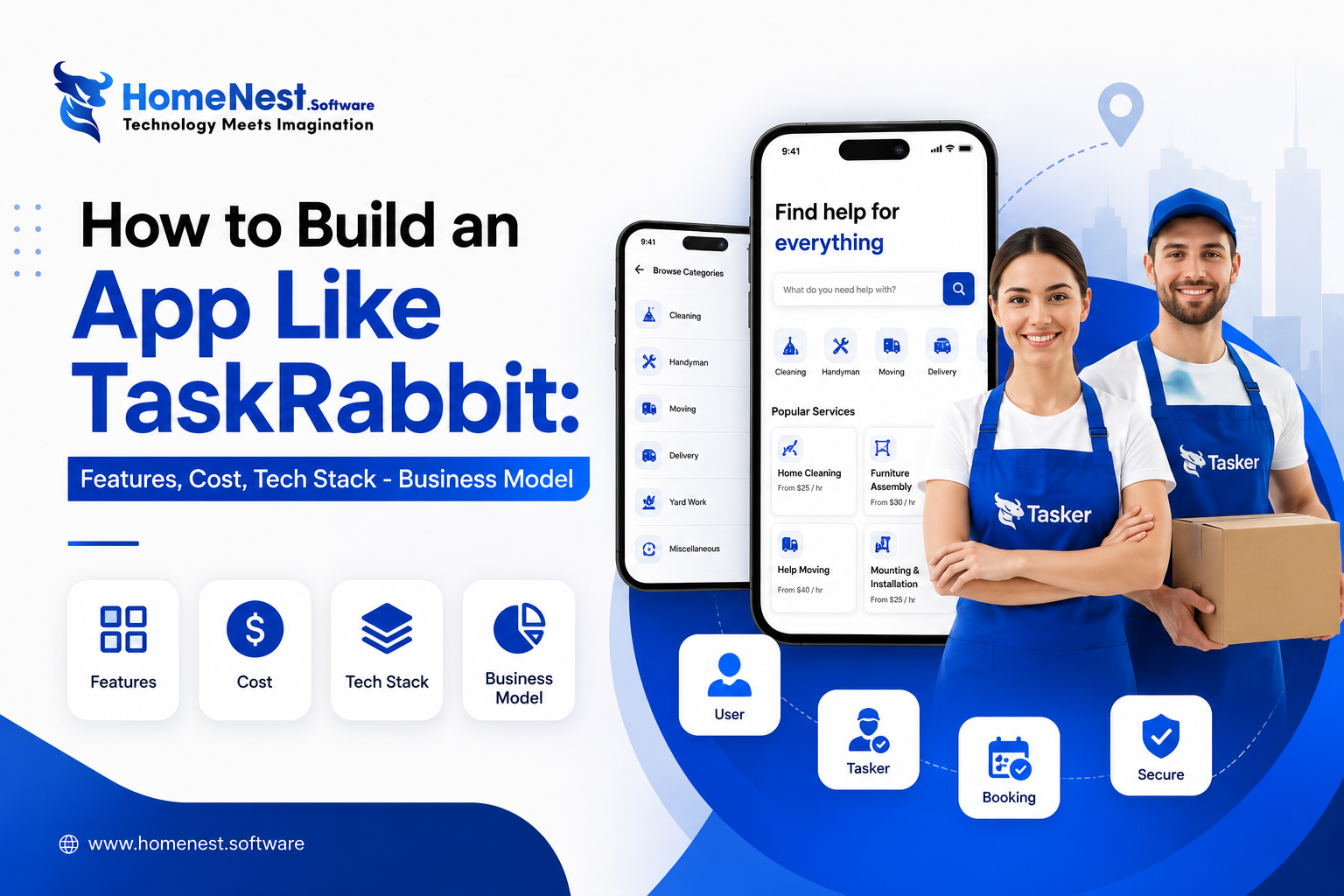
How to Build an App Like TaskRabbit: Features, Cost, Tech Stack – Business Model
Building an app like TaskRabbit is more than replicating existing features—it’s about creating a trusted marketplace that seamlessly connects customers with skilled service providers. By combining an intuitive user experience, secure payment systems, scalable architecture, and the right business model, you can launch a competitive on-demand platform. Partnering with an experienced app development company like HomeNest Software ensures your product is built with the technology, flexibility, and long-term scalability needed to succeed in the rapidly growing gig economy.
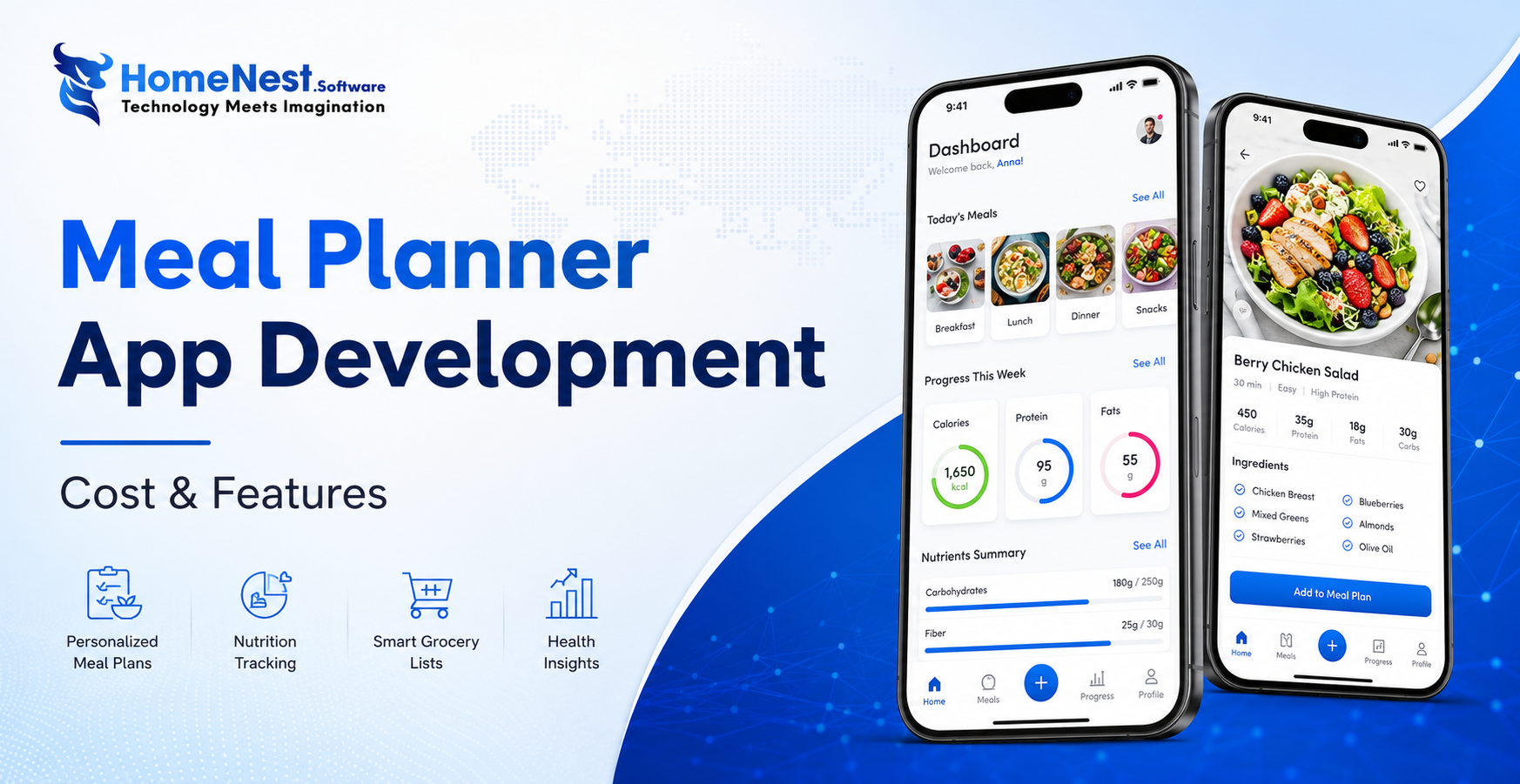
How to Build a Meal Planning App: A Complete Step-by-Step Guide
Building a successful meal planning app goes beyond creating an attractive interface it requires a clear business strategy, personalized user experiences, and scalable technology. By combining essential features like AI-powered meal recommendations, nutrition tracking, grocery list automation, and wearable integration, businesses can deliver lasting value to users while capitalizing on the growing digital health market. Partnering with an experienced mobile app development company ensures your solution is secure, future-ready, and designed to succeed in an increasingly competitive health-tech industry.

How Much Does It Cost to Build a Shopping App Like Temu?
Temu’s meteoric rise to over 900 million global downloads proves the power of combining AI, gamification, and social commerce, but building a similar viral shopping platform requires careful financial and technical planning. Developing an app like Temu typically costs anywhere from $40,000 for a basic Minimum Viable Product (MVP) to over $300,000 for a fully-featured platform. This guide breaks down every cost category, analyzes the core features driving Temu’s success, highlights the best technology stacks, and offers practical strategies to optimize your development budget without compromising on quality.

Criteria For Choosing The Right App Design Agency
UI/UX design is the logical foundation of a system, not merely a visual element. Choosing the wrong partner will directly lead to technical debt, budget overruns, and disruptions in the development process. This article provides a 6-step evaluation framework and a list of operational risks, helping businesses eliminate subjective design advice and accurately assess agency capabilities based on developer handoff standards and practical business performance.
How Does AI in Banking Industry Impact the Future?
Artificial intelligence (AI) has transitioned from a supplementary tool to a core infrastructure of financial data management, optimizing profitability through real-time fraud detection, natural language processing (NLP), and high-speed credit scoring models. “Deploying AI in the financial sector requires more than just algorithmic accuracy, it demands a highly secure cloud architecture and rigorous data governance,” commented Nguyen Tien, co-founder of HomeNest Software. Why read this guide? We skip the theoretical jargon to focus entirely on technical implementation. Whether you’re evaluating a vendor or planning a system overhaul, this article will detail: Operational Efficiency: Automating unstructured data workflows at scale. Risk Architecture: Implementing real-time threat detection and AML compliance. Data ownership: The essential need for 100% ownership of the source code to ensure full algorithm auditability.