
Essential Tips To Develop A Music Streaming App
Discover expert tips to develop a successful music streaming app with HomeNest Software. This guide covers essential features, legal licensing, and scalable technology stacks. Learn how to build a robust, cross-platform application with AI personalization to stand out in the 2026 competitive audio market.
Scope of Work
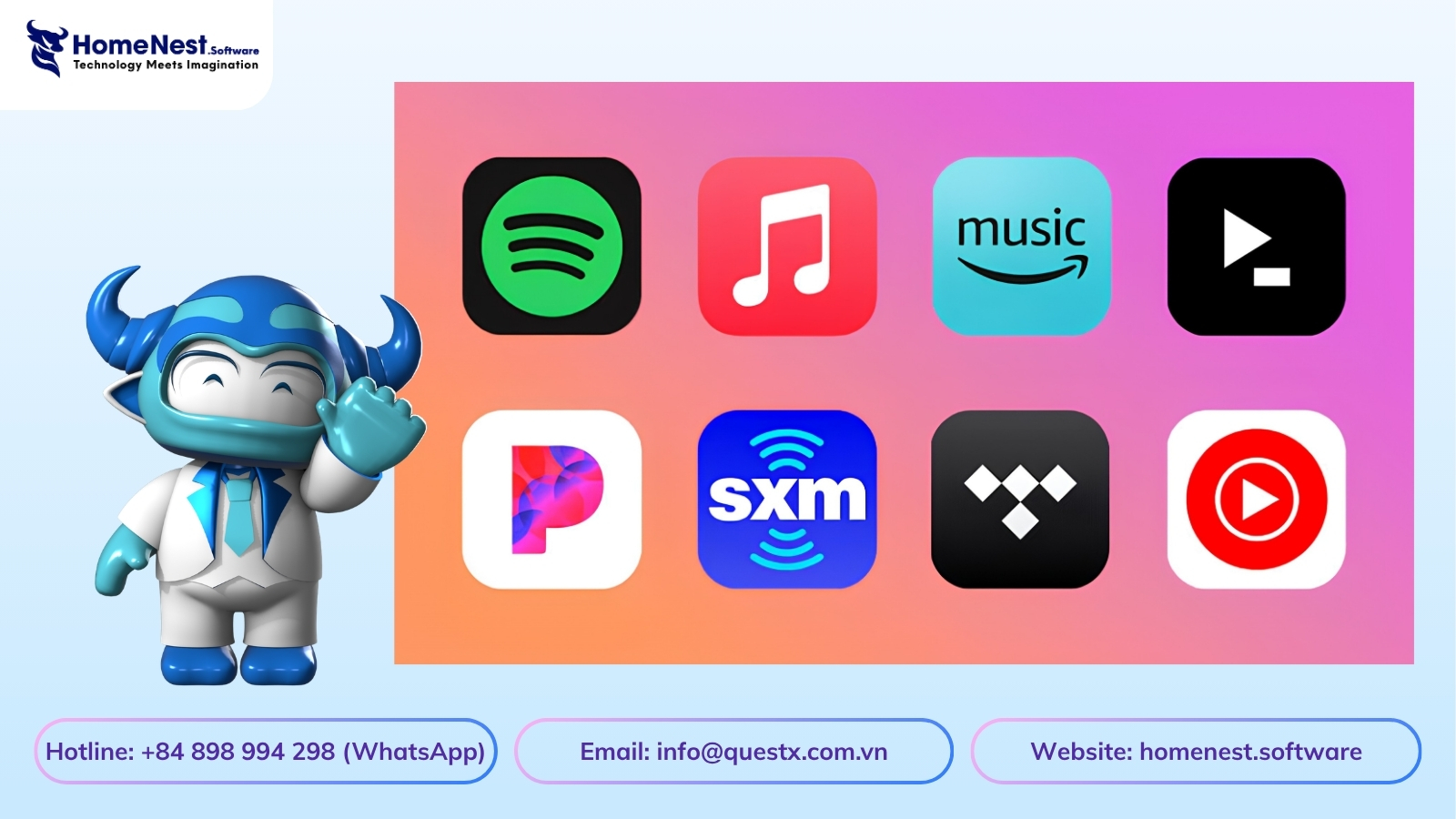
The era of physical downloads is over. Today, cloud-based streaming platforms dominate the market, with users demanding high-quality audio and seamless, personalized listening experiences across all their devices. Meeting these high expectations requires a robust and scalable technical foundation.
As your experienced technology partner, HomeNest Software is here to simplify this complex process for you. In this article, we will share actionable tips to develop a music streaming app that operates flawlessly under heavy traffic and stands out in a competitive landscape.
Understanding the Current Audio Streaming Market
Before building your application, it is crucial to understand the market’s immense potential. In 2026, the global music streaming market is projected to reach $42.84 billion, driven by over 837 million paid subscribers worldwide. This data proves that developing a streaming app remains a highly profitable investment.
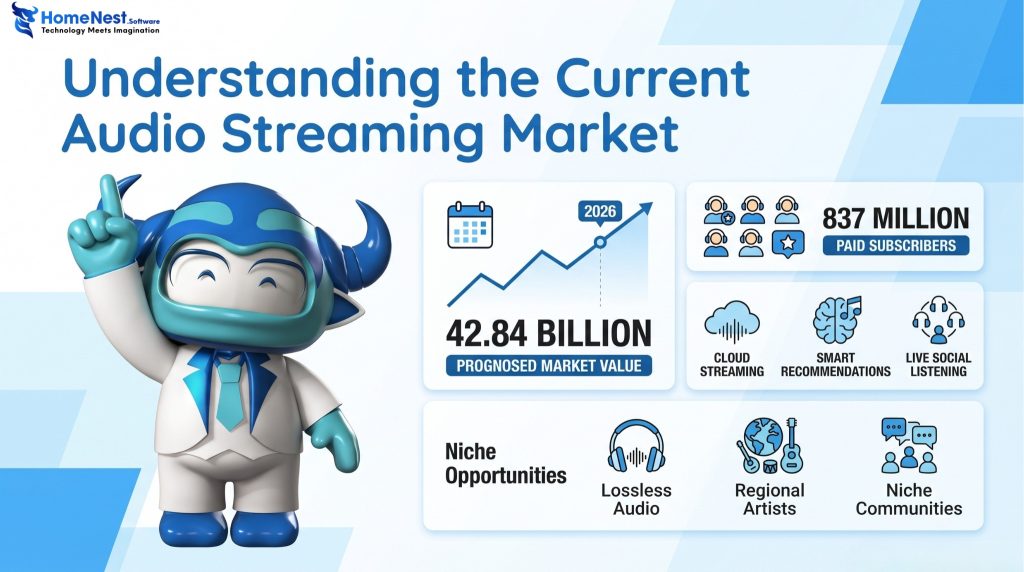
Consumer behavior has permanently shifted from downloading audio files to continuous cloud streaming. Powered by modern high-speed networks, today’s users demand instant access to massive music catalogs, smart algorithmic recommendations, and seamless playback without taking up local device storage.
While giants like Spotify and Apple Music dominate the general market, HomeNest Software knows there is still ample room for innovation. By targeting specific niches—such as lossless audio formats, regional independent artists, or live social listening rooms—your platform can successfully capture a highly dedicated and loyal audience.
Core Tips To Develop A Music Streaming App Successfully
Core Tips To Develop A Music Streaming App Successfully
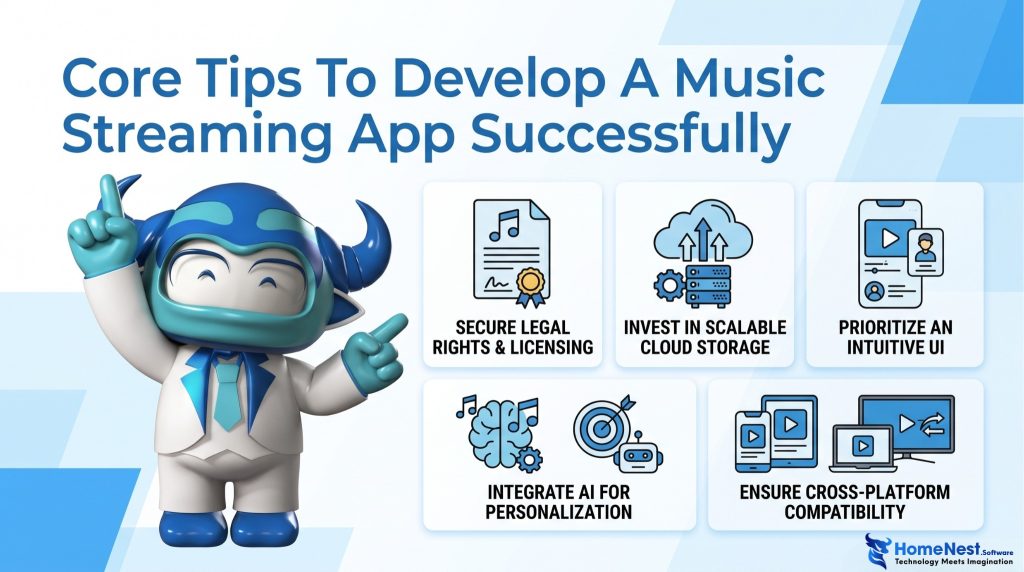
- Secure Legal Rights and Licensing: Obtaining Public Performance Rights is mandatory. Skipping this critical step guarantees severe legal penalties and immediate platform shutdowns.
- Invest in Scalable Cloud Storage: A robust backend infrastructure is vital. Utilizing scalable cloud storage prevents buffering lag and ensures smooth audio playback across all network conditions.
- Prioritize an Intuitive User Interface: A clean, easily navigable design keeps listeners engaged, simplifies music discovery, and drastically reduces app abandonment rates.
- Integrate Artificial Intelligence for Personalization: Deploy machine learning to analyze individual listening habits. This enables your platform to deliver highly accurate song recommendations and auto-generate custom playlists.
- Ensure Cross-Platform Compatibility: At HomeNest Software, we strongly advise building for both iOS and Android. This maximizes your audience reach from launch day and delivers a consistent, high-quality experience across all devices.
Explore more: “Property Management Software Development Guide: Key Features, Costs, and Strategy”
Must-Have Features to Engage Your Listeners
Must-Have Features to Engage Your Listeners
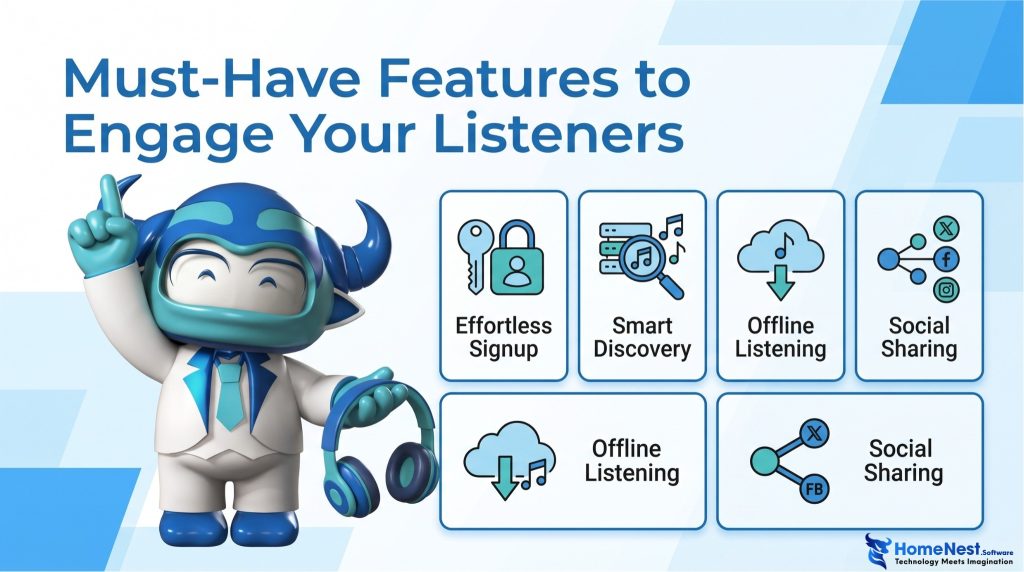
- Effortless Registration and Authentication: Provide instant access. Quick login options via email, phone numbers, or social media accounts eliminate friction and speed up the user onboarding process.
- Advanced Search and Discovery Tools: A powerful search engine is essential. Listeners must be able to filter and find music instantly by artist, album, genre, or mood.
- Offline Listening Mode: Ensure uninterrupted playback. Allowing users to download tracks guarantees a premium listening experience even when internet connectivity drops.
- Social Media Sharing Capabilities: At HomeNest Software, we emphasize social integration. Letting users share their favorite tracks across platforms drives high engagement and serves as highly effective, free organic marketing for your application.
Explore more: “Ride-Sharing App Development: A Complete End-to-End Guide”
Selecting the Right Technology Stack
At HomeNest Software, we know that a brilliant idea is only as strong as its technical foundation. Choosing the right technology stack ensures your application runs quickly, securely, and seamlessly for every listener.
Front-End Frameworks for a Flawless Experience
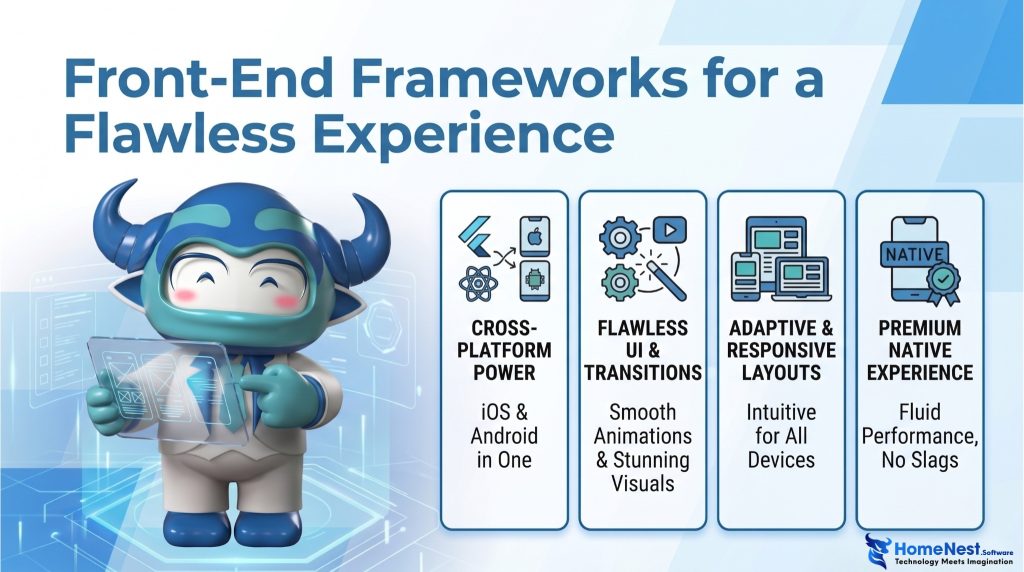
To create visually stunning interfaces with smooth animations and instant screen transitions, we recommend utilizing robust front-end frameworks like Flutter or React Native. These modern tools allow our development team to build a highly responsive, intuitive layout that delivers a premium, native feel across both iOS and Android devices—ensuring the user experience never feels sluggish.
Back-End Power and Reliable Databases
A successful music streaming app must instantly process massive audio file directories and serve high volumes of concurrent users without crashing. To achieve this, we utilize powerful back-end languages like Node.js or Python, which are designed to handle heavy, real-time data traffic effortlessly.
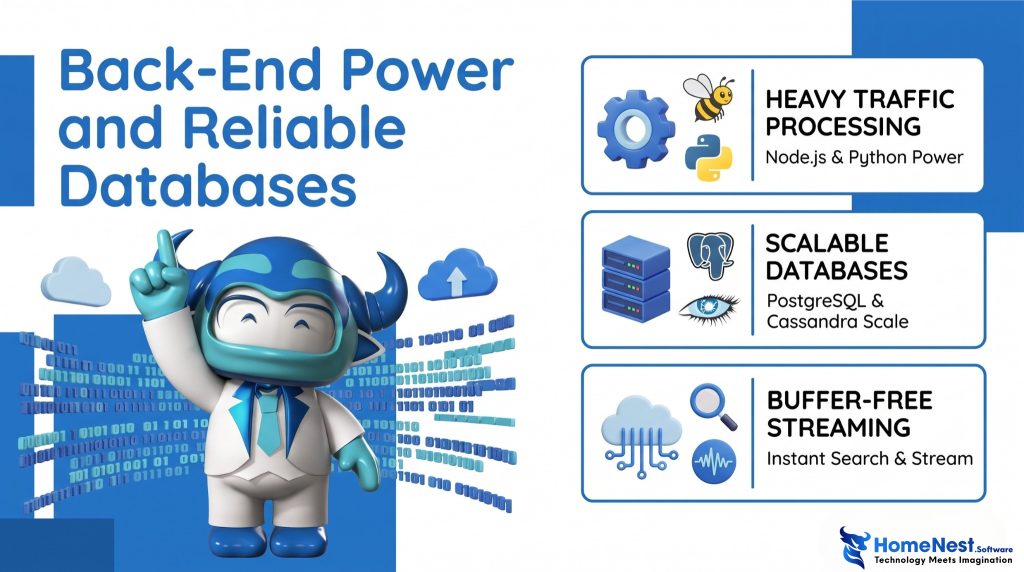
Furthermore, pairing this back-end with highly scalable databases—such as PostgreSQL or Cassandra—and utilizing edge computing cloud networks ensures your vast music catalog remains perfectly organized, instantly searchable, and ready to stream without buffering delays.
Explore more: “Top 6 Programming Languages for Custom Software Development“
How HomeNest Software Can Bring Your Vision to Life
HomeNest Software brings proven expertise in crafting custom digital solutions and highly scalable mobile platforms. Our dedicated team of developers, designers, and project managers completely understands the specific technical and market demands of the audio streaming industry.
We are ready to build a high-performance application tailored directly to your business goals. Reach out to HomeNest Software today for a consultation to discuss your specific project requirements and start developing your successful music streaming app.
Conclusion
Developing a successful music streaming application requires a strategic and well-planned approach. Throughout this guide, we have explored the massive market potential, the absolute necessity of securing proper audio licenses, and the importance of integrating essential features like seamless offline listening and advanced personalization.
The audio streaming industry is undeniably competitive. However, by strictly focusing on legal compliance, delivering an exceptional user experience, and building upon a robust technology stack, you establish a clear pathway to long-term success.
Are you ready to build a platform that listeners will truly love? Contact HomeNest Software today, and let us start your development journey together.
- Head Office: SAV5 Tower – The Sun Avenue, 28 Mai Chi Tho Street, Binh Trung Ward, Ho Chi Minh City
- Branch: SAV4 Tower – The Sun Avenue, 28 Mai Chi Tho Street, Binh Trung Ward, Ho Chi Minh City
- Hotline: +84 898 994 298 ( WhatsApp )
Frequently Asked Questions About Developing a Music Streaming App
What is the most critical legal step when building a music streaming app?
Securing Public Performance Rights is the mandatory first step. Distributing copyrighted music without proper licensing guarantees severe financial penalties and the immediate shutdown of your platform.
How can a new application compete with industry giants?
The most effective strategy is to target specific market niches. Your platform can offer unique value propositions, such as lossless high-quality audio formats, exclusive support for regional independent artists, or live social listening rooms to build a highly dedicated and loyal user community.
What technology prevents the app from lagging under heavy user traffic?
To smoothly handle massive traffic, the application requires a robust backend infrastructure and highly scalable cloud storage. At HomeNest Software, we utilize powerful backend languages like Node.js or Python, paired with high-speed databases like PostgreSQL, to ensure seamless audio streaming across all network conditions.
Should the app be developed for iOS or Android?
We strongly recommend cross-platform development to maximize your audience reach from launch day. Utilizing modern front-end frameworks like Flutter or React Native ensures your application delivers a smooth, consistent, and native-like experience across all devices and operating systems.
What role does Artificial Intelligence play in retaining listeners?
AI and machine learning technologies are deployed to deeply analyze individual listening habits. Based on this data, the system automatically delivers highly accurate song recommendations and auto-generates personalized playlists, which significantly enhances the user experience and increases platform retention rates.
Latest Articles
View All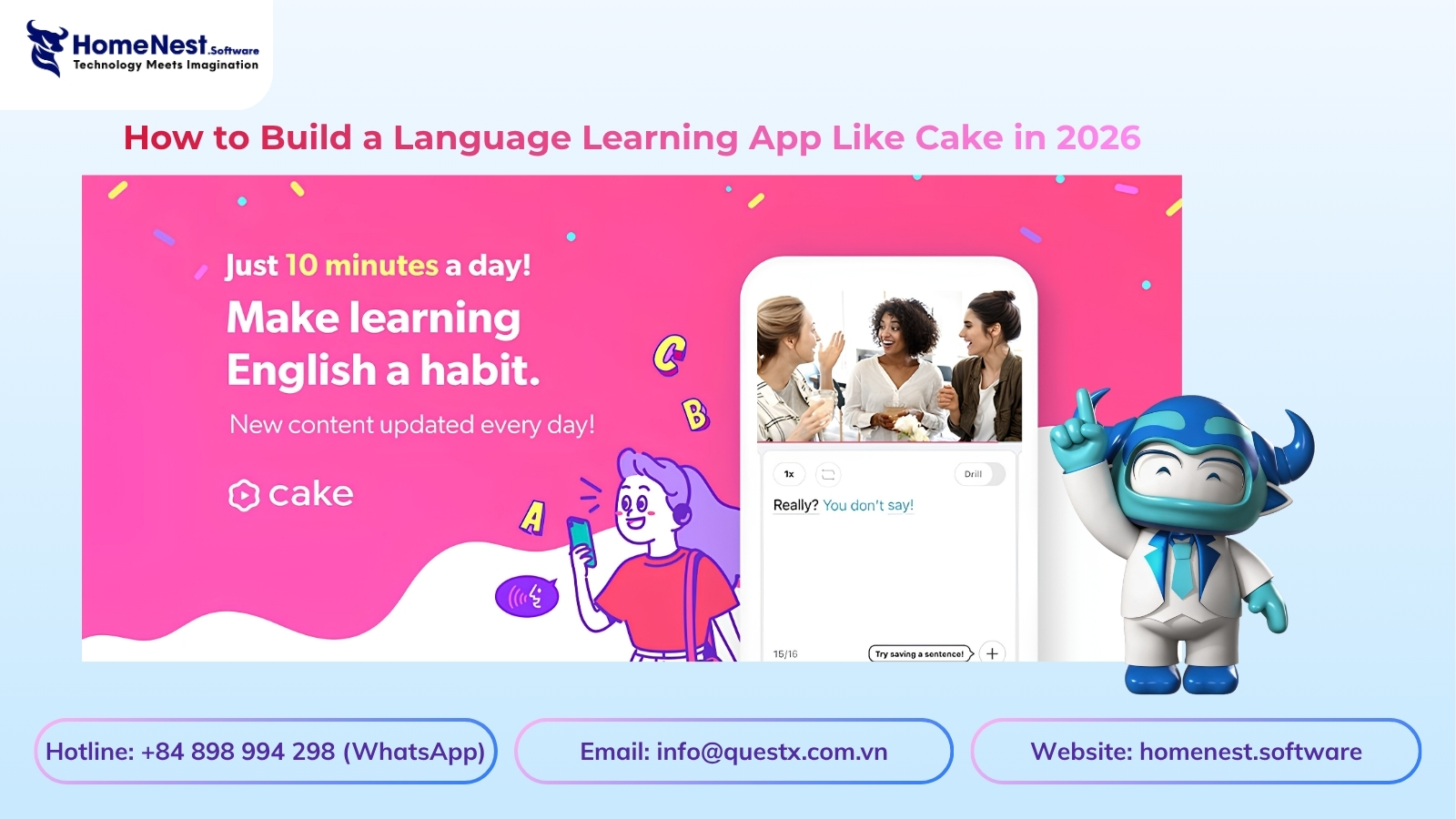
How to Build a Language Learning App Like Cake
Discover how to build a successful language learning app like Cake with this comprehensive guide from HomeNest Software. We explore market research, essential MVP features, advanced AI integrations, tech stack selection, and estimated development costs. Partner with HomeNest Software to create a scalable, gamified, and highly engaging educational platform tailored to your business goals. Start your app development journey with us today.
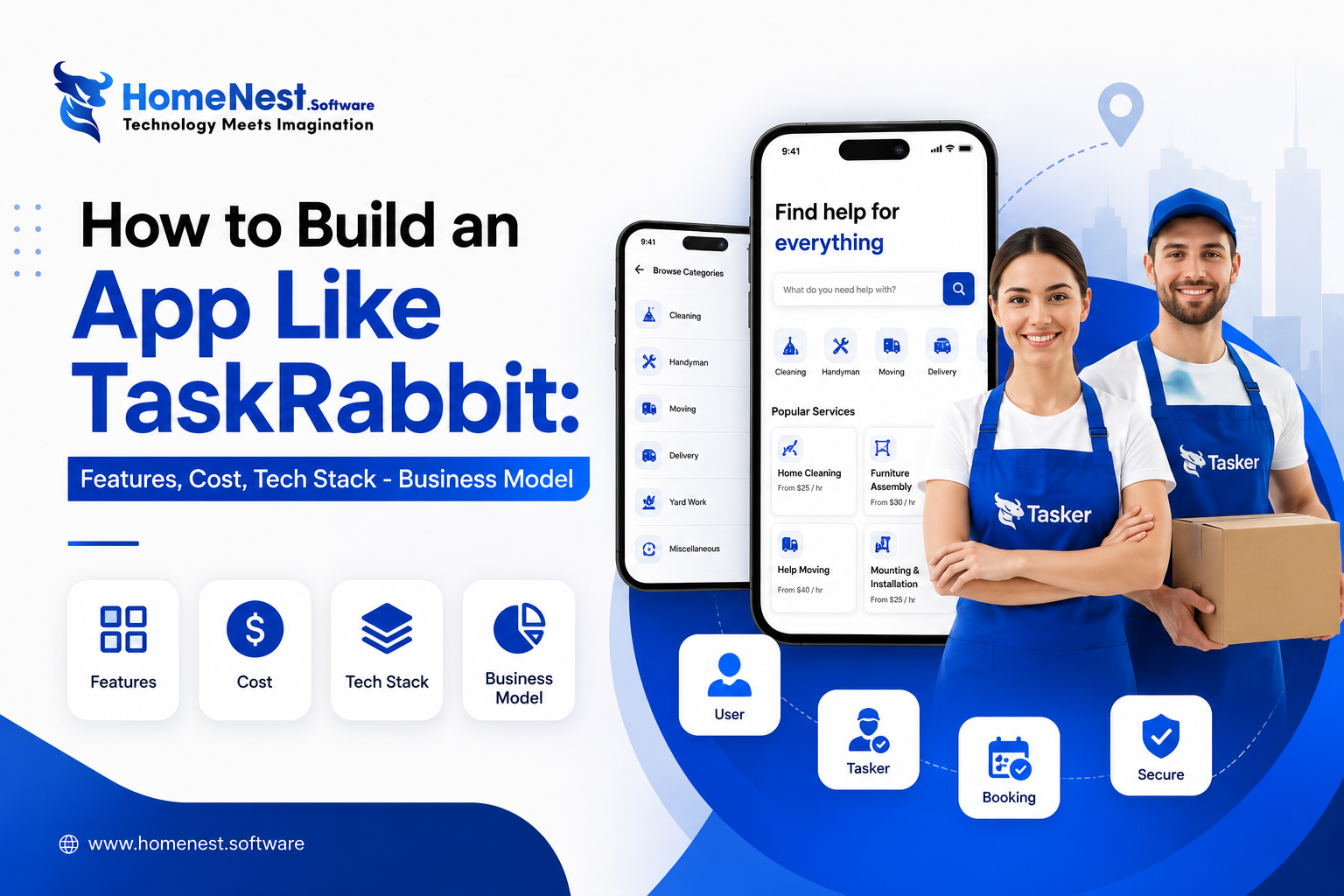
How to Build an App Like TaskRabbit: Features, Cost, Tech Stack – Business Model
Building an app like TaskRabbit is more than replicating existing features—it’s about creating a trusted marketplace that seamlessly connects customers with skilled service providers. By combining an intuitive user experience, secure payment systems, scalable architecture, and the right business model, you can launch a competitive on-demand platform. Partnering with an experienced app development company like HomeNest Software ensures your product is built with the technology, flexibility, and long-term scalability needed to succeed in the rapidly growing gig economy.
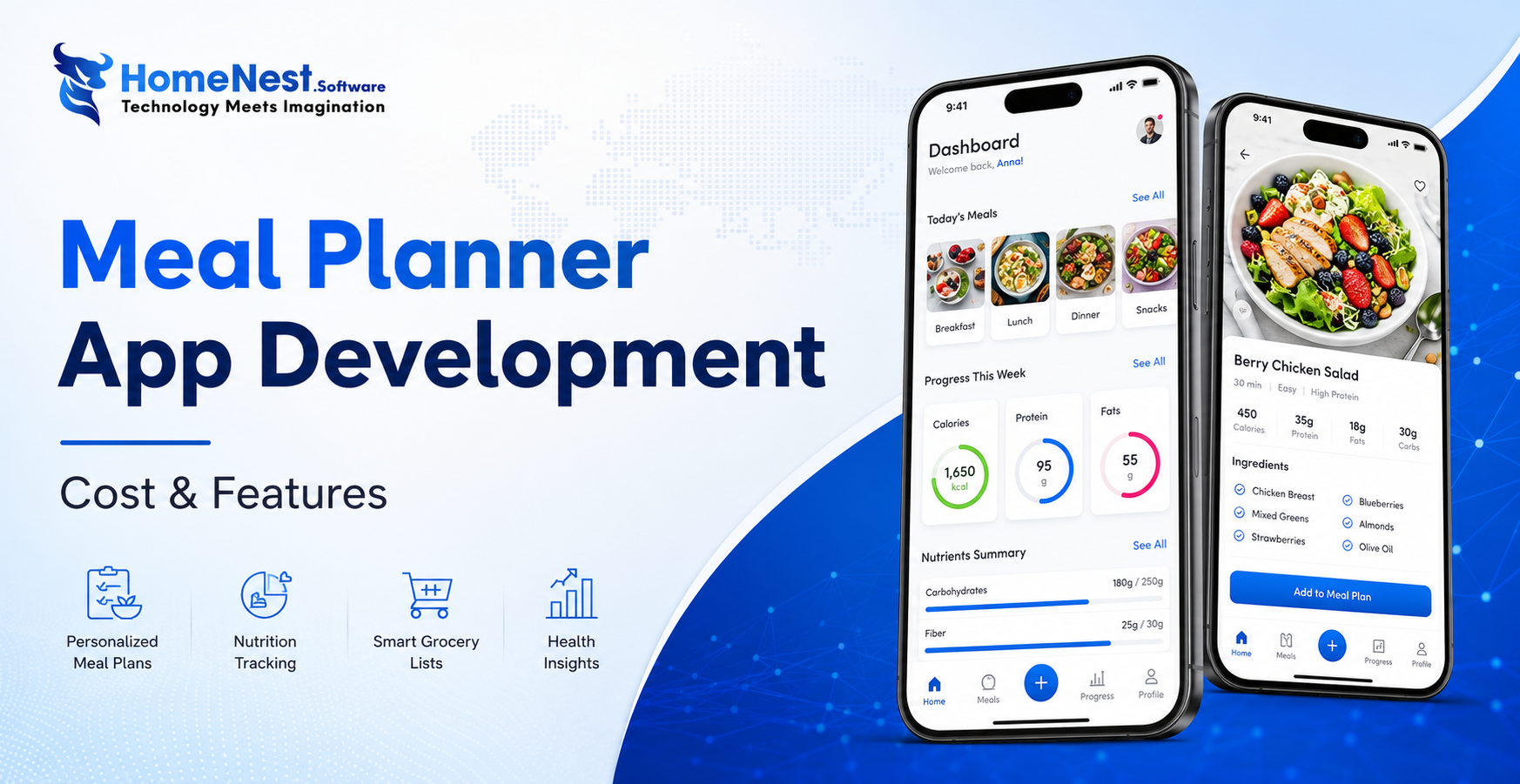
How to Build a Meal Planning App: A Complete Step-by-Step Guide
Building a successful meal planning app goes beyond creating an attractive interface it requires a clear business strategy, personalized user experiences, and scalable technology. By combining essential features like AI-powered meal recommendations, nutrition tracking, grocery list automation, and wearable integration, businesses can deliver lasting value to users while capitalizing on the growing digital health market. Partnering with an experienced mobile app development company ensures your solution is secure, future-ready, and designed to succeed in an increasingly competitive health-tech industry.

How Much Does It Cost to Build a Shopping App Like Temu?
Temu’s meteoric rise to over 900 million global downloads proves the power of combining AI, gamification, and social commerce, but building a similar viral shopping platform requires careful financial and technical planning. Developing an app like Temu typically costs anywhere from $40,000 for a basic Minimum Viable Product (MVP) to over $300,000 for a fully-featured platform. This guide breaks down every cost category, analyzes the core features driving Temu’s success, highlights the best technology stacks, and offers practical strategies to optimize your development budget without compromising on quality.

Criteria For Choosing The Right App Design Agency
UI/UX design is the logical foundation of a system, not merely a visual element. Choosing the wrong partner will directly lead to technical debt, budget overruns, and disruptions in the development process. This article provides a 6-step evaluation framework and a list of operational risks, helping businesses eliminate subjective design advice and accurately assess agency capabilities based on developer handoff standards and practical business performance.
How Does AI in Banking Industry Impact the Future?
Artificial intelligence (AI) has transitioned from a supplementary tool to a core infrastructure of financial data management, optimizing profitability through real-time fraud detection, natural language processing (NLP), and high-speed credit scoring models. “Deploying AI in the financial sector requires more than just algorithmic accuracy, it demands a highly secure cloud architecture and rigorous data governance,” commented Nguyen Tien, co-founder of HomeNest Software. Why read this guide? We skip the theoretical jargon to focus entirely on technical implementation. Whether you’re evaluating a vendor or planning a system overhaul, this article will detail: Operational Efficiency: Automating unstructured data workflows at scale. Risk Architecture: Implementing real-time threat detection and AML compliance. Data ownership: The essential need for 100% ownership of the source code to ensure full algorithm auditability.