
The True Cost of an Employee: A Complete Breakdown for Employers
This article reveals that the true cost of an employee is typically 25% to 40% higher than their base salary due to hidden expenses like taxes, benefits, workspace, and recruiting. To address this, the guide provides a detailed 7-step framework to accurately calculate total employer costs, alongside actionable strategies to optimize budgets and improve retention without reducing pay.
Scope of Work
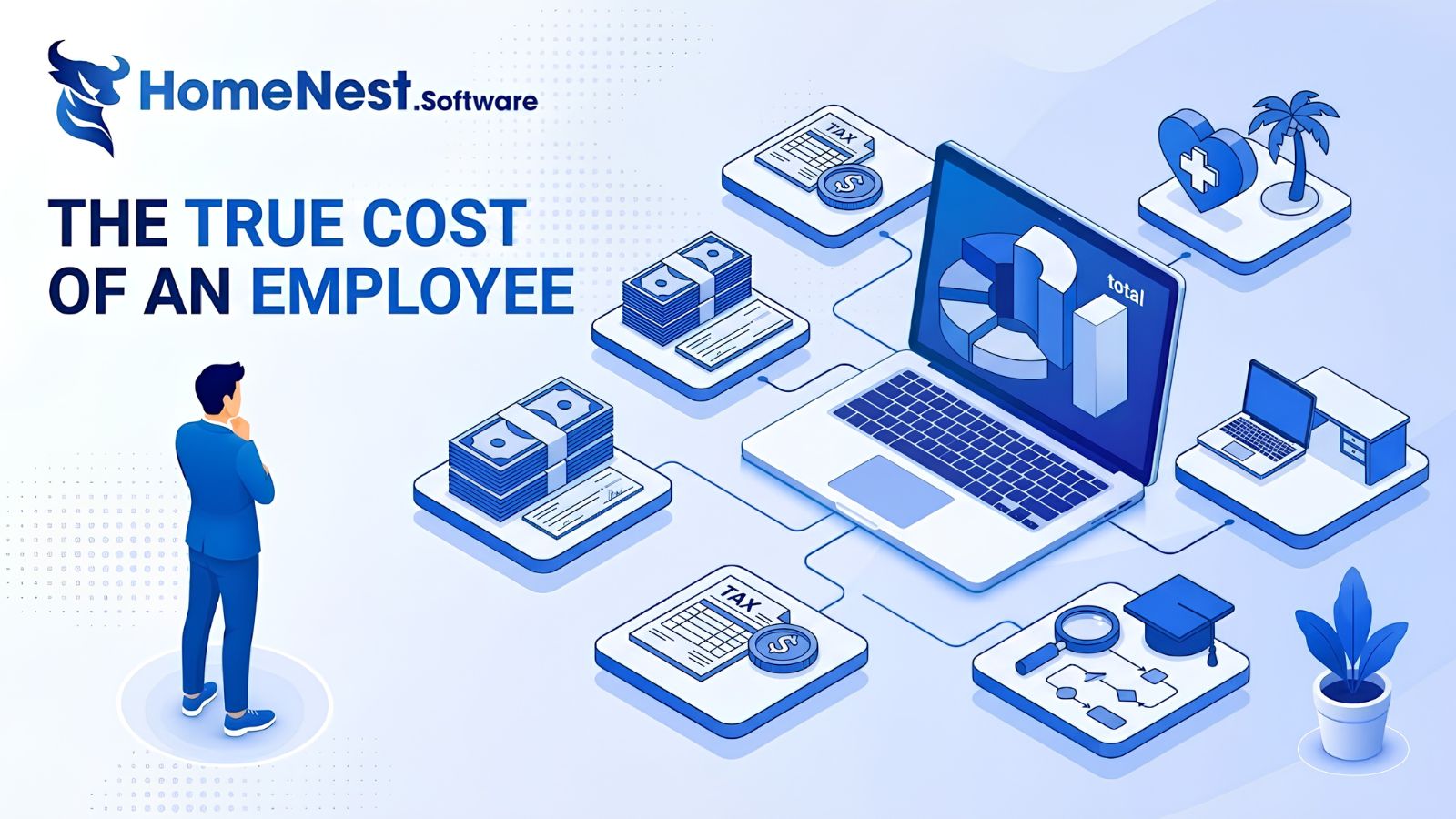
Most business owners know the salary they offer. Far fewer know the real number they pay each year once taxes, benefits, equipment, and administrative costs are included. The gap between salary and total employer cost is typically 25% to 40%, and for certain roles or locations it runs even higher.
This guide breaks down every cost category, shows you how to calculate the total for any position, and explains where companies consistently underestimate what they actually spend.
Why Salary Alone Does Not Reflect the True Cost of an Employee
When you hire someone at $60,000 per year, your actual cost to the business is rarely $60,000. Payroll taxes, health insurance, paid leave, equipment, and administrative overhead all add to the bill before the first month ends.
Research from the U.S. Bureau of Labor Statistics shows that employer-paid benefits and mandatory contributions consistently add between 30% and 40% on top of wages for full-time positions in the United States. This ratio holds across most industries and company sizes.
Understanding the full number matters when you are budgeting a new role, comparing in-house hiring to outsourcing, or deciding how many people a department can realistically support.
The Formula for Calculating Total Employee Cost
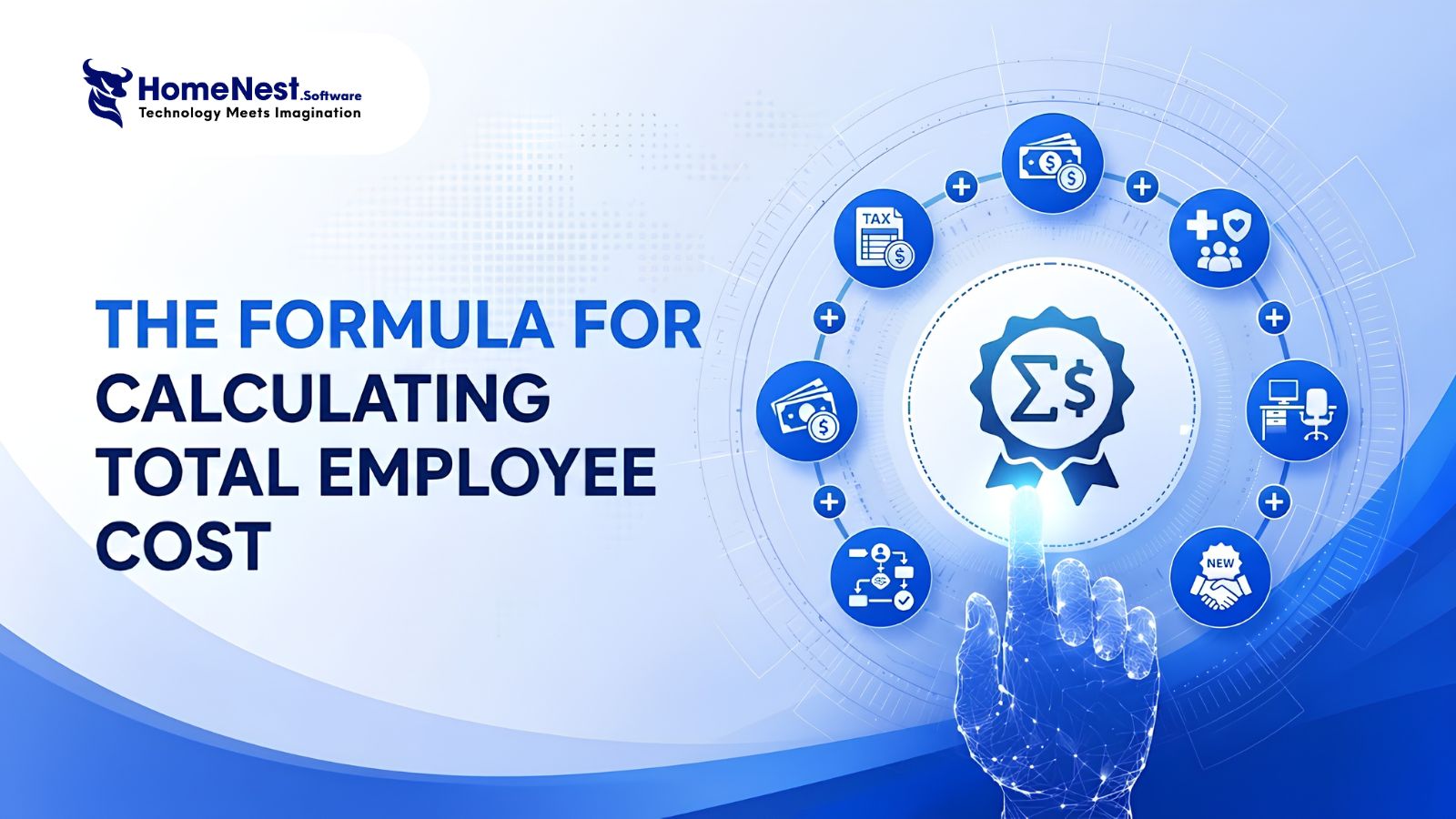
A reliable framework for estimating annual employer cost uses five components:
Total Employer Cost = Base Salary + Mandatory Tax Contributions + Employee Benefits + Equipment and Workspace + Indirect Costs
Each component carries its own variables. The sections below explain each one with specific figures so you can apply this to any position.
Component 1: Base Salary
Base salary is the agreed gross annual compensation before any deductions. It is the number most employers quote when discussing what a position costs, but it is only the starting point in a complete calculation.
For salaried employees, the annual figure is the gross pay stated in the employment agreement. For hourly workers, the calculation is straightforward: hourly rate multiplied by total hours worked per year. A full-time employee working 40 hours per week works approximately 2,080 hours per year. At $20 per hour, that equals $41,600 in base wages.
Component 2: Mandatory Employer Tax Contributions
These costs apply to every employee in the United States regardless of role, industry, or company size. They are not optional.
Payroll Tax Breakdown
- Social Security tax: 6.2% of the employee’s wages up to the annual wage base, which adjusts each year. For 2025, the limit is $176,100.
- Medicare tax: 1.45% of all wages with no upper limit.
- Federal Unemployment Tax (FUTA): 6% on the first $7,000 of wages per employee per year. Most employers qualify for a 5.4% credit, reducing the effective rate to 0.6%.
- State Unemployment Tax (SUTA): Rates vary by state and employer history, typically ranging from 1% to 8% on a state-set wage base.
- Workers’ compensation insurance: Varies by industry and job classification. Office workers are typically under 1% of payroll. Construction and manufacturing roles can exceed 5%.
For an employee earning $60,000 per year, mandatory employer tax contributions commonly total $7,000 to $10,000 annually.
Component 3: Employee Benefits
Benefits represent a significant portion of total employee cost. Some are mandatory under federal or state law. Others are competitive offerings that affect your ability to attract and retain qualified people.
Health Insurance
Employer-sponsored health coverage is one of the largest individual line items. According to the Kaiser Family Foundation 2024 Employer Health Benefits Survey, employers pay an average of $8,435 per year for single coverage and $23,968 for family coverage. The exact figure depends on the plan type, the insurer, and the portion the employer chooses to subsidize.
Paid Time Off
Paid vacation, sick leave, and company holidays represent pay delivered for non-working days. This cost is easy to overlook because it does not appear as a separate charge on payroll.
To calculate the cost, divide annual salary by 260 working days to get a daily rate, then multiply by total paid leave days. For an employee earning $60,000 with 20 total paid leave days per year, the cost is approximately $4,615 in paid non-productive time.
Retirement Plan Contributions
Many employers match a percentage of employee contributions to a 401(k) or similar plan. A 3% employer match on a $60,000 salary costs $1,800 per year.
Other Common Benefit Costs
- Dental and vision insurance: $500 to $1,500 per employee per year
- Life insurance: $150 to $500 per year
- Short-term and long-term disability: $300 to $600 per year
- Employee Assistance Programs: $100 to $300 per year
Component 4: Equipment and Workspace Costs
Every employee requires tools and space to perform their work. These costs vary by role but apply universally.
Hardware and Software
A business-grade laptop, external monitor, and required software licenses typically cost $1,500 to $3,000 at the time of hire. Recurring software subscriptions for project management, communication, and job-specific tools can add $500 to $2,000 per year.
Office Space
For employees who work on-site, their workspace carries a proportional real estate cost. Commercial office space in major U.S. cities averages $10 to $30 per square foot per year. A standard workstation including shared common areas accounts for approximately 150 to 200 square feet, producing a per-employee real estate cost of $1,500 to $6,000 annually.
Remote Work Costs
For remote employees, companies commonly provide a home office stipend or monthly allowance. These typically range from $50 to $200 per month, or $600 to $2,400 per year.
Component 5: Recruiting and Onboarding Costs
These are largely one-time expenses, but they are substantial. When amortized over expected employee tenure, they add meaningfully to the annual cost per employee.
Recruiting Expenses
- Job board postings: $200 to $500 per listing on platforms such as LinkedIn or Indeed
- Internal recruiter cost: When salary, benefits, and overhead are divided across annual hires, internal recruiters commonly cost $5,000 to $15,000 per filled position
- External agency fees: Typically 15% to 25% of the first year’s salary for the placed candidate
- Background checks and skills assessments: $50 to $500 per candidate depending on the depth of verification required
Onboarding and Training
- HR administrative time: Processing new hire paperwork, setting up payroll access, handling benefits enrollment, and completing compliance documentation averages 15 to 25 hours per employee
- Formal training programs: Depending on role complexity, structured onboarding and job-specific training costs $1,000 to $5,000 per new hire
- Productivity ramp-up period: New employees typically perform at 50% to 75% of expected output during their first three to six months. For a $60,000 salary role, this productivity gap represents $7,500 to $15,000 in reduced output during the adjustment period
Total first-year recruiting and onboarding costs for a $60,000 role commonly range from $5,000 to $15,000.
True Cost of an Employee: A Full Breakdown Example
The table below shows a realistic cost estimate for a mid-level office employee earning $60,000 per year in the United States.
| Cost Category | Annual Amount |
| Base salary | $60,000 |
| Payroll taxes (Social Security, Medicare, FUTA, SUTA) | $8,000 |
| Health insurance (employer share) | $7,500 |
| Paid time off (20 days) | $4,615 |
| Retirement match (3%) | $1,800 |
| Other benefits (dental, vision, disability) | $1,200 |
| Equipment and software | $2,000 |
| Office space allocation | $3,000 |
| Recruiting and onboarding (amortized over 3 years) | $3,333 |
| Total estimated annual employer cost | $91,448 |
In this example, the true cost is approximately 52% above the stated salary. This ratio is common across mid-level roles in the United States. Senior positions with richer benefit packages and higher recruiting costs produce even larger gaps.
How to Calculate the True Cost of Any Employee
You can apply this framework to any position in seven steps.
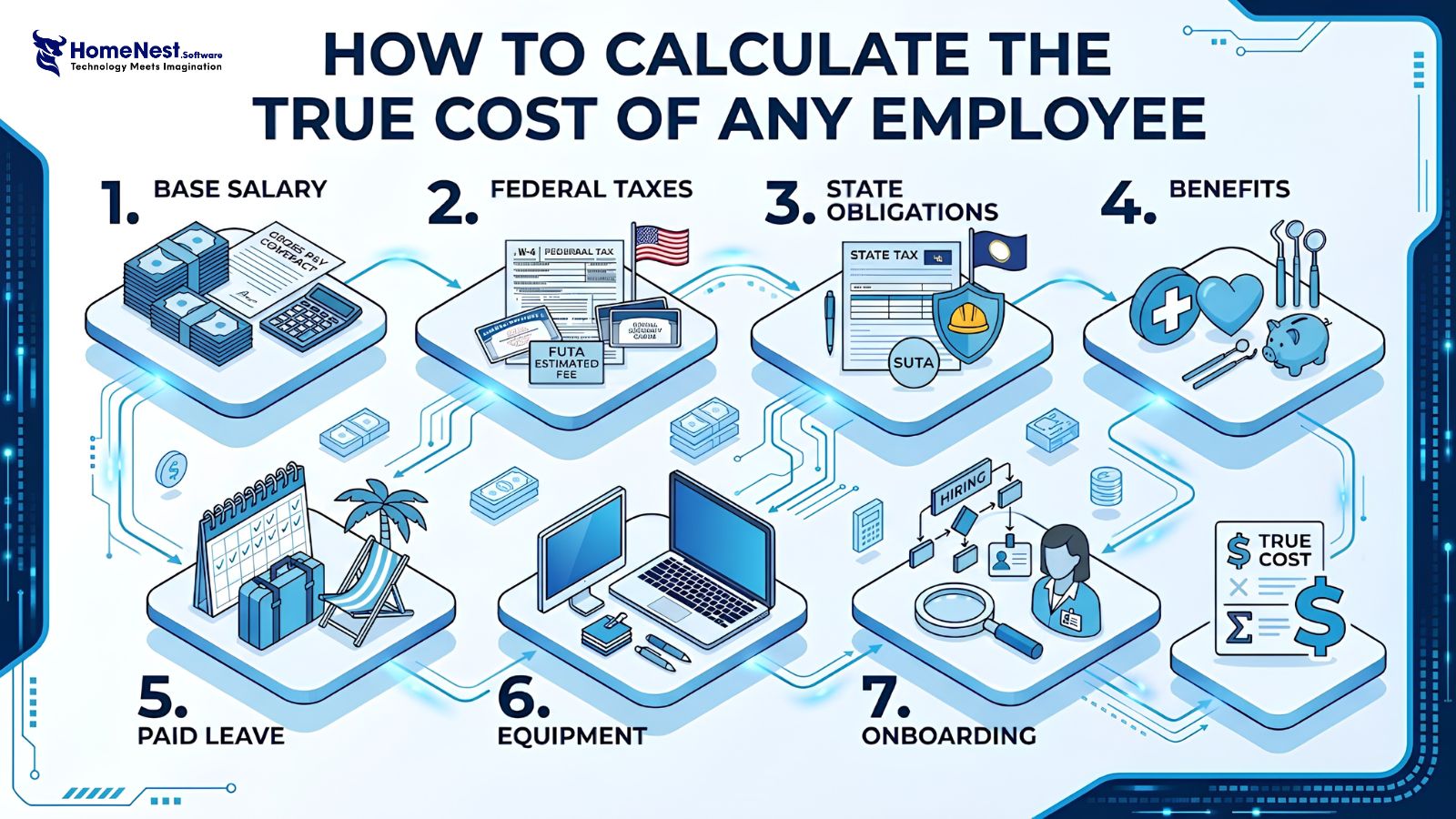
Step 1: Start with Gross Annual Salary
Use the agreed annual salary for salaried employees. For hourly workers, multiply the hourly rate by 2,080 for a standard full-time schedule.
Step 2: Add Federal Payroll Taxes
Multiply the base salary by 7.65% to cover Social Security and Medicare. Add an estimated amount for FUTA, which for most employers comes to $42 per employee per year at the 0.6% effective rate on the first $7,000.
Step 3: Add State Payroll Obligations
Apply your state’s SUTA rate to the applicable wage base. Add your workers’ compensation rate based on the employee’s job classification.
Step 4: Calculate Benefits Cost
Pull the actual invoice amount from your health insurer for per-employee cost. Add retirement match amount based on the percentage and expected employee contribution. Add other benefit costs from your benefits administration records.
Step 5: Calculate Paid Leave Cost
Divide the annual salary by 260 to find the daily rate. Multiply by the total number of paid leave days including vacation, sick leave, and paid holidays the company observes.
Step 6: Add Equipment and Workspace Costs
For existing roles, review actual invoices and allocate proportional office space cost. For new roles, estimate based on comparable positions already on staff.
Step 7: Amortize Recruiting and Onboarding Costs
Estimate total hiring cost for the role. Divide by your average employee tenure in years. Add this annual figure to your running total.
The sum of all seven components is your true annual employer cost for that position.
Hidden Costs Most Employers Miss
Employee Turnover
When an employee leaves, the cost to replace them is significant. Research from the Society for Human Resource Management estimates replacement cost at 50% to 200% of annual salary depending on role seniority and specialization. High turnover in a team compounds recruiting, onboarding, and productivity loss costs continuously. A team with 30% annual turnover is absorbing replacement costs for nearly one third of its workforce every year.
Management Overhead
Every employee requires supervision. If a manager allocates 15% of their working hours to overseeing a single direct report, that is 15% of a senior-level salary charged against each person managed. In a team of four direct reports, this translates to roughly $12,000 to $20,000 in management cost per employee per year for mid-to-senior managers.
HR and Payroll Administration
Processing payroll, administering benefits, managing compliance requirements, and maintaining employment records requires dedicated time. Small businesses using external payroll services typically pay $50 to $200 per employee per month for these functions.
Performance Management
Structured review cycles, goal-setting platforms, and 360-degree feedback systems all carry software and time costs that are rarely attributed to individual employees in standard cost calculations but are real expenses nonetheless.
In-House Employees vs. Contractors vs. Offshore Teams
Understanding true employee cost creates a foundation for comparing staffing alternatives objectively.
Full-Time Employees vs. Independent Contractors
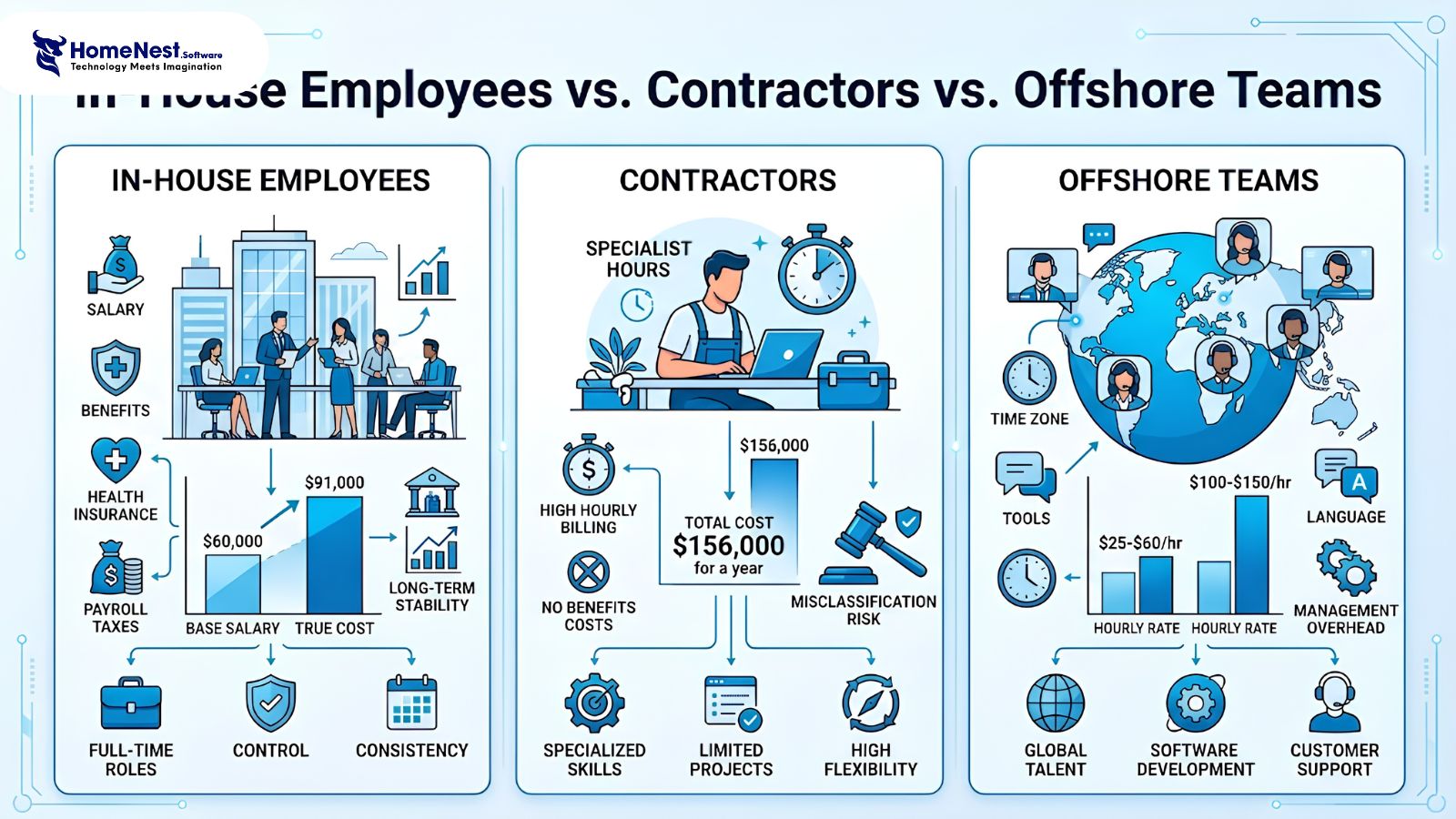
A contractor billing $75 per hour for a full 2,080-hour year costs $156,000 before any project expenses. That figure is more than double a $60,000 salary. But total employer cost for that salaried employee reaches approximately $91,000, and the contractor brings no payroll tax, benefits, or onboarding cost.
For roles that require consistent, ongoing output over multiple years, full-time employees are generally more cost-effective. For specialized, time-limited projects, contractors often provide better value.
One important risk to manage: misclassifying an employee as an independent contractor creates exposure to back taxes, penalties, and potential legal liability. The IRS and many state agencies apply specific tests to determine the correct classification.
Offshore and Nearshore Staffing
Software development, customer support, and data-intensive roles are frequently staffed through offshore teams. Experienced developers in Vietnam, for example, typically bill at $25 to $60 per hour compared to $100 to $150 for equivalent U.S.-based talent. Over a full year at comparable output levels, the cost difference is substantial. For a broader comparison across markets, see this guide to Vietnam vs India outsourcing.
The real cost of offshore staffing includes management overhead, communication tools, time zone coordination, and the time required to build shared working practices. These add-ons reduce the net savings but rarely eliminate them for well-managed arrangements.
You can read more in the article: In-House or Outsourced Software Development
How to Reduce Total Employee Cost Without Reducing Pay
Improve Employee Retention
Keeping employees longer is the most direct way to reduce total cost over time. Every departure triggers a full cycle of recruiting, onboarding, and ramp-up expense. Improving annual retention from 70% to 85% across a team of 20 employees prevents three or four full replacement cycles per year.
Audit Benefit Utilization
Many organizations pay for benefits that a small percentage of employees actually use. An annual audit of benefit utilization data helps identify programs that can be replaced with alternatives employees value more, at similar or lower cost.
Reduce Office Space Requirements
Remote and hybrid work arrangements lower the real estate cost per employee. Companies that have moved to smaller offices or hot-desking configurations report real estate cost reductions of 20% to 40% per employee.
Automate HR Administration
HR platforms that handle onboarding workflows, time tracking, and benefits administration reduce the labor cost of managing employee records. For small businesses, a well-configured HR system commonly pays for itself within 12 months through administrative time savings.
Promote Internal Candidates
Filling open roles from the existing workforce eliminates external recruiting fees, reduces onboarding time, and shortens the productivity ramp-up period. The promoted employee already understands company systems, culture, and expectations.
Lower Your Hiring Costs With HomeNest Software
When the total employer cost of a mid-level developer in the United States reaches $90,000 to $120,000 per year, many companies evaluate offshore development as a cost-effective alternative that delivers the same output at a significantly lower total spend.

HomeNest Software provides dedicated development teams based in Vietnam. You work with experienced engineers across web, mobile, AI, and enterprise software without carrying the overhead of local employment: no payroll taxes, no benefits administration, no office space cost, and no ramp-up delay from an extended onboarding process.
Our IT outsourcing services and offshore development outsourcing are structured to give you a transparent cost per sprint, not an unpredictable annual headcount expense.
Contact HomeNest Software to receive a team structure proposal and cost comparison for your specific role requirements.
- Phone / WhatsApp: (+84) 898 994 298
- Email: info@questx.com.vn
- Headquarters: SAV5 Tower, The Sun Avenue, 28 Mai Chi Tho Street, Binh Trung Ward, Ho Chi Minh City, Vietnam
- Branch Office: SAV4 Tower, The Sun Avenue, 28 Mai Chi Tho Street, Binh Trung Ward, Ho Chi Minh City, Vietnam
Frequently Asked Questions About the True Cost of an Employee
What percentage above salary is the true cost of an employee?
For most full-time roles in the United States, total employer cost runs 125% to 150% of base salary. An employee earning $60,000 typically costs $75,000 to $90,000 per year when all taxes, benefits, equipment, and overhead are included. Senior positions with richer benefit packages or high recruiting costs can push this ratio above 150%.
Does the true cost of an employee include paid time off?
Yes. Paid vacation, sick leave, and company holidays represent full pay for days where no work is performed. These days are a real cost and should be included in any accurate total cost calculation. For a $60,000 salary with 20 paid leave days, this component adds approximately $4,600 per year.
How do you calculate cost per employee for a small business?
Start with gross annual salary. Add your share of Social Security and Medicare taxes at 7.65%. Add state unemployment tax based on your state rate and wage base. Add health insurance cost from your insurer’s invoice. Add paid leave cost by multiplying daily salary by total leave days. Add equipment and workspace costs. Finally, amortize recruiting and training costs over expected tenure. The total is your annual employer cost for that employee.
Are contractors cheaper than full-time employees?
On an hourly rate basis, contractors cost more. On a total cost basis, the comparison depends on hours worked and duration. For short-term or project-based work, contractors are typically more cost-effective because you pay no taxes, benefits, or onboarding costs. For ongoing full-time work over two or more years, employees are generally less expensive in total.
How much does employee turnover cost a business?
Research from the Society for Human Resource Management estimates that replacing a mid-level employee costs 50% to 100% of their annual salary. For senior or highly specialized roles, replacement cost can reach 150% to 200% of annual salary. The total includes recruiting fees, onboarding time, training cost, and the productivity gap during the period before the new hire reaches full output.
What is the cost of an employee beyond salary in the United States?
Beyond base salary, U.S. employers typically pay Social Security and Medicare taxes totaling 7.65% of wages, state unemployment taxes ranging from 1% to 8%, workers’ compensation insurance, health insurance averaging $7,000 to $24,000 per year depending on plan and coverage, paid time off, and retirement contributions. Combined, these add-ons commonly total 30% to 50% of base salary.
Latest Articles
View All
Essential Tips To Develop A Music Streaming App
Discover expert tips to develop a successful music streaming app with HomeNest Software. This guide covers essential features, legal licensing, and scalable technology stacks. Learn how to build a robust, cross-platform application with AI personalization to stand out in the 2026 competitive audio market.

How to Build a Language Learning App Like Cake
Discover how to build a successful language learning app like Cake with this comprehensive guide from HomeNest Software. We explore market research, essential MVP features, advanced AI integrations, tech stack selection, and estimated development costs. Partner with HomeNest Software to create a scalable, gamified, and highly engaging educational platform tailored to your business goals. Start your app development journey with us today.
How to Build an App Like TaskRabbit: Features, Cost, Tech Stack – Business Model
Building an app like TaskRabbit is more than replicating existing features—it’s about creating a trusted marketplace that seamlessly connects customers with skilled service providers. By combining an intuitive user experience, secure payment systems, scalable architecture, and the right business model, you can launch a competitive on-demand platform. Partnering with an experienced app development company like HomeNest Software ensures your product is built with the technology, flexibility, and long-term scalability needed to succeed in the rapidly growing gig economy.
How to Build a Meal Planning App: A Complete Step-by-Step Guide
Building a successful meal planning app goes beyond creating an attractive interface it requires a clear business strategy, personalized user experiences, and scalable technology. By combining essential features like AI-powered meal recommendations, nutrition tracking, grocery list automation, and wearable integration, businesses can deliver lasting value to users while capitalizing on the growing digital health market. Partnering with an experienced mobile app development company ensures your solution is secure, future-ready, and designed to succeed in an increasingly competitive health-tech industry.

How Much Does It Cost to Build a Shopping App Like Temu?
Temu’s meteoric rise to over 900 million global downloads proves the power of combining AI, gamification, and social commerce, but building a similar viral shopping platform requires careful financial and technical planning. Developing an app like Temu typically costs anywhere from $40,000 for a basic Minimum Viable Product (MVP) to over $300,000 for a fully-featured platform. This guide breaks down every cost category, analyzes the core features driving Temu’s success, highlights the best technology stacks, and offers practical strategies to optimize your development budget without compromising on quality.

Criteria For Choosing The Right App Design Agency
UI/UX design is the logical foundation of a system, not merely a visual element. Choosing the wrong partner will directly lead to technical debt, budget overruns, and disruptions in the development process. This article provides a 6-step evaluation framework and a list of operational risks, helping businesses eliminate subjective design advice and accurately assess agency capabilities based on developer handoff standards and practical business performance.