
Grocery Delivery App Development Cost: UAE vs Saudi Arabia vs Kuwait
Scope of Work
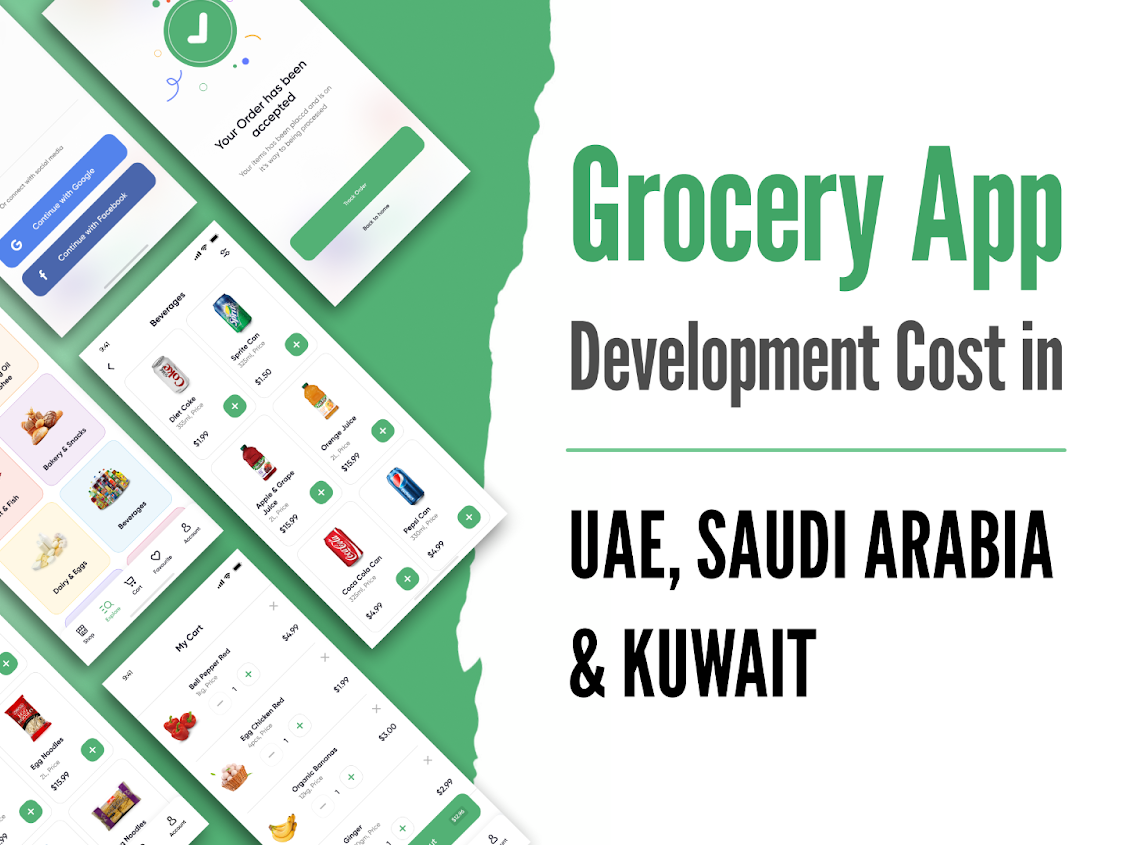
The rapid growth of online grocery shopping is transforming how consumers in Middle Eastern countries access their everyday essentials. Fast-paced lifestyles and a growing demand for convenience have accelerated the adoption of grocery delivery apps, making them an integral part of modern households.
Markets such as the UAE, Saudi Arabia, and Kuwait are witnessing strong momentum, with consumers increasingly willing to pay for grocery solutions that are fast, reliable, and easy to use. This shift has opened up significant opportunities for entrepreneurs and businesses to launch advanced grocery delivery applications tailored to local preferences and user expectations.
However, building a successful grocery delivery platform requires a deep understanding of regional market dynamics, consumer behavior, and operational challenges. Whether you are a startup founder or an established enterprise, entering these markets strategically can help you secure a strong position in an increasingly competitive digital ecosystem.
On-Demand Grocery Delivery Market in UAE, Saudi Arabia, and Kuwait
The on-demand grocery delivery market across the Middle East particularly in the UAE, Saudi Arabia, and Kuwait is experiencing steady growth, driven by digital adoption and rising demand for convenience.
UAE Grocery Delivery Market
Revenue from grocery delivery services in the UAE is projected to reach approximately USD 38.58 million in 2026.
The market is expected to grow at a steady CAGR between 6% and 7% from 2026 to 2029, reflecting gradual but consistent expansion.
By 2029, the number of grocery delivery app users in the UAE is estimated to reach around 3.5 million, highlighting increasing consumer reliance on online grocery platforms.
Saudi Arabia Grocery Delivery Market
Saudi Arabia is emerging as one of the largest grocery delivery markets in the region. Revenue is forecasted to reach nearly USD 1.9 billion by 2026.
From 2026 to 2029, the market is expected to maintain a strong CAGR of approximately 8%–9%, surpassing the USD 3 billion revenue mark by 2029.
Additionally, the total number of grocery delivery app users is projected to grow rapidly, reaching approximately 14.2 million users.
Kuwait Grocery Delivery Market
Although smaller in size, Kuwait’s grocery delivery market shows strong growth potential. Revenue is estimated to reach USD 1.38 billion in 2026.
According to growth projections, the market could expand to USD 3.27 billion by 2029, supported by a high CAGR of around 9%–10% between 2026 and 2029.
This growth reflects increasing smartphone penetration and strong consumer demand for premium delivery services.
Key Factors Influencing Grocery Delivery App Development Costs
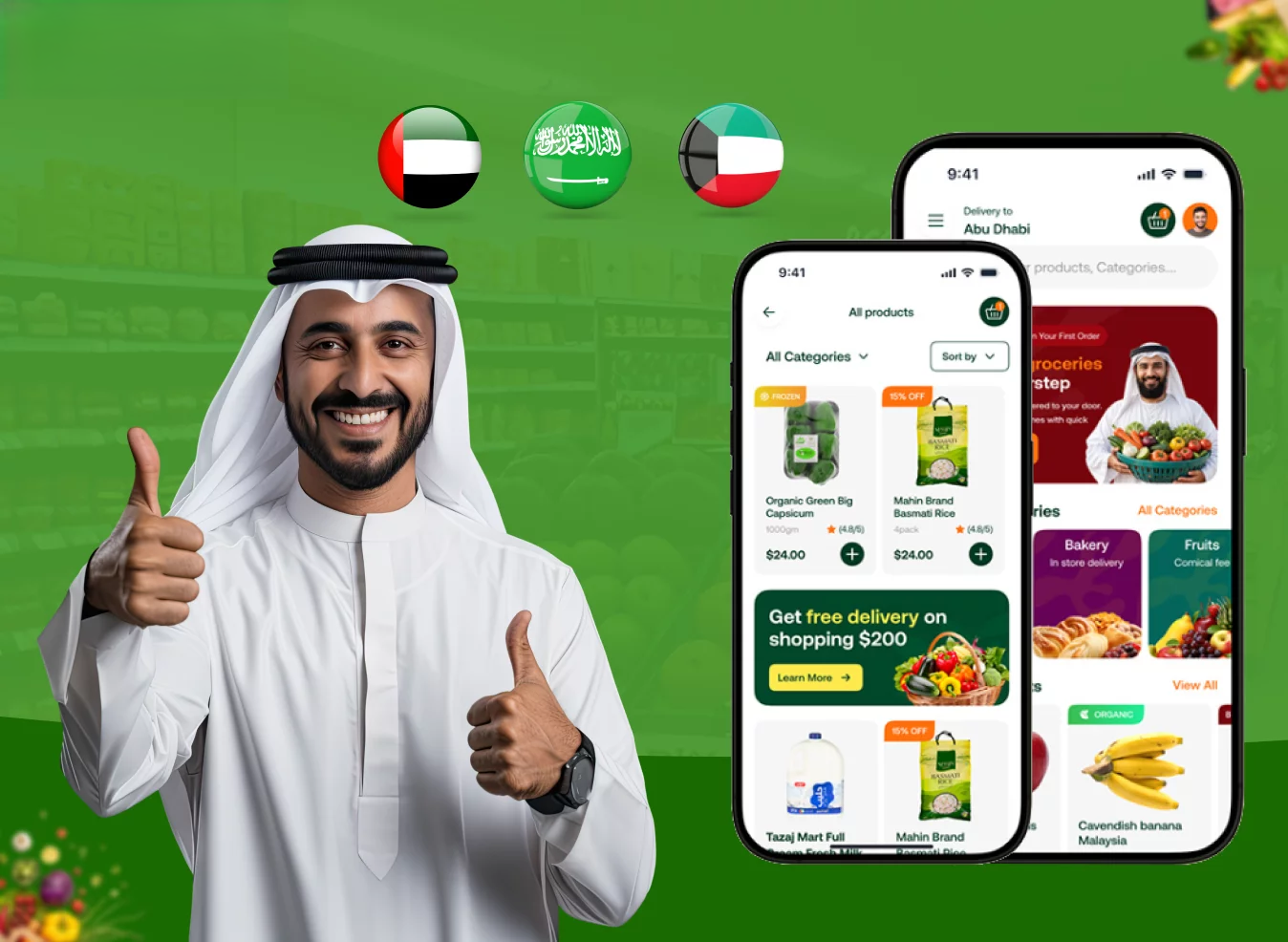
Several critical factors directly impact the overall on-demand grocery delivery app development cost in the UAE, Saudi Arabia, and Kuwait. Understanding these elements helps businesses plan budgets more effectively and make informed development decisions.
Platform Choice (iOS, Android, or Cross-Platform)
Developing an app for a single platform is generally more cost-effective. However, launching on both iOS and Android significantly expands market reach—while also increasing development time and cost.
Cross-platform solutions such as Flutter or React Native can help reduce overall expenses by enabling a single codebase while maintaining consistent performance across devices.
App Features and Functionalities
Core features such as real-time order tracking, in-app payments, user profiles, and inventory management directly influence development complexity and cost.
Advanced capabilities like AI-powered product recommendations, voice search, and predictive analytics further increase the scope and investment required.
UI/UX Design Quality
A well-designed, intuitive, and responsive interface plays a crucial role in user engagement and retention. However, premium UI/UX design demands experienced designers and additional development time.
Costs may also rise due to localization requirements, multi-language support, custom UI components, and interactive animations tailored to Middle Eastern markets.
Backend Infrastructure
A robust backend is essential for handling real-time data, order processing, user management, and inventory synchronization.
Development costs vary based on server architecture, database design, API integrations, and whether the solution is hosted on cloud infrastructure or supported by on-premise systems—along with ongoing maintenance requirements.
Third-Party Integrations
Integrations with third-party services such as payment gateways, SMS notifications, analytics tools, and mapping services enhance app functionality but add to development complexity.
As integrations increase, ensuring strong data security and compliance becomes even more critical.
Developer Location and Expertise
Development costs differ significantly based on the development team’s location and experience.
For example, grocery app development services in Saudi Arabia typically cost more than teams based in South Asia or Eastern Europe. Additionally, developers with domain expertise in eCommerce, logistics, or last-mile delivery often command higher rates due to their specialized skills.
Read more: How Much Does Mobile App Development Cost in the UAE?
Essential Features of a Grocery Delivery App
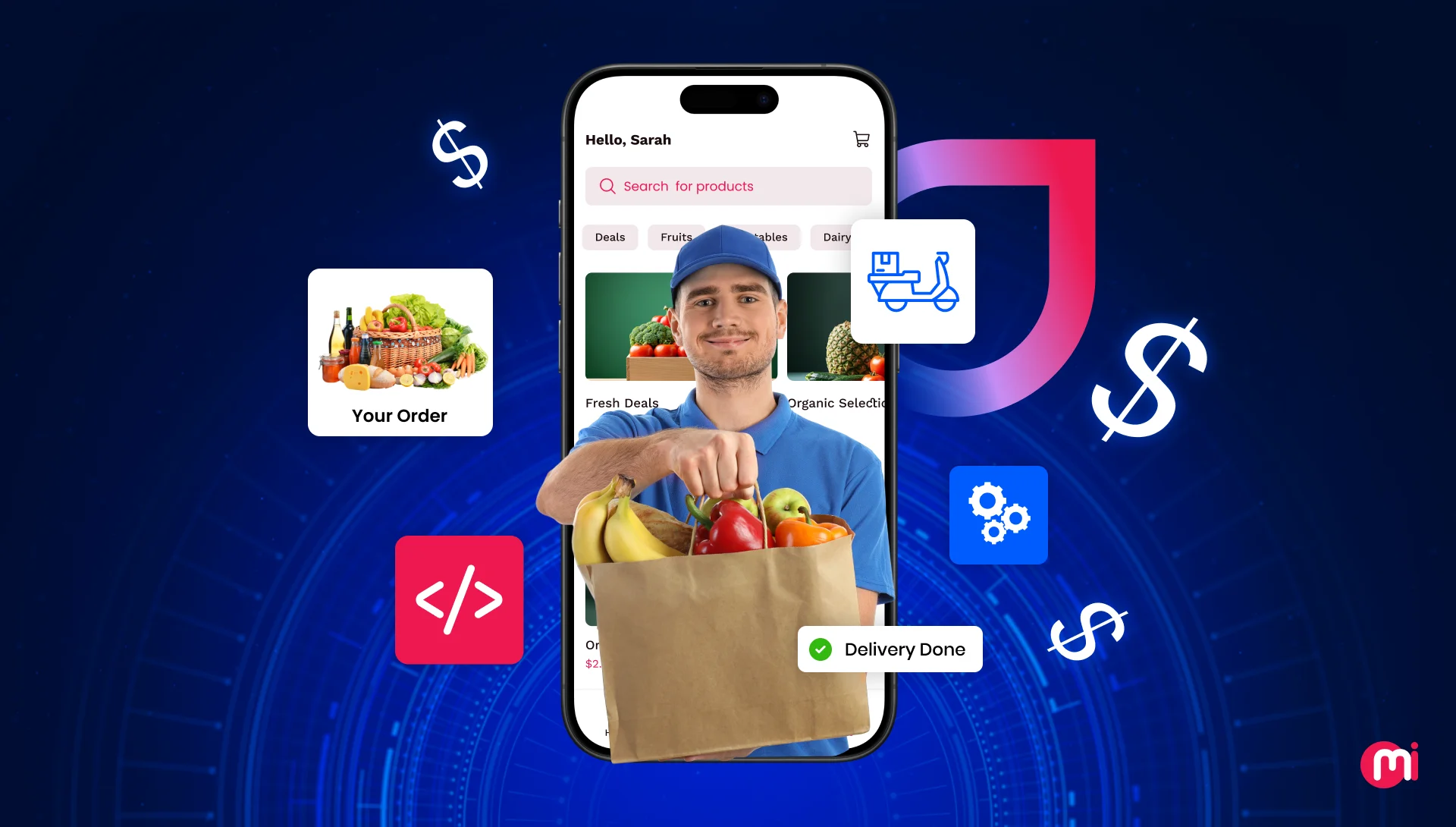
Below is a comprehensive overview of the essential features that directly impact grocery delivery app development costs in the UAE and Saudi Arabia. These features are grouped into three core panels—Customer, Delivery Agent, and Admin—which together define the overall scope and complexity of grocery app development in the Middle East.
Customer Panel Features
User Registration & Login
Users can securely register and log in using email, phone number, or social media accounts. Customer profiles are stored safely to enable faster checkout and personalized shopping experiences.
Product Search & Categories
Customers can quickly search, filter, and browse products across multiple categories. Advanced search functionality ensures fast and accurate results even with large inventories.
Smart Cart & Checkout
An intuitive cart system allows users to add or remove items, apply discounts, select delivery slots, and complete checkout using multiple payment methods with ease.
Real-Time Order Tracking
Customers can track their orders in real time, from confirmation to final delivery, using GPS-enabled tracking for complete transparency.
Push Notifications
Automated notifications keep users informed about order updates, delivery status, promotions, and special offers—helping improve engagement and repeat purchases.
Ratings & Reviews
Users can rate products, delivery services, and overall app experience. This feedback helps improve service quality and guides other customers in making informed choices.
Order History & Reorder
Customers can view past orders and reorder frequently purchased items with a single click, saving time and improving convenience for loyal users.
Delivery Agent Panel Features
Login & Profile Management
Delivery agents can securely log in and manage their profiles, including availability, contact details, and payment preferences.
Order Assignment
Orders are assigned to agents in real time based on location and delivery routes, ensuring optimal distribution and timely fulfillment.
Route Optimization
GPS and mapping tools suggest the fastest delivery routes, reducing travel time, fuel costs, and improving overall delivery efficiency.
Order Details & Tracking
Agents can view complete order details, including items, customer information, and delivery addresses, ensuring accurate and reliable deliveries.
Status Updates & Notifications
Agents receive instant notifications for new orders, delivery updates, and task changes, maintaining smooth operational flow.
Payment Management
Supports cash-on-delivery (COD), digital payments, tips, and earnings tracking, ensuring transparent and secure payment handling for agents.
Ratings & Feedback
Delivery agents can receive ratings and feedback, helping maintain service quality and identify areas for improvement.
Admin Panel Features
User & Order Management
Admins can manage user registrations, monitor profiles, track orders, and handle cancellations through a centralized dashboard.
Product Management
Admins can add, update, categorize, price, and manage product inventories to ensure accurate listings and availability.
Real-Time Analytics & Reporting
Advanced analytics provide insights into sales, orders, user behavior, and performance metrics, supporting data-driven decision-making.
Inventory Management
Real-time stock monitoring prevents out-of-stock issues and alerts admins when inventory replenishment is required.
Promotions & Discounts
Admins can create, schedule, and manage discount campaigns, coupons, and promotional offers to boost sales and customer retention.
Payment & Commission Management
Ensures accurate tracking of transactions, settlements, and commissions between customers, vendors, and delivery agents.
Customer Support & Feedback
An integrated support system enables admins to manage complaints, resolve issues, and respond to customer feedback efficiently.
Read more: Mobile App Development Cost in Saudi Arabia
Grocery Delivery App Development Cost in UAE vs. Saudi Arabia vs. Kuwait
The cost of developing a grocery delivery app in the UAE, Saudi Arabia, and Kuwait largely depends on factors such as app complexity, feature set, ongoing maintenance, and local market conditions. Overall, development costs across these three countries remain relatively comparable, especially when the scope and functionality of the app are similar.
Below is a high-level comparison of grocery delivery app development costs across the UAE, Saudi Arabia, and Kuwait:
| Development Type | UAE | Saudi Arabia | Kuwait |
|---|---|---|---|
| Basic App Development | $5,000 – $8,000 | $5,000 – $8,000 | $5,000 – $8,000 |
| Standard App Development | $10,000 – $15,000 | $10,000 – $15,000 | $10,000 – $15,000 |
| Advanced App Development | $15,000+ | $15,000+ | $15,000+ |
These estimates reflect average development costs based on common project requirements in each market. While pricing remains similar across regions, customization plays a crucial role in success. Adapting the app to local regulations, consumer behavior, language preferences, and payment methods can significantly impact both development cost and market performance.
To effectively compete in the growing digital grocery and AI-powered app ecosystem, partnering with an experienced grocery delivery app development company is essential. A skilled development team can help optimize costs, ensure compliance, and build a scalable solution tailored to the unique demands of the UAE, Saudi Arabia, and Kuwait markets.
Market Challenges and Differences in UAE, Saudi Arabia & Kuwait Grocery Apps
Although the grocery delivery app market in the UAE, Saudi Arabia, and Kuwait shares similar growth drivers, each country presents distinct challenges and market dynamics that businesses must address to succeed. Below are the key differences across these three markets:
UAE
-
Regulatory Compliance
The UAE enforces strict data protection, cybersecurity, and eCommerce regulations. Grocery delivery apps must comply with local digital laws and privacy standards to operate smoothly and avoid legal risks. -
High Market Competition
The UAE grocery delivery space is highly saturated, with multiple established players. New entrants must invest heavily in branding, differentiation, and customer acquisition to stand out. -
Tech-Savvy Consumers
Consumers in the UAE expect advanced features such as AI-driven product recommendations, personalized offers, and seamless user experiences, raising both development complexity and costs.
Saudi Arabia (KSA)
-
Cultural Sensitivities
Payment preferences, product availability, customer support practices, and service tone must align with local cultural norms to ensure adoption and trust. -
Regional & Geographic Challenges
Saudi Arabia’s large land area and uneven population distribution make last-mile delivery—especially in rural regions—more complex and costly. -
Rapid Market Growth
Grocery delivery is one of the fastest-growing digital services in Saudi Arabia. While demand is high, competition is intensifying quickly as more players enter the market.
Kuwait
-
Smaller Market Size
Kuwait’s lower population density and limited market scale make rapid expansion more challenging compared to UAE and Saudi Arabia. -
Logistics & Infrastructure Constraints
While logistics infrastructure is improving, ensuring consistent and timely deliveries remains a challenge for grocery apps operating at scale. -
Customer Loyalty Development
Building strong customer loyalty often takes longer due to smaller, niche user segments. Retention strategies must be highly targeted and value-driven.
Understanding these regional challenges is critical when planning a grocery delivery app for the Middle East. A localized strategy—covering compliance, logistics, user behavior, and technology—is essential to achieving sustainable growth in UAE, Saudi Arabia, and Kuwait.
Read more: Hire Developers in Vietnam
How to Reduce Grocery Delivery App Development Costs
For businesses entering the highly competitive grocery delivery market, controlling development costs is crucial to protecting budgets without compromising product quality. Below are proven strategies to reduce grocery delivery app development costs while maintaining performance, scalability, and user experience.
1. Choose Cross-Platform Development
Instead of building separate apps for Android and iOS, businesses can adopt cross-platform frameworks such as Flutter or React Native.
This single codebase approach significantly reduces development time and overall costs while still allowing access to both platforms especially effective for controlling grocery app development costs in Saudi Arabia and other Gulf countries.
2. Use White-Label Solutions
White-label grocery delivery solutions enable businesses to customize pre-built platforms rather than developing apps from scratch.
This approach drastically cuts development time and reduces the average cost of building a grocery delivery app in markets like Dubai, while still offering flexibility and faster go-to-market execution.
3. Focus on Essential Features First
Start with core features such as product search, cart management, secure payments, and order tracking.
Avoid adding advanced functionalities—like AI voice assistants or complex analytics in the initial version. Prioritizing an MVP helps control custom grocery app development costs across Gulf countries.
4. Outsource Development Strategically
Outsourcing development to regions such as Eastern Europe or South Asia can significantly reduce costs.
Working with experienced and affordable development teams allows businesses to lower grocery app development expenses by up to 40–50%, without sacrificing code quality or delivery timelines.
5. Simplify UI/UX Design
While user experience is critical, overly complex and highly customized designs increase both design and development costs particularly when building grocery apps for markets like Kuwait.
A clean, intuitive, and minimal UI not only improves usability but also reduces overall development and maintenance expenses.
By adopting these cost-optimization strategies, businesses can launch a competitive grocery delivery app that is scalable, efficient, and budget-friendly without cutting corners on performance or user satisfaction.
Future Trends in Grocery Delivery App Development for UAE, Saudi Arabia & Kuwait
Rapid changes in consumer behavior, combined with continuous innovation and advancing technologies, are accelerating grocery delivery app development across the UAE, Saudi Arabia, and Kuwait. These markets are moving beyond basic delivery services toward smarter, faster, and more personalized digital experiences.
Below are the key trends expected to shape grocery app development in the region over the coming years:
AI-Driven Personalization
Artificial Intelligence is becoming the foundation of personalized user experiences. AI-powered insights enable tailored product recommendations, curated shopping lists, and predictive reordering based on customer preferences and purchase history driving higher engagement and satisfaction.
Voice Search & Smart Assistants
As voice-enabled devices gain popularity, voice search and smart assistant integration will simplify grocery ordering. This trend is especially relevant in car-centric cities such as Riyadh and Dubai, where hands-free ordering offers added convenience.
Hyperlocal Delivery Models
Speed is becoming a major competitive differentiator. Grocery apps are increasingly adopting hyperlocal delivery strategies such as micro-warehouses and neighborhood partnerships—to enable ultra-fast delivery within 30 to 60 minutes.
Sustainability-Focused Features
Environmentally conscious consumers are driving demand for sustainability features, including carbon footprint tracking, eco-friendly packaging options, and filters for local or organic products.
Subscription-Based Grocery Services
Monthly subscription models offering exclusive discounts, priority delivery slots, and bundled savings are gaining traction particularly among working professionals and busy households seeking convenience and cost efficiency.
Advanced Payment Technologies
The rapidly growing fintech ecosystem in the region is accelerating the adoption of digital wallets, Buy Now Pay Later (BNPL), and contactless payments. These options are becoming standard expectations rather than optional features.
Launch Your Grocery App Successfully with HomeNest Software
At HomeNest Software, we specialize in designing and deploying scalable, high-performance grocery delivery apps tailored for the fast-evolving markets of the UAE, Saudi Arabia, and Kuwait.
Our deep understanding of regional consumer behavior—combined with strong technical expertise allows us to build solutions that align with local regulations, cultural expectations, and market demands. By leveraging modern technologies, flexible architectures, and customized feature sets, we help businesses launch grocery apps that are future-ready and growth-focused.
Partner with HomeNest Software to accelerate your grocery app development journey and gain a competitive edge in the Middle East’s rapidly expanding digital commerce landscape.
HomeNest Software – Empowering Long-Term Growth for Modern Businesses.

Contact Information:
- Address: The Sun Avenue, 28 Mai Chi Tho Street, Binh Trung Ward, Ho Chi Minh City
- Hotline: +84 898 994 298 ( WhatsApp )
- Website: homenest.software
HomeNest Services: Website Design – App Design – Software Development.
Frequently Asked Questions (FAQs)
What makes grocery delivery apps popular in UAE, Saudi Arabia, and Kuwait?
High smartphone penetration, busy lifestyles, and strong demand for convenience are driving adoption. Fast delivery, multiple payment options, and localized features further accelerate usage across these markets.
Which features are essential for grocery delivery apps in the Middle East?
Core features include real-time order tracking, hyperlocal delivery support, secure digital payments, multi-language interfaces, AI-driven recommendations, and compliance with local regulations.
Is AI really necessary for grocery delivery apps?
Yes. AI improves personalization, demand forecasting, smart recommendations, and inventory optimization—key differentiators in competitive markets like UAE and Saudi Arabia.
How fast should grocery delivery apps aim to deliver orders?
Leading apps target 30–60 minute delivery windows using hyperlocal models, micro-warehouses, and nearby store partnerships, especially in urban areas.
Are subscription-based grocery models effective in the Gulf region?
Absolutely. Subscription plans offering discounts, priority delivery, and bundled savings are popular among working professionals and families seeking predictable, hassle-free grocery shopping.
What payment methods should a grocery app support in UAE, KSA, and Kuwait?
Apps should support digital wallets, cards, contactless payments, and Buy Now, Pay Later (BNPL) options to match the region’s fast-growing fintech ecosystem.
How long does it take to build a grocery delivery app?
A basic MVP can be launched in 8–12 weeks, while a feature-rich, scalable platform may take 3–5 months, depending on complexity and integrations.
Why choose HomeNest Software for grocery app development?
HomeNest Software delivers secure, scalable, and localized grocery delivery apps tailored for UAE, Saudi Arabia, and Kuwait combining regional expertise with modern technologies to ensure fast launch and long-term growth.
Latest Articles
View All
Criteria For Choosing The Right App Design Agency
UI/UX design is the logical foundation of a system, not merely a visual element. Choosing the wrong partner will directly lead to technical debt, budget overruns, and disruptions in the development process. This article provides a 6-step evaluation framework and a list of operational risks, helping businesses eliminate subjective design advice and accurately assess agency capabilities based on developer handoff standards and practical business performance.
How Does AI in Banking Industry Impact the Future?
Artificial intelligence (AI) has transitioned from a supplementary tool to a core infrastructure of financial data management, optimizing profitability through real-time fraud detection, natural language processing (NLP), and high-speed credit scoring models. “Deploying AI in the financial sector requires more than just algorithmic accuracy, it demands a highly secure cloud architecture and rigorous data governance,” commented Nguyen Tien, co-founder of HomeNest Software. Why read this guide? We skip the theoretical jargon to focus entirely on technical implementation. Whether you’re evaluating a vendor or planning a system overhaul, this article will detail: Operational Efficiency: Automating unstructured data workflows at scale. Risk Architecture: Implementing real-time threat detection and AML compliance. Data ownership: The essential need for 100% ownership of the source code to ensure full algorithm auditability.
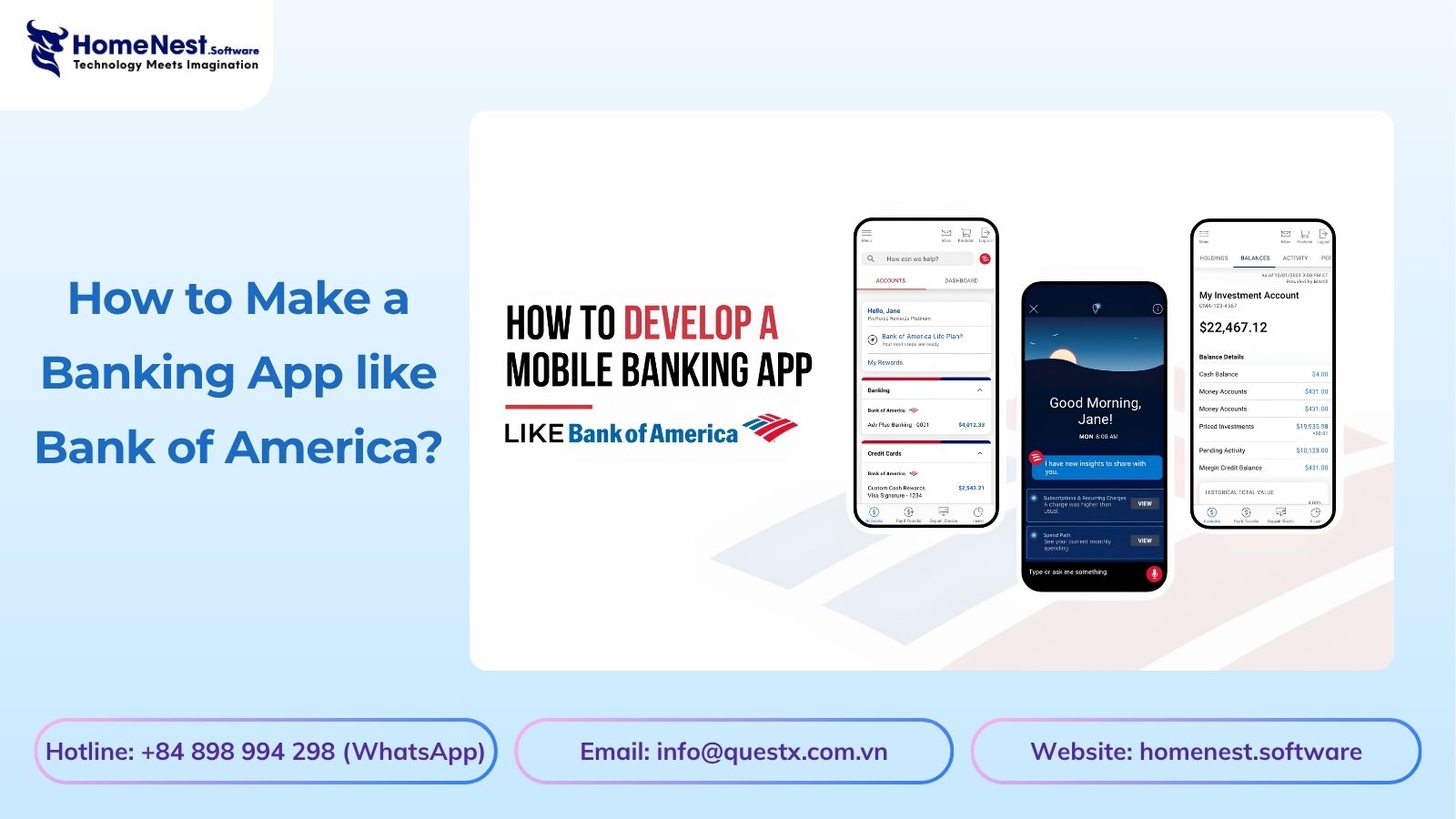
How to Make a Banking App like Bank of America?
Developing a mobile banking application like Bank of America extends far beyond basic UI design; it requires engineering a fault-tolerant backend capable of real-time ledger synchronization, biometric authentication, and high-volume data processing under strict regulatory frameworks. Drawing from HomeNest Software’s deep experience in architecting enterprise-grade fintech solutions, this guide strips away theoretical jargon to focus entirely on operational and technical execution. What you will find in this guide: We break down the precise development roadmap, from mapping out microservices and ensuring PCI-DSS compliance to estimating MVP development costs and securing absolute data sovereignty through 100% source code ownership. If you are preparing to build, scale, or audit a financial platform, this blueprint provides the exact framework you need.
Banking App Development Cost
Building a banking application is rarely a simple process; it’s a complex technical challenge requiring a balance between complying with stringent financial regulations, handling large transaction volumes, and a scalable cloud architecture. Miscalculating these technical requirements from the outset often leads to significant technical debt and budget overruns. Based on HomeNest Software’s practical experience in designing enterprise-grade fintech solutions, this guide bypasses generic estimates to provide a realistic analysis of banking application development costs. What you’ll find in this guide: We analyze the true cost factors, from technology selection and API integration to the hidden costs of regulatory compliance and security infrastructure. Whether you’re launching a minimum viable product or expanding an existing financial platform, this analysis provides the precise operational data you need to plan your budget effectively.
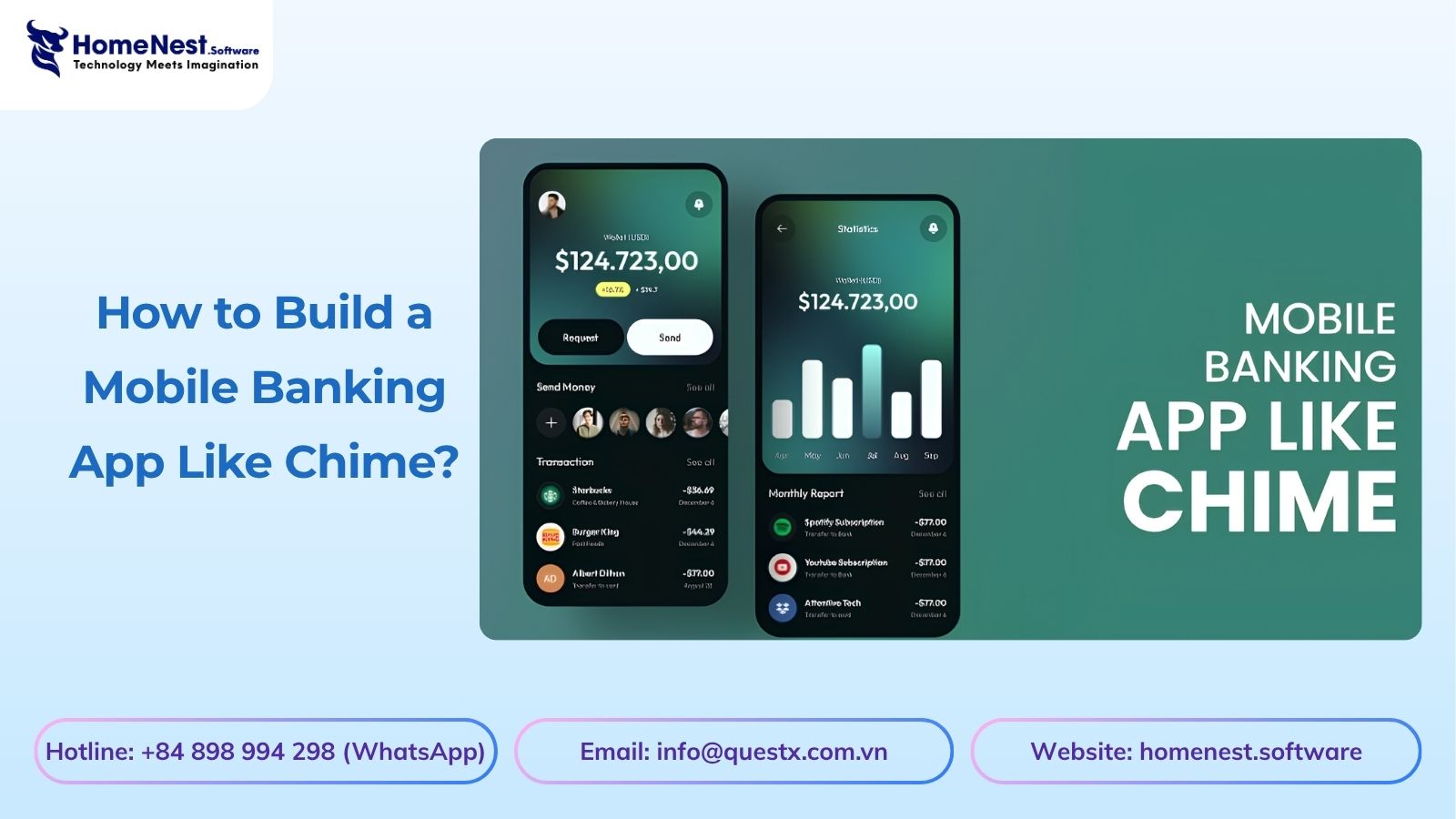
How to Build a Mobile Banking App Like Chime?
Building a mobile banking app like Chime is not just about features, it is about delivering a secure, scalable, and user-centric financial experience. From planning the right architecture to optimizing mobile banking app development cost, every decision directly impacts your product’s success. Leveraging Fintech app development services, starting with MVP app development, and scaling through on-demand app development solutions allows businesses to reduce risk and accelerate time to market. To stay competitive, combining Android app development services and iOS app development solutions ensures wider reach, while continuous updates through maintenance software development services keep your app secure and future-ready.
How to Build a Banking App Like Barclays: A Complete Entrepreneur’s Guide
Building a banking app like Barclays requires more than just development. It demands a strong product vision, secure architecture, and a clear monetization strategy. From optimizing cost and selecting the right tech stack to ensuring compliance and scalability, every decision impacts long-term success. Partnering with an experienced team like HomeNest Software helps accelerate development, reduce risks, and deliver a high-quality fintech product that can compete in today’s fast-evolving digital banking landscape.