
How to Make a Banking App like Bank of America?
Developing a mobile banking application like Bank of America extends far beyond basic UI design; it requires engineering a fault-tolerant backend capable of real-time ledger synchronization, biometric authentication, and high-volume data processing under strict regulatory frameworks.
Drawing from HomeNest Software’s deep experience in architecting enterprise-grade fintech solutions, this guide strips away theoretical jargon to focus entirely on operational and technical execution.
What you will find in this guide: We break down the precise development roadmap, from mapping out microservices and ensuring PCI-DSS compliance to estimating MVP development costs and securing absolute data sovereignty through 100% source code ownership. If you are preparing to build, scale, or audit a financial platform, this blueprint provides the exact framework you need.
Scope of Work
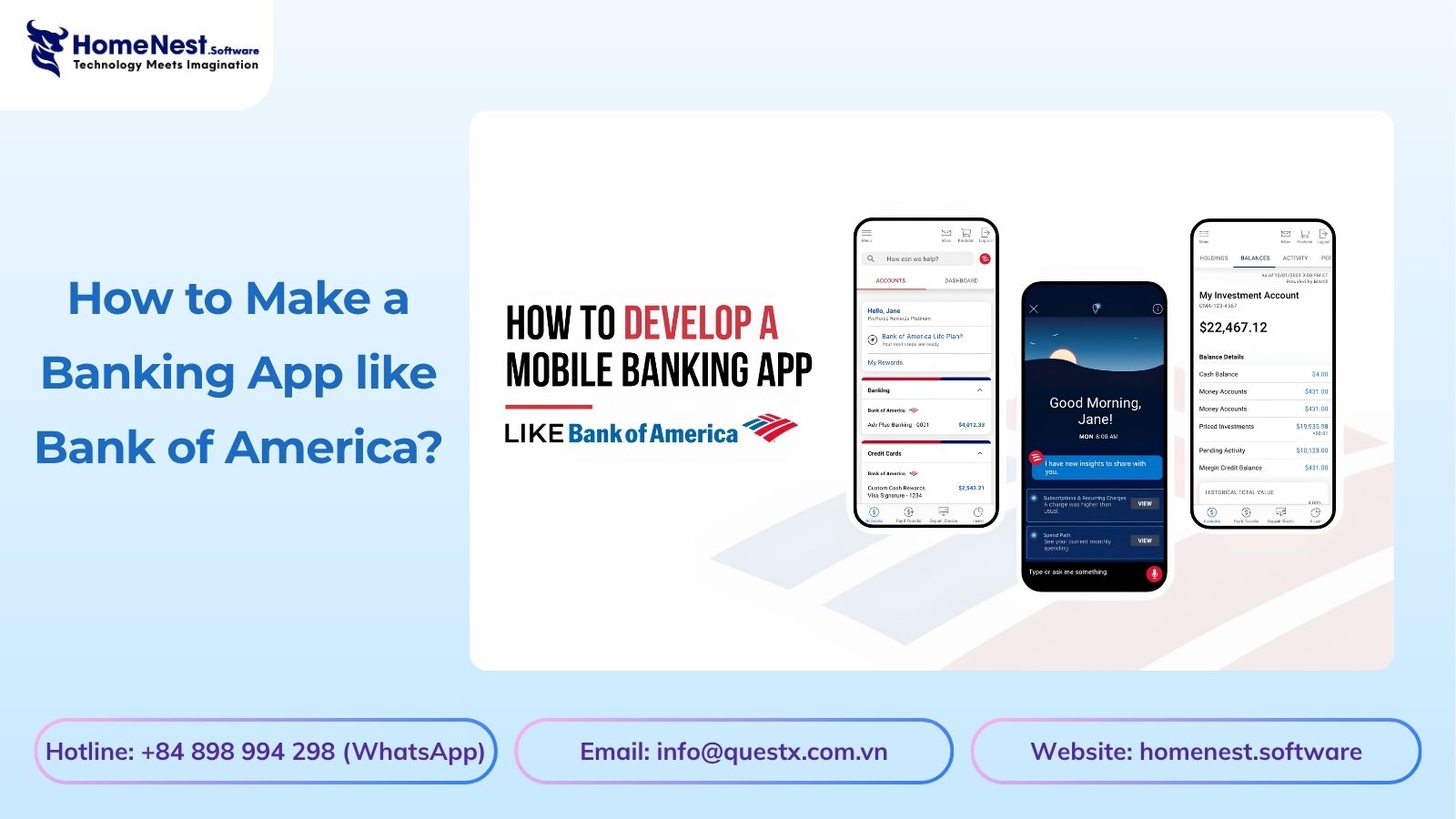
Cash usage is rapidly declining as more people rely on digital banking to manage their finances. Mobile banking apps have transformed how users interact with banks, eliminating the need for physical visits. Today, tasks like transferring money, checking balances, and reviewing transaction history can all be done instantly through a single app. Platforms like Bank of America Mobile Banking demonstrate how users can access a full range of banking services with just a few taps.
Recent market data highlights this shift. The mobile banking apps market was valued at approximately $1.34 billion in 2024 and is projected to grow to around $4.26 billion by 2032, reflecting strong global adoption.
These figures clearly show that investing in banking app development is a major opportunity for entrepreneurs looking to scale in the fintech space. In the following sections, we will explore how to build an app like Bank of America and the key features required to make your solution stand out in a competitive market.
What Is Bank of America?
The Bank of America Mobile Banking app is a full service mobile banking platform that allows users to manage their finances anytime, anywhere. It brings together essential banking IT solutions into one seamless digital experience.
Through the app, users can:
- Monitor accounts in real time
- Deposit checks using their mobile device
- Transfer funds quickly and securely
- Pay bills and manage payments
- Track credit scores and spending habits
With a strong focus on security and a user friendly interface, the app delivers a reliable and efficient banking experience for both individual and business users.
Core Features
- Account Management
- Mobile Check Deposit
- Fund Transfers
Market Analysis of Global Banking Applications
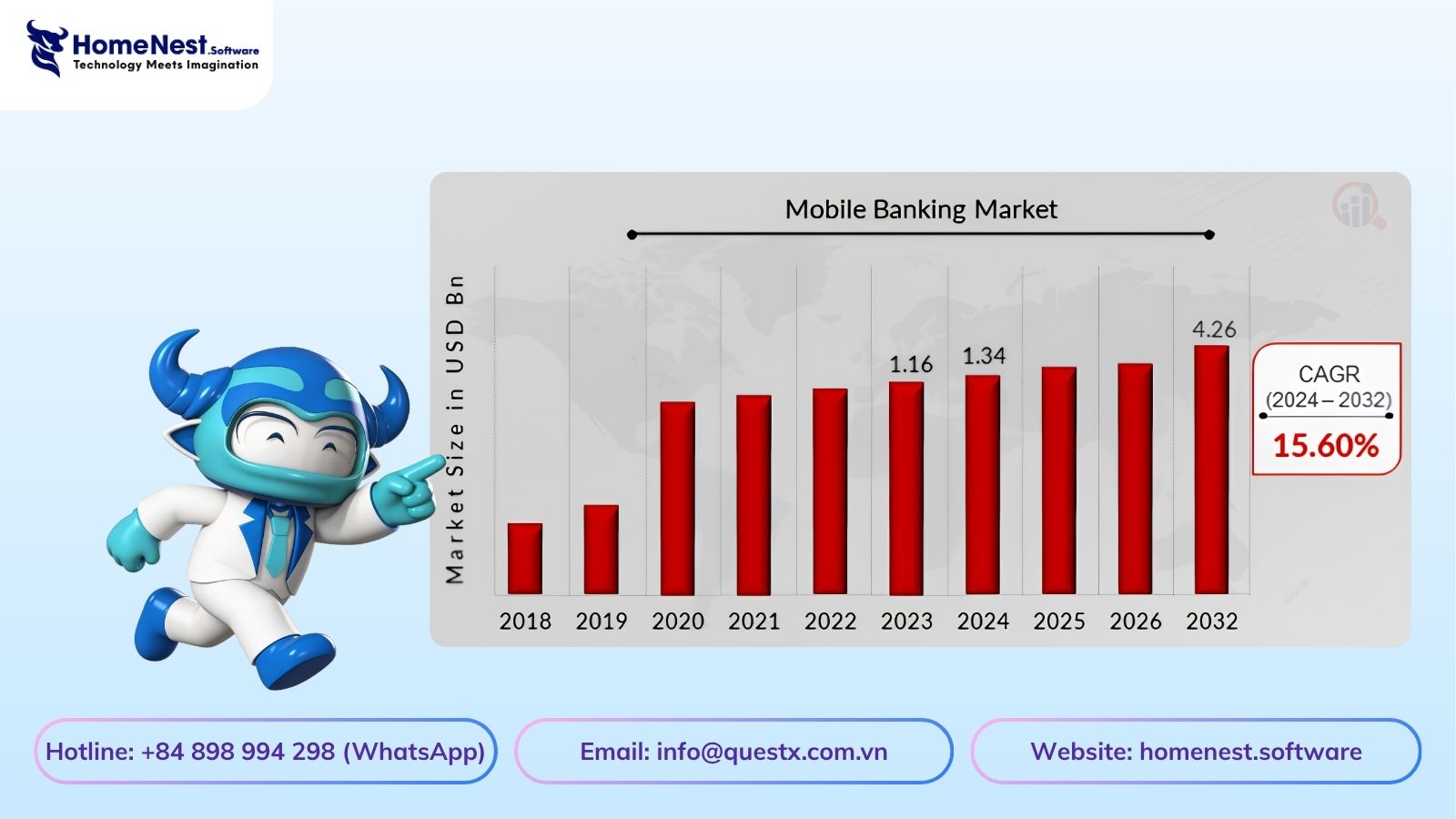
According to a reputable research organization, the mobile banking app market is expanding rapidly as users increasingly shift toward digital-first financial services. Industry reports provide clear metrics on this growth:
- According to Grand View Research, the global market is valued at around $1.34 billion in 2024 and is expected to reach approximately $4.26 billion by 2032.
- Market projections indicate it is set to grow at a strong CAGR of 60% from 2024 to 2032.
- Recent studies from Statista show that nearly 48% of banking customers now use mobile apps to manage their accounts.
Adoption rates are directly reflected in real-world usage. The Bank of America Mobile Banking app currently supports over 57 million verified digital users, with more than 35 million opting in to receive push notifications, highlighting strong, sustained engagement.
Regionally, North America continues to lead the global market, supported by advanced fintech infrastructure and strict regulatory frameworks that encourage digital banking adoption.
Top 10 Banking Apps Like Bank of America Mobile Banking
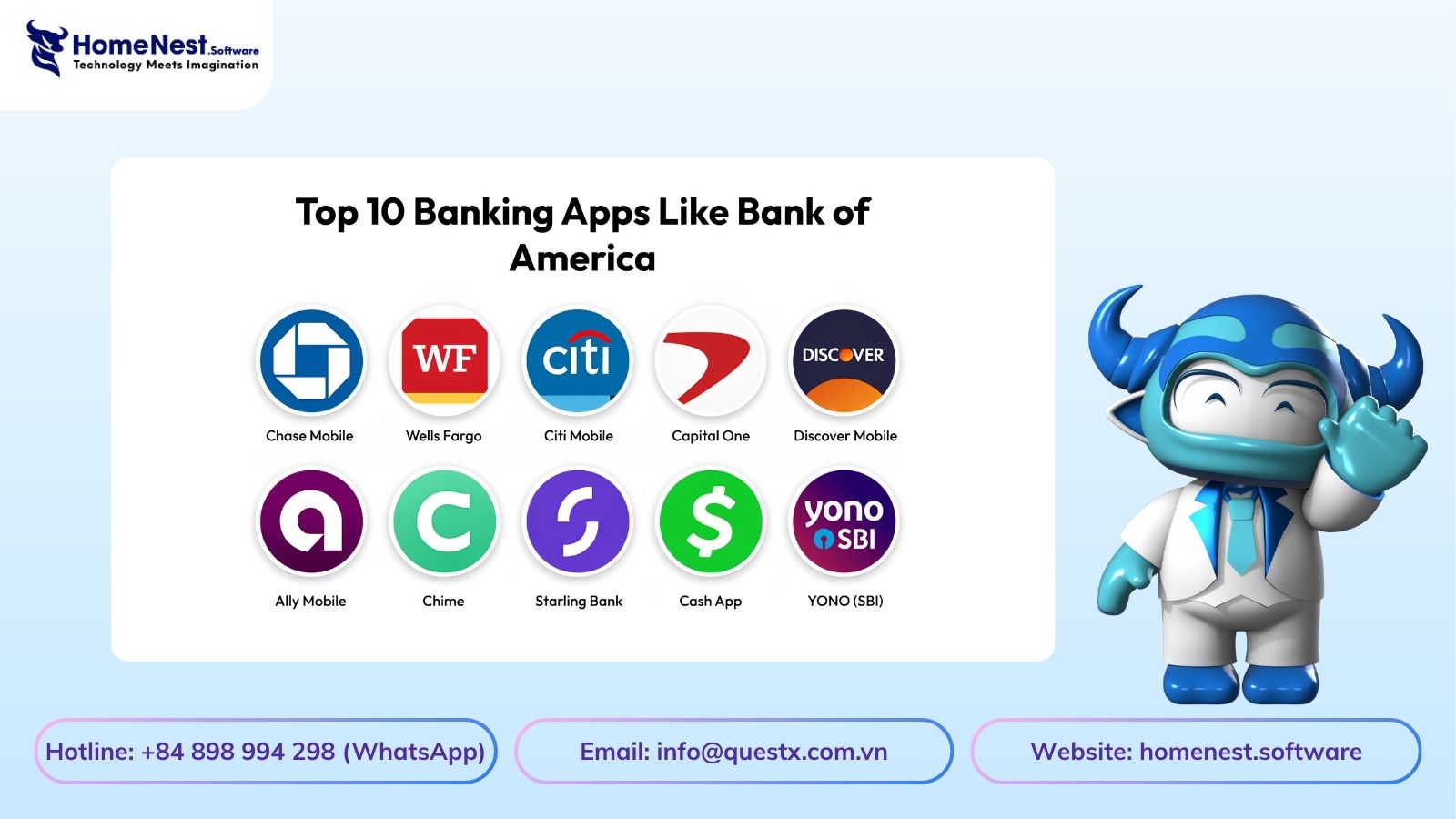
If you are exploring alternatives or benchmarks for building a modern banking solution, the following apps represent some of the best in terms of security, usability, and feature depth. These platforms offer strong digital banking experiences tailored for today’s users.
| App Name | Downloads | Rating | Launch Year | Platforms |
|---|---|---|---|---|
| Chase Mobile | 10M+ | 4.4 | 2008 | Android, iOS |
| Wells Fargo Mobile | 10M+ | 4.8 | 2010 | Android, iOS |
| Citi Mobile | 10M+ | 4.7 | 2010 | Android, iOS |
| Capital One Mobile | 10M+ | 4.5 | 2011 | Android, iOS |
| Discover Mobile | 10M+ | 4.7 | 2010 | Android, iOS |
| Ally Mobile | 10M+ | 3.9 | 2009 | Android, iOS |
| Chime | 10M+ | 4.6 | 2013 | Android, iOS |
| Starling Bank | 5M+ | 4.8 | 2014 | Android, iOS |
| Cash App | 50M+ | 4.7 | 2013 | Android, iOS |
| YONO SBI | 100M+ | 4.1 | 2017 | Android, iOS |
These apps showcase how digital banking continues to evolve, offering everything from traditional account management to advanced features like AI insights, instant payments, and integrated financial tools. Studying them can help you identify the right direction when building a competitive banking application.
Why Businesses Invest in Mobile Banking App Development
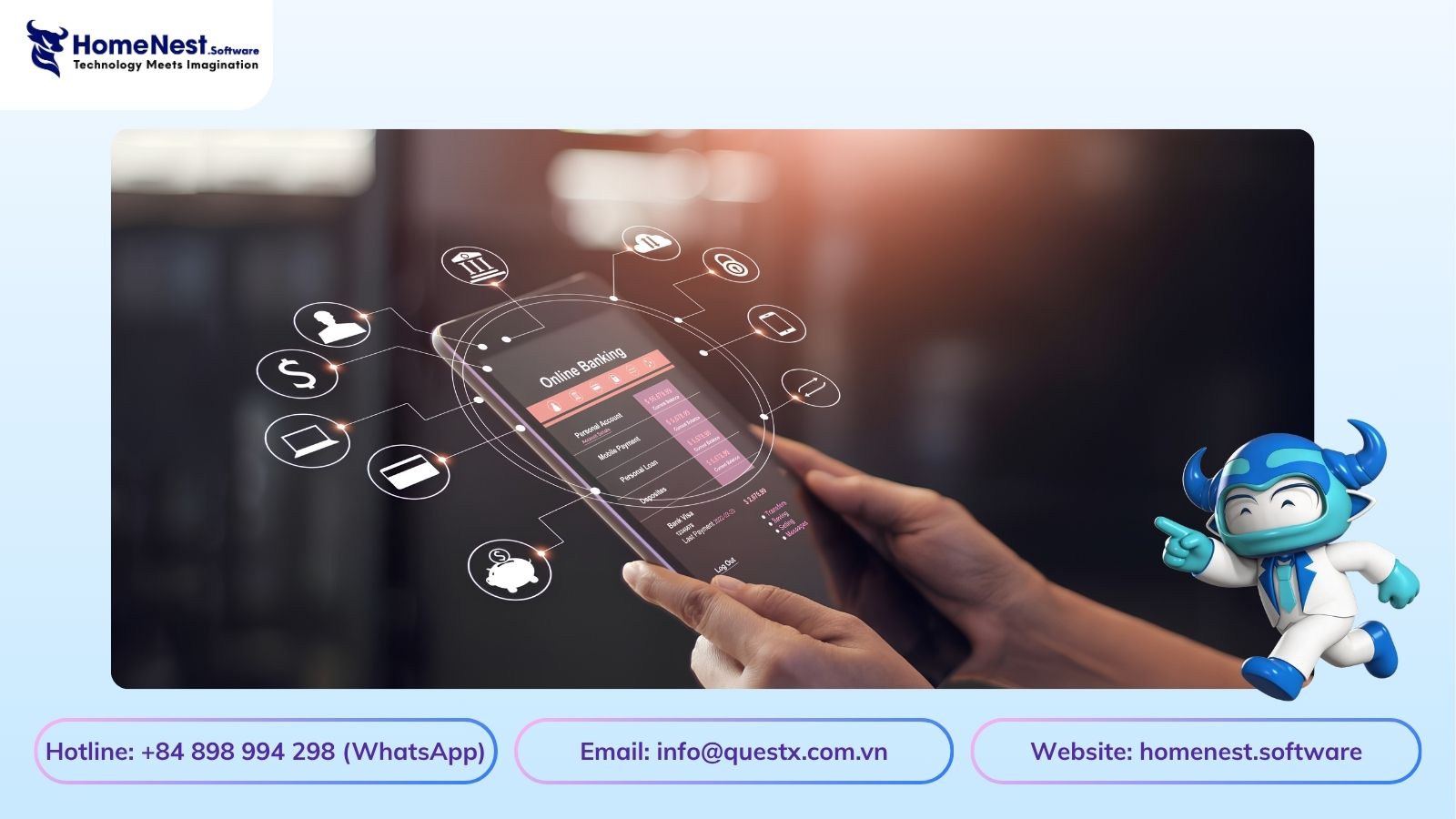
In today’s digital economy, mobile banking apps are no longer optional. They are a core channel for delivering financial services, improving customer experience, and driving growth. As a result, many companies are actively investing in digital banking app development to stay competitive and future ready.
1. Growing Demand for Digital Banking
Users now expect 24/7 access to financial services directly from their smartphones. This shift in behavior is pushing businesses to build intuitive and reliable banking apps that meet modern expectations while improving overall customer satisfaction.
2. Stronger Customer Engagement
If you build a credit card bill payment app or similar fintech solution, it allows real time interaction through push notifications, chatbots, and personalized services. This continuous engagement strengthens user relationships and increases retention.
3. Competitive Advantage
A well designed banking app with advanced features such as AI assistants, budgeting tools, and investment tracking helps businesses stand out. Innovation in user experience and functionality positions your brand as forward thinking and customer focused.
4. Increased Revenue Opportunities
Apps similar to Bank of America open up multiple revenue streams, including transaction fees, premium subscriptions, and cross selling financial products. Additionally, when you develop a banking website & web app alongside mobile solutions, you can reduce operational costs and expand service reach.
5. Data Driven Decision Making
Mobile banking apps generate valuable user data and behavioral insights. Businesses can leverage this data to refine services, personalize user experiences, and execute more effective marketing strategies, leading to better decision making and higher conversion rates.
By investing in mobile banking app development, businesses can unlock long term growth, improve user experience, and build a strong competitive position in the fintech market.
How Can AI Benefit Bank of America and Other Banking Apps?
Artificial intelligence is transforming how banking apps operate, making them smarter, faster, and more secure. By integrating AI in fintech, financial platforms can deliver more personalized and efficient experiences for users.
- Personalized Financial Insights
AI analyzes user behavior and spending patterns to provide tailored recommendations, helping customers manage their money more effectively. - Real Time Fraud Detection
AI systems can identify unusual transactions instantly, reducing fraud risk and strengthening user trust through enhanced security. - Automation of Routine Tasks
Everyday actions like bill payments, transfers, and reminders can be automated, saving time and improving convenience for users. - Operational Efficiency
AI helps streamline internal banking processes by reducing manual work, improving accuracy, and increasing overall productivity. - Enhanced Security and Accessibility
Voice enabled features and AI driven authentication allow users to log in, manage accounts, and perform actions more easily while maintaining high security standards.
By leveraging AI, banking apps can deliver smarter financial services while improving both user experience and operational performance.
7 Steps to Develop an App Like Bank of America
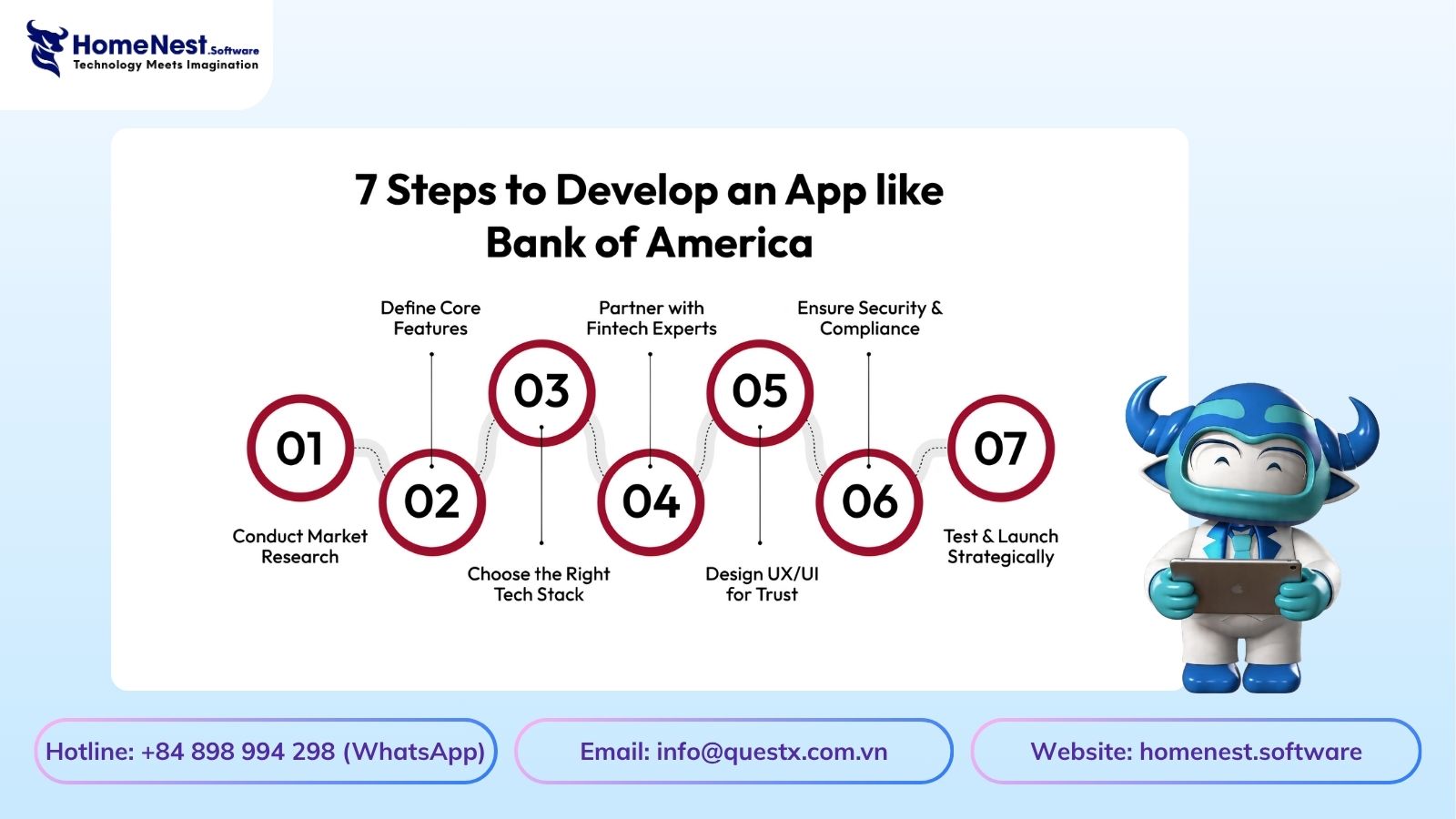
Building an app like Bank of America requires more than strong coding skills. It demands the right strategy, secure architecture, seamless user experience, and full alignment with banking regulations. Below is a practical on demand banking app development process that helps businesses move from idea to launch with confidence.
1. Conduct Market Research
The first step is understanding the digital banking landscape. Many businesses hire dedicated mobile app developers at this stage to evaluate customer expectations, emerging fintech trends, competitor strengths, and gaps in the market.
You should focus on:
- User behavior and banking habits
- Security expectations
- Popular financial tools and services
- Competitor features and app experience
This research helps define your app’s market position and ensures the product is built around real user needs.
2. Define Core Features
Once research is complete, identify the features your app must include. A banking app like Bank of America should cover core services such as:
- Account management
- Mobile check deposit
- Fund transfers
- Bill payments
- Credit monitoring
- Customer support
You can then expand with advanced capabilities like AI chatbots, budgeting tools, and fraud alerts. The goal is to balance functionality, usability, and compliance while creating a premium banking experience.
3. Choose the Right Tech Stack
The right technology stack determines how scalable, secure, and efficient your app will be. Many businesses partner with a fintech mobile app development company to choose the best combination of frontend, backend, infrastructure, and APIs.
A typical stack may include:
- Frontend: React Native, Swift, Kotlin
- Backend: Node.js, Java
- Cloud: AWS, Google Cloud
- Integrations: Payment gateways, biometric authentication, KYC APIs
Strong encryption, secure APIs, and cloud native infrastructure are essential to support performance and protect user data.
4. Partner with Fintech Experts
Banking apps must comply with strict financial and data security standards. That is why working with fintech specialists is critical. Experienced development teams understand financial workflows, compliance requirements, and cyber risk management.
Partnering with the right team can strengthen your Bank of America app development services strategy, reduce technical risk, and ensure compliance with standards such as:
- PCI DSS
- KYC
- GDPR
This step often has a major impact on product stability and long term success.
5. Design UX/UI for Trust
A banking app must feel secure, intuitive, and professional from the first interaction. Many companies work with a banking software development company to design interfaces that build trust while simplifying financial tasks.
Your UX/UI should include:
- Clean and familiar layouts
- Clear navigation and strong calls to action
- Low friction onboarding
- Accessibility features
- Personalized dashboards
Every design decision should reinforce reliability and help users feel in control of their finances.
6. Ensure Security and Compliance
Security and compliance are the foundational pillars of any fintech product. A banking app must implement multiple layers of protection to secure transactions, mitigate cyber threats, and protect sensitive financial data.
Essential technical measures include:
- Multi-factor authentication (MFA) and biometric login
- End-to-end encryption for all data in transit and at rest
- Secure APIs and real-time threat monitoring
- Regular penetration testing and vulnerability assessments
Beyond standard encryption, financial institutions must maintain absolute control over their software infrastructure to comply with stringent audit regulations. Partnering with a development firm that guarantees the handover of 100% source code is critical.
Complete code ownership ensures that internal compliance teams can fully audit the security architecture, eliminate third-party vendor lock-in, and maintain strict data sovereignty over all user transactions. Following secure coding practices and ensuring full code transparency are essential to maintaining user trust and avoiding legal risks.
7. Test and Launch Strategically
Before release, your app should go through extensive testing across devices, operating systems, and usage scenarios. This final Peer to Peer (P2P) payment app development stage is where quality assurance becomes essential.
Testing should cover:
- Functional performance
- Security
- Usability
- Device compatibility
- Load and stress testing
After that, launch with a clear go to market strategy, customer support plan, and monitoring tools. Once live, continue improving the product through updates, user feedback, and compliance based enhancements.
Latest Articles
View All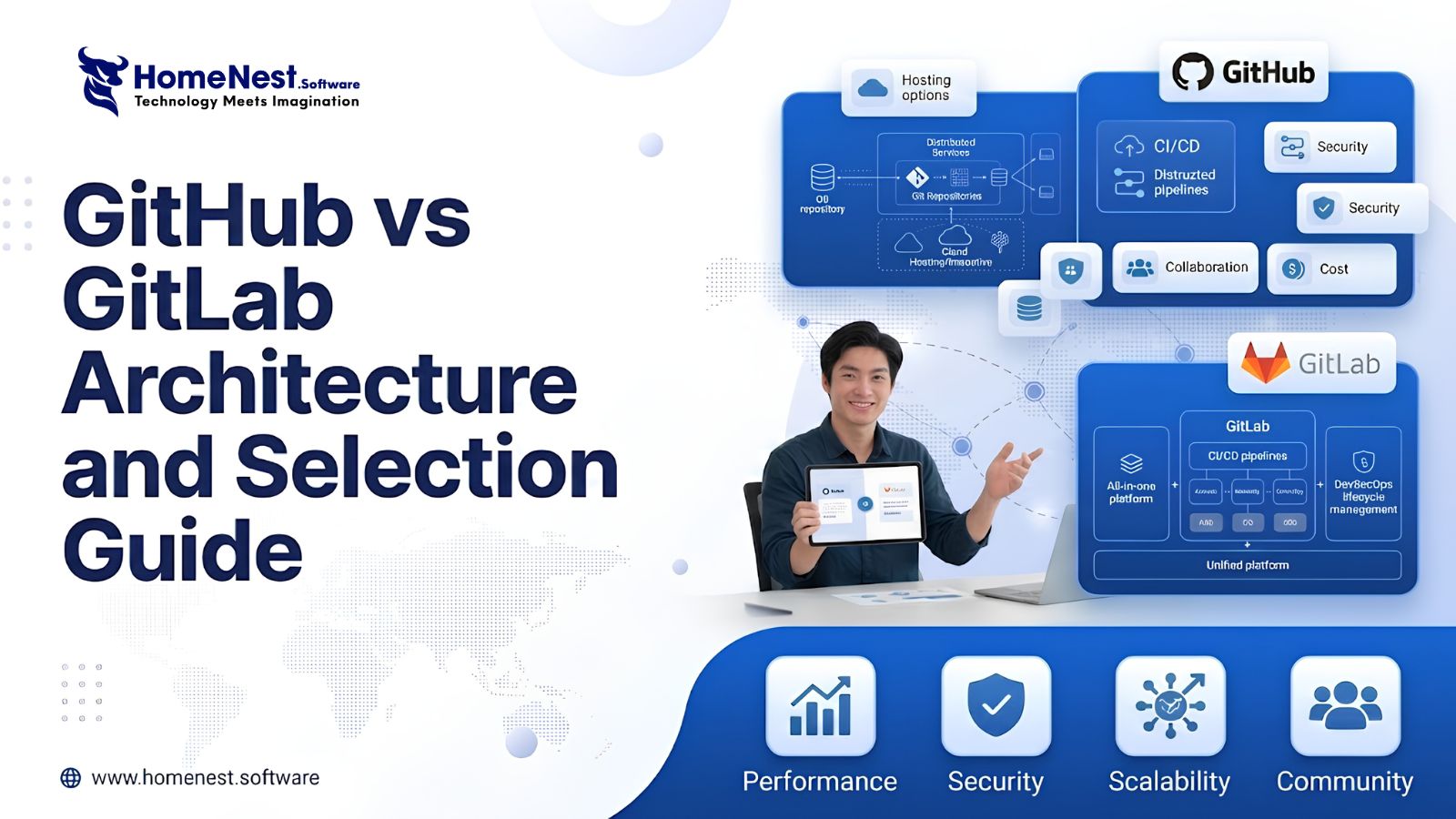
GitHub vs GitLab – Architecture and Selection Guide
Managing source code requires stable infrastructure. Automating software releases requires reliable pipelines. Tool sprawl creates operational complexity. Engineering teams face friction when using fragmented DevOps tools. Selecting between GitHub and GitLab shapes long term development efficiency.
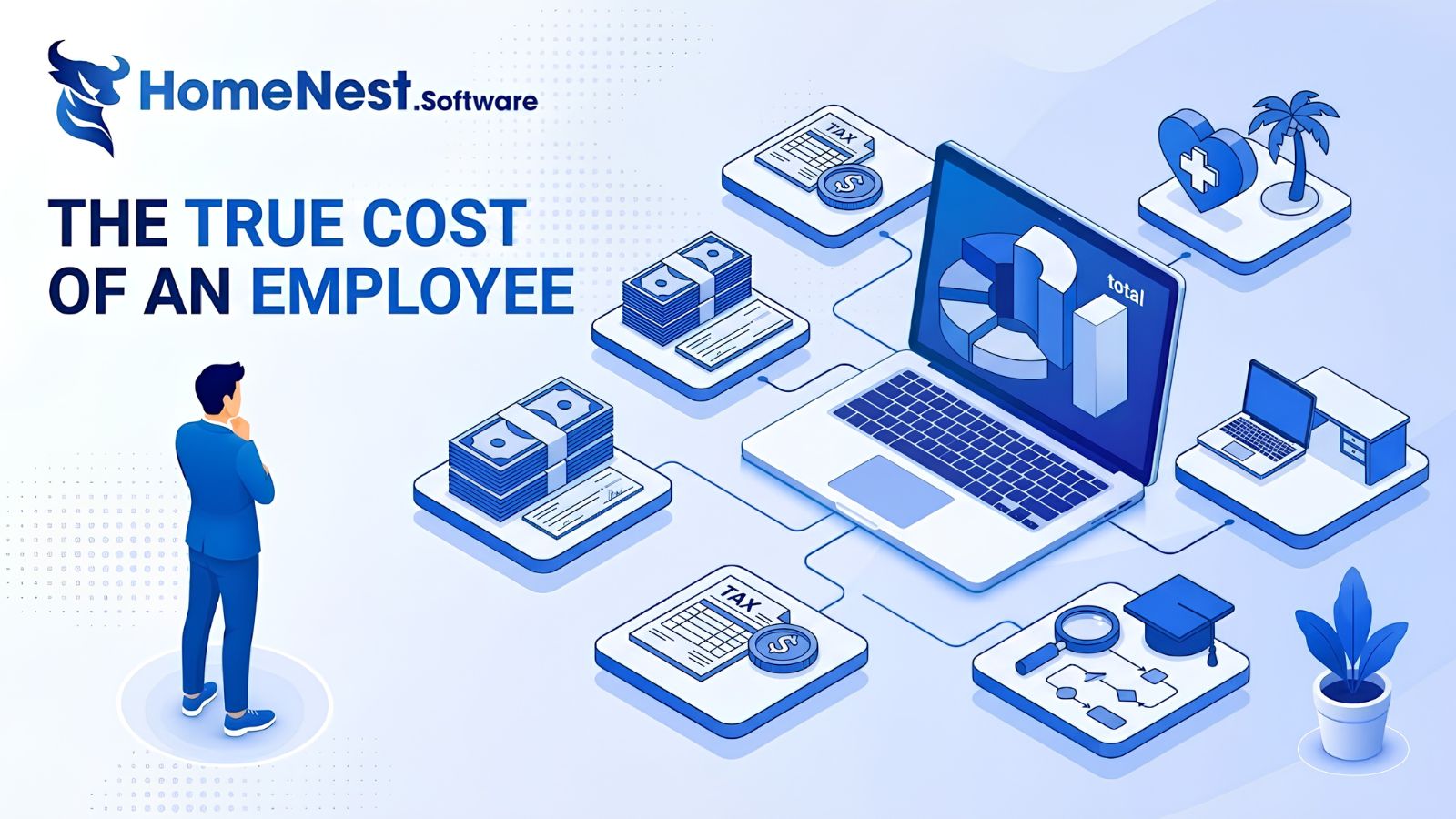
The True Cost of an Employee: A Complete Breakdown for Employers
This article reveals that the true cost of an employee is typically 25% to 40% higher than their base salary due to hidden expenses like taxes, benefits, workspace, and recruiting. To address this, the guide provides a detailed 7-step framework to accurately calculate total employer costs, alongside actionable strategies to optimize budgets and improve retention without reducing pay.
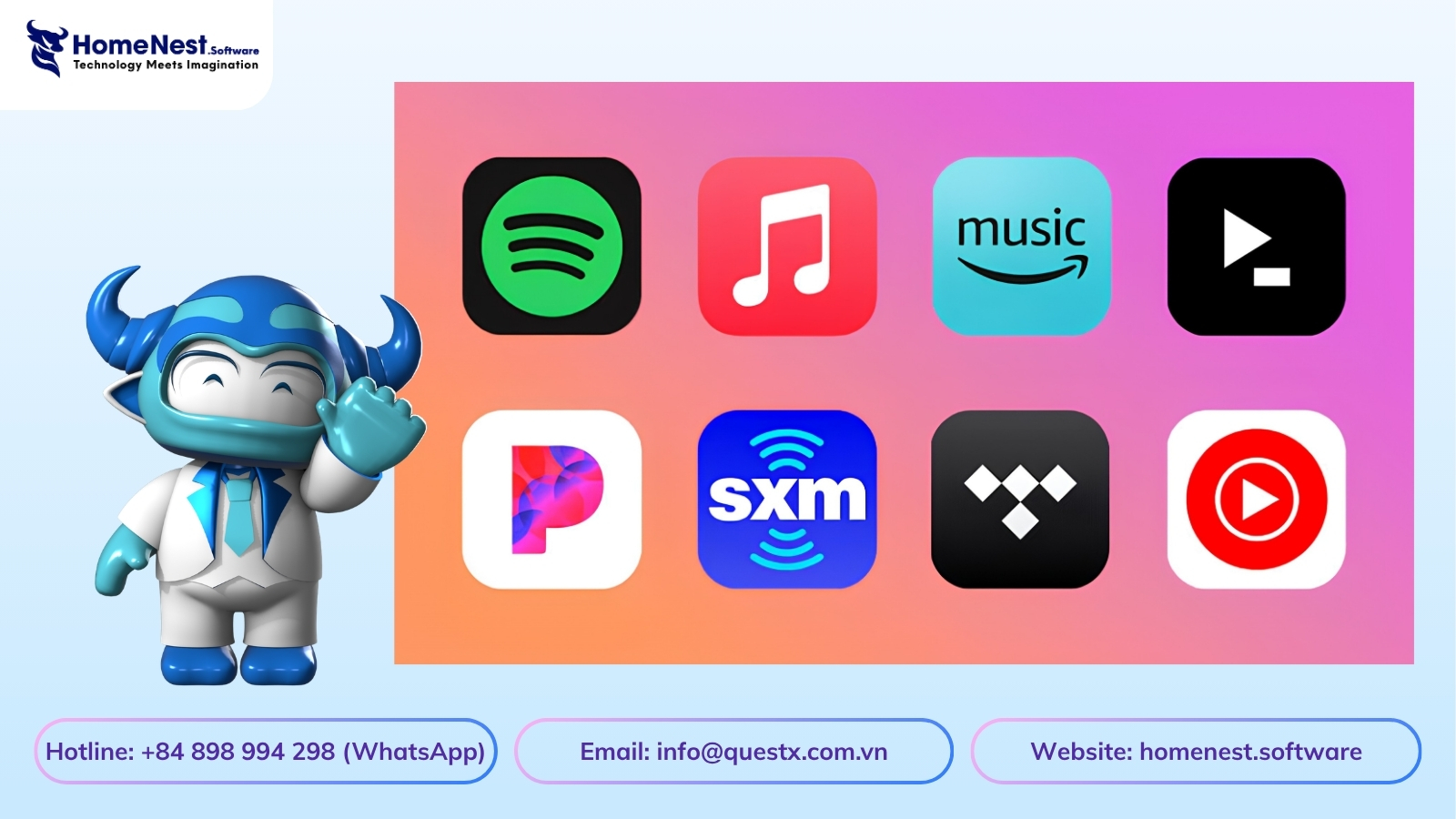
Essential Tips To Develop A Music Streaming App
Discover expert tips to develop a successful music streaming app with HomeNest Software. This guide covers essential features, legal licensing, and scalable technology stacks. Learn how to build a robust, cross-platform application with AI personalization to stand out in the 2026 competitive audio market.
How to Build a Language Learning App Like Cake
Discover how to build a successful language learning app like Cake with this comprehensive guide from HomeNest Software. We explore market research, essential MVP features, advanced AI integrations, tech stack selection, and estimated development costs. Partner with HomeNest Software to create a scalable, gamified, and highly engaging educational platform tailored to your business goals. Start your app development journey with us today.
How to Build an App Like TaskRabbit: Features, Cost, Tech Stack – Business Model
Building an app like TaskRabbit is more than replicating existing features—it’s about creating a trusted marketplace that seamlessly connects customers with skilled service providers. By combining an intuitive user experience, secure payment systems, scalable architecture, and the right business model, you can launch a competitive on-demand platform. Partnering with an experienced app development company like HomeNest Software ensures your product is built with the technology, flexibility, and long-term scalability needed to succeed in the rapidly growing gig economy.
How to Build a Meal Planning App: A Complete Step-by-Step Guide
Building a successful meal planning app goes beyond creating an attractive interface it requires a clear business strategy, personalized user experiences, and scalable technology. By combining essential features like AI-powered meal recommendations, nutrition tracking, grocery list automation, and wearable integration, businesses can deliver lasting value to users while capitalizing on the growing digital health market. Partnering with an experienced mobile app development company ensures your solution is secure, future-ready, and designed to succeed in an increasingly competitive health-tech industry.