
How to Build a Banking App Like Barclays: A Complete Entrepreneur’s Guide
Building a banking app like Barclays requires more than just development. It demands a strong product vision, secure architecture, and a clear monetization strategy. From optimizing cost and selecting the right tech stack to ensuring compliance and scalability, every decision impacts long-term success. Partnering with an experienced team like HomeNest Software helps accelerate development, reduce risks, and deliver a high-quality fintech product that can compete in today’s fast-evolving digital banking landscape.
Scope of Work
In today’s digital-first world, convenience is no longer optional, it is expected. Banking is no exception. Users now demand mobile apps that deliver seamless transactions, real-time financial insights, and enterprise-grade security, all within a few taps. Building a banking app similar to Barclays is a strong opportunity to enter a high-growth, high-value market. However, success goes beyond development alone. It requires creating a secure, reliable, and intuitive digital banking experience that users can trust.
If you are wondering how to build a banking app like Barclays, this guide will walk you through everything you need to know. From core features to development strategy, you will gain a clear understanding of what it takes to create a modern banking application that meets evolving customer expectations.
Market Stats of Banking Apps
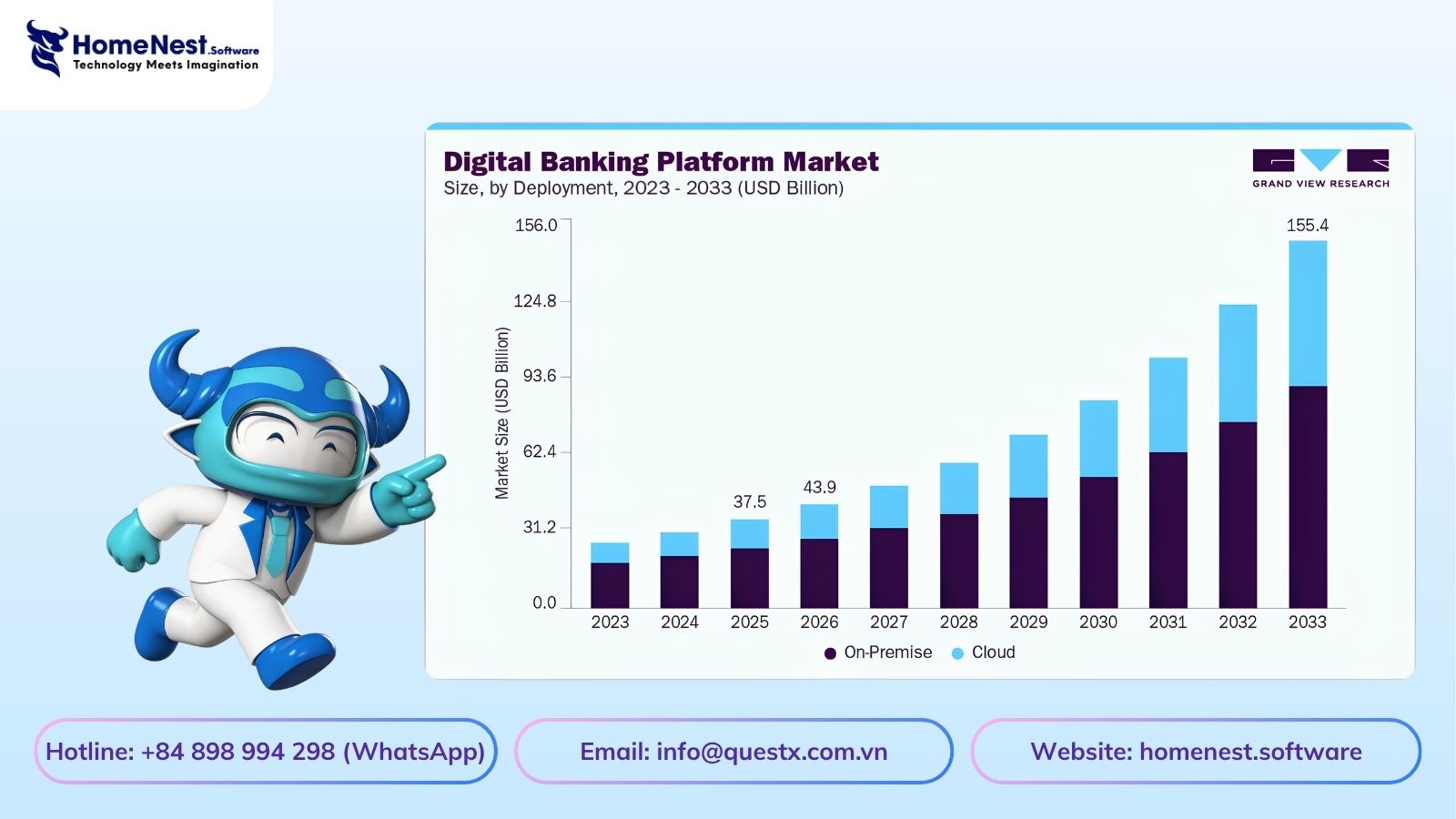
The digital banking market is experiencing rapid growth, driven by increasing demand for mobile-first financial services and seamless user experiences. According to Grand View Research, the industry shows strong long-term potential:
- The global digital banking platform market size is estimated to reach US$37.49 billion by 2025.
- It is projected to reach US$155.44 billion by 2033, growing at a CAGR of 19.8% from 2026 to 2033.
Regionally, Asia Pacific dominates the digital banking platform market with the largest revenue share of 32.5% by 2025, demonstrating unprecedented expansion and adoption across the region.
In terms of platform usage, the online banking segment is projected to capture the largest revenue share by 2025, reflecting the growing preference for digital banking solutions that operate 24/7.
These figures clearly demonstrate that investing in a customized banking app development strategy is perfectly aligned with long-term market trends and user needs.
What Is Barclays?
Founded in 1690, Barclays is a British multinational bank and financial services company headquartered in London. Established by John Freame and Thomas Gould, the bank has grown into one of the most recognized financial institutions globally, operating in more than 40 countries.
Barclays offers a wide range of services, including savings and current accounts, mortgages, personal loans, credit cards, and investment products. Its operations are primarily structured into two key divisions: Barclaycard and Barclays Investment Bank.
For businesses aiming to build a similar solution, creating a banking app like Barclays requires working with an experienced fintech development partner to ensure security, scalability, and compliance with financial regulations.
Why Entrepreneurs Are Investing in Banking Apps Like Barclays
The rapid shift toward digital-first financial services has made banking apps a high-priority investment area. Entrepreneurs are increasingly building apps similar to Barclays to capture market demand and create scalable fintech businesses. Here are the key drivers behind this trend:
1. Rising Demand for Digital Banking
Consumers expect fast, secure, and convenient banking experiences. Mobile apps that deliver real-time transactions and financial insights are becoming essential, driving strong demand and long-term user engagement.
2. Expansion of Fintech Capabilities
Advancements in fintech enable features like AI-driven budgeting, instant payments, and smart credit management. These innovations improve user experience and help new apps compete with established players.
3. Strong Scalability and Revenue Potential
Banking apps offer multiple monetization models such as subscriptions, transaction fees, and financial services partnerships. As user adoption grows, these platforms can scale efficiently and generate recurring revenue.
4. Building an All-in-One Financial Ecosystem
Modern users prefer a single platform for managing their finances. By combining services like payments, savings, loans, and investments, entrepreneurs can create a comprehensive ecosystem that increases retention and user lifetime value.
5. Enhancing Brand Trust and Market Position
Partnering with an experienced development team helps deliver a secure, reliable, and user-friendly product. A well-built banking app strengthens brand credibility and positions the business as a trusted player in the financial market.
Top 10 Banking Apps Like Barclays
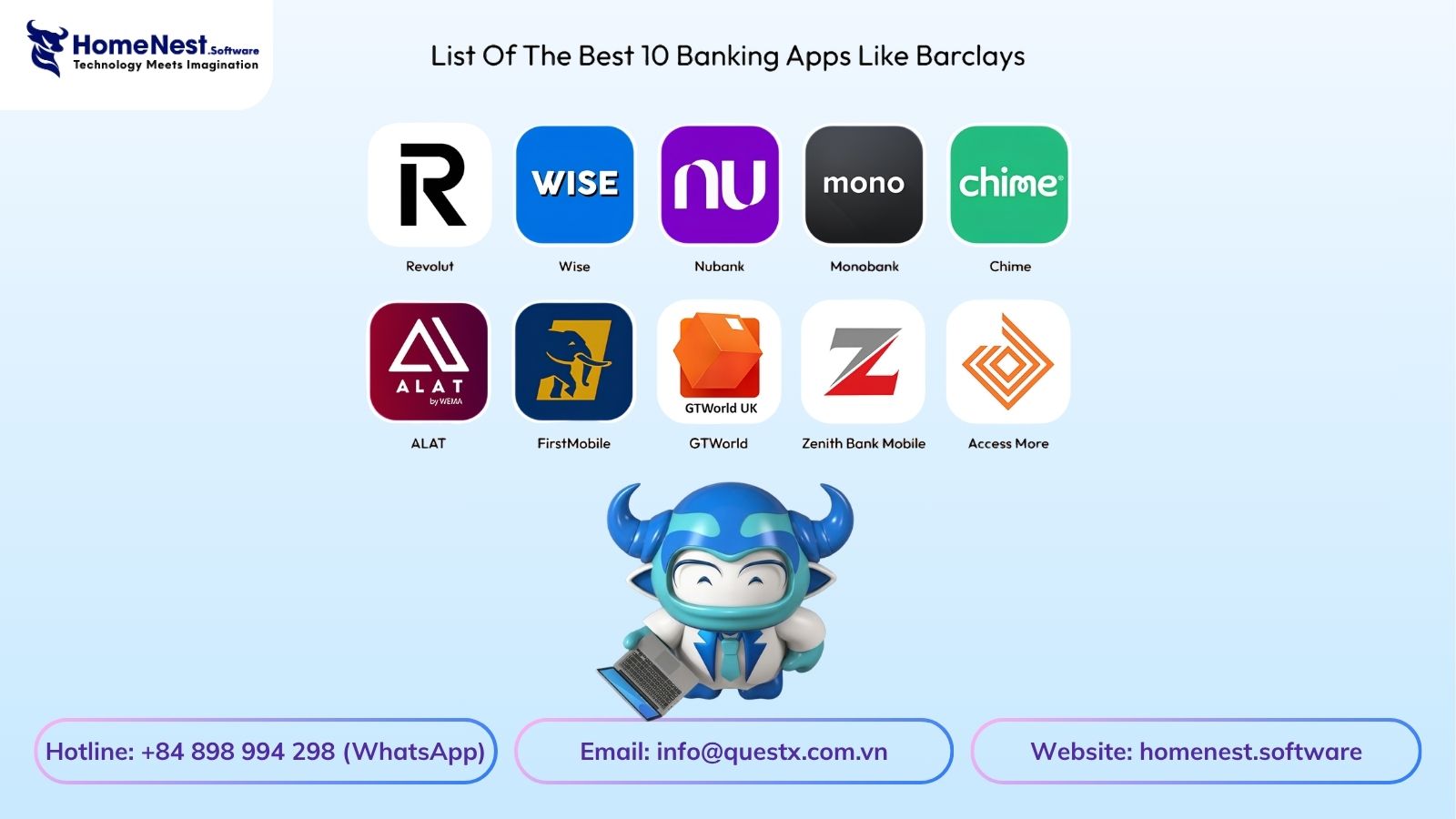
The fintech market offers a wide range of powerful banking apps that deliver seamless digital financial services. These alternatives to Barclays are known for their strong user experience, innovative features, and large user bases.
| App Name | Platforms | Estimated Downloads | User Ratings |
|---|---|---|---|
| Revolut | Android, iOS | 65M+ | 4.7/5 |
| Wise | Android, iOS | 10M+ | 4.6/5 |
| Nubank | Android, iOS | 50M+ | 4.7/5 |
| Monobank | Android, iOS | 10M+ | 4.9/5 |
| Chime | Android, iOS | 10M+ | 4.8/5 |
| ALAT | Android, iOS | 1M+ | 4.2/5 |
| FirstMobile | Android, iOS | 10M+ | 4.2/5 |
| GTWorld | Android, iOS | 5M+ | 4.0/5 |
| Zenith Bank Mobile | Android, iOS | 5M+ | 3.9/5 |
| Access More | Android, iOS | 10M+ | 4.5/5 |
These apps demonstrate how digital banking is evolving globally, offering everything from instant payments and international transfers to budgeting tools and credit management. Studying their features and user experience can provide valuable insights when building a banking app like Barclays.
What Are the Steps to Build an App Like Barclays?
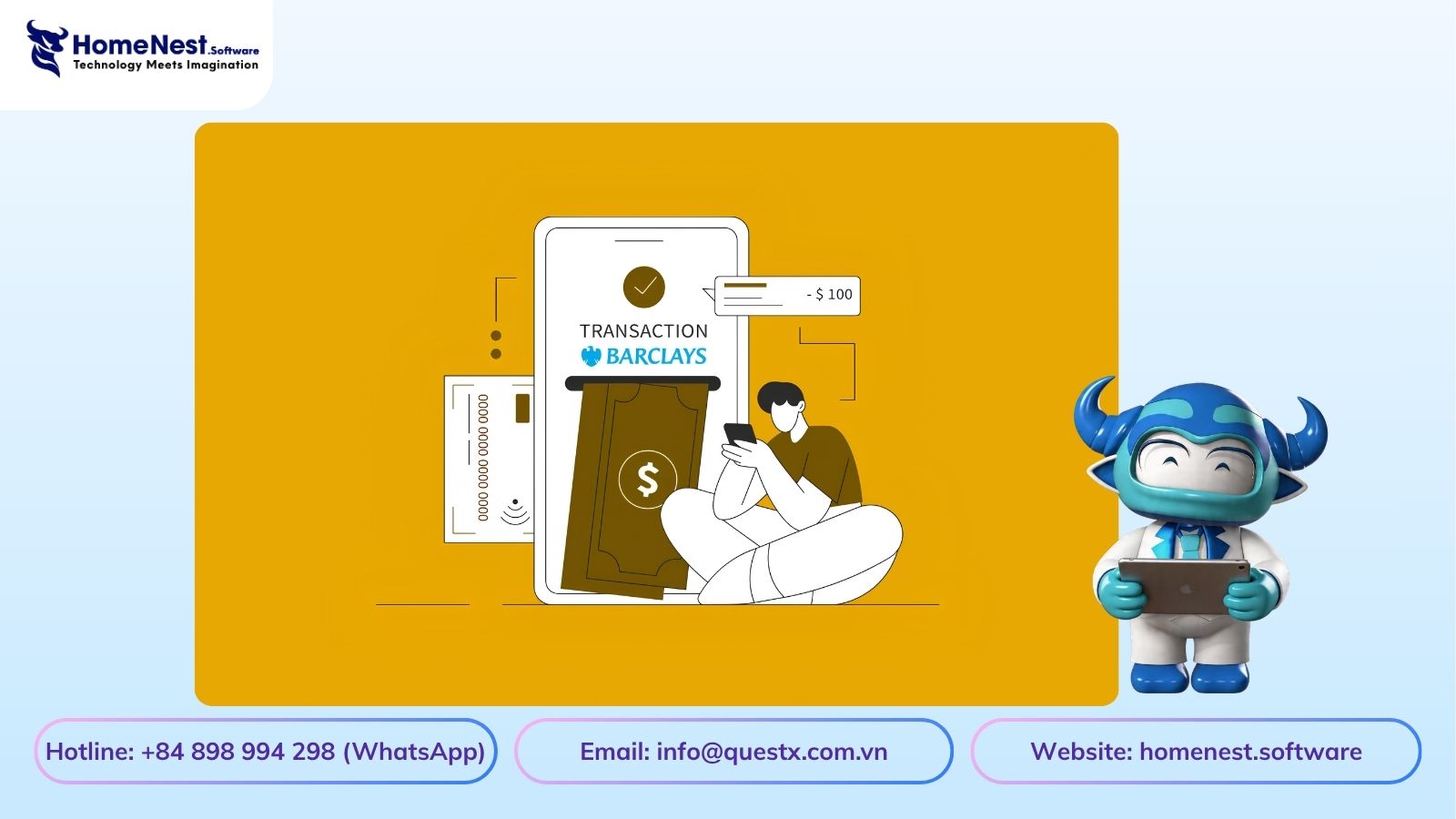
Building a modern banking app requires a structured approach, from research to post-launch support. Below is a refined step-by-step process, now aligned with key development services and real-world execution.
1. Market Research and Analysis
Start by studying the market landscape. Identify user needs, analyze competitors, and evaluate fintech trends. This helps define a strong value proposition and uncover opportunities for innovation.
2. Define Business Model and Core Features
Outline your monetization strategy and key features such as secure transactions, account management, and financial insights. At this stage, many teams begin with MVP app development to validate the idea quickly before scaling.
3. Choose the Right Tech Stack
Select technologies that ensure scalability, security, and cross-platform compatibility. Leveraging Android app development services alongside iOS development ensures your app reaches a broader user base with consistent performance.
4. UI/UX Design
Design a clean, intuitive interface that simplifies complex financial operations. Focus on user-friendly navigation, minimalistic layouts, and a seamless experience across devices.
5. Testing and Quality Assurance
Conduct thorough testing, including functionality, performance, and security checks. This ensures your app is stable, compliant, and ready for real-world financial usage.
6. Launch and Marketing Strategy
Deploy your app on app stores and execute a strong go-to-market plan. Using on-demand app development solutions can help you scale features and user acquisition strategies more flexibly as demand grows.
7. Post-Launch Support and Updates
After launch, continuously improve your app with updates, new features, and performance enhancements. Ongoing support ensures long-term user retention and product stability.
If you are planning to build a banking app like Barclays, choosing the right strategy and development partner will play a critical role in your success.
What Features Should a Banking App Have?
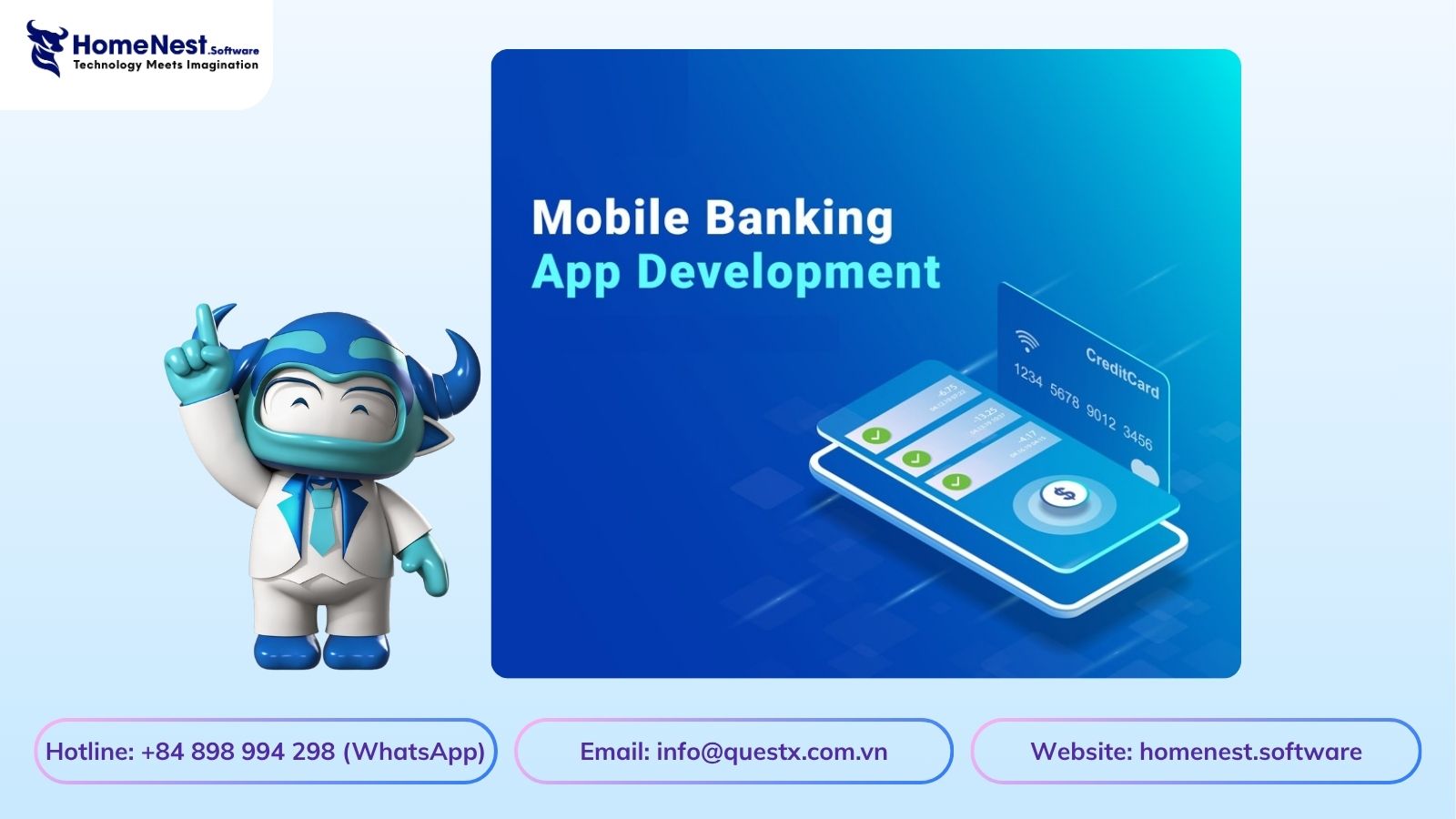
If you are planning to build a modern banking app like Barclays, focusing on the right feature set is critical. Below are the essential features that define a secure, scalable, and user-friendly digital banking experience.
Secure Login and Authentication
Your app must include strong security layers such as biometric login (fingerprint or face ID), OTP verification, and end-to-end encryption to protect user data and transactions. This is a core priority in any Fintech app development services strategy.
Real-Time Transactions
Users expect instant fund transfers, bill payments, and deposits. Real-time processing ensures accuracy, transparency, and a seamless banking experience.
Push Notifications
Provide real-time alerts for transactions, account activity, and offers. This keeps users informed and improves engagement and trust.
AI-Based Financial Tracking
AI-powered insights can automatically categorize expenses, track spending patterns, and suggest smarter financial decisions, enhancing user experience.
Account Management Dashboard
A centralized dashboard allows users to view balances, transaction history, and statements. This is a core feature that improves usability and control.
eWallet Integration
Integrating digital wallet functionality enables seamless payments, shopping transactions, and peer-to-peer transfers. Leveraging eWallet app development services helps ensure secure and scalable payment infrastructure.
Integrating LLM APIs for Automated Workflows
Modern financial applications demand more than just rule-based chatbots. Integrating Large Language Models (LLMs) via APIs enables natural language processing, real-time analysis of complex financial queries, and efficient automation of customer support workflows.
Smart Budgeting Tools
Advanced budgeting features help users manage finances by automatically tracking and categorizing spending, making financial planning easier.
Multi-Currency Payments
Support for multiple currencies allows users to send and receive money globally, making your app suitable for international transactions.
The Integration of Blockchain and Transaction Security
Advanced security architectures must integrate blockchain technology to ensure the immutability of the transaction ledger. This infrastructure provides accurate traceability for cross-border money flows and enhances the integrity of the overall system.
These features form the foundation of a competitive banking app and are essential for delivering a reliable and high-performing fintech product.
What Is the Cost to Build a Banking App Like Barclays?
The cost of building a banking app like Barclays typically ranges from $8,000 to $30,000+, depending on the app’s complexity, feature set, and technical requirements.
A simple MVP version with core functionalities will cost significantly less, while a fully featured, enterprise-grade banking solution requires a higher investment. Several factors influence the overall fintech app development cost, including UI/UX design, third-party integrations, backend infrastructure, security requirements, and the location of your development team.
Estimated Cost Breakdown
| Type of Banking App | Features Included | Estimated Cost |
|---|---|---|
| Basic App | Login, account overview, balance check, fund transfer | $8,000 – $12,000 |
| Intermediate App | Bill payments, transaction history, push notifications, basic security | $12,000 – $18,000 |
| Advanced App | AI chatbot, multi-currency support, analytics, biometric authentication | $18,000 – $25,000 |
| Enterprise-Level App | Full fintech integration, API ecosystem, compliance, high-level security | $25,000 – $30,000+ |
Choosing the right scope at the beginning, often starting with an MVP and scaling gradually, can help optimize costs while ensuring faster time-to-market.
Which Factors Impact the Cost to Build a Banking App Like Barclays?
While having a rough budget is helpful, understanding the key cost drivers is essential for accurate planning. Below are the main factors that influence the total cost of building a banking app.
1. Platform Choice
The platform you choose directly affects development time, cost, and market reach. Building separate apps using iOS app development solutions and Android development increases cost, while cross-platform approaches can optimize budget and speed.
| Platform Type | Description | Estimated Cost |
|---|---|---|
| Android App | Wider reach and flexibility across devices | $15,000 – $25,000 |
| iOS App | Premium performance using iOS app development solutions | $18,000 – $28,000 |
| Cross-Platform | Single codebase for both platforms, more cost-efficient | $20,000 – $30,000 |
2. Backend Infrastructure
A strong backend is critical for handling secure transactions and scaling the app. Cloud platforms like Google Cloud or Firebase offer flexibility, but infrastructure complexity impacts cost.
| Infrastructure Type | Description | Estimated Cost |
|---|---|---|
| Basic Cloud Setup | Supports user data and simple transactions | $12,000 – $18,000 |
| Scalable Cloud Architecture | Handles real-time operations and growth | $18,000 – $25,000 |
| Advanced Serverless System | High security, uptime, and performance optimization | $25,000 – $30,000 |
3. Security and Compliance
Security is an indispensable element in the fintech field. The higher the security and compliance requirements, the greater the development costs.
Data transparency and source code ownership:
Security in fintech goes beyond basic encryption; it demands absolute control over data. Relying on closed-source, third-party systems for a financial application carries significant legal and data leak risks. This risk is eliminated through a commitment to 100% source code transfer. Customers retain full intellectual property rights, allowing internal engineering teams to independently test the system architecture, customize operational features, and manage user data in strict compliance with regulations.
| Security Level | Description | Estimated Cost |
|---|---|---|
| Standard Security | Basic encryption and authentication | $10,000 – $16,000 |
| Advanced Security | Multi-factor authentication and fraud detection | $18,000 – $25,000 |
| Enterprise Compliance | GDPR, PCI-DSS, and regulatory compliance | $25,000 – $30,000 |
4. UI/UX Design
User experience plays a major role in adoption and retention. More advanced and customized designs increase development costs but improve long-term value.
| Design Type | Description | Estimated Cost |
|---|---|---|
| Basic UI/UX | Simple, functional interface | $8,000 – $14,000 |
| Modern UI/UX | Interactive dashboards and improved usability | $15,000 – $22,000 |
| Premium UI/UX | Custom branding, animations, and high-end experience | $22,000 – $30,000 |
Each of these factors contributes to the overall cost. Balancing performance, security, and user experience with your budget is key to building a successful banking app like Barclays.
What Monetization Models Can You Use in a Banking App for Recurring Revenue?
To build a sustainable fintech product, entrepreneurs need clear and scalable revenue strategies. Below are the most effective monetization models commonly used in modern banking apps.
1. Loan and Credit Services
Offering microloans or credit lines allows you to generate revenue through interest. Competitive rates combined with fast approvals can improve user adoption while creating a steady income stream.
2. Subscription Plans
A subscription model works well for premium features such as advanced analytics, personalized financial insights, priority support, and enhanced security. Monthly or annual plans provide predictable recurring revenue.
3. Affiliate Partnerships
Partnering with financial service providers such as insurers, lenders, or investment platforms allows you to earn commissions. Each successful referral or purchase made through your app generates additional income.
4. Transaction Fees
Charging small fees on services like fund transfers, currency exchange, or bill payments is a widely used model in mobile banking. It ensures revenue generation while keeping basic features accessible to users.
5. White Label Solutions
You can license your banking platform to other businesses under their branding. This white label model generates revenue through licensing fees while expanding your market reach without additional customer acquisition costs.
Combining multiple monetization models often delivers the best results, helping your banking app achieve both scalability and long-term profitability.
Expert Insights on System Architecture
Practical experience in developing and optimizing high-traffic B2B platforms demonstrates a clear reality: an intuitive user interface is ineffective if the backend cannot synchronize data in real-time.
Nguyễn Tiến, Co-Founder of HomeNest Software, emphasizes: “In the fintech sector, the security and stability of the cloud architecture are critical. The most resilient platform is built on transparency, where the client maintains total control over their system architecture and data governance.”
Conclusion
Building a banking app like Barclays requires more than just development, it demands a clear vision to deliver a smarter, more intuitive way for users to manage their finances. A well-designed banking app simplifies complex processes, turning traditional banking into a seamless experience accessible in just a few taps.
If your goal is to compete among the top mobile banking apps in the UK or beyond, having the right strategy, features, and technology foundation is essential. This guide has also highlighted key considerations, including how P2P lending functionalities can be integrated effectively to expand your app’s value proposition.
With the support of experienced fintech partners like HomeNest Software, transforming your concept into a secure, scalable, and high-performing banking solution becomes far more achievable.
FAQs About Building a Banking App Like Barclays
How much does it cost to build a banking app like Barclays?
The cost typically ranges from $8,000 to $30,000+ depending on features, security requirements, platform choice, and overall complexity.
How long does it take to develop a banking app?
A basic MVP can take 3–6 months, while a full-featured banking app may require 6–12 months or more, depending on integrations and compliance requirements.
What are the main security requirements for a banking app?
A banking app must implement end-to-end data encryption (AES-256), multi-factor authentication (MFA), secure API gateways, biometric logins (FaceID/TouchID), tokenization, real-time fraud monitoring, and strict compliance with regulations such as GDPR, PCI-DSS, and PSD2.
Can I start with an MVP for a banking app?
Yes, starting with a Minimum Viable Product (MVP) is highly recommended. It allows you to launch core features (like secure login, balance check, and basic transfers) to a limited audience, test the market, gather user feedback, and scale the app gradually while optimizing costs.
Latest Articles
View All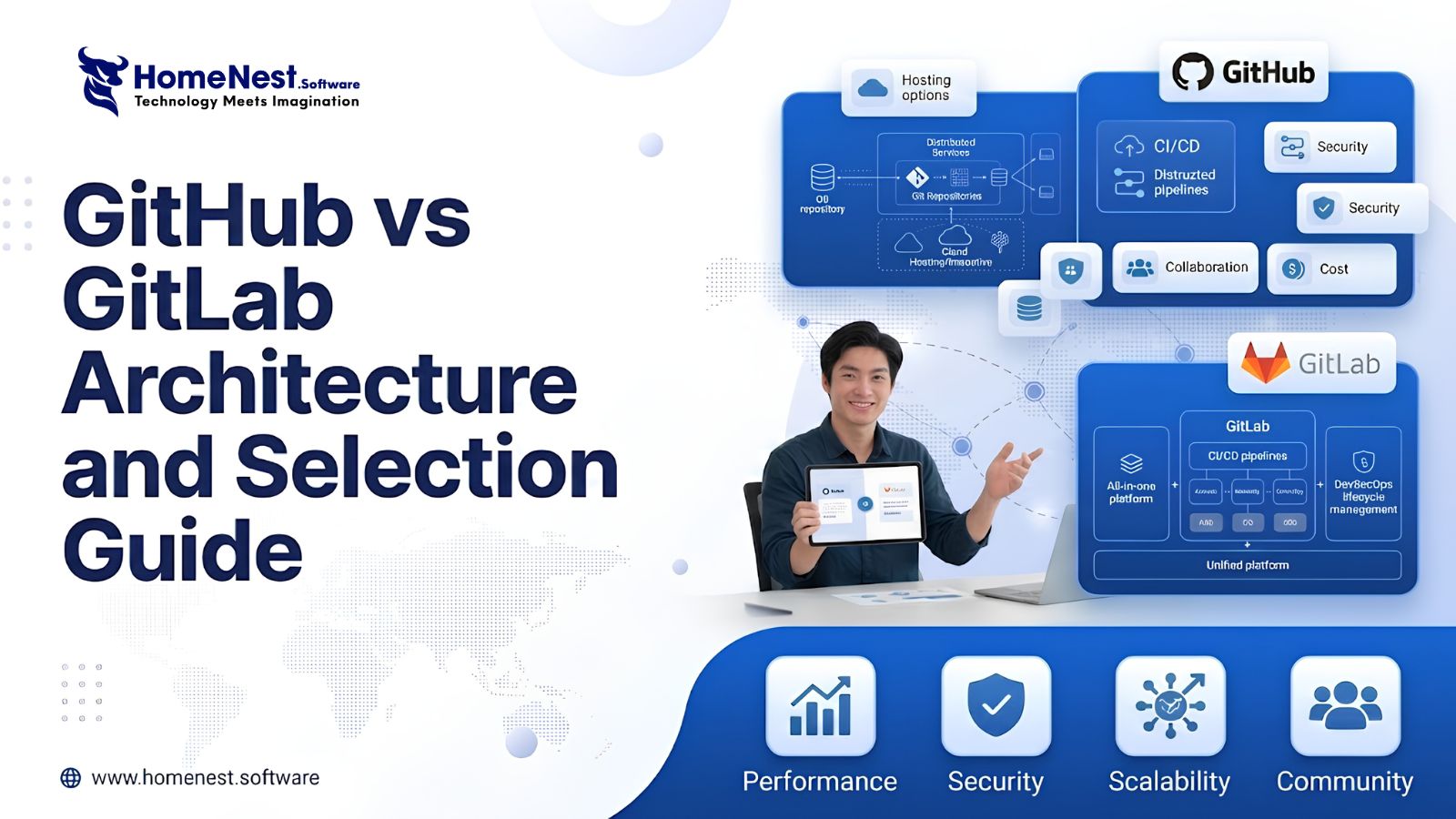
GitHub vs GitLab – Architecture and Selection Guide
Managing source code requires stable infrastructure. Automating software releases requires reliable pipelines. Tool sprawl creates operational complexity. Engineering teams face friction when using fragmented DevOps tools. Selecting between GitHub and GitLab shapes long term development efficiency.
The True Cost of an Employee: A Complete Breakdown for Employers
This article reveals that the true cost of an employee is typically 25% to 40% higher than their base salary due to hidden expenses like taxes, benefits, workspace, and recruiting. To address this, the guide provides a detailed 7-step framework to accurately calculate total employer costs, alongside actionable strategies to optimize budgets and improve retention without reducing pay.
Essential Tips To Develop A Music Streaming App
Discover expert tips to develop a successful music streaming app with HomeNest Software. This guide covers essential features, legal licensing, and scalable technology stacks. Learn how to build a robust, cross-platform application with AI personalization to stand out in the 2026 competitive audio market.
How to Build a Language Learning App Like Cake
Discover how to build a successful language learning app like Cake with this comprehensive guide from HomeNest Software. We explore market research, essential MVP features, advanced AI integrations, tech stack selection, and estimated development costs. Partner with HomeNest Software to create a scalable, gamified, and highly engaging educational platform tailored to your business goals. Start your app development journey with us today.
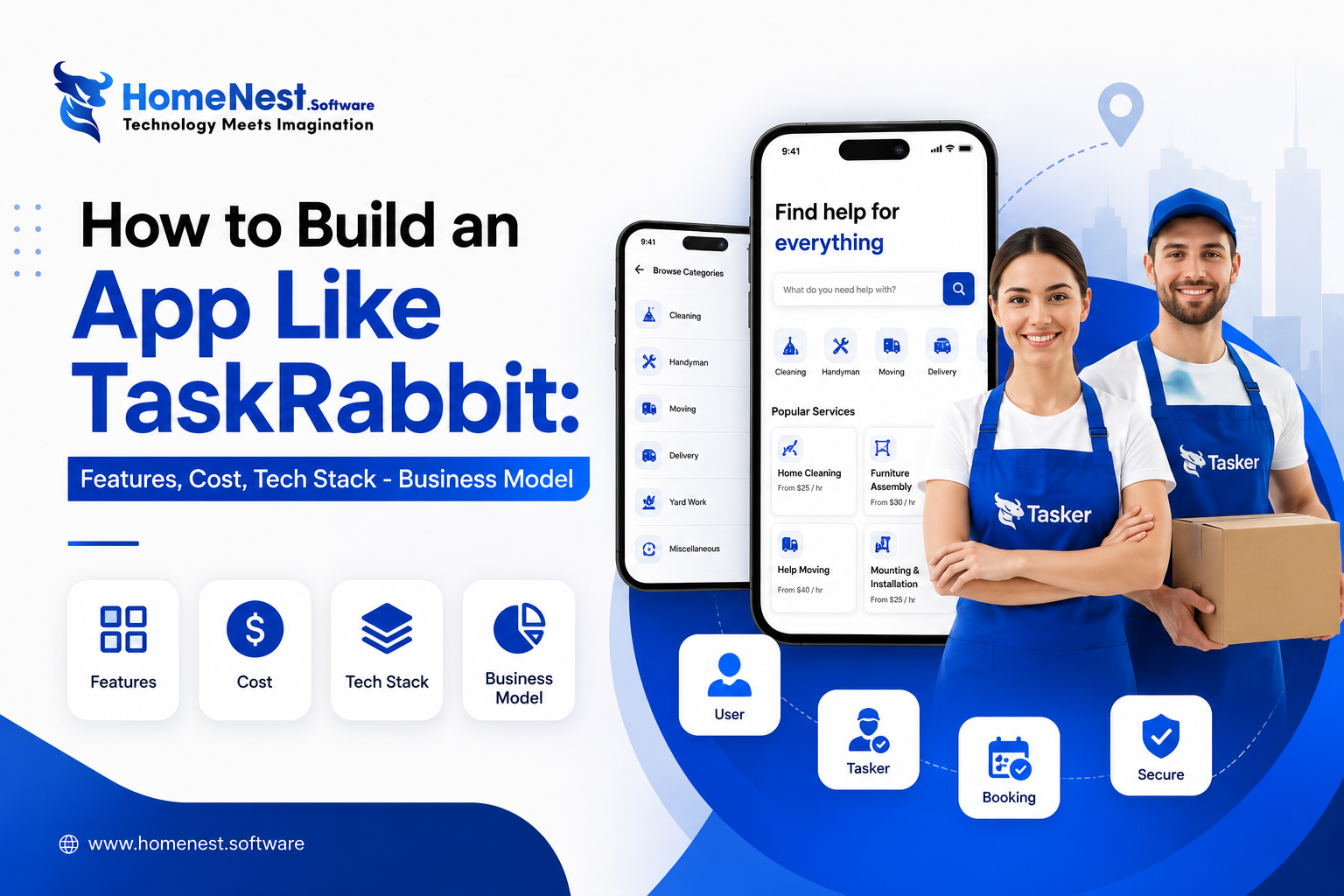
How to Build an App Like TaskRabbit: Features, Cost, Tech Stack – Business Model
Building an app like TaskRabbit is more than replicating existing features—it’s about creating a trusted marketplace that seamlessly connects customers with skilled service providers. By combining an intuitive user experience, secure payment systems, scalable architecture, and the right business model, you can launch a competitive on-demand platform. Partnering with an experienced app development company like HomeNest Software ensures your product is built with the technology, flexibility, and long-term scalability needed to succeed in the rapidly growing gig economy.
How to Build a Meal Planning App: A Complete Step-by-Step Guide
Building a successful meal planning app goes beyond creating an attractive interface it requires a clear business strategy, personalized user experiences, and scalable technology. By combining essential features like AI-powered meal recommendations, nutrition tracking, grocery list automation, and wearable integration, businesses can deliver lasting value to users while capitalizing on the growing digital health market. Partnering with an experienced mobile app development company ensures your solution is secure, future-ready, and designed to succeed in an increasingly competitive health-tech industry.