
Banking App Development Cost
Building a banking application is rarely a simple process; it’s a complex technical challenge requiring a balance between complying with stringent financial regulations, handling large transaction volumes, and a scalable cloud architecture. Miscalculating these technical requirements from the outset often leads to significant technical debt and budget overruns.
Based on HomeNest Software’s practical experience in designing enterprise-grade fintech solutions, this guide bypasses generic estimates to provide a realistic analysis of banking application development costs.
What you’ll find in this guide: We analyze the true cost factors, from technology selection and API integration to the hidden costs of regulatory compliance and security infrastructure. Whether you’re launching a minimum viable product or expanding an existing financial platform, this analysis provides the precise operational data you need to plan your budget effectively.
Scope of Work
The growing demand for digital financial services has made mobile banking a core component of modern fintech products. From instant fund transfers to real-time balance tracking, a well-designed banking app can significantly improve user experience and long-term engagement.
As a result, more entrepreneurs are investing in mobile-first financial solutions. However, one key question always comes up: how much does it cost to build a banking app?
The answer is not straightforward. The total investment depends on multiple factors, including features, complexity, security requirements, and technology choices. Understanding these cost drivers is critical to building a secure, scalable, and user-friendly application.
In this guide, we break down the key cost components to help you plan your budget effectively and move forward with confidence in developing a successful digital banking solution.
Market Predictions for Banking Apps
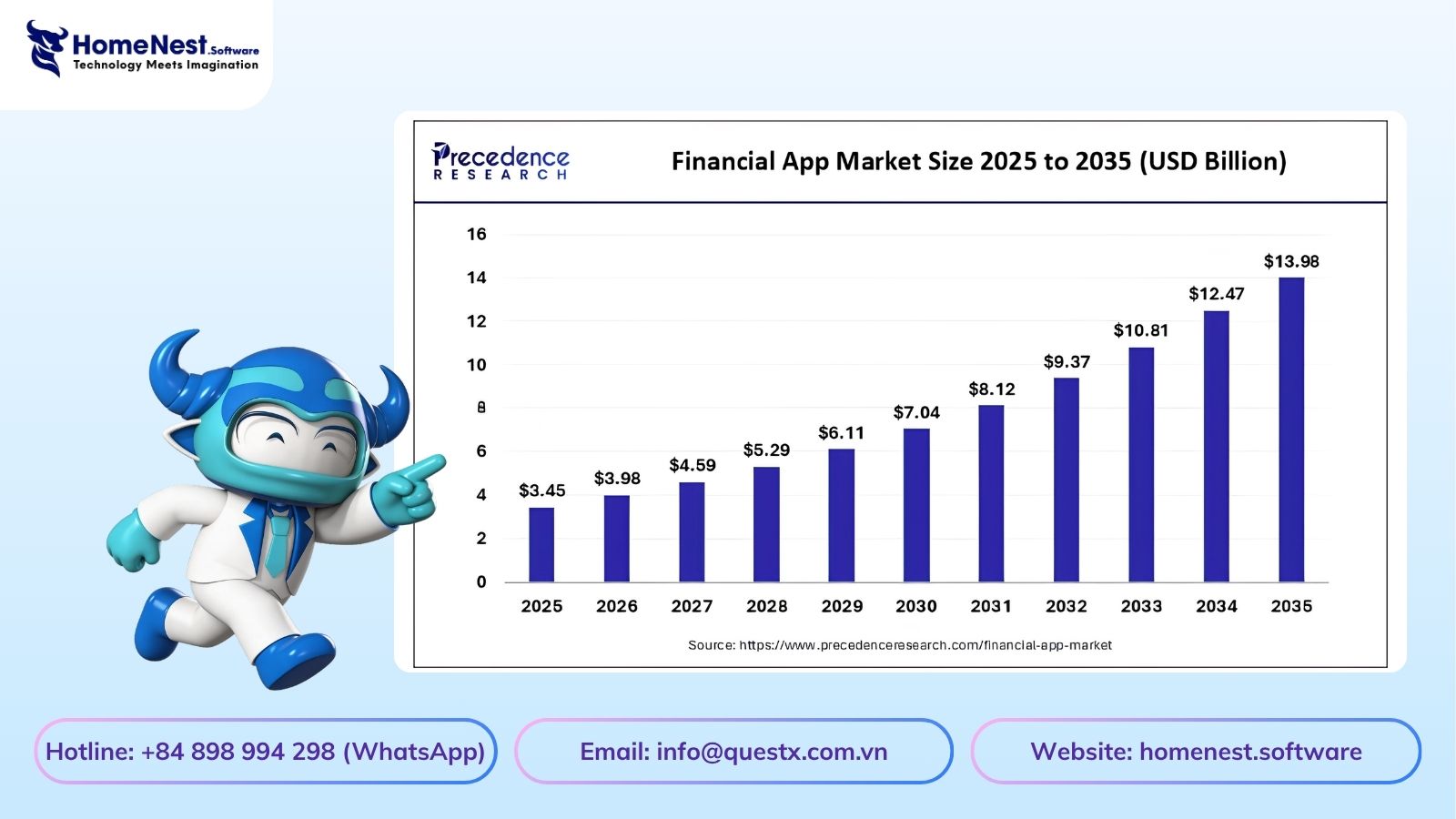
The global financial app market is expanding rapidly, fueled by the growing adoption of mobile banking app development solutions. This surge is opening up strong opportunities for businesses and entrepreneurs looking to enter the fintech space. According to Precedence Research, the growth outlook for banking apps is highly promising:
- The global financial app market reached USD 3.45 billion in 2025
- It is expected to grow to USD 3.98 billion in 2026
- By 2035, the market is projected to reach approximately USD 13.98 billion
- The industry is forecast to grow at a CAGR of 15.02% from 2026 to 2035
- North America led the market in 2025, supported by a strong fintech ecosystem
These figures highlight the increasing demand for digital banking solutions and reinforce why investing in mobile banking applications is a strategic move for long-term growth.
What Is the Average Cost to Build a Banking App?
The cost to develop a mobile app in the banking sector typically ranges from $8,000 to $30,000+, depending on the level of complexity, features, and technology involved.
At a high level, the budget is mainly determined by how advanced your application is:
- Simple apps follow an MVP approach with only essential features and minimal integrations. These usually cost between $8,000 and $14,000.
- Mid-range apps include a mix of core and some advanced functionalities, resulting in a cost of around $14,000 to $22,000.
- Advanced apps are fully featured platforms with modern technologies, complex integrations, and higher security standards, costing between $22,000 and $30,000+.
Cost Breakdown by App Complexity
| App Type | Complexity Level | Description | Estimated Cost |
|---|---|---|---|
| Simple Banking App | Low | MVP-based app with core features and limited integrations | $8,000 – $14,000 |
| Mid-Range Banking App | Moderate | Combines basic features with selected advanced modules | $14,000 – $22,000 |
| Advanced Banking App | High | Full-featured solution with complex integrations and modern tech stack | $22,000 – $30,000+ |
Starting with an MVP and gradually scaling is often the most effective way to control costs while validating your product in the market.
What Factors Affect the Cost of Banking App Development?
The total cost of building a banking app depends on multiple variables, not just features alone. Factors such as platform choice, tech stack, backend infrastructure, development team, security requirements, and location all influence the final budget. Below is a detailed breakdown to help you understand where your investment goes.
1. Platform Choice
The platform you choose (iOS, Android, or both) has a direct impact on cost, timeline, and resources. Developing separate native apps requires more effort compared to a shared codebase.
| Platform Option | Description | Estimated Cost |
|---|---|---|
| Single Platform App | Built for either iOS or Android with basic functionality | $8,000 – $12,000 |
| Cross-Platform App | One codebase supporting both platforms | $12,000 – $20,000 |
| Native Apps (iOS + Android) | Separate high-performance apps for both platforms | $20,000 – $30,000 |
2. Tech Stack Selection
The technologies and tools used for mobile and web app development significantly affect development costs. More advanced stacks require experienced engineers and longer implementation time.
| Tech Stack Level | Description | Estimated Cost |
|---|---|---|
| Basic Tech Stack | Standard frameworks for small-scale apps | $2,000 – $4,000 |
| Standard Tech Stack | Scalable technologies with better performance | $4,000 – $7,000 |
| Advanced Tech Stack | AI integration, microservices, cloud-native architecture | $7,000 – $10,000 |
3. Backend Infrastructure
A banking app relies heavily on backend systems to manage transactions, APIs, and user data securely. More complex infrastructure increases both development and maintenance costs.
| Backend Type | Description | Estimated Cost |
|---|---|---|
| Basic Backend Setup | Simple server with essential APIs and database | $4,000 – $7,000 |
| Standard Infrastructure | Secure cloud backend with integrations | $7,000 – $11,000 |
| Advanced Cloud Backend | High-performance system with microservices and automation | $11,000 – $15,000 |
4. Development Team
Your choice of development team—freelancer, in-house, or agency—affects both cost and project quality. A mobile app development company often provides structured processes and end-to-end expertise.
| Team Type | Description | Estimated Cost |
|---|---|---|
| Freelancers | Suitable for small or simple projects | $3,000 – $6,000 |
| In-House Team | Dedicated internal team with full control | $6,000 – $10,000 |
| Development Agency | Full-service delivery with fintech expertise | $10,000 – $15,000 |
5. Security and Compliance
Security is one of the most critical and costly aspects of banking apps. Implementing encryption, authentication, and compliance standards increases development effort but is essential for trust and legal operation.
| Security Level | Description | Estimated Cost |
|---|---|---|
| Basic Security | Standard authentication and encryption | $1,500 – $3,000 |
| Standard Security | Multi-factor authentication and compliance | $3,000 – $4,500 |
| Advanced Security | End-to-end encryption, fraud detection, full compliance | $4,500 – $6,000 |
6. Developer Location
The geographic location of your development team significantly affects hourly rates and total cost.
| Region | Description | Estimated Cost |
|---|---|---|
| Asia (Vietnam, Southeast Asia) | Cost-effective with skilled developers | $2,000 – $3,500 |
| Eastern Europe | Balanced pricing and strong technical expertise | $3,500 – $5,000 |
| North America / Western Europe | Premium services with higher rates | $5,000 – $6,000 |
Understanding these factors allows you to plan your budget more effectively and make strategic decisions when building a secure, scalable banking application.
Estimated Cost Breakdown for Different Types of Banking Apps
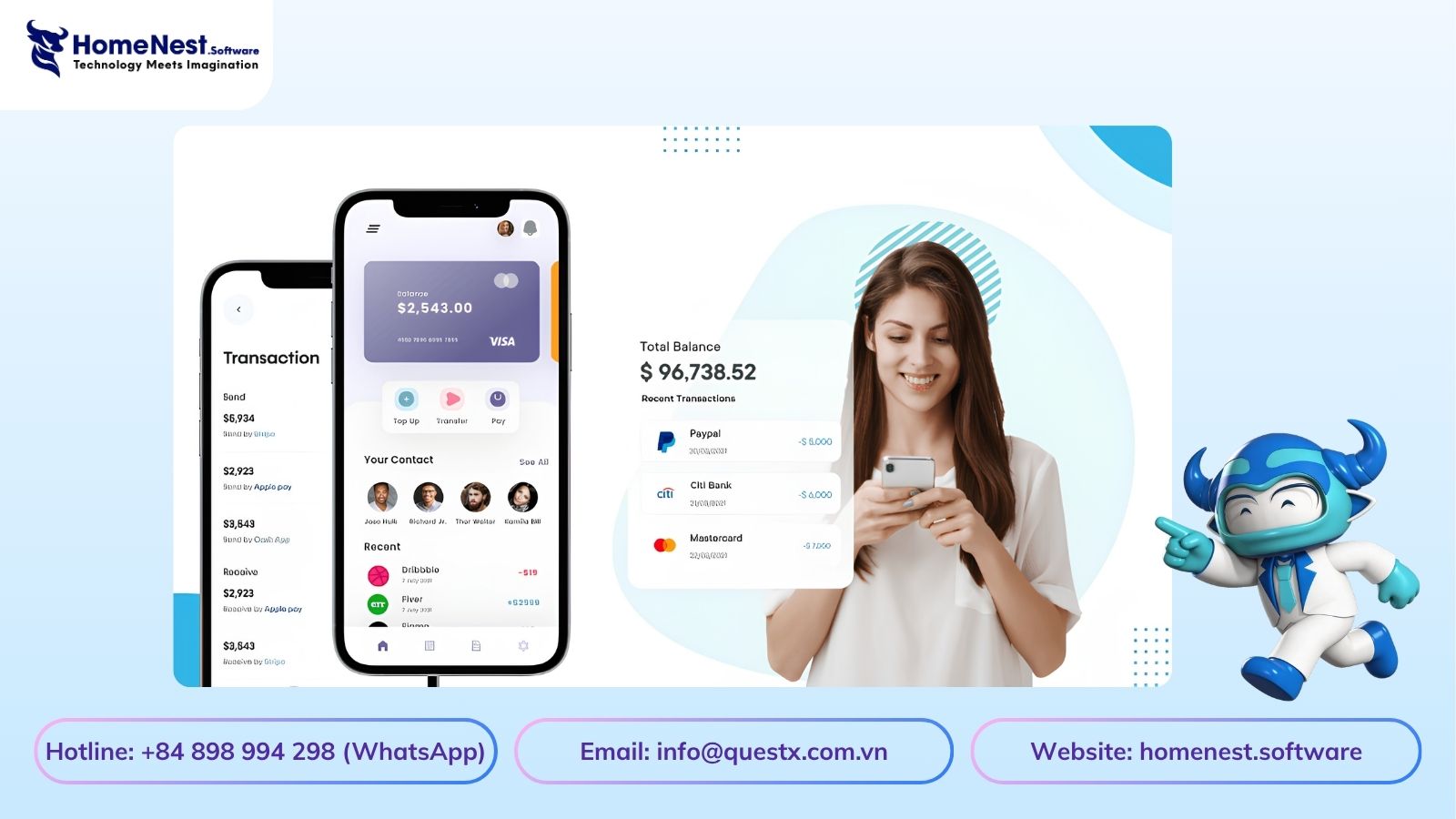
The cost to create a mobile app for banking services varies significantly based on the type of application you want to build. Each category comes with its own feature set, security requirements, integrations, and compliance standards, all of which directly impact development cost.
Below is a breakdown of the most common types of banking apps and what they typically include:
1. Retail Banking Apps
Retail banking apps are designed for everyday users to manage personal finances. These apps usually include features such as balance checking, fund transfers, bill payments, savings management, and mobile check deposits.
2. Payment and Money Transfer Apps
These apps focus on fast and convenient transactions. Users can send and receive money instantly using peer-to-peer transfers, QR code payments, digital wallets, and bank account integrations.
3. Investment and Wealth Management Apps
Investment apps allow users to trade stocks, ETFs, and other assets directly from their mobile devices. Common features include portfolio tracking, automated investing, financial insights, and real-time market data.
4. Lending and Loan Management Apps
These apps enable users to apply for loans or credit lines digitally. Features typically include eligibility checks, document uploads, EMI calculators, and loan tracking dashboards.
5. Corporate Banking Apps
Built for businesses, these apps help manage company finances efficiently. Through mobile banking app development services, businesses can access features like payroll processing, bulk payments, expense tracking, and multi-user account management.
6. Personal Finance Management (PFM) Apps
PFM apps help users track spending, manage budgets, and set financial goals. They often integrate with multiple bank accounts to provide a complete overview of a user’s financial health.
7. Digital-Only (Neobank) Apps
Neobanks operate entirely online without physical branches. If you plan to develop a neobank, key features include instant account creation, digital KYC, budgeting tools, and real-time financial insights, often delivered at lower operational costs.
Cost Comparison by App Type
| Banking App Type | Estimated Cost | Complexity | Core Features |
|---|---|---|---|
| Retail Banking Apps | $12,000 – $28,000 | Medium–High | Balance check, transfers, bill payments, account management |
| Payment & Money Transfer Apps | $8,000 – $20,000 | Medium | P2P payments, QR payments, digital wallet, integrations |
| Investment Apps | $15,000 – $29,000 | High | Trading, portfolio tracking, automation, market insights |
| Lending Apps | $10,000 – $24,000 | Medium–High | Loan applications, eligibility checks, EMI tools |
| Corporate Banking Apps | $20,000 – $30,000 | High | Payroll, bulk payments, expense tracking, multi-user access |
| PFM Apps | $9,000 – $18,000 | Medium | Budgeting, expense tracking, financial insights |
| Neobank Apps | $18,000 – $30,000 | High | Digital onboarding, KYC, analytics, full banking features |
Understanding these categories helps you choose the right direction for your product and plan your budget more effectively based on your business goals.
What Is the Price Range for Building Popular Banking Apps?
Top banking apps in the US set the standard for what modern fintech products should deliver: seamless user experience, strong security, and powerful financial tools. Apps like Chase Mobile, Bank of America Mobile Banking, Wells Fargo Mobile, Chime, and Cash App provide a clear benchmark for features and development scope.
Below is a realistic cost estimation breakdown for building apps with similar capabilities.
1. Chase Mobile
A full-featured banking app focused on account management, transactions, and card control.
| Development Component | Estimated Cost |
|---|---|
| UI/UX Design | $2,000 – $3,000 |
| Core Banking Features | $6,000 – $9,000 |
| Mobile Check Deposit & Card Controls | $3,000 – $4,000 |
| Security Implementation | $3,000 – $5,000 |
| API & Payment Integrations | $3,000 – $4,000 |
| Testing & Deployment | $2,000 – $3,000 |
| Total Cost | $19,000 – $28,000 |
2. Bank of America Mobile Banking
A comprehensive banking solution enhanced with AI-driven financial insights.
| Development Component | Estimated Cost |
|---|---|
| UI/UX Design | $2,000 – $3,000 |
| Core Banking Features | $5,000 – $8,000 |
| AI Assistant & Smart Insights | $3,000 – $5,000 |
| Security & Compliance | $3,000 – $4,000 |
| API Integrations | $3,000 – $4,000 |
| Testing & Launch | $2,000 – $3,000 |
| Total Cost | $18,000 – $27,000 |
3. Wells Fargo Mobile
A secure and user-friendly app for everyday banking operations.
| Development Component | Estimated Cost |
|---|---|
| UI/UX Design | $2,000 – $3,000 |
| Core Banking Features | $5,000 – $7,000 |
| Mobile Deposit & Notifications | $3,000 – $4,000 |
| Security Features | $3,000 – $4,000 |
| Backend Infrastructure | $3,000 – $4,000 |
| Testing & Deployment | $2,000 – $3,000 |
| Total Cost | $18,000 – $25,000 |
4. Chime
A digital-only banking app focused on simplicity, automation, and zero fees.
| Development Component | Estimated Cost |
|---|---|
| UI/UX Design | $2,000 – $3,000 |
| Digital Account Setup & KYC | $4,000 – $6,000 |
| Spending Insights & Auto Savings | $3,000 – $4,000 |
| Security & Identity Verification | $3,000 – $4,000 |
| Banking & Payment Integrations | $3,000 – $4,000 |
| Testing & Deployment | $2,000 – $3,000 |
| Total Cost | $17,000 – $24,000 |
5. Cash App
A hybrid fintech app combining payments, wallet, and investment features.
| Development Component | Estimated Cost |
|---|---|
| UI/UX Design | $2,000 – $3,000 |
| Peer-to-Peer Payment System | $4,000 – $6,000 |
| Digital Wallet | $3,000 – $4,000 |
| Investment Features | $3,000 – $4,000 |
| Security & Authentication | $2,000 – $3,000 |
| Testing & Deployment | $1,000 – $2,000 |
| Total Cost | $15,000 – $22,000 |
Key Insight
The cost of building a banking app depends heavily on feature depth, integrations, and security requirements. Apps with AI, real-time analytics, and advanced compliance will naturally require higher investment, but they also deliver greater long-term value and scalability.
What Strategies Help Reduce Banking App Development Costs?
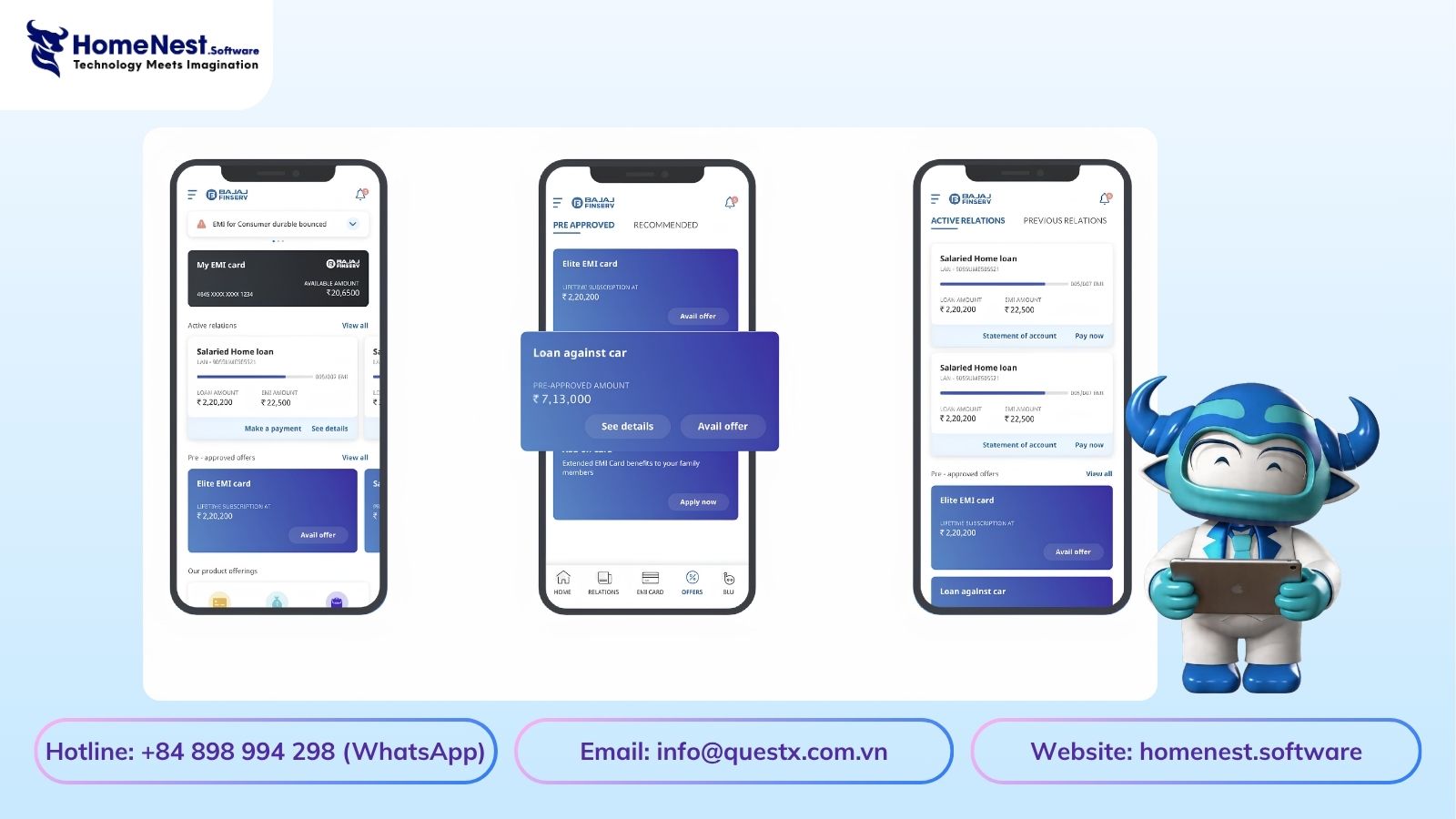
Building a banking app can be expensive due to complex features, integrations, and strict security requirements. However, with the right approach, businesses can significantly optimize costs without compromising quality. Below are practical strategies to make your mobile app development services more efficient and cost-effective.
1. Start with an MVP (Minimum Viable Product)
Launching with an MVP allows you to focus only on core features such as account access, fund transfers, and payments. This approach reduces initial investment, speeds up time to market, and helps validate your idea with real users before scaling.
2. Leverage Cross-Platform Development
Instead of building separate native apps for iOS and Android, utilize cross-platform frameworks like Flutter or React Native. This enables developers to write a single codebase that runs on both platforms, saving up to 40% in development costs and significantly cutting time-to-market.
3. Use Pre-built Integrations and APIs
Don’t reinvent the wheel. Utilize secure, established third-party services and APIs for non-core features:
- Plaid or Yodlee for bank account connections.
- Stripe or PayPal for payment processing.
- Twilio for SMS notifications and multi-factor authentication (MFA).
- Amazon Web Services (AWS) or Google Cloud Platform (GCP) for scalable cloud infrastructure.
4. Outsource to Cost-Effective Tech Hubs
Hiring local developers in North America or Western Europe can quickly drain your budget. Outsourcing development to prominent tech hubs like Vietnam offers a strategic advantage. You gain access to high-caliber, vetted software engineers at a fraction of the cost, ensuring high quality and compliance without premium price tags.
5. Adopt Agile and CI/CD Practices
By implementing Agile methodologies and continuous integration/continuous deployment (CI/CD) pipelines, development teams can test early and iterate often. Catching bugs and design issues in the early stages prevents expensive rework and keeps the development timeline on track.
Conclusion: Budgeting Wisely for Your Banking App
Developing a digital banking solution is a significant but highly rewarding investment. While costs can vary between $8,000 for simple MVPs to $30,000+ for advanced enterprise solutions, planning your feature set, technology stack, and outsourcing strategy wisely will keep your budget optimized.
Partnering with an experienced B2B tech partner like HomeNest Software allows you to navigate the complexities of fintech compliance, security, and scalability while maximizing cost-efficiency.
Ready to build your banking app? Contact HomeNest Software today for a free consultation and customized project estimate.
Latest Articles
View All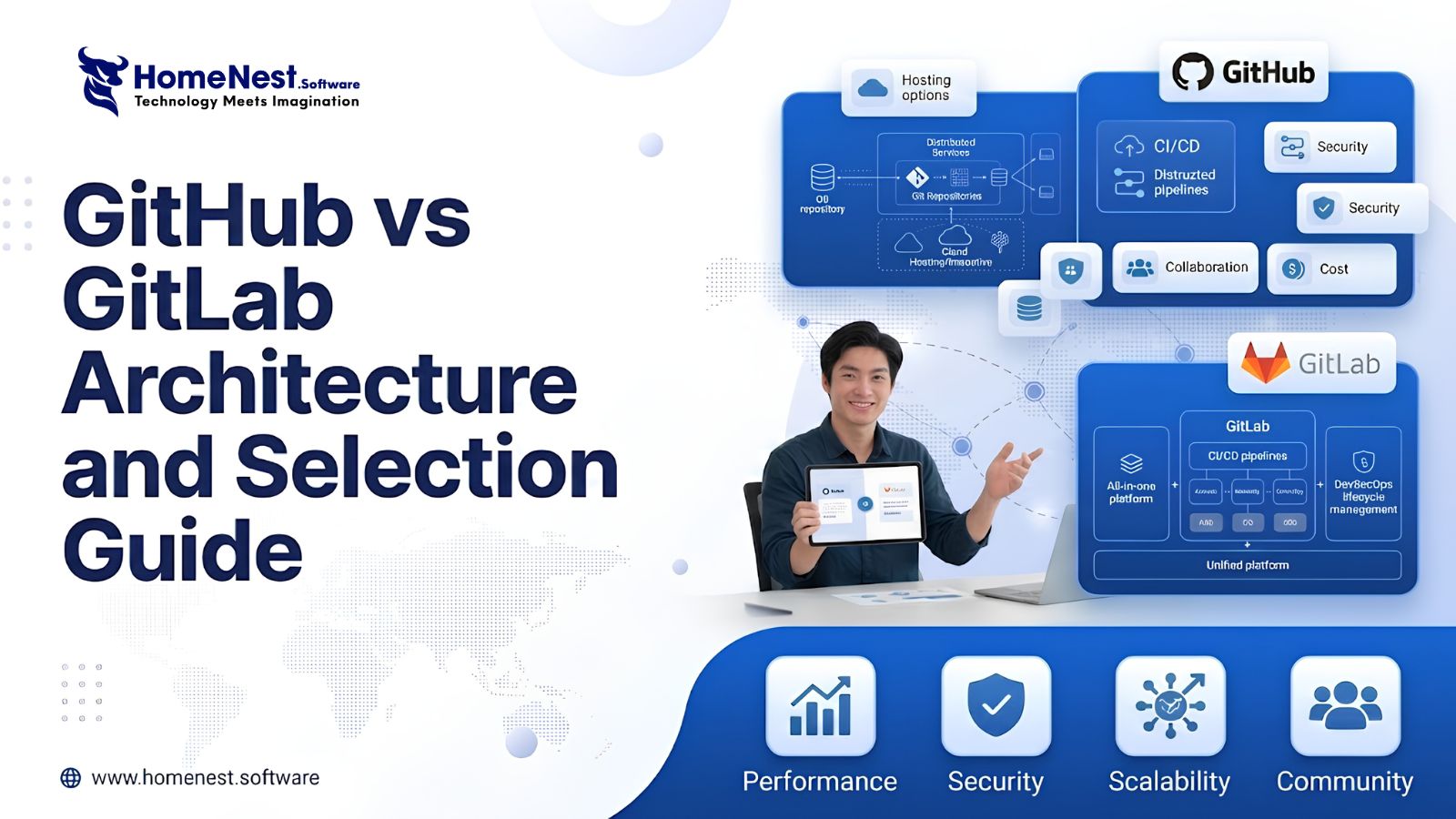
GitHub vs GitLab – Architecture and Selection Guide
Managing source code requires stable infrastructure. Automating software releases requires reliable pipelines. Tool sprawl creates operational complexity. Engineering teams face friction when using fragmented DevOps tools. Selecting between GitHub and GitLab shapes long term development efficiency.
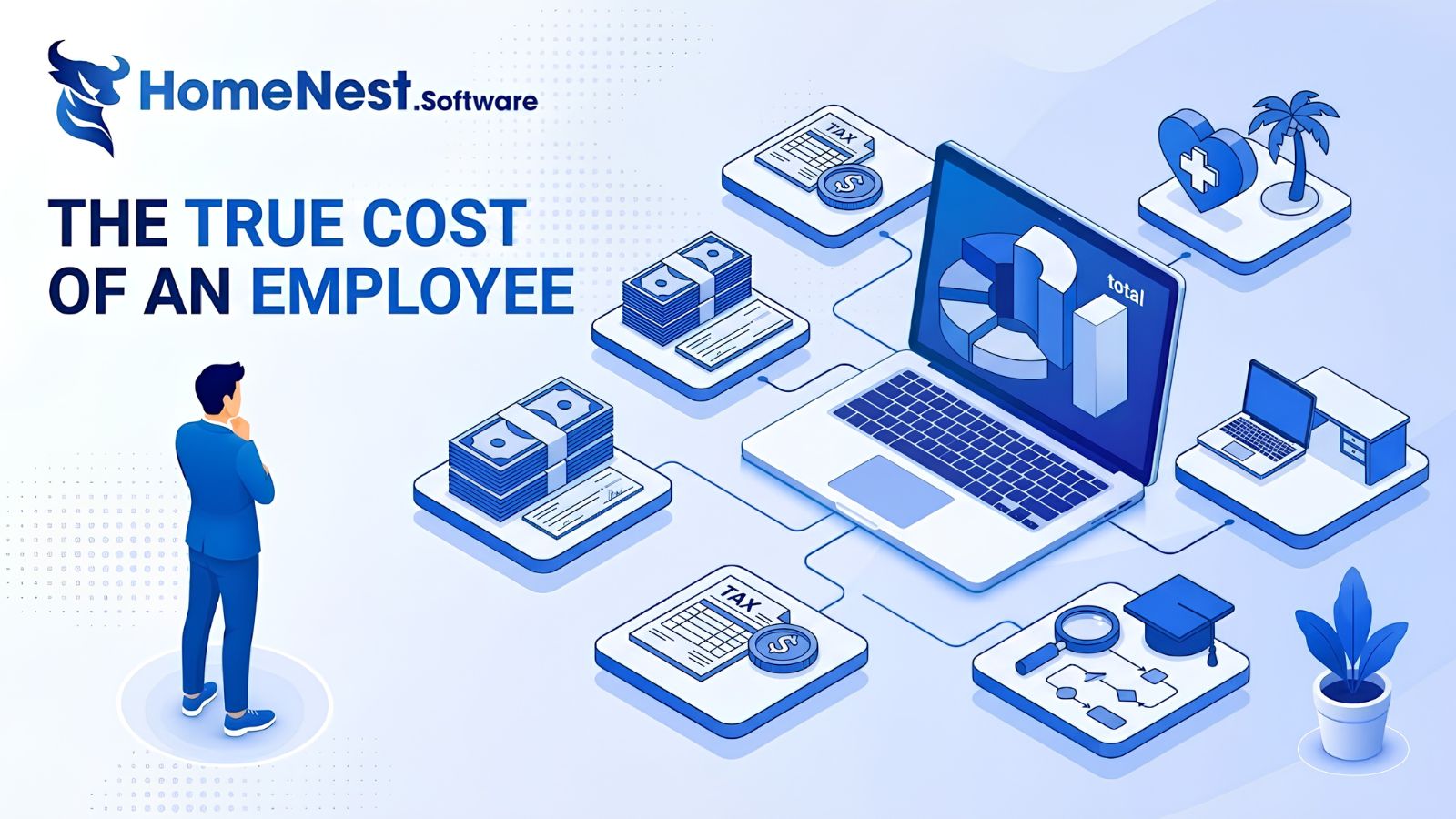
The True Cost of an Employee: A Complete Breakdown for Employers
This article reveals that the true cost of an employee is typically 25% to 40% higher than their base salary due to hidden expenses like taxes, benefits, workspace, and recruiting. To address this, the guide provides a detailed 7-step framework to accurately calculate total employer costs, alongside actionable strategies to optimize budgets and improve retention without reducing pay.
Essential Tips To Develop A Music Streaming App
Discover expert tips to develop a successful music streaming app with HomeNest Software. This guide covers essential features, legal licensing, and scalable technology stacks. Learn how to build a robust, cross-platform application with AI personalization to stand out in the 2026 competitive audio market.

How to Build a Language Learning App Like Cake
Discover how to build a successful language learning app like Cake with this comprehensive guide from HomeNest Software. We explore market research, essential MVP features, advanced AI integrations, tech stack selection, and estimated development costs. Partner with HomeNest Software to create a scalable, gamified, and highly engaging educational platform tailored to your business goals. Start your app development journey with us today.
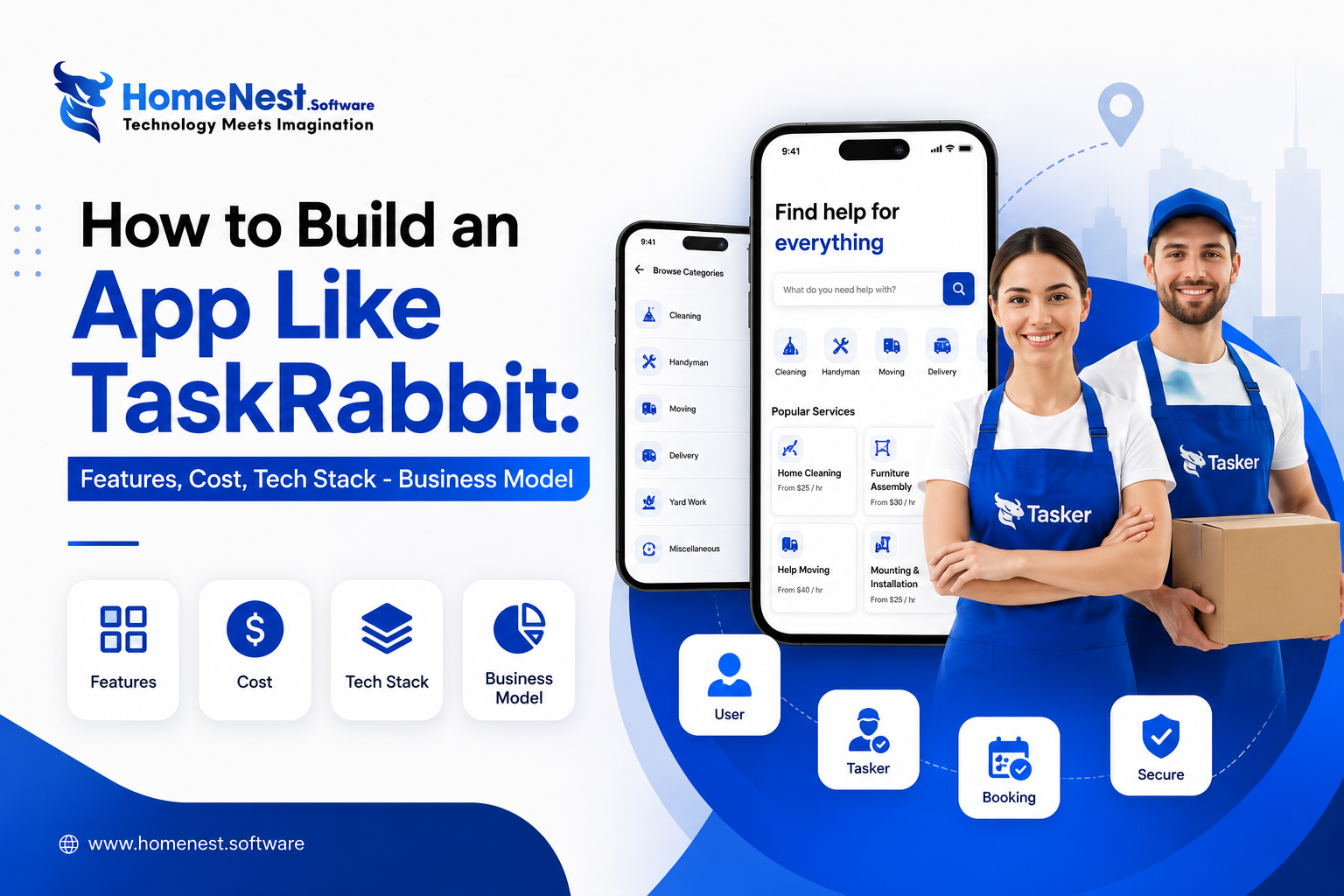
How to Build an App Like TaskRabbit: Features, Cost, Tech Stack – Business Model
Building an app like TaskRabbit is more than replicating existing features—it’s about creating a trusted marketplace that seamlessly connects customers with skilled service providers. By combining an intuitive user experience, secure payment systems, scalable architecture, and the right business model, you can launch a competitive on-demand platform. Partnering with an experienced app development company like HomeNest Software ensures your product is built with the technology, flexibility, and long-term scalability needed to succeed in the rapidly growing gig economy.
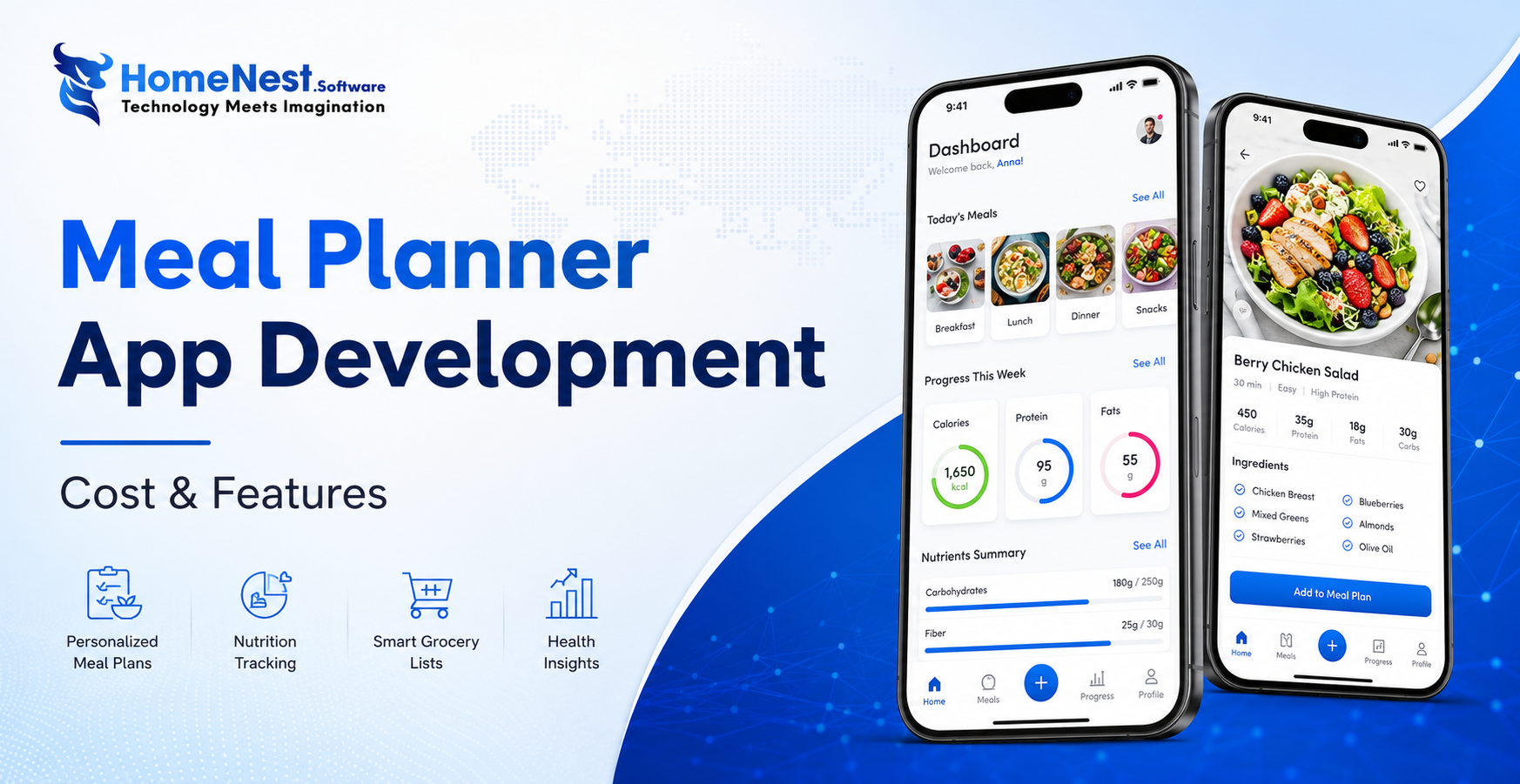
How to Build a Meal Planning App: A Complete Step-by-Step Guide
Building a successful meal planning app goes beyond creating an attractive interface it requires a clear business strategy, personalized user experiences, and scalable technology. By combining essential features like AI-powered meal recommendations, nutrition tracking, grocery list automation, and wearable integration, businesses can deliver lasting value to users while capitalizing on the growing digital health market. Partnering with an experienced mobile app development company ensures your solution is secure, future-ready, and designed to succeed in an increasingly competitive health-tech industry.