
How IoT Is Revolutionizing Finance and Banking?
IoT in finance and banking is transforming the industry by enabling real-time data insights, intelligent automation, and advanced security capabilities. By strategically adopting IoT, financial institutions can deliver highly personalized customer experiences, streamline operations, and proactively manage risks. The key to success lies in aligning technology with business goals—ensuring scalable infrastructure, strong security frameworks, and continuous innovation to stay competitive in an increasingly digital financial ecosystem.
Scope of Work

The financial and banking sectors are experiencing a profound shift driven by the adoption of IoT in finance and banking. This advanced technology enables institutions to deliver highly personalized customer experiences, streamline operations, and strengthen security frameworks. In this article, we explore how IoT applications are reshaping modern banking covering key use cases, business benefits, and practical approaches to implementation within financial systems.
Understanding IoT in Finance and Banking
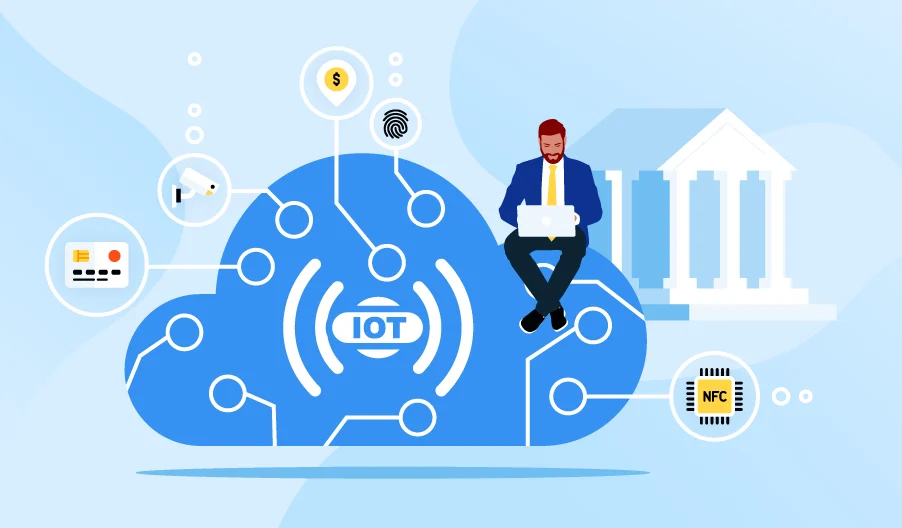
The adoption of IoT in finance and banking is reshaping how financial institutions operate and engage with customers. By connecting devices, systems, and data streams, IoT enables smarter decision making, streamlined workflows, and more responsive services helping banks stay competitive in a rapidly evolving market.
Real Time Data Analytics
IoT technologies empower banks to collect and analyze data in real time, providing immediate visibility into customer behavior, transaction patterns, and market dynamics.
- Enables data driven decision making with higher accuracy
- Supports personalized financial services based on user behavior
- Helps institutions respond quickly to market fluctuations
With real time insights, banks can refine pricing strategies, optimize marketing efforts, and proactively anticipate customer needs delivering a more tailored and efficient experience.
Automated Banking Processes
One of the most impactful applications of IoT is the automation of routine banking operations. Connected systems can handle tasks such as payment processing, account management, and identity verification with minimal human intervention.
- Reduces operational overhead and manual errors
- Accelerates processes like loan approvals and credit assessments
- Improves consistency and efficiency across back end systems
By integrating IoT into financial services, banks can streamline workflows while enhancing speed, accuracy, and overall service quality.
Enhanced Security and Fraud Prevention
Security remains a critical priority in the financial sector, and IoT introduces advanced mechanisms to strengthen protection across both physical and digital environments.
- Biometric authentication (fingerprint, facial recognition) enhances identity verification
- Smart sensors and monitoring systems detect suspicious activities in real time
- Continuous infrastructure monitoring helps identify and mitigate vulnerabilities early
These capabilities significantly reduce the risk of fraud, unauthorized access, and data breaches supporting a more secure and resilient banking ecosystem.
IoT in finance and banking is not just a technological upgrade it’s a strategic enabler of smarter operations, stronger security, and more personalized customer experiences. Financial institutions that effectively leverage IoT will be better positioned to innovate, scale, and lead in the digital era.
Benefits of IoT Integration in Finance and Banking
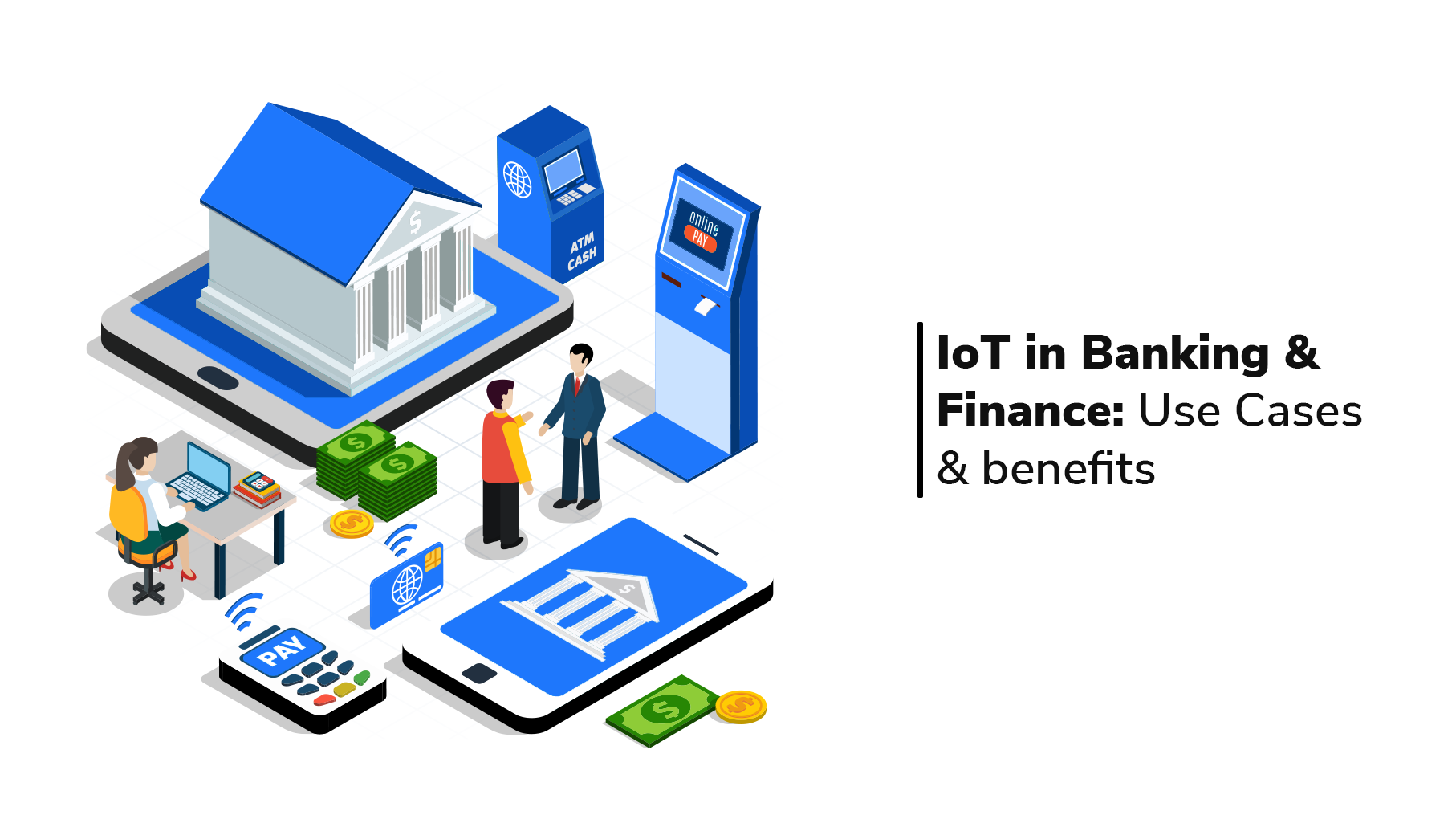
Integrating IoT in finance and banking delivers measurable advantages across customer experience, operational performance, and security. By leveraging connected devices and real time data, financial institutions can unlock new levels of efficiency and innovation.
Personalized Customer Experiences
IoT enables banks to gain deeper insights into customer behavior by analyzing transaction history, location data, and usage patterns.
- Delivers tailored offerings such as customized loans, insurance plans, and financial advice
- Enhances customer engagement through relevant, data driven interactions
- Builds stronger relationships and long term loyalty
By leveraging IoT driven personalization, banks can significantly improve customer satisfaction and retention in a highly competitive market.
Improved Operational Efficiency
IoT integration helps streamline banking operations by automating processes and improving system visibility.
- Automates routine tasks, reducing manual effort and operational costs
- Enables real time monitoring of ATMs, branches, and network infrastructure
- Minimizes downtime through predictive maintenance (e.g., smart ATMs alerting for servicing)
This level of operational intelligence allows banks to allocate resources more effectively and maintain consistent service quality across multiple locations.
Advanced Fraud Detection and Risk Management
IoT plays a critical role in strengthening fraud detection capabilities through real time data monitoring and intelligent analytics.
- Detects unusual transaction patterns and suspicious behavior instantly
- Combines IoT data with machine learning for proactive fraud prevention
- Identifies anomalies such as abnormal locations or spending habits
Faster detection and response not only reduce financial risk but also enhance customer trust by ensuring a secure banking environment.
The integration of IoT in finance and banking goes beyond operational improvements it enables smarter, more secure, and highly personalized financial services. Institutions that adopt IoT strategically can enhance efficiency, strengthen security, and deliver superior customer experiences at scale.
Process of Implementing IoT in Banking Operations
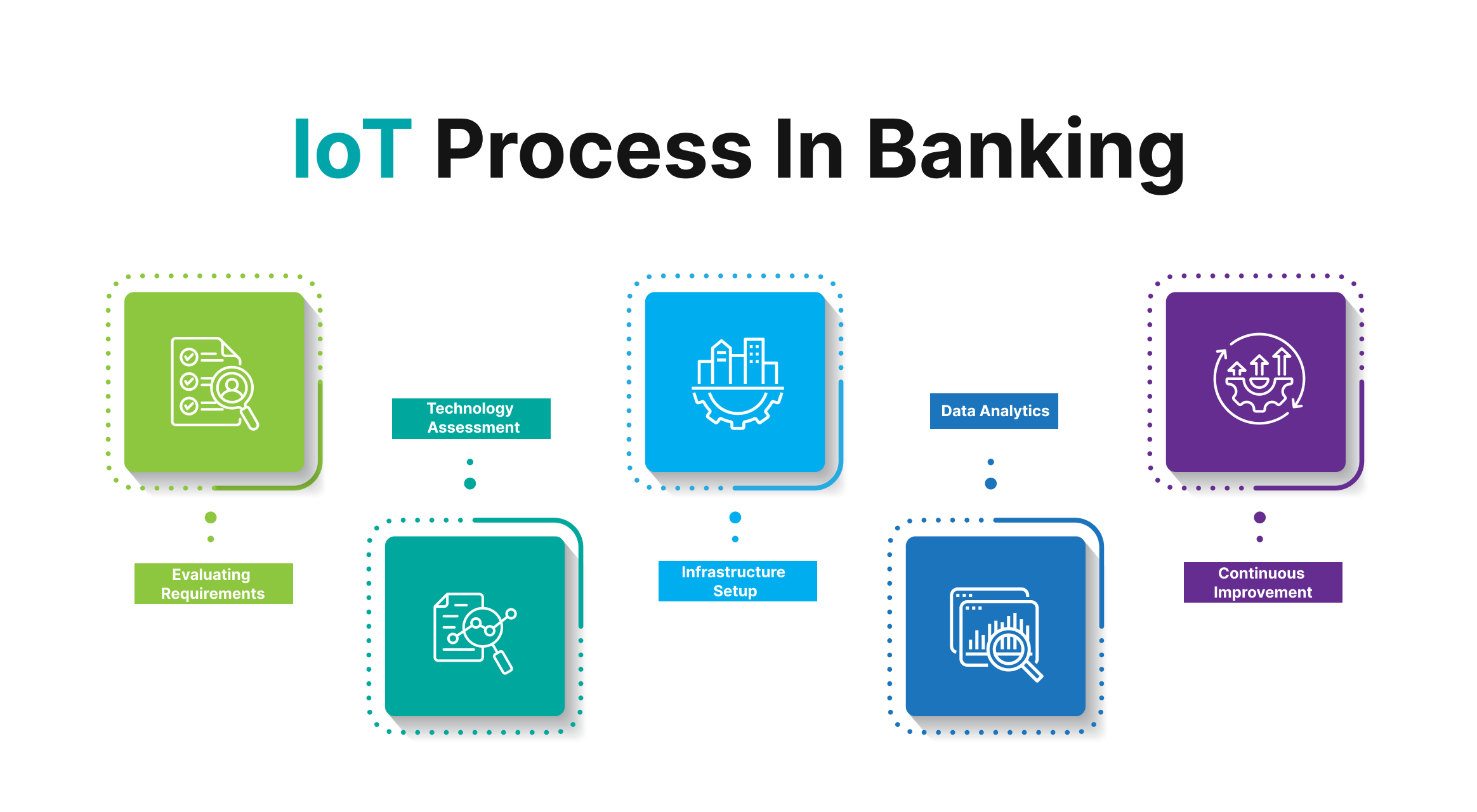
Successfully integrating IoT in finance and banking requires a structured, well planned approach to ensure seamless adoption and maximum return on investment. Financial institutions must align technology, infrastructure, and people to fully leverage IoT capabilities in daily operations.
Assessing Infrastructure Readiness
Before deployment, banks must evaluate their existing IT infrastructure to identify gaps and required upgrades.
- Modernize legacy systems to support IoT integration
- Enhance network capacity to handle high volume, real time data
- Deploy IoT compatible devices, sensors, and connectivity frameworks
A scalable and resilient infrastructure is essential to process large data streams efficiently while maintaining system stability and performance.
Strengthening Data Security Frameworks
Security is a non negotiable priority when implementing IoT in the banking sector. With increased connectivity comes expanded risk exposure.
- Implement end to end encryption and secure communication protocols
- Use advanced authentication methods (biometrics, multi factor authentication)
- Enforce strict access control and data governance policies
Continuous monitoring and regular patching of IoT devices are critical to prevent vulnerabilities and protect sensitive financial data from cyber threats.
Investing in Staff Training and Capability Building
Technology adoption is only effective when supported by skilled personnel. Banks must ensure their workforce is prepared to operate within an IoT enabled environment.
- Provide training on IoT systems, data handling, and new workflows
- Equip teams with the knowledge to interpret IoT driven insights
- Encourage continuous learning to keep pace with evolving technologies
By investing in employee development, financial institutions can accelerate adoption, reduce operational friction, and maximize the value of IoT initiatives.
Final Insight
Implementing IoT in banking is not just a technical upgrade it’s an organizational transformation. With the right infrastructure, robust security, and well trained teams, banks can unlock the full potential of IoT to drive efficiency, innovation, and long term growth.
Exploring IoT Driven Innovations in Financial Services
The adoption of IoT in finance and banking is driving a new wave of innovation, fundamentally transforming how financial institutions operate and interact with customers. These advancements not only enhance user experience but also optimize operational performance across the banking ecosystem.
Smart ATMs
Smart ATMs are a significant leap forward in IoT enabled banking infrastructure. Equipped with sensors and connectivity features, they provide real time monitoring and enhanced functionality.
- Track cash levels and maintenance needs automatically
- Enable advanced authentication methods such as biometric verification
- Offer value added services like video banking for real time customer support
These capabilities improve reliability, reduce downtime, and deliver a more secure and convenient banking experience.
Connected Branches
IoT enables banks to create fully connected branch networks, where data flows seamlessly across locations.
- Centralized systems allow real time data sharing and decision making
- Improve coordination between branches and streamline operations
- Enhance inventory and resource management
Connected branches ensure consistent service quality while helping banks optimize staff allocation and operational efficiency.
Wearable Banking Devices
IoT powered wearables, such as smartwatches, are redefining how customers interact with financial services.
- Enable quick payments, balance checks, and transaction alerts
- Provide a seamless and convenient user experience
- Enhance security through device level authentication
As convenience becomes a key differentiator, wearable banking solutions offer a fast, secure, and intuitive way for users to manage their finances.
Final Perspective
IoT in finance and banking is more than an emerging trend it is a transformative force reshaping the industry. By enabling smarter infrastructure, connected ecosystems, and personalized user experiences, IoT is paving the way for a more efficient, secure, and customer centric financial future. Institutions that embrace these innovations will be better positioned to lead in the next generation of digital banking.
Frequently Asked Questions (FAQs)
What is IoT in finance and banking?
IoT in finance and banking refers to the use of connected devices, sensors, and systems to collect and exchange data in real time, enabling smarter operations, enhanced security, and more personalized financial services.
How does IoT improve customer experience in banking?
IoT enables banks to analyze customer behavior and preferences, allowing them to deliver personalized services such as tailored financial products, real time notifications, and seamless digital interactions.
Is IoT in banking secure?
Yes, when implemented correctly. Banks use encryption, biometric authentication, and real time monitoring to protect data and detect threats. However, continuous security updates and risk management are essential.
What are common use cases of IoT in banking?
Popular use cases include smart ATMs, connected bank branches, wearable banking devices, real time fraud detection, and automated financial processes.
How does IoT help reduce operational costs?
IoT automates routine tasks, enables predictive maintenance, and improves resource allocation. This reduces manual work, minimizes downtime, and increases overall operational efficiency.
What challenges do banks face when implementing IoT?
Key challenges include data security risks, integration with legacy systems, high initial investment, and the need for skilled personnel to manage IoT infrastructure.
How long does it take to implement IoT in banking systems?
Implementation timelines vary depending on scale and complexity, but typically range from a few months for pilot projects to over a year for full scale deployment.
Why should banks invest in IoT technology?
IoT helps banks stay competitive by improving efficiency, enhancing security, and delivering better customer experiences ultimately driving growth and long term innovation.
Latest Articles
View All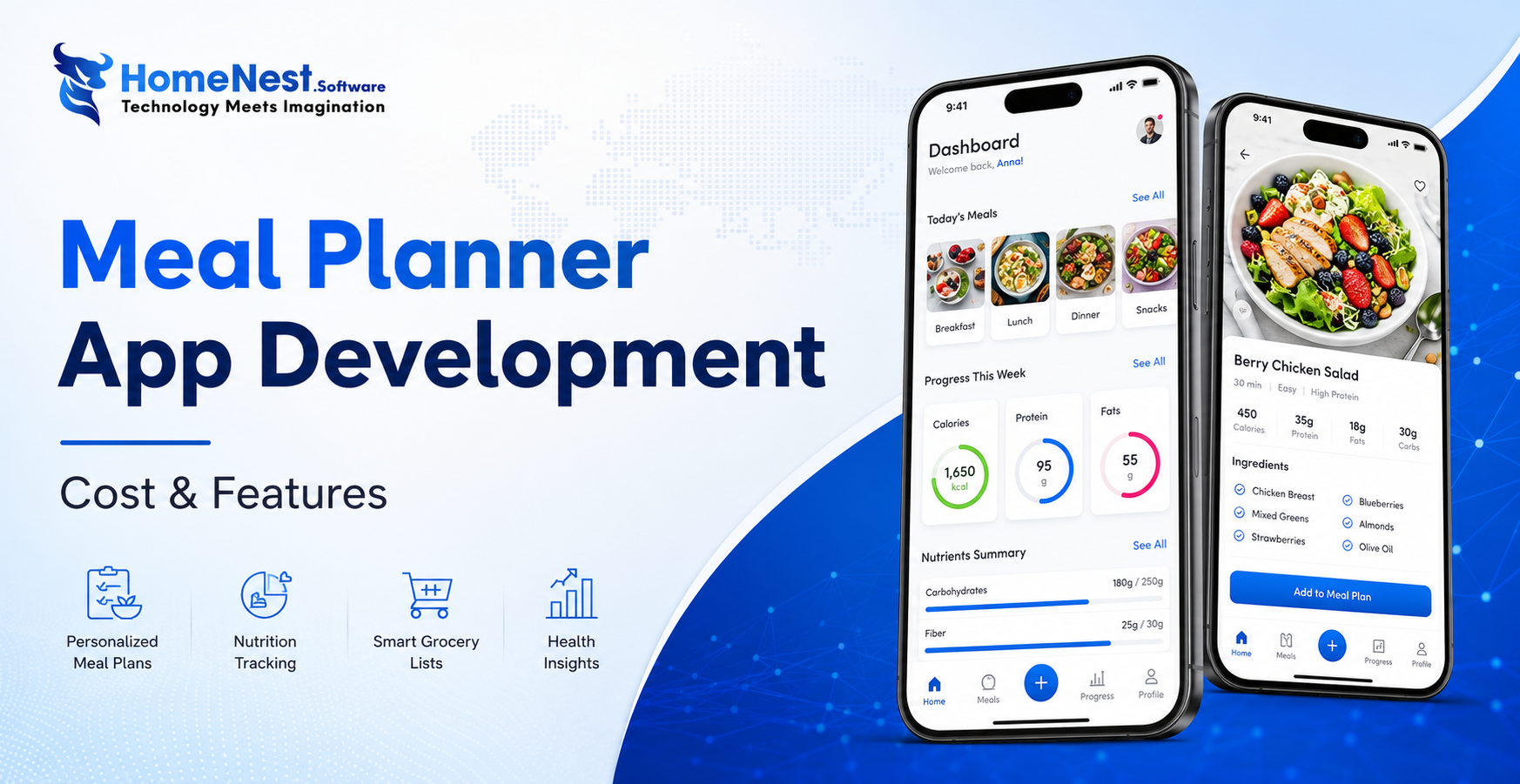
How to Build a Meal Planning App: A Complete Step-by-Step Guide
Building a successful meal planning app goes beyond creating an attractive interface it requires a clear business strategy, personalized user experiences, and scalable technology. By combining essential features like AI-powered meal recommendations, nutrition tracking, grocery list automation, and wearable integration, businesses can deliver lasting value to users while capitalizing on the growing digital health market. Partnering with an experienced mobile app development company ensures your solution is secure, future-ready, and designed to succeed in an increasingly competitive health-tech industry.
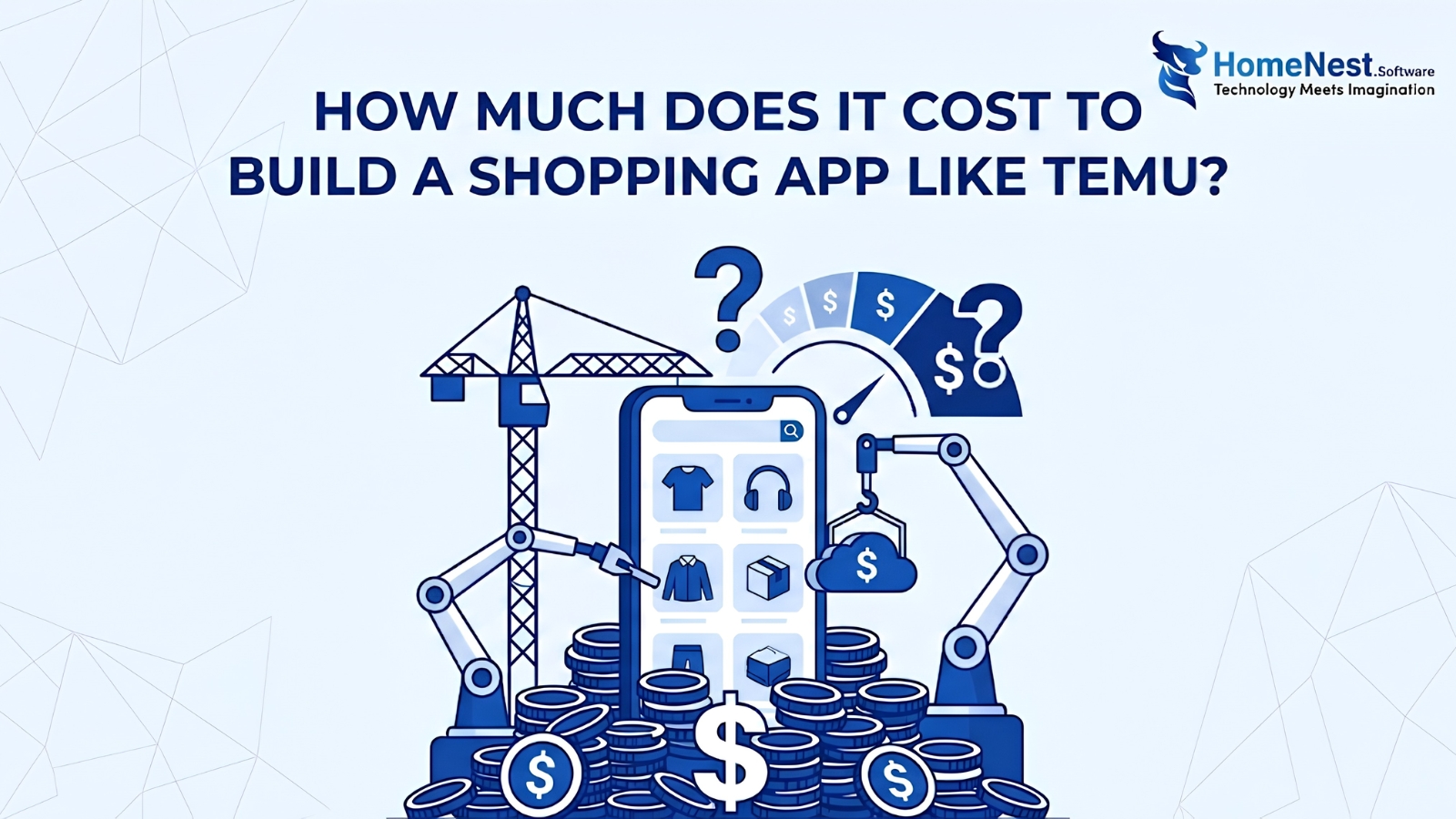
How Much Does It Cost to Build a Shopping App Like Temu?
Temu’s meteoric rise to over 900 million global downloads proves the power of combining AI, gamification, and social commerce, but building a similar viral shopping platform requires careful financial and technical planning. Developing an app like Temu typically costs anywhere from $40,000 for a basic Minimum Viable Product (MVP) to over $300,000 for a fully-featured platform. This guide breaks down every cost category, analyzes the core features driving Temu’s success, highlights the best technology stacks, and offers practical strategies to optimize your development budget without compromising on quality.

Criteria For Choosing The Right App Design Agency
UI/UX design is the logical foundation of a system, not merely a visual element. Choosing the wrong partner will directly lead to technical debt, budget overruns, and disruptions in the development process. This article provides a 6-step evaluation framework and a list of operational risks, helping businesses eliminate subjective design advice and accurately assess agency capabilities based on developer handoff standards and practical business performance.
How Does AI in Banking Industry Impact the Future?
Artificial intelligence (AI) has transitioned from a supplementary tool to a core infrastructure of financial data management, optimizing profitability through real-time fraud detection, natural language processing (NLP), and high-speed credit scoring models. “Deploying AI in the financial sector requires more than just algorithmic accuracy, it demands a highly secure cloud architecture and rigorous data governance,” commented Nguyen Tien, co-founder of HomeNest Software. Why read this guide? We skip the theoretical jargon to focus entirely on technical implementation. Whether you’re evaluating a vendor or planning a system overhaul, this article will detail: Operational Efficiency: Automating unstructured data workflows at scale. Risk Architecture: Implementing real-time threat detection and AML compliance. Data ownership: The essential need for 100% ownership of the source code to ensure full algorithm auditability.
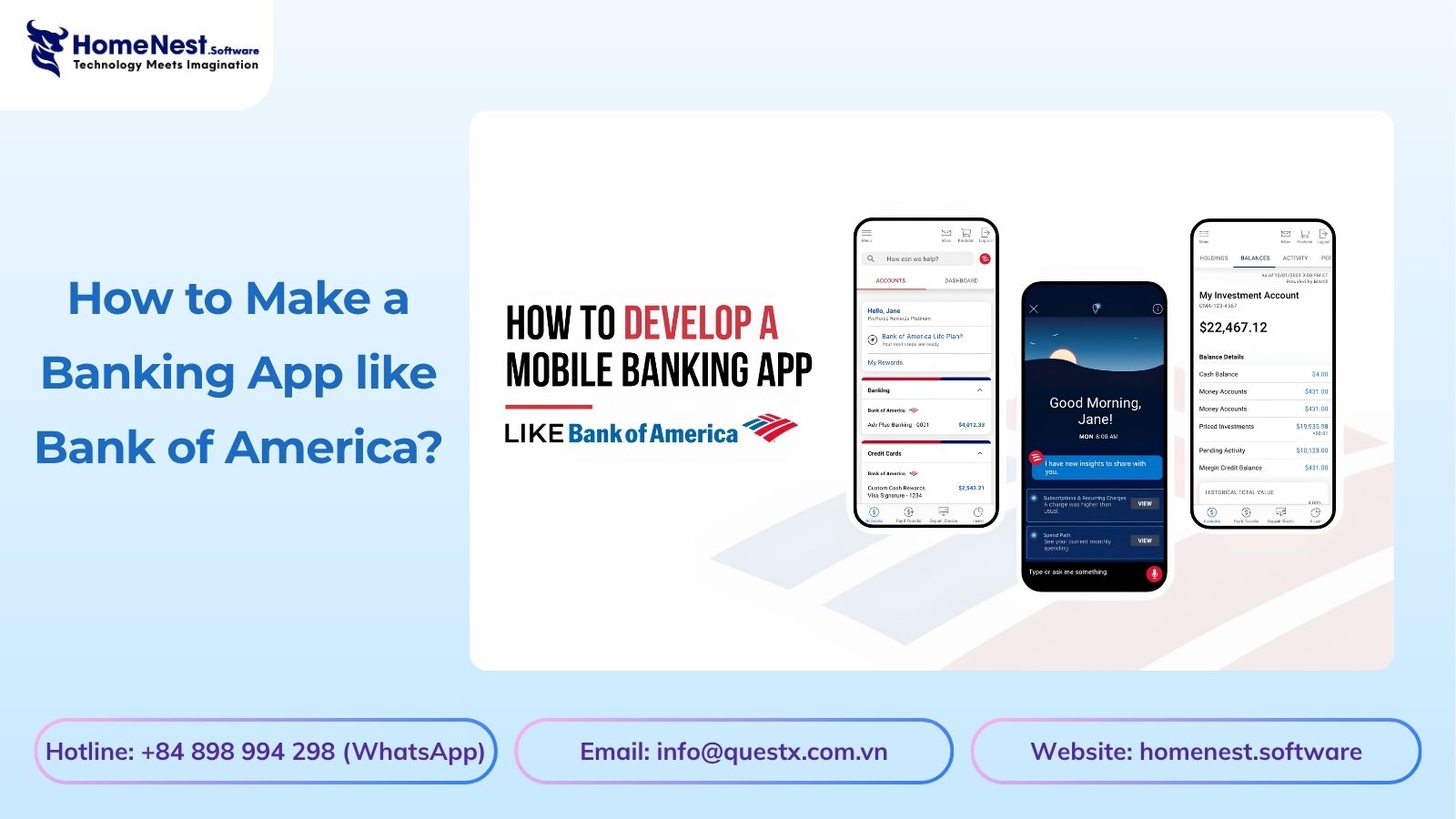
How to Make a Banking App like Bank of America?
Developing a mobile banking application like Bank of America extends far beyond basic UI design; it requires engineering a fault-tolerant backend capable of real-time ledger synchronization, biometric authentication, and high-volume data processing under strict regulatory frameworks. Drawing from HomeNest Software’s deep experience in architecting enterprise-grade fintech solutions, this guide strips away theoretical jargon to focus entirely on operational and technical execution. What you will find in this guide: We break down the precise development roadmap, from mapping out microservices and ensuring PCI-DSS compliance to estimating MVP development costs and securing absolute data sovereignty through 100% source code ownership. If you are preparing to build, scale, or audit a financial platform, this blueprint provides the exact framework you need.
Banking App Development Cost
Building a banking application is rarely a simple process; it’s a complex technical challenge requiring a balance between complying with stringent financial regulations, handling large transaction volumes, and a scalable cloud architecture. Miscalculating these technical requirements from the outset often leads to significant technical debt and budget overruns. Based on HomeNest Software’s practical experience in designing enterprise-grade fintech solutions, this guide bypasses generic estimates to provide a realistic analysis of banking application development costs. What you’ll find in this guide: We analyze the true cost factors, from technology selection and API integration to the hidden costs of regulatory compliance and security infrastructure. Whether you’re launching a minimum viable product or expanding an existing financial platform, this analysis provides the precise operational data you need to plan your budget effectively.