
AI Development Services: Building Intelligent Solutions with HomeNest Software
AI development is no longer optional but a strategic necessity for businesses seeking efficiency, innovation, and competitive advantage. By leveraging technologies such as Machine Learning, Natural Language Processing, and Computer Vision, organizations can transform data into actionable insights, automate complex processes, and enhance customer experiences. Success depends on high-quality data, clear objectives, and a structured development lifecycle—combined with the right technology partner to ensure scalable, secure, and high-impact AI implementation.
Scope of Work

In today’s digital first economy, Artificial Intelligence has moved beyond theoretical promise to become a core driver of real world business transformation. From intelligent automation and advanced analytics to data driven decision making and personalized customer experiences, AI is fundamentally reshaping how organizations operate, innovate, and compete at scale.
At the center of this shift is AI development the discipline of architecting, training, and deploying intelligent systems that convert raw data into actionable insight. For modern enterprises, it is no longer optional; it is a strategic capability that enables scalability, operational agility, and sustainable competitive advantage.
This guide provides a comprehensive overview of AI development services, including their core components, business impact, and implementation best practices. It also highlights how HomeNest Software empowers organizations to transform data into measurable business value through high performance, enterprise grade AI solutions.
What Are AI Development Services?

AI development services encompass the end to end engineering of software systems capable of performing tasks traditionally associated with human intelligence such as learning, reasoning, perception, and decision making. These services integrate multiple advanced disciplines, including Machine Learning, Deep Learning, Natural Language Processing, and Computer Vision, to build models that can interpret data, detect patterns, and continuously improve through experience.
A typical AI development lifecycle involves several structured phases:
- Problem Definition – Clearly articulating the business challenge and identifying where AI can deliver measurable impact.
- Data Collection and Preparation – Aggregating, cleaning, and structuring datasets to ensure high quality inputs for model training.
- Model Design and Training – Developing and optimizing algorithms using industry standard frameworks such as TensorFlow or PyTorch.
- Testing and Validation – Evaluating model performance for accuracy, robustness, and bias mitigation.
- Deployment and Monitoring – Integrating models into production environments and continuously tracking performance for ongoing refinement.
Unlike conventional rule based systems, AI solutions are inherently adaptive leveraging data and feedback loops to evolve over time, improve decision quality, and deliver increasing value as they scale.
Why AI Development Matters for Businesses
AI development has shifted from a competitive advantage to a strategic imperative for organizations aiming to operate intelligently and scale efficiently in a data driven economy. By embedding AI into core business processes, enterprises unlock measurable gains across operations, decision making, and customer engagement.
- Drive Operational Efficiency
AI enables intelligent automation of repetitive, resource intensive tasks such as document processing, quality control, and customer support. This reduces operational overhead while allowing teams to concentrate on higher value, strategic initiatives. - Enable Data Driven Decision Making
Leveraging technologies like Machine Learning, AI systems can process vast volumes of structured and unstructured data in real time, generating actionable insights that support forecasting, optimization, and risk mitigation. - Enhance Customer Experience
Through AI powered chatbots, recommendation engines, and predictive personalization, businesses can deliver highly tailored interactions that improve engagement, satisfaction, and long term customer loyalty. - Accelerate Product and Service Innovation
AI expands what products can do powering capabilities such as intelligent assistants, autonomous systems, and adaptive applications that respond dynamically to user behavior and environmental inputs. - Strengthen Competitive Positioning
Early and effective adoption of AI allows organizations to innovate faster, respond more rapidly to market shifts, and consistently deliver superior value compared to competitors.
In essence, AI transforms data into a strategic asset fueling continuous optimization, intelligent automation, and more informed decision making across the enterprise.
Core Components of AI Development
AI development is a multidisciplinary process composed of tightly integrated components that collectively ensure system intelligence, accuracy, and scalability in real world environments.
- Data Collection and Preparation
Data forms the foundation of every AI system. High quality datasets diverse, relevant, and unbiased are critical to achieving reliable outcomes. This phase involves data acquisition, labeling, cleansing, and normalization across both structured and unstructured sources. - Model Design and Training
Engineers select appropriate algorithms and architectures based on the use case such as classification, prediction, or clustering often leveraging techniques from Machine Learning and Deep Learning. Models are iteratively trained and fine tuned until they meet defined performance thresholds. - Model Validation and Testing
Prior to deployment, models undergo rigorous validation to assess accuracy, robustness, and generalization. This includes detecting overfitting, minimizing bias, and ensuring consistent performance across varied datasets and real world scenarios. - Deployment and Integration
Once validated, models are deployed into production environments and integrated with existing systems via APIs or cloud infrastructure. Ensuring scalability, latency optimization, and system interoperability is essential for seamless adoption. - Monitoring and Continuous Improvement
AI systems require ongoing monitoring to maintain performance over time. Continuous evaluation helps identify model drift, incorporate new data, and refine outputs ensuring alignment with evolving business requirements.
Collectively, these components form the operational backbone of effective AI development balancing technical sophistication with reliability, scalability, and long term business value.
Types of AI Solutions in Development
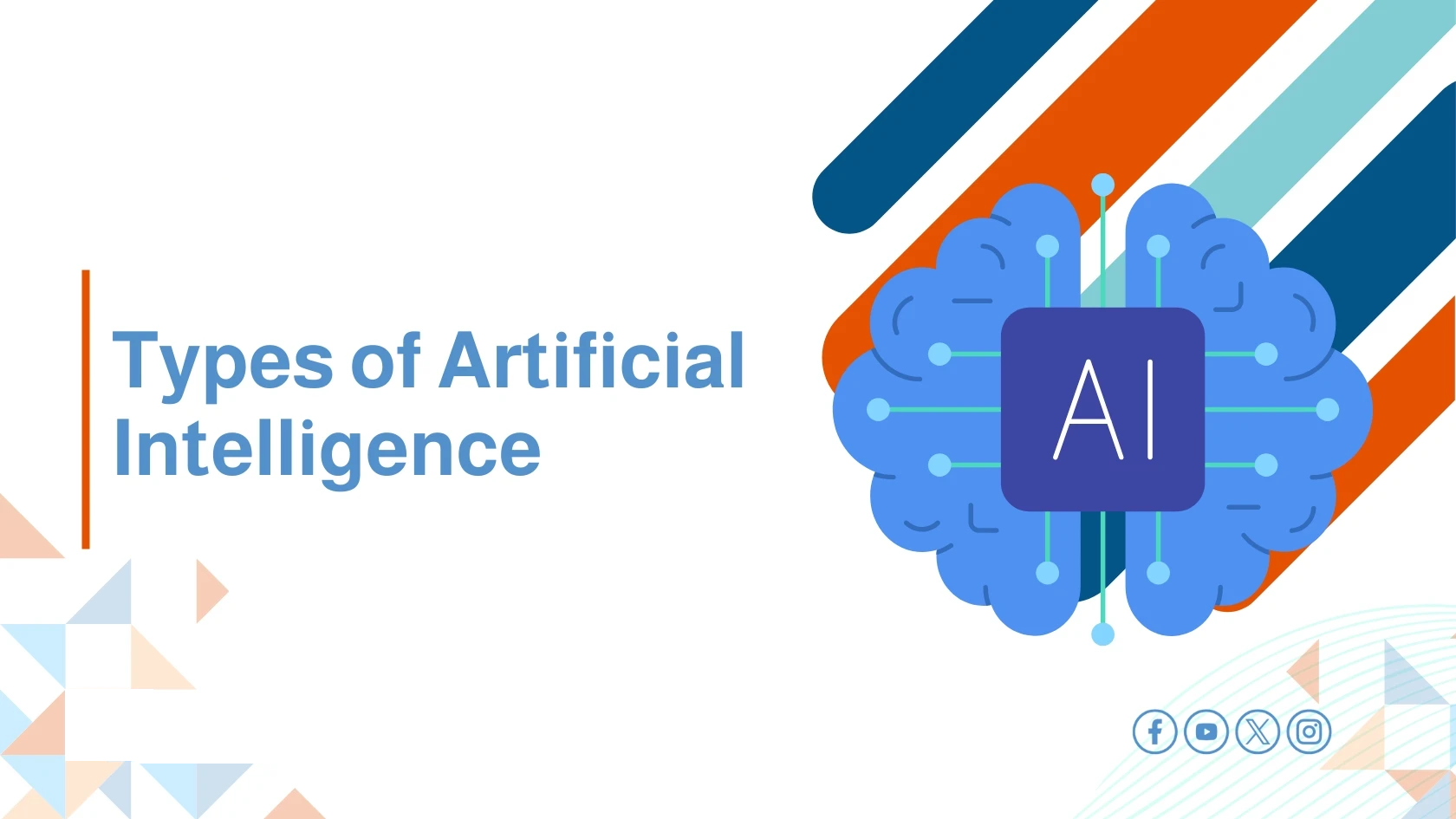
AI development spans a diverse portfolio of solutions, each designed to address specific business challenges and unlock distinct sources of value:
- Predictive Analytics
Leveraging historical data and advanced modeling techniques, predictive analytics enables organizations to forecast future outcomes such as demand trends, customer behavior, or equipment failures. It is widely adopted across industries including finance, retail, and manufacturing. - Natural Language Processing (NLP)
Natural Language Processing allows machines to understand, interpret, and generate human language. Common applications include chatbots, sentiment analysis, speech recognition, and automated translation systems. - Computer Vision
Computer Vision equips systems with the ability to analyze and interpret visual data from images and video streams. Key use cases include facial recognition, autonomous driving, industrial quality inspection, and medical imaging diagnostics. - Intelligent Automation
By combining AI with robotic process automation (RPA), intelligent automation enables end to end handling of complex, rule based and cognitive workflows such as invoice processing, compliance checks, and customer onboarding. - Generative AI
Powered by advanced models like GPT and diffusion based architectures, generative AI can create new content including text, images, code, and designs. This capability is transforming industries such as marketing, software development, and digital media.
Each category represents a convergence of data science, software engineering, and domain expertise tailored to solve industry specific problems while driving innovation and competitive differentiation.
AI Development vs. Traditional Software Development
Although both disciplines involve coding, architecture design, and system integration, AI development differs fundamentally from traditional software engineering in how systems are built, trained, and evolved over time.
| Aspect | Traditional Software Development | AI Development |
|---|---|---|
| Logic Foundation | Rule based, explicitly programmed instructions | Data driven learning and adaptive behavior using models |
| Output Behavior | Deterministic identical inputs produce identical outputs | Probabilistic outputs vary based on learned patterns and data context |
| Maintenance Approach | Requires manual code updates and rule adjustments | Continuously improves through retraining and exposure to new data |
| Primary Objective | Automate predefined, structured tasks | Enable learning, prediction, and autonomous decision making |
| Technology Stack | Conventional programming languages (e.g., Java, C#) | ML frameworks such as TensorFlow, PyTorch, and Scikit learn |
This paradigm shift from rule based logic to data driven intelligence enables AI systems to evolve over time, making them significantly more adaptable, scalable, and effective in dynamic and complex business environments.
Best Practices for Successful AI Development
To maximize impact and ensure sustainable value, organizations should approach AI development with a structured, disciplined strategy that aligns technology with business outcomes.
- Define Clear Business Objectives
Start with precise, outcome driven goals whether reducing operational costs, improving customer satisfaction, or increasing process efficiency. Every AI initiative should be tied to measurable KPIs and business impact. - Prioritize Data Quality
The performance of any AI system is directly dependent on the quality of its data. Invest in robust data pipelines, cleansing, enrichment, and governance to minimize bias and ensure accuracy and consistency. - Adopt Agile and Iterative Development
AI development is inherently experimental. Leveraging agile methodologies enables rapid prototyping, continuous testing, and iterative refinement accelerating time to value while reducing development risk. - Implement MLOps
MLOps provides a structured approach to managing the full AI lifecycle from model training and versioning to deployment and monitoring ensuring scalability, reliability, and operational efficiency. - Ensure Ethical and Responsible AI
Incorporate principles of transparency, fairness, accountability, and data privacy into every stage of development. Responsible AI practices not only mitigate risks but also build trust with users and stakeholders. - Foster Cross Functional Collaboration
Successful AI initiatives require the convergence of technical expertise and domain knowledge. Encourage close collaboration between data scientists, engineers, product teams, and business leaders to ensure solutions are both technically sound and commercially relevant.
By following these best practices, organizations can accelerate AI adoption, reduce implementation risks, and maximize return on investment turning AI into a durable competitive advantage.
Common Challenges in AI Development
While AI offers substantial transformative potential, its implementation is not without complexity. Organizations must proactively address several key challenges to ensure successful adoption and long term sustainability:
- Data Limitations
Inadequate, inconsistent, or low quality data can significantly degrade model performance. Overcoming this requires well defined data strategies, including data collection pipelines, enrichment, and augmentation techniques to improve dataset robustness. - Model Bias and Fairness
Bias embedded in training data can lead to skewed or unethical outcomes. Implementing regular audits, using diverse datasets, and applying fairness aware techniques are essential to maintain responsible and trustworthy AI systems. - Integration Complexity
Embedding AI into legacy systems often demands architectural modernization and seamless interoperability. Strong API design, microservices architecture, and cloud native approaches are critical to enable smooth integration. - Talent Shortage
The demand for skilled AI engineers, data scientists, and ML specialists continues to outpace supply. Organizations must invest in talent acquisition, upskilling, and strategic partnerships to bridge this capability gap. - Cost and Scalability Constraints
AI development requires substantial investment in infrastructure, cloud computing, and ongoing model maintenance. Leveraging scalable cloud platforms and modular system design helps optimize costs while supporting growth.
By identifying and addressing these challenges early, organizations can mitigate risks, streamline implementation, and build AI systems that are both effective and resilient at scale.
How HomeNest Software Transforms Business Operations with AI Development Services
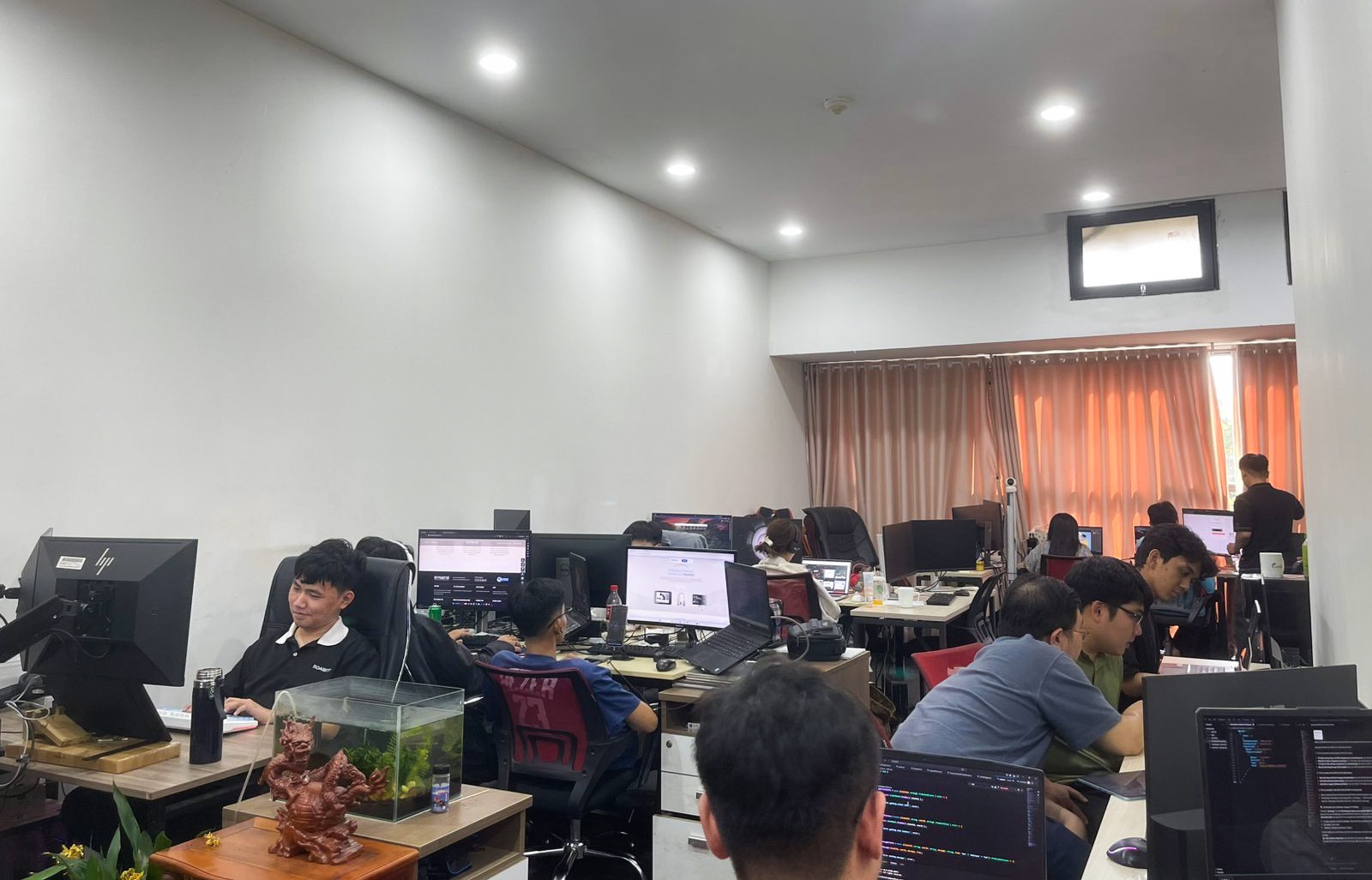
At HomeNest Software, we enable organizations to accelerate digital transformation and achieve operational excellence through advanced AI development. Backed by over a decade of software engineering expertise and a growing global footprint, we deliver intelligent solutions that streamline operations, enhance decision making, and unlock new sources of business value.
By combining capabilities in Machine Learning, Computer Vision, and Generative AI, we design and implement scalable systems tailored to industry specific challenges across finance, healthcare, retail, education, and construction. Our focus is clear: help businesses modernize, operate more efficiently, and sustain a competitive edge in a rapidly evolving digital landscape.
AI Powered Automation and Process Optimization
We build intelligent automation solutions that streamline complex workflows and eliminate repetitive manual tasks. Leveraging computer vision and Optical Character Recognition (OCR), our systems automate data extraction, document processing, and quality inspection significantly improving speed, accuracy, and operational efficiency while reducing human error.
Enhancing Customer Experience with Generative AI
Harnessing the power of generative AI and Natural Language Processing, we develop advanced chatbots and virtual assistants capable of real time, human like interactions. These solutions enable personalized engagement at scale, helping businesses strengthen customer relationships and deliver superior user experiences.
Driving Data Driven Decision Making
Our AI solutions empower leadership teams with actionable, real time insights. Through predictive analytics, interactive dashboards, and intelligent data visualization, we help organizations forecast trends, optimize performance, and make faster, more informed strategic decisions turning data into a measurable competitive advantage.
Scalable, Secure, and Cloud Integrated AI Systems
We architect AI solutions with scalability, security, and reliability at the core. By adopting cloud native infrastructure and leveraging MLOps best practices, we ensure seamless deployment, efficient model lifecycle management, and consistent system performance as business demands evolve.
Client Centric, Agile Delivery Model
Every organization has unique challenges and requires tailored solutions. We adopt agile methodologies and a client first approach to ensure flexibility, transparency, and continuous collaboration throughout the development lifecycle. From initial consulting and solution design to deployment and long term support, every AI system we deliver is aligned with the client’s business objectives and growth strategy.
Conclusion
AI development has become a defining force in modern business transformation. As organizations increasingly adopt automation, data intelligence, and generative technologies, those that invest strategically in AI will be best positioned to operate with greater speed, intelligence, and adaptability.
With deep technical expertise, a strong innovation mindset, and a client centric delivery model, HomeNest Software is well equipped to help enterprises unlock the full value of AI from initial concept through to scalable, real world implementation.
Transform your operations with intelligent, future ready AI solutions.
Partner with HomeNest Software to turn your data into a sustainable competitive advantage.
FAQs
What are AI development services?
AI development services involve designing, building, and deploying intelligent systems that can learn from data, make decisions, and automate complex tasks. These services typically include data engineering, model development, deployment, and ongoing optimization.
How long does it take to develop an AI solution?
The timeline depends on project complexity, data availability, and business requirements. A basic AI solution may take 2–4 months, while more advanced, enterprise scale systems can take 6–12 months or longer.
What industries benefit most from AI development?
AI delivers value across multiple industries, including healthcare, finance, retail, logistics, manufacturing, and education. Any organization with access to data and repetitive processes can benefit from AI driven automation and insights.
What is the difference between AI, machine learning, and deep learning?
Artificial Intelligence is the broader concept of machines simulating human intelligence. Machine Learning is a subset of AI that enables systems to learn from data. Deep Learning is a specialized branch of ML that uses neural networks for more complex tasks like image and speech recognition.
How much does AI development cost?
Costs vary based on scope, data complexity, infrastructure, and required expertise. Small AI projects may start from $10,000–$30,000, while enterprise solutions can exceed $100,000 depending on scale and customization.
What are the key challenges in AI development?
Common challenges include data quality issues, model bias, integration with existing systems, high infrastructure costs, and the shortage of skilled AI talent. Addressing these early is critical for project success.
How do businesses ensure AI solutions remain accurate over time?
AI systems require continuous monitoring and retraining with new data to maintain performance. Implementing MLOps helps automate this process and ensures long term reliability.
Is AI development secure and compliant?
Yes when implemented correctly. AI systems must follow security best practices, data privacy regulations (such as GDPR or PDPA), and ethical AI guidelines to ensure compliance and protect sensitive information.
Why choose HomeNest Software for AI development?
HomeNest Software combines strong engineering expertise, domain knowledge, and an agile delivery approach to build scalable, secure, and high impact AI solutions tailored to business needs.
Latest Articles
View All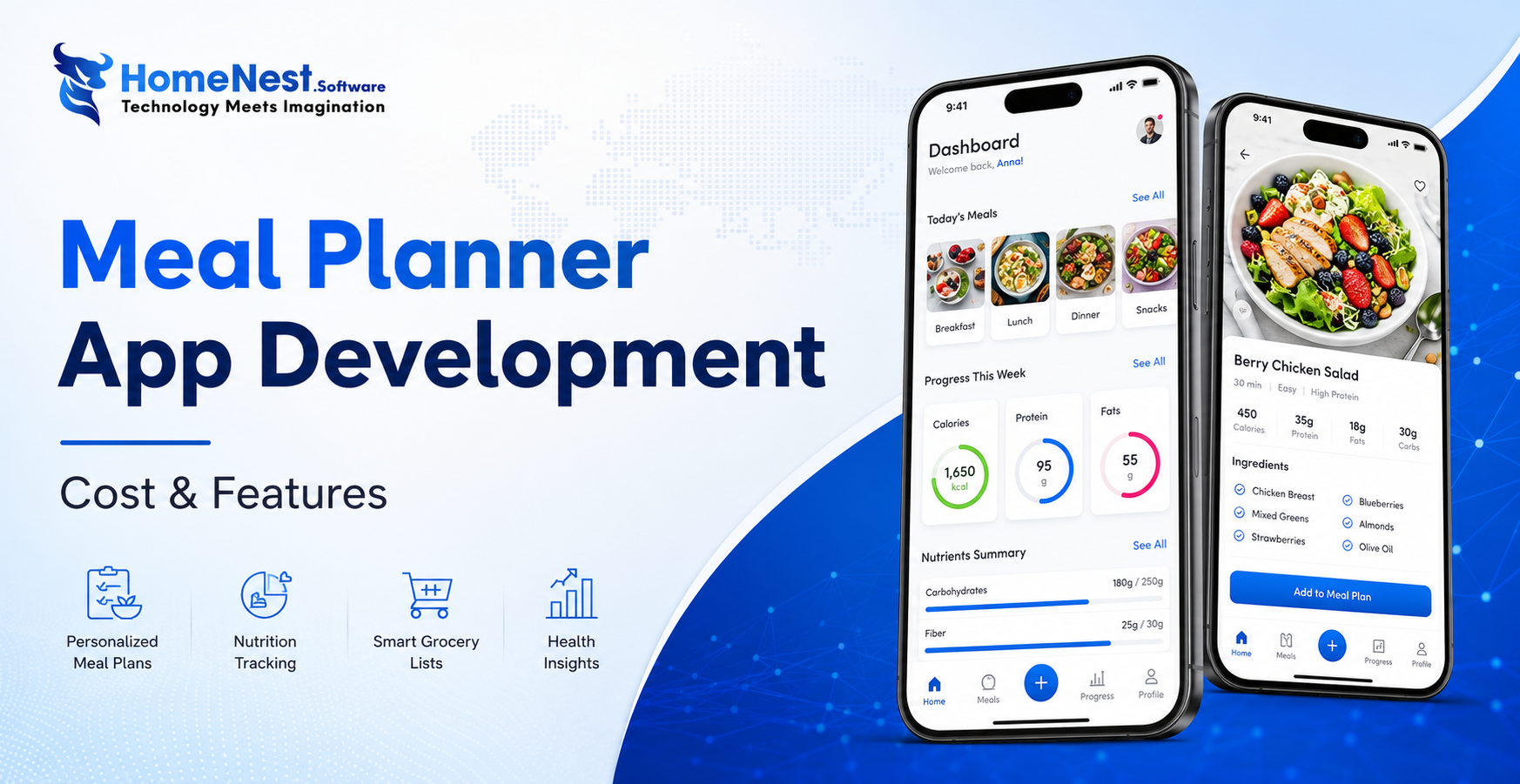
How to Build a Meal Planning App: A Complete Step-by-Step Guide
Building a successful meal planning app goes beyond creating an attractive interface it requires a clear business strategy, personalized user experiences, and scalable technology. By combining essential features like AI-powered meal recommendations, nutrition tracking, grocery list automation, and wearable integration, businesses can deliver lasting value to users while capitalizing on the growing digital health market. Partnering with an experienced mobile app development company ensures your solution is secure, future-ready, and designed to succeed in an increasingly competitive health-tech industry.

How Much Does It Cost to Build a Shopping App Like Temu?
Temu’s meteoric rise to over 900 million global downloads proves the power of combining AI, gamification, and social commerce, but building a similar viral shopping platform requires careful financial and technical planning. Developing an app like Temu typically costs anywhere from $40,000 for a basic Minimum Viable Product (MVP) to over $300,000 for a fully-featured platform. This guide breaks down every cost category, analyzes the core features driving Temu’s success, highlights the best technology stacks, and offers practical strategies to optimize your development budget without compromising on quality.

Criteria For Choosing The Right App Design Agency
UI/UX design is the logical foundation of a system, not merely a visual element. Choosing the wrong partner will directly lead to technical debt, budget overruns, and disruptions in the development process. This article provides a 6-step evaluation framework and a list of operational risks, helping businesses eliminate subjective design advice and accurately assess agency capabilities based on developer handoff standards and practical business performance.
How Does AI in Banking Industry Impact the Future?
Artificial intelligence (AI) has transitioned from a supplementary tool to a core infrastructure of financial data management, optimizing profitability through real-time fraud detection, natural language processing (NLP), and high-speed credit scoring models. “Deploying AI in the financial sector requires more than just algorithmic accuracy, it demands a highly secure cloud architecture and rigorous data governance,” commented Nguyen Tien, co-founder of HomeNest Software. Why read this guide? We skip the theoretical jargon to focus entirely on technical implementation. Whether you’re evaluating a vendor or planning a system overhaul, this article will detail: Operational Efficiency: Automating unstructured data workflows at scale. Risk Architecture: Implementing real-time threat detection and AML compliance. Data ownership: The essential need for 100% ownership of the source code to ensure full algorithm auditability.

How to Make a Banking App like Bank of America?
Developing a mobile banking application like Bank of America extends far beyond basic UI design; it requires engineering a fault-tolerant backend capable of real-time ledger synchronization, biometric authentication, and high-volume data processing under strict regulatory frameworks. Drawing from HomeNest Software’s deep experience in architecting enterprise-grade fintech solutions, this guide strips away theoretical jargon to focus entirely on operational and technical execution. What you will find in this guide: We break down the precise development roadmap, from mapping out microservices and ensuring PCI-DSS compliance to estimating MVP development costs and securing absolute data sovereignty through 100% source code ownership. If you are preparing to build, scale, or audit a financial platform, this blueprint provides the exact framework you need.

Banking App Development Cost
Building a banking application is rarely a simple process; it’s a complex technical challenge requiring a balance between complying with stringent financial regulations, handling large transaction volumes, and a scalable cloud architecture. Miscalculating these technical requirements from the outset often leads to significant technical debt and budget overruns. Based on HomeNest Software’s practical experience in designing enterprise-grade fintech solutions, this guide bypasses generic estimates to provide a realistic analysis of banking application development costs. What you’ll find in this guide: We analyze the true cost factors, from technology selection and API integration to the hidden costs of regulatory compliance and security infrastructure. Whether you’re launching a minimum viable product or expanding an existing financial platform, this analysis provides the precise operational data you need to plan your budget effectively.