
AI in Jewelry: Elevating Online Shopping Experiences for Luxury Brands
AI is transforming the jewelry industry from end to end enhancing customer experiences, optimizing operations, and enabling data-driven growth. From virtual try-ons and personalized recommendations to smarter supply chains and precision manufacturing, AI empowers brands to deliver both luxury and efficiency at scale. While challenges like cost and integration exist, businesses that adopt AI strategically will gain a strong competitive edge, improve customer loyalty, and unlock new opportunities in the evolving digital luxury market.
Scope of Work
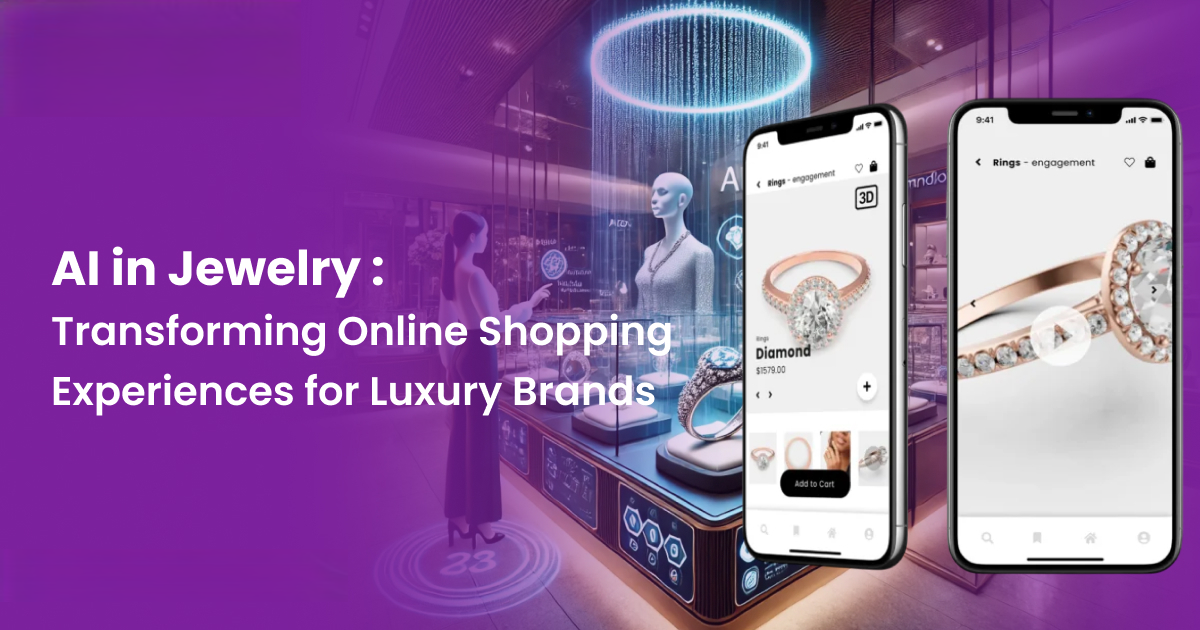
AI is transforming the luxury jewelry market by delivering immersive, data driven, and highly personalized online shopping experiences. As digital adoption accelerates, the global luxury eCommerce market is projected to reach $91 billion by 2026, with AI playing a central role in shaping how premium brands engage customers. From virtual try ons and intelligent product filters to AI chatbots and predictive analytics, retailers are leveraging AI to enhance customer satisfaction, strengthen brand loyalty, and drive conversions across omnichannel journeys.
According to Deloitte, nearly 80% of retail executives plan to invest in AI to improve personalization and customer engagement. For jewelry brands where visual appeal, exclusivity, and emotional connection are critical AI bridges the gap between the in store luxury experience and the convenience of digital commerce.
In this blog, we’ll explore how AI is reshaping the jewelry eCommerce landscape enabling brands to create seamless, engaging, and deeply personalized customer journeys. More importantly, AI helps transform each purchase into a memorable experience, where every piece of jewelry becomes not just a product, but a lasting emotional connection with the brand.
Applications of AI in the Jewelry Industry

Artificial Intelligence (AI) is redefining the jewelry industry by enhancing operational efficiency, elevating customer experiences, and enabling smarter, data driven decisions. From design to sales and post purchase engagement, AI empowers brands to deliver highly personalized and seamless shopping journeys. Below are the most impactful applications of AI in the jewelry sector:
1. Virtual Try Ons
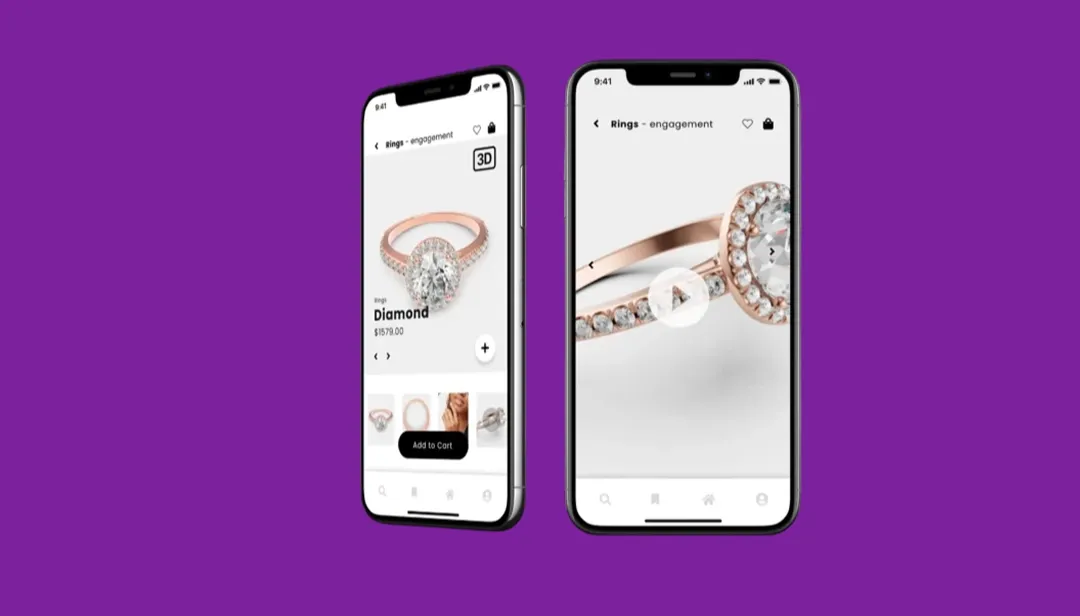
AI powered Augmented Reality (AR) allows customers to virtually try on rings, necklaces, and earrings using mobile devices or webcams. This technology replicates the in store experience, reduces purchase hesitation, increases conversion rates, and minimizes product returns.
2. Personalized Recommendations
AI driven recommendation engines analyze user behavior such as browsing history, preferences, and past purchases to suggest relevant jewelry pieces. This level of personalization enhances customer satisfaction, encourages repeat purchases, and strengthens brand loyalty.
3. AI Assisted Design Automation
AI tools help designers generate innovative jewelry concepts based on market trends, customer preferences, and material availability. By combining creativity with data insights, brands can accelerate design cycles, reduce time to market, and produce collections that align with consumer demand.
4. Intelligent Inventory Management
AI systems optimize inventory by analyzing sales patterns and market trends in real time. They help maintain optimal stock levels, identify slow moving items, and prevent overstocking or shortages resulting in improved supply chain efficiency and reduced waste.
5. Dynamic Pricing Optimization
AI algorithms evaluate demand, competitor pricing, and market conditions to recommend optimal pricing strategies. This enables jewelry retailers to remain competitive while maximizing profit margins.
6. Quality Control and Gemstone Grading
Using computer vision and pattern recognition, AI can assess gemstones based on cut, clarity, and color with high precision. This ensures consistent grading, reduces human error, and enhances trust in product quality.
7. Counterfeit Detection
AI enhances authentication by analyzing microscopic patterns, materials, and unique identifiers in jewelry. This helps detect counterfeit products more accurately, protecting brand integrity and maintaining customer trust.
8. AI Chatbots and Virtual Assistants
AI powered chatbots provide 24/7 customer support, handling inquiries, tracking orders, and offering personalized recommendations. This improves customer service efficiency while reducing operational costs.
9. Trend Forecasting
AI analyzes data from social media, search trends, and fashion reports to predict emerging jewelry styles. This allows brands to stay ahead of trends and design collections that resonate with future market demand.
10. Advanced Customer Insights
AI driven analytics provide deep insights into customer demographics, preferences, and buying behavior. These insights enable brands to create targeted marketing campaigns, personalized offers, and loyalty programs ultimately improving the overall customer experience.
Together, these applications demonstrate how AI is not only modernizing the jewelry industry but also enabling brands to deliver more personalized, efficient, and engaging experiences across the entire customer journey.
AI in Jewelry Manufacturing and Supply Chain
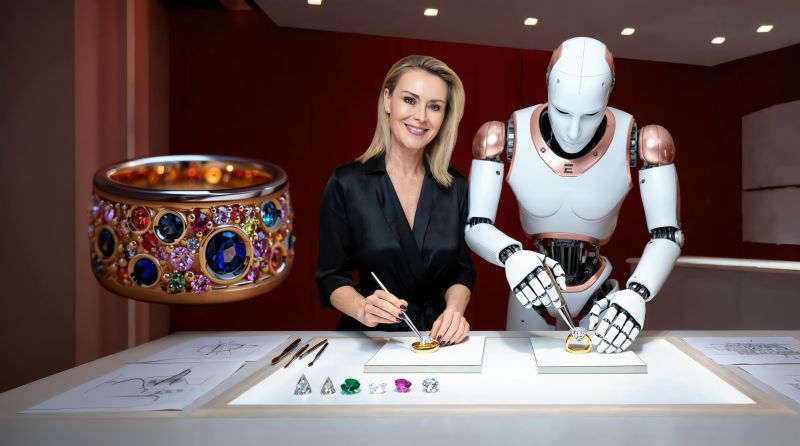
Artificial Intelligence is not only transforming customer facing experiences but also revolutionizing how jewelry is designed, manufactured, and delivered. By integrating AI into production and supply chain operations, jewelry companies can enhance precision, improve efficiency, reduce costs, and ensure higher product quality. Here are the key ways AI is reshaping jewelry manufacturing and supply chain management:
1. Precision in Design and Prototyping
AI powered generative design tools enable the creation of highly detailed jewelry concepts based on customer preferences and market trends. These systems can generate and evaluate multiple design variations considering factors like metal type, gemstone shape, and weight. When combined with 3D printing, AI significantly accelerates prototyping and shortens the time from concept to production.
2. Intelligent Material Sourcing
AI driven analytics platforms monitor fluctuations in the availability and pricing of precious metals and gemstones. They also evaluate supplier performance to identify reliable and ethical sourcing partners. This helps manufacturers optimize procurement costs while ensuring transparency and compliance with sourcing standards.
3. Demand Forecasting
AI models analyze historical sales data, seasonal trends, and external market factors to accurately predict demand. This allows jewelry brands to plan production more effectively, avoid overstocking or shortages, and improve overall inventory efficiency.
4. Predictive Maintenance of Machinery
AI enabled sensors continuously monitor manufacturing equipment in real time, identifying potential issues before they lead to failures. Predictive maintenance reduces downtime, lowers repair costs, and ensures smoother, uninterrupted production processes.
5. Automated Quality Control and Inspection
Computer vision and machine learning technologies are used to inspect finished jewelry for defects, imperfections, or inconsistencies. Automated inspections are faster and more accurate than manual checks, ensuring consistent quality and reducing human error.
6. Optimized Inventory and Warehouse Management
AI systems streamline inventory management by tracking stock levels, predicting restocking needs, and optimizing warehouse operations. Automated reorder points and intelligent storage allocation help improve efficiency and reduce operational waste.
7. Route Optimization and Delivery Management
In the supply chain, AI algorithms optimize delivery routes for both raw materials and finished products. This reduces transportation time and costs while improving delivery reliability and customer satisfaction.
By integrating AI across manufacturing and supply chain processes, jewelry companies can achieve greater operational efficiency, enhance product quality, and build a more agile and responsive business model.
Benefits of Using AI in the Jewelry Business
Artificial Intelligence (AI) is transforming the jewelry industry by unlocking new levels of efficiency, personalization, and profitability. From customer engagement to operations and marketing, AI enables brands to deliver smarter, more impactful experiences. Here are the key benefits of adopting AI in the jewelry business:
1. Hyper Personalized Customer Experience
AI enables jewelry brands to deliver highly personalized experiences by analyzing customer data such as browsing behavior, preferences, and purchase history. This allows businesses to recommend tailored designs, curated collections, and targeted marketing content driving higher engagement, conversions, and long term customer loyalty.
2. Enhanced Virtual Shopping Experiences
With AI powered Augmented Reality (AR), customers can virtually try on jewelry pieces from anywhere. This immersive experience not only replicates in store shopping but also boosts buyer confidence, reduces hesitation, and significantly lowers product return rates.
3. Smarter Inventory Management
AI helps retailers optimize inventory by predicting demand, monitoring stock levels in real time, and automating reordering processes. This reduces excess inventory, prevents stock shortages, and ensures more efficient operations.
4. Faster and More Intelligent Design Processes
AI tools assist designers by analyzing trends, customer preferences, and material availability to generate innovative design ideas. This accelerates ideation and prototyping while ensuring that new collections align with current market demand and fashion trends.
5. More Efficient Supply Chain Operations
AI enhances supply chain efficiency by tracking logistics, predicting potential delays, and optimizing delivery routes. It also helps evaluate supplier performance and material availability, ensuring smoother production workflows and cost effective sourcing.
6. Precision Quality Control
Using computer vision and machine learning, AI can detect even the smallest defects or inconsistencies in jewelry products. This ensures consistent quality standards, reduces human error, and minimizes customer complaints.
7. Data Driven Marketing and Sales Strategies
AI analyzes customer behavior, market trends, and competitor activities to optimize marketing campaigns and pricing strategies. This enables brands to create targeted promotions, identify high value opportunities, and improve overall sales performance.
By integrating AI across business functions, jewelry brands can deliver superior customer experiences, streamline operations, and gain a strong competitive advantage in an increasingly digital marketplace.
Challenges in Adopting AI in the Jewelry Industry
While Artificial Intelligence (AI) offers significant benefits, many jewelry businesses especially traditional retailers face practical challenges when implementing these technologies. Understanding these barriers is essential for successful adoption and long term ROI.
1. High Implementation Costs
Deploying AI solutions whether for design automation, inventory optimization, or customer engagement requires substantial investment. Costs include software, infrastructure, and skilled talent. For small and mid sized jewelers, these upfront expenses can be a major obstacle.
2. Limited Technical Expertise
AI implementation demands expertise in data science, machine learning, and system integration. Many jewelry businesses lack in house technical capabilities, leading to a reliance on external vendors and increasing the complexity of adoption.
3. Data Availability and Quality
AI systems depend on high quality, structured data to function effectively. However, many jewelry companies do not have sufficient customer, sales, or operational data. Poor or inconsistent data can limit the accuracy of insights and reduce the effectiveness of AI solutions.
4. Resistance to Change
Traditional workflows in the jewelry industry often rely on manual processes. Employees and management may resist AI adoption due to concerns about job displacement, unfamiliarity with technology, or disruption to existing operations.
5. Integration with Legacy Systems
Integrating AI with existing systems such as POS platforms, inventory management tools, or eCommerce websites can be technically complex. Poor integration may lead to inefficiencies, data inconsistencies, or system failures if not handled properly.
Addressing these challenges with the right strategy, skilled partners, and phased implementation can help jewelry businesses successfully adopt AI and unlock its full potential.
Final Thoughts
Artificial Intelligence is redefining how luxury jewelry brands connect with customers in a digital first world. From virtual try ons and personalized recommendations to intelligent chatbots and dynamic pricing, AI is enhancing every stage of the customer journey making it more seamless, engaging, and memorable.
Beyond improving customer experience, AI is also transforming core business operations. It enables smarter decision making, drives higher conversions, and strengthens brand loyalty by delivering tailored, high value interactions. For luxury jewelry brands, this means the ability to combine exclusivity with convenience bringing the elegance of in store experiences into the digital space.
As technology continues to evolve, the future of online jewelry shopping will be defined by deeper personalization, smarter interactions, and immersive digital environments. Brands that embrace AI today will be better positioned to lead tomorrow.
If you’re planning to innovate or invest in the luxury jewelry market in 2026, partnering with an experienced AI development company can help you unlock the full potential of intelligent, future ready solutions.
FAQs
1. How is AI used in the jewelry industry?
AI is used for virtual try ons, personalized recommendations, inventory management, demand forecasting, pricing optimization, quality control, and customer support through chatbots.
2. What are the benefits of AI for jewelry businesses?
AI helps improve customer experience, increase sales, reduce operational costs, optimize inventory, and enable data driven decision making.
3. Can AI improve online jewelry shopping?
Yes, AI enhances online shopping through features like AR based virtual try ons, smart product recommendations, and personalized user experiences making it easier for customers to make confident purchase decisions.
4. How does AI help in jewelry design?
AI assists designers by analyzing trends, customer preferences, and material availability to generate innovative design ideas and accelerate the prototyping process.
5. Is AI expensive to implement in the jewelry industry?
Initial implementation can be costly, especially for small businesses. However, AI solutions can be scaled gradually, starting with MVP features or cloud based tools to reduce upfront investment.
6. How does AI help with inventory management in jewelry?
AI predicts demand, tracks stock levels in real time, and automates reordering processes helping businesses avoid overstocking or stock shortages.
7. Can AI detect fake or counterfeit jewelry?
Yes, AI uses computer vision and pattern recognition to analyze materials and design details, helping identify counterfeit products and protect brand authenticity.
8. What technologies are used in AI for jewelry?
Common technologies include machine learning, computer vision, natural language processing (NLP), augmented reality (AR), and cloud based analytics platforms.
9. Is AI replacing human roles in the jewelry industry?
No, AI is not replacing humans but supporting them by automating repetitive tasks, improving accuracy, and allowing professionals to focus on creativity and customer engagement.
10. Why should jewelry brands invest in AI now?
Investing in AI helps brands stay competitive, deliver personalized experiences, improve operational efficiency, and adapt to the growing demand for digital first luxury shopping.
Latest Articles
View All
Criteria For Choosing The Right App Design Agency
UI/UX design is the logical foundation of a system, not merely a visual element. Choosing the wrong partner will directly lead to technical debt, budget overruns, and disruptions in the development process. This article provides a 6-step evaluation framework and a list of operational risks, helping businesses eliminate subjective design advice and accurately assess agency capabilities based on developer handoff standards and practical business performance.
How Does AI in Banking Industry Impact the Future?
Artificial intelligence (AI) has transitioned from a supplementary tool to a core infrastructure of financial data management, optimizing profitability through real-time fraud detection, natural language processing (NLP), and high-speed credit scoring models. “Deploying AI in the financial sector requires more than just algorithmic accuracy, it demands a highly secure cloud architecture and rigorous data governance,” commented Nguyen Tien, co-founder of HomeNest Software. Why read this guide? We skip the theoretical jargon to focus entirely on technical implementation. Whether you’re evaluating a vendor or planning a system overhaul, this article will detail: Operational Efficiency: Automating unstructured data workflows at scale. Risk Architecture: Implementing real-time threat detection and AML compliance. Data ownership: The essential need for 100% ownership of the source code to ensure full algorithm auditability.

How to Make a Banking App like Bank of America?
Developing a mobile banking application like Bank of America extends far beyond basic UI design; it requires engineering a fault-tolerant backend capable of real-time ledger synchronization, biometric authentication, and high-volume data processing under strict regulatory frameworks. Drawing from HomeNest Software’s deep experience in architecting enterprise-grade fintech solutions, this guide strips away theoretical jargon to focus entirely on operational and technical execution. What you will find in this guide: We break down the precise development roadmap, from mapping out microservices and ensuring PCI-DSS compliance to estimating MVP development costs and securing absolute data sovereignty through 100% source code ownership. If you are preparing to build, scale, or audit a financial platform, this blueprint provides the exact framework you need.

Banking App Development Cost
Building a banking application is rarely a simple process; it’s a complex technical challenge requiring a balance between complying with stringent financial regulations, handling large transaction volumes, and a scalable cloud architecture. Miscalculating these technical requirements from the outset often leads to significant technical debt and budget overruns. Based on HomeNest Software’s practical experience in designing enterprise-grade fintech solutions, this guide bypasses generic estimates to provide a realistic analysis of banking application development costs. What you’ll find in this guide: We analyze the true cost factors, from technology selection and API integration to the hidden costs of regulatory compliance and security infrastructure. Whether you’re launching a minimum viable product or expanding an existing financial platform, this analysis provides the precise operational data you need to plan your budget effectively.
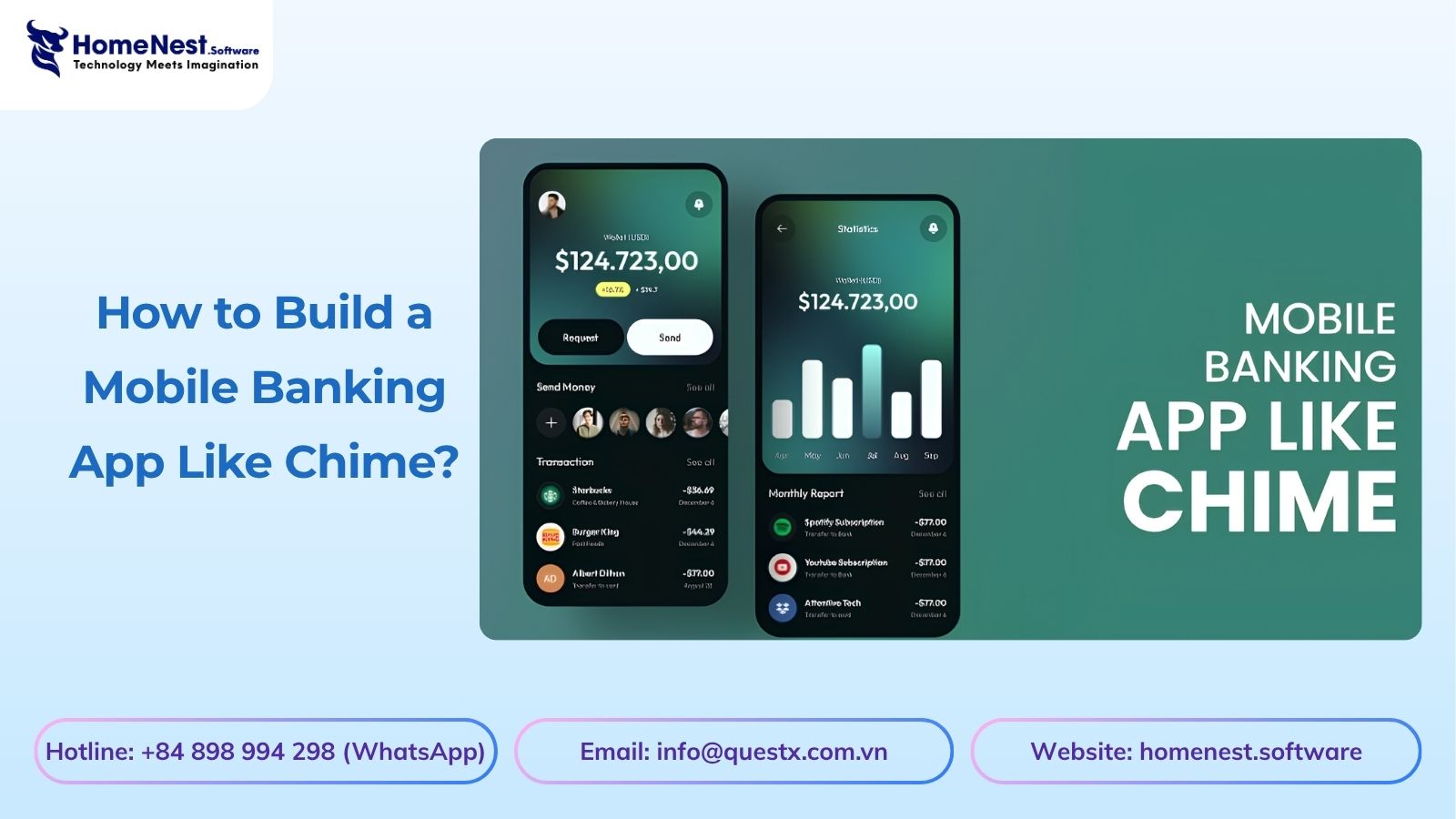
How to Build a Mobile Banking App Like Chime?
Building a mobile banking app like Chime is not just about features, it is about delivering a secure, scalable, and user-centric financial experience. From planning the right architecture to optimizing mobile banking app development cost, every decision directly impacts your product’s success. Leveraging Fintech app development services, starting with MVP app development, and scaling through on-demand app development solutions allows businesses to reduce risk and accelerate time to market. To stay competitive, combining Android app development services and iOS app development solutions ensures wider reach, while continuous updates through maintenance software development services keep your app secure and future-ready.

How to Build a Banking App Like Barclays: A Complete Entrepreneur’s Guide
Building a banking app like Barclays requires more than just development. It demands a strong product vision, secure architecture, and a clear monetization strategy. From optimizing cost and selecting the right tech stack to ensuring compliance and scalability, every decision impacts long-term success. Partnering with an experienced team like HomeNest Software helps accelerate development, reduce risks, and deliver a high-quality fintech product that can compete in today’s fast-evolving digital banking landscape.