
How AI Is Used in Restaurants: Top Use Cases End Real-World Examples
AI is rapidly transforming the restaurant industry by streamlining operations, enhancing customer experiences, and enabling data driven decision making. From inventory optimization and demand forecasting to personalized recommendations and automated kitchens, AI helps restaurants reduce costs, improve efficiency, and increase revenue. While challenges like initial investment and system integration exist, adopting the right AI strategy focused on high impact use cases and scalable implementation can give restaurants a strong competitive advantage in an increasingly digital and experience-driven market.
Scope of Work

The restaurant industry is rapidly evolving, with Artificial Intelligence (AI) playing a central role in this transformation. From fast food chains to fine dining establishments, businesses are leveraging AI to streamline operations, enhance customer experiences, and stay competitive in an increasingly digital landscape.
Today, AI in restaurants is more than just a trend it’s a powerful driver of innovation. From predicting customer preferences and automating food preparation to analyzing feedback and optimizing workflows, AI is fundamentally changing how restaurants operate and engage with their customers.
Leading brands are already setting the benchmark. For instance, AI is helping McDonald’s optimize drive thru efficiency, while Yum Brands is enhancing kitchen operations across chains like KFC and Taco Bell. At the same time, voice AI solutions such as SoundHound are enabling faster, more seamless ordering experiences especially in high demand environments.
From robotic automation and smart menus to dynamic pricing strategies, AI is solving real world challenges across the food service industry. In this blog, we’ll explore the most impactful AI use cases in restaurants, highlight real world examples, and show how businesses of all sizes can benefit from adopting AI driven solutions.
Top Use Cases of AI in the Restaurant Industry
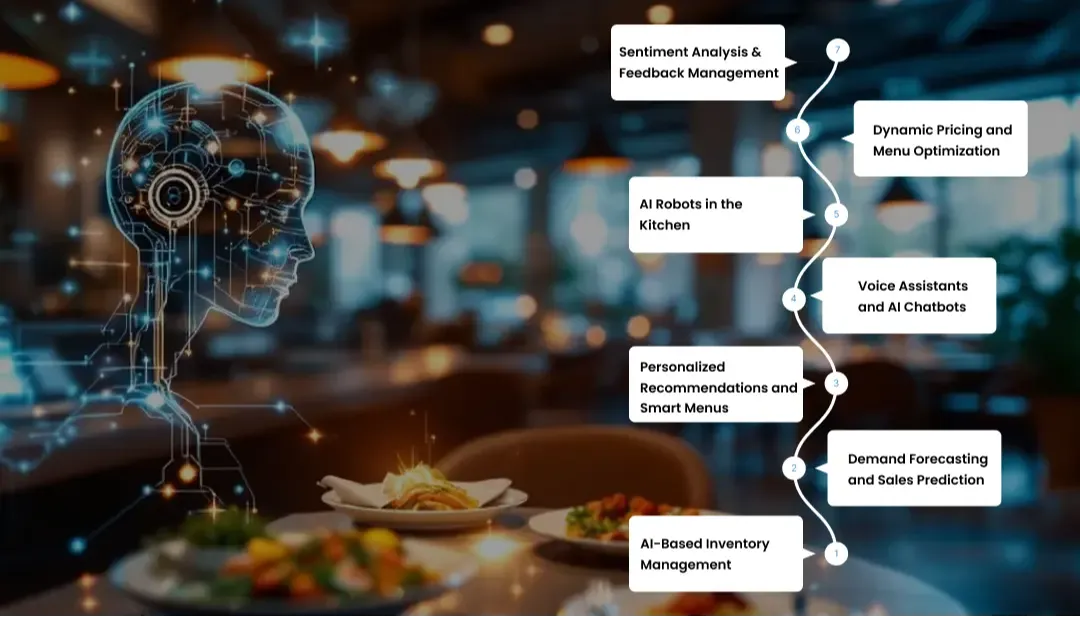
The adoption of AI in the restaurant industry is enabling businesses to operate more intelligently, efficiently, and profitably. From back of house operations to customer facing experiences, AI is transforming every stage of the dining journey.
Let’s explore the most impactful use cases of artificial intelligence in restaurants:
1. AI Powered Inventory Management
Inventory management is one of the most challenging aspects of restaurant operations. AI systems analyze historical sales data, real time consumption, weather patterns, and local events to accurately forecast demand. This helps restaurants maintain optimal stock levels reducing waste while avoiding shortages.
Additionally, real time alerts notify managers when inventory is low or nearing expiration, ensuring smooth kitchen operations.
2. Demand Forecasting and Sales Prediction
AI tools can identify patterns in customer behavior and predict demand with high accuracy. This enables restaurants to prepare ingredients in advance and allocate staff efficiently during peak hours.
For example, AI can anticipate increased coffee sales on rainy days or higher family meal orders during holidays automating resource planning.
3. Personalized Recommendations and Smart Menus
Personalization plays a key role in customer retention. AI analyzes past orders, dietary preferences, and visit history to deliver tailored recommendations. Smart menus dynamically adjust to suggest relevant meals, offers, or combos in real time, enhancing the overall dining experience.
4. Voice Assistants and AI Chatbots
AI powered chatbots and voice assistants automate customer interactions such as ordering, reservations, and inquiries. Solutions like voice AI systems allow customers to place orders or ask questions instantly, improving speed and convenience while reducing staff workload.
5. AI Robots in the Kitchen
Automation is extending into food preparation with AI driven robots. These systems can handle repetitive tasks such as cooking, frying, or assembling meals with precision and consistency reducing human error and increasing efficiency.
6. Dynamic Pricing and Menu Optimization
AI analyzes sales performance, customer preferences, and seasonal trends to optimize menu pricing and promotions. Restaurants can adjust prices dynamically and highlight high performing items to maximize revenue and profitability.
7. Sentiment Analysis and Feedback Management
AI tools monitor and analyze customer feedback from reviews, social media, and surveys. By identifying sentiment and recurring issues, restaurants can take proactive steps to improve service quality and strengthen brand reputation.
These use cases demonstrate how AI is revolutionizing restaurant operations helping businesses deliver better experiences, optimize resources, and stay competitive in a rapidly evolving market.
Real World Examples of AI in Restaurants
Many global restaurant brands are already leveraging artificial intelligence in restaurants to enhance efficiency, increase revenue, and deliver superior customer experiences. These real world examples demonstrate that AI is no longer experimental it’s a proven driver of measurable business results.
Here’s how leading food brands are applying AI in practice:
McDonald’s – AI for Drive Thru Optimization & Personalization
McDonald’s has made significant investments in AI, notably through its acquisition of Dynamic Yield. This technology enables real time personalization of digital drive thru menus based on factors such as weather, traffic patterns, and trending items.
The company has also tested AI powered voice ordering systems to reduce wait times and streamline the ordering process highlighting a strong use case of AI in fast food operations.
Yum Brands – AI for Operational Efficiency
Yum Brands, the parent company of KFC, Pizza Hut, and Taco Bell, uses AI to optimize multiple aspects of its business, including:
- Predicting cooking times
- Optimizing ingredient usage
- Managing kitchen workflows
- Enhancing delivery routing
In China, KFC has even implemented facial recognition ordering, enabling faster transactions and more personalized customer experiences.
Starbucks – Deep Brew for Personalization & Operations
Starbucks developed its AI platform, Deep Brew, to power:
- Personalized recommendations via its mobile app
- Predictive inventory management
- Store level workforce optimization
- Voice ordering through smart devices
This allows Starbucks to deliver highly tailored promotions while improving operational efficiency across locations.
Domino’s – AI for Ordering, Delivery & Quality Control
Domino’s integrates AI across its operations to enhance both customer experience and backend efficiency:
- “Dom” – an AI chatbot for voice based ordering
- GPS tracking for delivery optimization
- Computer vision for quality control (ensuring pizzas meet standards)
- Predictive analytics for routing and preparation timing
These innovations have helped Domino’s reduce errors, speed up deliveries, and maintain consistent product quality.
CaliExpress – Fully Automated AI Restaurant
CaliExpress, based in California, showcases the future of AI driven kitchens. Powered by Flippy, an AI robotic chef, the restaurant automates cooking processes such as preparing burgers and fries with precision.
Using sensors, cameras, and real time data, CaliExpress demonstrates how AI and robotics can operate a kitchen with minimal human intervention.
KFC + Alibaba – Smart Restaurant Experience
KFC partnered with Alibaba to launch a fully AI powered smart restaurant in China, featuring:
- Facial recognition for ordering and payment
- AI driven nutrition analysis
- Personalized menu recommendations
Customers can place and pay for orders seamlessly without interacting with staff, creating a fully automated dining experience.
These examples highlight how AI is transforming the restaurant industry from improving operational efficiency to delivering highly personalized customer journeys.
Benefits of AI Adoption in Restaurants
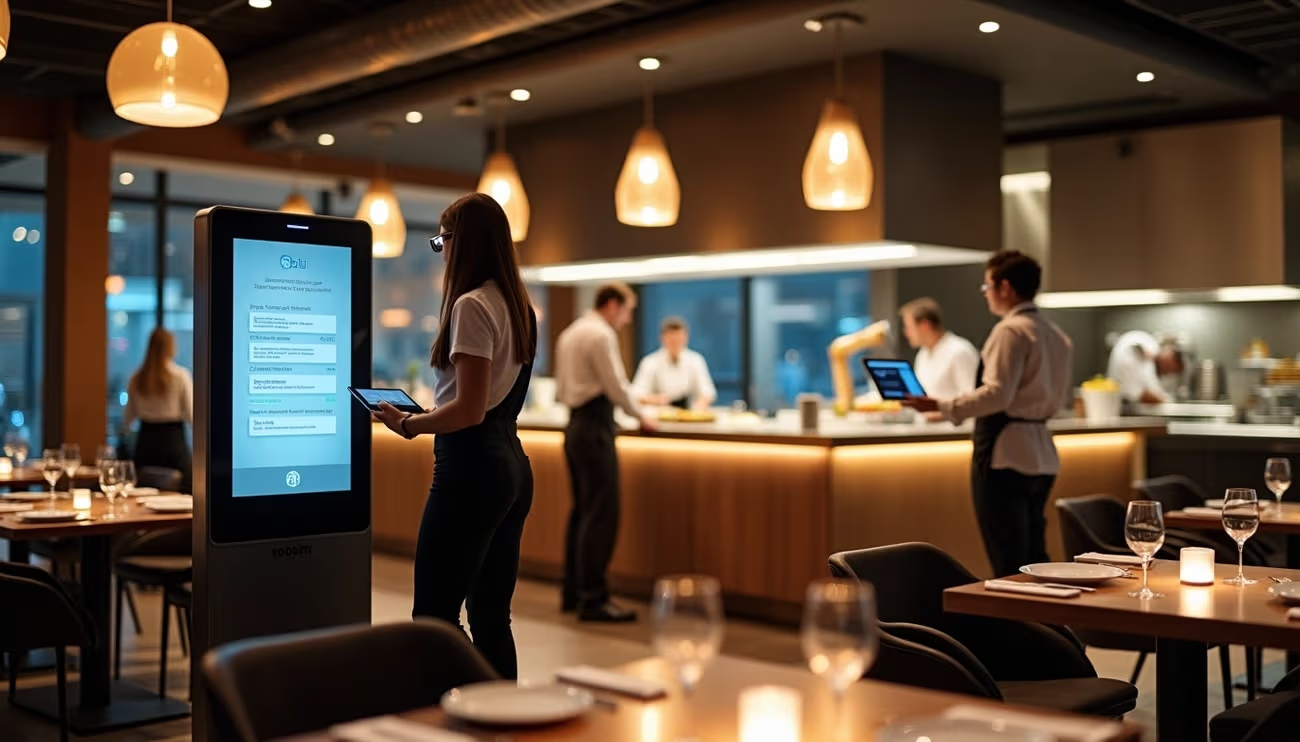
Adopting AI in restaurants is more than a technological upgrade it’s a strategic move that delivers measurable business value. From operational efficiency to customer experience, AI is reshaping how restaurants operate and compete.
Improved Operational Efficiency
AI automates repetitive and time consuming tasks such as inventory management, order processing, staff scheduling, and even parts of food preparation. This reduces human error and streamlines daily operations.
For example, in fast food environments, AI systems can automatically adjust cooking equipment based on real time demand improving consistency while optimizing energy usage.
Data Driven Decision Making
Restaurants generate large volumes of data, including customer orders, inventory levels, staff performance, and feedback. AI processes this data to deliver actionable insights.
These insights help businesses make smarter decisions such as identifying best selling items, optimizing promotions, reducing waste, and improving overall profitability.
Reduced Costs and Food Waste
AI powered systems track ingredient usage, monitor expiration dates, and analyze waste patterns. Predictive analytics helps restaurants order the right quantities, minimizing overstocking and spoilage.
Additionally, AI driven automation in kitchens can reduce labor costs by handling repetitive tasks more efficiently.
Personalized Customer Experience
AI enables highly personalized interactions by analyzing customer behavior, preferences, and order history. Restaurants can offer tailored recommendations, targeted promotions, and loyalty rewards.
Dynamic menus, for example, can adapt in real time based on factors like time of day, weather, and user preferences boosting engagement and upselling opportunities.
Faster Service and Reduced Wait Times
AI powered voice assistants and chatbots enable quick, seamless ordering especially in high volume environments like drive thrus. Digital kiosks further reduce pressure on staff and improve service speed.
This leads to shorter wait times, higher customer satisfaction, and increased operational throughput.
These benefits highlight how AI adoption empowers restaurants to operate more efficiently, reduce costs, and deliver superior customer experiences in an increasingly competitive market.
Challenges of Implementing AI in Restaurants
While AI offers significant advantages, adopting it in the restaurant industry comes with several challenges especially for small and mid sized businesses. Understanding these barriers is essential for successful implementation.
High Initial Investment
Implementing AI solutions such as robotics, smart kitchen systems, or advanced analytics platforms often requires substantial upfront costs. Expenses include hardware, software integration, and staff training. While large chains can absorb these costs, smaller restaurants may find the investment difficult to justify initially.
Staff Training and Resistance to Change
AI adoption requires employees to learn new tools and workflows. This can lead to resistance, particularly among staff who are less familiar with technology or concerned about job security. Proper training and change management are critical to ensure smooth adoption and maximize the value of AI systems.
Data Privacy and Security Concerns
AI systems rely on large volumes of customer data, including preferences, order history, and payment information. In some cases, biometric data may also be used. Restaurants must implement strong data protection measures and comply with regulations like GDPR or local privacy laws to maintain customer trust and avoid legal risks.
Integration with Existing Systems
Many restaurants operate on legacy POS systems or fragmented software environments. Integrating AI solutions with outdated infrastructure can be complex and may limit performance. Ensuring compatibility and investing in modern systems is often necessary to unlock the full potential of AI.
Uncertain ROI and Performance
Although large brands have demonstrated success with AI, smaller operators may hesitate due to unclear returns on investment. AI benefits often take time to materialize and require continuous optimization. Without a clear strategy aligned with business goals, the impact of AI may be limited.
Addressing these challenges with a well planned implementation strategy can help restaurants successfully adopt AI and realize its long term value.
Future Trends: What’s Next for AI in Restaurants?
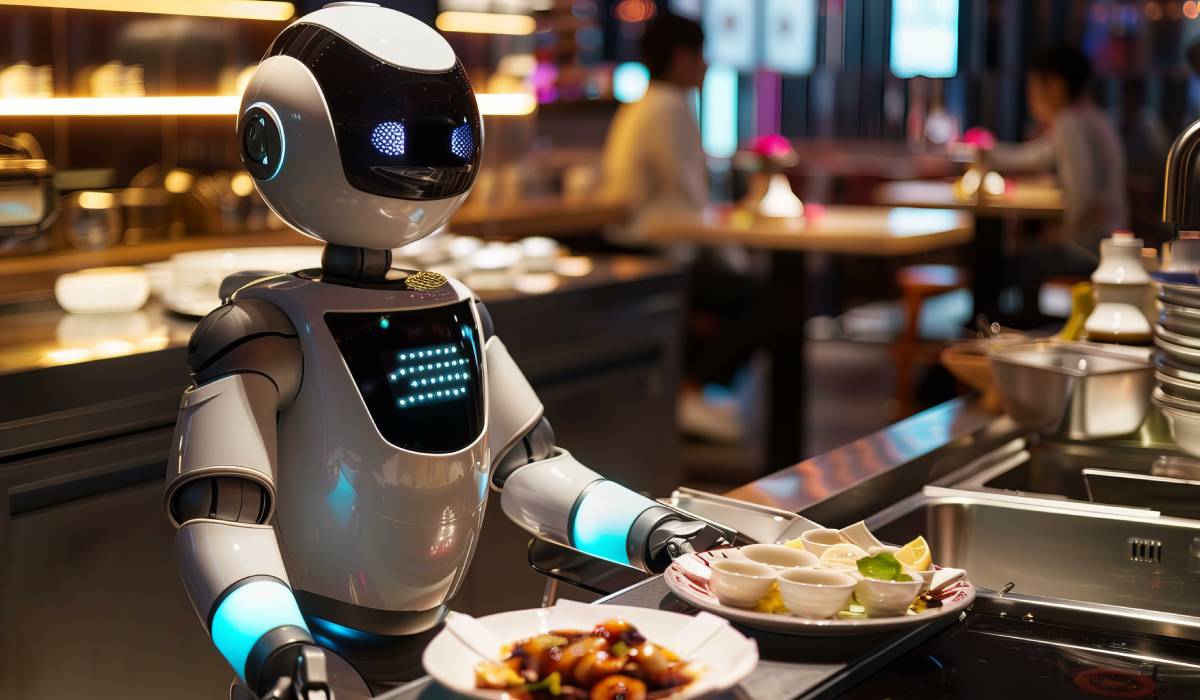
As technology continues to evolve, AI in the restaurant industry is becoming more advanced, adaptive, and customer centric. Restaurants that embrace these innovations will be better positioned to meet rising customer expectations and stay competitive in a fast changing market.
Here are the key trends shaping the future of AI in restaurants:
AI + IoT Integration for Smart Kitchens
The convergence of AI and IoT (Internet of Things) is transforming traditional kitchens into intelligent, connected ecosystems. Smart sensors and devices can communicate with AI systems to automate tasks such as:
- Temperature control
- Real time equipment monitoring
- Spoilage detection
- Automated inventory replenishment
For example, a smart refrigerator can detect low stock levels and automatically trigger restocking ensuring uninterrupted operations.
Hyper Personalization with Predictive AI
AI is moving toward deeper personalization by leveraging predictive analytics. By analyzing customer behavior, dietary preferences, order history, weather patterns, and even sentiment, AI can:
- Recommend tailored menu items
- Suggest personalized promotions
- Send timely reminders and offers
This level of personalization is already emerging and is expected to become standard across the industry.
Advanced Robotics in Restaurant Operations
The next generation of AI powered robots will go beyond food preparation. Future applications include:
- Table service and food delivery
- Dishwashing and cleaning
- Sanitization processes
Tech forward restaurants are already experimenting with these capabilities, signaling a shift toward highly automated operations.
Conversational AI and Multilingual Voice Assistants
Voice AI technologies are becoming more sophisticated, enabling:
- Multilingual interactions
- Emotion recognition
- Real time upselling during conversations
- Voice enabled payments
These advancements will enhance accessibility and streamline ordering, especially in high traffic or international environments.
AI Driven Ghost Kitchens and Virtual Restaurants
AI is playing a key role in the rise of ghost kitchens delivery focused operations without physical dine in spaces. AI systems help:
- Forecast demand accurately
- Optimize menus based on location and trends
- Automate delivery logistics
This model is rapidly reshaping the food delivery ecosystem, with AI at its core.
These trends highlight a future where AI not only improves efficiency but also redefines how restaurants operate, interact with customers, and scale their business.
Conclusion
AI is no longer just a technological upgrade for restaurants it’s a strategic advantage that drives efficiency, innovation, and growth. From AI powered kitchens and voice assistants to robotic automation and real time customer analytics, artificial intelligence is reshaping every aspect of the dining experience.
At HomeNest Software, we specialize in building custom, AI driven restaurant solutions that help businesses streamline operations, deliver personalized customer experiences, and scale effectively. Whether you operate a fast food chain, cloud kitchen, or an AI first restaurant startup, our team can design and implement end to end solutions tailored to your needs.
From robotic kitchen automation and predictive ordering systems to intelligent chatbots and AI powered food delivery platforms, we empower restaurants to adopt AI in a cost effective and future ready way.
FAQs
1. What is AI in the restaurant industry?
AI in restaurants refers to the use of technologies like machine learning, automation, and data analytics to improve operations, enhance customer experience, and optimize decision making.
2. How is AI used in restaurants?
AI is used for inventory management, demand forecasting, personalized recommendations, chatbots, voice ordering, robotic cooking, and customer feedback analysis.
3. What are the benefits of AI in restaurants?
Key benefits include improved efficiency, reduced operational costs, faster service, personalized customer experiences, and data driven decision making.
4. How much does it cost to implement AI in a restaurant?
The cost can range from $5,000 to $15,000+, depending on the complexity of features, type of AI solutions, and level of automation required.
5. Can small restaurants use AI?
Yes, small and mid sized restaurants can adopt AI through affordable tools such as chatbots, POS analytics, and cloud based AI solutions without large upfront investments.
6. What are AI robots in restaurants?
AI robots are automated machines used for tasks like cooking, food preparation, serving, and cleaning helping improve speed, consistency, and efficiency.
7. Is AI replacing restaurant staff?
AI is not replacing staff entirely but supporting them by automating repetitive tasks, allowing employees to focus on customer service and higher value activities.
8. Is AI in restaurants secure?
Yes, with proper implementation of data protection measures and compliance with regulations like GDPR, AI systems can ensure secure handling of customer data.
9. What technologies are used in AI restaurant apps?
Common technologies include machine learning frameworks (TensorFlow, PyTorch), cloud platforms (AWS, Azure), and tools for voice AI, computer vision, and analytics.
10. Why should restaurants adopt AI now?
Adopting AI early helps restaurants stay competitive, improve efficiency, reduce costs, and meet evolving customer expectations in a digital first market.
Latest Articles
View All
How to Build a Meal Planning App: A Complete Step-by-Step Guide
Building a successful meal planning app goes beyond creating an attractive interface it requires a clear business strategy, personalized user experiences, and scalable technology. By combining essential features like AI-powered meal recommendations, nutrition tracking, grocery list automation, and wearable integration, businesses can deliver lasting value to users while capitalizing on the growing digital health market. Partnering with an experienced mobile app development company ensures your solution is secure, future-ready, and designed to succeed in an increasingly competitive health-tech industry.

How Much Does It Cost to Build a Shopping App Like Temu?
Temu’s meteoric rise to over 900 million global downloads proves the power of combining AI, gamification, and social commerce, but building a similar viral shopping platform requires careful financial and technical planning. Developing an app like Temu typically costs anywhere from $40,000 for a basic Minimum Viable Product (MVP) to over $300,000 for a fully-featured platform. This guide breaks down every cost category, analyzes the core features driving Temu’s success, highlights the best technology stacks, and offers practical strategies to optimize your development budget without compromising on quality.

Criteria For Choosing The Right App Design Agency
UI/UX design is the logical foundation of a system, not merely a visual element. Choosing the wrong partner will directly lead to technical debt, budget overruns, and disruptions in the development process. This article provides a 6-step evaluation framework and a list of operational risks, helping businesses eliminate subjective design advice and accurately assess agency capabilities based on developer handoff standards and practical business performance.
How Does AI in Banking Industry Impact the Future?
Artificial intelligence (AI) has transitioned from a supplementary tool to a core infrastructure of financial data management, optimizing profitability through real-time fraud detection, natural language processing (NLP), and high-speed credit scoring models. “Deploying AI in the financial sector requires more than just algorithmic accuracy, it demands a highly secure cloud architecture and rigorous data governance,” commented Nguyen Tien, co-founder of HomeNest Software. Why read this guide? We skip the theoretical jargon to focus entirely on technical implementation. Whether you’re evaluating a vendor or planning a system overhaul, this article will detail: Operational Efficiency: Automating unstructured data workflows at scale. Risk Architecture: Implementing real-time threat detection and AML compliance. Data ownership: The essential need for 100% ownership of the source code to ensure full algorithm auditability.

How to Make a Banking App like Bank of America?
Developing a mobile banking application like Bank of America extends far beyond basic UI design; it requires engineering a fault-tolerant backend capable of real-time ledger synchronization, biometric authentication, and high-volume data processing under strict regulatory frameworks. Drawing from HomeNest Software’s deep experience in architecting enterprise-grade fintech solutions, this guide strips away theoretical jargon to focus entirely on operational and technical execution. What you will find in this guide: We break down the precise development roadmap, from mapping out microservices and ensuring PCI-DSS compliance to estimating MVP development costs and securing absolute data sovereignty through 100% source code ownership. If you are preparing to build, scale, or audit a financial platform, this blueprint provides the exact framework you need.

Banking App Development Cost
Building a banking application is rarely a simple process; it’s a complex technical challenge requiring a balance between complying with stringent financial regulations, handling large transaction volumes, and a scalable cloud architecture. Miscalculating these technical requirements from the outset often leads to significant technical debt and budget overruns. Based on HomeNest Software’s practical experience in designing enterprise-grade fintech solutions, this guide bypasses generic estimates to provide a realistic analysis of banking application development costs. What you’ll find in this guide: We analyze the true cost factors, from technology selection and API integration to the hidden costs of regulatory compliance and security infrastructure. Whether you’re launching a minimum viable product or expanding an existing financial platform, this analysis provides the precise operational data you need to plan your budget effectively.