
AI in Healthcare Cost: How Much Does Implementation Really Cost?
This guide analyzes the true cost architecture of implementing artificial intelligence in healthcare systems. Moving beyond generic software development estimates, the article details critical financial investments required for clinical data structuring, HL7 integration, and strict HIPAA compliance. By addressing these hidden technical barriers, HomeNest Software provides healthcare executives with a realistic framework to optimize budgets, mitigate deployment risks, and accelerate the clinical testing phase of enterprise AI models.
Scope of Work
When hospital executives budget for artificial intelligence, they often focus entirely on software development. However, the true financial drain lies in clinical data structuring, HL7 integration, and strict HIPAA compliance frameworks. Miscalculating these hidden technical barriers is why many healthcare digital transformations run out of budget before hitting the clinical testing phase.
In this technical breakdown, HomeNest Software analyzes the exact cost architecture of implementing artificial intelligence in healthcare. We bypass generic estimates to provide actionable financial insights on data preparation, infrastructure hosting, and long-term model maintenance.
1. What Is AI in Healthcare and How It’s Transforming Healthcare Systems
Artificial Intelligence (AI) in healthcare refers to the use of advanced algorithms, machine learning models, and data driven technologies to support clinical decision making, streamline operations, and enhance patient engagement. These systems process large volumes of both structured and unstructured medical data, identify patterns, and generate insights that assist healthcare professionals in delivering more accurate and efficient care.
AI is driving measurable improvements across the healthcare ecosystem. It enhances diagnostic precision, reduces administrative burden, and contributes to better patient outcomes. Its applications span from operational use cases such as automating medical billing, scheduling, and documentation to clinical functions like analyzing radiology images, detecting anomalies, and predicting patient deterioration in intensive care settings. Common AI powered tools include virtual assistants for patient triage, robotic systems for surgical support, and digital pathology platforms.
What sets AI apart from traditional technologies is its ability to continuously learn and improve. By leveraging ongoing data inputs, AI systems refine their accuracy over time, minimizing reliance on static rules and manual processes. As healthcare systems worldwide accelerate their digital transformation efforts, AI is becoming a core component in modernizing both patient care delivery and operational efficiency.
2. Key Cost Factors When Implementing AI in Healthcare Systems

Implementing AI in healthcare involves a broad range of direct and indirect costs that go far beyond simply acquiring software. It is a multi phase initiative that includes data management, infrastructure investment, talent acquisition, training, regulatory compliance, and ongoing support. Total costs can vary significantly depending on the scale of deployment, whether the solution is custom built or off the shelf, geographic factors, and the organization’s digital maturity.
2.1. Discovery and Planning
The discovery phase establishes the foundation for the entire AI initiative. Healthcare organizations must define clear objectives, identify suitable AI use cases, and develop a roadmap aligned with both clinical and operational priorities.
This stage typically includes stakeholder workshops, interviews with clinical teams, regulatory assessments, and procurement planning. Many organizations also engage external consultants to conduct feasibility studies and ROI analysis. These early stage activities can range from $25,000 to $100,000, depending on complexity. Early involvement of IT and clinical leadership is essential to ensure alignment and reduce implementation risks.
2.2. Clinical Data Structuring and Annotation Costs
AI models are useless without clean data. In healthcare, patient records are historically fragmented across incompatible Electronic Health Records systems. Transforming raw clinical notes into FHIR-compliant formats is highly resource-intensive.
Engineering insight from HomeNest: Do not build AI algorithms until your data pipeline is standardized. Many of our enterprise clients waste hundreds of thousands of dollars training models on unstructured data, leading to severe model drift. Investing heavily in automated data cleaning middleware upfront will cut your total project cost by at least 30 percent in the long run.
2.3. AI Development
Developing AI solutions in healthcare is inherently complex due to the high stakes nature of clinical decision making. Models must be trained on high quality, domain specific datasets and undergo rigorous validation before deployment.
Organizations can either build in house teams comprising data scientists, machine learning engineers, domain experts, and project managers or collaborate with specialized vendors. Annual salaries for a qualified team can exceed $500,000, and development cycles may span several months to years depending on system complexity.
Another critical requirement is model explainability. Healthcare professionals and regulators need transparency into how AI systems generate recommendations. Integrating explainability frameworks adds both technical complexity and additional cost.
2.4. Infrastructure and Hosting
AI systems require significant computational resources, particularly during model training. This includes GPU enabled servers, large scale storage, and high performance networking infrastructure.
Organizations must choose between on premise deployment and cloud based solutions. On premise infrastructure offers greater control but requires substantial capital investment, ongoing maintenance, and dedicated IT personnel. In contrast, cloud platforms provide scalability and faster deployment, though they introduce recurring operational costs.
Solutions such as Amazon Web Services and Google Cloud offer healthcare ready AI services with pricing that typically ranges from a few hundred to several thousand dollars per month, depending on usage. The choice of infrastructure has a direct impact on both scalability and long term cost efficiency.
2.5. System Integration
Seamless integration with existing healthcare systems is critical for successful AI adoption. AI solutions must interact with electronic health records, deliver real time alerts, and support clinical workflows without disruption.
This often requires developing secure APIs and coordinating with third party vendors. Middleware solutions such as Mirth Connect and HL7 based integration frameworks are commonly used to enable interoperability.
Integration, testing, and deployment across departments can take several weeks and typically cost between $50,000 and $250,000, depending on system complexity.
2.6. Validation and Compliance
AI systems in healthcare must meet strict regulatory and clinical validation requirements. This includes validating model performance against real world outcomes and conducting controlled clinical evaluations.
In markets like the United States, AI solutions classified as medical devices require approval from regulatory bodies such as the U.S. Food and Drug Administration. The approval process involves audits, documentation, and clinical trials, often costing hundreds of thousands of dollars.
Additionally, compliance with frameworks such as HIPAA and GDPR introduces further legal, technical, and operational costs.
2.7. Maintenance and Continuous Improvement
AI systems require continuous monitoring and updates after deployment. Over time, changes in patient populations and clinical practices can lead to performance degradation a phenomenon known as model drift.
To maintain accuracy, models must be retrained regularly and evaluated against new data. Ongoing maintenance may also include adding new features, improving security, and integrating with evolving systems.
Annual maintenance costs can reach 20%–25% of the initial investment, making long term planning a critical component of AI adoption strategies.
3. Cost by Use Case
The cost of implementing AI in healthcare varies widely depending on the specific use case. Each application comes with its own level of technical complexity, data requirements, system integration needs, and regulatory considerations. In this section, we examine four of the most widely adopted AI use cases and outline their typical cost ranges, benefits, and deployment factors.
3.1. Medical Imaging
AI in medical imaging is among the most mature and commercially adopted applications in healthcare. These solutions leverage deep learning models to analyze imaging data such as X rays, CT scans, MRIs, and mammograms, supporting radiologists in detecting abnormalities, prioritizing cases, and improving diagnostic accuracy.
Developing these systems requires large scale, high quality datasets often consisting of hundreds of thousands to millions of annotated images along with substantial computational resources and rigorous clinical validation. Integration with existing imaging infrastructure, particularly PACS systems, is also essential.
Typical cost components include:
- Licensing fees for commercial solutions: $100,000–$500,000 per year
- Custom development: $500,000–$1.5 million
- Validation and regulatory compliance: $100,000–$300,000
- Integration and staff training: $50,000–$150,000
While the upfront investment is significant, the long term value includes faster diagnostic turnaround, reduced clinician workload, and improved patient outcomes.
3.2. Predictive Analytics
Predictive analytics enables healthcare providers to anticipate clinical events such as patient deterioration, readmission risk, disease progression, or treatment outcomes. These systems analyze historical and real time data including vital signs, lab results, and patient records to generate actionable insights.
The complexity of these models ranges from relatively simple statistical approaches to advanced machine learning and neural network architectures. Key cost drivers include data quality, real time data integration, and ongoing model refinement.
Estimated costs:
- Development and testing: $100,000–$400,000
- Data preparation and compliance: $50,000–$150,000
- Integration with EHR systems and alert workflows: $30,000–$100,000
When implemented effectively, predictive analytics can reduce emergency incidents, optimize resource allocation (especially in ICUs), and lower overall care costs. Some studies report up to a 15% reduction in hospital readmission rates.
3.3. Chatbots and Virtual Assistants
AI powered chatbots and virtual assistants are widely used to enhance patient engagement and automate administrative tasks. These systems can handle appointment scheduling, answer common patient inquiries, send medication reminders, and assist with intake processes.
Compared to other AI applications, implementation is relatively cost efficient. Most solutions rely on natural language processing (NLP) and integrate with existing communication channels such as websites, mobile apps, or messaging platforms.
Typical costs include:
- Basic chatbot implementation: $5,000–$20,000
- Advanced NLP enabled virtual assistant: $50,000–$100,000
- Integration with EHR systems and patient portals: $10,000–$30,000
These tools significantly reduce administrative workload and provide 24/7 support for patients, with some organizations reporting up to a 60% reduction in call center volume.
3.4. The HomeNest Implementation Approach for Healthcare
We do not simply write code; we engineer compliant medical infrastructure. Building an in-house team of machine learning engineers with deep healthcare compliance knowledge can push your payroll over one million dollars annually.
By partnering with HomeNest Software, medical institutions gain immediate access to pre-vetted data architects and security specialists. We deliver custom diagnostic algorithms and predictive analytics models wrapped in HIPAA-compliant cloud architectures, significantly reducing your time to market and operational risks.
See How HomeNest Software Delivers Results
HomeNest Software has partnered with global clients to deliver high impact healthcare and AI solutions. From concept to deployment, our teams focus on building scalable, secure, and outcome driven systems tailored to each client’s needs.
Explore our portfolio to see how we turn complex challenges into measurable results.
4. Hidden Costs of AI in Healthcare and Common Challenges
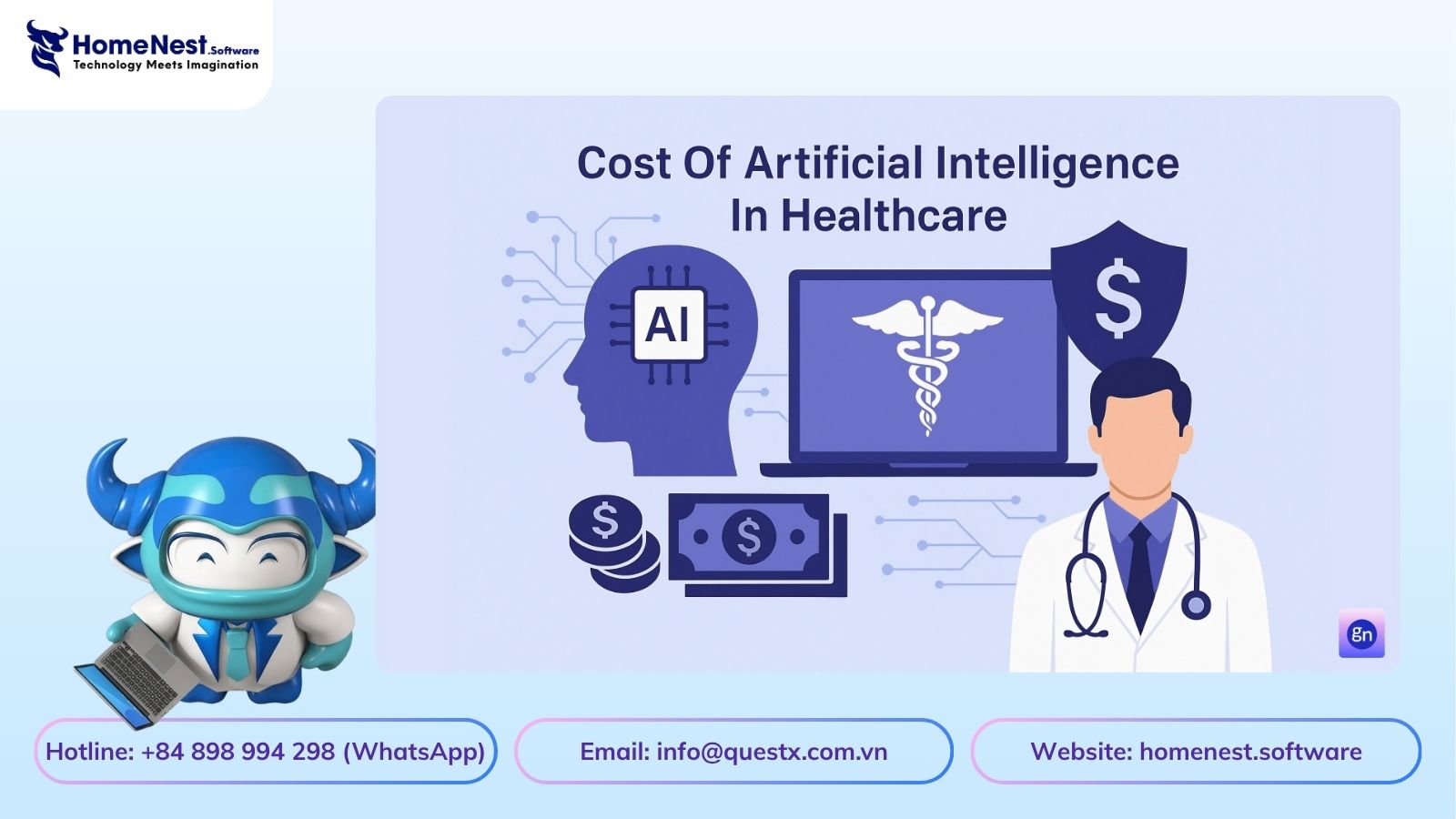
While most healthcare organizations carefully plan for the direct costs of AI implementation, a range of hidden expenses often surfaces once deployment begins. If not proactively managed, these indirect costs can lead to budget overruns, slow adoption, and delayed return on investment.
Workforce Adaptation and Training
One of the most underestimated cost drivers is workforce readiness. Successfully integrating AI requires more than system deployment it demands continuous training across clinical, administrative, and IT teams. Staff must understand not only how to use AI tools, but also their limitations, ethical implications, and how to interpret outputs in a clinical context.
Ongoing training programs, combined with staff turnover and evolving roles, create recurring costs. In addition to direct training expenses, organizations must account for productivity loss during onboarding and transition periods.
Regulatory and Legal Complexity
Compliance costs often escalate beyond initial projections. Healthcare organizations must adhere to strict data privacy and security regulations such as HIPAA and GDPR, depending on their operating markets.
Meeting these requirements involves implementing consent management systems, conducting regular audits, engaging legal advisors, and ensuring cross border data handling compliance. These efforts are essential to mitigate legal risk but are frequently underestimated during early planning stages.
Cybersecurity Risks and Investment
AI systems expand the digital attack surface by connecting multiple data sources, platforms, and workflows. This increased complexity makes healthcare organizations more vulnerable to cyber threats.
To mitigate these risks, institutions must invest in advanced cybersecurity measures, including encryption protocols, intrusion detection systems, secure APIs, and staff awareness training. Failure to address these risks can result in severe financial losses, regulatory penalties, and long term damage to patient trust.
Organizational Resistance and Change Management
Human factors can significantly impact the success of AI adoption. Resistance from staff whether due to fear of job displacement, lack of trust in AI outputs, or disruption to existing workflows can slow implementation and reduce overall effectiveness.
To overcome this, many organizations invest in change management initiatives such as internal communication campaigns, leadership alignment sessions, training workshops, and even behavioral consulting. These efforts, while critical, are often not accounted for in initial budgets.
Vendor Lock In and Long Term Flexibility
Vendor lock in is another hidden risk with long term financial implications. Many AI solutions operate within proprietary ecosystems, making it difficult and costly to switch providers or integrate alternative tools in the future.
To reduce this risk, healthcare organizations must negotiate clear terms around data ownership, interoperability, and exit strategies from the outset. This typically requires additional legal and technical due diligence, adding to upfront costs but protecting long term flexibility.
5. How to Reduce the Cost of AI Implementation in Healthcare
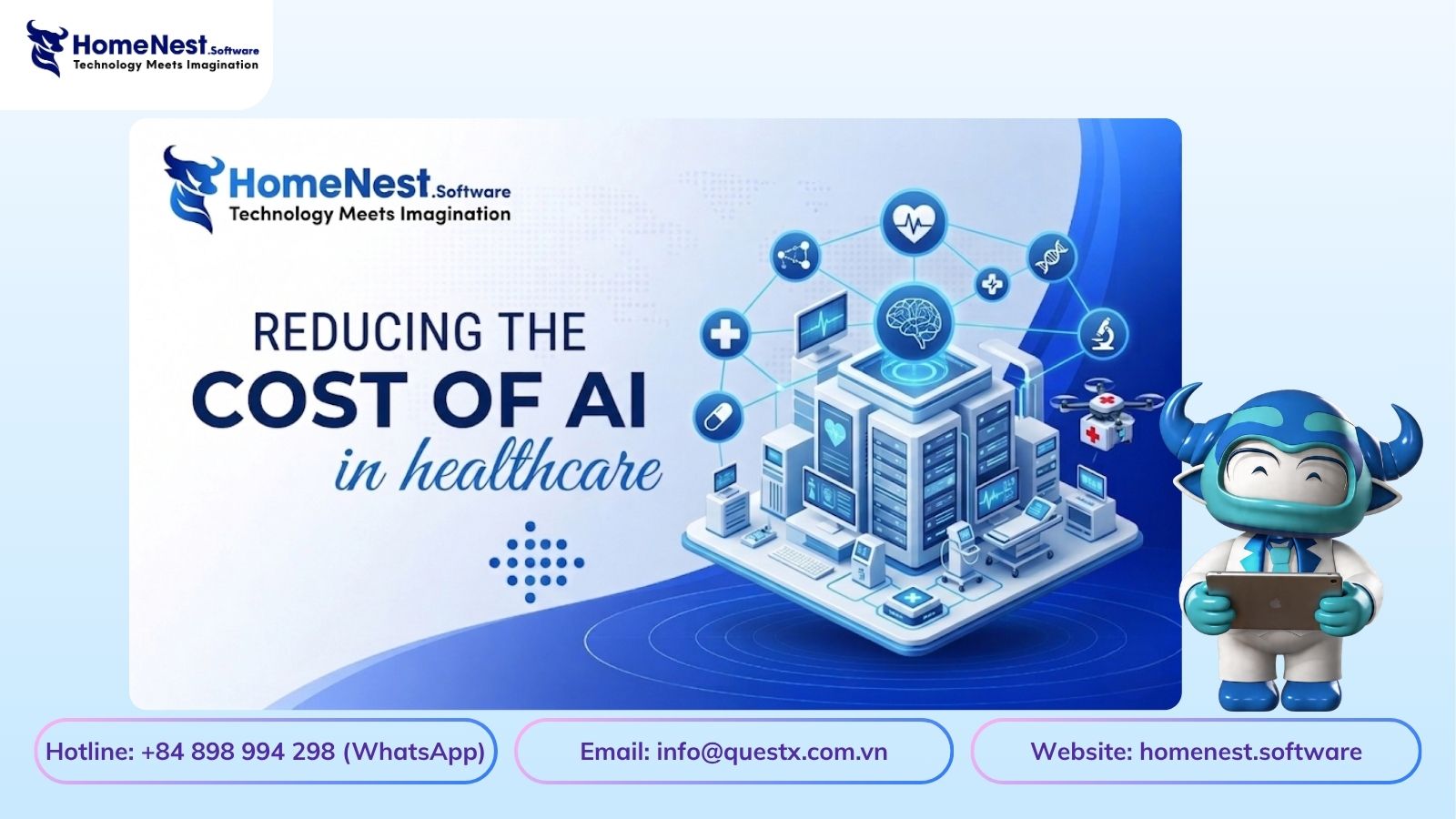
Despite the complexity and cost challenges, healthcare organizations can adopt targeted strategies to control expenses without compromising performance or outcomes. A structured, phased approach is often the most effective starting point. Instead of deploying AI across multiple departments at once, hospitals should focus on a single high impact use case such as automating appointment scheduling through Mobile App Development solutions or implementing predictive models to detect patient deterioration. Early wins not only validate ROI but also build internal momentum for broader adoption.
Leveraging open source frameworks is another proven way to reduce development costs. Technologies like TensorFlow, PyTorch, and Apache MXNet provide robust capabilities supported by active developer communities. By building on these foundations, organizations can allocate more resources toward customization, integration, and domain specific optimization rather than reinventing core AI architecture.
Pre built healthcare platforms can also accelerate implementation and lower costs. Solutions from providers such as IBM Watson Health, Google Cloud, and Amazon Web Services offer ready to use components for data management, compliance, and system integration. These platforms reduce the need for extensive Enterprise Software Development, enabling faster deployment while maintaining scalability and regulatory alignment.
Cloud computing further enhances cost efficiency. By hosting AI workloads on platforms like Microsoft Azure, AWS, or Google Cloud, healthcare providers can scale infrastructure on demand, adopt pay as you go pricing models, and eliminate the burden of maintaining on premise systems. Additionally, these platforms typically include built in security and compliance certifications, helping organizations meet healthcare regulations with less overhead.
Upskilling internal teams is another high impact cost optimization strategy. Rather than relying indefinitely on external vendors for maintenance and model updates, organizations can invest in training their existing workforce. Cross functional knowledge spanning clinical operations, IT, and AI fundamentals creates a more sustainable and cost effective operating model over time.
Healthcare organizations should also explore partnerships and funding opportunities. Government programs, NGOs, and global health initiatives often provide grants or co funding for AI driven innovation. Leveraging these resources can significantly offset upfront investment and reduce financial risk.
Finally, establishing a strong governance framework from the outset is essential. Clear ownership structures, defined performance metrics, and regular review cycles help ensure that AI initiatives remain aligned with business objectives and regulatory requirements. Effective governance prevents scope creep, controls costs, and enables scalable growth.
Strategic execution not just technology adoption is what ultimately determines whether AI delivers long term value in healthcare.
6. Conclusion
The cost of implementing AI in healthcare is inherently complex, spanning both visible investments and less obvious, ongoing expenses. From data preparation and model development to system integration, compliance, and long term maintenance, each phase introduces its own operational and financial considerations. However, with a disciplined and well structured approach, these costs can be effectively managed while unlocking substantial long term value.
AI delivers tangible benefits across the healthcare ecosystem enhancing diagnostic accuracy, improving patient outcomes, streamlining administrative processes, and enabling more personalized treatment strategies. It also addresses persistent industry challenges such as workforce shortages and operational inefficiencies. Organizations that take a strategic path starting with focused pilot projects, leveraging scalable technologies, and investing in internal capabilities are better positioned to succeed in an increasingly digital healthcare landscape.
Ultimately, the value of AI in healthcare extends beyond cost optimization. Its real impact lies in improving quality of care and enabling better clinical decisions at scale. With careful planning, continuous evaluation, and a strong commitment to ethical and compliant implementation, AI can transform healthcare delivery in a way that is both sustainable and economically viable.
FAQs About the Cost of Implementing AI in Healthcare
1. What is the realistic starting budget for medical AI systems?
A clinical-level predictive analytics MVP (Minimum Viable Product) model integrated with standard eHealth Records typically starts at $150,000. Complex medical imaging models requiring rigorous FDA validation processes and custom algorithm training can exceed $800,000. The primary cost determinant is always the quality and structure of your existing data infrastructure.
2. What are the main factors that affect AI implementation costs in healthcare?
Key cost drivers include data collection and preparation, AI model development, infrastructure (cloud or on premise), system integration, regulatory compliance, and ongoing maintenance. The choice between custom built and off the shelf solutions also significantly impacts the budget.
3. Is AI in healthcare worth the investment?
Yes when implemented strategically, AI can deliver strong ROI by improving diagnostic accuracy, reducing administrative costs, and enhancing patient outcomes. Many healthcare organizations see long term cost savings and operational efficiency gains.
4. How long does it take to implement AI in healthcare systems?
Implementation timelines vary based on complexity. Simple AI tools can be deployed in 3–6 months, while more advanced systems such as predictive analytics or medical imaging may take 12–24 months or longer.
5. What are the highest hidden costs of AI in healthcare?
Hidden costs often include staff training, change management, cybersecurity upgrades, regulatory compliance, and ongoing model maintenance. These can account for a significant portion of the total investment over time.
6. Can small clinics afford AI solutions?
Yes. Smaller clinics can start with cost effective solutions like AI chatbots, scheduling automation, or cloud based AI services. These entry level applications typically require lower upfront investment and can scale over time.
7. What is the difference between custom AI development and off the shelf solutions?
Custom AI solutions are tailored to specific workflows and offer greater flexibility but come with higher costs and longer development time. Off the shelf solutions are faster to deploy and more affordable but may have limitations in customization and integration.
8. How can healthcare organizations reduce AI implementation costs?
Organizations can reduce costs by starting with pilot projects, using open source frameworks, leveraging cloud infrastructure, partnering with experienced vendors, and investing in internal team training.
9. Do I own the source code of my medical AI software if I work with HomeNest Software?
Yes. HomeNest Software guarantees 100% source code ownership and intellectual property transfer upon project deployment. This eliminates vendor lock-in risks, allowing your internal technical teams to independently audit, scale, or modify the AI models as regulatory compliance or clinical needs evolve.
Latest Articles
View All
Criteria For Choosing The Right App Design Agency
UI/UX design is the logical foundation of a system, not merely a visual element. Choosing the wrong partner will directly lead to technical debt, budget overruns, and disruptions in the development process. This article provides a 6-step evaluation framework and a list of operational risks, helping businesses eliminate subjective design advice and accurately assess agency capabilities based on developer handoff standards and practical business performance.

How Does AI in Banking Industry Impact the Future?
Artificial intelligence (AI) has transitioned from a supplementary tool to a core infrastructure of financial data management, optimizing profitability through real-time fraud detection, natural language processing (NLP), and high-speed credit scoring models. “Deploying AI in the financial sector requires more than just algorithmic accuracy, it demands a highly secure cloud architecture and rigorous data governance,” commented Nguyen Tien, co-founder of HomeNest Software. Why read this guide? We skip the theoretical jargon to focus entirely on technical implementation. Whether you’re evaluating a vendor or planning a system overhaul, this article will detail: Operational Efficiency: Automating unstructured data workflows at scale. Risk Architecture: Implementing real-time threat detection and AML compliance. Data ownership: The essential need for 100% ownership of the source code to ensure full algorithm auditability.

How to Make a Banking App like Bank of America?
Developing a mobile banking application like Bank of America extends far beyond basic UI design; it requires engineering a fault-tolerant backend capable of real-time ledger synchronization, biometric authentication, and high-volume data processing under strict regulatory frameworks. Drawing from HomeNest Software’s deep experience in architecting enterprise-grade fintech solutions, this guide strips away theoretical jargon to focus entirely on operational and technical execution. What you will find in this guide: We break down the precise development roadmap, from mapping out microservices and ensuring PCI-DSS compliance to estimating MVP development costs and securing absolute data sovereignty through 100% source code ownership. If you are preparing to build, scale, or audit a financial platform, this blueprint provides the exact framework you need.
Banking App Development Cost
Building a banking application is rarely a simple process; it’s a complex technical challenge requiring a balance between complying with stringent financial regulations, handling large transaction volumes, and a scalable cloud architecture. Miscalculating these technical requirements from the outset often leads to significant technical debt and budget overruns. Based on HomeNest Software’s practical experience in designing enterprise-grade fintech solutions, this guide bypasses generic estimates to provide a realistic analysis of banking application development costs. What you’ll find in this guide: We analyze the true cost factors, from technology selection and API integration to the hidden costs of regulatory compliance and security infrastructure. Whether you’re launching a minimum viable product or expanding an existing financial platform, this analysis provides the precise operational data you need to plan your budget effectively.

How to Build a Mobile Banking App Like Chime?
Building a mobile banking app like Chime is not just about features, it is about delivering a secure, scalable, and user-centric financial experience. From planning the right architecture to optimizing mobile banking app development cost, every decision directly impacts your product’s success. Leveraging Fintech app development services, starting with MVP app development, and scaling through on-demand app development solutions allows businesses to reduce risk and accelerate time to market. To stay competitive, combining Android app development services and iOS app development solutions ensures wider reach, while continuous updates through maintenance software development services keep your app secure and future-ready.

How to Build a Banking App Like Barclays: A Complete Entrepreneur’s Guide
Building a banking app like Barclays requires more than just development. It demands a strong product vision, secure architecture, and a clear monetization strategy. From optimizing cost and selecting the right tech stack to ensuring compliance and scalability, every decision impacts long-term success. Partnering with an experienced team like HomeNest Software helps accelerate development, reduce risks, and deliver a high-quality fintech product that can compete in today’s fast-evolving digital banking landscape.