
App Development for Startups: 10 Steps Roadmap to Success
App development for startups is not just about building an application—it’s about validating ideas, managing limited resources wisely, and continuously improving based on real user feedback. By starting with an MVP, choosing the right technology approach, and balancing speed with quality, startups can reduce risks and accelerate growth. The key to success lies in aligning product decisions with market demand while maintaining flexibility to adapt as the business evolves.
Scope of Work

Building a product is an exciting journey, but app development for startups can quickly become complex due to limited budgets and intense market competition. To navigate these challenges, many founders choose to work with a startup app development agency for expert support. In this guide, HomeNest Software outlines a practical 10 step roadmap to help you successfully launch and scale your app in 2026.
Why App Development for Startups Is Essential

In 2024, global spending on mobile applications reached $150 billion, marking a 13% year over year increase. At the same time, users spent approximately 4.2 trillion hours within mobile apps, highlighting how critical mobile platforms have become for both distribution and revenue generation.
For startups, investing in app development is no longer optional it is a strategic necessity. However, the purpose behind building an app can vary depending on the stage of growth and business objectives.
Validating Startup Ideas Early
One of the primary reasons startups invest in app development is to validate their ideas quickly and efficiently. Instead of launching a fully featured product, many founders begin with a minimum viable product (MVP) that focuses only on core functionality.
For example, a peer to peer payment app might initially support only basic transfers via phone number, rather than offering a complete suite of financial services. By releasing this simplified version to early users, startups can gather feedback and determine whether the concept has real market potential.
This approach is critical, especially considering that 42% of startups fail due to lack of market demand, according to CB Insights. Partnering with a startup app development agency can help accelerate this validation phase by providing the technical expertise and speed required to launch quickly.
Preparing for Scalable Growth
As startups gain traction, the focus shifts from validation to scalability. At this stage, infrastructure decisions become crucial.
Cloud technology plays a key role in supporting growth. McKinsey estimates that cloud adoption could generate up to $3 trillion in EBITDA by 2030, with many industries experiencing 20–30% performance improvements. By leveraging cloud platforms, startups can scale resources dynamically, handle increasing user demand, and maintain consistent performance without heavy upfront investment.
For startups facing challenges in building in house teams, outsourcing to experienced development partners is often a practical solution. This approach helps fill skill gaps, accelerate delivery, and support rapid expansion.
Leveraging Data for Smarter Decisions
Effective app development for startups goes beyond building features it enables data driven decision making.
Modern applications are designed to collect and analyze user behavior, providing valuable insights into customer preferences, engagement patterns, and market trends. According to McKinsey, companies that leverage customer analytics effectively are 23 times more likely to acquire new customers and 19 times more likely to achieve profitability.
By integrating analytics from the beginning, startups can continuously refine their product strategy and make informed decisions that support sustainable growth.
Gathering and Acting on User Feedback
Early user feedback is one of the most valuable assets for any startup. It helps improve usability, refine features, and ensure the product remains relevant in a competitive environment.
Apps can incorporate various feedback mechanisms, from simple in app surveys to advanced tools such as AI powered chatbots. Speed is also a critical factor 51% of consumers prefer instant responses from bots, making them effective for capturing real time insights and addressing user concerns.
In addition to handling basic queries, these tools can collect user feedback and route it to support teams for further action. Real world implementations demonstrate their impact for example, Verizon reported a nearly 40% increase in sales after deploying an AI assistant to support customer interactions.
App development for startups is not just about launching a product it is about creating a continuous feedback loop between the business and its users. By validating ideas early, scaling efficiently, leveraging data, and actively listening to users, startups can build products that evolve with market needs and maintain a competitive edge.
Main Types of Apps for Startups
Choosing the right application type is a critical decision in app development for startups. Each option comes with its own advantages and limitations, so founders must align the choice with their target users, technical requirements, and long term business goals. The main categories include:
Native Apps
Native applications are built specifically for a single platform such as iOS or Android, using platform specific languages and tools.
- Deliver the highest performance and seamless user experience
- Provide full access to device features and hardware
- Require separate development for each platform, increasing cost and time
This approach is ideal for startups that prioritize performance and advanced functionality.
Cross Platform Apps
Cross platform apps are developed using frameworks like Flutter or React Native, allowing a single codebase to run on multiple platforms.
- Faster development and reduced costs
- Easier maintenance with shared code
- May have limitations when accessing certain native features
This model is widely adopted by startups aiming for faster time to market while maintaining reasonable performance.
Progressive Web Apps (PWAs)
Progressive Web Apps function like native apps but run directly in a web browser.
- Lower development and maintenance costs
- No need for installation from app stores
- Limited access to device hardware and advanced features
PWAs are suitable for startups that need a lightweight solution with broad accessibility.
Hybrid Apps
Hybrid apps combine elements of both native and web applications.
- Support multiple platforms with a single build
- Offer a balance between cost efficiency and functionality
- May not achieve the same level of performance as fully native apps
This approach works well for startups seeking broader reach without the full cost of native development.
There is no one size fits all solution in app development for startups. The right choice depends on your product complexity, user expectations, and growth strategy. Selecting the appropriate app type early can significantly impact development speed, cost efficiency, and long term scalability.
Factors Affecting App Development for Startups
Several key factors directly influence the success of app development for startups, and founders need to evaluate each one carefully to make informed decisions.
Budget Constraints
Budget is often the first and most critical factor. According to Clutch, the average cost of an app development project is around $90,780, with a typical timeline of approximately 11 months. These figures highlight the importance of defining a clear scope and prioritizing features from the very beginning.
Since most startups operate with limited funding, every decision carries weight from feature selection to platform choice. Focusing on core functionality and considering cross platform development instead of building separate native apps can help optimize costs without compromising initial launch goals.
Time to Market
Speed is a major priority for startups aiming to validate ideas quickly. Launching a Minimum Viable Product (MVP) is often the most effective strategy.
An MVP includes only essential features, allowing startups to release faster and iterate based on user feedback. However, this approach requires disciplined decision making to determine what is truly necessary at launch. Partnering with experienced app developers can help balance speed with product quality.
Platform Selection
Choosing the right platform significantly impacts development cost, timeline, and user reach.
- Globally, Android holds approximately 74% of the mobile OS market
- iOS accounts for around 26% worldwide
- In the U.S., the trend reverses, with iOS at 57% and Android at 42%
These differences often guide launch strategy. If the target audience primarily uses iPhones, starting with iOS may be the best option. If users are distributed across devices, supporting both platforms or adopting a cross platform approach can provide broader reach.
User Experience (UX/UI)
User experience is a decisive factor in app success. An application that is visually appealing, intuitive, and responsive is far more likely to retain users.
Even strong business ideas can fail if the interface feels complicated or unreliable. Investing in high quality UX/UI design from the beginning helps ensure better engagement, higher retention rates, and long term user satisfaction.
Compliance and Security
Compliance is essential, especially for startups handling user data or operating in regulated industries.
Key considerations include:
- Data privacy and protection regulations
- User consent and transparency
- Security standards and legal requirements
Addressing these factors early prevents potential legal risks and builds user trust from the outset.
Budget, timeline, platform choice, user experience, and compliance collectively define the reality of app development for startups. By understanding and planning for these factors early, founders can reduce risks, allocate resources effectively, and build products that are better positioned for market success.
10 Step Roadmap for App Development for Startups
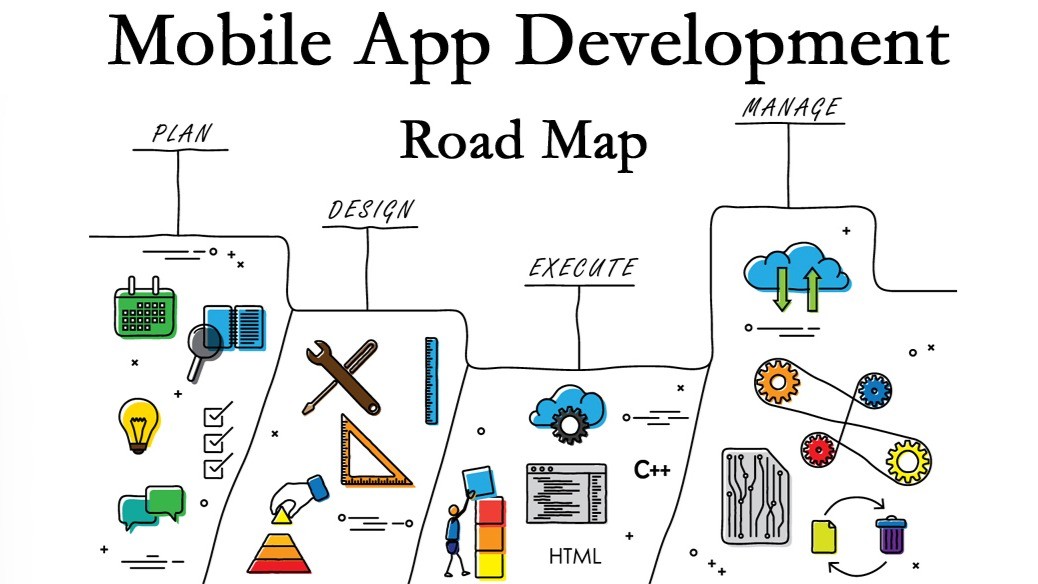
By following a structured process, founders can transform an app idea into a functional product that generates real value. This guide breaks the journey into practical steps, giving startups a clear roadmap to approach app development for startups with confidence.
Identify Customer Pain Points
The first step in app development for startups is gaining a deep understanding of your customers’ real challenges. Without clearly identifying the problem, no app can deliver meaningful value.
If you don’t fully understand the pain point, building a relevant solution becomes nearly impossible. Startups that focus on what frustrates users and align their product to solve those issues gain a strong competitive advantage from the beginning.
This stage is more than just research it sets the foundation for long term success. By identifying core problems, you also define the purpose and direction of your app. Founders who show genuine concern for user needs build trust early and position their product for stronger market acceptance.
Research the Market
Validating your idea through market research is a critical step in app development for startups. Skipping this phase can result in investing time and resources into a product that lacks real demand.
Even before working with development partners, startups should analyze the market independently. Reviewing competitors helps determine whether similar solutions exist, how they perform, and where gaps remain.
Effective validation methods include:
- Google Trends to track search interest over time
- Surveys to understand user behavior and preferences
- Competitor analysis to evaluate strengths, weaknesses, and user feedback
By combining these approaches, startups gain a clearer understanding of market readiness, reducing risk and improving the chances of success.
Build and Test a Minimum Viable Product (MVP)
One common mistake in app development for startups is trying to build a perfect product before releasing it. In reality, most successful apps evolve through continuous updates based on user feedback.
An MVP focuses only on essential features that solve the main problem. It is the simplest version of the product that still delivers value. This approach reduces cost and accelerates validation.
The MVP is typically released to a small group of users to gather feedback. Insights from this stage help identify what works, what doesn’t, and where improvements are needed.
Refine and Finalize the App Idea
After testing the MVP, the next step is refining the concept. Early feedback often reveals gaps, usability issues, or new opportunities.
Founders should evaluate:
- Which features deliver real value
- Which elements can be removed
- How the product can better meet user expectations
This refinement process transforms a raw idea into a clear, actionable product strategy. Many successful startups achieve growth by listening closely to early users and adapting quickly.
Create a Wireframe
Once the concept is validated, creating a wireframe becomes essential. A wireframe serves as the blueprint of the app, outlining structure, layout, and user interaction.
It helps visualize:
- App flow and navigation
- Placement of elements like buttons and menus
- Overall usability before development begins
Like an architectural sketch, a wireframe provides clarity and helps identify issues early, reducing costly changes later.
Test the Wireframe
Wireframe testing is often underestimated, but it plays a critical role in app development for startups.
Testing at this stage helps:
- Evaluate usability before coding
- Identify missing or unnecessary features
- Detect gaps in functionality and design
Making improvements early saves time and resources while strengthening the overall product concept.
Design the App Experience
Design is a decisive factor in app success. At this stage, wireframes are transformed into complete UI/UX designs.
A well designed app should:
- Be visually appealing
- Offer intuitive navigation
- Deliver a smooth and engaging experience
Good design is not just about appearance it’s about functionality. A seamless user experience increases retention and ensures users continue engaging with the app.
Plan a Monetization Strategy
Revenue planning should be integrated early in app development for startups.
Common monetization models include:
- In app advertising
- Subscription plans
- Freemium models with paid features
Choosing the right model depends on your product and target audience. Defining this strategy early ensures the app is built not only to serve users but also to generate sustainable revenue.
Launch and Market the App
Launching the app is only part of the journey. A strong marketing strategy is essential to gain visibility and attract users.
Effective promotion channels include:
- Social media campaigns
- Public relations and media coverage
- Email marketing
- SMS campaigns
- App Store Optimization (ASO)
A well executed launch helps the app stand out in a crowded market and gain early traction.
Continuous Improvement
App development does not end after launch. Continuous improvement is essential to remain competitive.
Startups should monitor:
- User engagement
- Customer acquisition
- App performance
- User feedback
Regular updates, feature enhancements, and performance improvements help maintain relevance and build long term user trust.
This 10 step roadmap shows that app development for startups is not a one time process but a continuous cycle of learning, building, and improving. Startups that follow a structured approach and adapt based on real user insights are far more likely to succeed in today’s competitive market.
Best Practices in Startup App Development

Even with a well defined roadmap, app development for startups remains a complex process that requires skilled talent, strong coordination, and the right technical foundation. Based on practical experience, the following best practices help startups streamline development, reduce risks, and build products that can succeed in competitive markets.
Start with an MVP
A common mistake among founders is attempting to launch a fully featured product from the beginning. This often leads to wasted time and budget on features that users may not need.
A minimum viable product (MVP) offers a more strategic approach. By focusing only on core functionalities, startups can validate their idea with real users and gather actionable feedback early. Once product market fit is confirmed, additional features can be introduced gradually.
This method keeps costs under control and ensures that every development effort aligns with actual user demand.
Make Data Driven Decisions
In the fast moving environment of app development for startups, decisions need to be both quick and accurate. Data plays a critical role in improving decision quality.
By analyzing user behavior, engagement patterns, and usage trends, startups can identify which features deliver the most value. Advanced analytics and AI driven insights can further support forecasting and product direction.
When data is integrated effectively, it becomes more than just a byproduct it becomes a core driver of product strategy and continuous improvement.
Do Not Skip the Discovery Phase
While data is valuable, it cannot replace proper product discovery. This phase is essential for validating market demand before development begins.
Discovery activities typically include:
- User research and surveys
- Competitor analysis
- Industry trend evaluation
- Risk assessment
Skipping this step can lead to misaligned products, increased costs, and delayed timelines. A thorough discovery phase ensures that development is grounded in real market needs, significantly increasing the likelihood of success.
Maintain Clear and Consistent Documentation
Documentation is often underestimated but plays a vital role in ensuring smooth development.
All key elements requirements, technical specifications, design decisions, and code updates should be properly documented. This creates a shared knowledge base for the team and supports long term maintainability.
Good documentation also reduces dependency on individual team members. If changes occur within the team, new developers can quickly understand the system and continue work without disruption. For startups planning to scale, this practice ensures continuity, quality control, and operational efficiency.
Successful app development for startups is not just about execution it is about discipline in process, clarity in decision making, and consistency in improvement. By starting small, relying on data, validating ideas early, and maintaining strong documentation, startups can build products that are both efficient to develop and aligned with real market demand.
HomeNest Software’s Experience with App Development for Startups
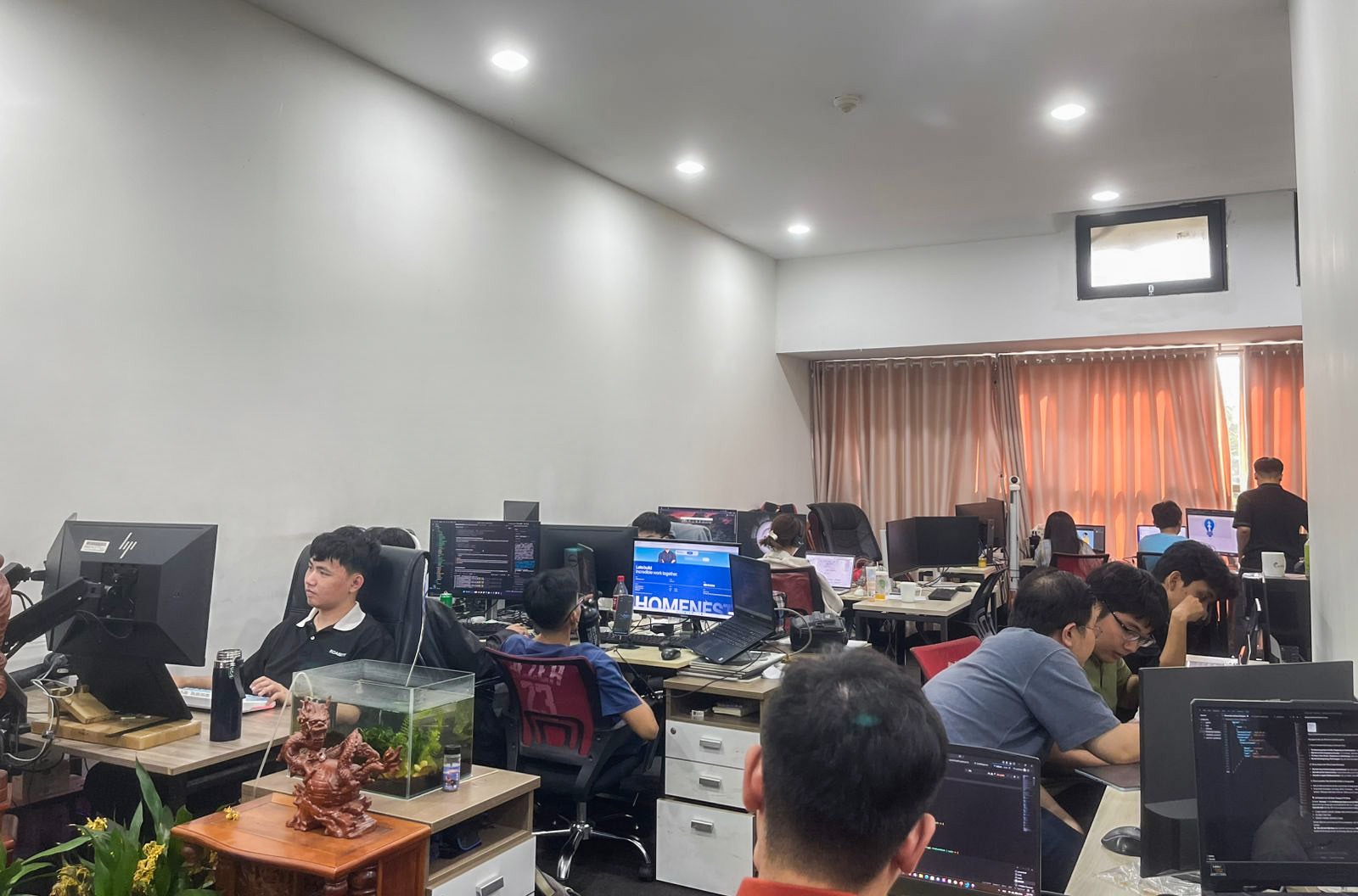
HomeNest Software works closely with founders and early stage companies to turn ideas into functional, scalable applications. We understand the pressure startups face limited budgets, tight timelines, and the need to validate concepts quickly. By combining expertise in mobile, web, and cloud development, we help startups build products that attract users, secure funding, and scale sustainably.
Dan Tri News App
Dan Tri, one of Vietnam’s leading online newspapers, aimed to expand its global reach through a mobile platform. Our team developed a robust media application using Swift, Kotlin, .NET, and Python, integrating features such as customizable layouts, real time push notifications, and seamless social sharing.
Results:
The application now serves more than 10 million daily users across 172 countries, significantly strengthening Dan Tri’s digital presence and global accessibility.
Construction Collaboration App
A construction startup in Japan needed a modern solution to improve on site project management. We delivered a cross platform application built with React Native and FastAPI, featuring task management, real time messaging, instant reporting, and visual drawing tools for clearer communication.
Results:
The app enhanced daily productivity, minimized communication errors, and enabled project managers to deliver work more efficiently and on schedule.
SpaceShare
A Vietnamese startup set out to simplify coworking space booking. We developed SpaceShare using Flutter and AWS, incorporating a user friendly scheduling system, automated check ins powered by camera recognition, and reliable real time data synchronization.
Results:
SpaceShare has become a trusted platform for flexible workspace booking, offering a seamless user experience and receiving strong positive feedback from its growing user base.
Through these projects, HomeNest Software demonstrates its ability to deliver practical, high impact solutions tailored to startup needs helping founders move from idea validation to scalable growth with confidence.
Estimating the Cost of App Development for Startups
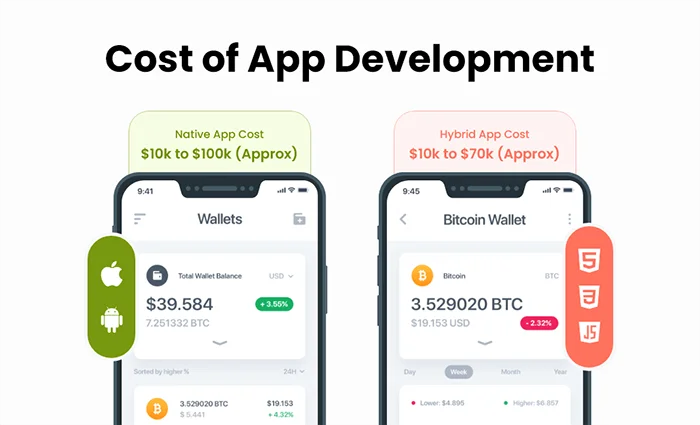
Starting app development for startups is an exciting step, but one of the first questions founders ask is: how much will it cost? The answer varies depending on multiple factors, including app complexity, feature scope, and the development model you choose. Understanding these variables early helps set realistic budgets and avoid unexpected financial pressure later.
Costs can differ significantly between in house development and outsourcing. Building an internal team provides greater control, but it often requires higher upfront investment and longer setup time. In contrast, outsourcing offers more flexibility, faster delivery, and access to specialized expertise without the overhead of hiring full time staff. For many startups, outsourcing becomes a practical choice when speed and cost efficiency are priorities.
Typical Cost Breakdown
Below is a general cost overview based on app complexity and development approach:
Basic App
A simple application with limited functionality, such as a utility or informational tool
- In house: $5,000 – $20,000
- Outsourcing: $2,000 – $30,000
Mid Level App
Applications with moderate complexity, including features like integrations or social functionality
- In house: $20,000 – $100,000
- Outsourcing: $30,000 – $100,000
Advanced App
Feature rich solutions such as gaming platforms or large scale social applications
- In house: $100,000 – $500,000+
- Outsourcing: $100,000 – $300,000+
By understanding these cost ranges, startups can plan resources more effectively and choose a development strategy that aligns with their business goals. The key is not just minimizing cost, but investing wisely to build a product that can scale and succeed in the market.
Common Challenges in App Development for Startups
Startups often encounter distinct challenges that can slow down or complicate app development for startups. From financial constraints to limited internal resources, these obstacles can significantly impact both the development process and the final outcome.
Limited Budgets
Budget constraints are one of the most common challenges startups face. Funding must cover multiple areas, including research, development, launch, and marketing.
Because of this, many startups hesitate to work with experienced development teams, even though partnering with a specialized provider can save time and prevent costly mistakes. Managing limited resources while maintaining product quality remains a major hurdle throughout the development journey.
Pressure for Rapid Launch
Startups often feel intense pressure to launch quickly in order to stay ahead of competitors. While speed is important, rushing development can lead to compromises in quality.
Some teams rely on low cost or white label solutions to accelerate release, but this approach can result in poor performance, weak user experience, and higher long term maintenance costs. Finding the right balance between speed and quality is one of the most difficult aspects of startup app development.
Lack of Dedicated Research Resources
Early stage startups typically operate with small teams, often without a dedicated research function. This makes it challenging to gather deep insights into user needs and market behavior.
Without proper research, founders risk building features that do not align with actual demand. Since validation is a critical step, the absence of structured research can significantly affect product success.
Limited Marketing Capabilities
Launching an app is only the beginning gaining visibility is equally important. However, many startups lack the budget and expertise to execute effective marketing strategies.
As a result, even well designed apps may struggle to attract users in competitive marketplaces. Collaborating with partners who understand both product development and go to market strategies can help overcome this limitation and improve traction.
These challenges highlight the realities of app development for startups. By recognizing them early and planning strategically, founders can reduce risks, allocate resources more effectively, and increase their chances of building a successful product.
Conclusion
Success in app development for startups goes far beyond writing code. It requires thorough research, strategic planning, and a commitment to continuous improvement. With a clear roadmap in place, founders can turn ideas into products that not only attract users but also gain investor confidence.
At HomeNest Software, we support startups at every stage from MVP development to scalable growth. If you’re ready to transform your concept into a market ready application, contact us today and start building with confidence.
Frequently Asked Questions (FAQs)
What is app development for startups?
App development for startups refers to the process of designing, building, and launching mobile or web applications tailored to early stage businesses. It focuses on speed, cost efficiency, and validating ideas before scaling.
How long does it take to develop a startup app?
The timeline typically ranges from 5–12 weeks for an MVP and 3–6 months or more for a full featured app, depending on complexity, features, and integrations.
How much does app development cost for startups?
Costs vary widely:
- Basic apps: $5,000–$20,000
- Mid level apps: $20,000–$100,000
- Advanced apps: $100,000–$500,000+
Outsourcing can reduce costs significantly compared to in house development.
Why should startups start with an MVP?
An MVP allows startups to validate ideas quickly, reduce risk, and save costs. It focuses on essential features and gathers real user feedback before scaling.
Should startups choose native or cross platform development?
- Native apps offer better performance but higher cost
- Cross platform apps reduce cost and development time
The choice depends on budget, timeline, and target audience.
Is outsourcing app development a good option for startups?
Yes. Outsourcing provides access to experienced developers, reduces hiring costs, and speeds up delivery especially in regions like Vietnam, India, or Eastern Europe.
How do startups monetize their apps?
Common monetization strategies include:
- Subscriptions
- In app purchases
- Advertising
- Freemium models
The right approach depends on the app’s business model and user base.
What are the biggest challenges in startup app development?
Key challenges include:
- Limited budget
- Pressure for fast launch
- Lack of market research
- Weak marketing strategies
How can startups ensure their app succeeds?
Startups should:
- Validate ideas early
- Focus on user needs
- Use data driven decisions
- Continuously improve the product
What happens after launching the app?
After launch, startups should monitor performance, collect feedback, fix issues, and release updates regularly to improve user experience and scale the product.
Latest Articles
View All
Criteria For Choosing The Right App Design Agency
UI/UX design is the logical foundation of a system, not merely a visual element. Choosing the wrong partner will directly lead to technical debt, budget overruns, and disruptions in the development process. This article provides a 6-step evaluation framework and a list of operational risks, helping businesses eliminate subjective design advice and accurately assess agency capabilities based on developer handoff standards and practical business performance.
How Does AI in Banking Industry Impact the Future?
Artificial intelligence (AI) has transitioned from a supplementary tool to a core infrastructure of financial data management, optimizing profitability through real-time fraud detection, natural language processing (NLP), and high-speed credit scoring models. “Deploying AI in the financial sector requires more than just algorithmic accuracy, it demands a highly secure cloud architecture and rigorous data governance,” commented Nguyen Tien, co-founder of HomeNest Software. Why read this guide? We skip the theoretical jargon to focus entirely on technical implementation. Whether you’re evaluating a vendor or planning a system overhaul, this article will detail: Operational Efficiency: Automating unstructured data workflows at scale. Risk Architecture: Implementing real-time threat detection and AML compliance. Data ownership: The essential need for 100% ownership of the source code to ensure full algorithm auditability.
How to Make a Banking App like Bank of America?
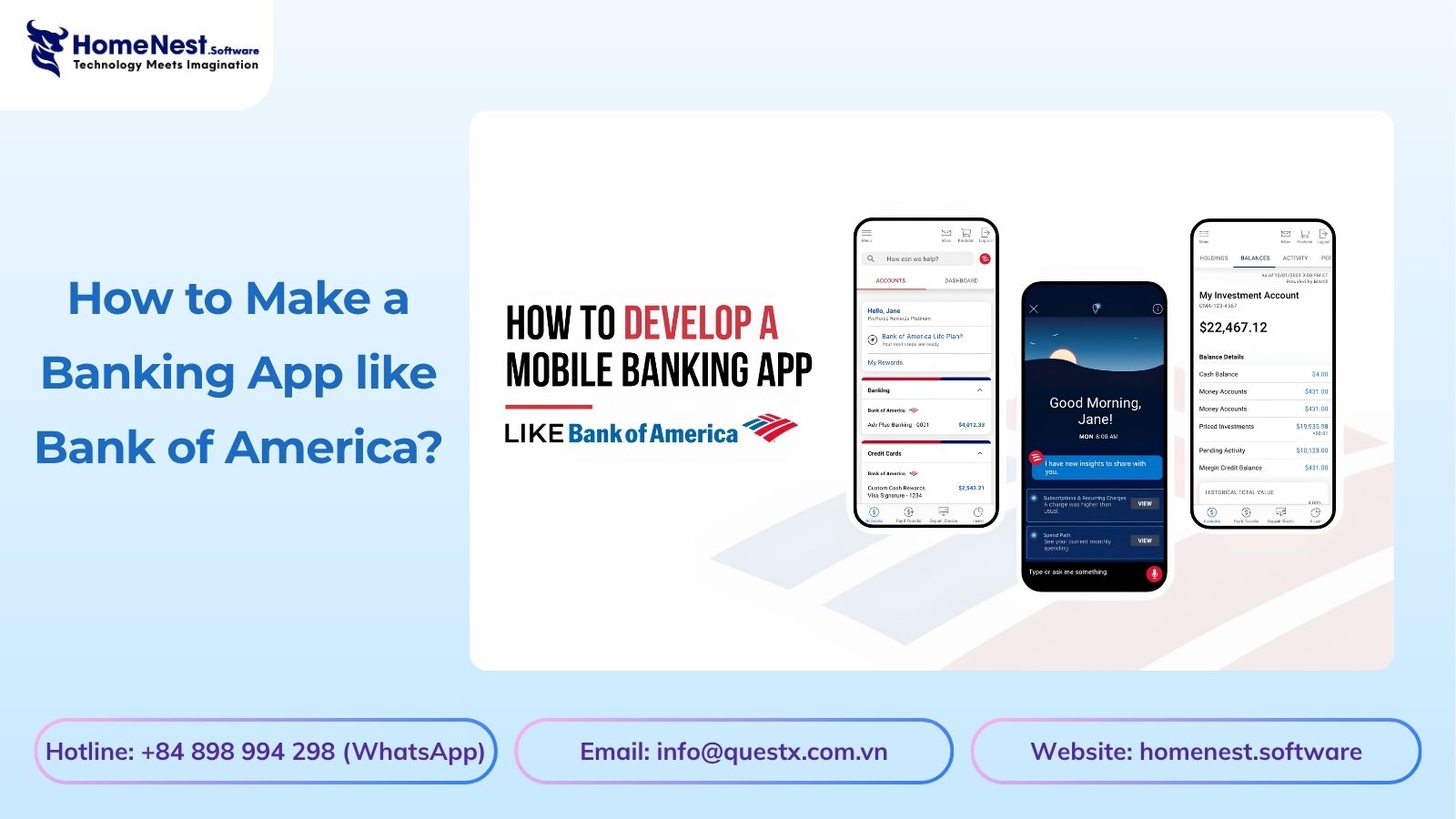
Developing a mobile banking application like Bank of America extends far beyond basic UI design; it requires engineering a fault-tolerant backend capable of real-time ledger synchronization, biometric authentication, and high-volume data processing under strict regulatory frameworks. Drawing from HomeNest Software’s deep experience in architecting enterprise-grade fintech solutions, this guide strips away theoretical jargon to focus entirely on operational and technical execution. What you will find in this guide: We break down the precise development roadmap, from mapping out microservices and ensuring PCI-DSS compliance to estimating MVP development costs and securing absolute data sovereignty through 100% source code ownership. If you are preparing to build, scale, or audit a financial platform, this blueprint provides the exact framework you need.
Banking App Development Cost
Building a banking application is rarely a simple process; it’s a complex technical challenge requiring a balance between complying with stringent financial regulations, handling large transaction volumes, and a scalable cloud architecture. Miscalculating these technical requirements from the outset often leads to significant technical debt and budget overruns. Based on HomeNest Software’s practical experience in designing enterprise-grade fintech solutions, this guide bypasses generic estimates to provide a realistic analysis of banking application development costs. What you’ll find in this guide: We analyze the true cost factors, from technology selection and API integration to the hidden costs of regulatory compliance and security infrastructure. Whether you’re launching a minimum viable product or expanding an existing financial platform, this analysis provides the precise operational data you need to plan your budget effectively.
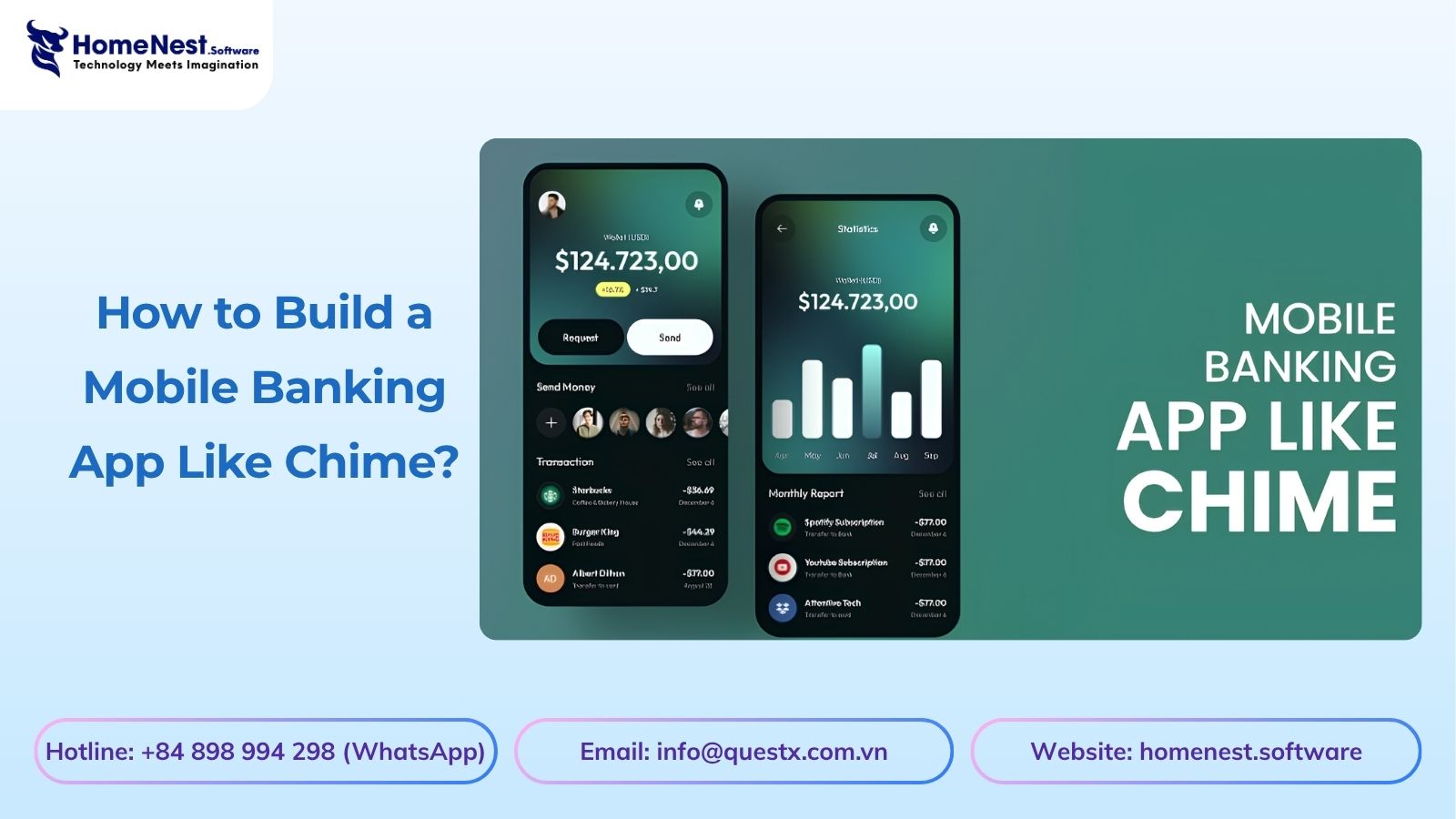
How to Build a Mobile Banking App Like Chime?
Building a mobile banking app like Chime is not just about features, it is about delivering a secure, scalable, and user-centric financial experience. From planning the right architecture to optimizing mobile banking app development cost, every decision directly impacts your product’s success. Leveraging Fintech app development services, starting with MVP app development, and scaling through on-demand app development solutions allows businesses to reduce risk and accelerate time to market. To stay competitive, combining Android app development services and iOS app development solutions ensures wider reach, while continuous updates through maintenance software development services keep your app secure and future-ready.

How to Build a Banking App Like Barclays: A Complete Entrepreneur’s Guide
Building a banking app like Barclays requires more than just development. It demands a strong product vision, secure architecture, and a clear monetization strategy. From optimizing cost and selecting the right tech stack to ensuring compliance and scalability, every decision impacts long-term success. Partnering with an experienced team like HomeNest Software helps accelerate development, reduce risks, and deliver a high-quality fintech product that can compete in today’s fast-evolving digital banking landscape.