
Embedded Software Outsourcing in Asia: Key Benefits and Top Destinations
Scope of Work

Looking to reduce development costs without compromising technical quality? Many global companies are turning to embedded software outsourcing in Asia as a strategic solution. Discover why this trend is growing and how it can help your business accelerate innovation and stay competitive.
Why Outsource Embedded Software Development to Asia?
Cost-Effective Solutions and Competitive Pricing
Asia—especially Vietnam—has become one of the most cost-effective destinations for embedded software outsourcing. In the United States, the average hourly rate for embedded engineers typically ranges from $80 to $150, while outsourcing to Vietnam often costs only $25 to $45 per hour without sacrificing quality.
According to Deloitte’s Global Outsourcing Survey, 59% of companies outsource primarily to reduce costs. Vietnam has emerged as a strong outsourcing hub thanks to its expanding IT ecosystem, growing talent pool, and competitive labor market. Companies can access high-quality engineering services while maintaining significantly lower development expenses.
Compared with regions such as Eastern Europe or Latin America, Southeast Asia generally offers lower operational costs, favorable tax environments, and more affordable infrastructure. This cost advantage is particularly valuable for companies building consumer IoT devices, smart appliances, or other cost-sensitive embedded products.
Access to Highly Skilled Engineering Talent
Asia provides access to a large and rapidly growing pool of engineers specializing in embedded systems and firmware development. In Vietnam alone, over 55,000 ICT graduates enter the workforce each year, according to the Vietnam ICT White Book 2023.
Many engineers are trained in ARM Cortex architectures, real-time operating systems (RTOS), and low-level programming languages such as C/C++, Python, and Assembly. They are also experienced with professional development tools including Keil, MPLAB, and Altium Designer, allowing them to build reliable and efficient embedded solutions.
Beyond technical expertise, engineers across Asia bring industry-specific experience in sectors such as automotive technology, medical devices, industrial automation, and IoT. This ensures strong hardware-software integration and compliance with industry standards.
Governments across the region continue to invest heavily in STEM education, technology parks, and partnerships with global technology firms, creating a sustainable pipeline of skilled developers.
Scalability and Flexibility of Offshore Engineering Teams
Another major advantage of outsourcing embedded software development to Asia is the ability to scale engineering resources quickly based on project needs.
This flexibility benefits both startups and enterprises. Startups can rapidly assemble teams to build minimum viable products (MVPs), while larger companies can scale resources to meet tight development deadlines.
Outsourcing providers in countries like Vietnam, India, and the Philippines typically offer multiple engagement models, including:
-
Dedicated development teams
-
Extended engineering teams
-
Project-based outsourcing models
These offshore teams can integrate smoothly with internal development processes, supporting Agile development cycles, collaborative testing, and rapid prototyping. Companies also avoid long-term hiring commitments, helping them manage costs and risks more effectively.
Stronger Focus on Core Business Growth
Outsourcing embedded development allows internal teams to concentrate on high-value strategic activities, such as product innovation, market expansion, regulatory compliance, and customer experience.
For instance, a German medical device manufacturer outsourced firmware development to a Vietnamese engineering team. This decision reduced the company’s internal engineering workload by around 40%, enabling its core team to focus on FDA compliance and clinical trials—two crucial steps for bringing the product to market.
By dividing responsibilities strategically, companies can accelerate product development, improve efficiency, and drive innovation, ensuring that internal resources are focused on areas that generate the greatest business impact.
Read more: Top 10 Outsourcing Countries
Top 6 Asian Countries for Embedded Software Development
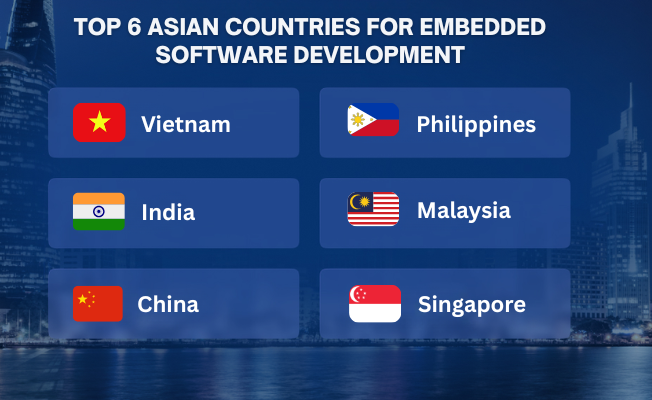
Vietnam: A Leading Destination for Embedded Software Outsourcing
Vietnam has rapidly evolved from an emerging outsourcing market into one of the leading destinations for embedded software development in Asia. Several factors contribute to its growing reputation among global technology companies.
First, Vietnam offers strong technical capabilities in areas such as embedded C programming, real-time operating systems (RTOS), IoT protocols, and ARM-based development. Vietnamese engineers are known for their strong academic foundations and hands-on experience in firmware and hardware integration.
Another major advantage is cost efficiency. Development costs in Vietnam are typically 40–60% lower than in countries like China or India, allowing companies to maintain high technical quality while reducing overall project expenses.
Vietnam also benefits from strong English communication skills, especially in major technology hubs such as Ho Chi Minh City, Hanoi, and Da Nang. This makes collaboration with international teams smoother and more efficient.
In addition, the Vietnamese government actively supports the technology sector through digital transformation initiatives, STEM education programs, and incentives for foreign investment. These policies have helped build a dynamic tech ecosystem that includes software parks, innovation hubs, and international partnerships.
Well-known companies such as FPT Software, TMA Solutions, Savarti, and HomeNest Software have delivered embedded software and firmware solutions for global clients, including automotive suppliers, IoT device manufacturers, and medical technology companies.
Thanks to its combination of technical expertise, affordability, and a rapidly expanding developer ecosystem, Vietnam consistently ranks among the top outsourcing destinations for embedded software development in Asia.
India: A Global Powerhouse in Embedded Development
India has long been one of the world’s largest hubs for software outsourcing services, and its role in embedded systems development remains significant.
The country has a vast engineering workforce with expertise in microcontrollers, real-time operating systems, and safety-critical standards such as ISO 26262 and MISRA C. This makes India a strong choice for complex embedded projects in industries like automotive, telecommunications, and industrial automation.
India also offers high English proficiency and strong collaboration with Western clients, which has contributed to decades of successful outsourcing partnerships.
Major technology cities such as Bangalore, Pune, and Hyderabad host large embedded R&D centers and technology parks, attracting global companies looking for long-term development partners.
China: Strong Hardware and IoT Development Capabilities
China is particularly strong in hardware–software integration, making it a key destination for companies building IoT devices, wearables, smart appliances, and consumer electronics.
The country has a large manufacturing ecosystem, allowing companies to integrate product design, firmware development, and hardware production within a single supply chain.
However, some international businesses remain cautious due to concerns about intellectual property protection, regulatory transparency, and communication barriers.
The Philippines: Growing Talent in Embedded Engineering
The Philippines has traditionally been known for its business process outsourcing (BPO) sector, but its technology capabilities are expanding.
With excellent English proficiency and strong communication skills, Filipino engineers are well-suited for projects that require close collaboration, documentation, and technical support.
While the embedded engineering ecosystem is still developing, the country is gradually building expertise in software development and electronics engineering.
Malaysia: An Emerging Embedded Technology Hub
Malaysia is becoming an increasingly attractive destination for embedded software outsourcing. The government strongly supports the digital economy and has invested heavily in the electrical and electronics (E&E) industry.
Technology hubs such as Cyberjaya and Penang host multinational research and development centers focused on semiconductors, embedded systems, and electronics manufacturing.
Malaysia offers a highly educated, English-speaking workforce and competitive development costs, making it a reliable choice for companies looking to diversify their outsourcing locations while maintaining strong intellectual property protection.
Singapore: Premium Engineering and R&D Expertise
Singapore stands out as a high-end destination for embedded software development. Although development costs are higher than in other Asian countries, Singapore offers exceptional advantages.
The country provides world-class infrastructure, strict intellectual property protection, and highly skilled engineers. It is particularly suitable for complex or high-risk projects in industries such as medical technology, automotive safety systems, and fintech.
Many global companies choose Singapore for research, innovation, and early-stage prototyping, before scaling development in lower-cost Asian markets.
Choosing the Right Country for Embedded Software Outsourcing
Selecting the right outsourcing destination depends on several factors, including:
-
Project complexity
-
Intellectual property protection requirements
-
Communication and collaboration needs
-
Budget and development timeline
Each Asian country offers unique strengths. By choosing the right partner and location, businesses can maximize efficiency, reduce development costs, and accelerate product innovation in embedded systems.
Read more: Top IT Outsourcing Companies in Vietnam
How to Outsource Embedded Systems Projects in Asia
Outsourcing embedded systems development involves more than simply hiring an overseas team. It requires a clear strategy, technical alignment, and proper legal planning to ensure the project runs smoothly. By following a structured approach, companies can maximize the benefits of embedded software outsourcing in Asia from the very beginning.
A Step-by-Step Outsourcing Process
1. Define Your Project Scope and Objectives
Start by clearly outlining your technical requirements. This may include low-level driver development, real-time firmware, board bring-up, or full embedded system solutions. Establish clear deliverables, timelines, and compliance standards such as ISO 13485 or ISO 26262 to ensure the project meets industry requirements.
2. Choose the Right Outsourcing Location
Asia offers several strong outsourcing destinations. Vietnam is often chosen for its balance of affordability, engineering quality, and communication skills. India provides extensive R&D capabilities and large engineering teams, while the Philippines is well known for strong English communication and technical support capabilities.
3. Evaluate Technical Expertise
Select vendors with proven experience in firmware development, embedded architecture, and hardware–software integration. Look for teams familiar with platforms such as STM32, NXP, or Nordic chipsets. During vendor evaluation, request technical documentation, sample code, and certifications to assess their capabilities.
4. Review Case Studies and Client Feedback
A reliable outsourcing partner should be able to demonstrate past success. Examine portfolios and case studies in industries such as automotive systems, medical devices, industrial automation, or IoT products. Verified client testimonials can also provide valuable insights into the vendor’s reliability and delivery quality.
5. Start with a Pilot Project
Before committing to a full-scale engagement, begin with a pilot project or proof-of-concept. This allows you to evaluate the team’s coding quality, communication style, and responsiveness within an agile workflow. A successful pilot makes it easier to scale the team later.
6. Establish Clear KPIs and Service Agreements
Define measurable performance indicators such as code quality, defect rates, delivery timelines, and integration speed. Clear service-level agreements (SLAs) and escalation procedures help manage risks and keep the project on track.
Time Zone and Communication Advantages
One significant benefit of outsourcing embedded software development to Asia is the ability to support near 24-hour development cycles. With engineering teams located in countries such as Vietnam or India, companies in North America or Europe can take advantage of time zone differences to accelerate development.
For example, tasks assigned at the end of a Western workday can be completed overnight by offshore teams, enabling faster iteration and shorter release cycles.
In addition, strong English proficiency and increasing familiarity with global collaboration tools—such as Jira, Slack, Git, and Agile project management systems—make it easier for distributed teams to work together efficiently.
Legal and Data Protection Considerations
Legal protection and intellectual property security are critical when outsourcing embedded systems projects. Companies should ensure that contracts include:
-
Non-disclosure agreements (NDAs) and clear IP ownership clauses
-
Compliance with international data protection regulations such as GDPR, HIPAA, or CCPA
-
Clearly defined legal jurisdiction and dispute resolution procedures
Countries like Vietnam and India have strengthened their legal frameworks to support international technology partnerships, giving global businesses greater confidence when outsourcing software development projects.
Outsourcing embedded systems development to Asia is not only about reducing costs—it is about building a more efficient and scalable development strategy. With the right planning, vendor selection, and project management framework, businesses can unlock the full benefits of embedded software outsourcing in Asia, including faster innovation, flexible engineering resources, and improved product delivery.
Read more: Software Outsourcing Costs: Key Factors and Strategic Insights
Conclusion
In today’s fast-evolving technology landscape, outsourcing embedded software development to Asia has become more than a cost-reduction strategy. It allows companies to access highly skilled engineering talent, scale development teams quickly, and accelerate product innovation.
Among the leading destinations in the region, Vietnam stands out thanks to its competitive costs, strong technical expertise, and supportive business environment. With a rapidly growing tech ecosystem and a large pool of skilled engineers, the country has become a preferred outsourcing hub for global companies.
If you are looking for a reliable partner for your embedded systems projects, HomeNest Software delivers the expertise and agility needed to turn ideas into high-performance solutions. Our team combines deep technical knowledge with flexible development models to ensure fast, efficient, and scalable results.
Contact HomeNest Software today to start your embedded development journey and build smarter, faster, and more efficiently.
HomeNest Software – Empowering Long-Term Growth for Modern Businesses.
Contact Information:
- Address: The Sun Avenue, 28 Mai Chi Tho Street, Binh Trung Ward, Ho Chi Minh City
- Hotline: +84 898 994 298 ( WhatsApp )
- Website: homenest.software
FAQs
What is embedded software outsourcing?
Embedded software outsourcing is the practice of hiring external engineering teams to design, develop, test, and maintain firmware or embedded systems. Companies outsource these tasks to access specialized expertise, reduce development costs, and speed up product development.
Why do companies outsource embedded software development to Asia?
Many businesses outsource to Asia because the region offers highly skilled engineers, competitive development costs, and scalable engineering teams. Countries like Vietnam and India also provide strong technical education systems and growing technology ecosystems.
Which Asian country is best for embedded software outsourcing?
Several countries are strong outsourcing destinations, but Vietnam is increasingly recognized as one of the best choices due to its balance of cost efficiency, engineering talent, and reliable communication. India is known for large R&D teams, while Singapore excels in high-end innovation projects.
How much does embedded software outsourcing cost in Asia?
Costs vary by country and project complexity. On average, embedded engineers in Asia charge between $25 and $60 per hour, significantly lower than the $80–$150 per hour typically seen in the United States or Western Europe.
What industries benefit most from embedded software outsourcing?
Industries that commonly outsource embedded development include automotive, IoT devices, medical technology, industrial automation, telecommunications, and consumer electronics. These sectors often require specialized firmware and hardware integration expertise.
How can companies ensure quality when outsourcing embedded development?
To ensure quality, companies should choose experienced vendors, start with pilot projects, define clear KPIs and SLAs, and maintain regular communication through agile project management tools. Reviewing case studies and technical portfolios also helps identify reliable partners.
Latest Articles
View All
Essential Tips To Develop A Music Streaming App
Discover expert tips to develop a successful music streaming app with HomeNest Software. This guide covers essential features, legal licensing, and scalable technology stacks. Learn how to build a robust, cross-platform application with AI personalization to stand out in the 2026 competitive audio market.

How to Build a Language Learning App Like Cake
Discover how to build a successful language learning app like Cake with this comprehensive guide from HomeNest Software. We explore market research, essential MVP features, advanced AI integrations, tech stack selection, and estimated development costs. Partner with HomeNest Software to create a scalable, gamified, and highly engaging educational platform tailored to your business goals. Start your app development journey with us today.
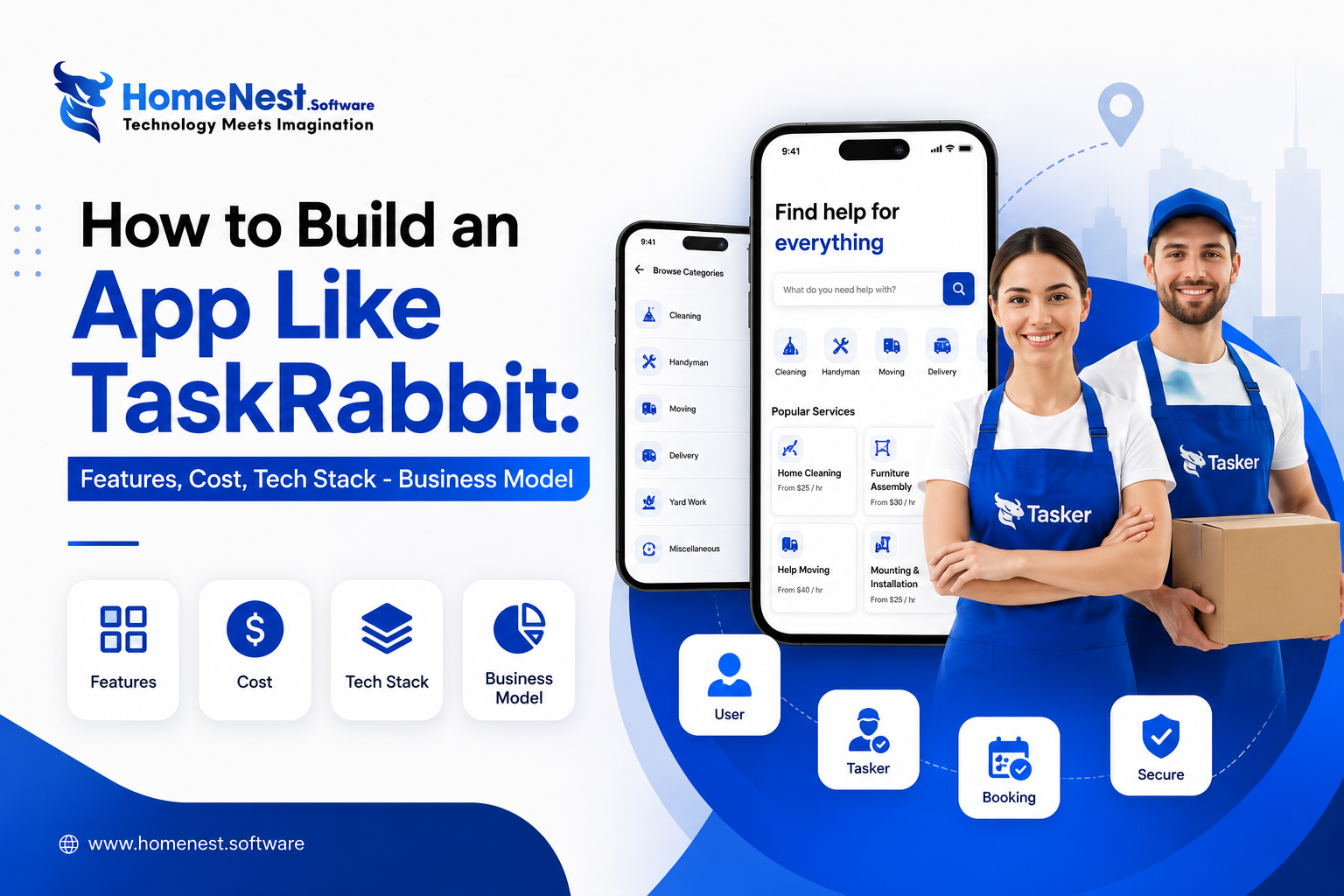
How to Build an App Like TaskRabbit: Features, Cost, Tech Stack – Business Model
Building an app like TaskRabbit is more than replicating existing features—it’s about creating a trusted marketplace that seamlessly connects customers with skilled service providers. By combining an intuitive user experience, secure payment systems, scalable architecture, and the right business model, you can launch a competitive on-demand platform. Partnering with an experienced app development company like HomeNest Software ensures your product is built with the technology, flexibility, and long-term scalability needed to succeed in the rapidly growing gig economy.
How to Build a Meal Planning App: A Complete Step-by-Step Guide
Building a successful meal planning app goes beyond creating an attractive interface it requires a clear business strategy, personalized user experiences, and scalable technology. By combining essential features like AI-powered meal recommendations, nutrition tracking, grocery list automation, and wearable integration, businesses can deliver lasting value to users while capitalizing on the growing digital health market. Partnering with an experienced mobile app development company ensures your solution is secure, future-ready, and designed to succeed in an increasingly competitive health-tech industry.

How Much Does It Cost to Build a Shopping App Like Temu?
Temu’s meteoric rise to over 900 million global downloads proves the power of combining AI, gamification, and social commerce, but building a similar viral shopping platform requires careful financial and technical planning. Developing an app like Temu typically costs anywhere from $40,000 for a basic Minimum Viable Product (MVP) to over $300,000 for a fully-featured platform. This guide breaks down every cost category, analyzes the core features driving Temu’s success, highlights the best technology stacks, and offers practical strategies to optimize your development budget without compromising on quality.

Criteria For Choosing The Right App Design Agency
UI/UX design is the logical foundation of a system, not merely a visual element. Choosing the wrong partner will directly lead to technical debt, budget overruns, and disruptions in the development process. This article provides a 6-step evaluation framework and a list of operational risks, helping businesses eliminate subjective design advice and accurately assess agency capabilities based on developer handoff standards and practical business performance.