
How to Build an On-Demand Delivery App Like Onfleet: A Step-by-Step Guide
Building an on-demand delivery app like Onfleet requires more than just core features it demands a scalable architecture, real-time capabilities, and cost efficient execution strategy. By starting with an MVP, leveraging modern technologies, and focusing on route optimization, tracking, and user experience, businesses can quickly enter the market, optimize last mile operations, and create a sustainable competitive advantage.
Scope of Work
In today’s hyper connected world, convenience has become the standard. Users expect to get almost anything food, groceries, furniture, or services delivered to their doorstep with just a few taps. This shift has driven the rapid growth of on demand and last mile delivery apps.
A strong example is Onfleet, a widely used solution that helps businesses streamline last mile logistics, optimize routes, and manage deliveries efficiently. Platforms like this enable companies to meet rising customer expectations while improving operational performance.
If you’re looking to build a similar last mile delivery app for your business, the opportunity is clear but execution requires the right strategy. In this blog, we’ll explore how to develop an on demand delivery app like Onfleet, along with the key components involved. But first, let’s understand what Onfleet is and how it works.
What Is Onfleet?
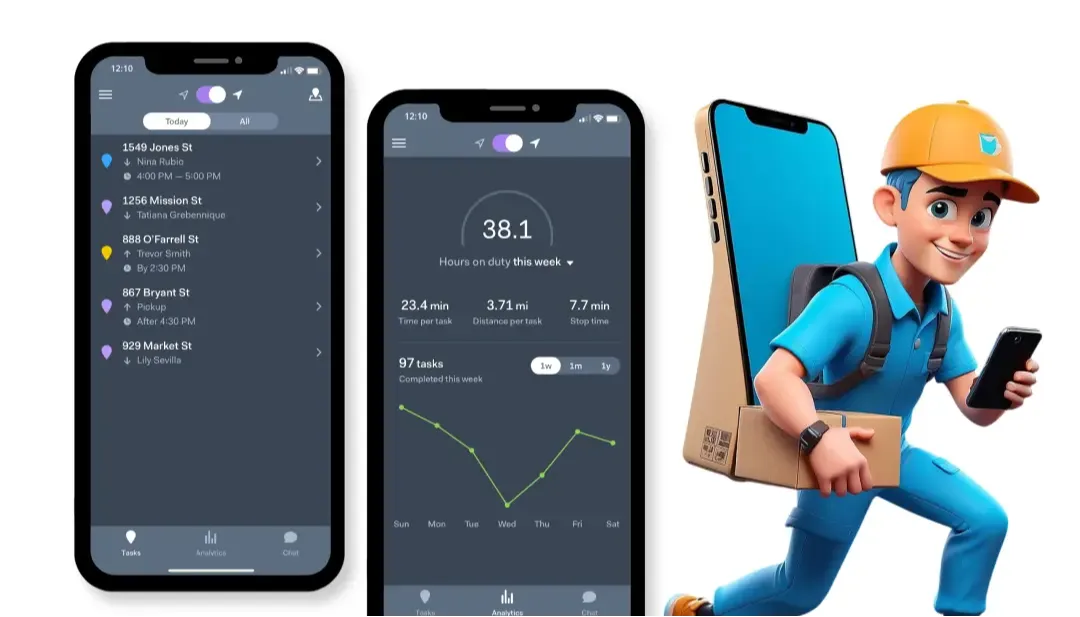
Onfleet is a leading last mile delivery management platform designed to optimize logistics operations and enhance customer experience. It provides a comprehensive set of features such as scheduled deliveries, real time tracking, route optimization, and proof of delivery, enabling businesses to manage deliveries efficiently from dispatch to completion.
Whether it’s delivering meals, groceries, or retail products, Onfleet ensures that orders reach customers accurately and on time. Its strength lies in seamlessly coordinating all stakeholders involved in the delivery process including customers, businesses, and drivers creating a smooth, transparent, and reliable last mile delivery experience.
Benefits of Building a Last Mile Delivery App Like Onfleet
Investing in a last mile delivery app similar to Onfleet offers significant advantages for businesses looking to optimize logistics, improve customer satisfaction, and unlock new revenue streams. As demand for on demand delivery continues to grow, fleet management solutions are becoming a strategic asset across industries.
Growing Market Demand
The demand for fleet and delivery management software has increased rapidly in recent years. Businesses across eCommerce, food delivery, and logistics are adopting digital solutions to streamline operations. This rising demand creates strong revenue potential for companies investing in delivery app development.
Enhanced Customer Experience
Modern delivery apps offer features such as real time tracking, scheduled deliveries, and personalized notifications, allowing customers to stay informed and in control. These capabilities significantly improve user satisfaction and build trust through transparency and convenience.
Improved Operational Efficiency
Last mile delivery apps optimize routes, reduce delivery times, and lower fuel consumption. By automating dispatching, tracking, and performance monitoring, businesses can streamline operations and increase overall productivity leading to higher profitability.
Data Driven Decision Making
These platforms collect and analyze valuable data, including customer behavior, delivery patterns, and service performance. Businesses can use these insights to optimize operations, identify trends, and make informed strategic decisions that drive growth.
Strong Competitive Advantage
Building a feature rich delivery app gives businesses a clear edge in a competitive market. With a user friendly interface, scalable architecture, and advanced capabilities, companies can differentiate their services and position themselves as reliable, tech driven logistics providers.
By leveraging these benefits, businesses can transform their delivery operations into a scalable, efficient, and customer centric ecosystem.
Features of a Last Mile Delivery App Like Onfleet
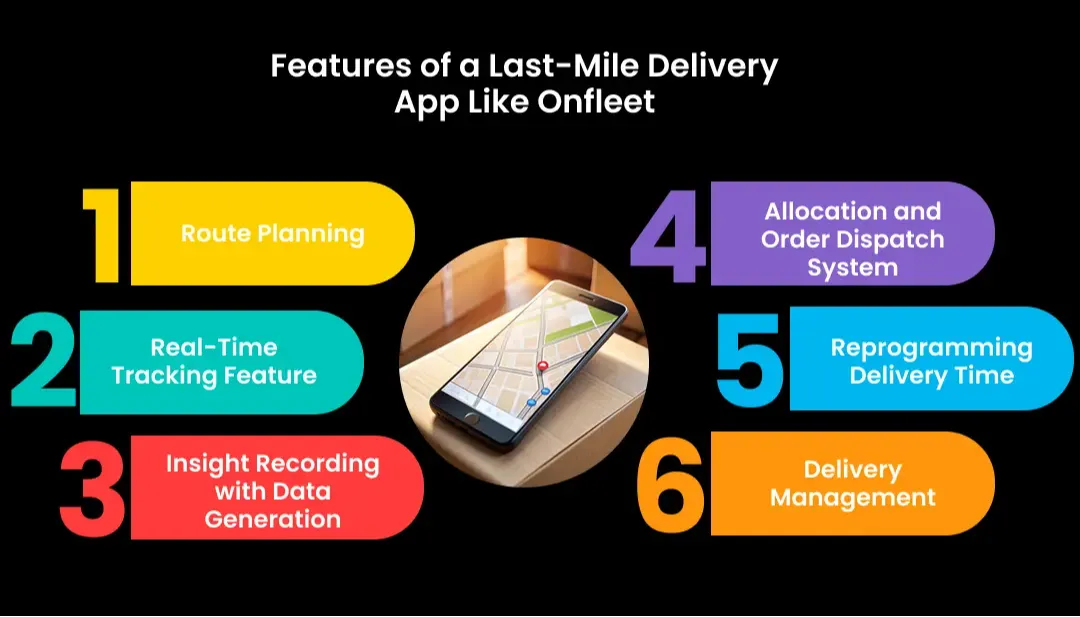
To build a high performance last mile delivery solution similar to Onfleet, it’s essential to implement features that optimize logistics, enhance visibility, and improve customer experience. Below are the core functionalities every robust delivery app should include:
Route Planning & Optimization
Efficient route planning ensures deliveries are completed via the fastest and most cost effective paths. By leveraging real time traffic data and optimization algorithms, the app minimizes delays, reduces fuel consumption, and improves delivery turnaround times.
Real Time Tracking
Live tracking allows both businesses and customers to monitor orders from dispatch to delivery. This feature increases transparency, improves coordination, and builds customer trust by providing accurate status updates.
Data Collection & Insights
The app captures operational data such as delivery times, distances traveled, customer feedback, and service performance. These insights help businesses identify inefficiencies, optimize workflows, and make data driven decisions.
Smart Allocation & Dispatch System
An intelligent dispatch system automatically assigns orders to the most suitable drivers based on availability, location, and workload. This ensures faster deliveries, better resource utilization, and improved service quality.
Flexible Delivery Scheduling
Users can reschedule, cancel, or modify delivery times based on their preferences. This flexibility enhances user satisfaction and accommodates real world scenarios such as last minute changes or emergencies.
Delivery Management System
A centralized delivery management module oversees the entire process from order assignment to final delivery. It enables real time coordination, handles exceptions, and supports dynamic rescheduling based on customer needs and operational conditions.
By integrating these features, businesses can build a scalable and efficient last mile delivery app that delivers speed, reliability, and a superior user experience.
Steps to Build a Last Mile Delivery App Like Onfleet
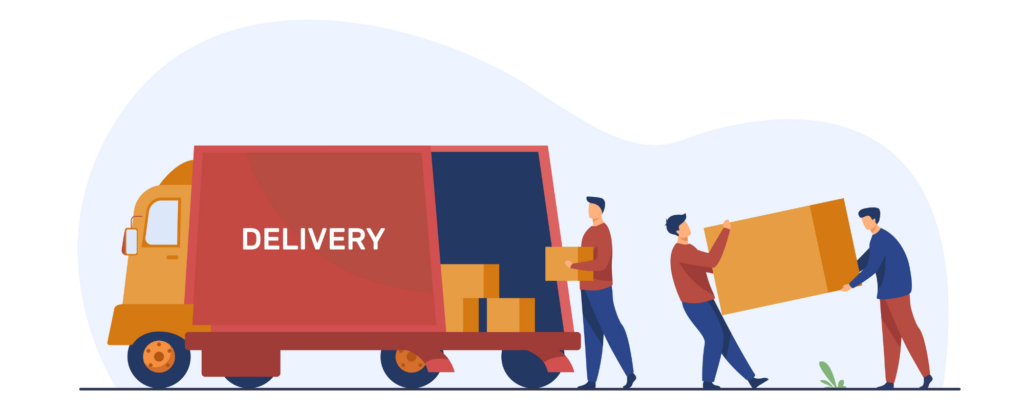
Developing a last mile delivery app requires a structured, end to end process to ensure scalability, performance, and business alignment. Below is a step by step framework to help you build a solution similar to Onfleet:
Define Business Needs and Goals
Start by analyzing market demand and evaluating existing fleet management solutions. Clearly define your business objectives, target users, and key use cases. This stage ensures your product is aligned with real operational needs and long term growth goals.
Identify Core and Advanced Features
Outline the essential (MVP) and advanced features your app will require such as real time tracking, route optimization, dispatch systems, and analytics. Prioritizing features helps control costs and ensures faster time to market.
Choose the Right Technology Stack
The tech stack is critical to your app’s performance, scalability, and security. A modern architecture may include:
- Mobile Apps: Kotlin, Swift, React Native
- Web Apps: Next.js, Tailwind CSS / Material UI
- Backend Services: NestJS, Spring Boot
- Real Time Messaging: WebSockets, MQTT
- Databases: PostgreSQL, Redis
- Object Storage: AWS S3, Google Cloud Storage
- Maps & Geolocation: Google Maps Platform, Mapbox
- Telemetry & Data Streams: AWS IoT Core, streaming services
- Payments & Invoicing: Stripe, Adyen
- Analytics & BI: ClickHouse, BigQuery
Selecting the right technologies ensures seamless integrations and future scalability.
Design UI/UX
Create a user friendly and intuitive interface that simplifies navigation and enhances usability. Focus on responsive design, clean layouts, and essential components such as dashboards, tracking screens, and notifications to improve user engagement.
Development & Integration
Build a skilled development team to implement the app’s architecture, features, and integrations. This phase includes API integrations, third party services, backend logic, and real time functionalities required for a fully operational delivery platform.
Testing & Quality Assurance
Conduct comprehensive testing to ensure the app performs reliably under real world conditions. This includes functional testing, performance testing, security checks, and usability validation before deployment.
Launch & Ongoing Maintenance
Deploy the app on platforms such as iOS, Android, or web. After launch, continuous monitoring, updates, and feature enhancements are essential to maintain performance, fix issues, and adapt to evolving user needs.
By following this structured process, businesses can build a scalable, efficient, and high performing last mile delivery app tailored to modern logistics demands.
Cost to Build an On Demand Delivery App Like Onfleet
The cost of developing an on demand delivery app similar to Onfleet depends on multiple factors, including feature scope, app complexity, level of customization, UI/UX design quality, and the development team’s size, expertise, and location. Ongoing expenses such as maintenance, support, and infrastructure also contribute to the total investment.
Below is a typical cost breakdown based on app complexity:
| App Complexity | Estimated Cost | Development Time |
|---|---|---|
| Simple Level | $5,000 – $8,000 | 4 – 5 weeks |
| Moderate Level | $10,000 – $15,000 | 5 – 8 weeks |
| Advanced Level | $15,000+ | 8 – 12 weeks |
Key Cost Drivers
- Features & Functionality: Advanced capabilities like real time tracking, route optimization, and analytics increase development effort.
- UI/UX Customization: High quality, tailored interfaces require additional design and frontend resources.
- Technology Stack: The choice of frameworks, cloud infrastructure, and integrations impacts scalability and cost.
- Development Team: Rates vary significantly by region and expertise level.
- Maintenance & Support: Post launch updates, monitoring, and scaling should be factored into the overall budget.
Strategic Insight
For most businesses, starting with an MVP (Minimum Viable Product) is the most efficient approach allowing you to validate the concept, control initial costs, and scale features based on real user feedback.
Cost Optimization Strategies to Build an App Like Onfleet
Developing a delivery app similar to Onfleet can be cost efficient if you apply the right strategies. By optimizing resources, technology choices, and development scope, businesses can significantly reduce overall investment while maintaining quality and scalability.
Hire Freelance or Flexible Talent
Engaging freelance developers or building a hybrid team can lower development costs compared to maintaining a full in house team. This approach allows you to scale resources based on project needs while keeping budgets under control provided you align skills with your technical requirements.
Leverage Cloud Based Infrastructure
Using cloud platforms instead of on premise servers reduces infrastructure and maintenance costs. Cloud solutions offer scalability, high availability, and remote access making them ideal for real time delivery applications while minimizing operational overhead.
Adopt Cross Platform Development
Rather than building separate native apps for iOS and Android, frameworks like React Native or Flutter allow you to develop a single codebase for multiple platforms. This approach significantly reduces development time and cost while maintaining acceptable performance.
Start with an MVP (Minimum Viable Product)
Focusing on an MVP helps you launch faster with only essential features such as user accounts, real time tracking, booking, and payments. This reduces initial investment and allows you to validate your product before scaling with advanced features.
Use Open Source Technologies
Open source frameworks and libraries (e.g., React Native, Django, Apache Spark) can lower licensing costs and accelerate development. They provide robust, community supported solutions that reduce the need for building components from scratch.
By applying these cost optimization strategies, businesses can build a scalable and efficient delivery app while maintaining budget discipline and accelerating time to market.
Wrapping Up
In this guide, we’ve explored how to build a last mile delivery app like Onfleet covering key aspects such as its core concept, business benefits, essential features, development process, cost estimates, and practical cost optimization strategies. Together, these insights provide a clear roadmap for developing a scalable and efficient delivery solution.
As a trusted logistics app development partner, HomeNest Software supports businesses end to end from ideation and design to development and post launch optimization. Whether you’re launching a new platform or upgrading existing delivery operations, the focus is on delivering tailored, high performance solutions aligned with your business goals and growth strategy.
FAQs
What is a last mile delivery app like Onfleet?
A last mile delivery app is a logistics platform that helps businesses manage the final stage of delivery from dispatching orders to tracking drivers and ensuring timely delivery to customers.
How much does it cost to build an app like Onfleet?
The cost typically ranges from $5,000 to $15,000+, depending on app complexity, features, integrations, and the development team’s location and expertise.
How long does it take to develop a delivery app?
A basic version can take 4–5 weeks, while a more advanced app with real time tracking and analytics may take 8–12 weeks or more.
What are the essential features of a last mile delivery app?
Key features include route optimization, real time tracking, order management, driver assignment, push notifications, and analytics dashboards.
What technologies are used to build delivery apps?
Common technologies include React Native/Flutter (frontend), Node.js/NestJS (backend), PostgreSQL/Redis (database), and cloud platforms like AWS or GCP, along with APIs for maps and payments.
How do delivery apps generate revenue?
Revenue models include delivery fees, subscription plans for businesses, commission per order, surge pricing, and premium features.
Is real time tracking necessary?
Yes. Real time tracking improves transparency, enhances customer trust, and helps businesses manage operations more efficiently.
Can I start with a limited budget?
Yes. You can launch an MVP (Minimum Viable Product) with core features and gradually scale based on user feedback and business growth.
What are the biggest challenges in building a delivery app?
Common challenges include real time system performance, route optimization complexity, integration with third party services, and scaling infrastructure.
Why should I hire a professional development company?
An experienced partner like HomeNest Software ensures scalable architecture, faster time to market, secure integrations, and long term support, helping you build a reliable and competitive delivery platform.
Latest Articles
View All
How Much Does It Cost to Build a Shopping App Like Temu?
Temu’s meteoric rise to over 900 million global downloads proves the power of combining AI, gamification, and social commerce, but building a similar viral shopping platform requires careful financial and technical planning. Developing an app like Temu typically costs anywhere from $40,000 for a basic Minimum Viable Product (MVP) to over $300,000 for a fully-featured platform. This guide breaks down every cost category, analyzes the core features driving Temu’s success, highlights the best technology stacks, and offers practical strategies to optimize your development budget without compromising on quality.

Criteria For Choosing The Right App Design Agency
UI/UX design is the logical foundation of a system, not merely a visual element. Choosing the wrong partner will directly lead to technical debt, budget overruns, and disruptions in the development process. This article provides a 6-step evaluation framework and a list of operational risks, helping businesses eliminate subjective design advice and accurately assess agency capabilities based on developer handoff standards and practical business performance.

How Does AI in Banking Industry Impact the Future?
Artificial intelligence (AI) has transitioned from a supplementary tool to a core infrastructure of financial data management, optimizing profitability through real-time fraud detection, natural language processing (NLP), and high-speed credit scoring models. “Deploying AI in the financial sector requires more than just algorithmic accuracy, it demands a highly secure cloud architecture and rigorous data governance,” commented Nguyen Tien, co-founder of HomeNest Software. Why read this guide? We skip the theoretical jargon to focus entirely on technical implementation. Whether you’re evaluating a vendor or planning a system overhaul, this article will detail: Operational Efficiency: Automating unstructured data workflows at scale. Risk Architecture: Implementing real-time threat detection and AML compliance. Data ownership: The essential need for 100% ownership of the source code to ensure full algorithm auditability.
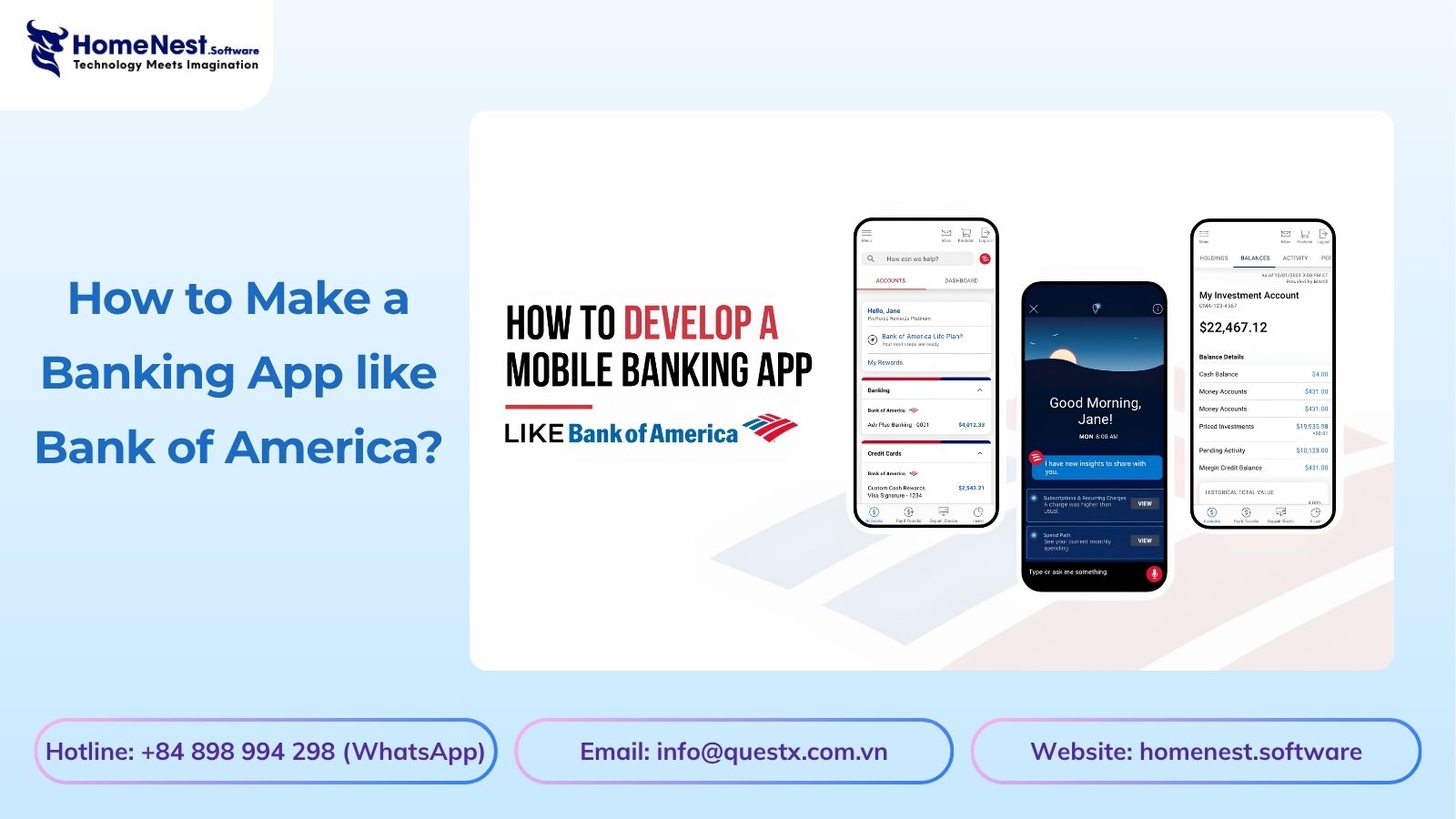
How to Make a Banking App like Bank of America?
Developing a mobile banking application like Bank of America extends far beyond basic UI design; it requires engineering a fault-tolerant backend capable of real-time ledger synchronization, biometric authentication, and high-volume data processing under strict regulatory frameworks. Drawing from HomeNest Software’s deep experience in architecting enterprise-grade fintech solutions, this guide strips away theoretical jargon to focus entirely on operational and technical execution. What you will find in this guide: We break down the precise development roadmap, from mapping out microservices and ensuring PCI-DSS compliance to estimating MVP development costs and securing absolute data sovereignty through 100% source code ownership. If you are preparing to build, scale, or audit a financial platform, this blueprint provides the exact framework you need.
Banking App Development Cost
Building a banking application is rarely a simple process; it’s a complex technical challenge requiring a balance between complying with stringent financial regulations, handling large transaction volumes, and a scalable cloud architecture. Miscalculating these technical requirements from the outset often leads to significant technical debt and budget overruns. Based on HomeNest Software’s practical experience in designing enterprise-grade fintech solutions, this guide bypasses generic estimates to provide a realistic analysis of banking application development costs. What you’ll find in this guide: We analyze the true cost factors, from technology selection and API integration to the hidden costs of regulatory compliance and security infrastructure. Whether you’re launching a minimum viable product or expanding an existing financial platform, this analysis provides the precise operational data you need to plan your budget effectively.
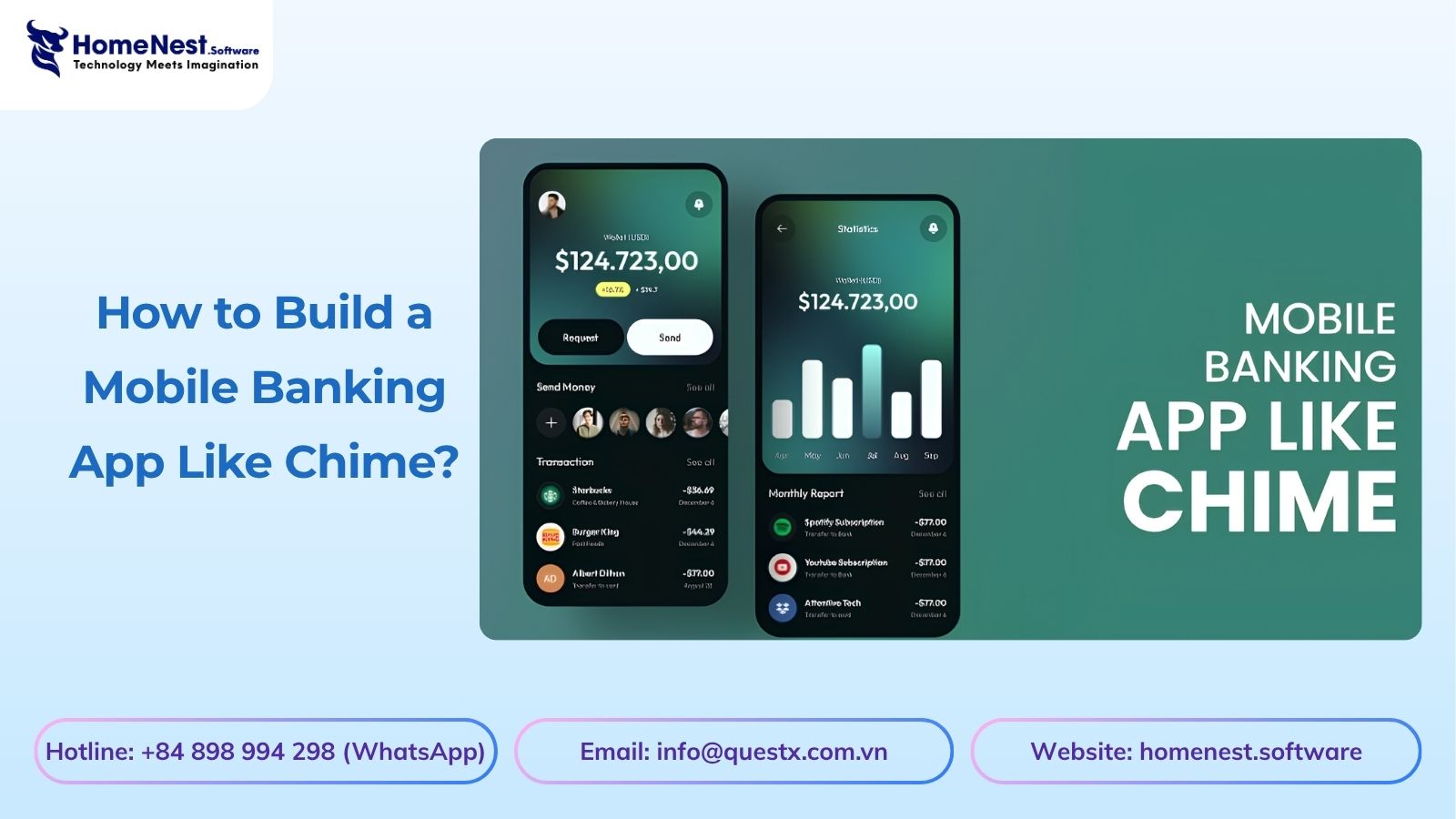
How to Build a Mobile Banking App Like Chime?
Building a mobile banking app like Chime is not just about features, it is about delivering a secure, scalable, and user-centric financial experience. From planning the right architecture to optimizing mobile banking app development cost, every decision directly impacts your product’s success. Leveraging Fintech app development services, starting with MVP app development, and scaling through on-demand app development solutions allows businesses to reduce risk and accelerate time to market. To stay competitive, combining Android app development services and iOS app development solutions ensures wider reach, while continuous updates through maintenance software development services keep your app secure and future-ready.