
Onshore Outsourcing: Definition, Benefits, and Tips for Choosing the Right Partner
Onshore outsourcing is a strategic option for businesses looking to delegate operations while keeping them domestic. Learn about the benefits of domestic outsourcing, how it compares to offshore models, and key tips for choosing the right partner to support your business goals.
Scope of Work

In today’s increasingly connected global economy, onshore outsourcing also referred to as domestic outsourcing has become a strategic option for companies that want to leverage external expertise while keeping operations within their own country. Whether businesses are considering onshore outsourcing for IT services, customer support, or creative projects, understanding its advantages and knowing how to choose the right partner can help them make informed decisions and support long term, sustainable growth.
What Exactly Is Onshore Outsourcing?
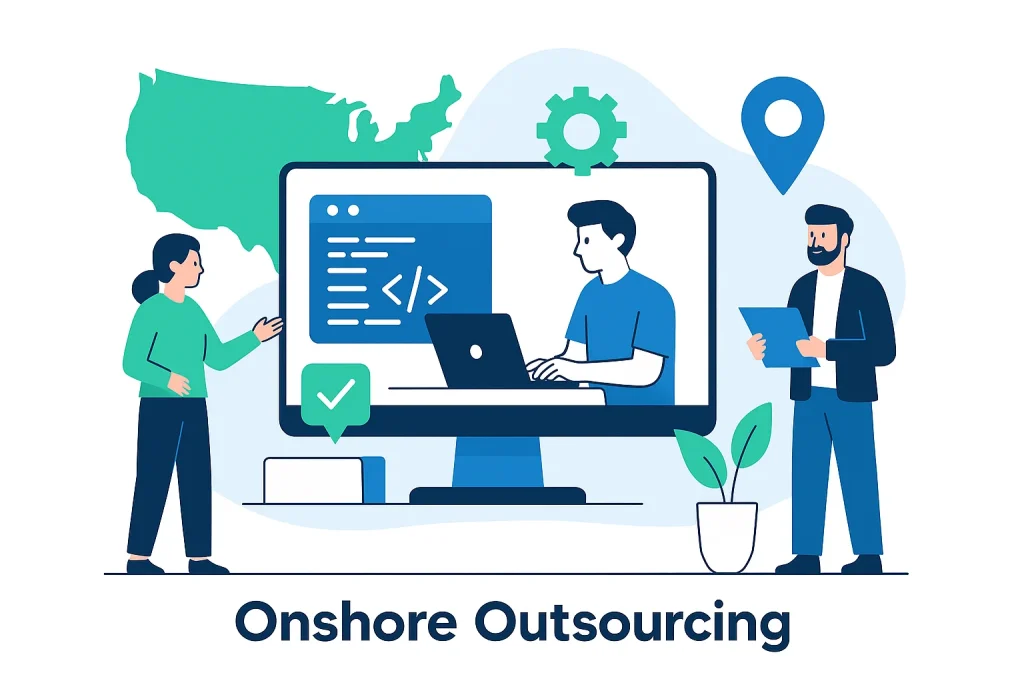
Onshore outsourcing, also known as domestic outsourcing or homeshoring, refers to the practice of hiring external service providers within the same country to manage specific business functions or processes. Since these providers operate domestically, they typically share the same language, cultural environment, time zones, and legal regulations as the hiring organization.
This proximity often makes collaboration smoother and helps businesses maintain better oversight of outsourced operations.
Who Can Benefit from Onshore Outsourcing?
Onshore outsourcing is especially suitable for organizations that:
-
Operate in highly regulated industries such as finance, healthcare, or government, where strict compliance with national regulations is required.
-
Require frequent communication and close collaboration with their outsourcing partners.
-
Handle sensitive customer data or intellectual property, where local data protection laws and security standards are critical.
-
Prefer strong cultural alignment so that outsourced teams can match internal workflows, values, and service standards.
Example of Onshore Outsourcing
In the technology sector, onshore outsourcing might involve partnering with local software development companies to build custom applications for domestic financial institutions. Similarly, organizations may work with local cybersecurity providers to monitor and protect sensitive systems for government agencies or enterprises.
This approach helps ensure regulatory compliance, data security, and operational transparency while maintaining effective collaboration between internal and external teams.
Benefits of Choosing Onshore Outsourcing
Choosing onshore outsourcing services offers several advantages, especially for companies that prioritize close collaboration, regulatory compliance, and strong operational alignment. Below are some of the key benefits organizations can gain from working with domestic outsourcing partners.
Improved Communication and Collaboration
Effective communication is essential for successful project execution, particularly in technology driven environments. Onshore outsourcing allows teams to operate within the same time zone, enabling real time discussions, faster decision making, and more efficient project management.
Since both teams typically share the same native language and cultural context, misunderstandings are minimized. This makes it easier to collaborate on complex technical topics such as software architecture, system integration, database design, or API development without losing important details.
Easier Regulatory Compliance
Working with a domestic outsourcing partner simplifies compliance with national laws and industry regulations. Because both organizations operate under the same legal framework, it becomes easier to meet requirements related to labor laws, data protection, and industry specific standards.
This advantage is particularly valuable for companies in regulated industries such as fintech, healthcare, and enterprise technology, where compliance issues can delay projects or lead to serious legal consequences.
More Predictable Cost Management
While offshore outsourcing is often associated with lower hourly rates, onshore outsourcing can offer more predictable costs and fewer hidden expenses. Domestic teams typically require less time for onboarding, communication, and coordination, which can reduce project delays and additional management costs.
Additionally, businesses avoid challenges such as currency fluctuations or extended development cycles caused by communication gaps. This can lead to more efficient project delivery and improved return on investment.
Additional Advantages
Beyond the core benefits, onshore outsourcing also provides several additional advantages, including:
-
Faster onboarding through local training sessions and occasional in person meetings.
-
Stronger quality control thanks to easier monitoring and project oversight.
-
Better cultural and market alignment, allowing teams to understand customer expectations more effectively.
-
Increased customer trust, as companies demonstrate their commitment to supporting local talent and domestic services.
Overall, onshore outsourcing can be a powerful strategy for organizations that value clear communication, regulatory security, and close collaboration while maintaining high quality project outcomes.
Read more: Onshore vs Offshore Development: Which Model Is Best for Your Business?
What Is the Difference Between Onshore and Offshore Sourcing?
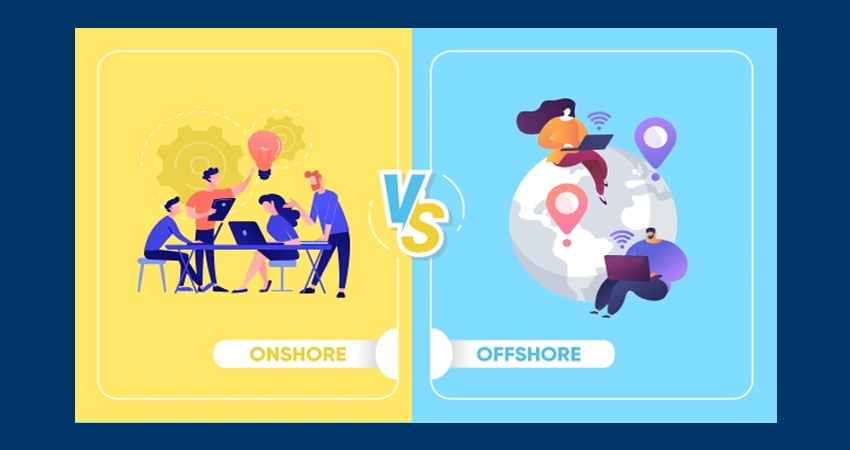
The main difference between onshore outsourcing and offshore outsourcing lies in the location of the service provider. Onshore outsourcing involves working with vendors within the same country, while offshore outsourcing means partnering with companies located in distant countries.
Offshore outsourcing is often chosen for its cost advantages and access to a global talent pool, whereas onshore outsourcing focuses on closer collaboration, cultural alignment, regulatory compliance, and stronger operational oversight.
Below is a comparison of the two outsourcing models to help businesses determine which option best fits their needs.
| Category | Onshore Sourcing | Offshore Sourcing |
|---|---|---|
| Advantages | • Native language communication • Strong cultural alignment • Same time zone collaboration • Easier regulatory compliance • Better project oversight • Stronger protection of intellectual property |
• Lower development costs • Access to global talent pools • Potential for 24/7 operations • Diverse technical expertise • Scalable workforce • Reduced operational expenses |
| Challenges | • Higher service costs • Smaller local talent pool • Higher labor expenses • Limited cost advantages |
• Language barriers • Cultural differences • Time zone challenges • Compliance complexities • Quality control difficulties • Slower communication cycles |
| Best Suited For | • Highly regulated industries • Customer facing services • Projects requiring high security • Complex or sensitive projects • Brand sensitive operations |
• Cost sensitive projects • Back office operations • Large scale development projects • Businesses requiring 24/7 services • Standardized development processes |
| Example | • U.S. companies working with American call centers • Canadian firms partnering with domestic IT providers • UK businesses collaborating with local software developers |
• U.S. companies outsourcing software development to India • European firms using call centers in the Philippines • Australian businesses outsourcing manufacturing to China |
Choosing the Right Model
Both onshore and offshore outsourcing have their own strengths. Businesses that prioritize cost efficiency and scalability may benefit from offshore outsourcing, while organizations that require close collaboration, strong regulatory compliance, and local market understanding may prefer onshore sourcing.
The best choice ultimately depends on factors such as budget, project complexity, communication requirements, and long term strategic goals.
How Many Types of Onshore Outsourcing Services Are There?
Onshore outsourcing services cover a wide range of business functions across different industries. Companies that provide these services can include IT consulting firms, call centers, marketing agencies, legal service providers, and managed service companies. By working with domestic providers, businesses can benefit from local expertise, market understanding, and customized workflows that align with their operational standards.
Below are some of the most common types of onshore outsourcing services:
Customer Support and Contact Centers
Businesses often outsource customer support to local call centers to ensure communication with native language speakers and culturally aligned service agents. This helps improve customer satisfaction through faster response times and clearer communication.
Onshore Software Development
Companies may partner with domestic software development teams to build complex applications or systems. This approach is particularly useful when data security, intellectual property protection, or close collaboration is essential.
Cybersecurity and Data Protection
Organizations that handle sensitive information often outsource cybersecurity services to domestic experts who understand national data protection regulations and security standards.
Accounting and Financial Services
Many businesses rely on local accounting firms to manage payroll, tax compliance, financial reporting, and auditing. Domestic providers help ensure accuracy and adherence to national financial regulations.
Marketing and Creative Services
Onshore marketing agencies help businesses create campaigns that resonate with local audiences and cultural trends, making brand messaging more effective in specific markets.
Project Management and Quality Assurance
Companies may outsource project management or quality assurance tasks to experienced local professionals who can monitor progress, maintain quality standards, and ensure timely delivery.
IT Infrastructure Management
Domestic IT service providers can manage network systems, cloud infrastructure, and hardware support, offering faster on site assistance when technical issues arise.
Overall, onshore outsourcing services allow businesses to leverage local expertise and regulatory familiarity while maintaining close collaboration and operational control.
Read more: Types of IT Outsourcing: Onshore, Offshore, Nearshore
How to Choose the Best Onshore Outsourcing Services for Your Business
Selecting the right onshore outsourcing partner requires careful evaluation to ensure the provider aligns with your business goals, operational needs, and long term growth strategy. The most effective outsourcing partnership goes beyond technical capability it also involves strong communication, industry understanding, and reliable service delivery.
Here are several key steps to help you choose the best onshore outsourcing services for your organization:
1. Define Your Business Objectives
Start by identifying what you want to achieve through outsourcing. Your priorities may include cost efficiency, regulatory compliance, faster project delivery, or access to specialized expertise. Clear goals will help narrow down potential partners.
2. Evaluate Industry Experience
Look for a provider with proven experience in your industry. Vendors who understand your sector can better anticipate challenges, comply with regulations, and deliver solutions that match your business requirements.
3. Assess Communication and Collaboration
Strong communication is essential for successful outsourcing. Ensure the provider has clear communication channels and a collaboration style that fits your internal workflow.
4. Review Security and Compliance Standards
For businesses handling sensitive data, it’s critical to choose a partner that follows strict security protocols and national regulatory requirements. Verify their compliance policies and data protection practices.
5. Check Client References and Reputation
Request case studies or references from existing clients. Speaking with past or current customers can give you valuable insights into the provider’s service quality, reliability, and project management capabilities.
6. Consider Scalability and Flexibility
Your outsourcing partner should be able to adapt as your business grows. Evaluate whether they can scale resources quickly to support increasing workloads or changing project demands.
Read more: Choosing the Right Outsourcing Partner
Partner with HomeNest Software for Reliable Outsourcing Solutions
At HomeNest Software, we believe successful outsourcing partnerships require more than technical expertise they require strategic alignment, clear communication, and a deep understanding of your business objectives.
Our services are designed to support businesses with flexible and scalable technology solutions.
What We Offer
-
Full cycle software development supported by experienced development teams
-
Regulatory compliant IT and data security services
-
Localized project management for efficient agile delivery
-
Flexible engagement models tailored to your budget and project goals
Our goal is to build partnerships that function as a natural extension of your internal team, ensuring transparent communication, aligned objectives, and measurable results that support your business growth.
If you’re ready to explore how the right outsourcing strategy can improve your operations, contact HomeNest Software today for a consultation and discover how our expertise can help accelerate your digital transformation.
Contact Information:
- Address: The Sun Avenue, 28 Mai Chi Tho Street, Binh Trung Ward, Ho Chi Minh City
- Hotline: +84 898 994 298 ( WhatsApp )
- Website: homenest.software
FAQs
1. What is onshore outsourcing?
Onshore outsourcing is the practice of hiring a third party service provider within the same country to handle specific business tasks or operations. Companies often use onshore outsourcing for services such as software development, customer support, IT management, and marketing while maintaining close collaboration and regulatory compliance.
2. What are the main benefits of onshore outsourcing?
Onshore outsourcing offers several advantages, including:
-
Easier communication due to shared language and culture
-
No time zone differences, enabling real time collaboration
-
Better regulatory compliance with local laws
-
Stronger oversight and project control
-
Enhanced protection of sensitive data and intellectual property
3. How does onshore outsourcing differ from offshore outsourcing?
The key difference lies in the location of the service provider.
-
Onshore outsourcing uses vendors located in the same country.
-
Offshore outsourcing involves working with providers in distant countries, usually to reduce costs and access global talent.
While offshore outsourcing focuses on cost savings, onshore outsourcing emphasizes communication efficiency, compliance, and operational control.
4. Which industries benefit most from onshore outsourcing?
Industries that handle sensitive information or require strict regulatory compliance often benefit the most from onshore outsourcing. These include:
-
Finance and banking
-
Healthcare and medical technology
-
Government and public sector
-
Legal services
-
Enterprise technology companies
5. Is onshore outsourcing more expensive than offshore outsourcing?
In many cases, yes. Onshore outsourcing typically has higher labor costs compared to offshore services. However, it can reduce hidden costs related to communication delays, project management challenges, and compliance risks.
For projects that require close collaboration or strict regulatory oversight, onshore outsourcing may provide greater overall value despite higher initial costs.
6. When should a business choose onshore outsourcing?
Businesses should consider onshore outsourcing when they need:
-
Frequent collaboration with the development team
-
Strong regulatory compliance and legal protection
-
Faster communication and real time project updates
-
Local expertise and market understanding
7. How do I find the right onshore outsourcing partner?
To choose the right partner, businesses should evaluate:
-
Industry experience and technical expertise
-
Communication and collaboration processes
-
Security and compliance standards
-
Client reviews and case studies
-
Scalability and long term partnership potential
Selecting a trusted outsourcing provider ensures smoother collaboration and better project outcomes.
Latest Articles
View All
How to Build a Language Learning App Like Cake in 2026
Discover how to build a successful language learning app like Cake with this comprehensive guide from HomeNest Software. We explore market research, essential MVP features, advanced AI integrations, tech stack selection, and estimated development costs. Partner with HomeNest Software to create a scalable, gamified, and highly engaging educational platform tailored to your business goals. Start your app development journey with us today.
How to Build an App Like TaskRabbit: Features, Cost, Tech Stack – Business Model
Building an app like TaskRabbit is more than replicating existing features—it’s about creating a trusted marketplace that seamlessly connects customers with skilled service providers. By combining an intuitive user experience, secure payment systems, scalable architecture, and the right business model, you can launch a competitive on-demand platform. Partnering with an experienced app development company like HomeNest Software ensures your product is built with the technology, flexibility, and long-term scalability needed to succeed in the rapidly growing gig economy.
How to Build a Meal Planning App: A Complete Step-by-Step Guide
Building a successful meal planning app goes beyond creating an attractive interface it requires a clear business strategy, personalized user experiences, and scalable technology. By combining essential features like AI-powered meal recommendations, nutrition tracking, grocery list automation, and wearable integration, businesses can deliver lasting value to users while capitalizing on the growing digital health market. Partnering with an experienced mobile app development company ensures your solution is secure, future-ready, and designed to succeed in an increasingly competitive health-tech industry.
How Much Does It Cost to Build a Shopping App Like Temu?
Temu’s meteoric rise to over 900 million global downloads proves the power of combining AI, gamification, and social commerce, but building a similar viral shopping platform requires careful financial and technical planning. Developing an app like Temu typically costs anywhere from $40,000 for a basic Minimum Viable Product (MVP) to over $300,000 for a fully-featured platform. This guide breaks down every cost category, analyzes the core features driving Temu’s success, highlights the best technology stacks, and offers practical strategies to optimize your development budget without compromising on quality.

Criteria For Choosing The Right App Design Agency
UI/UX design is the logical foundation of a system, not merely a visual element. Choosing the wrong partner will directly lead to technical debt, budget overruns, and disruptions in the development process. This article provides a 6-step evaluation framework and a list of operational risks, helping businesses eliminate subjective design advice and accurately assess agency capabilities based on developer handoff standards and practical business performance.

How Does AI in Banking Industry Impact the Future?
Artificial intelligence (AI) has transitioned from a supplementary tool to a core infrastructure of financial data management, optimizing profitability through real-time fraud detection, natural language processing (NLP), and high-speed credit scoring models. “Deploying AI in the financial sector requires more than just algorithmic accuracy, it demands a highly secure cloud architecture and rigorous data governance,” commented Nguyen Tien, co-founder of HomeNest Software. Why read this guide? We skip the theoretical jargon to focus entirely on technical implementation. Whether you’re evaluating a vendor or planning a system overhaul, this article will detail: Operational Efficiency: Automating unstructured data workflows at scale. Risk Architecture: Implementing real-time threat detection and AML compliance. Data ownership: The essential need for 100% ownership of the source code to ensure full algorithm auditability.