
Software Developer Salary in Singapore: Updated Pay Benchmarks
Scope of Work

Software developer salaries in Singapore remain one of the most searched and widely discussed topics in the tech industry as the market moves into 2026. As a leading digital and financial hub in Asia, Singapore continues to offer attractive compensation for software engineers. However, the actual salary ranges, influencing factors, and long term trends are often misunderstood or oversimplified.
In 2026, average software developer salaries in Singapore typically range from SGD 4,500–6,000 per month for junior developers to SGD 10,000–15,000+ per month for senior or lead engineers. This translates to annual compensation packages from approximately SGD 55,000 to over SGD 180,000, depending on factors such as experience, technical specialization, company size, and industry sector.
These salary levels remain relatively high due to several market dynamics, including ongoing talent shortages in advanced technologies, growing demand for expertise in AI, cloud computing, and fintech, and Singapore’s position as a regional headquarters for global technology companies and financial institutions.
In this article, we provide a data driven overview of software developer salary benchmarks in Singapore for 2026, explore the key factors shaping these compensation trends, and share practical insights for both developers planning their career paths and organizations seeking sustainable strategies to build strong engineering teams.
Average Software Developer Salary in Singapore (Overview)
The average software developer salary in Singapore continues to rank among the highest in Asia, reflecting the country’s strong position as a regional hub for technology, finance, and innovation. In 2026, data from recruitment platforms and industry reports shows that software developers typically earn between SGD 6,000 and SGD 8,500 per month, depending on their role, years of experience, and the sector they work in. On an annual basis, this translates to an estimated SGD 75,000 to SGD 110,000, excluding bonuses and additional benefits.
Looking at the median salary provides a more realistic view of what most developers actually earn. In Singapore, the median monthly salary for software developers is around SGD 6,800 to SGD 7,200, suggesting a strong demand for mid level engineering talent. Higher level roles and specialized technical positions tend to push the overall average upward. Job listings that use titles such as software engineer salary Singapore usually fall within a similar compensation range, as many companies use “software engineer” and “software developer” interchangeably.
It is also important to differentiate between the advertised salary and the total cost of employment. Most job postings highlight base salary, but employers typically incur additional expenses such as CPF contributions, performance bonuses, insurance, training programs, and regulatory compliance costs. For developers, the advertised salary may differ from actual take home income after taxes and mandatory contributions. For companies, these additional costs can significantly influence long term hiring budgets, especially when scaling engineering teams.
Overall, software developer salaries in Singapore remain strong in 2026 due to several factors, including ongoing talent shortages, increasing demand for digital transformation, and rapid growth in areas such as AI, cloud computing, and fintech. While the headline numbers provide a useful snapshot of the market, understanding what they mean in real hiring and career contexts requires deeper analysis.
Salary levels can also vary widely based on experience level, technical specialization, and industry demand factors explored in the sections below.
Read more: Top 10 IT Outsourcing Companies Singapore
Average Software Developer Salary in Singapore by Experience Level

The average software developer salary in Singapore varies significantly depending on experience, as responsibilities, technical ownership, and business impact grow over time. Breaking compensation down by experience level provides a clearer benchmark for both developers planning their careers and companies setting realistic hiring budgets.
| Experience Level | Typical Monthly Salary (SGD) | Approx. Annual Salary (SGD) | Market Notes |
|---|---|---|---|
| Junior (0–2 years) | 4,000 – 6,000 | 50,000 – 72,000 | Entry level roles focused on learning fundamentals and building practical skills |
| Mid Level (2–5 years) | 6,500 – 9,500 | 80,000 – 115,000 | Highly competitive segment with strong demand and faster salary growth |
| Senior & Lead (5+ years) | 10,000 – 15,000+ | 120,000 – 180,000+ | Scarce talent; compensation tied to leadership and system level impact |
This breakdown highlights why salary expectations and actual hiring costs can vary dramatically even when the job title is simply “software developer.”
Junior Developer Salary in Singapore (0–2 Years)
Junior software developers typically have 0–2 years of professional experience and are often recent graduates or professionals transitioning into their first full time engineering roles. In 2026, junior developer salaries in Singapore generally range from SGD 4,000 to SGD 6,000 per month, equivalent to approximately SGD 50,000–72,000 annually, depending on company size, industry, and technical skill set.
At this stage, compensation is influenced less by deep specialization and more by fundamental programming knowledge and learning potential. Employers typically evaluate junior developers based on their ability to learn quickly, write maintainable code, and collaborate effectively with experienced engineers.
Typical characteristics of junior developer roles include:
-
Working on clearly defined tasks such as bug fixes, small feature updates, or testing support
-
Building foundational skills in programming languages, frameworks, and development tools
-
Receiving close mentorship from senior developers or tech leads
-
Having limited responsibility for system architecture or technical decision making
Because companies invest significant time in training and onboarding, salary growth during the first one to two years is usually gradual. Compensation tends to increase more rapidly once developers transition into mid level roles.
Mid Level Developer Salary in Singapore (2–5 Years)
Mid level software developers typically have 2–5 years of professional experience and represent the most competitive segment of the engineering talent market. In 2026, mid level developer salaries in Singapore usually range from SGD 6,500 to SGD 9,500 per month, or approximately SGD 80,000–115,000 per year.
At this stage, developers are expected to operate with greater independence and contribute directly to product delivery. Salary growth at this level is strongly tied to hands on experience, problem solving ability, and the capacity to build production ready systems with minimal supervision.
Typical responsibilities for mid level developers include:
-
Owning features or modules from development through deployment
-
Writing scalable, maintainable code and participating in code reviews
-
Collaborating with product managers, designers, and QA teams
-
Mentoring junior developers and helping maintain engineering standards
Because demand for experienced engineers continues to exceed supply in Singapore, mid level developers often experience faster salary growth than entry level professionals especially when they develop expertise in high demand areas such as cloud platforms, data engineering, fintech infrastructure, or AI systems.
Senior & Lead Developer Salary in Singapore (5+ Years)
Senior and lead software developers typically have 5 or more years of experience and play a crucial role in shaping technical direction and ensuring engineering quality. In 2026, senior developer salaries in Singapore commonly range from SGD 10,000 to SGD 15,000+ per month, equivalent to SGD 120,000–180,000+ annually depending on specialization, leadership scope, and company scale.
At this level, compensation is influenced not only by technical expertise but also by decision making authority and overall business impact. Senior and lead developers are responsible for designing scalable systems, solving complex engineering problems, and ensuring applications meet strict standards for performance, reliability, and security.
Typical responsibilities include:
-
Designing system architecture and making key technical decisions
-
Leading code reviews and setting engineering best practices
-
Mentoring and guiding junior and mid level engineers
-
Working with product leaders and stakeholders on long term technical strategy
Because experienced technical leaders remain in short supply, particularly in fields like cloud native platforms, AI engineering, and fintech infrastructure, competition for senior developers in Singapore remains intense. As a result, salary ceilings at this level are high, and many organizations face increasing challenges in scaling engineering teams relying solely on local senior hires.
Read more: Hire Software Developers to Scale Your IT Outsourcing
Software Developer Salary by Tech Stack & Specialization
While experience plays a major role in compensation, software developer salaries in Singapore also vary widely based on tech stack and specialization. Certain technical skills deliver greater business value and are harder to find locally, which leads companies to offer higher salaries for those capabilities. In 2026, organizations increasingly pay a premium for engineers who can support scalability, security, cloud infrastructure, and advanced data driven systems.
High Demand Tech Stacks (Higher Salary Range)
Developers with expertise in the following areas typically earn above average compensation due to strong market demand and a limited supply of experienced professionals:
-
Cloud & DevOps – AWS, Azure, Google Cloud, Kubernetes, CI/CD pipelines
-
Backend & System Engineering – Java, .NET, Node.js, distributed systems, microservices
-
Data & AI Engineering – Data pipelines, machine learning, advanced analytics
-
Fintech & High Compliance Systems – payment platforms, financial infrastructure, security focused systems
These roles are critical for companies building scalable platforms, handling large data volumes, or operating in regulated industries.
Common Tech Stacks (Moderate Salary Range)
Some development roles remain widely used across industries and offer stable salary ranges, with compensation growth driven primarily by experience and project impact rather than specialization scarcity.
Common stacks include:
-
Frontend development – React, Angular, Vue
-
General full stack development
-
Mobile application development – iOS, Android, and cross platform frameworks such as Flutter or React Native
While these skills are common in the market, experienced developers who demonstrate strong architectural thinking or product ownership can still achieve competitive compensation.
Approximate Salary Comparison by Specialization
| Specialization | Typical Monthly Salary (SGD) | Market Insight |
|---|---|---|
| Frontend Developer | 5,500 – 8,000 | Strong demand but competitive talent pool |
| Backend / Full Stack Developer | 6,500 – 10,000 | Higher value due to system ownership |
| Cloud / DevOps Engineer | 8,000 – 12,000+ | Essential for infrastructure scalability and reliability |
| Data / AI Engineer | 8,500 – 13,000+ | Limited talent supply and strong business impact |
| Fintech / Domain Specialist | 9,000 – 15,000+ | Premium driven by regulatory complexity and system reliability |
In Singapore’s tech ecosystem, salary progression is often driven less by job title and more by the depth of specialization and business relevance of a developer’s skills. Engineers who combine strong technical expertise with domain knowledge such as fintech, AI, or large scale cloud platforms tend to achieve the highest compensation levels.
For companies looking to expand engineering teams, exploring flexible hiring models can provide access to specialized developers while managing long term cost pressure.
What Factors Influence Software Developer Salaries in Singapore?
Software developer salaries in Singapore are influenced by more than just job titles. Compensation can vary widely depending on skills, industry demand, and market dynamics. Understanding these factors helps explain why two developers with similar roles may earn very different salaries.
Several key elements shape salary levels in Singapore’s tech market:
-
Depth of experience and real world impact – Developers who can work independently, architect solutions, and solve complex technical problems tend to command higher salaries than those with similar years of experience but limited project exposure.
-
Technical specialization and skill scarcity – Expertise in high demand areas such as cloud computing, DevOps, data engineering, artificial intelligence, and fintech infrastructure often leads to premium compensation because these skills are harder to source locally.
-
Industry and domain complexity – Developers working in sectors like fintech, healthcare technology, and enterprise software typically receive higher pay due to stricter regulatory requirements, complex systems, and higher reliability standards.
-
Company size and hiring strategy – Large enterprises, multinational tech firms, and well funded startups often offer higher salaries to attract top talent. Smaller companies may provide slightly lower base salaries but offset them with flexibility, equity, or faster career growth opportunities.
-
Local hiring costs and market demand – In Singapore, employers must account for CPF contributions, employee benefits, and competitive hiring conditions. Combined with ongoing talent shortages in advanced technologies, these factors continue to push compensation levels upward.
Overall, these dynamics show why salary benchmarks should be interpreted as ranges rather than fixed numbers. For employers, the total cost of hiring and retaining engineering talent often matters more than base salary alone, while developers benefit most when they build skills that align with strong market demand.
Is the Software Developer Salary in Singapore Worth the Cost?
Whether the software developer salary in Singapore is justified depends largely on business priorities and hiring strategy. From a talent perspective, Singapore provides access to highly skilled developers, strong English communication, and a well established technology ecosystem. For projects that require close collaboration with stakeholders, strict regulatory compliance, or rapid decision making, hiring local developers can deliver significant advantages.
However, these benefits come at a higher cost. Competitive base salaries, combined with employer CPF contributions, employee benefits, and rising operational expenses, mean that the total cost of employing a software developer in Singapore is considerably higher than in many other Asia Pacific markets. As engineering teams grow, these expenses can become a major consideration especially for startups and rapidly scaling companies.
As a result, many organizations are now evaluating whether relying solely on local hiring is sustainable in the long run. While Singapore offers excellent technical talent, companies must balance factors such as productivity, time to market, and scalability against increasing salary levels. This has led many businesses to explore alternative hiring approaches for certain development functions.
In practice, local hiring often makes the most sense for strategic, leadership, or domain critical roles, where proximity to the business and market knowledge are essential. At the same time, a hybrid hiring strategy combining local expertise with offshore or distributed engineering teams can provide a more balanced approach, helping organizations maintain quality while improving cost efficiency and scalability.
A Smarter Alternative: Offshore & Hybrid Development Teams for Singapore Companies
As software developer salaries in Singapore continue to increase, many companies are reconsidering not only who they hire but also how they structure their engineering teams. Depending entirely on local recruitment often means dealing with high salary expectations, long term headcount commitments, and extended hiring timelines costs that can escalate quickly as development teams grow.
One solution that has gained traction is the offshore or hybrid development model, which enables organizations to access skilled engineering talent while maintaining better cost control. When implemented effectively, this approach helps companies optimize the total cost of development, including salaries, recruitment expenses, onboarding time, and long term employment risks. Modern offshore development is no longer simply about low cost outsourcing; instead, it focuses on strategic talent distribution and operational flexibility. Countries such as Vietnam, for example, have built strong technology ecosystems with experienced engineers and proven track records in supporting international projects.
A hybrid development structure combines the advantages of local and offshore teams. Key roles such as product managers, solution architects, and project leads remain in Singapore to ensure alignment with business goals and stakeholders. Meanwhile, offshore teams handle tasks like software development, quality assurance, and system maintenance, enabling companies to increase output while keeping operational costs more predictable.
This model is particularly beneficial for organizations aiming to:
-
Expand development capacity without significantly increasing fixed salary costs
-
Allocate budgets strategically based on role importance rather than geographic location
-
Access specialized technical skills that may be limited or expensive in the local market
-
Reduce hiring risks while maintaining delivery speed and engineering quality
For many Singapore based companies, offshore and hybrid teams offer a practical way to stay competitive supporting sustainable growth and innovation without being constrained by rising local salary levels.
How HomeNest Software Helps Singapore Companies Optimize Development Costs

As a trusted software development partner for Singapore businesses, HomeNest Software supports organizations in building and scaling engineering teams without being constrained by rising local salary structures. Rather than relying on a rigid outsourcing approach, HomeNest Software provides flexible delivery models designed to balance cost efficiency, engineering quality, and long term scalability.
Flexible Hybrid and Dedicated Team Models
HomeNest Software enables companies to adopt hybrid development structures, where strategic roles such as product owners, architects, or product managers remain in Singapore, while offshore engineering teams handle development and delivery tasks. This approach allows businesses to maintain close alignment with stakeholders while significantly reducing overall hiring costs.
Access to a Large, Skilled Engineering Talent Pool
Companies can leverage a network of 100+ experienced engineers with expertise across modern technology domains, including cloud infrastructure, data platforms, artificial intelligence, fintech systems, and enterprise applications. This helps organizations avoid the delays and salary premiums often associated with scarce local talent.
Scalable Team Structures
With flexible engagement models, companies can scale development teams up or down quickly based on project needs. This eliminates many of the fixed costs and long term commitments that typically come with expanding full time local teams.
Proven Delivery Processes
HomeNest Software follows structured development workflows, transparent communication practices, and agile delivery methods. With experience supporting international and Singapore based clients, the company ensures consistent output quality and predictable project timelines.
Cost Optimization Without Compromising Quality
By focusing on efficient resource allocation and measurable business outcomes, HomeNest Software helps companies optimize development budgets while maintaining high engineering standards.
Through a combination of technical expertise, scalable team models, and cost effective delivery, HomeNest Software enables Singapore organizations to accelerate product development, maintain operational flexibility, and remain competitive in an increasingly demanding technology market.
Conclusion
In 2026, software developer salaries in Singapore remain among the highest in Asia, fueled by strong demand for technical talent, ongoing skill shortages, and the rapid expansion of technologies such as cloud computing, artificial intelligence, and fintech. While these high salaries reflect the strength and maturity of Singapore’s technology ecosystem, they also create practical challenges for companies aiming to scale engineering teams efficiently.
For many organizations, the central question is no longer simply whether to hire local developers, but how to balance technical capability, hiring costs, and long term scalability. Understanding salary benchmarks, the factors that influence them, and the full cost of employment helps companies make more informed decisions whether they are hiring for strategic in house roles or expanding larger development teams.
Many businesses are increasingly adopting hybrid team structures, combining local leadership and product roles with offshore development capacity. This model allows companies to maintain high engineering standards while keeping operational costs manageable.
By adopting a balanced hiring strategy, Singapore companies can remain competitive, accelerate innovation, and build resilient engineering teams capable of supporting long term growth in an increasingly demanding global technology market.
Contact Information:
- Address: The Sun Avenue, 28 Mai Chi Tho Street, Binh Trung Ward, Ho Chi Minh City
- Hotline: +84 898 994 298 ( WhatsApp )
- Website: homenest.software
FAQ: Software Developer Salaries in Singapore
What is the average software developer salary in Singapore in 2026?
The average software developer salary in Singapore in 2026 typically ranges between SGD 6,000 and SGD 8,500 per month, depending on experience, industry, and technical specialization. On an annual basis, this is roughly SGD 75,000 to SGD 110,000, excluding bonuses and additional benefits.
How much do junior software developers earn in Singapore?
Junior software developers with 0–2 years of experience generally earn SGD 4,000 to SGD 6,000 per month, or around SGD 50,000–72,000 per year. Salaries may vary depending on company size, programming skills, and the industry they work in.
What is the salary for senior software developers in Singapore?
Senior or lead developers with 5+ years of experience usually earn SGD 10,000 to SGD 15,000+ per month. This translates to annual compensation packages ranging from SGD 120,000 to over SGD 180,000, especially for roles involving technical leadership or specialized expertise.
Which tech skills command the highest developer salaries in Singapore?
Developers with expertise in cloud computing (AWS, Azure, GCP), DevOps, data engineering, artificial intelligence, and fintech systems often command the highest salaries. These skills are in high demand and relatively scarce in Singapore’s technology market.
Why are software developer salaries so high in Singapore?
Developer salaries are high in Singapore due to strong demand for digital talent, limited local supply of experienced engineers, and the country’s role as a regional hub for global technology and financial companies. High living costs and employer obligations such as CPF contributions also influence salary levels.
Are offshore development teams a viable option for Singapore companies?
Yes. Many Singapore companies adopt offshore or hybrid development models to balance cost and access to talent. By keeping strategic roles locally and working with offshore engineering teams, organizations can scale development capacity while maintaining quality and controlling long term costs.
Latest Articles
View All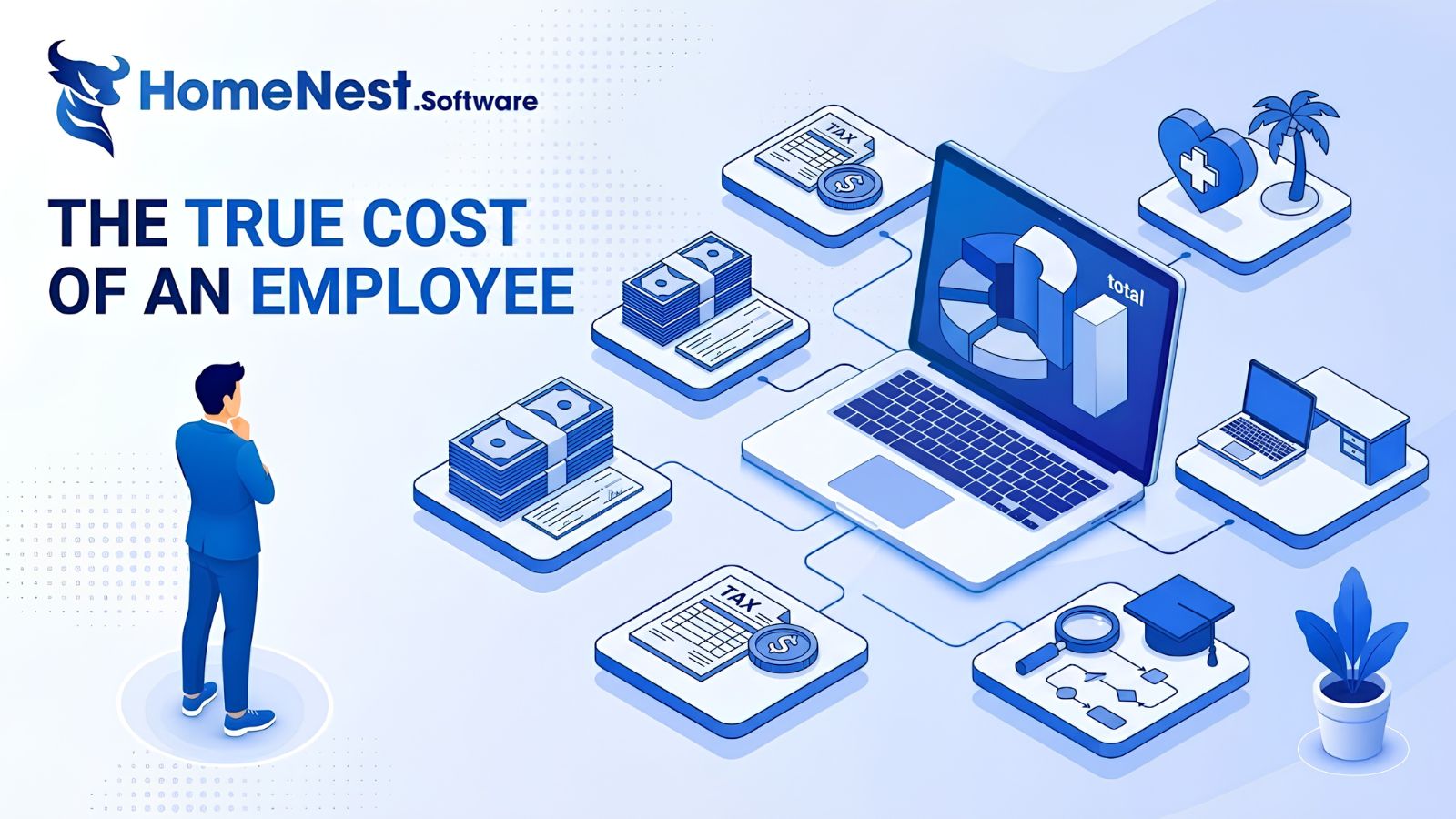
The True Cost of an Employee: A Complete Breakdown for Employers
This article reveals that the true cost of an employee is typically 25% to 40% higher than their base salary due to hidden expenses like taxes, benefits, workspace, and recruiting. To address this, the guide provides a detailed 7-step framework to accurately calculate total employer costs, alongside actionable strategies to optimize budgets and improve retention without reducing pay.
Essential Tips To Develop A Music Streaming App
Discover expert tips to develop a successful music streaming app with HomeNest Software. This guide covers essential features, legal licensing, and scalable technology stacks. Learn how to build a robust, cross-platform application with AI personalization to stand out in the 2026 competitive audio market.

How to Build a Language Learning App Like Cake
Discover how to build a successful language learning app like Cake with this comprehensive guide from HomeNest Software. We explore market research, essential MVP features, advanced AI integrations, tech stack selection, and estimated development costs. Partner with HomeNest Software to create a scalable, gamified, and highly engaging educational platform tailored to your business goals. Start your app development journey with us today.
How to Build an App Like TaskRabbit: Features, Cost, Tech Stack – Business Model
Building an app like TaskRabbit is more than replicating existing features—it’s about creating a trusted marketplace that seamlessly connects customers with skilled service providers. By combining an intuitive user experience, secure payment systems, scalable architecture, and the right business model, you can launch a competitive on-demand platform. Partnering with an experienced app development company like HomeNest Software ensures your product is built with the technology, flexibility, and long-term scalability needed to succeed in the rapidly growing gig economy.
How to Build a Meal Planning App: A Complete Step-by-Step Guide
Building a successful meal planning app goes beyond creating an attractive interface it requires a clear business strategy, personalized user experiences, and scalable technology. By combining essential features like AI-powered meal recommendations, nutrition tracking, grocery list automation, and wearable integration, businesses can deliver lasting value to users while capitalizing on the growing digital health market. Partnering with an experienced mobile app development company ensures your solution is secure, future-ready, and designed to succeed in an increasingly competitive health-tech industry.

How Much Does It Cost to Build a Shopping App Like Temu?
Temu’s meteoric rise to over 900 million global downloads proves the power of combining AI, gamification, and social commerce, but building a similar viral shopping platform requires careful financial and technical planning. Developing an app like Temu typically costs anywhere from $40,000 for a basic Minimum Viable Product (MVP) to over $300,000 for a fully-featured platform. This guide breaks down every cost category, analyzes the core features driving Temu’s success, highlights the best technology stacks, and offers practical strategies to optimize your development budget without compromising on quality.