
Top 5 HealthTech Development Firms Transforming Singapore’s Healthcare Ecosystem
Singapore is rapidly advancing as a HealthTech leader, where AI, IoT, and digital platforms are transforming how healthcare is delivered and managed. As demand grows for scalable, secure, and patient-centric solutions, choosing the right development partner becomes critical. The right HealthTech firm not only ensures compliance and innovation but also helps organizations build future-ready systems that improve outcomes and drive long-term impact.
Scope of Work

HealthTech development firms in Singapore are reshaping the healthcare landscape in response to an aging population and rising system pressures. By 2030, an estimated 25% of Singaporeans will be over the age of 65 up significantly from just 10% in 2010 highlighting the urgent need for more efficient, scalable care solutions.
In 2026, HealthTech is driving a fundamental shift in how healthcare is delivered, accessed, and managed. From AI powered diagnostics and remote patient monitoring to blockchain secured medical records and telemedicine platforms, technology is redefining the future of care across the nation.
At the center of this transformation are specialized HealthTech development firms that go beyond building applications. They design intelligent, secure, and scalable systems tailored to real world healthcare challenges. In this article, we highlight five of the most impactful HealthTech development companies in Singapore including HomeNest Software that are advancing care delivery and setting new standards for modern healthcare.
HealthTech as the Engine of a New Healthcare Model
HealthTech development firms are at the core of Singapore’s healthcare transformation. The digital health market reached USD 671 million in 2024 and is projected to grow at a 16% CAGR, surpassing USD 1.27 billion by 2029. This rapid expansion reflects a broader shift toward more connected, efficient, and patient centric care models.
A key trend is the rise of home based digital healthcare. Companies like Speedoc are leveraging AI to triage patients, detect early health risks, and streamline care delivery while ensuring that clinical decisions remain in the hands of qualified medical professionals. This balance between AI driven efficiency and human expertise is shaping the next generation of healthcare in Singapore.
Why HealthTech Is Booming in Singapore
Singapore’s HealthTech ecosystem has expanded significantly, growing from around 140 startups in 2018 to over 400 by 2026, accounting for nearly 9% of Asia’s total HealthTech landscape. In 2026 alone, health and biotech companies attracted approximately USD 342 million in funding, underscoring strong investor confidence in the sector.
Government support has played a pivotal role in this growth. Initiatives such as Healthier SG and the Sandbox Licensing Framework have accelerated innovation by enabling controlled experimentation and faster deployment of new solutions. Combined with Singapore’s advanced digital infrastructure and high levels of public trust, these factors have created an ideal environment for rapid adoption.
Behavioral technologies are also delivering measurable outcomes. A 2024 GovTech pilot involving 84,000 users demonstrated that AI driven nudging applications increased daily step counts by 6.17% and weekly physical activity by 7.61%.
Together, these developments are shaping a healthcare model that is increasingly data driven, preventive, and human centered where technology enhances care without replacing the human touch.
Top 5 HealthTech Development Firms in Singapore (2026)
1. Doctor Anywhere
Doctor Anywhere has grown from a telehealth startup into one of Southeast Asia’s most comprehensive digital healthcare platforms. It connects patients with licensed doctors, wellness specialists, and chronic care services through a single integrated ecosystem. By combining teleconsultation, e pharmacy, insurance, and diagnostics, the platform streamlines the entire patient journey. As of 2026, it serves millions of users across multiple countries, with continued investment in AI driven triage, real time consultations, and secure regional infrastructure.
2. HomeNest Software
HomeNest Software is more than a development firm it is a strategic partner for HealthTech innovation. With headquarters in Ho Chi Minh City and strong operations in Singapore, the company delivers scalable, secure, and compliant healthcare solutions, including custom EHR systems, AI powered diagnostics, IoT platforms for eldercare, and blockchain based medical records.
What differentiates HomeNest Software is its combination of deep technical expertise, agile delivery, and global execution capabilities. Backed by a team of over +100 engineers, designers, and healthcare specialists, the company supports clients across the full lifecycle from concept to post launch optimization.
3. Docquity
Docquity has evolved into Southeast Asia’s largest professional network for healthcare practitioners, serving over 400,000 doctors. Beyond networking, it enables knowledge sharing, peer collaboration, and continuous medical education (CME). Its platform integrates secure messaging, teleconsultation tools, and analytics that help healthcare organizations better understand clinician behavior and training needs.
4. KINEXCS
KINEXCS specializes in digital health solutions for musculoskeletal rehabilitation and eldercare monitoring. Its flagship wearable device, KIMIA, provides real time biofeedback, allowing clinicians to track recovery and adjust treatment remotely. Supported by clinical research and partnerships with leading hospitals, KINEXCS is improving patient outcomes while reducing hospital readmissions especially for elderly populations.
5. Holmusk
Holmusk focuses on transforming mental healthcare through data driven innovation. Its flagship platform, MindLinc, is a specialized EHR for behavioral health, enabling more accurate diagnosis, personalized treatment, and predictive insights. By building large scale real world data platforms, Holmusk supports both clinical decision making and pharmaceutical research, positioning itself at the intersection of healthcare and advanced analytics.
Read more: AI in Healthcare in Singapore: Key Benefits, Real Use Cases, and Future Trends
How to Choose the Right HealthTech Development Partner
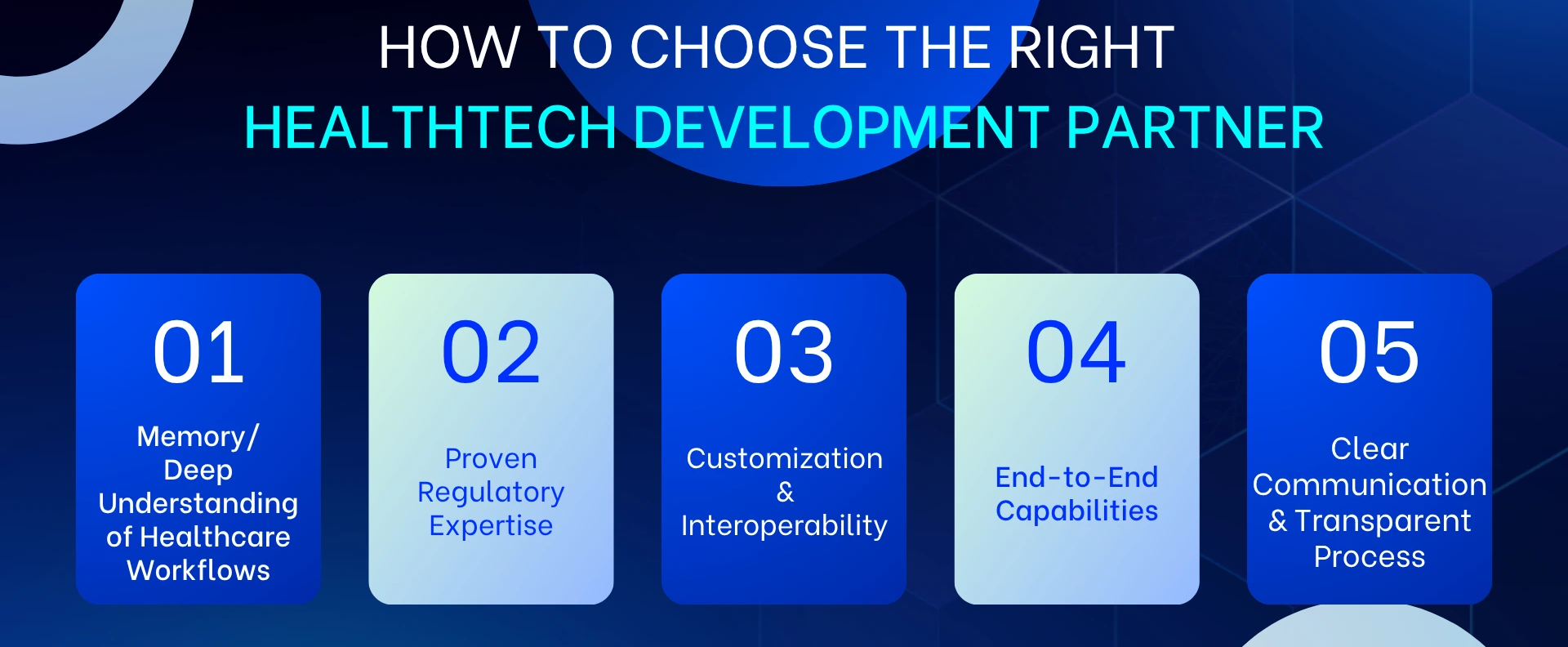
Not every software vendor is equipped to operate in the healthcare domain. In an industry where accuracy, compliance, and patient safety are paramount, selecting the right HealthTech development partner requires a strategic evaluation beyond technical capability. Here are the key factors to consider:
1. Deep Understanding of Healthcare Workflows
Healthcare systems are inherently complex. A qualified partner must understand how clinicians, administrators, and patients interact across processes such as EHR integration, medical billing, clinical decision support, and patient onboarding. The right partner prioritizes understanding your operational workflows not just your feature requirements.
2. Proven Regulatory Expertise
Compliance is non negotiable in healthcare. Your partner should have hands on experience with standards such as HIPAA, HL7, GDPR, and Singapore’s PDPA. They must be capable of embedding security best practices such as end to end encryption, role based access control, and audit logging into the system architecture from the outset.
3. Customization and Interoperability
Healthcare platforms must integrate seamlessly with existing systems, from hospital ERPs to wearable devices and third party applications. A strong partner delivers modular, API driven solutions that are flexible, scalable, and future ready avoiding rigid architectures that limit growth.
4. End to End Development Capabilities
From initial concept and design to deployment and long term maintenance, an effective partner should manage the entire software lifecycle. This includes ongoing support, scalability enhancements, and continuous improvements based on regulatory updates and real user feedback.
5. Transparent Communication and Delivery Process
In HealthTech, even minor misalignments can lead to compliance risks or operational inefficiencies. A reliable partner maintains clear communication, detailed documentation, defined timelines, and proactive risk management while involving your internal stakeholders throughout the process.
Read more: App Developers in Singapore: How HomeNest Software Drives Digital Transformation
Why HomeNest Software Is a Trusted Choice
HomeNest Software stands out not only for its technical capabilities but for its approach to building impactful healthcare solutions. Positioned at the intersection of healthcare and innovation, the company combines robust engineering with strategic insight to help providers, startups, and enterprises solve complex digital health challenges.
In a highly regulated and mission critical industry, meeting compliance standards is just the baseline. HomeNest Software goes further by delivering solutions that are scalable, secure, and genuinely patient centric. With deep expertise in medical data workflows, AI powered diagnostics, and blockchain based patient records, the team develops platforms that not only meet industry requirements but also elevate the standard of care delivery.
The Bigger Picture: Why the Right HealthTech Development Partner Matters
Developing healthcare technology goes far beyond writing efficient code or designing intuitive interfaces it is about building trust, ensuring compliance, and delivering real world impact. In healthcare, the margin for error is minimal. System failures, data breaches, or inaccurate outputs can have serious consequences, making the choice of a development partner a critical strategic decision.
Unlike conventional software projects, healthcare solutions operate within a highly regulated, complex, and human centric ecosystem. Development teams must collaborate with a wide range of stakeholders including clinicians, IT departments, regulators, administrators, and patients each with distinct requirements and expectations.
However, true value lies not just in meeting compliance standards, but in delivering forward thinking innovation. A strong HealthTech partner brings strategic insight anticipating future needs rather than simply executing current requirements. This includes leveraging AI to enhance clinical decision making, applying blockchain to secure and streamline data exchange, utilizing IoT for remote monitoring and eldercare, and empowering patients through digital health tools.
The companies highlighted in this article represent the forefront of Singapore’s HealthTech ecosystem. They are recognized not only for technical excellence, but for their ability to bridge healthcare and technology effectively. Among them, HomeNest Software stands out for its combination of deep engineering expertise, agile delivery approach, and global execution capabilities.
The future of healthcare is not just digital it is collaborative, intelligent, and highly personalized. To build this future, organizations need more than a technology vendor; they need a strategic partner. With a proven track record, cross functional expertise, and a strong commitment to human centered design, HomeNest Software is helping healthcare innovators shape the next generation of care one solution at a time.
Conclusion
The future of healthcare is not shaped solely in boardrooms or conferences it is being built every day through code, secure data architectures, and the digital platforms that empower clinicians to deliver better care. Singapore is already at the forefront of HealthTech adoption in Southeast Asia, and with the right development partners, it has the potential to lead on a global scale.
As highlighted by the companies in this article, meaningful transformation comes not from hype, but from consistent execution, patient centric design, and technology that adapts to real world healthcare complexities.
If your organization is ready to build the next generation of healthcare solutions whether it’s a telehealth platform, AI driven diagnostics, wearable integrations, or blockchain secured medical records HomeNest Software is ready to partner with you. With deep technical expertise, full stack capabilities, and a proven track record in digital health, HomeNest Software helps turn ideas into scalable, high impact solutions.
Explore how HomeNest Software can help you build secure, intelligent, and future ready healthcare systems.
Contact Information:
- Address: The Sun Avenue, 28 Mai Chi Tho Street, Binh Trung Ward, Ho Chi Minh City
- Hotline: +84 898 994 298 ( WhatsApp )
- Website: homenest.software
FAQs
What is HealthTech and why is it important?
HealthTech refers to the use of technology such as AI, IoT, and digital platforms to improve healthcare delivery, patient outcomes, and operational efficiency. It is essential for addressing rising healthcare demands and improving access to care.
Why is Singapore a leader in HealthTech?
Singapore combines strong government support, advanced digital infrastructure, high public trust, and a robust regulatory framework making it an ideal environment for HealthTech innovation.
What types of solutions do HealthTech development firms build?
They develop telemedicine platforms, electronic health record (EHR) systems, AI powered diagnostics, remote patient monitoring tools, wearable integrations, and blockchain based medical data systems.
What regulations must HealthTech solutions comply with?
Common standards include Singapore’s PDPA, HIPAA (for international projects), GDPR, and healthcare interoperability standards like HL7 and FHIR.
How long does it take to build a HealthTech solution?
Development timelines vary, but most projects take 3–6 months for an MVP and longer for full scale, enterprise grade systems.
What challenges do healthcare organizations face in digital transformation?
Key challenges include data privacy, system integration with legacy infrastructure, regulatory compliance, and ensuring user adoption among medical staff and patients.
What should you look for in a HealthTech development partner?
Look for domain expertise, compliance knowledge, scalability, security capabilities, and experience in building patient centric solutions.
Why choose HomeNest Software for HealthTech development?
HomeNest Software offers end to end HealthTech solutions with expertise in AI, IoT, and blockchain ensuring secure, scalable, and compliant platforms tailored to real healthcare needs.
Latest Articles
View All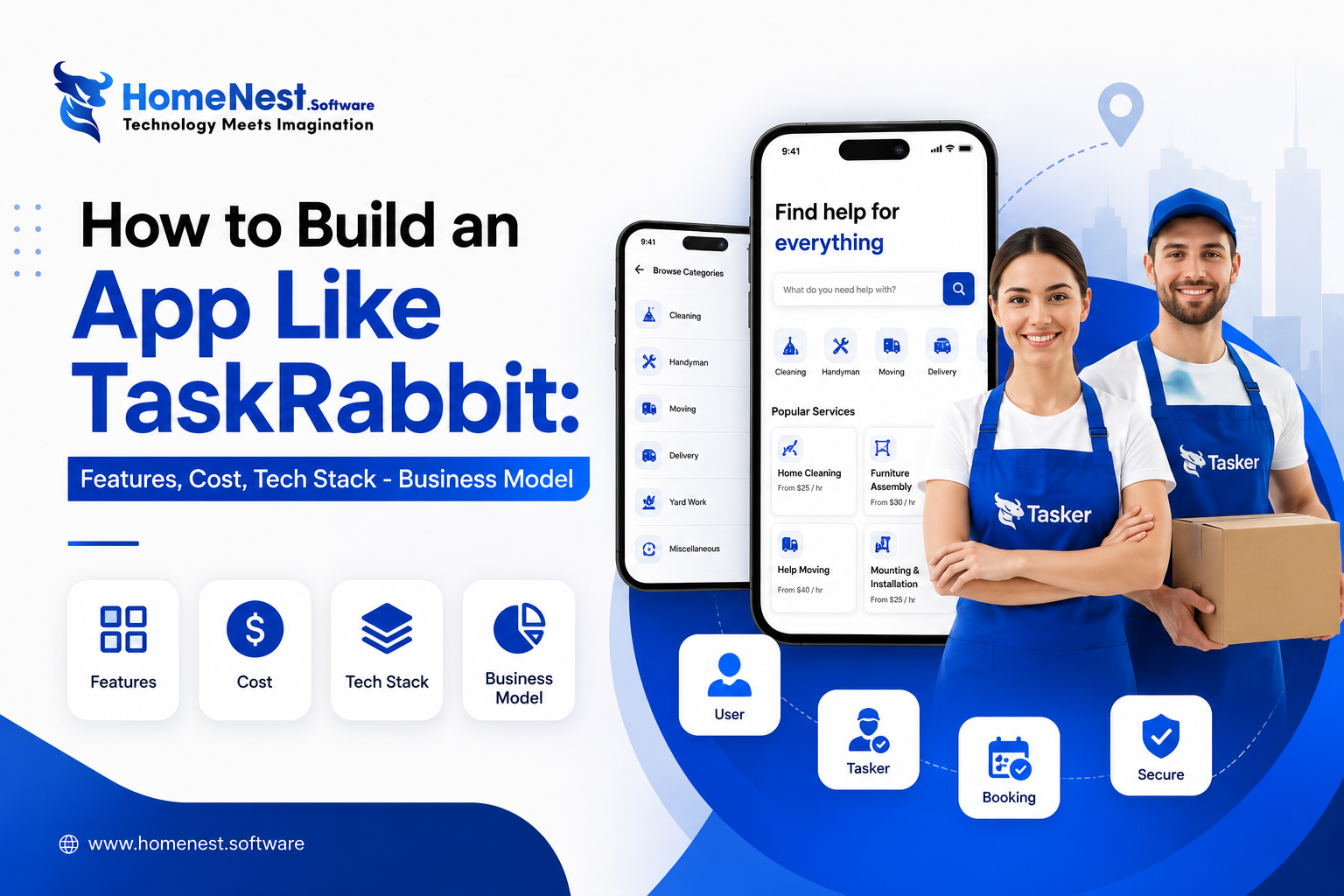
How to Build an App Like TaskRabbit: Features, Cost, Tech Stack – Business Model
Building an app like TaskRabbit is more than replicating existing features—it’s about creating a trusted marketplace that seamlessly connects customers with skilled service providers. By combining an intuitive user experience, secure payment systems, scalable architecture, and the right business model, you can launch a competitive on-demand platform. Partnering with an experienced app development company like HomeNest Software ensures your product is built with the technology, flexibility, and long-term scalability needed to succeed in the rapidly growing gig economy.
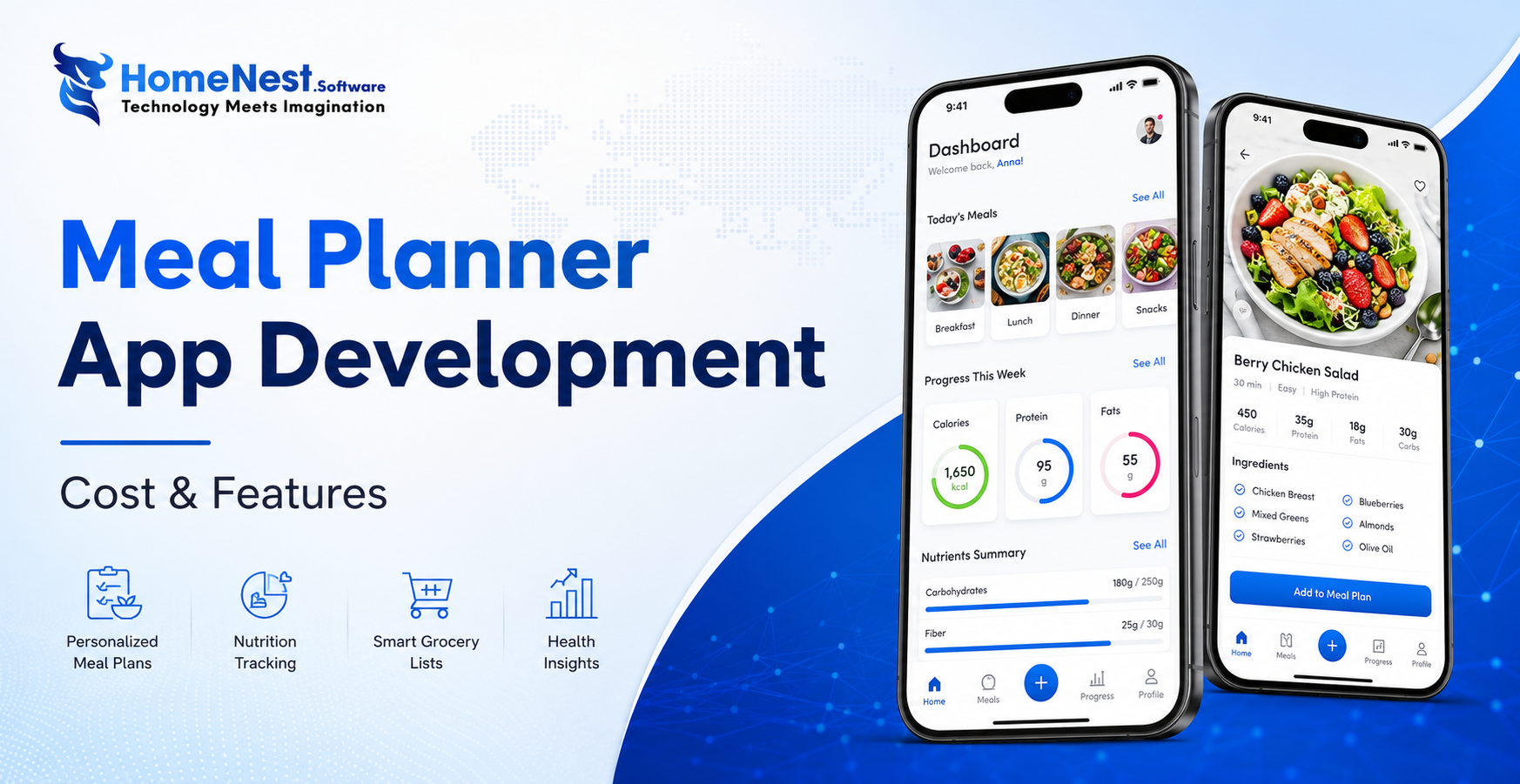
How to Build a Meal Planning App: A Complete Step-by-Step Guide
Building a successful meal planning app goes beyond creating an attractive interface it requires a clear business strategy, personalized user experiences, and scalable technology. By combining essential features like AI-powered meal recommendations, nutrition tracking, grocery list automation, and wearable integration, businesses can deliver lasting value to users while capitalizing on the growing digital health market. Partnering with an experienced mobile app development company ensures your solution is secure, future-ready, and designed to succeed in an increasingly competitive health-tech industry.

How Much Does It Cost to Build a Shopping App Like Temu?
Temu’s meteoric rise to over 900 million global downloads proves the power of combining AI, gamification, and social commerce, but building a similar viral shopping platform requires careful financial and technical planning. Developing an app like Temu typically costs anywhere from $40,000 for a basic Minimum Viable Product (MVP) to over $300,000 for a fully-featured platform. This guide breaks down every cost category, analyzes the core features driving Temu’s success, highlights the best technology stacks, and offers practical strategies to optimize your development budget without compromising on quality.

Criteria For Choosing The Right App Design Agency
UI/UX design is the logical foundation of a system, not merely a visual element. Choosing the wrong partner will directly lead to technical debt, budget overruns, and disruptions in the development process. This article provides a 6-step evaluation framework and a list of operational risks, helping businesses eliminate subjective design advice and accurately assess agency capabilities based on developer handoff standards and practical business performance.

How Does AI in Banking Industry Impact the Future?
Artificial intelligence (AI) has transitioned from a supplementary tool to a core infrastructure of financial data management, optimizing profitability through real-time fraud detection, natural language processing (NLP), and high-speed credit scoring models. “Deploying AI in the financial sector requires more than just algorithmic accuracy, it demands a highly secure cloud architecture and rigorous data governance,” commented Nguyen Tien, co-founder of HomeNest Software. Why read this guide? We skip the theoretical jargon to focus entirely on technical implementation. Whether you’re evaluating a vendor or planning a system overhaul, this article will detail: Operational Efficiency: Automating unstructured data workflows at scale. Risk Architecture: Implementing real-time threat detection and AML compliance. Data ownership: The essential need for 100% ownership of the source code to ensure full algorithm auditability.
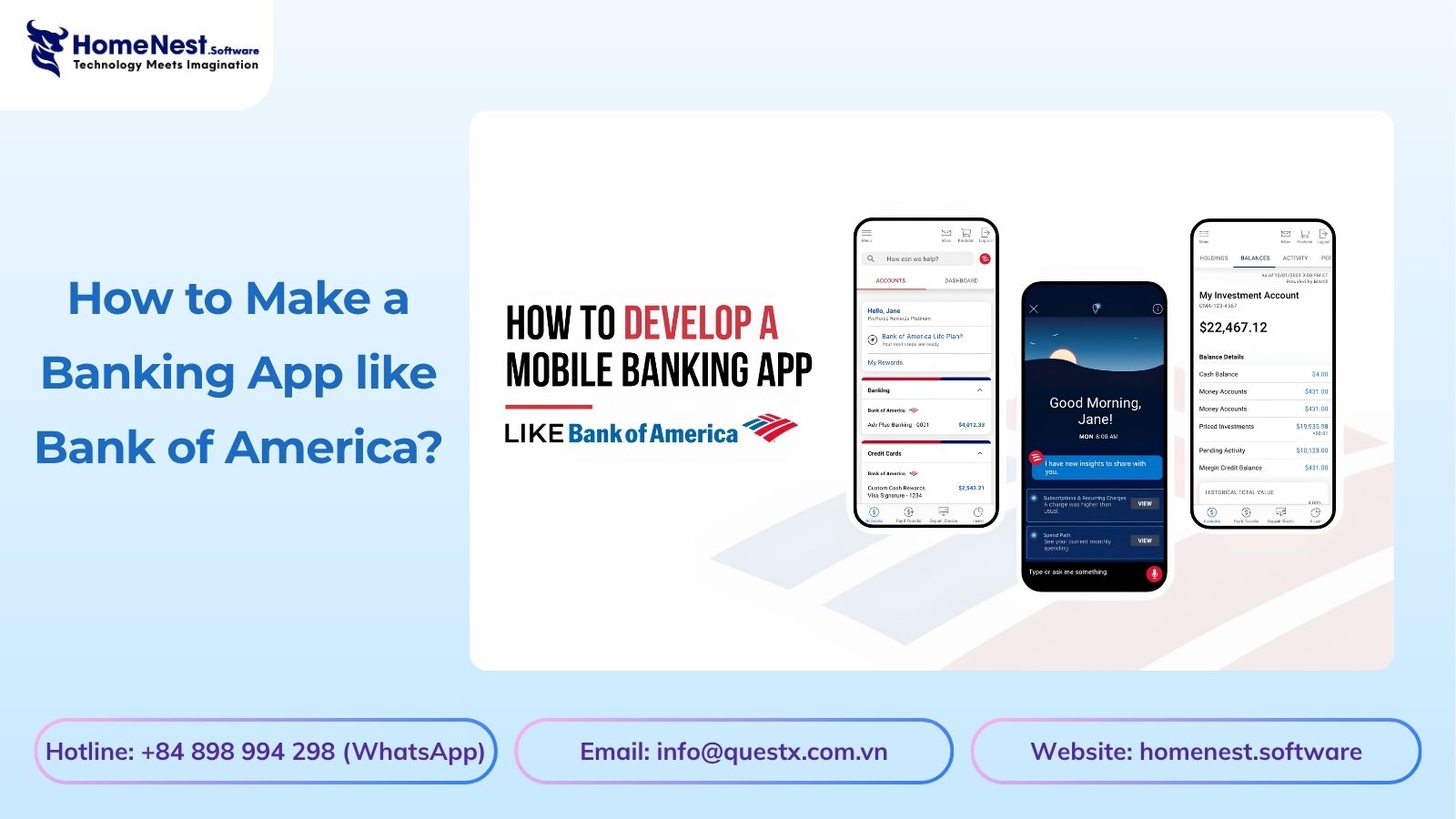
How to Make a Banking App like Bank of America?
Developing a mobile banking application like Bank of America extends far beyond basic UI design; it requires engineering a fault-tolerant backend capable of real-time ledger synchronization, biometric authentication, and high-volume data processing under strict regulatory frameworks. Drawing from HomeNest Software’s deep experience in architecting enterprise-grade fintech solutions, this guide strips away theoretical jargon to focus entirely on operational and technical execution. What you will find in this guide: We break down the precise development roadmap, from mapping out microservices and ensuring PCI-DSS compliance to estimating MVP development costs and securing absolute data sovereignty through 100% source code ownership. If you are preparing to build, scale, or audit a financial platform, this blueprint provides the exact framework you need.