
Top Custom Healthcare Software Development Companies
This technical guide categorizes the top healthcare software development companies, distinguishing between enterprise platform giants and specialized custom engineering partners. Bypassing generic feature lists, the article analyzes the critical architectural capabilities required for successful medical software integration, including FHIR interoperability, HIPAA-compliant cloud infrastructure, and legacy system modernization. HomeNest Software provides healthcare executives with an objective evaluation framework to select the right technical vendor for their specific clinical workflow demands.
Scope of Work
What tangible value do custom healthcare software development companies deliver to modern healthcare systems? And why are organizations allocating increasing budgets to these solutions?
This article breaks down the strategic advantages, highlights leading providers, and examines real world success cases driving adoption.
What Is Custom Healthcare Software Development?
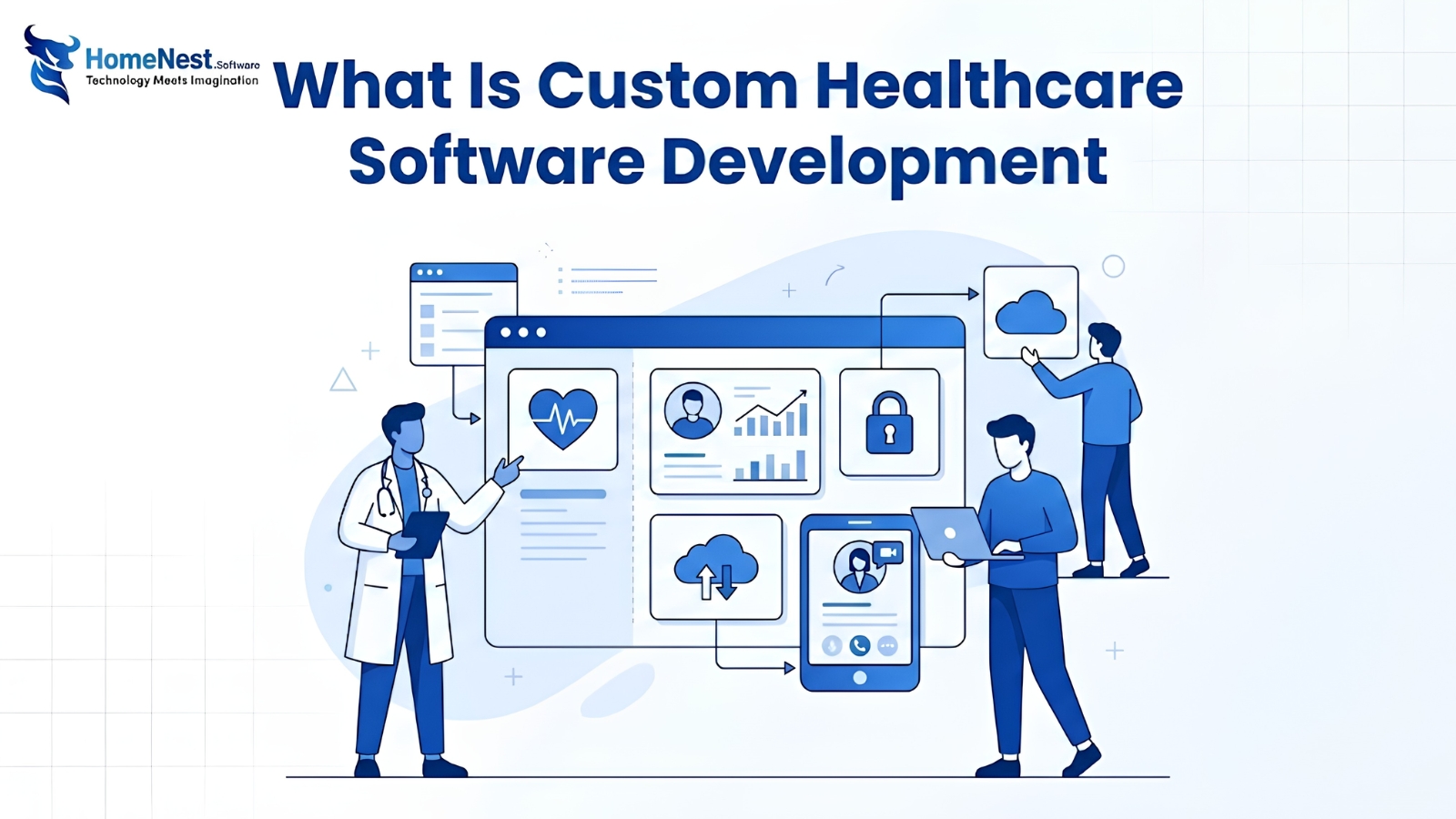
Healthcare executives frequently face the “Build vs. Buy” dilemma. While off-the-shelf platforms offer standard functionalities, they often force hospitals to alter their clinical workflows to fit the software.
Custom healthcare software development bridges this gap. Instead of replacing core systems, specialized engineering firms architect middleware, custom patient portals, and automated diagnostic workflows that integrate seamlessly with legacy infrastructures. This article categorizes the top healthcare development vendors into enterprise platform providers and specialized custom engineering partners, helping you select the precise technical expertise your infrastructure requires.
Benefits of Custom Healthcare Software
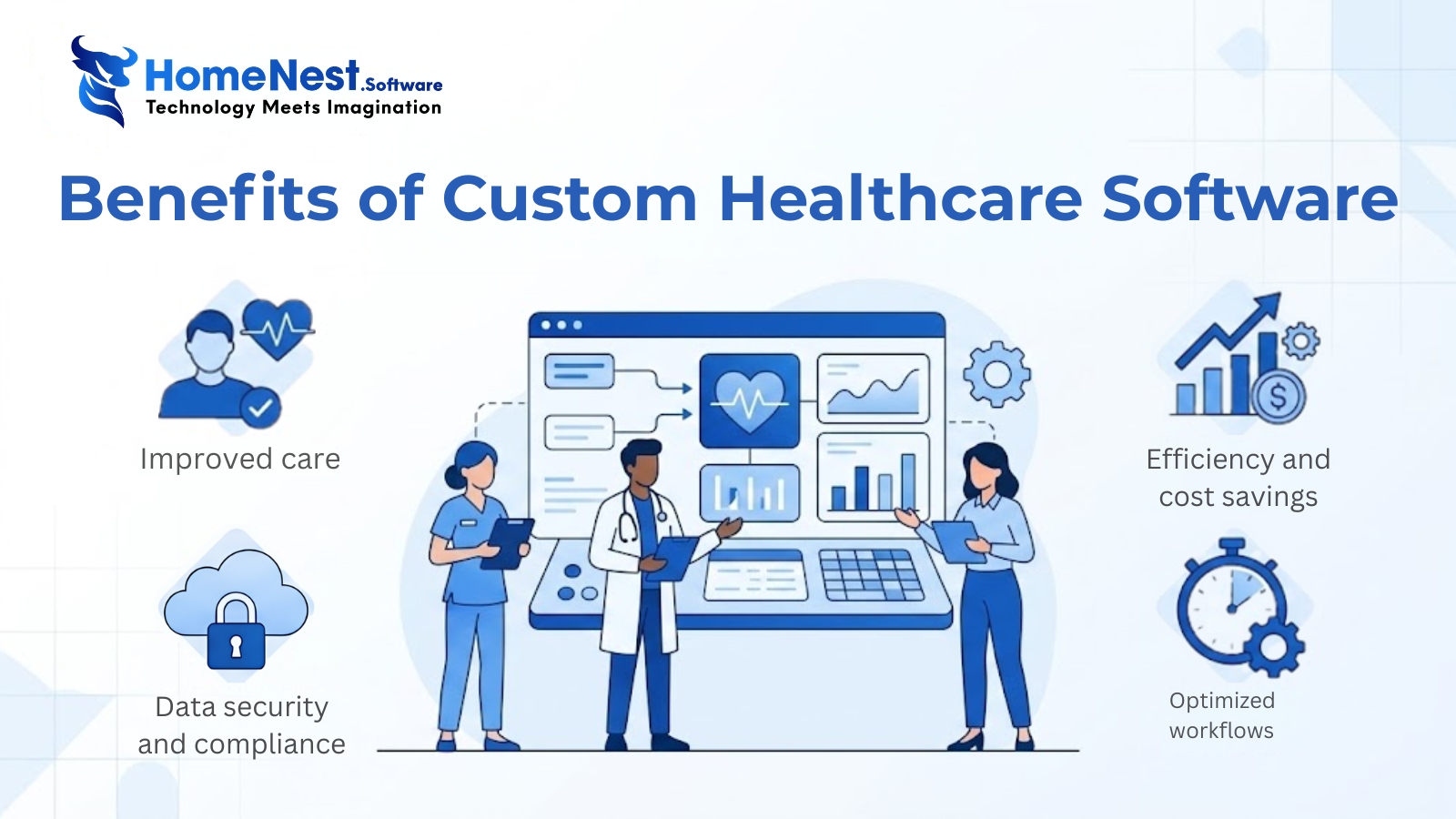
Enhancing Patient Care with Tailored Solutions
Custom healthcare software significantly improves clinical outcomes by equipping providers with intelligent, data driven tools. Decision support systems enable doctors to make faster and more accurate diagnoses by delivering real time insights into patient conditions.
At the same time, customized electronic health record (EHR) platforms ensure that patient data is consistently updated and easily accessible across departments. This reduces information silos and supports more coordinated, patient centered care.
Research from HIMSS Analytics shows that hospitals adopting EHR systems have achieved notable reductions in medical errors alongside measurable improvements in care quality.
Streamlining Operations and Improving Efficiency
Custom solutions help healthcare organizations optimize workflows, minimize administrative burdens, and improve overall efficiency. By automating repetitive processes, providers can reduce patient wait times and allow staff to focus on higher value tasks.
For example, a patient management system (PMS) can handle appointment scheduling, patient registration, and automated reminders. It can also integrate billing and insurance verification into a unified workflow, reducing manual errors and saving operational time.
According to Grand View Research, the global healthcare IT market is expected to grow at a CAGR of 15.8% from 2024 to 2030, largely driven by the demand for greater operational efficiency.
Ensuring Compliance and Data Security
Compliance and data protection are critical in healthcare environments. Custom software is designed to meet strict regulatory requirements such as HIPAA and GDPR, ensuring that sensitive patient information is handled securely.
These systems typically incorporate advanced security features, including encryption, role based access control, and audit trails. This ensures that only authorized personnel can access critical data while maintaining full traceability of system activity.
In practice, custom healthcare software not only enhances service quality and operational performance but also ensures long term compliance and trust creating sustainable value for both providers and patients.
Leading Custom Healthcare Software Development Companies
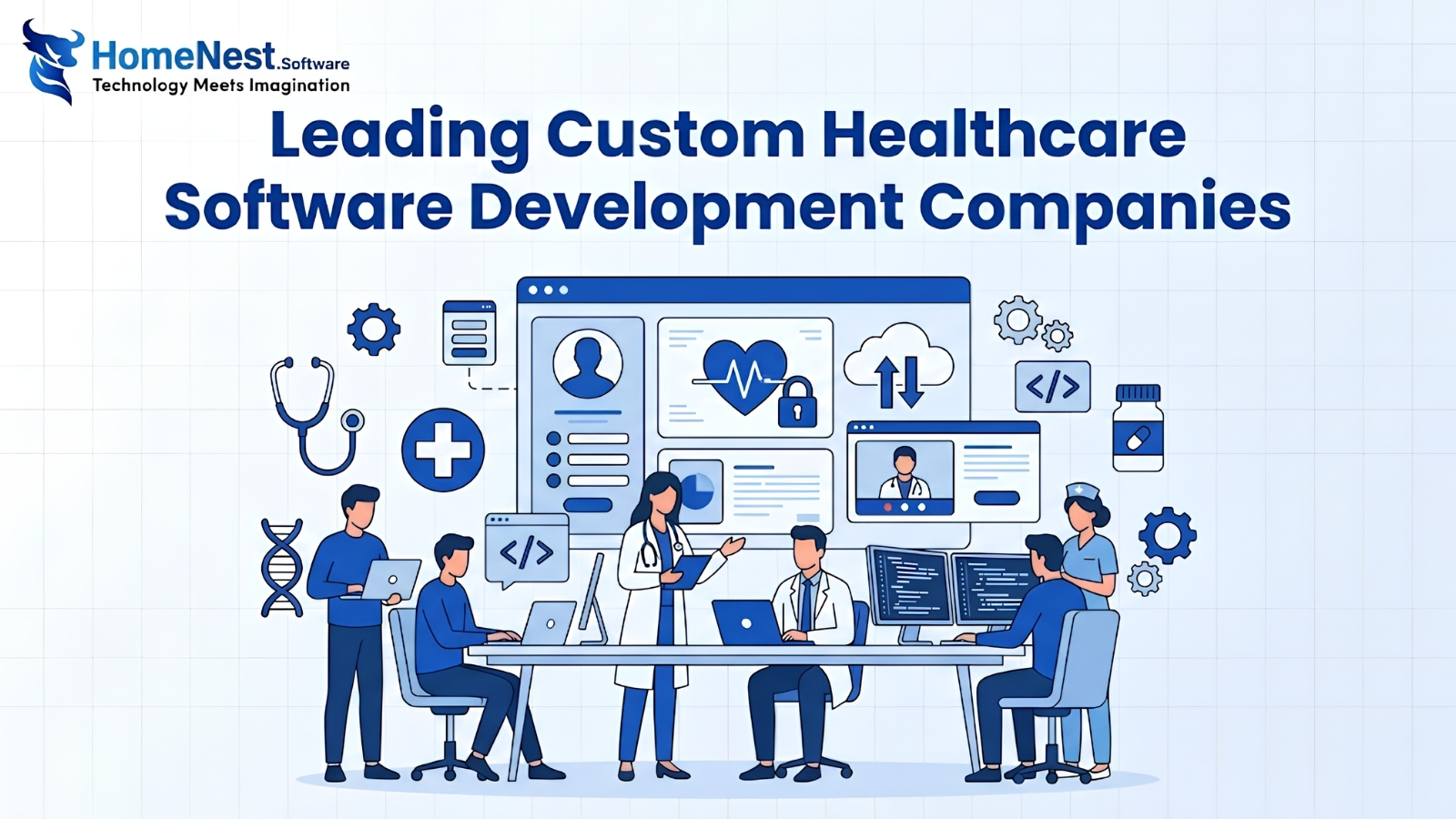
The vendor landscape is divided into two distinct categories: Enterprise Platform Giants that provide foundational Electronic Health Records, and Agile Engineering Partners that build custom applications to scale and secure those foundations.
HomeNest Software: Specialized Custom Engineering Partner
- Core Focus: HomeNest Software does not sell boxed software. We provide dedicated engineering teams to architect custom middleware, patient-facing applications, and FHIR-compliant API integrations for hospitals dealing with fragmented legacy systems.
- Engineering Strengths: Rapid deployment of HIPAA-compliant cloud architectures and specialized expertise in integrating custom machine learning models into existing clinical workflows without disrupting daily operations.
Cerner Corporation
- Services: Provides comprehensive EHR systems, hospital management platforms, and data analytics tools to enhance clinical decision making and operational efficiency.
- Clientele: Includes major institutions such as Mayo Clinic, Cleveland Clinic, and National Health Service.
- Strengths: trong innovation in AI driven healthcare solutions and extensive global deployment experience.
- Technologies: AI, machine learning, and cloud based infrastructures for scalable healthcare delivery.
Epic Systems Corporation
- Services: Offers integrated EHR systems, patient management tools, and telemedicine platforms for remote care delivery.
- Clientele: Serves leading institutions such as Johns Hopkins Hospital and Mayo Clinic facilities.
- Strengths: Highly customizable platforms with a strong reputation for reliability and system stability.
- Technologies: Machine learning and cloud computing to support advanced analytics and scalability.
Allscripts Healthcare Solutions
- Services: Provides EHR platforms, remote patient monitoring tools, and healthcare financial management systems.
- Clientele: Works with organizations such as Ascension Health and MedStar Health.
- Strengths: Strong integration capabilities and a consistent focus on product innovation.
- Technologies: loud computing and data analytics for performance optimization and decision support.
Athenahealth
- Services: Delivers user friendly EHR systems, patient engagement tools, and revenue cycle management solutions.
- Clientele: Includes Partners HealthCare and Mount Sinai Health System.
- Strengths: Cloud native architecture and strong 24/7 support services.
- Technologies: Cloud computing and automation to streamline administrative and clinical workflows.
Tata Consultancy Services (TCS)
- Services: Offers custom healthcare software development, system integration, consulting, and large scale data analytics solutions.
- Clientele: Supports global healthcare networks such as National Health Service and Apollo Hospitals.
- Strengths: Extensive global delivery capabilities and deep expertise in big data driven healthcare solutions.
- Technologies: Cloud computing and big data platforms for scalable and data intensive healthcare applications.
These companies illustrate how custom healthcare software development is evolving from basic system implementation to highly integrated, intelligent platforms that drive both clinical excellence and operational efficiency.
Key Services Offered by Healthcare Software Development Companies
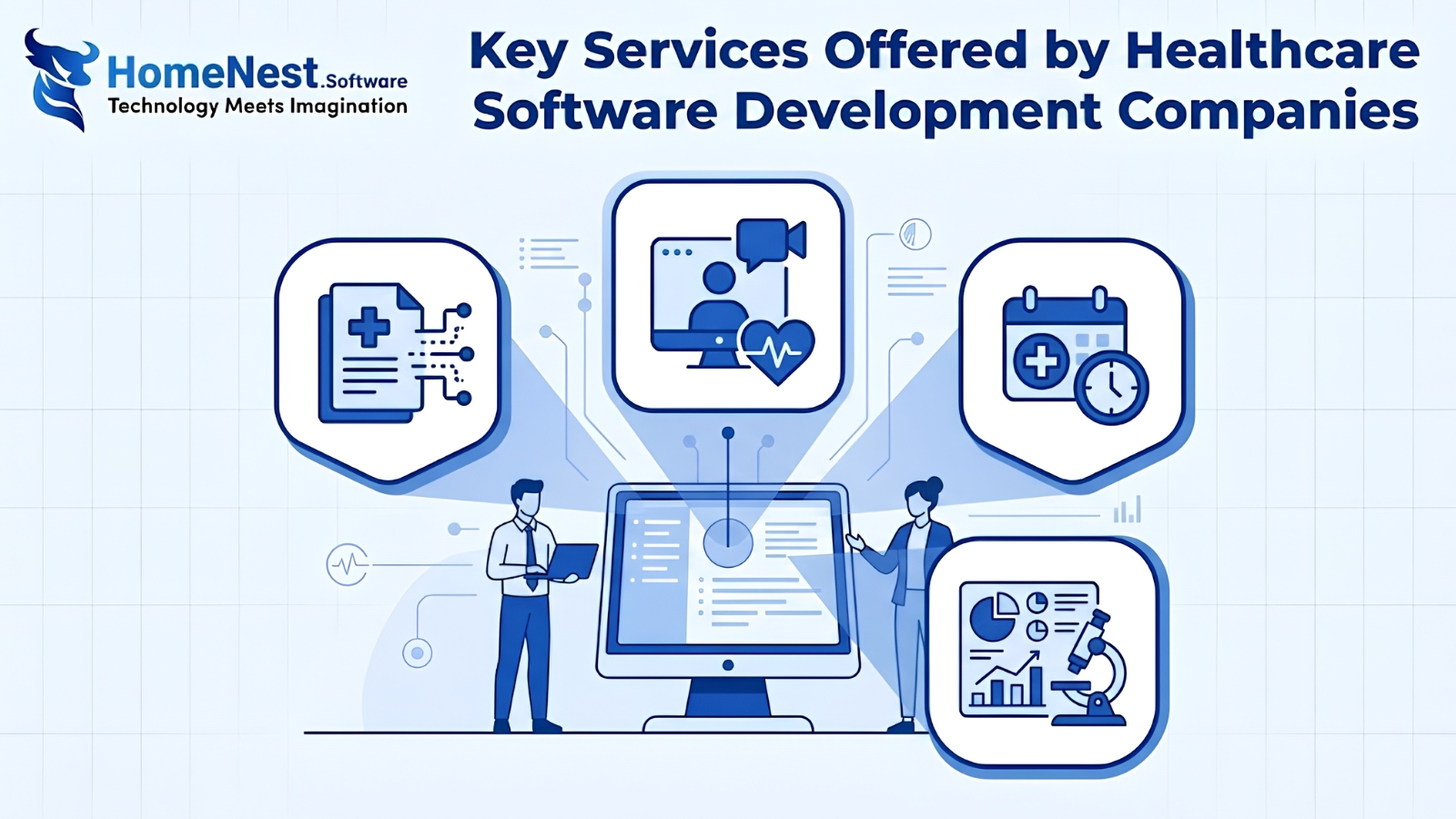
Custom Healthcare Software Solutions and Services
Healthcare software development companies deliver a broad portfolio of solutions designed to address clinical, operational, and data driven challenges. Some of the most widely adopted services include:
- Electronic Health Record (EHR) Systems:
Digital platforms that centralize and manage patient information, including medical history, lab results, prescriptions, and clinical notes ensuring accurate, real time access across care teams. - Telemedicine Solutions:
Platforms that enable remote consultations through video, messaging, and digital communication tools, expanding access to care while reducing the need for in person visits. - Patient Management Systems (PMS):
Comprehensive tools that streamline patient registration, appointment scheduling, and record management, helping healthcare providers optimize administrative workflows. - Medical Data Analytics:
Advanced analytics solutions that process large volumes of healthcare data to uncover insights, support clinical decisions, and improve treatment outcomes. - Mobile Health (mHealth) Applications:
Mobile apps and connected devices that support remote monitoring, chronic disease management, and patient engagement outside traditional clinical settings.
Together, these services enable healthcare organizations to modernize operations, improve patient engagement, and make more informed, data driven decisions.
Integration with Existing Systems
A critical success factor in healthcare software implementation is seamless integration with existing infrastructure. Hospitals and clinics often rely on a complex ecosystem of legacy systems, medical devices, and financial platforms.
Leading development companies bring deep expertise in system interoperability ensuring that new solutions integrate smoothly with EHR platforms, diagnostic equipment, billing systems, and third party applications. This reduces disruption, preserves data continuity, and accelerates time to value.
Choosing the right technology stack is equally important. Leveraging modern frameworks and scalable architectures ensures that healthcare applications remain flexible, secure, and capable of evolving alongside organizational needs.
How to Choose the Right Custom Healthcare Software Development Company
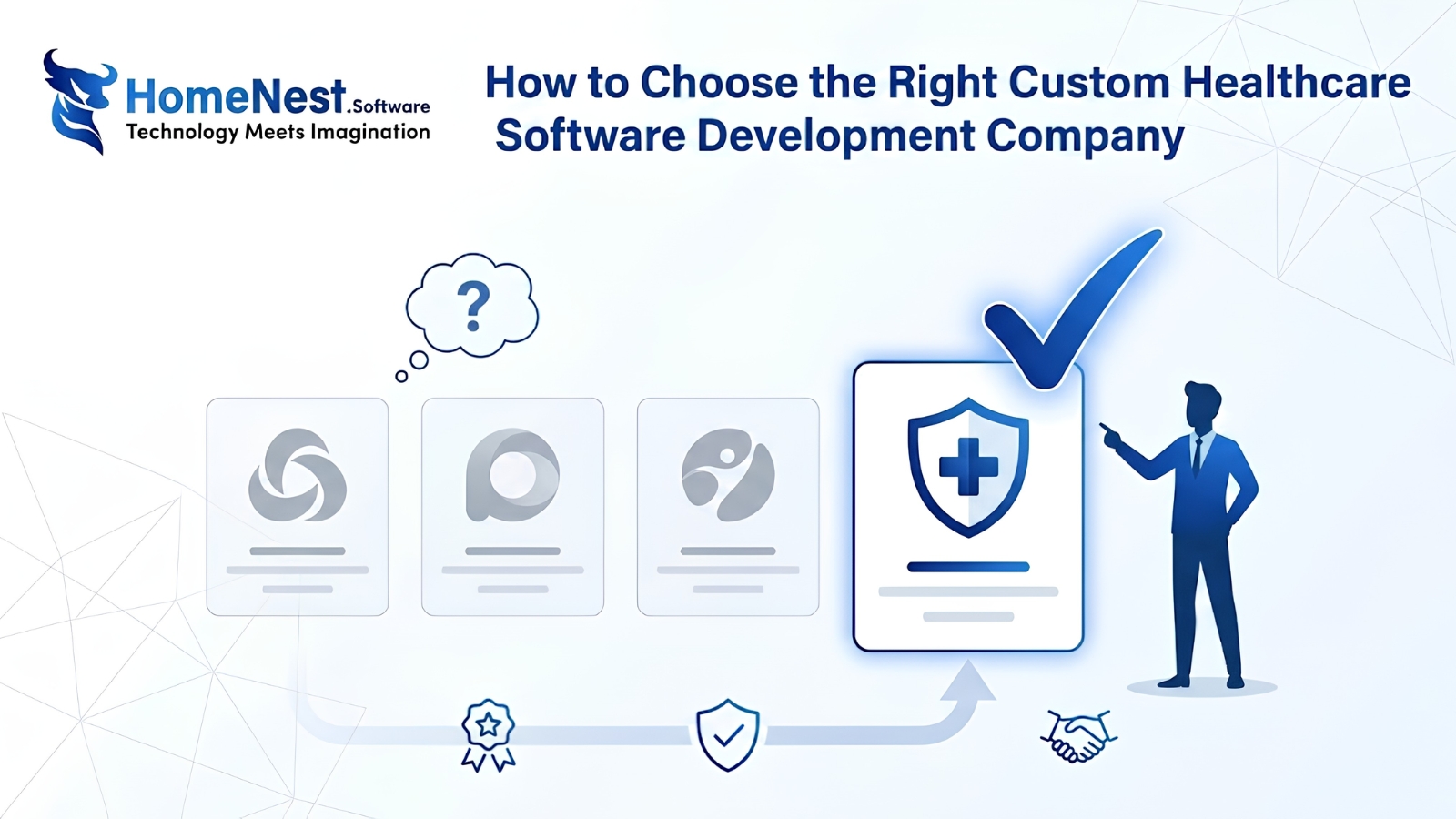
Key Features to Look for in a Development Partner
Choosing the right custom healthcare software development partner requires evaluating both technical expertise and industry experience. Key factors include:
- Proven Healthcare Experience and Reputation:
Select a vendor with a strong track record in healthcare projects. They should demonstrate domain expertise, successful case studies, and recognized certifications or industry credibility. - Integration and Customization Capabilities:
Ensure the partner can seamlessly integrate new solutions with existing systems such as EHR platforms, patient management tools, and third party applications. Strong customization ensures the software fits your workflows not the other way around. - Compliance with Security and Regulatory Standards:
The partner must comply with strict regulations such as HIPAA and GDPR, implementing robust security practices like encryption, role based access, and audit logs. - Experienced and Specialized Development Team:
Look for a team with hands on experience in healthcare systems, interoperability standards, and scalable architectures. This ensures they can handle complex technical and compliance requirements.
Factors to Consider When Making the Final Decision
- Cost Structure and Pricing Transparency:
Evaluate whether the pricing model (hourly, fixed price, or dedicated team) aligns with your budget. Ensure clear cost breakdowns to avoid hidden fees. - Client Reviews and Case Studies:
Analyze feedback from past clients and review similar project case studies to assess reliability, delivery quality, and domain expertise. - Post Deployment Support and Maintenance:
Confirm the availability of ongoing support, including updates, bug fixes, monitoring, and team training to ensure smooth adoption. - Scalability and Upgrade Capability:
The partner should offer continuous improvements to keep your system aligned with evolving technologies and regulatory changes.
Leveraging the Right Mobile App Development Frameworks
Selecting the appropriate technology stack is critical for building scalable and high performance healthcare applications. Popular frameworks include:
- React Native – Ideal for cross platform apps with fast development cycles
- Flutter – Strong UI performance and flexibility for healthcare apps
- Swift (iOS) – Best for high performance, secure iOS healthcare applications
- Kotlin (Android) – Modern and reliable for Android based medical apps
Choosing the right framework depends on your product goals, user base, and compliance requirements. A capable development partner will guide you toward the most suitable architecture to ensure long term scalability and performance.
Conclusion
Choosing the right custom healthcare software development partner is a strategic decision that directly impacts system performance, regulatory compliance, and patient outcomes. From evaluating industry experience and technical capabilities to ensuring seamless integration and long term support, every factor plays a critical role in building a reliable healthcare ecosystem.
Organizations that invest in the right partner gain more than just a software solution they secure a foundation for scalable growth, operational efficiency, and continuous innovation. By combining domain expertise with modern technologies and aligning with top mobile app development practices, healthcare providers can deliver smarter, faster, and more patient centric services.
If you are planning to modernize your healthcare systems, now is the time to collaborate with a development partner that understands both technology and the complexities of healthcare delivery.
FAQs
What is custom healthcare software development?
Custom healthcare software development involves building tailored digital solutions designed specifically for the needs of healthcare organizations, improving workflows, patient care, and system integration.
Why is custom software better than off the shelf healthcare solutions?
Custom solutions are built around your processes, allowing better integration, scalability, and compliance. Unlike generic software, they adapt to your operations instead of forcing workflow changes.
How much does custom healthcare software development cost?
Costs vary depending on complexity, features, and technology stack. Basic solutions may start from $10,000–$50,000+, while advanced, enterprise grade systems can cost significantly more.
How long does it take to develop healthcare software?
Development timelines typically range from 3 to 9 months, depending on the scope, integrations, and regulatory requirements involved.
What regulations must healthcare software comply with?
Healthcare software must comply with regulations such as HIPAA and GDPR, ensuring patient data security and privacy.
What features are essential in healthcare mobile apps?
Key features include secure login, patient data management, appointment scheduling, telemedicine capabilities, notifications, and integration with wearable or IoT devices aligned with top mobile app development standards.
How do I choose the right healthcare software development company?
Look for proven healthcare experience, strong technical expertise, compliance knowledge, transparent pricing, and reliable post launch support.
Can custom healthcare software integrate with existing systems?
Yes, modern custom solutions are designed to integrate with EHR systems, billing platforms, and third party tools to ensure seamless data flow and operational continuity.
Latest Articles
View All
Criteria For Choosing The Right App Design Agency
UI/UX design is the logical foundation of a system, not merely a visual element. Choosing the wrong partner will directly lead to technical debt, budget overruns, and disruptions in the development process. This article provides a 6-step evaluation framework and a list of operational risks, helping businesses eliminate subjective design advice and accurately assess agency capabilities based on developer handoff standards and practical business performance.

How Does AI in Banking Industry Impact the Future?
Artificial intelligence (AI) has transitioned from a supplementary tool to a core infrastructure of financial data management, optimizing profitability through real-time fraud detection, natural language processing (NLP), and high-speed credit scoring models. “Deploying AI in the financial sector requires more than just algorithmic accuracy, it demands a highly secure cloud architecture and rigorous data governance,” commented Nguyen Tien, co-founder of HomeNest Software. Why read this guide? We skip the theoretical jargon to focus entirely on technical implementation. Whether you’re evaluating a vendor or planning a system overhaul, this article will detail: Operational Efficiency: Automating unstructured data workflows at scale. Risk Architecture: Implementing real-time threat detection and AML compliance. Data ownership: The essential need for 100% ownership of the source code to ensure full algorithm auditability.
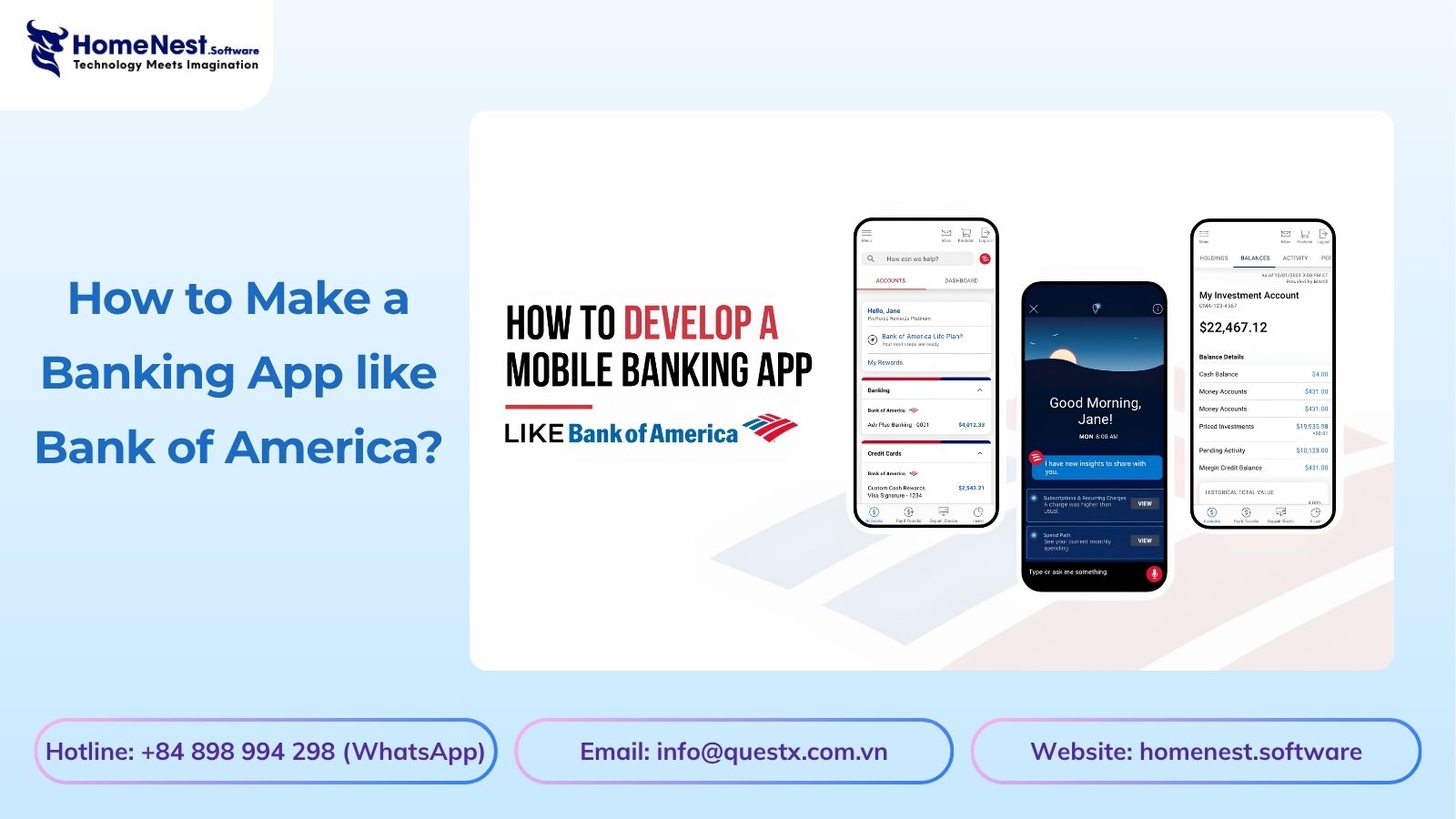
How to Make a Banking App like Bank of America?
Developing a mobile banking application like Bank of America extends far beyond basic UI design; it requires engineering a fault-tolerant backend capable of real-time ledger synchronization, biometric authentication, and high-volume data processing under strict regulatory frameworks. Drawing from HomeNest Software’s deep experience in architecting enterprise-grade fintech solutions, this guide strips away theoretical jargon to focus entirely on operational and technical execution. What you will find in this guide: We break down the precise development roadmap, from mapping out microservices and ensuring PCI-DSS compliance to estimating MVP development costs and securing absolute data sovereignty through 100% source code ownership. If you are preparing to build, scale, or audit a financial platform, this blueprint provides the exact framework you need.
Banking App Development Cost
Building a banking application is rarely a simple process; it’s a complex technical challenge requiring a balance between complying with stringent financial regulations, handling large transaction volumes, and a scalable cloud architecture. Miscalculating these technical requirements from the outset often leads to significant technical debt and budget overruns. Based on HomeNest Software’s practical experience in designing enterprise-grade fintech solutions, this guide bypasses generic estimates to provide a realistic analysis of banking application development costs. What you’ll find in this guide: We analyze the true cost factors, from technology selection and API integration to the hidden costs of regulatory compliance and security infrastructure. Whether you’re launching a minimum viable product or expanding an existing financial platform, this analysis provides the precise operational data you need to plan your budget effectively.
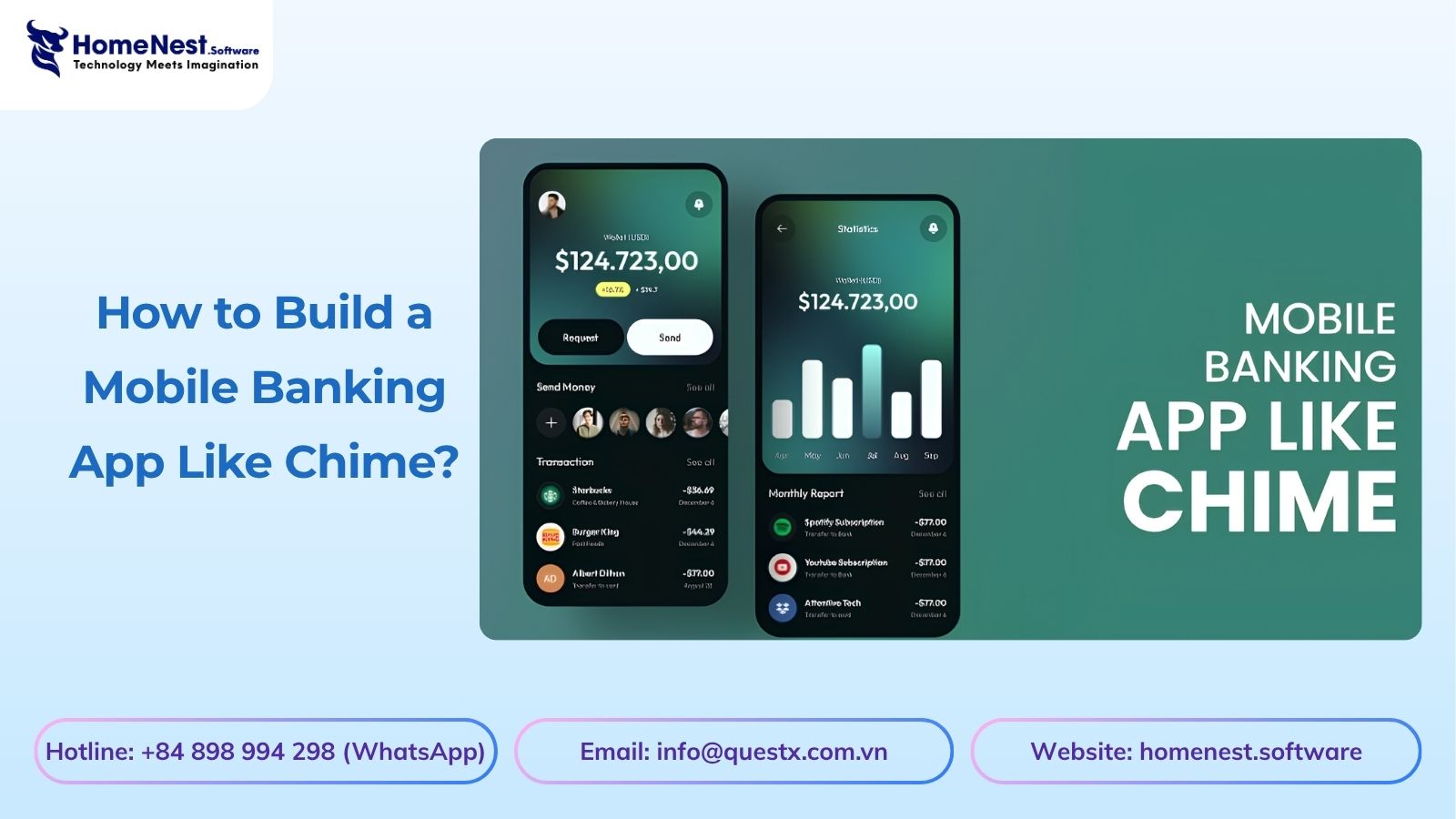
How to Build a Mobile Banking App Like Chime?
Building a mobile banking app like Chime is not just about features, it is about delivering a secure, scalable, and user-centric financial experience. From planning the right architecture to optimizing mobile banking app development cost, every decision directly impacts your product’s success. Leveraging Fintech app development services, starting with MVP app development, and scaling through on-demand app development solutions allows businesses to reduce risk and accelerate time to market. To stay competitive, combining Android app development services and iOS app development solutions ensures wider reach, while continuous updates through maintenance software development services keep your app secure and future-ready.
How to Build a Banking App Like Barclays: A Complete Entrepreneur’s Guide
Building a banking app like Barclays requires more than just development. It demands a strong product vision, secure architecture, and a clear monetization strategy. From optimizing cost and selecting the right tech stack to ensuring compliance and scalability, every decision impacts long-term success. Partnering with an experienced team like HomeNest Software helps accelerate development, reduce risks, and deliver a high-quality fintech product that can compete in today’s fast-evolving digital banking landscape.