
Top Automotive Software Development Companies in the USA
Scope of Work

The automotive industry is undergoing a profound technological transformation, with software now serving as the backbone of modern mobility innovation. From connected and autonomous vehicles to telematics platforms, fleet management systems, and electric mobility solutions, software is redefining how vehicles are designed, operated, and experienced. As a result, companies across the USA are increasingly seeking specialized automotive software development partners capable of delivering secure, scalable, and regulation-compliant solutions that enhance safety, efficiency, and user experience.
Choosing the right automotive software development company is a critical strategic decision, as it directly affects the performance, scalability, and long-term reliability of automotive systems. Leading automotive software development firms in the USA combine advanced technologies, modern system architectures, and deep industry expertise to build solutions tailored to the evolving demands of OEMs, mobility startups, and enterprise fleets.
In this blog, we explore the top automotive software development companies in the USA highlighting their core services, technical strengths, and unique capabilities so you can make an informed decision in today’s highly competitive automotive software landscape.
10 Leading Automotive Software Development Companies in the USA
Below is a curated list of ten prominent automotive software development companies in the USA that are actively shaping the future of mobility through technology. These firms are widely recognized for delivering secure, scalable, and innovation-driven automotive software solutions across key domains such as connected vehicles, fleet management, electric mobility, and autonomous driving systems.
The companies featured in this list stand out for their strong technical capabilities, industry expertise, and ability to integrate advanced technologies like AI and IoT to meet the evolving demands of the automotive ecosystem.
Comparison Overview
| No. | Company Name | Founded | Avg. Hourly Rate (USD) | Team Size | Custom Automotive Software | AI & IoT Capabilities |
|---|---|---|---|---|---|---|
| 1 | HomeNest Software | 2023 | $25 – $50 | 50–249 | ✓ | ✓ |
| 2 | ELEKS | 1991 | $50 – $120 | 1,800+ | ✓ | ✓ |
| 3 | Cognizant | 1994 | $40 – $90 | 330,000+ | ✓ | ✓ |
| 4 | Accenture | 1989 | $150 – $300 | 700,000+ | ✓ | ✓ |
| 5 | Tata Consultancy Services (TCS) | 1968 | $40 – $90 | 600,000+ | ✓ | ✓ |
| 6 | Infosys | 1981 | $30 – $70 | 350,000+ | ✓ | ✓ |
| 7 | Luxoft | 2000 | $50 – $150 | 20,000+ | ✓ | ✓ |
| 8 | Wipro | 1945 | $30 – $70 | 250,000+ | ✓ | ✓ |
| 9 | EPAM Systems | 1993 | $50 – $150 | 50,000+ | ✓ | ✓ |
| 10 | HCLTech | 1976 | $30 – $70 | 220,000+ | ✓ | ✓ |
20 Best Automotive Software Development Companies in the USA
Discover the top 20 automotive software development companies in the USA delivering end-to-end solutions across connected vehicles, telematics systems, autonomous driving software, fleet management platforms, electric vehicle (EV) software, and Mobility-as-a-Service (MaaS).
These companies are recognized for building secure, scalable, and future-ready automotive software that improves operational efficiency, enhances safety, and elevates the overall driver and passenger experience.
1. HomeNest Software
HomeNest Software is a fast-growing automotive software development partner for startups and enterprises in the USA. The company delivers modern solutions including connected vehicle platforms, fleet management systems, EV charging software, telematics solutions, and AI-powered vehicle analytics.
Real-world case studies demonstrate measurable improvements in operational efficiency, predictive maintenance accuracy, and user engagement across automotive ecosystems.
Key Automotive Services
-
Custom connected car software development
-
Fleet management and telematics solutions
-
EV software and charging management systems
-
AI-enabled vehicle analytics
-
Driver experience and infotainment systems
2. Accenture
Accenture delivers enterprise-scale automotive software solutions with a strong focus on digital transformation and mobility innovation. Its offerings include cloud-based vehicle platforms, autonomous driving software, AI-driven analytics, and integrated mobility ecosystems.
Accenture has helped OEMs and automotive suppliers modernize legacy systems while significantly enhancing customer experience.
Key Automotive Services
-
Cloud vehicle platform development
-
Autonomous vehicle software
-
AI-driven predictive maintenance
-
Electric mobility software solutions
-
Connected car and infotainment platforms
3. Infosys
Infosys provides scalable, compliant automotive software solutions spanning digital vehicle platforms, telematics, fleet management, MaaS, and smart EV systems.
Its case studies highlight successful system modernization initiatives and performance optimization for OEMs and large fleet operators.
Key Automotive Services
-
Telematics and connected vehicle solutions
-
Fleet management software
-
EV mobility and charging platforms
-
Vehicle diagnostics and predictive maintenance
-
Mobility data analytics
4. Luxoft
Luxoft specializes in software for autonomous vehicles, connected cars, and digital mobility platforms. The company delivers ADAS systems, infotainment software, vehicle cybersecurity, and V2X communication solutions.
Clients benefit from reduced development cycles and improved safety features.
Key Automotive Services
-
Autonomous driving software and ADAS
-
Connected vehicle and infotainment solutions
-
Vehicle cybersecurity and secure data management
-
EV mobility and smart fleet systems
-
V2X integration
5. Wipro
Wipro provides end-to-end automotive software services with a focus on smart mobility, EV systems, telematics, and connected vehicle platforms.
Its solutions have enabled fleet optimization, improved vehicle safety, and reduced operational downtime.
Key Automotive Services
-
Smart mobility and connected car platforms
-
Fleet management and telematics software
-
EV software and charging infrastructure
-
Predictive vehicle diagnostics
-
Driver assistance and infotainment systems
6. Cognizant
Cognizant builds data-driven automotive software designed to improve vehicle intelligence and operational efficiency. Its solutions include connected car platforms, telematics systems, predictive maintenance, and AI-powered analytics.
Key Automotive Services
-
Connected car platforms
-
Telematics and fleet optimization
-
AI-enabled predictive maintenance
-
Autonomous vehicle software
-
Vehicle performance analytics
7. Deloitte
Deloitte combines automotive consulting with technology-led software development. The firm delivers digital vehicle platforms, fleet optimization tools, EV software, and AI-driven mobility analytics helping businesses achieve compliance and operational excellence.
Key Automotive Services
-
Automotive digital transformation consulting
-
Fleet management and telematics systems
-
EV software and energy management
-
AI-driven vehicle analytics
-
Connected car and infotainment solutions
8. Tech Mahindra
Tech Mahindra focuses on connected vehicle software, offering cloud-based platforms, AI-driven predictive maintenance, driver assistance technologies, and mobile vehicle applications.
Key Automotive Services
-
Connected vehicle platform development
-
EV software solutions
-
AI-based predictive maintenance
-
Driver assistance and ADAS
-
Mobile vehicle applications
9. UST Global
UST Global delivers customer-centric automotive software solutions including fleet management, connected car platforms, telematics systems, and mobility services.
Case studies demonstrate cost reductions, efficiency gains, and data-driven decision-making.
Key Automotive Services
-
Fleet management and telematics solutions
-
Connected vehicle software development
-
EV management platforms
-
Predictive vehicle analytics
-
Driver engagement and infotainment systems
10. Coforge
Coforge develops scalable automotive software for connected vehicles, fleet monitoring, EV systems, and autonomous mobility. Its platforms enable real-time monitoring and enhanced vehicle intelligence.
Key Automotive Services
-
Connected vehicle platforms
-
Fleet monitoring and telematics
-
AI-driven vehicle analytics
-
EV management systems
-
Cloud-based vehicle solutions
11. Hexaware
Hexaware delivers automation-driven automotive software solutions, including AI-enabled connected vehicle platforms, telematics, EV management systems, and fleet optimization tools.
Key Automotive Services
-
AI-powered connected vehicle platforms
-
Fleet and telematics software
-
EV infrastructure software
-
Driver experience applications
-
Predictive vehicle maintenance
12. KPMG
KPMG combines automotive software delivery with deep expertise in compliance and digital mobility strategy. Its solutions improve regulatory adherence and operational efficiency.
Key Automotive Services
-
Automotive digital transformation consulting
-
Fleet telematics and EV software
-
Predictive vehicle analytics
-
Vehicle cybersecurity
-
Driver engagement platforms
13. ELEKS
ELEKS builds agile automotive software platforms for connected vehicles, fleet management, and autonomous mobility, emphasizing speed, intelligence, and scalability.
Key Automotive Services
-
Custom automotive software development
-
Connected vehicle and telematics platforms
-
EV charging and management solutions
-
AI-driven vehicle diagnostics
-
Driver and passenger experience systems
14. DXC Technology
DXC Technology provides enterprise-grade automotive software modernization and integration services, improving reliability and simplifying vehicle operations.
Key Automotive Services
-
Connected vehicle and fleet management
-
EV software platforms
-
Vehicle telematics systems
-
Predictive fleet analytics
-
Cloud-based automotive infrastructure
15. GlobalLogic
GlobalLogic develops user-focused automotive software for connected vehicles, EVs, and smart mobility, enabling seamless system integration and higher adoption rates.
Key Automotive Services
-
Connected vehicle software development
-
EV management and telematics platforms
-
Driver experience and infotainment solutions
-
AI-driven vehicle analytics
-
Cloud-integrated automotive platforms
16. Tata Consultancy Services (TCS)
TCS delivers large-scale automotive software solutions for OEMs, suppliers, and fleet operators, focusing on efficiency, control, and digital transformation.
Key Automotive Services
-
Automotive digital transformation
-
Telematics and connected car platforms
-
EV software and charging solutions
-
Autonomous vehicle systems
-
Cloud-based vehicle management
17. HCLTech
HCLTech provides experience-led automotive software solutions targeting connected vehicles, EVs, and smart mobility ecosystems.
Key Automotive Services
-
Connected and autonomous vehicle platforms
-
EV management and telematics solutions
-
AI-driven predictive maintenance
-
Driver engagement software
-
Cloud-integrated automotive systems
18. EY
EY combines strategic consulting with automotive software delivery, supporting data-driven decision-making and regulatory compliance.
Key Automotive Services
-
Mobility strategy and consulting
-
Connected vehicle and fleet management software
-
AI-powered vehicle analytics
-
EV software solutions
-
Compliance and governance management
19. Mindtree
Mindtree builds agile automotive software tailored to modern mobility, improving vehicle intelligence and operational efficiency.
Key Automotive Services
-
Connected vehicle platforms and telematics
-
EV management software
-
Driver experience systems
-
Predictive maintenance analytics
-
Cloud-integrated automotive solutions
20. Palantir Technologies
Palantir Technologies delivers data-centric automotive intelligence platforms that enable strategic and operational decision-making through advanced analytics.
Key Automotive Services
-
Fleet analytics and vehicle intelligence platforms
-
Connected vehicle integration
-
EV monitoring and management
-
Predictive vehicle maintenance
-
Decision-support dashboards
How to Choose the Right Automotive Software Development Company in the USA

Selecting the right automotive software development partner in the USA is a strategic decision that directly influences innovation, operational efficiency, and long-term scalability. With numerous providers offering varied capabilities across the automotive ecosystem, a structured evaluation is essential to ensure alignment with your business goals and technical requirements.
Below are five critical factors to consider when choosing an automotive software development company.
1. Industry Expertise and Automotive Domain Knowledge
Look for companies with a proven track record in automotive software development across areas such as connected vehicles, electric mobility, telematics, fleet management, and autonomous driving systems.
A partner with deep industry expertise understands regulatory requirements, safety standards, and real-world operational challenges allowing them to anticipate risks, apply best practices, and deliver compliant, future-ready solutions.
2. Solution Flexibility and Scalability
Automotive businesses vary widely in fleet size, vehicle types, and operational workflows. Your software partner should be able to deliver modular, adaptable solutions that evolve with your needs.
Scalability is essential to support system expansion, new integrations, and emerging technologies without disrupting ongoing operations.
3. Technical Capabilities and Security Standards
A reliable automotive software partner must demonstrate expertise in cloud infrastructure, AI-driven analytics, IoT connectivity, and machine learning for predictive maintenance.
Equally important is security. Ensure the provider follows robust cybersecurity practices, including data encryption, secure communication protocols, and compliance with industry standards to protect vehicle, fleet, and driver data.
4. Proven Results and Client Success Stories
Review case studies, client testimonials, and independent reviews to evaluate the company’s ability to deliver tangible results.
Key indicators of success include improved operational efficiency, reduced maintenance costs, enhanced vehicle safety, and better driver experiences evidence that the solutions perform effectively in real-world environments.
5. Post-Deployment Support and Maintenance
Automotive software requires continuous monitoring, updates, and optimization. Choose a partner that offers long-term support, including regular upgrades, proactive maintenance, and responsive troubleshooting.
Ongoing support ensures your platform remains secure, reliable, and adaptable as technologies and market demands evolve.
Key Factors That Define a Leading Automotive Software Development Company in the USA
In the highly competitive automotive software landscape, only a select group of companies consistently stand out as industry leaders. Their success is driven by a strong combination of deep domain expertise, technological innovation, and a clear focus on delivering measurable value to clients.
Below are the defining factors that distinguish top automotive software development companies in the USA.
1. Deep Automotive Domain Expertise and Industry Experience
Leading providers demonstrate comprehensive knowledge across connected vehicles, electric vehicle (EV) platforms, fleet management systems, telematics, and autonomous mobility.
Their cross-sector experience enables them to design software solutions that solve real-world automotive challenges while ensuring full compliance with U.S. safety standards and regulatory requirements.
2. Continuous Innovation and Advanced Technology Adoption
Top automotive software companies actively leverage AI, IoT, V2X communication, cloud-native architectures, and machine learning to deliver intelligent automotive platforms.
These technologies streamline operations, improve vehicle performance, and enable predictive insights that support proactive decision-making and long-term optimization.
3. Scalable, Modular, and Customizable Platforms
Industry leaders build flexible, modular software platforms designed to evolve alongside business growth. Their solutions support fleet expansion, third-party integrations, and feature enhancements without disrupting existing operations ensuring long-term adaptability and ROI.
4. Strong Commitment to Data Security and Regulatory Compliance
Automotive software processes highly sensitive data, including vehicle telemetry, driver behavior, and operational metrics. Leading companies prioritize robust cybersecurity frameworks, data privacy safeguards, and compliance with industry standards, earning client trust while protecting mission-critical information.
5. Proven Delivery Capability and Client-Centric Approach
A strong track record of successful deployments, long-term partnerships, and high client satisfaction defines top providers. Their delivery model emphasizes transparent communication, responsive support, and continuous improvement, ensuring solutions align closely with business objectives.
Read more: Choosing the Right Outsourcing Partner
Conclusion
Choosing the right automotive software development company in the USA is a strategic decision that directly impacts operational efficiency, vehicle safety, and customer satisfaction. The leading automotive software providers distinguish themselves through deep expertise, continuous innovation, and the ability to deliver secure, scalable, and customized solutions.
By partnering with an experienced and reputable software development company, automotive businesses can confidently deploy connected car platforms, EV solutions, telematics systems, and autonomous technologies. Such partnerships not only ensure regulatory compliance and competitive performance today but also prepare organizations to navigate the evolving mobility challenges of the future with confidence and resilience.
HomeNest Software – Empowering Long-Term Growth for Modern Businesses.
Contact Information:
- Address: The Sun Avenue, 28 Mai Chi Tho Street, Binh Trung Ward, Ho Chi Minh City
- Hotline: +84 898 994 298 ( WhatsApp )
- Website: homenest.software
HomeNest Services: Website Design – App Design – Software Development.
Frequently Asked Questions (FAQs)
1. What does an automotive software development company do?
An automotive software development company builds digital solutions for vehicles and mobility systems, including connected car platforms, telematics, fleet management, EV software, autonomous driving systems, and in-vehicle infotainment. These solutions improve safety, efficiency, and user experience while ensuring regulatory compliance.
2. Why should businesses choose an automotive software development company in the USA?
Companies in the USA benefit from advanced technology ecosystems, experienced automotive engineers, strong cybersecurity standards, and deep knowledge of US automotive regulations. This makes US-based automotive software development companies ideal partners for building scalable, compliant, and future-ready solutions.
3. What technologies are commonly used in automotive software development?
Leading automotive software companies use technologies such as cloud computing, AI and machine learning, IoT, V2X communication, big data analytics, and cybersecurity frameworks to build intelligent, connected, and secure automotive systems.
4. How do automotive software companies ensure data security and compliance?
Top providers implement encryption, secure communication protocols, role-based access control, and compliance with industry standards such as ISO, GDPR, and automotive safety regulations. These measures protect sensitive vehicle, fleet, and driver data.
5. What industries benefit most from automotive software solutions?
Automotive software solutions are widely used by OEMs, fleet operators, logistics companies, EV manufacturers, mobility startups, ride-sharing platforms, and smart city initiatives to optimize operations and enhance mobility services.
6. Can automotive software solutions scale as a business grows?
Yes. Leading automotive software development companies design modular and scalable platforms that can grow with fleet size, support new vehicle types, integrate third-party services, and adopt emerging technologies without disrupting operations.
7. How long does it take to develop automotive software?
Development timelines vary based on complexity and scope. A basic automotive software solution may take 3–6 months, while advanced systems involving AI, telematics, or autonomous features can take 6–12 months or longer.
8. How much does automotive software development cost in the USA?
Costs typically range from $25,000 to $250,000+, depending on features, technology stack, security requirements, integrations, and ongoing support needs. Custom enterprise-grade solutions may exceed this range.
9. What should I look for when choosing an automotive software development partner?
Key factors include automotive domain expertise, scalability, security practices, proven case studies, transparent communication, and reliable post-deployment support.
10. Do automotive software companies provide post-launch support and maintenance?
Yes. Reputable providers offer continuous monitoring, updates, performance optimization, security patches, and feature enhancements to ensure long-term reliability and compliance.
Latest Articles
View All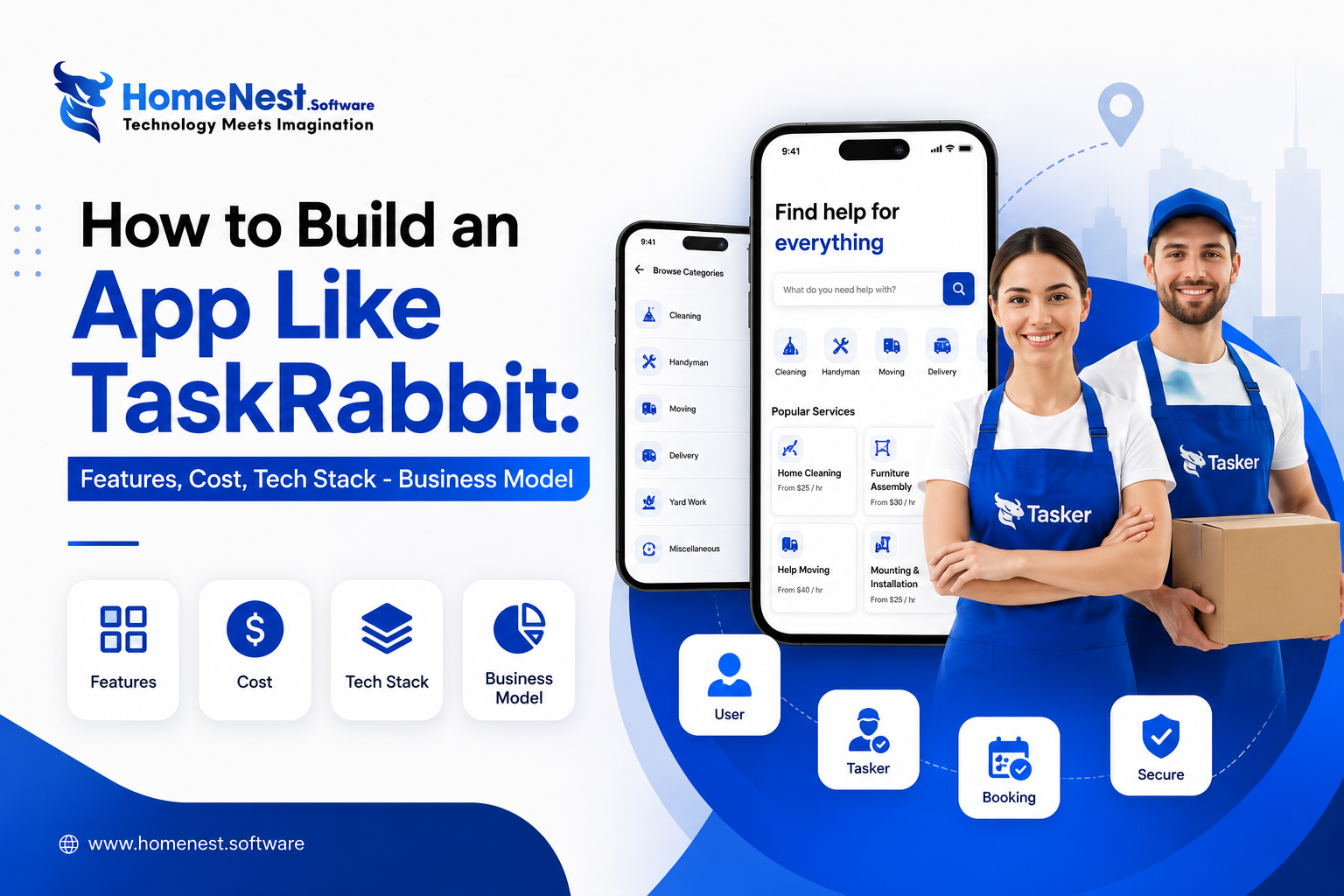
How to Build an App Like TaskRabbit: Features, Cost, Tech Stack – Business Model
Building an app like TaskRabbit is more than replicating existing features—it’s about creating a trusted marketplace that seamlessly connects customers with skilled service providers. By combining an intuitive user experience, secure payment systems, scalable architecture, and the right business model, you can launch a competitive on-demand platform. Partnering with an experienced app development company like HomeNest Software ensures your product is built with the technology, flexibility, and long-term scalability needed to succeed in the rapidly growing gig economy.
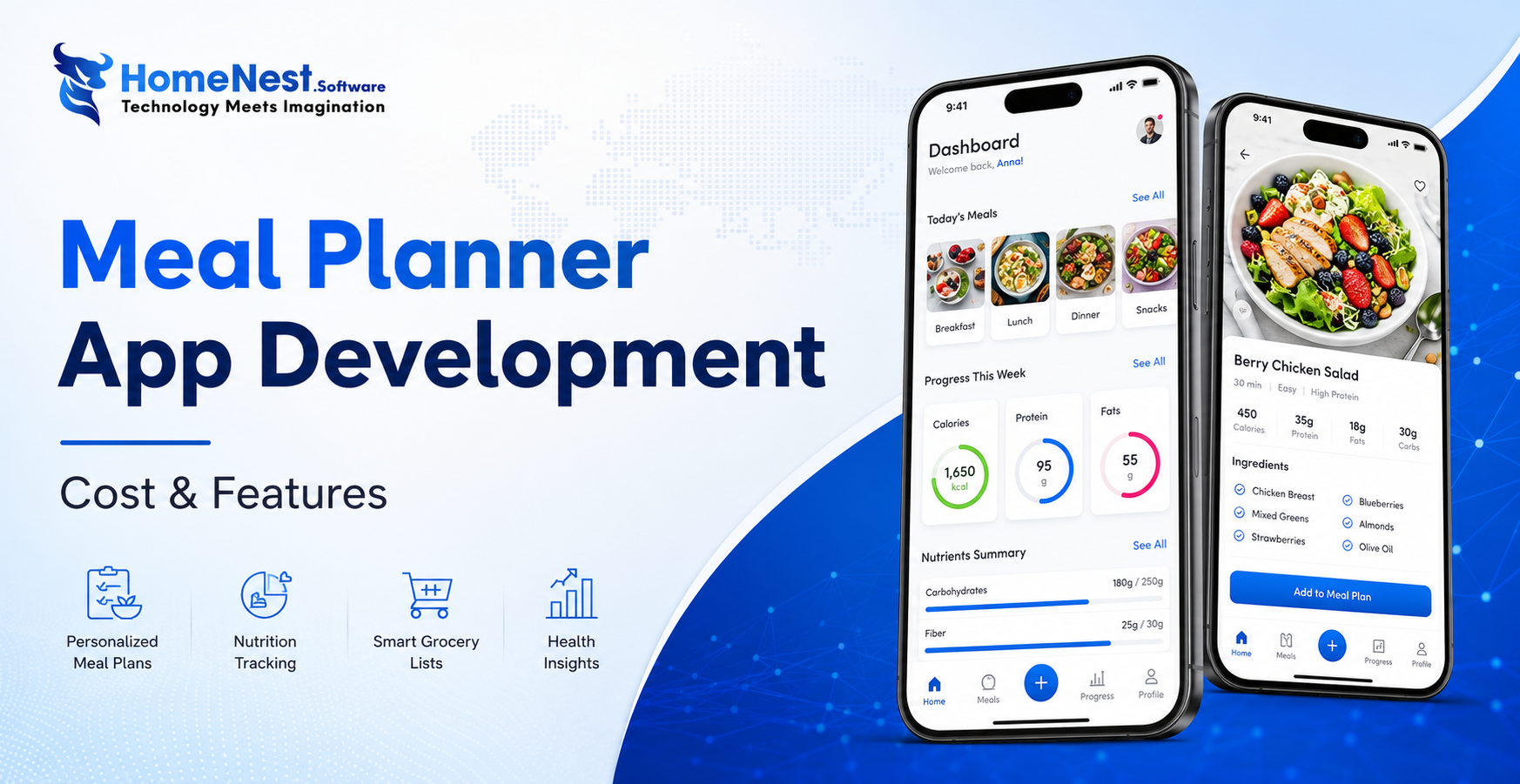
How to Build a Meal Planning App: A Complete Step-by-Step Guide
Building a successful meal planning app goes beyond creating an attractive interface it requires a clear business strategy, personalized user experiences, and scalable technology. By combining essential features like AI-powered meal recommendations, nutrition tracking, grocery list automation, and wearable integration, businesses can deliver lasting value to users while capitalizing on the growing digital health market. Partnering with an experienced mobile app development company ensures your solution is secure, future-ready, and designed to succeed in an increasingly competitive health-tech industry.

How Much Does It Cost to Build a Shopping App Like Temu?
Temu’s meteoric rise to over 900 million global downloads proves the power of combining AI, gamification, and social commerce, but building a similar viral shopping platform requires careful financial and technical planning. Developing an app like Temu typically costs anywhere from $40,000 for a basic Minimum Viable Product (MVP) to over $300,000 for a fully-featured platform. This guide breaks down every cost category, analyzes the core features driving Temu’s success, highlights the best technology stacks, and offers practical strategies to optimize your development budget without compromising on quality.

Criteria For Choosing The Right App Design Agency
UI/UX design is the logical foundation of a system, not merely a visual element. Choosing the wrong partner will directly lead to technical debt, budget overruns, and disruptions in the development process. This article provides a 6-step evaluation framework and a list of operational risks, helping businesses eliminate subjective design advice and accurately assess agency capabilities based on developer handoff standards and practical business performance.

How Does AI in Banking Industry Impact the Future?
Artificial intelligence (AI) has transitioned from a supplementary tool to a core infrastructure of financial data management, optimizing profitability through real-time fraud detection, natural language processing (NLP), and high-speed credit scoring models. “Deploying AI in the financial sector requires more than just algorithmic accuracy, it demands a highly secure cloud architecture and rigorous data governance,” commented Nguyen Tien, co-founder of HomeNest Software. Why read this guide? We skip the theoretical jargon to focus entirely on technical implementation. Whether you’re evaluating a vendor or planning a system overhaul, this article will detail: Operational Efficiency: Automating unstructured data workflows at scale. Risk Architecture: Implementing real-time threat detection and AML compliance. Data ownership: The essential need for 100% ownership of the source code to ensure full algorithm auditability.

How to Make a Banking App like Bank of America?
Developing a mobile banking application like Bank of America extends far beyond basic UI design; it requires engineering a fault-tolerant backend capable of real-time ledger synchronization, biometric authentication, and high-volume data processing under strict regulatory frameworks. Drawing from HomeNest Software’s deep experience in architecting enterprise-grade fintech solutions, this guide strips away theoretical jargon to focus entirely on operational and technical execution. What you will find in this guide: We break down the precise development roadmap, from mapping out microservices and ensuring PCI-DSS compliance to estimating MVP development costs and securing absolute data sovereignty through 100% source code ownership. If you are preparing to build, scale, or audit a financial platform, this blueprint provides the exact framework you need.