
Top Benefits of Health Apps for Patients and Doctors
- Healthcare apps are transforming how care is delivered—making services more accessible, efficient, and patient-centric
mHealth enables real-time communication, remote consultations, and continuous health monitoring - Patients gain better control over their health through data tracking, reminders, and instant access to medical information
- Doctors benefit from improved accuracy, faster workflows, and enhanced collaboration
- Features like e-prescriptions, mobile portals, and image sharing streamline the entire healthcare experience
- As digital health evolves, adopting healthcare apps is becoming a strategic advantage—not just a trend
- This article breaks down how mHealth works, its real-world applications, and why it is reshaping the future of healthcare for both patients and providers.
Scope of Work

According to International Data Corporation, the global healthcare app market has experienced significant growth, expanding from $4.2 billion in 2016 to over $11.5 billion by 2020. This rapid acceleration is largely driven by the rising adoption of mobile health (mHealth) technologies applications designed to deliver healthcare services through smartphones and other mobile devices.
As digital health continues to reshape the healthcare landscape, both patients and medical professionals are benefiting from greater accessibility, efficiency, and data driven care. In this article, we explore the key advantages of healthcare apps and how they are transforming the way care is delivered and experienced.
What is mHealth?
Healthcare app development spans a wide range of technologies within the mHealth ecosystem, as defined by the World Health Organization. According to the organization, mHealth refers to the use of mobile technologies to enhance healthcare delivery and improve overall public health outcomes.
In practice, mHealth includes a broad spectrum of solutions from mobile applications on smartphones and tablets to wearable devices such as fitness trackers, as well as telemedicine platforms that enable remote consultations between patients and healthcare professionals. Together, these technologies are redefining how healthcare is accessed, monitored, and delivered in a more connected, data driven environment.
Benefits of Health Apps
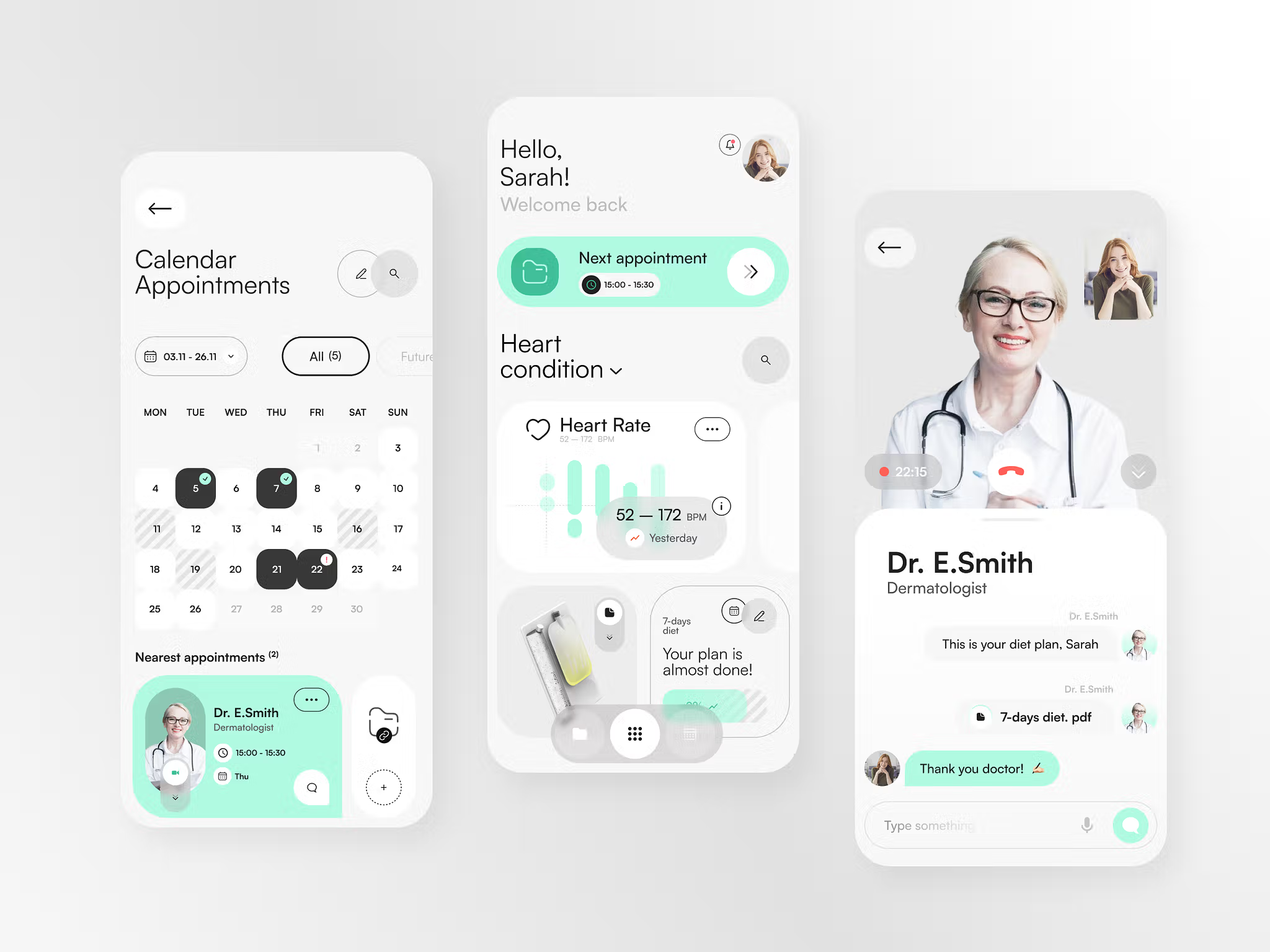
Healthcare applications deliver measurable value for both patients and providers, regardless of whether they are developed in house or through software outsourcing services. These solutions are not just digital tools they are enablers of more efficient, data driven, and patient centric healthcare systems.
Convenience and Accessibility
One of the most immediate benefits is convenience. Patients can access medical records, book appointments, and communicate with healthcare providers anytime, anywhere. This reduces unnecessary hospital visits and administrative friction, improving the overall care experience.
Greater Accuracy in Health Management
Health apps empower patients to continuously track vital metrics such as blood pressure, glucose levels, and physical activity. This real time data collection enhances diagnostic accuracy and provides healthcare professionals with reliable insights during consultations. It also streamlines routine actions like prescription refills and appointment scheduling.
Improved Decision Making
By having instant access to personal health data, patients are better equipped to make informed decisions about their treatment and lifestyle. This transparency fosters a more collaborative relationship between patients and doctors, ultimately leading to better clinical outcomes.
Enhanced Operational Efficiency
Healthcare apps significantly reduce manual processes. From automated appointment booking to digital test result delivery, both patients and providers save time.
Read more : How to Build Custom Healthcare Software for Hospitals: A Complete Guide
How mHealth Is Used in Modern Healthcare
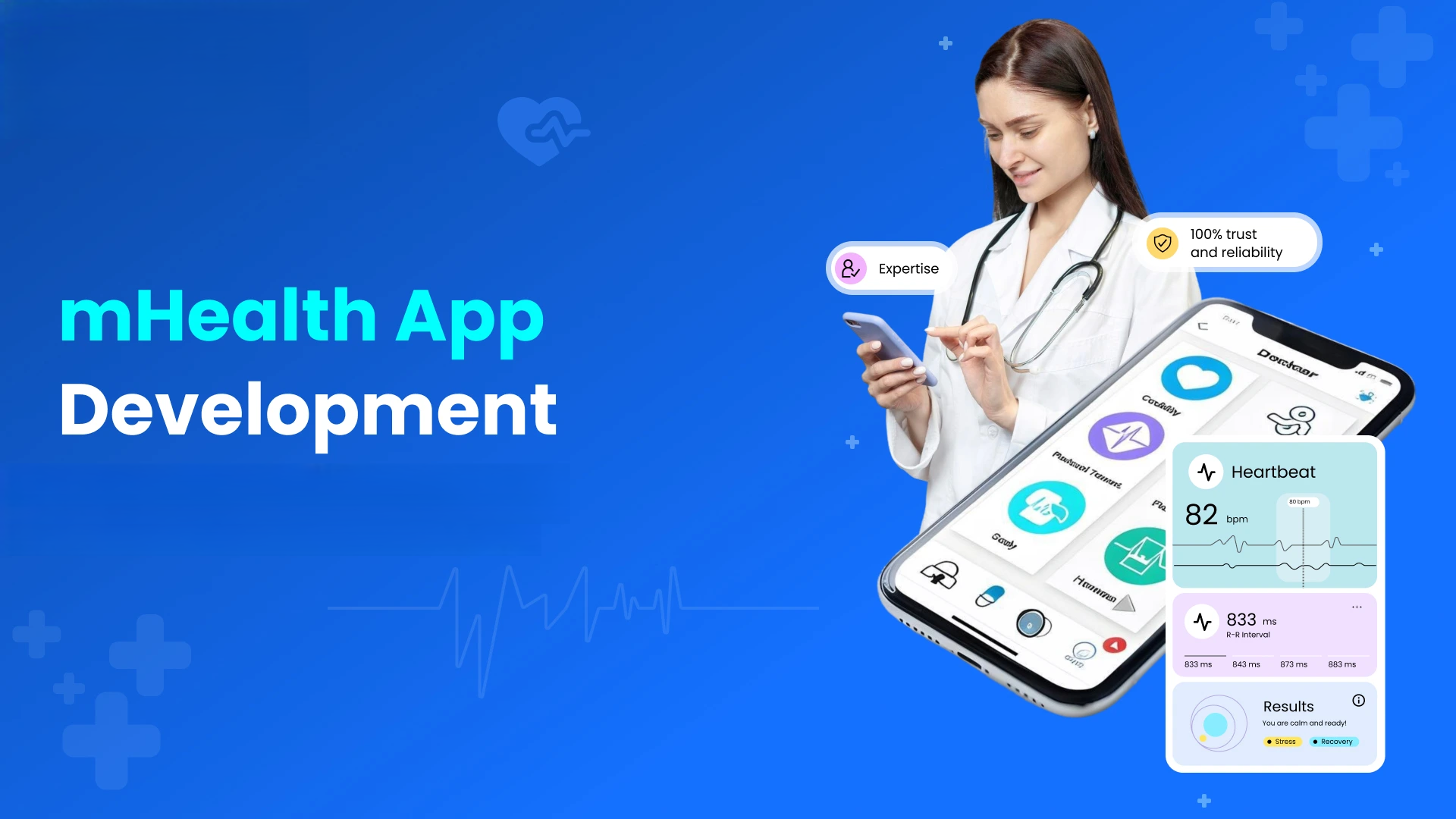
The applications of mHealth continue to expand as digital health ecosystems mature. From clinical workflows to patient engagement, mobile technologies are redefining how healthcare is delivered and managed.
Digital Patient Records and Communication
mHealth enables the creation and real time access of patient records through mobile applications. Healthcare providers can update, review, and share patient data instantly improving care coordination and reducing delays.
In parallel, secure in app messaging allows seamless communication between patients and providers. This supports follow ups, appointment reminders, and ongoing care discussions without requiring physical visits.
Mobile Patient Portals
Modern mHealth solutions often include mobile portals that centralize patient information. Through secure login systems, patients can access medical records, schedule appointments, request prescription refills, and communicate with providers.
This not only enhances patient autonomy but also streamlines administrative workflows for healthcare organizations.
Medical Image Sharing
mHealth platforms facilitate the secure exchange of medical images between patients and healthcare professionals. Patients can share images of symptoms such as skin conditions or injuries for preliminary assessments, reducing unnecessary clinic visits.
Additionally, providers can collaborate more effectively by sharing diagnostic images with peers for consultations or second opinions, improving clinical decision making.
Access to Educational Resources
Healthcare apps increasingly serve as centralized hubs for medical knowledge. Patients can access curated educational content, including articles, videos, and guided resources that help them better understand their conditions, treatments, and potential side effects.
For healthcare professionals, these platforms also provide access to updated research, clinical guidelines, and patient progress tracking supporting continuous learning and evidence based care.
Electronic Prescriptions (e Prescribing)
mHealth enables the digital transmission of prescriptions, eliminating the inefficiencies of paper based systems. According to Surescripts, e prescribing can save providers up to $290 per prescription and reduce healthcare costs by as much as $78 billion over a decade.
Beyond cost savings, this approach minimizes medication errors, accelerates dispensing processes, and improves prescription management for both providers and patients.
Medication Tracking and Identification
mHealth applications support accurate medication management by allowing patients to log prescriptions, dosage schedules, and frequency. This information can be easily accessed by healthcare providers during consultations or emergencies.
Such functionality enhances treatment adherence, reduces the risk of medication errors, and gives patients greater control over their health management.
Read more: How to Develop an Intelligent AI Healthcare Chatbot
Final Thoughts
Healthcare applications are no longer optional they are becoming a core component of modern care delivery. By improving access to information, streamlining communication, and enabling data driven decision making, mHealth technologies are reshaping how healthcare providers operate and how patients engage with their own health.
For organizations, these solutions unlock greater efficiency and scalability. For patients, they offer more control, transparency, and convenience throughout the care journey. As digital health continues to evolve, adopting mHealth is not just a technological upgrade it is a strategic move toward better outcomes and a more connected healthcare ecosystem.
If you have not yet explored the potential of mHealth, now is the time to evaluate how these solutions can enhance your healthcare services or personal health management.
Contact Information:
- Address: The Sun Avenue, 28 Mai Chi Tho Street, Binh Trung Ward, Ho Chi Minh City
- Hotline: +84 898 994 298 ( WhatsApp )
- Website: homenest.software
FAQs
What is a healthcare app?
A healthcare app is a mobile or web based application designed to support medical services such as appointment booking, health tracking, teleconsultation, and access to medical records.
What does mHealth mean?
mHealth, as defined by the World Health Organization, refers to the use of mobile technologies to improve healthcare services and public health outcomes.
What are the main benefits of healthcare apps?
Healthcare apps improve accessibility, enhance communication between patients and doctors, enable real time health monitoring, and streamline administrative processes.
How do healthcare apps help doctors?
They help doctors access patient data quickly, reduce paperwork, improve diagnosis accuracy, and communicate more efficiently with patients and other healthcare professionals.
How do healthcare apps benefit patients?
Patients can manage their health more effectively by tracking vital signs, accessing medical records, booking appointments, and receiving care remotely.
Are healthcare apps safe to use?
Most healthcare apps follow strict compliance standards such as HIPAA and GDPR, ensuring that sensitive medical data is securely stored and transmitted.
Can healthcare apps replace hospital visits?
Healthcare apps cannot fully replace hospital visits but can reduce the need for in person consultations, especially for routine check ups and follow ups.
What technologies are commonly used in mHealth apps?
Common technologies include cloud computing, AI, wearable integrations, telemedicine platforms, and secure APIs for data exchange.
What features should a modern healthcare app include?
A modern healthcare app should offer secure authentication, health data tracking, appointment scheduling, telehealth services, e prescriptions, and real time communication.
Why should businesses invest in healthcare app development?
Investing in healthcare apps helps organizations improve service delivery, reduce operational costs, enhance patient experience, and stay competitive in the digital health landscape.
https://homenest.software/wiki/top benefits of health apps for patients and doctors/
Latest Articles
View All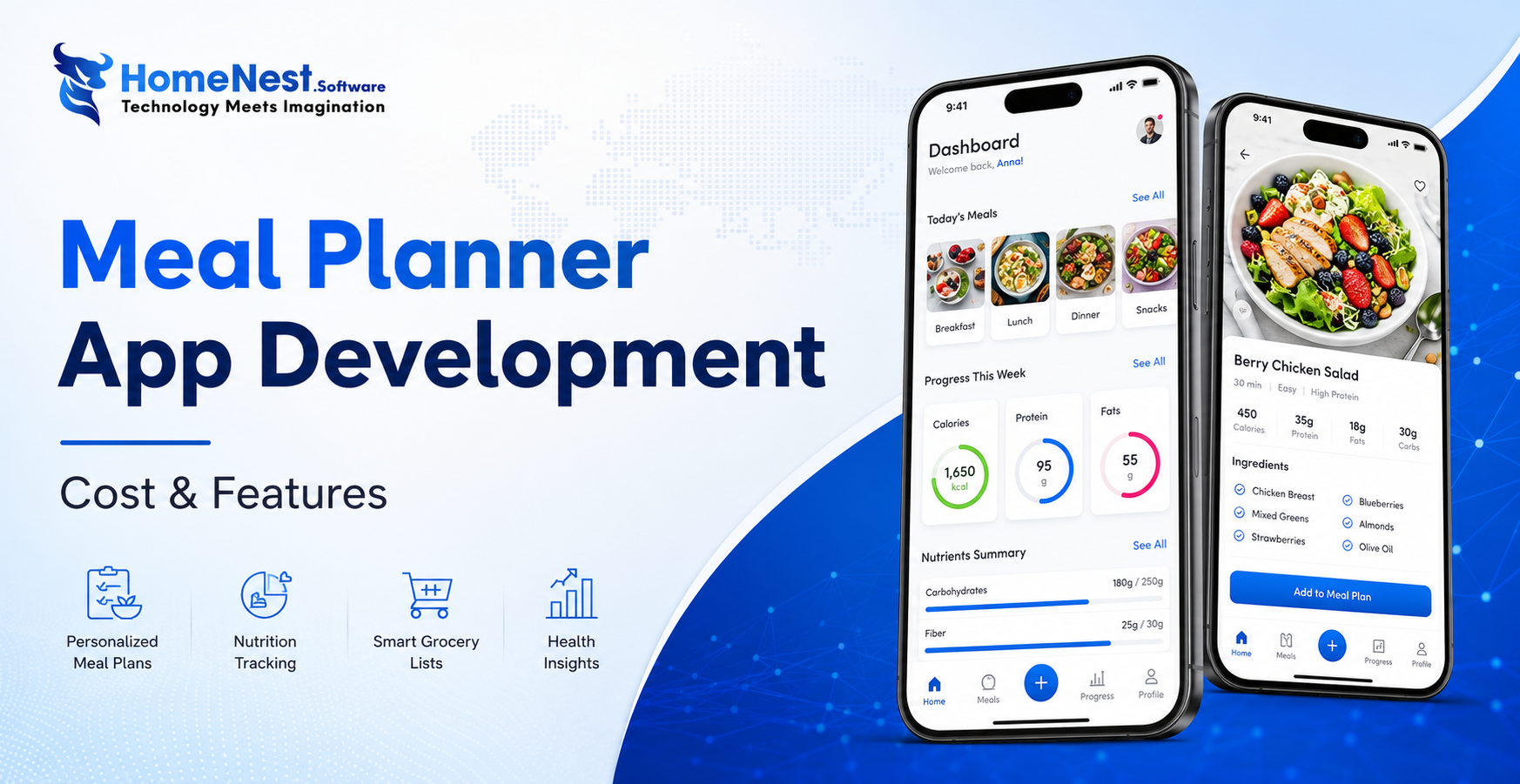
How to Build a Meal Planning App: A Complete Step-by-Step Guide
Building a successful meal planning app goes beyond creating an attractive interface it requires a clear business strategy, personalized user experiences, and scalable technology. By combining essential features like AI-powered meal recommendations, nutrition tracking, grocery list automation, and wearable integration, businesses can deliver lasting value to users while capitalizing on the growing digital health market. Partnering with an experienced mobile app development company ensures your solution is secure, future-ready, and designed to succeed in an increasingly competitive health-tech industry.
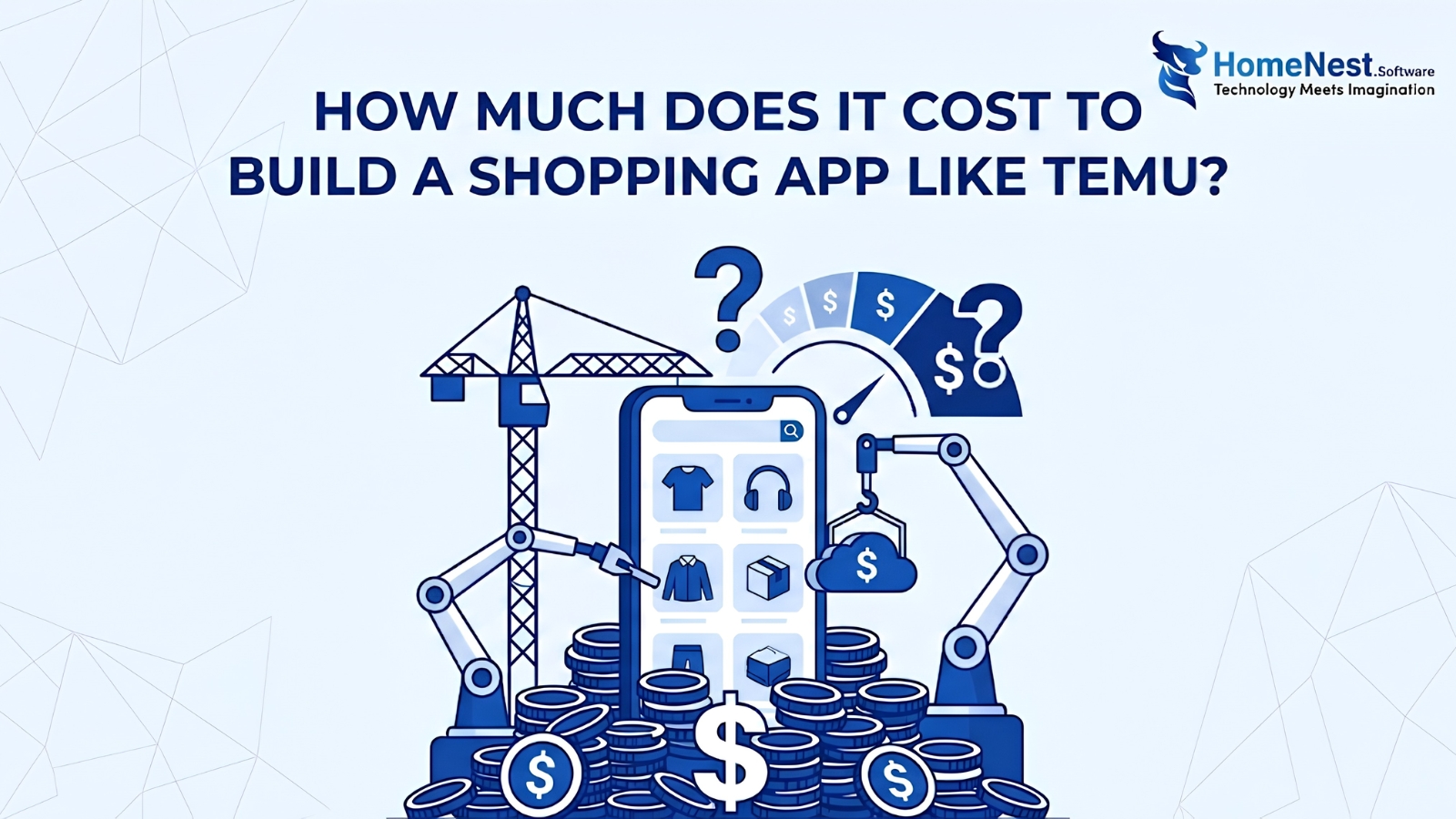
How Much Does It Cost to Build a Shopping App Like Temu?
Temu’s meteoric rise to over 900 million global downloads proves the power of combining AI, gamification, and social commerce, but building a similar viral shopping platform requires careful financial and technical planning. Developing an app like Temu typically costs anywhere from $40,000 for a basic Minimum Viable Product (MVP) to over $300,000 for a fully-featured platform. This guide breaks down every cost category, analyzes the core features driving Temu’s success, highlights the best technology stacks, and offers practical strategies to optimize your development budget without compromising on quality.

Criteria For Choosing The Right App Design Agency
UI/UX design is the logical foundation of a system, not merely a visual element. Choosing the wrong partner will directly lead to technical debt, budget overruns, and disruptions in the development process. This article provides a 6-step evaluation framework and a list of operational risks, helping businesses eliminate subjective design advice and accurately assess agency capabilities based on developer handoff standards and practical business performance.
How Does AI in Banking Industry Impact the Future?
Artificial intelligence (AI) has transitioned from a supplementary tool to a core infrastructure of financial data management, optimizing profitability through real-time fraud detection, natural language processing (NLP), and high-speed credit scoring models. “Deploying AI in the financial sector requires more than just algorithmic accuracy, it demands a highly secure cloud architecture and rigorous data governance,” commented Nguyen Tien, co-founder of HomeNest Software. Why read this guide? We skip the theoretical jargon to focus entirely on technical implementation. Whether you’re evaluating a vendor or planning a system overhaul, this article will detail: Operational Efficiency: Automating unstructured data workflows at scale. Risk Architecture: Implementing real-time threat detection and AML compliance. Data ownership: The essential need for 100% ownership of the source code to ensure full algorithm auditability.
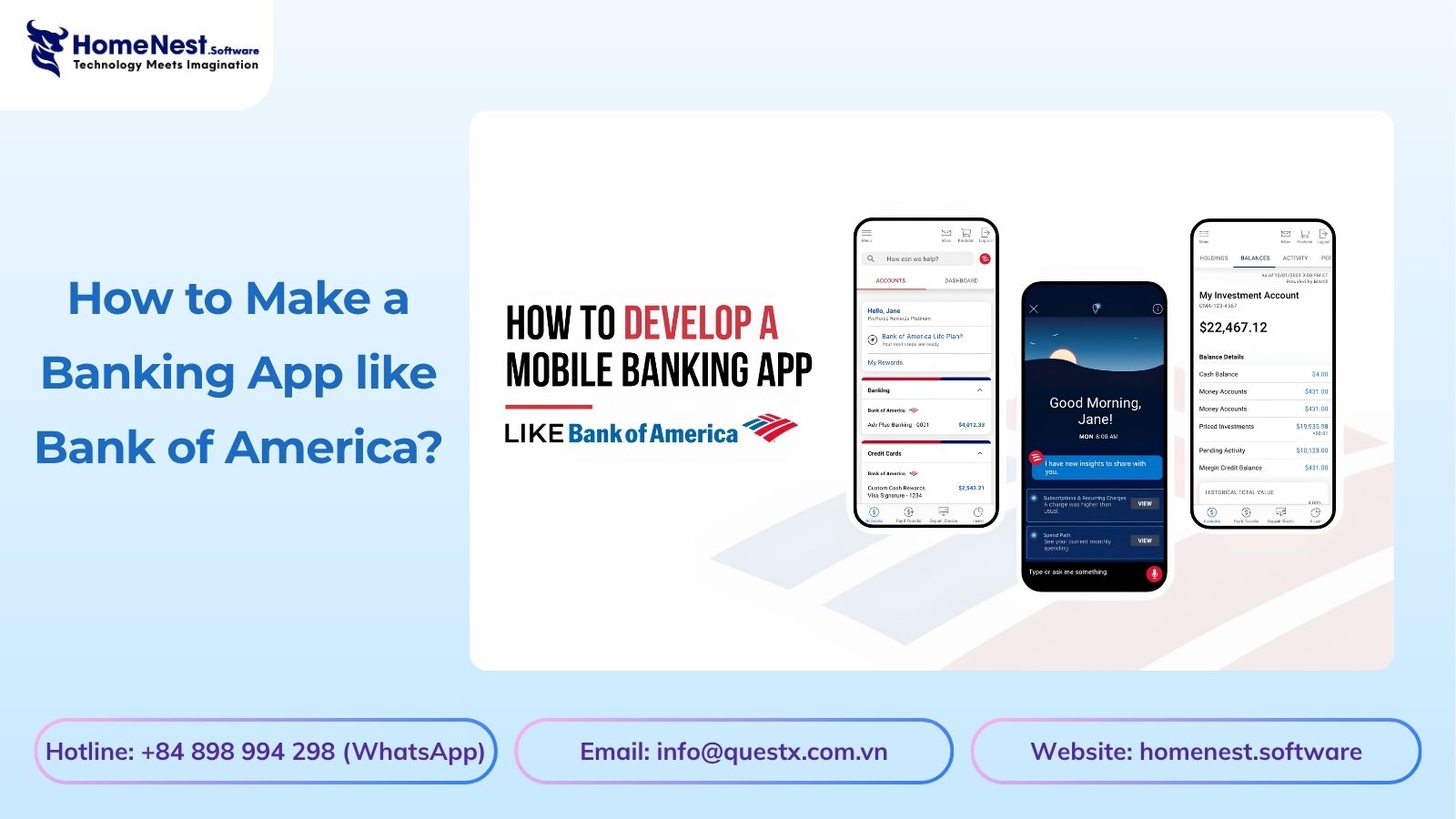
How to Make a Banking App like Bank of America?
Developing a mobile banking application like Bank of America extends far beyond basic UI design; it requires engineering a fault-tolerant backend capable of real-time ledger synchronization, biometric authentication, and high-volume data processing under strict regulatory frameworks. Drawing from HomeNest Software’s deep experience in architecting enterprise-grade fintech solutions, this guide strips away theoretical jargon to focus entirely on operational and technical execution. What you will find in this guide: We break down the precise development roadmap, from mapping out microservices and ensuring PCI-DSS compliance to estimating MVP development costs and securing absolute data sovereignty through 100% source code ownership. If you are preparing to build, scale, or audit a financial platform, this blueprint provides the exact framework you need.
Banking App Development Cost
Building a banking application is rarely a simple process; it’s a complex technical challenge requiring a balance between complying with stringent financial regulations, handling large transaction volumes, and a scalable cloud architecture. Miscalculating these technical requirements from the outset often leads to significant technical debt and budget overruns. Based on HomeNest Software’s practical experience in designing enterprise-grade fintech solutions, this guide bypasses generic estimates to provide a realistic analysis of banking application development costs. What you’ll find in this guide: We analyze the true cost factors, from technology selection and API integration to the hidden costs of regulatory compliance and security infrastructure. Whether you’re launching a minimum viable product or expanding an existing financial platform, this analysis provides the precise operational data you need to plan your budget effectively.