
Top Features That Make A Taxi Booking App Stand Out In 2026
Building a standout taxi booking app in 2026 requires a forward-looking tech strategy. From AI-driven personalized booking and real-time IoT telematics to scalable cloud-native engineering, HomeNest Software highlights the essential features and technical recommendations needed to boost user retention, optimize fleet operations, and dominate the modern mobility market.
Scope of Work
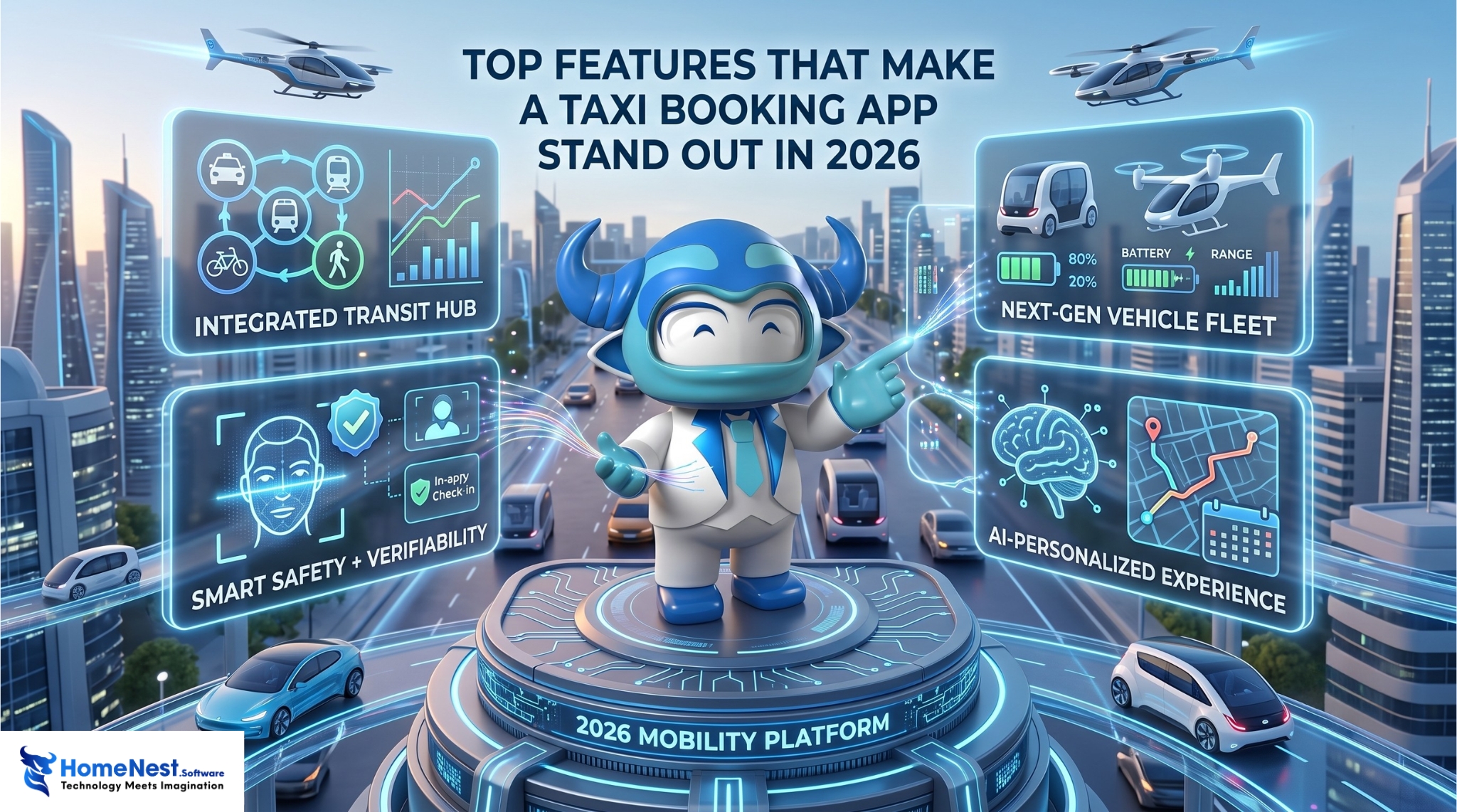
In 2026, ride-hailing platforms must evolve beyond basic GPS connection to survive. From predictive AI dispatch and proactive IoT safety to EV fleet management and frictionless 2-tap booking, building a market-leading app requires a forward-looking software strategy.
In this article, HomeNest Software breaks down the essential features and technical architecture that will make your taxi booking app stand out and thrive in 2026.
The Shifting Landscape of the Taxi Booking Market in 2026
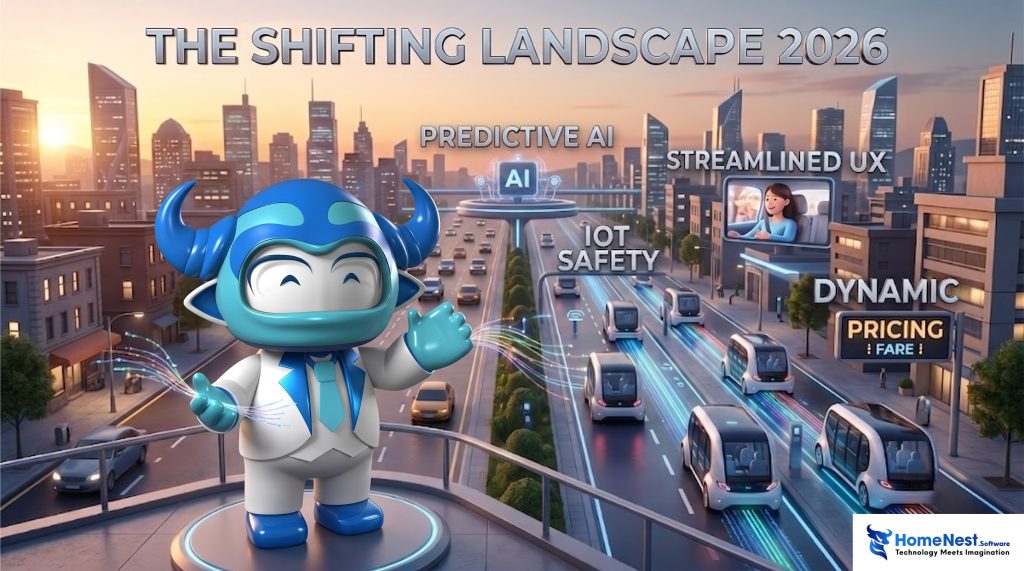
The Shifting Landscape of the Taxi Booking Market
The Evolving Market Context
In 2026, a taxi booking app is no longer just a tool to connect point A to point B. Modern passengers demand a seamless, end-to-end mobility experience centered around speed, active safety, and cost efficiency. As urban transit patterns become increasingly dynamic, user expectations have moved beyond basic GPS tracking toward instant fulfillment, personalized journeys, and transparent pricing.
Strategic Challenges for Businesses
With fierce market competition, basic booking features are no longer enough. To retain both passengers and drivers, platforms must establish a clear technological edge through predictive AI, IoT safety, and streamlined UX.
The HomeNest Software Perspective
At HomeNest Việt Nam, we emphasize that long-term success begins at the architectural stage. Rather than overloading your app with non-essential tools, strategically selecting the right core features during early software design is the single most critical step to achieving market leadership.
Explore more: “EV Taxi Booking App Development: Top Apps, Costs And Advantages”
Core Features That Make A Taxi App Stand Out In 2026
Ultra-Fast 2-Tap Booking & Personalized AI
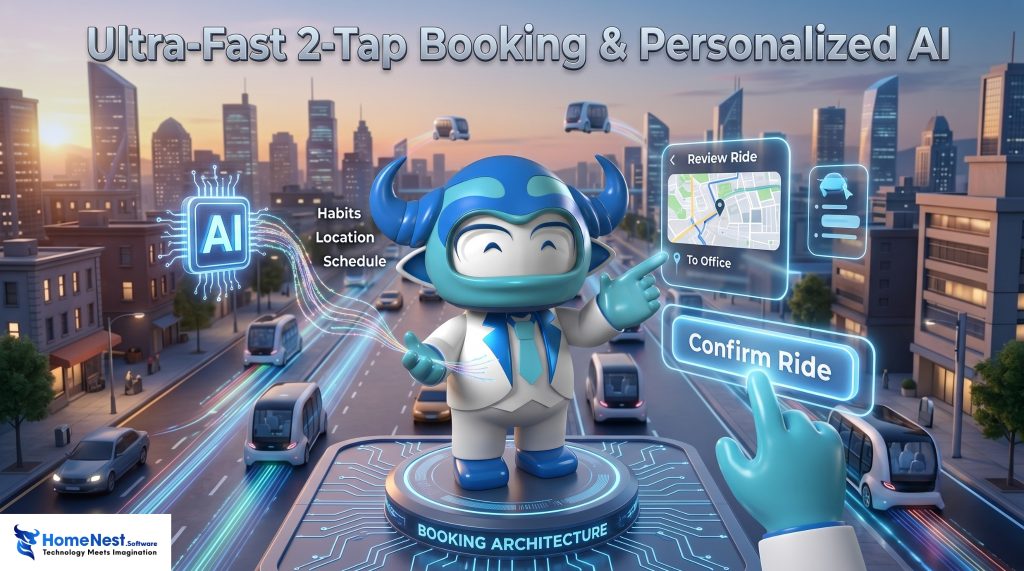
Ultra-Fast 2-Tap Booking & Personalized AI
How It Works
Traditional booking takes 5 to 7 manual steps. The 2-Tap Booking architecture leverages predictive AI to streamline the flow into just two taps:
Contextual Analysis: The AI engine processes real-time data—such as routine habits, time of day, current GPS, and schedule.
Auto-Configuration: On launch, the app auto-fills the entire trip details:
- Pickup & Destination: Auto-selected based on daily patterns (e.g., “Office” at 8:00 AM).
- Vehicle & Payment: Pre-set to the rider’s preferred options.
Execution in 2 Taps:
- Tap 1: Review the auto-suggested trip.
- Tap 2: Tap “Confirm Ride” to request a driver immediately.
Key Benefits
- Boosts Conversion Rates: Removing booking friction prevents drop-offs, directly increasing completed bookings.
- Enhances Retention: A seamless “3-second booking” builds user habituation and long-term app loyalty.
- Optimizes Backend Speed: Pre-predicting destinations allows the system to pre-query nearby drivers, cutting API response times.
Predictive Dispatch & Smart Demand Forecasting
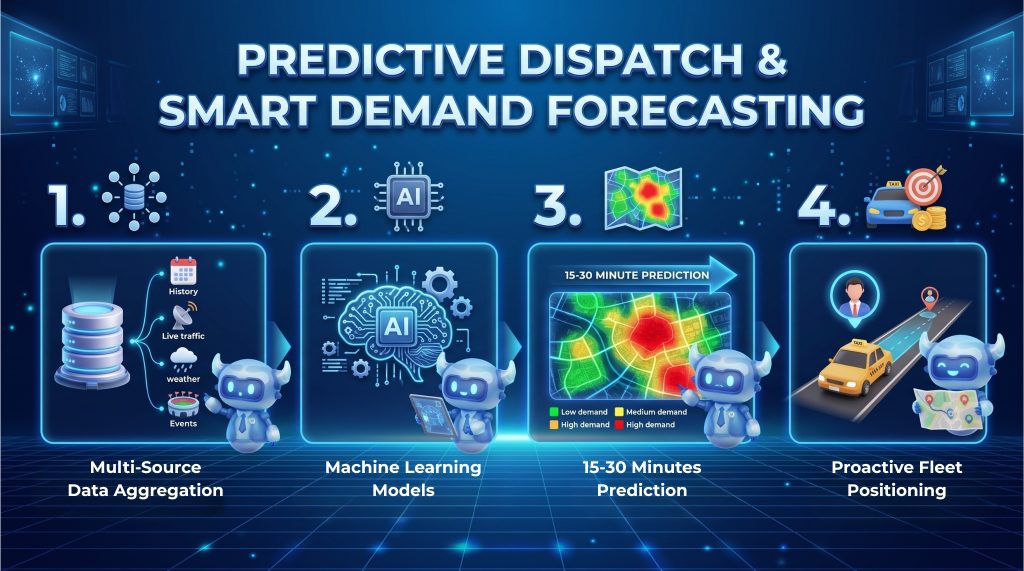
Predictive Dispatch & Smart Demand Forecasting
How It Works
Traditional dispatch systems operate reactively—assigning drivers only after a passenger submits a request. Predictive Dispatch transforms this model into a proactive system using real-time predictive analytics:
- Multi-Source Data Aggregation: The AI engine continuously ingests real-time variables, including historical trip volume, live traffic conditions, weather changes, public transport delays, and local event schedules.
- Heatmap & Demand Forecasting: Machine learning models process these data streams to accurately predict high-demand hotspots 15 to 30 minutes before surge activity actually begins.
- Proactive Fleet Rebalancing: The app automatically sends targeted notifications and financial incentives to idle drivers, positioning them in predicted high-demand zones before passenger request spikes.
Key Benefits
- Cuts Passenger Wait Times: Having drivers pre-positioned in high-volume zones reduces Average Estimated Time of Arrival (ETA) to under 5 minutes.
- Maximizes Driver Earnings: Minimizes unpaid “deadhead” driving time, allowing drivers to complete more trips per hour with optimized route planning.
- Flattens Surge Pricing Peaks: Proactively balancing supply and demand prevents extreme price spikes, maintaining fair rates and improving passenger satisfaction.
Proactive Safety Powered by IoT & Biometrics
Proactive Safety Powered by IoT & Biometrics
How It Works
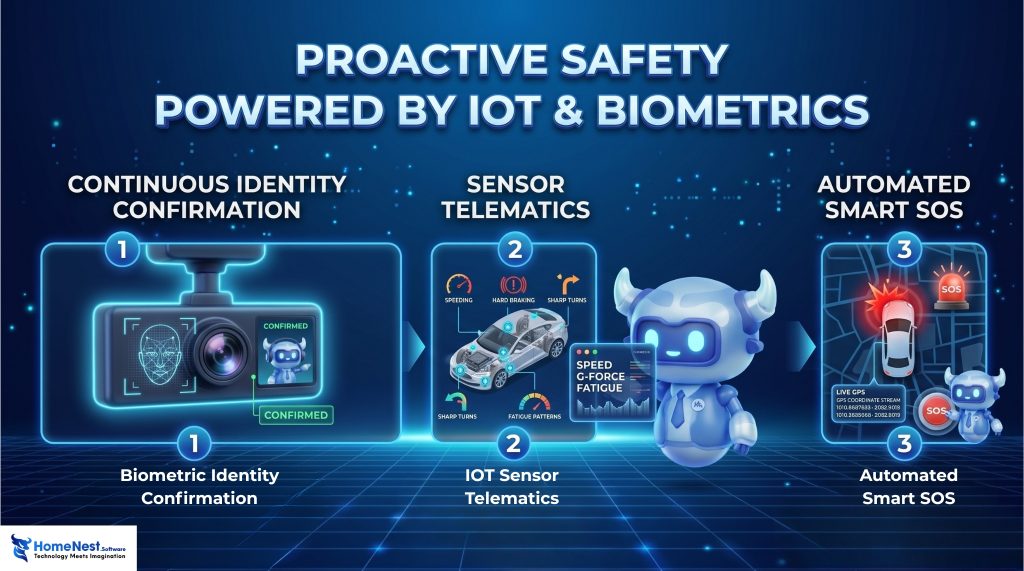
Traditional app safety is reactive—handling incidents after they happen. Proactive Safety uses real-time IoT telematics and biometrics to detect and prevent hazards before they escalate:
- Continuous Identity Verification (Biometric KYC): The system triggers random, mid-shift facial scans to confirm the driver matches the registered profile and eliminate unauthorized account sharing.
- Sensor Telematics (IoT Integration): Onboard sensors track driving behavior in real time—detecting speeding, hard braking, sharp turns, or fatigue patterns to send instant driver warnings.
- Automated Smart SOS: Unplanned off-route stops or crash detection automatically prompt a safety check. Unanswered alerts instantly stream live GPS coordinates to emergency responders.
Key Benefits
- Mitigates Risk Proactively: Prevents accidents and illegal driver swaps before they occur, drastically cutting platform liability.
- Builds Superior User Trust: Hardware-backed safety measures reassure solo and late-night riders, driving brand loyalty.
- Reduces Operational Costs: Encouraging safer driving habits lowers accident rates, vehicle wear-and-tear, and insurance premiums.
EV-Fleet Management & Green Mobility
EV-Fleet Management & Green Mobility
How It Works
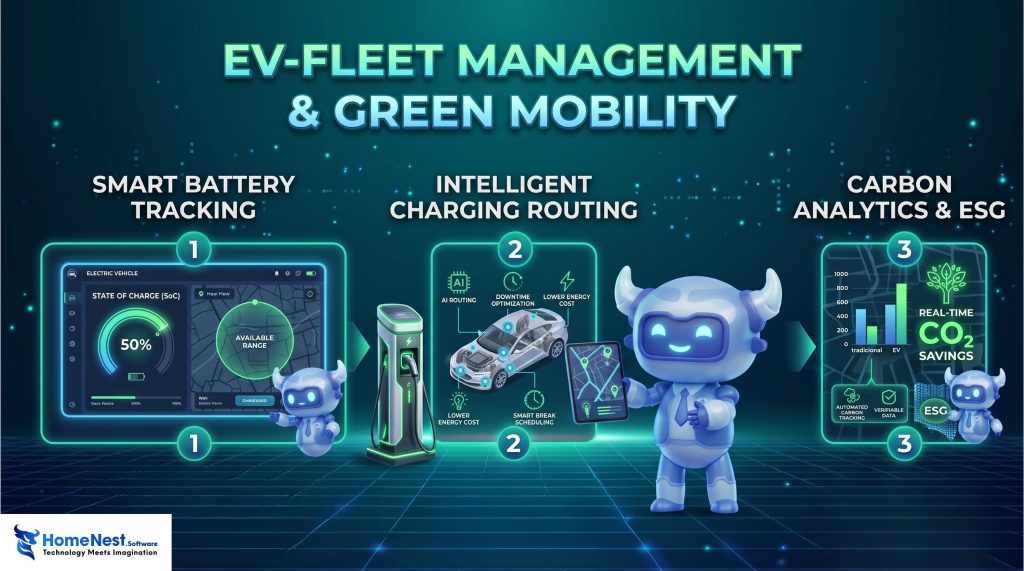
EV fleets require specialized logic beyond traditional fuel routes. EV-Fleet Management combines real-time vehicle telematics with AI routing to keep fleets charged and efficient:
- Smart Battery Tracking: Real-time State of Charge (SoC) monitoring ensures drivers are only assigned trips within their available battery range.
- Predictive Downtime Charging: AI routes drivers to available charging stations during low-demand periods or shift breaks, avoiding peak-hour queues.
- Automated Carbon Analytics: Tracks fuel displacement per trip to calculate real-time $\text{CO}_2$ savings compared to gas-powered vehicles.
Key Benefits
- Eliminates Range Anxiety: Intelligent charge-routing prevents battery depletion during trips and maximizes active drive time.
- Attracts Corporate B2B Clients: Verifiable CO₂ tracking helps corporate accounts meet strict ESG compliance targets.
- Lowers Operational Costs: Automated fleet management reduces overall energy costs and accelerates green transition ROI.
Explore more: “How To Create A Taxi App Like Grab?”
Multi-Modal Mobility
Multi-modal Mobility
How It Works
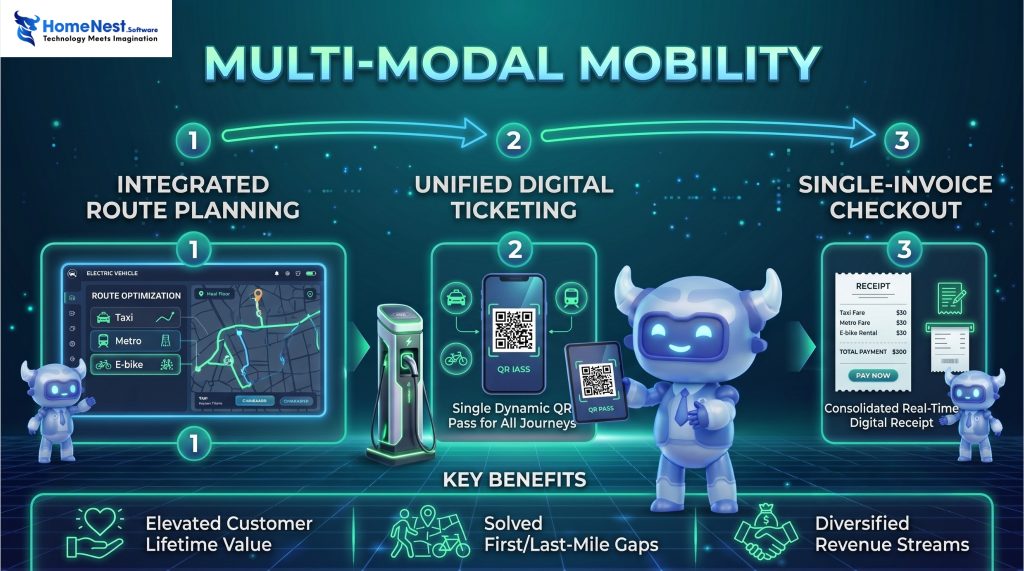
Enables riders to combine multiple transport modes (Taxi → Metro → E-bike) in a single itinerary with a unified payment receipt.
- Integrated Route Planning: AI calculates optimal routes combining multiple transit modes (Taxi → Metro → E-bike) based on live schedules and traffic.
- Unified Digital Ticketing: Riders complete multi-leg journeys using a single dynamic QR code or pass.
- Single-Invoice Checkout: Combines fares across all transport providers into one seamless payment and digital receipt.
Key Benefits
- Elevates Customer Lifetime Value: Serving as an all-in-one transit hub increases app usage frequency and user retention.
- Solves First/Last-Mile Gaps: Connecting passengers to public transit expands service reach into areas with low taxi availability.
- Diversifies Revenue Streams: Opens new commission models through partnerships with public transit and micro-mobility operators.
Comprehensive Driver Retention Tools
How It Works
Acquiring new drivers is far costlier than retaining existing ones. Comprehensive Driver Retention Tools combine real-time fintech, predictive AI, and transparent analytics to build partner loyalty:
- Instant Earnings Payouts: Real-time payment APIs allow drivers to cash out net earnings instantly after every trip instead of waiting for weekly cycles.
- Predictive AI Heatmaps: Live demand analytics guide drivers to high-yield pickup zones before surges begin, minimizing unpaid idling time.
- Transparent Earnings Analytics: Dashboards display trip fares, tip breakdowns, passenger ratings, and progress toward bonus tiers with zero hidden deductions.
Key Benefits
- Stabilizes Fleet Supply: Solves driver churn by offering immediate liquidity and reliable earnings growth.
- Maximizes Hourly Income: Directing drivers to active demand zones cuts unpaid driving miles and boosts completed trips per hour.
- Reduces Acquisition Costs: Satisfied drivers stay longer and drive organic word-of-mouth referrals, cutting onboarding expenses.
Explore more: “Top Taxi Booking App Features That Differentiate Leading Apps”
Technical Recommendations for App Development
- Scalable Architecture Strategy: We recommend prioritizing Microservices and Cloud-Native architecture. This ensures high system resilience and seamless auto-scaling during sudden traffic surges, preventing downtime during peak hours.
- Real-Time Latency Optimization: To achieve sub-second location tracking, leverage Edge Computing. Processing GPS data closer to the user drastically reduces server latency, ensuring fluid map rendering and instant driver-rider synchronization.
- Enterprise-Grade Security & Compliance: Maintain full compliance with global data protection standards (such as GDPR and CCPA). Implement end-to-end encryption (E2EE) for sensitive user data and PCI-DSS-compliant protocols for payment processing to safeguard financial transactions.
Explore more: “How Much Does Taxi Booking App Development Cost?”
Build Your Next-Gen Taxi App with HomeNest Software
The taxi booking landscape in 2026 demands more than basic connectivity. To stay competitive, mobility platforms must center their digital strategy around four core pillars: Predictive AI, Proactive IoT Safety, EV Fleet Integration, and Frictionless User Experience.
At HomeNest Software, we offer end-to-end software development services—including software architecture consulting, intuitive UI/UX design, and full-cycle mobile app engineering tailored to the latest 2026 tech standards.
Ready to transform your mobility service? Contact the expert engineering team at HomeNest Software today to schedule an in-depth consultation and explore a customized solution tailored to your business model.
Contact information:
- Phone / WhatsApp: (+84) 898 994 298
- Email: info@questx.com.vn
- Headquarters: SAV5 Tower, The Sun Avenue, 28 Mai Chi Tho Street, Binh Trung Ward, Ho Chi Minh City, Vietnam
- Branch Office: SAV4 Tower, The Sun Avenue, 28 Mai Chi Tho Street, Binh Trung Ward, Ho Chi Minh City, Vietnam
Frequently Asked Questions
How long does it take to build a custom taxi booking app in 2026?
Development typically takes 4 to 6 months, covering architecture design, UI/UX, AI integration, and QA testing. At HomeNest Software, we use agile workflows to launch market-ready MVPs even faster.
How does AI predictive dispatch differ from traditional dispatching?
Traditional dispatch is reactive—assigning drivers only after a request is made. AI predictive dispatch proactively forecasts demand hotspots 15–30 minutes in advance, positioning drivers early to cut passenger wait times below 5 minutes.
Why choose Microservices over a Monolithic architecture?
Monolithic apps risk server crashes during demand surges. Microservices decouple core functions (dispatch, payments, tracking) into independent modules, enabling seamless auto-scaling, high uptime, and faster feature updates.
How can smaller transport businesses compete with giants like Uber?
By focusing on niche capabilities and localized UX—such as EV-fleet management, frictionless 2-tap booking, multi-modal transit options, and instant driver payouts that boost fleet loyalty.
What security standards are required for modern mobility apps?
Platforms must enforce GDPR/CCPA for privacy compliance, PCI-DSS for secure payments, and End-to-End Encryption (E2EE) for user data and live GPS tracking.
Latest Articles
View All
How Much Does It Cost To Develop A Food Delivery App Like Zomato?
Discover the complete cost breakdown and technical roadmap to build a Zomato-like food delivery app with HomeNest Software. This guide explores budget tiers, the essential 4-panel architecture (Customer, Merchant, Driver, Admin), modern tech stack recommendations, and proven monetization strategies. Learn how HomeNest Software transforms your digital platform vision into a scalable, high-yielding business asset!

GitHub vs GitLab – Architecture and Selection Guide
Managing source code requires stable infrastructure. Automating software releases requires reliable pipelines. Tool sprawl creates operational complexity. Engineering teams face friction when using fragmented DevOps tools. Selecting between GitHub and GitLab shapes long term development efficiency.
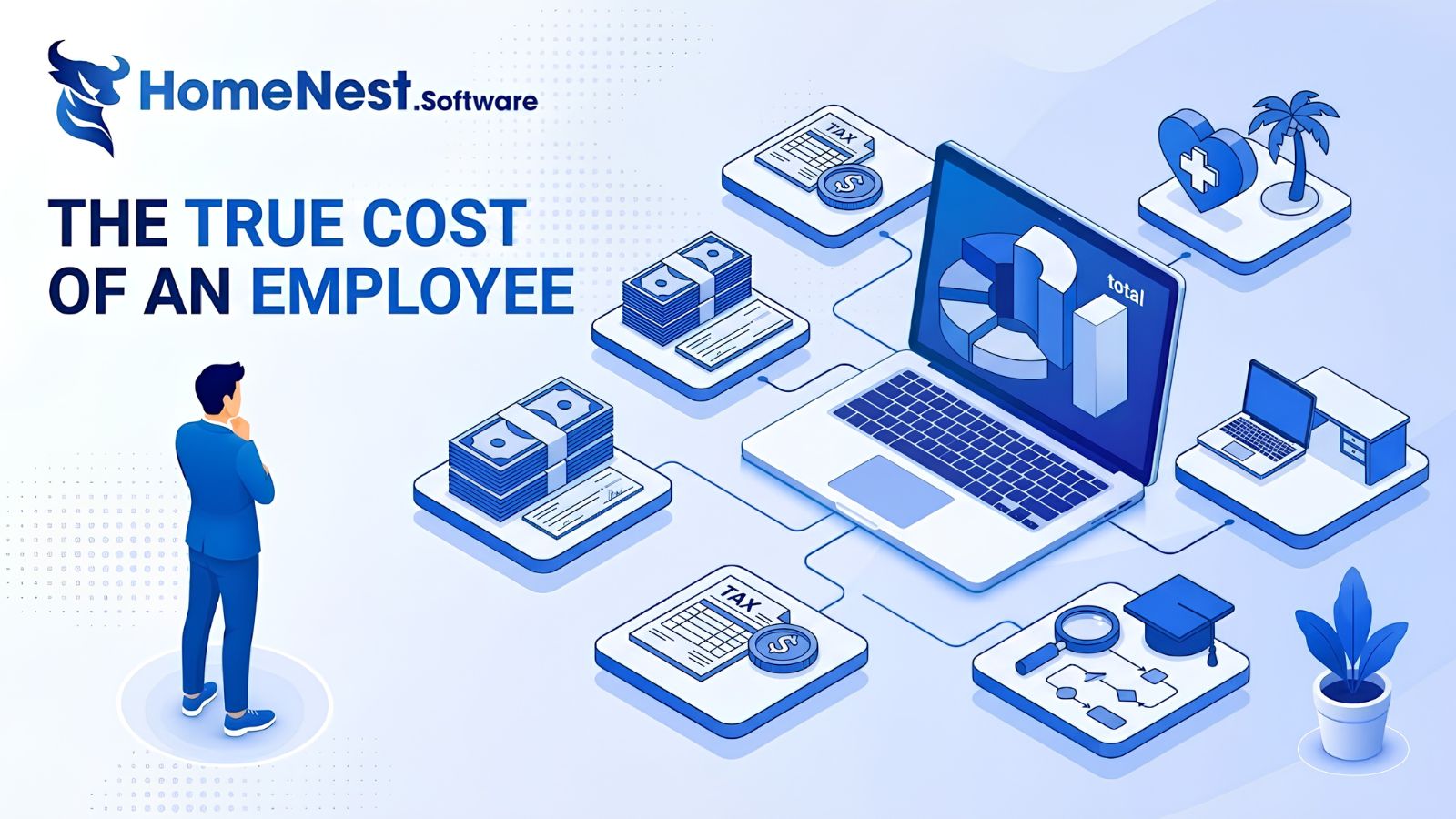
The True Cost of an Employee: A Complete Breakdown for Employers
This article reveals that the true cost of an employee is typically 25% to 40% higher than their base salary due to hidden expenses like taxes, benefits, workspace, and recruiting. To address this, the guide provides a detailed 7-step framework to accurately calculate total employer costs, alongside actionable strategies to optimize budgets and improve retention without reducing pay.
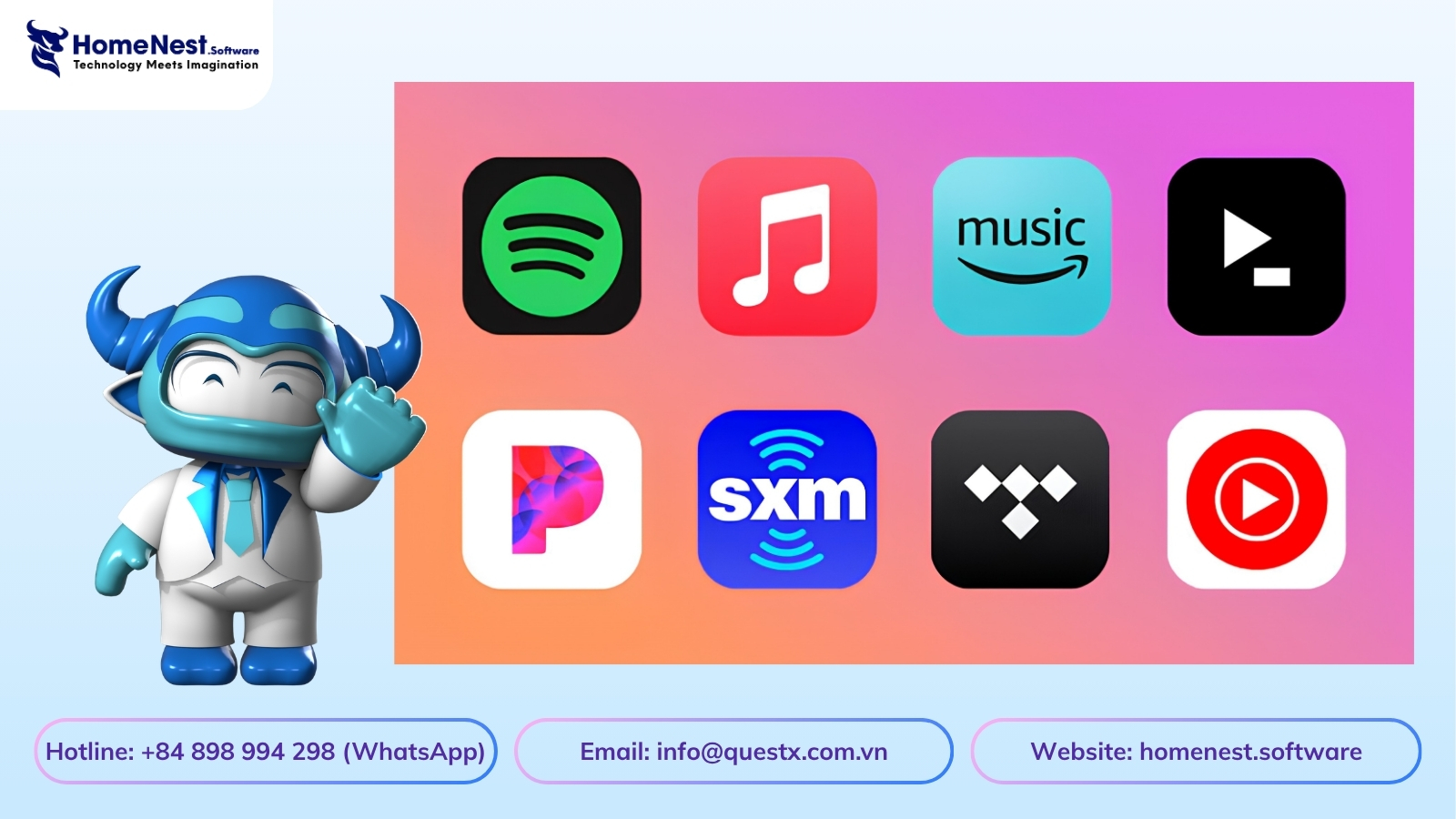
Essential Tips To Develop A Music Streaming App
Discover expert tips to develop a successful music streaming app with HomeNest Software. This guide covers essential features, legal licensing, and scalable technology stacks. Learn how to build a robust, cross-platform application with AI personalization to stand out in the 2026 competitive audio market.
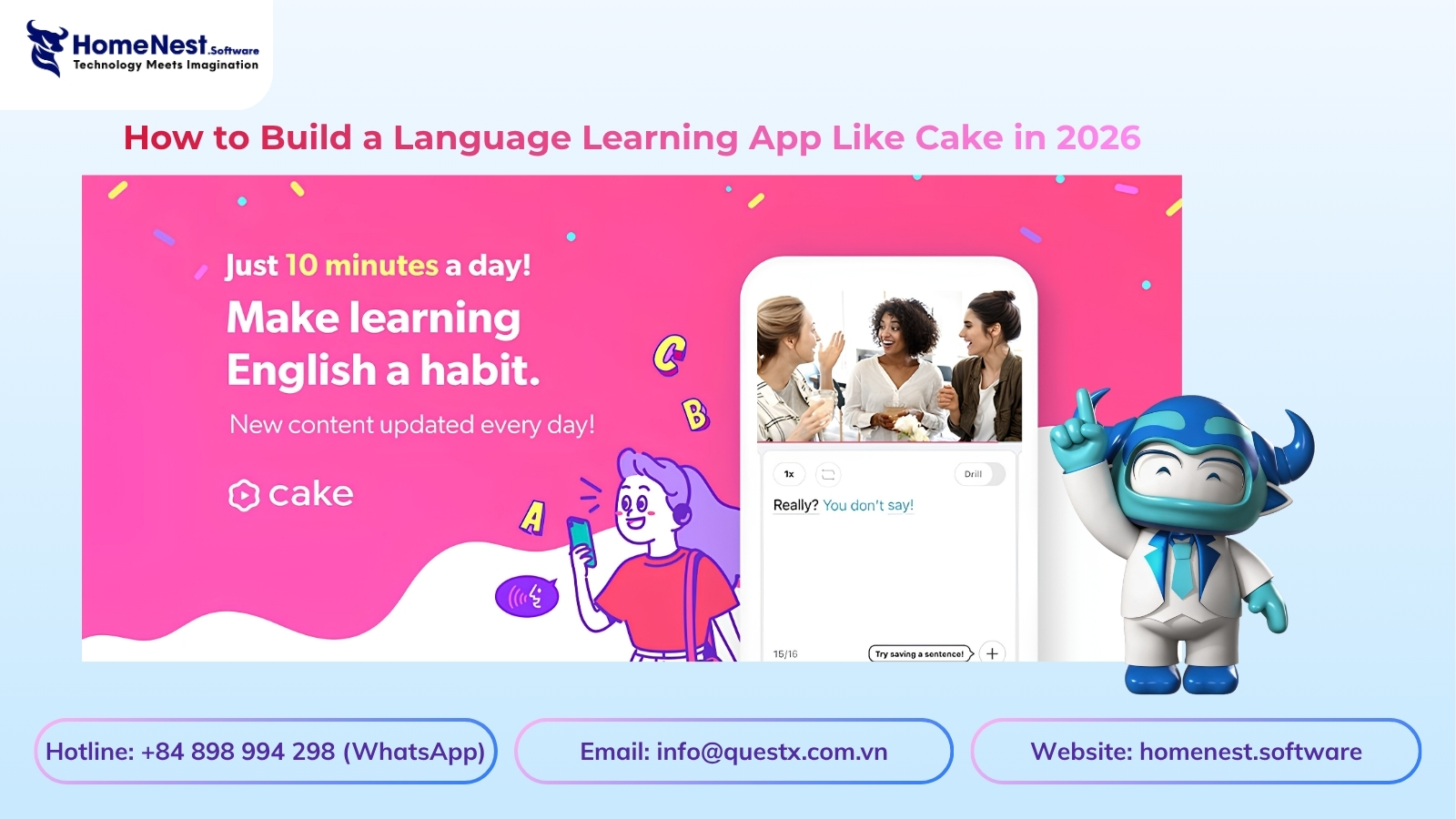
How to Build a Language Learning App Like Cake
Discover how to build a successful language learning app like Cake with this comprehensive guide from HomeNest Software. We explore market research, essential MVP features, advanced AI integrations, tech stack selection, and estimated development costs. Partner with HomeNest Software to create a scalable, gamified, and highly engaging educational platform tailored to your business goals. Start your app development journey with us today.
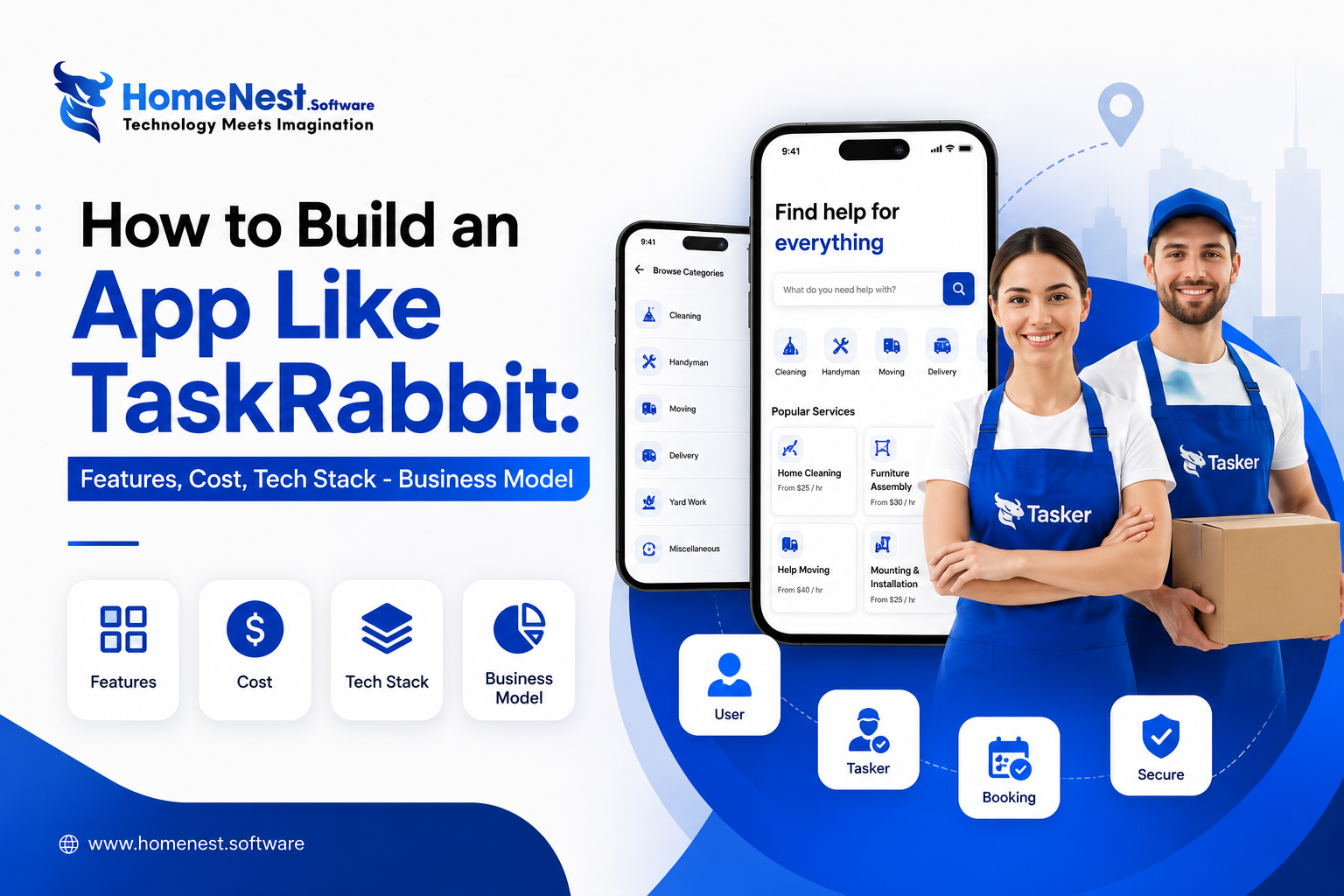
How to Build an App Like TaskRabbit: Features, Cost, Tech Stack – Business Model
Building an app like TaskRabbit is more than replicating existing features—it’s about creating a trusted marketplace that seamlessly connects customers with skilled service providers. By combining an intuitive user experience, secure payment systems, scalable architecture, and the right business model, you can launch a competitive on-demand platform. Partnering with an experienced app development company like HomeNest Software ensures your product is built with the technology, flexibility, and long-term scalability needed to succeed in the rapidly growing gig economy.