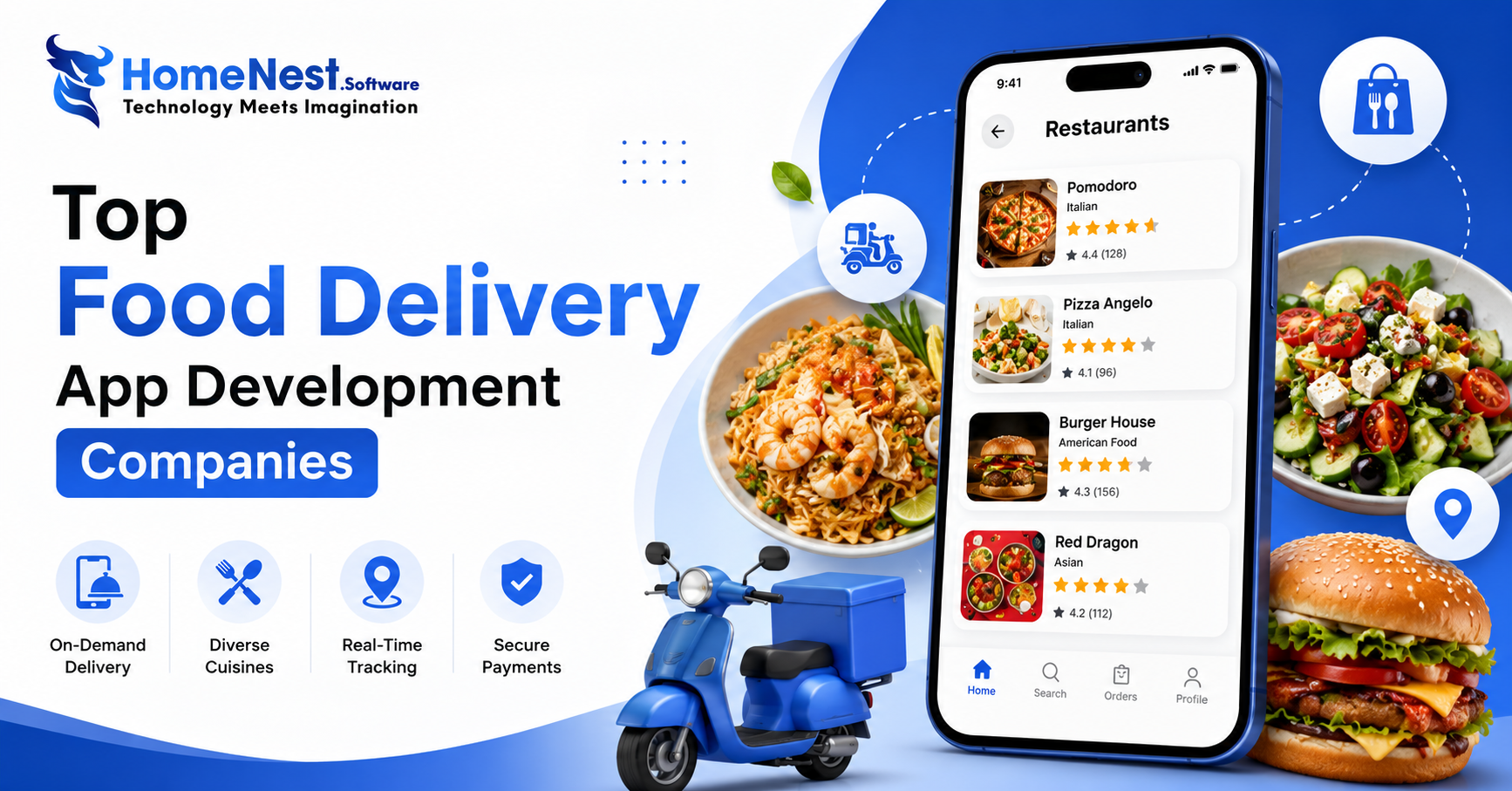
In today’s rapidly evolving food industry, the role of technology has become more critical than ever. As we move into 2026, the demand for fast, seamless, and efficient food delivery solutions continues to rise, pushing businesses to collaborate with top-tier food delivery app development companies. Food delivery apps are no longer a convenience they have become an essential part of everyday life, allowing users to order freshly prepared meals from their favorite restaurants with just a few taps.
In such a competitive and fast-paced market, identifying the right technology partners is crucial for success. This blog presents a curated overview of the Top 7 Food Delivery App Development Companies, highlighting the industry leaders that are shaping the future of digital food delivery.
So, without further delay, let’s dive in.
Food Delivery App Market Statistics Facts & Figures
The global food delivery app market is experiencing strong and sustained growth. It is projected to reach $1.40 trillion in revenue by 2026, expanding at a CAGR of 7.83%, and is expected to climb further to $1.91 trillion by 2029. The United States market alone is forecast to generate approximately $429.90 billion in revenue by 2026, highlighting its dominance in the global landscape.
In the U.S., market leadership is heavily concentrated, with DoorDash holding around 67% market share, followed by Uber Eats at 23%. Consumer behavior trends show that Gen Z users are the most active segment, placing an average of 2.3 food delivery orders per week.
Technology is also reshaping the sector at scale. By 2026, AI is expected to power nearly 50% of restaurant customer interactions, improving personalization, speed, and operational efficiency. At the same time, sustainability is becoming a decisive factor, with 78% of American consumers stating they value eco-friendly packaging and environmentally responsible delivery practices.
Despite rapid growth, the industry faces notable challenges. These include increasing regulatory scrutiny, particularly around deep discounting models in markets like India, and growing competition from e-commerce giants such as Amazon and Flipkart, which continue to expand into food and quick-commerce delivery.
Together, these figures highlight both the massive opportunity and the competitive complexity shaping the future of the global food delivery app market.
List of the Best 7 Food Delivery App Development Companies in the USA
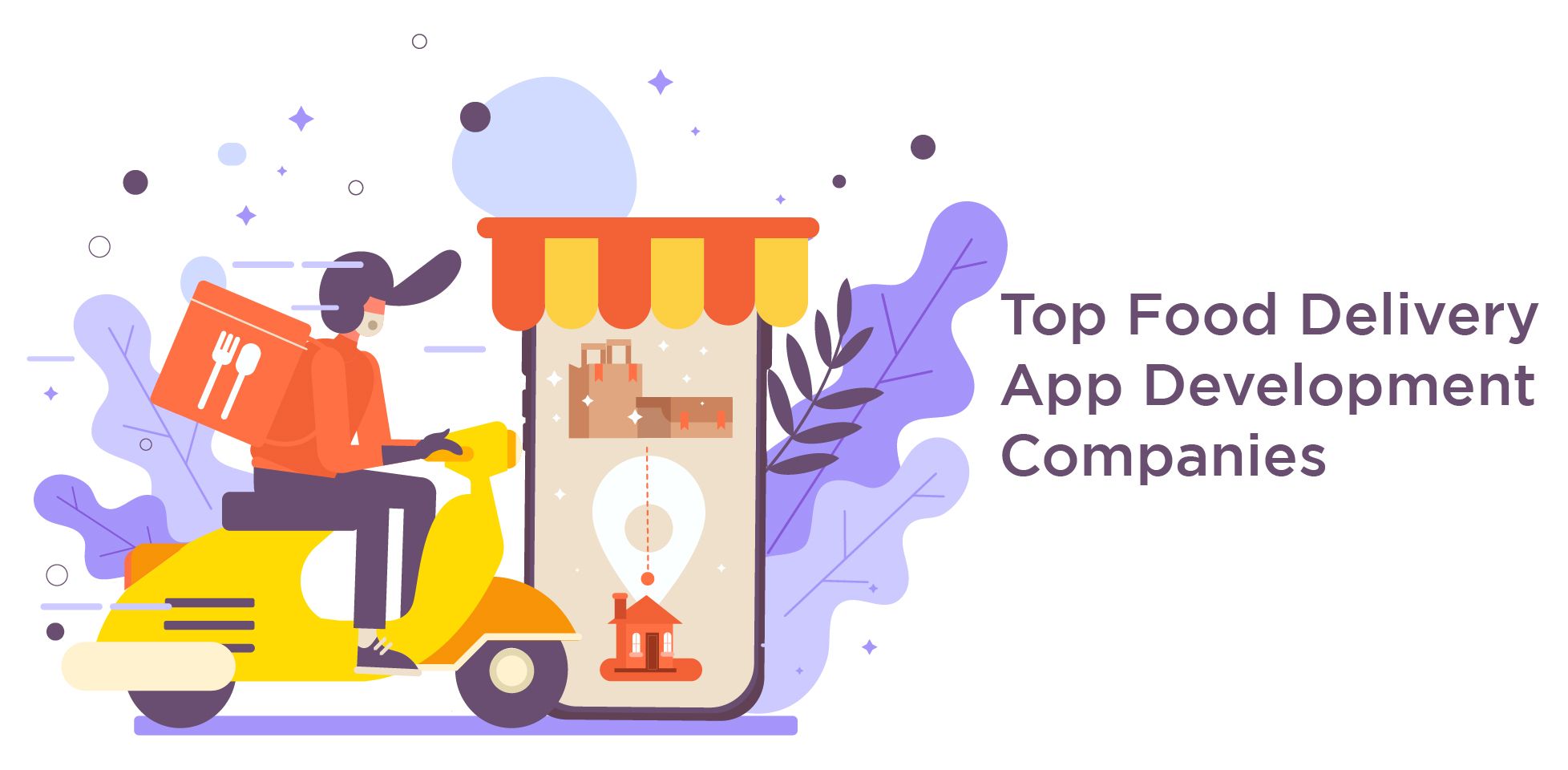
To help you choose the right technology partner for your next food-tech venture, we’ve curated a list of the top food delivery app development companies in the USA. These firms are recognized for their technical expertise, industry experience, and ability to deliver scalable, feature-rich food delivery platforms.
1. HomeNest Software
Founded: 2023
Company Size: 100+ professionals
Average Hourly Rate: $25 $55
Services:
Mobile App Development, Web Development, Custom Software Development, eCommerce Solutions, On-Demand App Development
HomeNest Software is a leading on-demand food delivery app development company in the USA, helping businesses build feature-rich food ordering and delivery platforms. Leveraging the latest technologies and market trends, the company develops user-friendly apps similar to Swiggy and Zomato.
With extensive experience across multiple business models, HomeNest Software delivers tailor-made restaurant app solutions for restaurant chains, food aggregators, cloud kitchens, and single restaurants helping brands increase visibility and customer engagement.
2. Appinventiv
Founded: 2015
Company Size: 1,000+ developers
Average Hourly Rate: $25 $49
Services:
Food Delivery App Development, Grocery Apps, Real Estate Apps, E-learning Platforms, Healthcare Apps, On-Demand Solutions
Appinventiv is a globally recognized digital product development company known for building scalable and innovative food delivery solutions. Their end-to-end offerings include customer apps, delivery partner apps, restaurant/vendor panels, and advanced admin dashboards.
By combining agile development, a robust tech stack, and a user-centric design approach, Appinventiv helps businesses stay competitive in the rapidly evolving food delivery ecosystem.
3. Xicom Technologies
Founded: 2002
Company Size: 300+ developers | 1,500+ clients
Average Hourly Rate: $25
Services:
Mobile App Development, Web Development, IT Consulting, QA & Testing, Software Development across healthcare, finance, retail, travel, and education
Xicom Technologies is a well-established app development company with a strong global presence. The company develops highly customized food delivery apps using advanced technologies tailored to client needs.
ISO 9001 certified and NASSCOM accredited, Xicom is trusted worldwide for delivering secure, scalable, and high-performance mobile and web applications.
4. Apptunix
Founded: 2015
Company Size: 1,000+ IT professionals
Average Hourly Rate: $25 $49
Services:
Food Delivery Apps, Grocery Delivery Solutions, Real Estate Apps, E-learning Platforms, Healthcare Apps, On-Demand Development
Apptunix is a result-driven app development company specializing in building scalable food delivery ecosystems. Their solutions include customer apps, delivery partner apps, restaurant/vendor panels, and data-rich admin dashboards.
With a focus on innovation, usability, and agile development, Apptunix enables businesses to launch high-performing online food delivery platforms with a competitive edge.
5. Hyperlink InfoSystem
Founded: 2011
Company Size: 350+ IT professionals
Average Hourly Rate: $15
Services:
Mobile App Development, eCommerce, Web & CMS Development, Blockchain, OTT App Development
Hyperlink InfoSystem is a well-known mobile app development company with over a decade of experience. The company delivers robust, growth-driven food delivery applications using cutting-edge technologies.
Known for its affordability and quality, Hyperlink InfoSystem is often chosen by startups and enterprises seeking reliable digital solutions without compromising performance.
6. Octal IT Solution
Founded: 2007
Company Size: 180+ professionals | 500+ clients
Average Hourly Rate: $25 $49
Services:
Food Delivery App Development for iOS & Android, Custom Software Solutions
Octal IT Solution specializes in building interactive, easy-to-manage food delivery apps similar to Grubhub and Uber Eats. The company follows agile methodologies to ensure faster development cycles and seamless integrations.
Serving startups, SMEs, and enterprises alike, Octal IT Solution delivers scalable, user-focused solutions that provide long-term business value.
7. TatvaSoft
Founded: 2001
Company Size: 1,080+ professionals
Average Hourly Rate: $30 $60
Services:
Software Product Development, Web Development, Custom Software Solutions, eCommerce Development, Mobile App Development
TatvaSoft is a globally trusted IT services provider with over 1,500 successful projects delivered across industries. The company is widely recognized for its quality-driven approach to web and mobile app development.
With decades of experience, TatvaSoft remains a top choice for enterprises seeking reliable, scalable food delivery app solutions.
Choosing the right food delivery app development company in the USA depends on your business goals, budget, and scalability requirements. The companies listed above bring proven expertise, strong portfolios, and innovative approaches to help you build successful food delivery platforms in 2026 and beyond.
Read more: USA App Development Costs: What You Need to Know
What Are the Benefits of Developing a Food Delivery App?
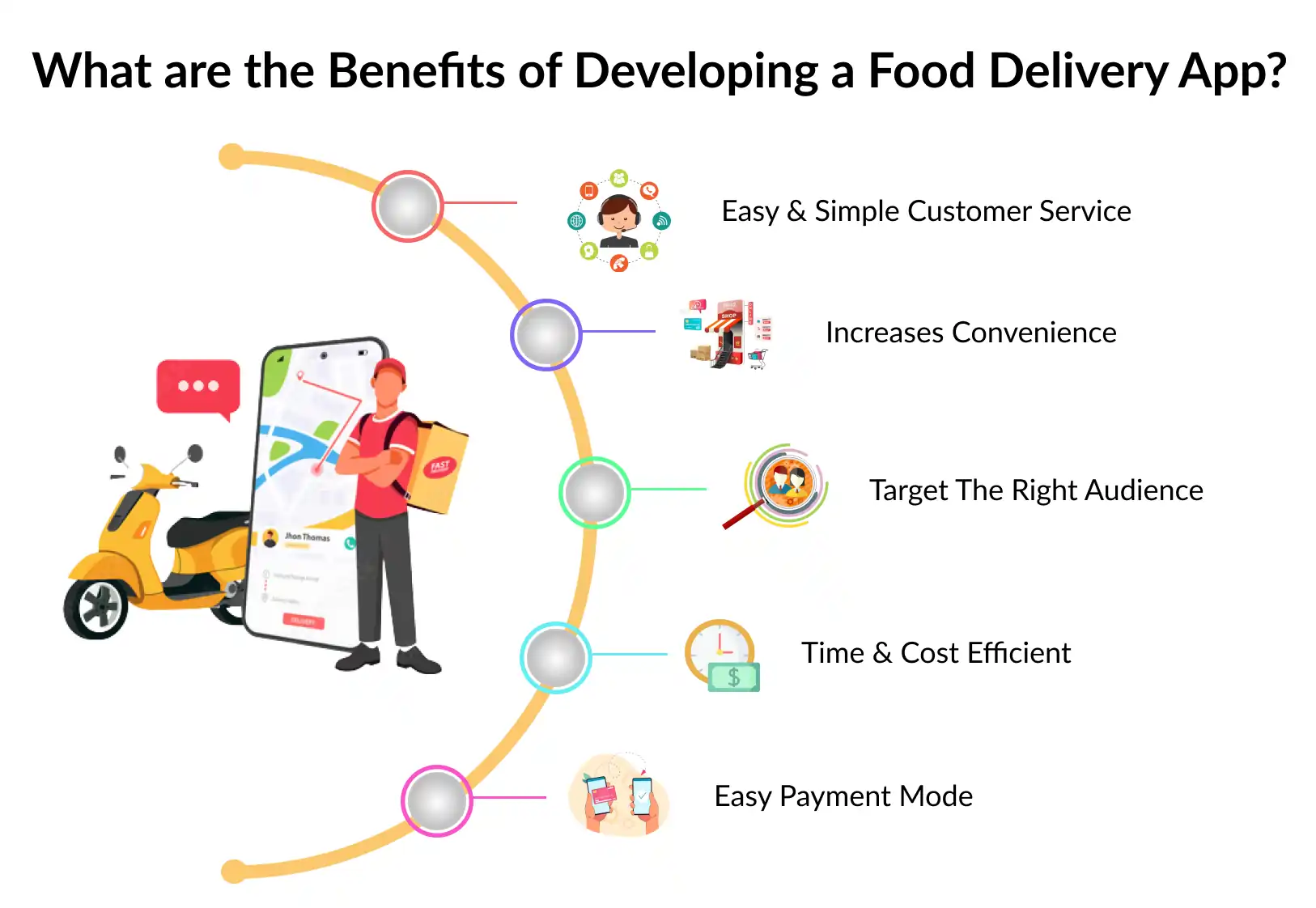
A food delivery app creates strong growth opportunities for businesses while offering unmatched convenience to customers. From increased sales to improved customer satisfaction, these platforms deliver value to all stakeholders. Let’s explore the key benefits of developing a food delivery app.
Easy & Efficient Customer Support
On-demand food delivery apps reduce the burden on restaurants by handling customer queries and issues through built-in support systems and automated workflows. With 24/7 customer assistance, restaurants can focus on food preparation while customers enjoy faster resolutions, shorter wait times, and a smoother overall experience leading to higher satisfaction and repeat orders.
Enhanced Convenience for Users and Merchants
Food delivery apps simplify the ordering process for customers and order management for restaurants. Users can browse menus and place orders effortlessly, while merchants can accept, prepare, and dispatch orders seamlessly resulting in faster service and improved operational efficiency.
Better Customer Targeting & Retention
By analyzing customer preferences, order history, and behavior, food delivery apps enable restaurants to target the right audience with personalized offers, discounts, and promotions. This data-driven approach increases customer engagement and turns first-time users into loyal, repeat customers.
Time & Cost Efficiency
Food delivery apps save time for customers by eliminating the need to travel, wait in lines, or dine out. At the same time, they help businesses reduce operational costs and improve delivery efficiency making the entire process more cost-effective for both buyers and sellers.
Multiple & Secure Payment Options
Modern food delivery apps support a variety of payment methods, including credit/debit cards, digital wallets, UPI, and cash-on-delivery (COD). This flexibility allows users to pay anytime, anywhere, improving checkout convenience and reducing cart abandonment.
Developing a food delivery app is not just about convenience it’s about building a scalable, customer-centric platform that drives revenue, strengthens brand presence, and enhances operational efficiency. With the right features and strategy, a food delivery app can become a powerful growth engine in today’s digital-first food industry.
What Are the Key Features of a Food Delivery App?
When planning to develop a food delivery app for your business, it’s essential to include the right set of features that ensure smooth operations, excellent user experience, and scalable growth. A successful food delivery platform typically consists of three core components: Customer App, Admin Panel, and Delivery Partner App.
Below is a breakdown of the key features required for each.
Key Features for the Customer App
The customer app is the face of your platform and plays a crucial role in user acquisition and retention.
-
User registration & login (email, phone, social login)
-
Restaurant discovery by location, cuisine, ratings, and offers
-
Digital menu browsing with prices and descriptions
-
Cart management and order customization
-
Secure online payments (cards, wallets, UPI, COD)
-
Real-time order tracking with live map view
-
Push notifications for order updates and promotions
-
Ratings, reviews, and feedback system
-
Order history and reordering
-
Personalized recommendations and offers
Key Features for the Admin Panel
The admin panel acts as the control center of the entire food delivery ecosystem.
-
Dashboard with real-time analytics and insights
-
User management (customers, restaurants, delivery partners)
-
Restaurant onboarding and approval management
-
Order monitoring and status management
-
Commission and payment management
-
Promotional campaigns and discount controls
-
Content management (banners, offers, categories)
-
Reports on sales, revenue, and performance
-
Security, compliance, and access control
Key Features for the Delivery Partner App
The delivery partner app ensures efficient order fulfillment and timely deliveries.
-
Secure login and profile management
-
Order request notifications and acceptance
-
GPS navigation for pickup and drop-off
-
Real-time delivery status updates
-
In-app communication with customers and restaurants
-
Earnings dashboard and payout tracking
-
Delivery history and performance metrics
-
Availability and shift management
A well-structured food delivery app combines user convenience, operational efficiency, and business intelligence. By implementing the right features across customer, admin, and delivery partner apps, you can build a robust platform that delivers value to every stakeholder and scales successfully in a competitive market.
Key Features for the Customer App
Easy Registration & Login
Your food delivery app should offer a simple and fast registration process to avoid early drop-offs. During sign-up or login, users should be able to enter essential details such as name, delivery address, contact number, and preferred login method (email, phone, or social media).
User Profile Management
A dedicated profile section allows customers to view and update their personal details, manage saved addresses, and adjust account settings ensuring a personalized and flexible experience.
Smooth Food Ordering System
The food ordering flow must be intuitive and enjoyable. Users should be able to browse restaurants, select items, customize orders, add them to the cart, and complete checkout effortlessly with minimal steps.
Secure Payment System
Offering multiple secure payment options increases trust and customer retention. The app should support cards, digital wallets, UPI, and Cash on Delivery (COD), ensuring a safe and flexible checkout experience.
Real-Time Order Tracking
Customers should be able to pin their location on a live map for accurate delivery and track their order in real time. This feature also displays estimated delivery time, improving transparency and user satisfaction.
Order History & Reordering
An order history section allows users to view past and current orders, reorder favorite meals quickly, and track ongoing deliveries making repeat purchases easy and convenient.
Push Notifications
Push notifications keep customers informed about order updates, delivery status, special offers, and discounts. They also reinforce brand presence and improve engagement.
24/7 In-App Chat Support
Round-the-clock chat support reassures users that help is always available. It enables quick resolution of order-related issues and builds trust with customers.
Key Features for the Admin App
-
Monitor and manage order fulfillment status in real time
-
Manage delivery partners and assign orders efficiently
-
Control logistics and delivery operations
-
Add or update restaurant listings and menus
-
Create and manage coupons, offers, and gift campaigns
-
Send notifications to customers and delivery partners
-
Enable real-time chat with customers
-
Access detailed sales reports, analytics, and performance insights
Key Features for the Delivery Partner App
-
Secure login and profile management
-
Built-in GPS navigation with optimized delivery routes
-
View order details and pickup/drop-off instructions
-
Update delivery status in real time
-
Capture digital signatures to confirm order fulfillment
-
View completed delivery history and earnings reports for salary calculation
A successful food delivery app relies on a well-balanced feature set across customer, admin, and delivery partner applications. By focusing on usability, transparency, and operational efficiency, you can build a scalable platform that delivers value to every stakeholder and thrives in a competitive market.
Conclusion
In today’s fast-moving food delivery app development landscape, choosing the right technology partner is critical to building a successful and scalable platform. Throughout this blog, we explored the top 7 food delivery app development companies in 2026, each recognized for innovation, technical excellence, and a strong focus on delivering seamless user experiences.
From advanced technology stacks to robust backend architectures, these companies have demonstrated their ability to build reliable, future-ready food delivery solutions. Ultimately, the best choice depends on how well a company’s strengths align with your specific business goals whether that’s scalability, customization, speed to market, or exceptional user experience.
If you’re looking for a trusted partner to turn your idea into a high-performing food delivery app, HomeNest Software stands out as a leading choice. With a dedicated team of experienced developers and a results-driven approach, HomeNest Software helps businesses bring their vision to life by building feature-rich, scalable, and user-friendly food delivery applications tailored to real market needs.
Partner with the right experts, and your food delivery app can become a powerful engine for growth in an increasingly competitive digital marketplace.
Contact HomeNest Software today for a free consultation and inquire about our all-inclusive App Design package offers!
HomeNest Software Empowering Long-Term Growth for Modern Businesses.

Contact Information:
- Address: The Sun Avenue, 28 Mai Chi Tho Street, Binh Trung Ward, Ho Chi Minh City
- Hotline: +84 898 994 298 ( WhatsApp )
- Website: homenest.software
HomeNest Services: Website Design App Design Software Development Digital Marketing.
Frequently Asked Questions (FAQ)
1. How much does it cost to develop a food delivery app in the USA?
The cost to build a food delivery app in the USA typically ranges from $20,000 to $80,000+, depending on app complexity, features, platforms (iOS/Android), third-party integrations, and scalability requirements.
2. How long does it take to develop a food delivery app?
A basic MVP can take 3 4 months, while a fully featured and scalable food delivery app usually requires 6 9 months or more, depending on customization and functionality.
3. What features are essential for a food delivery app?
Key features include:
-
Customer app (ordering, payments, tracking, notifications)
-
Restaurant/vendor panel
-
Delivery partner app
-
Admin dashboard with analytics
-
Secure payment gateways
-
Real-time order tracking and notifications
4. Should I build a native or cross-platform food delivery app?
Cross-platform development (using frameworks like Flutter or React Native) is often preferred for startups due to lower cost and faster time-to-market, while native apps are ideal for high-performance, large-scale platforms.
5. Can food delivery apps be scaled after launch?
Yes. A well-architected food delivery app can be scaled easily by adding new features, onboarding more restaurants and delivery partners, and expanding to new regions using cloud infrastructure.
6. Is post-launch maintenance necessary?
Absolutely. Post-launch maintenance typically 15 20% of the initial development cost annually is essential for bug fixes, performance optimization, security updates, and feature enhancements.
7. Why choose HomeNest Software for food delivery app development?
HomeNest Software offers end-to-end food delivery app development services, combining industry expertise, scalable architecture, transparent pricing, and a client-focused approach to deliver high-performing, future-ready food delivery solutions.