
Cloud Computing in Healthcare: Technology Impact on the Industry
Cloud computing is reshaping healthcare by enabling more efficient operations, scalable infrastructure, and data-driven care delivery. While challenges such as compliance, security, and migration complexity exist, they can be effectively managed with the right strategy and technology partner. Organizations that adopt cloud solutions early position themselves to deliver more accessible, collaborative, and patient-centric care while optimizing costs and preparing for future innovation.
Scope of Work
Cloud technology has rapidly transformed the way modern businesses operate, and the healthcare sector is no exception. As organizations increasingly shift their systems and data to the cloud, healthcare providers are leveraging this technology to modernize operations and improve service delivery.
Cloud computing brings significant advantages, including enhanced efficiency, scalability, and cost optimization. In this article, we’ll explore how cloud technology is reshaping the healthcare industry and the key benefits it can deliver for your organization.
Cloud Computing in Healthcare
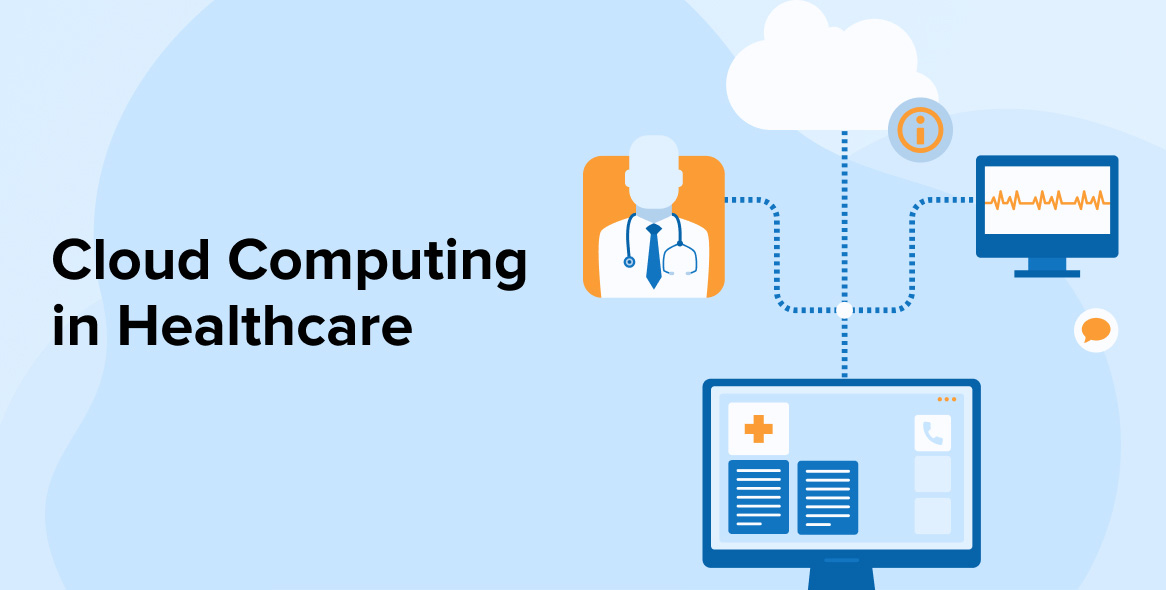
Cloud computing is playing a critical role in helping healthcare providers address operational challenges while improving efficiency and reducing costs. By enabling organizations to store, manage, and process data on remote servers, the cloud eliminates the need for extensive on premise infrastructure.
This shift not only frees up physical space in hospitals and clinics but also reduces reliance on in house IT resources. In addition, cloud based systems make it easier for healthcare providers to securely share data with external stakeholders such as research institutions, laborat
Benefits of Cloud Computing in Healthcare
Cloud technology is transforming the healthcare industry by enabling organizations to operate more efficiently, reduce costs, and deliver better patient outcomes. For providers looking to modernize their systems, cloud computing offers a scalable and future ready solution.
Increased Efficiency
Cloud based applications can be accessed anytime, from anywhere, allowing healthcare providers to deliver services more flexibly and respond quickly to changing demands. This improves workflow efficiency and reduces delays in care delivery.
Cost Optimization
By eliminating the need for expensive on premise infrastructure and reducing IT maintenance, cloud solutions significantly lower operational costs. They also offer flexible, scalable pricing models making them ideal for organizations seeking cost effective growth.
Improved Patient Care
Cloud platforms provide access to real time data and advanced analytics, enabling healthcare professionals to make faster, more informed decisions. This leads to more accurate diagnoses, better treatment planning, and improved patient outcomes.
Growth of Telemedicine
Cloud technology is a key enabler of telemedicine, allowing providers to deliver care remotely through video consultations and digital tools. This is especially valuable for patients in remote or underserved areas.
Telemedicine also reduces unnecessary hospital visits and can lower admission rates while saving time and costs for both patients and providers.
Seamless Interoperability
Cloud systems support easy integration across devices and platforms, enabling smooth data exchange between healthcare systems. This interoperability reduces data silos and ensures that critical patient information is always accessible when needed.
Enhanced Collaboration
Cloud based tools make it easier for healthcare teams to share information and collaborate in real time. With access to up to date patient data, clinicians can coordinate care more effectively leading to better clinical outcomes and improved patient experiences.
Cloud computing is not just a technological upgrade it is a strategic enabler for modern healthcare. By improving efficiency, reducing costs, and supporting connected care models, it empowers organizations to deliver smarter, faster, and more patient centric services.
Types of Cloud Computing Services
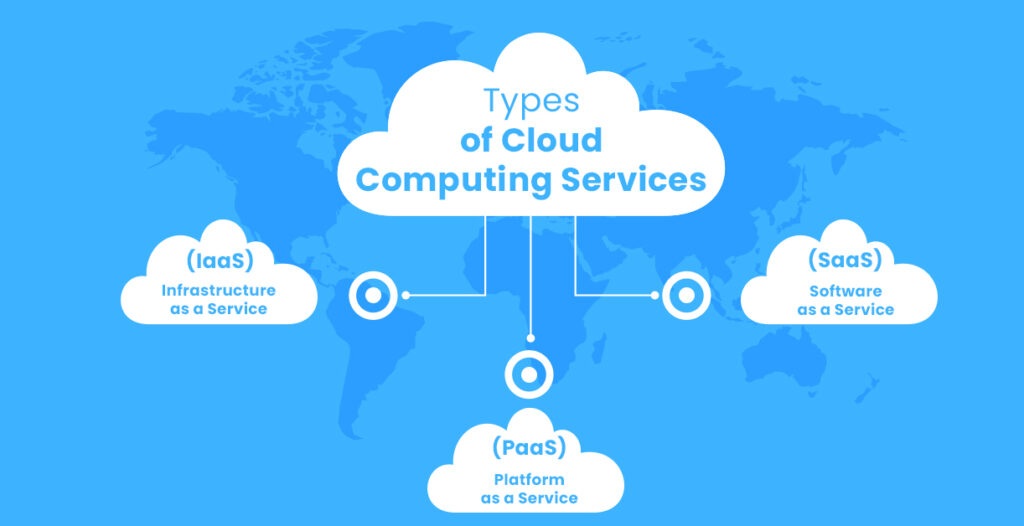
Cloud computing services are typically categorized into three main models, each addressing different business and technical needs:
Infrastructure as a Service (IaaS)
IaaS provides access to essential computing infrastructure such as servers, storage, and networking resources over the cloud.
- Ideal for organizations that want to avoid managing physical hardware
- Offers flexibility to scale infrastructure based on demand
- Reduces the need for in house IT maintenance
This model is commonly used by businesses that require full control over their infrastructure without the burden of owning it.
Platform as a Service (PaaS)
PaaS delivers a complete platform for building, testing, and deploying applications.
- Simplifies the development process
- Reduces time to market for applications
- Eliminates the need to manage underlying infrastructure
It is particularly useful for companies looking to streamline application development while focusing on innovation rather than system management.
Software as a Service (SaaS)
SaaS provides ready to use software applications delivered over the internet.
- Eliminates the need for installation and maintenance
- Offers subscription based access to software
- Enables easy updates and scalability
Businesses often rely on SaaS solutions to reduce the cost and complexity of managing software while ensuring continuous access to the latest features and improvements.
Each cloud service model IaaS, PaaS, and SaaS serves a distinct purpose. Choosing the right model depends on your organization’s goals, technical capabilities, and the level of control required over infrastructure and applications.
Challenges of Adopting Cloud Computing in Healthcare
While cloud computing offers significant advantages, its adoption in healthcare comes with several challenges primarily due to strict regulations, data sensitivity, and operational complexity. Understanding these barriers is essential for making informed decisions and mitigating risks.
Regulatory Compliance (e.g., HIPAA)
Healthcare organizations must comply with strict regulations such as HIPAA, which governs how patient data is stored, accessed, and shared.
- Not all cloud providers meet compliance requirements
- Requires built in safeguards such as encryption, audit logs, and access controls
- Organizations must carefully evaluate vendors to ensure full compliance
Data Sovereignty Concerns
Data sovereignty refers to the requirement that data be stored and governed according to the laws of the country where it is collected.
- Cloud providers often store data across multiple regions
- Patient data may be subject to different legal frameworks
- Organizations must ensure alignment with local and international data regulations
Reluctance to Migrate to the Cloud
Many healthcare providers remain cautious about moving sensitive data to the cloud.
- Concerns about data breaches and system vulnerabilities
- Lack of trust in relatively newer technologies
- Preference for traditional on premise systems
However, most modern cloud breaches are linked to misconfigurations or human error rather than flaws in the cloud itself.
Security & Privacy Risks
Healthcare data is highly sensitive, making security a top concern.
- Risk of cyberattacks and unauthorized access
- Strict privacy requirements for patient information
- Need for advanced security measures such as encryption, monitoring, and identity management
Despite these concerns, cloud providers have significantly improved their security capabilities and now offer enterprise grade protection.
Implementation Complexity
Migrating to the cloud requires a shift in infrastructure, processes, and mindset.
- Integration with legacy healthcare systems can be complex
- Requires new approaches to architecture and security
- Continuous updates and system evolution demand ongoing effort
This complexity can slow down adoption, especially for organizations with limited technical expertise.
High Initial Investment
Although cloud computing reduces long term costs, the upfront investment can be substantial.
- Costs for migration, integration, and system redesign
- Potential need for external consultants or outsourced expertise
- Training staff and adapting workflows
For organizations with tight budgets, these initial costs can be a significant barrier.
While cloud adoption in healthcare presents challenges, most can be mitigated through careful planning, the right technology partner, and a compliance first approach. Organizations that address these concerns early can unlock the full potential of cloud computing while maintaining security, compliance, and operational stability.
Final Thoughts
Cloud computing has become a transformative force in the healthcare industry, reshaping how organizations deliver services and manage operations. By enabling greater efficiency, cost optimization, improved patient care, seamless collaboration, and interoperability, the cloud is driving a new era of digital healthcare.
Among its most impactful applications is telemedicine, which is rapidly redefining how care is accessed and delivered. By making remote consultations more scalable and affordable, cloud technology is helping bridge gaps in access benefiting both providers and patients.
For healthcare organizations looking to modernize and stay competitive, adopting cloud solutions is no longer optional. It offers a clear path to enhanced performance, reduced costs, and better patient outcomes in an increasingly digital first healthcare landscape.
FAQs
What is cloud computing in healthcare?
Cloud computing in healthcare refers to the use of remote servers to store, manage, and process medical data and applications, instead of relying on on premise infrastructure. It enables scalable, secure, and efficient healthcare operations.
Why is cloud computing important for healthcare organizations?
It helps improve operational efficiency, reduce IT costs, enable real time data access, and support advanced solutions like telemedicine, AI analytics, and remote patient monitoring.
Is cloud computing secure for healthcare data?
Yes modern cloud platforms offer advanced security features such as encryption, multi factor authentication, and continuous monitoring. However, organizations must ensure compliance with regulations like HIPAA, GDPR, or PDPA.
What are the main types of cloud services used in healthcare?
The three primary models are:
- IaaS: Infrastructure (servers, storage)
- PaaS: Development platforms
- SaaS: Ready to use software applications
Each serves different needs depending on the organization’s goals.
What are the biggest challenges of adopting cloud computing in healthcare?
Common challenges include regulatory compliance, data security concerns, integration with legacy systems, high initial costs, and organizational resistance to change.
How does cloud computing support telemedicine?
Cloud technology enables secure video consultations, real time data sharing, and scalable infrastructure making telemedicine more accessible and efficient for both patients and providers.
Can cloud systems integrate with existing healthcare platforms?
Yes. Cloud based solutions can integrate with EHR/EMR systems, labs, pharmacies, and insurance platforms through APIs, enabling seamless data exchange.
Is cloud computing cost effective for healthcare providers?
While initial migration costs can be high, cloud computing reduces long term expenses by eliminating hardware costs, lowering maintenance needs, and offering scalable pricing models.
What is data sovereignty in healthcare cloud computing?
Data sovereignty refers to the requirement that healthcare data be stored and governed according to the laws of the country where it is collected. This is an important consideration when choosing cloud providers.
Should small healthcare providers adopt cloud computing?
Yes. Cloud solutions are particularly beneficial for small and mid sized providers, as they offer affordable, scalable infrastructure without the need for large in house IT teams.
Latest Articles
View All
How to Build a Meal Planning App: A Complete Step-by-Step Guide
Building a successful meal planning app goes beyond creating an attractive interface it requires a clear business strategy, personalized user experiences, and scalable technology. By combining essential features like AI-powered meal recommendations, nutrition tracking, grocery list automation, and wearable integration, businesses can deliver lasting value to users while capitalizing on the growing digital health market. Partnering with an experienced mobile app development company ensures your solution is secure, future-ready, and designed to succeed in an increasingly competitive health-tech industry.
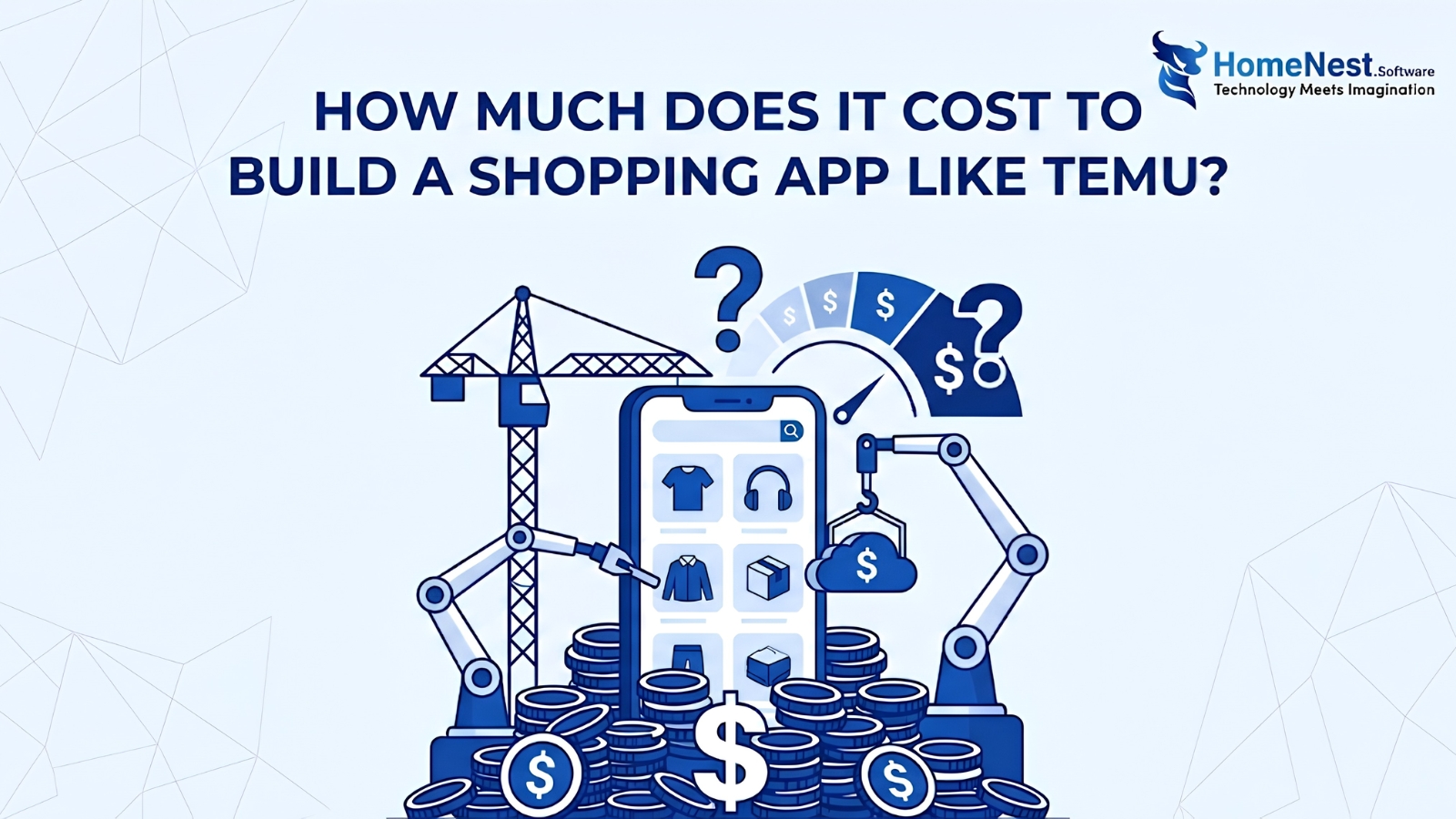
How Much Does It Cost to Build a Shopping App Like Temu?
Temu’s meteoric rise to over 900 million global downloads proves the power of combining AI, gamification, and social commerce, but building a similar viral shopping platform requires careful financial and technical planning. Developing an app like Temu typically costs anywhere from $40,000 for a basic Minimum Viable Product (MVP) to over $300,000 for a fully-featured platform. This guide breaks down every cost category, analyzes the core features driving Temu’s success, highlights the best technology stacks, and offers practical strategies to optimize your development budget without compromising on quality.

Criteria For Choosing The Right App Design Agency
UI/UX design is the logical foundation of a system, not merely a visual element. Choosing the wrong partner will directly lead to technical debt, budget overruns, and disruptions in the development process. This article provides a 6-step evaluation framework and a list of operational risks, helping businesses eliminate subjective design advice and accurately assess agency capabilities based on developer handoff standards and practical business performance.
How Does AI in Banking Industry Impact the Future?
Artificial intelligence (AI) has transitioned from a supplementary tool to a core infrastructure of financial data management, optimizing profitability through real-time fraud detection, natural language processing (NLP), and high-speed credit scoring models. “Deploying AI in the financial sector requires more than just algorithmic accuracy, it demands a highly secure cloud architecture and rigorous data governance,” commented Nguyen Tien, co-founder of HomeNest Software. Why read this guide? We skip the theoretical jargon to focus entirely on technical implementation. Whether you’re evaluating a vendor or planning a system overhaul, this article will detail: Operational Efficiency: Automating unstructured data workflows at scale. Risk Architecture: Implementing real-time threat detection and AML compliance. Data ownership: The essential need for 100% ownership of the source code to ensure full algorithm auditability.
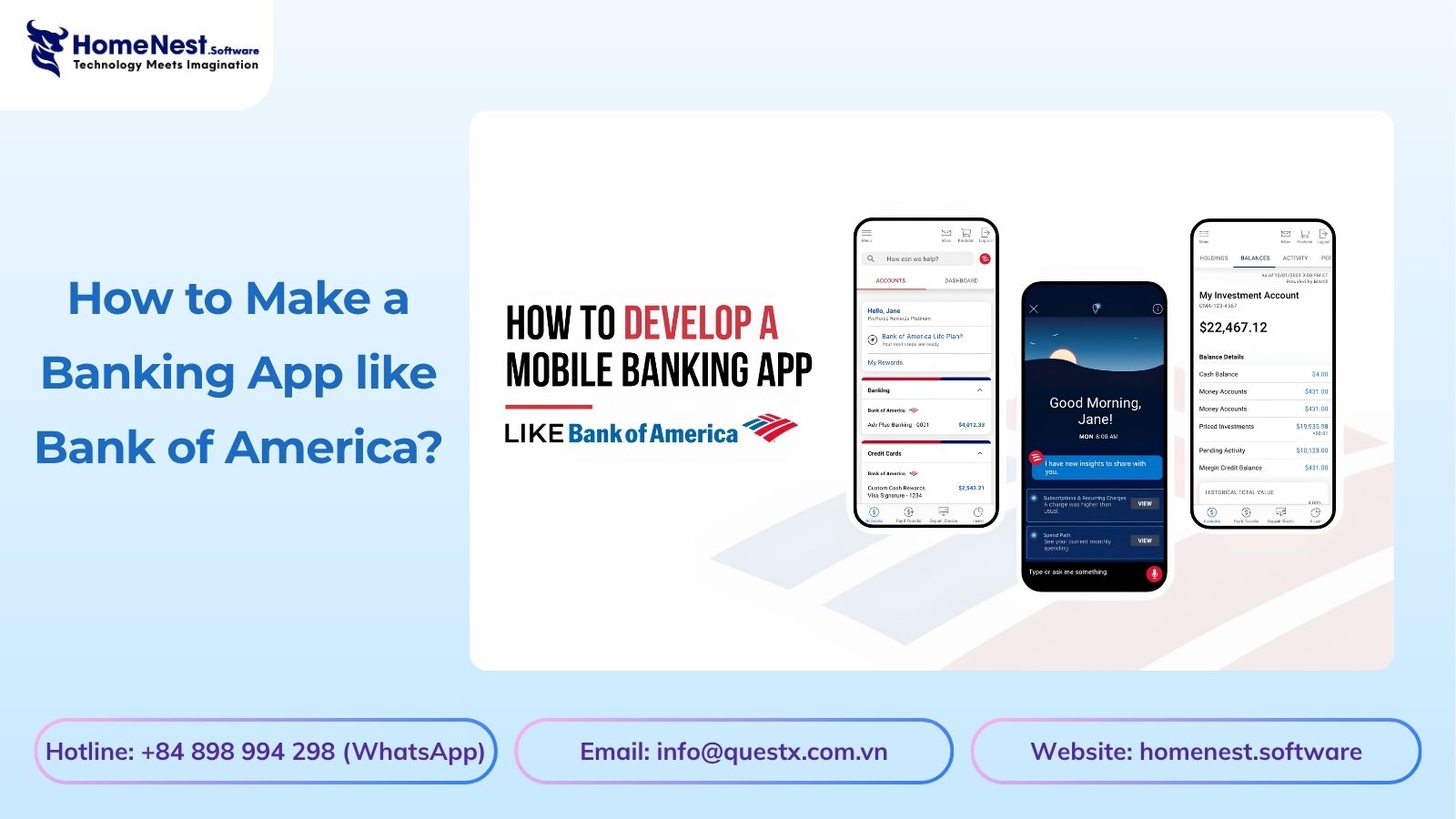
How to Make a Banking App like Bank of America?
Developing a mobile banking application like Bank of America extends far beyond basic UI design; it requires engineering a fault-tolerant backend capable of real-time ledger synchronization, biometric authentication, and high-volume data processing under strict regulatory frameworks. Drawing from HomeNest Software’s deep experience in architecting enterprise-grade fintech solutions, this guide strips away theoretical jargon to focus entirely on operational and technical execution. What you will find in this guide: We break down the precise development roadmap, from mapping out microservices and ensuring PCI-DSS compliance to estimating MVP development costs and securing absolute data sovereignty through 100% source code ownership. If you are preparing to build, scale, or audit a financial platform, this blueprint provides the exact framework you need.
Banking App Development Cost
Building a banking application is rarely a simple process; it’s a complex technical challenge requiring a balance between complying with stringent financial regulations, handling large transaction volumes, and a scalable cloud architecture. Miscalculating these technical requirements from the outset often leads to significant technical debt and budget overruns. Based on HomeNest Software’s practical experience in designing enterprise-grade fintech solutions, this guide bypasses generic estimates to provide a realistic analysis of banking application development costs. What you’ll find in this guide: We analyze the true cost factors, from technology selection and API integration to the hidden costs of regulatory compliance and security infrastructure. Whether you’re launching a minimum viable product or expanding an existing financial platform, this analysis provides the precise operational data you need to plan your budget effectively.