
Enterprise Software Development: What It Is and How to Choose the Right Partner
Scope of Work
In today’s rapidly evolving business environment, custom enterprise software has become a powerful driver of transformation. It enables organizations to streamline operations, improve efficiency, and gain a sustainable competitive advantage. As we move into 2026, the demand for tailored software solutions that address specific business needs continues to grow significantly.
This comprehensive guide explores the fundamentals of enterprise software development, including key trends, development processes, and the benefits of partnering with an experienced enterprise software development company.
What Is Enterprise Software Development?
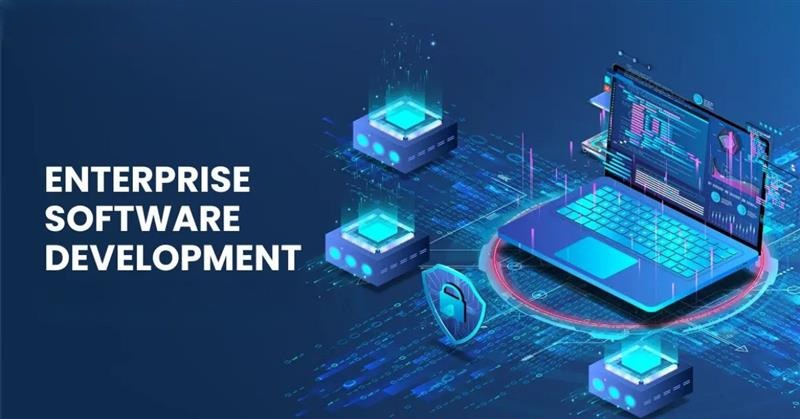
Enterprise software development refers to the process of designing and building large scale software systems tailored to address the complex needs of organizations. Today, custom enterprise solutions play a critical role in aligning technology with business operations, enabling companies to optimize workflows, improve efficiency, and support long term growth.
These systems are typically designed to integrate multiple departments, handle large volumes of users, and manage mission critical processes within a unified platform.
A strong example is IBM, which partnered with a global retail brand to develop a customized enterprise solution for real time inventory management. As a result, the company reduced stock outs by over 30% within the first year, demonstrating the tangible impact of well executed enterprise software.
Read more: What is Enterprise Application?
Why Enterprise Software Development Matters Today
In 2026, businesses face increasing pressure to modernize, optimize operations, and remain competitive. As a result, enterprise software development is no longer optional it has become a strategic necessity for sustainable growth and resilience.
-
Market growth & scale: The global enterprise software market is projected to exceed $300 billion in 2024–2025, highlighting strong investment in digital transformation.
-
Operational efficiency: Enterprise systems help automate repetitive tasks and integrate workflows across departments, leading to significant cost savings and improved productivity.
-
Business agility: Custom enterprise solutions enable organizations to adapt quickly to market changes and scale efficiently without being constrained by legacy systems.
-
Competitive advantage: Tailored software empowers businesses to innovate, enhance customer experiences, and leverage data driven insights to stay ahead of competitors.
Read more: What Is the Software Development Life Cycle (SDLC)? Complete Guide
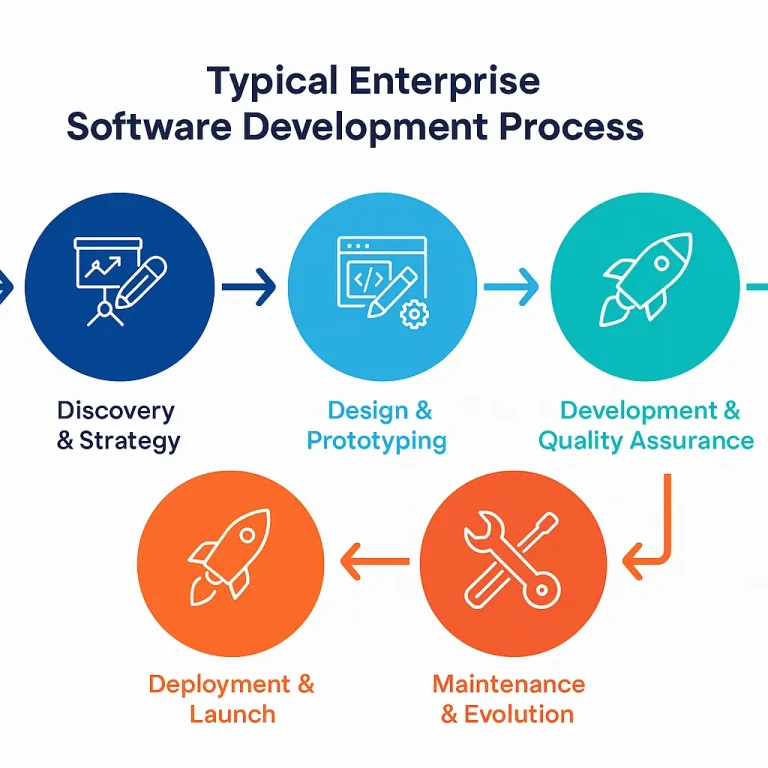
Typical Enterprise Software Development Process
Below is a simplified overview of a standard enterprise software development lifecycle:
-
Discovery & Strategy:
Teams collaborate with stakeholders to define business objectives, identify key processes, and assess technical constraints. This stage establishes a clear roadmap to ensure alignment between business goals and the software solution.
-
Design & Prototyping:
Designers and solution architects create UI/UX prototypes, system architecture, and technical blueprints. This phase helps validate ideas early and reduce risks before full scale development begins.
-
Development & Quality Assurance:
Developers build the system in iterative cycles, integrating modules while QA teams perform rigorous testing. This ensures the software meets enterprise standards for performance, security, and reliability.
-
Deployment & Launch:
The solution is deployed into production using modern approaches such as CI/CD pipelines or cloud infrastructure. Training and change management activities are conducted to support smooth adoption across the organization.
-
Maintenance & Evolution:
Ongoing monitoring, updates, and optimizations ensure the system continues to perform effectively, scale with business growth, and adapt to evolving requirements.
Real Life Case Studies of Enterprise Software Development
1. Microsoft: Cloud and Enterprise Software Development
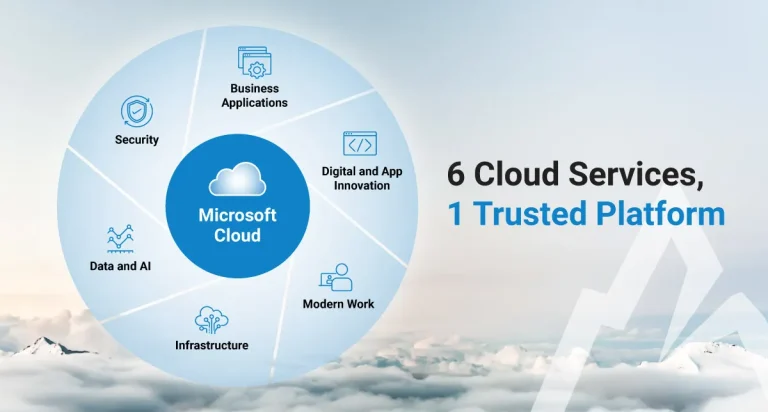
Microsoft has leveraged enterprise software development to build Azure, a powerful cloud platform that supports a wide range of industries with scalable infrastructure and services. This strategic investment has enabled Microsoft to expand its global enterprise customer base while driving innovation and operational efficiency.
Azure delivers significant value through near 100% uptime, advanced auto scaling, and resource elasticity, allowing businesses to reduce operational costs while seamlessly handling increasing workloads. This has accelerated cloud adoption across enterprises worldwide.
2. Spotify: Scalable Music Streaming Platform

Spotify utilized enterprise software development to create a highly scalable music streaming platform serving millions of users globally. Its custom backend architecture ensures smooth content delivery and personalized user experiences.
This strong technical foundation has enhanced user engagement and supported Spotify’s rapid growth, helping it secure a leading position in the digital entertainment industry.
3. Salesforce: Customer Relationship Management (CRM) Solutions
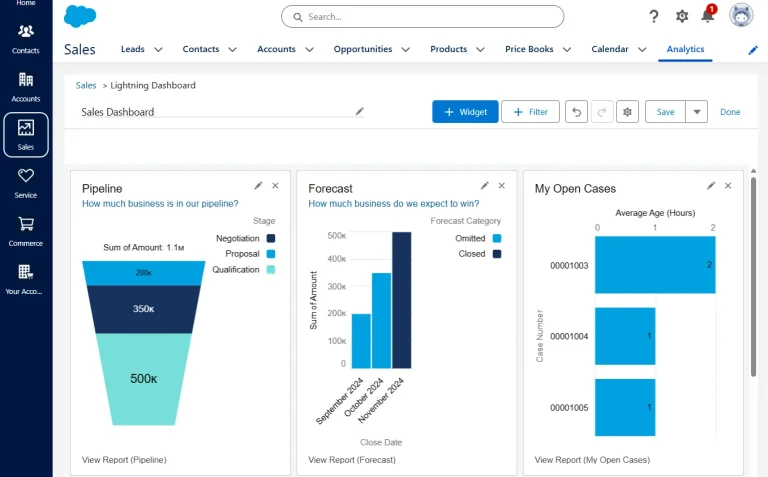
Salesforce revolutionized enterprise software with its cloud based CRM platform designed for businesses of all sizes. Its solutions streamline customer data management and automate sales processes, improving efficiency and customer satisfaction.
Widespread adoption across multiple industries has positioned Salesforce as a dominant leader in the global CRM market.
Read more: Top IT Outsourcing Companies in Vietnam
5 Common Challenges of Enterprise Software Development
-
Legacy system complexity:
Many organizations rely on outdated, monolithic systems that limit flexibility, slow down innovation, and make scaling more difficult.
-
Talent and resource shortages:
Finding skilled developers with both technical expertise and enterprise level experience can be challenging, often leading to delays in project delivery.
-
Data migration and integrity risks:
Transferring large volumes of legacy data carries the risk of data loss, corruption, or system downtime if not carefully planned and executed.
-
Change management and user adoption:
Even well built systems can fail if users are not properly trained or resist change, resulting in low adoption and reduced return on investment.
-
Budget overruns and unclear scope:
Without clear project governance, defined scope, and milestone tracking, enterprise projects can easily exceed budgets or fail to meet expectations.
How to Choose the Right Enterprise Software Development Partner
Enterprise software development demands significant resources, structured processes, and deep technical expertise. For organizations without prior experience, managing everything in house can be challenging. In such cases, partnering with a professional enterprise software development company is a smart move to optimize costs, improve efficiency, and ensure high quality results.
If you’re planning to work with an external partner, consider the following key factors:
-
Industry specific expertise:
Choose a partner with proven experience in your domain (e.g., finance, healthcare, manufacturing) and a strong understanding of your business workflows.
-
Technical capabilities and innovation:
Ensure the partner is proficient in modern technologies such as microservices, cloud native architecture, and AI and can propose innovative, future ready solutions.
-
Clear communication and project management:
A reliable partner should follow structured processes, provide regular updates, and maintain transparent communication with defined escalation paths.
-
Proven track record:
Look for case studies, client testimonials, and measurable outcomes that demonstrate success in delivering enterprise level projects.
-
Ongoing support and maintenance:
The partner should offer long term support, including system optimization, updates, and continuous improvement after deployment.
Read more: How To Hire Mobile App Developers In Vietnam?
Trends Shaping Enterprise Software Development in 2026
As we move toward 2026, enterprise software development is undergoing major transformation driven by emerging technologies and evolving business demands. Below are key trends expected to reshape how organizations build, deploy, and scale software solutions:
-
AI powered development tools:
Generative AI is increasingly automating coding, testing, and deployment tasks helping teams accelerate delivery while reducing human error.
-
Low code/No code platforms:
More enterprises are adopting platforms that enable non technical users to build applications, speeding up innovation and redefining traditional developer roles.
-
DevSecOps and resilient architectures:
Security is being integrated earlier in the development lifecycle, while modern architectures shift toward event driven and serverless models for better scalability and reliability.
-
Sustainable and green software engineering:
Organizations are focusing on energy efficient development, optimized cloud usage, and carbon aware coding practices to align with ESG (Environmental, Social, and Governance) goals.
-
Edge computing and distributed applications:
Applications are increasingly leveraging edge infrastructure to reduce latency, enhance performance, and deliver real time experiences across global users.
Outsource Software Development Services from HomeNest Software
With many providers in the market, HomeNest Software stands out as a trusted partner for enterprise software development. Backed by years of experience in the IT industry, we deliver tailored solutions that help businesses scale efficiently and drive innovation on a global level.
Why Choose HomeNest Software
-
Proven expertise:
With extensive industry experience, we deliver reliable and high quality solutions for enterprise needs.
-
Skilled talent pool:
Our team includes 100+ certified IT professionals with strong technical capabilities and domain knowledge.
-
Global project success:
We have successfully completed 200+ projects worldwide, demonstrating our ability to deliver scalable solutions on time.
-
Cost effective and scalable approach:
Our development model is designed to optimize budgets while maintaining high performance and scalability.
-
Strong security standards:
We follow strict security practices to ensure the safety and confidentiality of your business data.
Our Software Development Services
HomeNest Software offers a comprehensive range of services tailored to diverse business requirements:
-
IT Outsourcing:
Extend your in house team with skilled professionals to enhance productivity and accelerate delivery.
-
Access cost effective, high quality software development with efficient communication and project management.
-
Software Outsourcing:
End to end development services, allowing you to focus on core business activities while we handle the technical execution.
-
MVP Development:
MVP solutions are rapidly built, Minimum Viable Products to validate ideas and shorten time to market.
-
Software Product Development:
Design and develop full scale, customized software products aligned with your business goals.
-
Salesforce Development:
Build and customize Salesforce solutions to optimize customer relationship management and streamline workflows.
Partner with HomeNest Software to transform your ideas into scalable, secure, and high performing enterprise solutions.
Read more: Hire Software Developers from HomeNest Software to Scale Your IT Outsourcing
Conclusion
Enterprise software development plays a critical role in accelerating digital transformation and enabling businesses to stay competitive in today’s fast changing landscape. By adopting modern approaches such as cloud native architecture, AI integration, and strong cybersecurity practices, organizations can improve efficiency, make smarter decisions, and deliver better customer experiences.
Partnering with a reliable enterprise software development company like HomeNest Software opens the door to long term success. Our experienced team stays up to date with the latest technologies, ensuring your solutions are scalable, secure, and future ready.
At HomeNest Software, we support you at every stage of the development journey from strategy to deployment and beyond. Get in touch with us today to turn your vision into powerful, enterprise grade software solutions.

Contact Information:
- Address: The Sun Avenue, 28 Mai Chi Tho Street, Binh Trung Ward, Ho Chi Minh City
- Hotline: +84 898 994 298 ( WhatsApp )
- Website: homenest.software
FAQs
What is enterprise software development?
Enterprise software development involves building large scale, custom solutions designed to support complex business processes, multiple departments, and high user volumes within an organization.
Why is enterprise software important for businesses?
It helps streamline operations, improve efficiency, enhance decision making, and provide a competitive advantage through tailored digital solutions.
How long does enterprise software development take?
The timeline depends on project complexity, scope, and requirements. It can range from a few months for simpler systems to over a year for large scale enterprise solutions.
What technologies are commonly used in enterprise software development?
Common technologies include cloud platforms, microservices architecture, AI/ML, big data tools, and modern frameworks like .NET, Java, and Node.js.
What are the biggest challenges in enterprise software development?
Key challenges include legacy system integration, data migration risks, resource constraints, user adoption, and managing project scope and costs.
Should I build in house or outsource enterprise software development?
Outsourcing is often more cost effective and efficient, especially if your team lacks experience or resources. A trusted partner can help reduce risks and accelerate delivery.
How do I choose the right enterprise software development partner?
Look for industry expertise, technical capabilities, proven track record, strong communication, and long term support services.
Does HomeNest Software provide end to end enterprise solutions?
Yes. HomeNest Software offers full cycle services from consulting and development to deployment and maintenance ensuring scalable and high quality enterprise software solutions.
Latest Articles
View All
Criteria For Choosing The Right App Design Agency
UI/UX design is the logical foundation of a system, not merely a visual element. Choosing the wrong partner will directly lead to technical debt, budget overruns, and disruptions in the development process. This article provides a 6-step evaluation framework and a list of operational risks, helping businesses eliminate subjective design advice and accurately assess agency capabilities based on developer handoff standards and practical business performance.
How Does AI in Banking Industry Impact the Future?
Artificial intelligence (AI) has transitioned from a supplementary tool to a core infrastructure of financial data management, optimizing profitability through real-time fraud detection, natural language processing (NLP), and high-speed credit scoring models. “Deploying AI in the financial sector requires more than just algorithmic accuracy, it demands a highly secure cloud architecture and rigorous data governance,” commented Nguyen Tien, co-founder of HomeNest Software. Why read this guide? We skip the theoretical jargon to focus entirely on technical implementation. Whether you’re evaluating a vendor or planning a system overhaul, this article will detail: Operational Efficiency: Automating unstructured data workflows at scale. Risk Architecture: Implementing real-time threat detection and AML compliance. Data ownership: The essential need for 100% ownership of the source code to ensure full algorithm auditability.
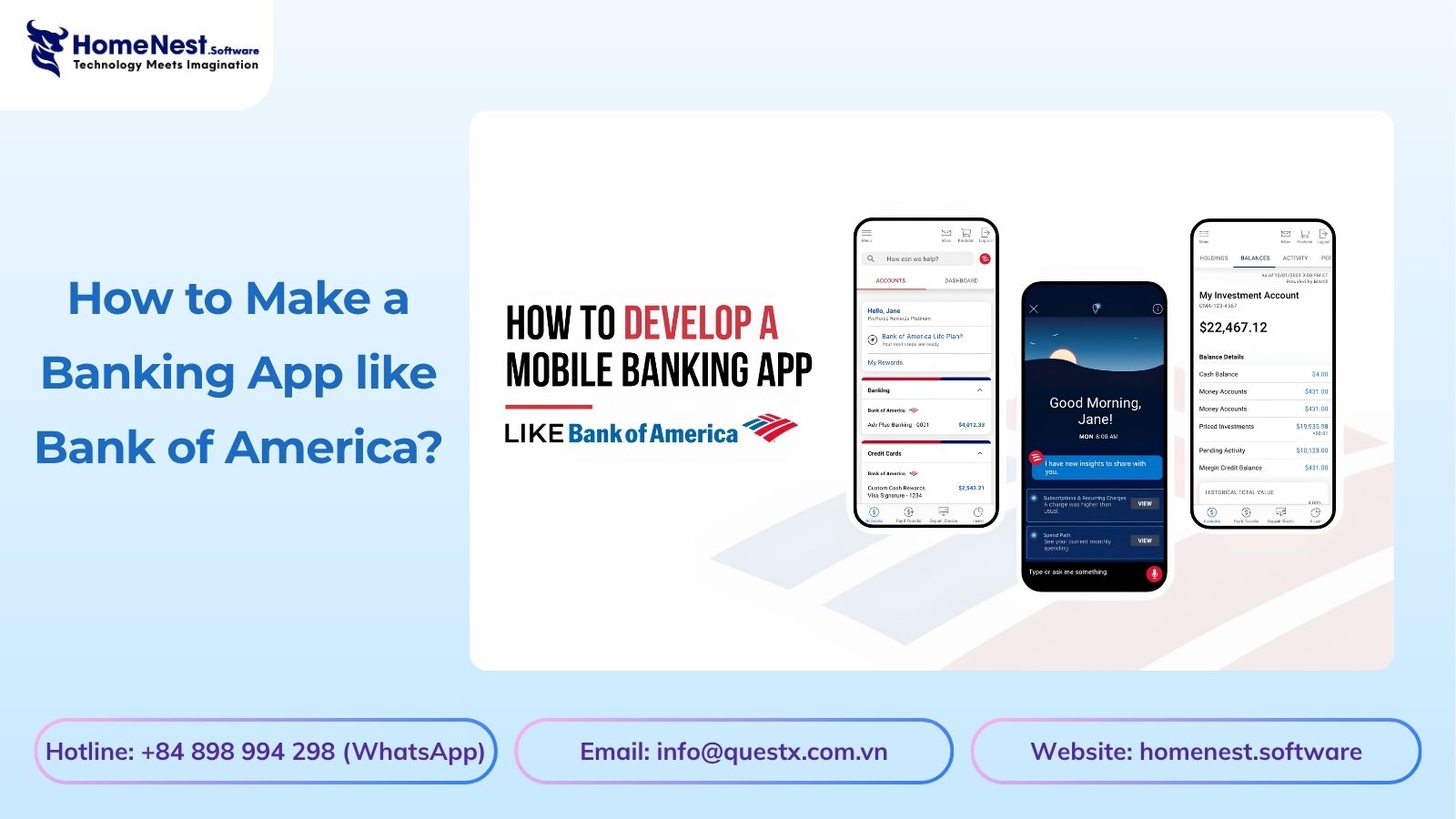
How to Make a Banking App like Bank of America?
Developing a mobile banking application like Bank of America extends far beyond basic UI design; it requires engineering a fault-tolerant backend capable of real-time ledger synchronization, biometric authentication, and high-volume data processing under strict regulatory frameworks. Drawing from HomeNest Software’s deep experience in architecting enterprise-grade fintech solutions, this guide strips away theoretical jargon to focus entirely on operational and technical execution. What you will find in this guide: We break down the precise development roadmap, from mapping out microservices and ensuring PCI-DSS compliance to estimating MVP development costs and securing absolute data sovereignty through 100% source code ownership. If you are preparing to build, scale, or audit a financial platform, this blueprint provides the exact framework you need.
Banking App Development Cost
Building a banking application is rarely a simple process; it’s a complex technical challenge requiring a balance between complying with stringent financial regulations, handling large transaction volumes, and a scalable cloud architecture. Miscalculating these technical requirements from the outset often leads to significant technical debt and budget overruns. Based on HomeNest Software’s practical experience in designing enterprise-grade fintech solutions, this guide bypasses generic estimates to provide a realistic analysis of banking application development costs. What you’ll find in this guide: We analyze the true cost factors, from technology selection and API integration to the hidden costs of regulatory compliance and security infrastructure. Whether you’re launching a minimum viable product or expanding an existing financial platform, this analysis provides the precise operational data you need to plan your budget effectively.
How to Build a Mobile Banking App Like Chime?
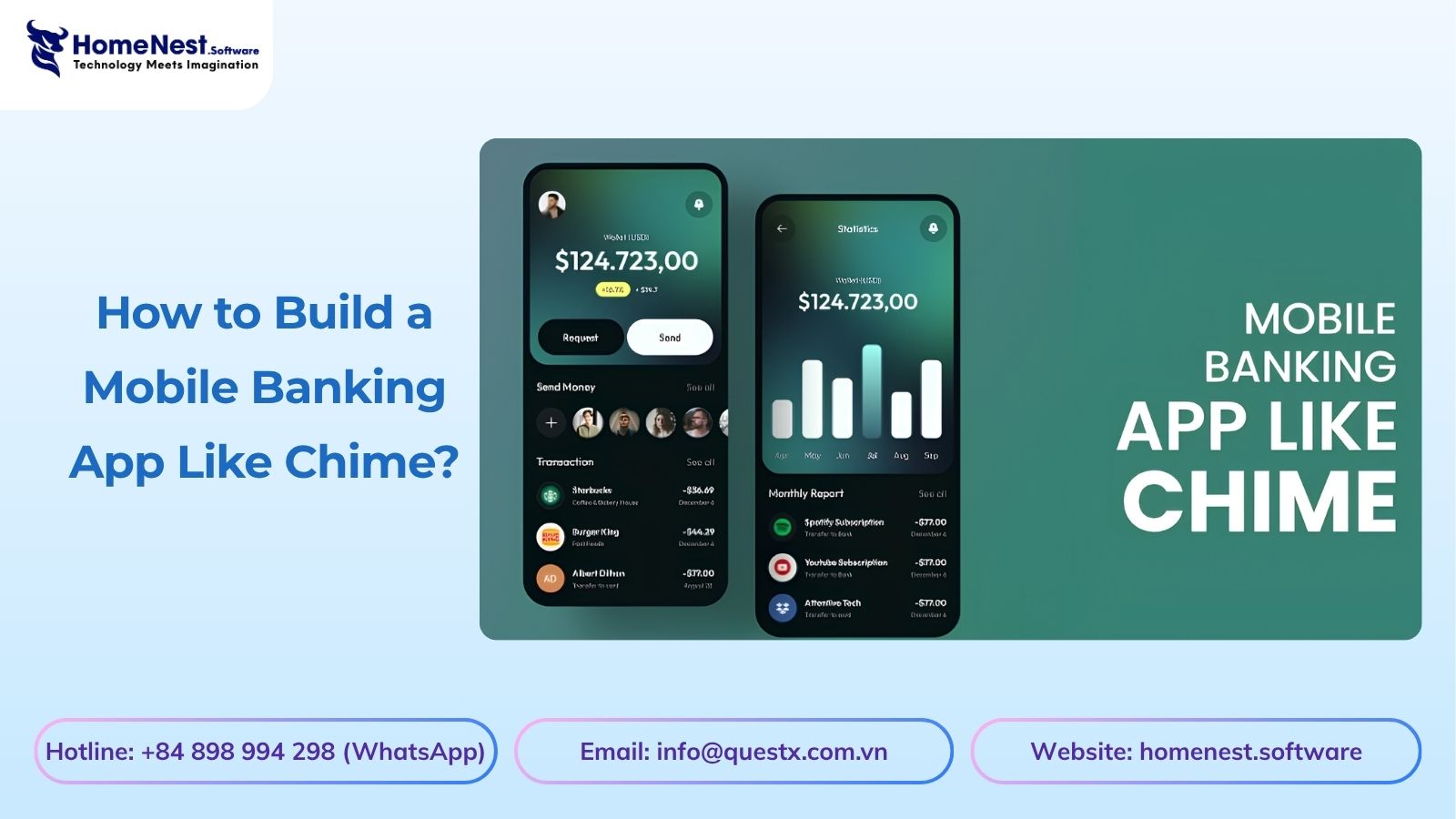
Building a mobile banking app like Chime is not just about features, it is about delivering a secure, scalable, and user-centric financial experience. From planning the right architecture to optimizing mobile banking app development cost, every decision directly impacts your product’s success. Leveraging Fintech app development services, starting with MVP app development, and scaling through on-demand app development solutions allows businesses to reduce risk and accelerate time to market. To stay competitive, combining Android app development services and iOS app development solutions ensures wider reach, while continuous updates through maintenance software development services keep your app secure and future-ready.

How to Build a Banking App Like Barclays: A Complete Entrepreneur’s Guide
Building a banking app like Barclays requires more than just development. It demands a strong product vision, secure architecture, and a clear monetization strategy. From optimizing cost and selecting the right tech stack to ensuring compliance and scalability, every decision impacts long-term success. Partnering with an experienced team like HomeNest Software helps accelerate development, reduce risks, and deliver a high-quality fintech product that can compete in today’s fast-evolving digital banking landscape.