
Healthcare MVP to Enterprise SaaS Roadmap: A Complete Guide
Building a successful healthcare SaaS platform is a step-by-step journey that starts with validating your idea through an MVP and evolves into a scalable, enterprise-grade solution. The key to success lies in focusing on real user needs, embedding compliance and security from the beginning, and designing a flexible architecture that can grow with demand. By combining strategic planning with the right technology partner, businesses can reduce risks, optimize costs, and deliver impactful healthcare solutions in a highly competitive digital landscape.
Scope of Work
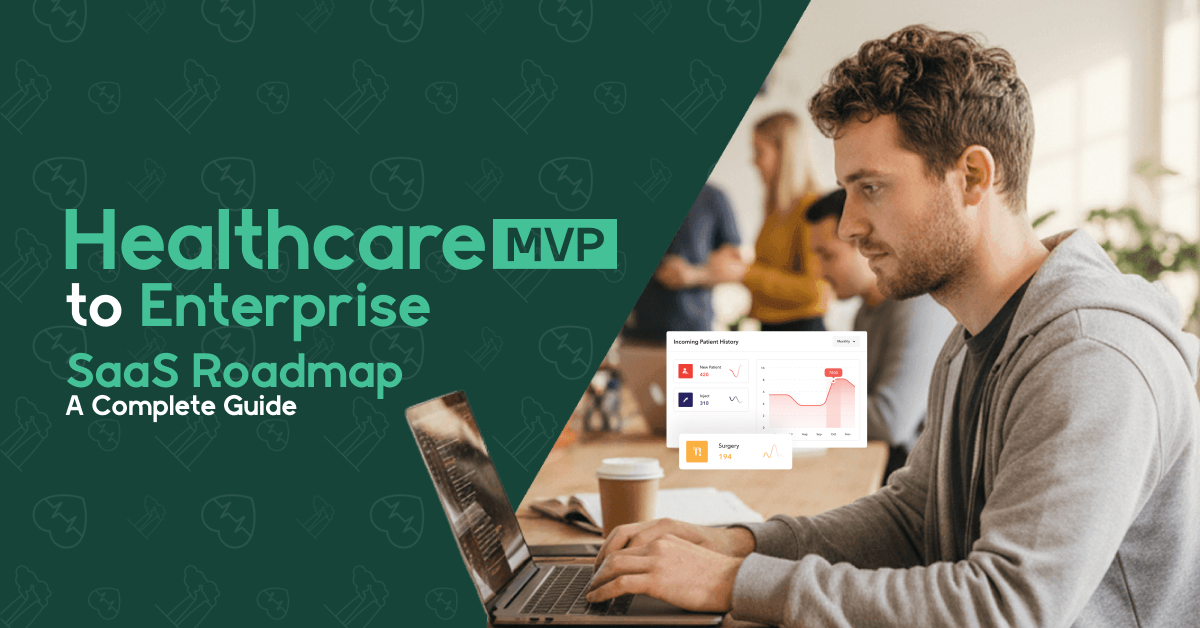
The healthcare industry is undergoing a rapid digital transformation, with software solutions redefining how care is delivered, data is managed, and operations are optimized. From early stage Minimum Viable Products (MVPs) to fully scaled enterprise SaaS platforms, modern healthcare applications must strike a careful balance between usability, regulatory compliance, and scalability.
In this Healthcare SaaS roadmap for 2026, we outline a structured path for businesses at every stage of development from validating ideas through an MVP to scaling with advanced features, integrating with healthcare systems, and ensuring compliance with standards such as HIPAA and GDPR. The goal is to help organizations transition from concept to a robust, enterprise grade SaaS solution.
By adopting a strategic Healthcare MVP development approach, startups and enterprises can minimize risk, control costs, and accelerate time to market while building impactful digital health products.
Ultimately, scaling an MVP into a full fledged SaaS platform not only enhances patient outcomes but also drives sustainable growth in an increasingly competitive and innovation driven healthcare ecosystem. Let’s explore the complete healthcare SaaS roadmap for 2026.
Understanding the Healthcare Market

The healthcare market is inherently complex, involving multiple stakeholders, regulatory layers, and interconnected workflows. To build a scalable healthcare SaaS platform and deliver effective enterprise grade solutions, businesses must deeply understand the needs of patients, providers, payers, and administrators along with the processes that drive both care delivery and operations.
1. Key Stakeholders in the Healthcare Ecosystem
Healthcare systems revolve around four primary stakeholder groups, each with distinct expectations and requirements:
i. Patients
As the core of the healthcare ecosystem, patients demand convenient access to services, telemedicine capabilities, and secure management of their medical records. Modern patient management SaaS tools play a crucial role in enhancing patient satisfaction, which directly impacts the adoption and success of digital health platforms.
ii. Providers (Doctors, Nurses, Clinics, Hospitals)
Healthcare providers require efficient tools to manage patient data, access EHR/EMR systems, and coordinate care delivery. Seamless SaaS integration with clinical systems ensures improved accuracy, streamlined workflows, and compliance with healthcare regulations.
iii. Payers (Insurance Companies, Health Plans)
Payers focus on claims processing, billing efficiency, and cost control. They rely on SaaS solutions that reduce administrative burden, enhance fraud detection, and provide accurate financial reporting and analytics.
iv. Administrators & Managers
Administrators oversee the operational backbone of healthcare organizations. Digital solutions help manage staff scheduling, compliance reporting, performance tracking, and resource allocation ensuring smooth and efficient day to day operations.
2. Clinical vs. Operational Workflows
Healthcare SaaS development must address two interconnected workflow categories: clinical and operational. While distinct in function, both are essential for delivering high quality, efficient healthcare services.
i. Clinical Workflows
These workflows are directly tied to patient care. They include processes such as patient registration, diagnosis, treatment planning, and telemedicine services. Optimizing clinical workflows improves patient outcomes while enhancing provider efficiency.
ii. Operational Workflows
Operational workflows support the business side of healthcare. They encompass appointment scheduling, billing, insurance claims, inventory management, compliance tracking, and reporting. Streamlining these processes reduces costs and improves overall organizational performance.
A clear understanding of these stakeholders and workflows is fundamental to building scalable, compliant, and high performing healthcare SaaS solutions.
Healthcare SaaS Roadmap 2026 Explained
Overview of the Healthcare SaaS Journey
Building a successful healthcare SaaS platform in 2026 requires a structured, phased approach from validating an idea with an MVP to scaling into a full enterprise solution. This journey is not about launching quickly, but about validating early, scaling efficiently, and ensuring compliance at every stage.
The roadmap can be divided into three key stages:
MVP Development → SaaS Product → Enterprise Platform
Stage 1: Healthcare MVP Development
Purpose of MVP
The MVP stage focuses on validating your core idea with minimal investment and risk. Instead of building a complete system, the goal is to solve a specific clinical or operational problem while gathering early user feedback.
Core MVP Features
At this stage, only essential features are developed, such as:
- User registration and authentication
- Basic patient or provider workflows
- Appointment scheduling
- Simple dashboards and reporting
The emphasis is on usability and proof of value, not full functionality.
MVP Compliance & Security
Even a basic healthcare product must meet security and compliance standards. This includes:
- Secure authentication
- Role based access control
- Encrypted data storage
Compliance with regulations like HIPAA or GDPR helps build trust from the beginning.
Stage 2: SaaS Product Development
Transition from MVP to SaaS
Once the MVP is validated, the next step is to evolve it into a scalable SaaS platform. This involves refining features based on user feedback and preparing the system to support multiple users or organizations.
SaaS Features & Capabilities
At this stage, the platform expands significantly with features such as:
- Multi tenant architecture
- Advanced workflows (clinical and operational)
- Automated administrative processes
- Subscription and billing management
- Analytics dashboards
- Integration with EHRs, labs, telehealth, and payment systems
Infrastructure & Scalability
A robust cloud based infrastructure is essential to support growth. Key components include:
- Load balancing and auto scaling
- Data backup and disaster recovery
- Monitoring and performance optimization
This ensures the platform can handle increasing users and data volumes without performance issues.
SaaS Compliance & Security
Security requirements become more advanced, including:
- Data encryption
- Audit logs
- Access control systems
- Regular security testing
Compliance with global standards like HIPAA and GDPR is critical for scaling and attracting enterprise clients.
Stage 3: Enterprise Healthcare Solutions
Enterprise Expectations
Enterprise clients demand high performance, reliability, and customization. They expect seamless workflows across departments, advanced reporting, and dedicated support.
Enterprise Features
Enterprise grade platforms include:
- Advanced clinical modules
- Configurable workflows
- AI powered decision support
- Patient engagement tools
- Automated operational processes
These features enable organizations to improve efficiency and patient outcomes.
Enterprise Integrations
Integration is a key requirement at this stage. The platform must connect with:
- EHR/EMR systems
- Insurance and billing platforms
- Laboratory systems
- Medical devices
Strong APIs and interoperability ensure smooth data exchange and system efficiency.
Enterprise Security & Compliance
Security is critical at the enterprise level. Systems must include:
- Advanced encryption
- Identity and access management
- Audit trails
- Disaster recovery mechanisms
Compliance with HIPAA, GDPR, and ISO standards ensures data protection and builds enterprise trust.
A healthcare SaaS platform is not built in a single step it evolves strategically. Starting with an MVP minimizes risk, transitioning to SaaS enables scalability, and reaching the enterprise level unlocks long term growth.
Businesses that succeed in 2026 will be those that combine innovation with compliance, and scalability with real user value.
5 Common Pitfalls in Healthcare SaaS & MVP Development
Building a healthcare SaaS platform is not just about launching fast it’s about scaling right. Many projects fail not because of poor ideas, but due to avoidable mistakes during the MVP and early SaaS stages.
Understanding these pitfalls early can help ensure a smoother transition from MVP to a scalable, enterprise grade healthcare solution.
1. Ignoring Compliance from the Start
Pitfall
Many teams treat compliance as a “later stage” concern, assuming it can be added after product validation. In healthcare, this approach often leads to costly rework, delayed launches, failed audits, and difficulty partnering with providers or insurers.
How to Avoid
Design your system with compliance in mind from day one.
- Incorporate HIPAA, GDPR, or local regulations into your architecture
- Implement basic controls like audit logs, secure authentication, and data protection early
Starting with a compliance first mindset reduces long term risks and builds trust with stakeholders.
2. Overloading the MVP with Features
Pitfall
Trying to build too many features at the MVP stage increases development time, cost, and complexity. It also makes it harder to gather clear, actionable user feedback.
How to Avoid
Focus on solving one specific problem.
- Identify a core clinical or operational use case
- Prioritize only essential features
- Iterate based on real user feedback
A lean MVP helps you validate faster and scale smarter.
3. Poor Scalability Planning
Pitfall
Many MVP architectures are not designed for growth. As users and data increase, systems may suffer from slow performance, downtime, or even complete failure.
How to Avoid
Adopt a scalable architecture early:
- Use cloud based infrastructure
- Design modular, flexible systems
- Plan for future expansion in users, data, and workflows
This ensures your platform can grow without requiring a full rebuild.
4. Weak Data Security Practices
Pitfall
Inadequate encryption, weak authentication, or lack of monitoring can expose sensitive patient data leading to breaches, compliance violations, and loss of trust.
How to Avoid
Implement strong security measures from the beginning:
- End to end data encryption
- Multi factor authentication
- Role based access control
- Continuous monitoring and regular security testing
Security should be embedded into every stage of development not added later.
5. Overlooking Enterprise Requirements
Pitfall
Many products are built for early adopters but fail when scaling to enterprise clients. Missing features like integrations, customization, and advanced reporting limit growth potential.
How to Avoid
Design with enterprise scalability in mind:
- Build flexible APIs and integration capabilities
- Support configurable workflows
- Plan for advanced reporting and analytics
- Ensure long term support and maintainability
Thinking ahead ensures your product can evolve into a true enterprise solution.
The difference between a struggling product and a scalable healthcare SaaS platform often comes down to avoiding these early mistakes.
By focusing on compliance, simplicity, scalability, security, and long term vision, you set a strong foundation for sustainable growth in the healthcare ecosystem.
Conclusion
This guide provides a clear overview of healthcare MVP development and the strategic path to scaling into an enterprise SaaS platform. From validating your idea at the MVP stage to implementing best practices and avoiding common pitfalls, each step plays a critical role in building a successful healthcare solution.
Transforming a healthcare MVP into an enterprise grade SaaS product is not just a technical process it’s a strategic journey that requires careful planning, continuous validation, and a long term growth mindset.
If you’re looking to build or scale a healthcare application, partnering with an experienced team can make all the difference. HomeNest Software, a trusted healthcare app development company, offers end to end expertise to help you move from concept to a secure, scalable, and high performing SaaS platform.
FAQs
What is a healthcare MVP?
A healthcare MVP (Minimum Viable Product) is a simplified version of a healthcare application that includes only core features. It is used to validate the product idea, gather user feedback, and reduce development risk before scaling.
Why should I start with an MVP in healthcare SaaS?
Starting with an MVP helps minimize costs, accelerate time to market, and validate real user needs. It allows businesses to test assumptions before investing in a full scale solution.
How long does it take to build a healthcare MVP?
Typically, a healthcare MVP can be developed within 4–8 weeks, depending on complexity, features, and compliance requirements.
What are the key features of a healthcare SaaS platform?
Core features include patient management, appointment scheduling, dashboards, reporting, integrations with EHR/EMR systems, billing systems, and secure communication tools.
How do I scale from MVP to a full SaaS platform?
Scaling involves refining features based on feedback, implementing multi tenant architecture, enhancing infrastructure, adding integrations, and ensuring compliance with healthcare regulations.
What compliance standards are required for healthcare SaaS?
Common standards include HIPAA (US), GDPR (EU), and local healthcare data protection laws. Compliance ensures secure handling of sensitive patient data.
What are the biggest challenges in healthcare SaaS development?
Key challenges include regulatory compliance, data security, system integration, scalability, and managing complex clinical and operational workflows.
How much does it cost to build a healthcare SaaS platform?
Costs vary widely from $5,000–$15,000+ for MVPs to significantly higher for enterprise grade platforms, depending on features, integrations, and infrastructure.
What technologies are used in healthcare SaaS development?
Common technologies include cloud platforms (AWS, Azure), microservices architecture, APIs, AI/ML, and integration standards like HL7 and FHIR.
Why choose HomeNest Software for healthcare SaaS development?
HomeNest Software offers expertise in healthcare domain, scalable architecture, compliance (HIPAA/GDPR), and end to end development helping businesses build secure and enterprise ready SaaS solutions.
Latest Articles
View All
Criteria For Choosing The Right App Design Agency
UI/UX design is the logical foundation of a system, not merely a visual element. Choosing the wrong partner will directly lead to technical debt, budget overruns, and disruptions in the development process. This article provides a 6-step evaluation framework and a list of operational risks, helping businesses eliminate subjective design advice and accurately assess agency capabilities based on developer handoff standards and practical business performance.

How Does AI in Banking Industry Impact the Future?
Artificial intelligence (AI) has transitioned from a supplementary tool to a core infrastructure of financial data management, optimizing profitability through real-time fraud detection, natural language processing (NLP), and high-speed credit scoring models. “Deploying AI in the financial sector requires more than just algorithmic accuracy, it demands a highly secure cloud architecture and rigorous data governance,” commented Nguyen Tien, co-founder of HomeNest Software. Why read this guide? We skip the theoretical jargon to focus entirely on technical implementation. Whether you’re evaluating a vendor or planning a system overhaul, this article will detail: Operational Efficiency: Automating unstructured data workflows at scale. Risk Architecture: Implementing real-time threat detection and AML compliance. Data ownership: The essential need for 100% ownership of the source code to ensure full algorithm auditability.
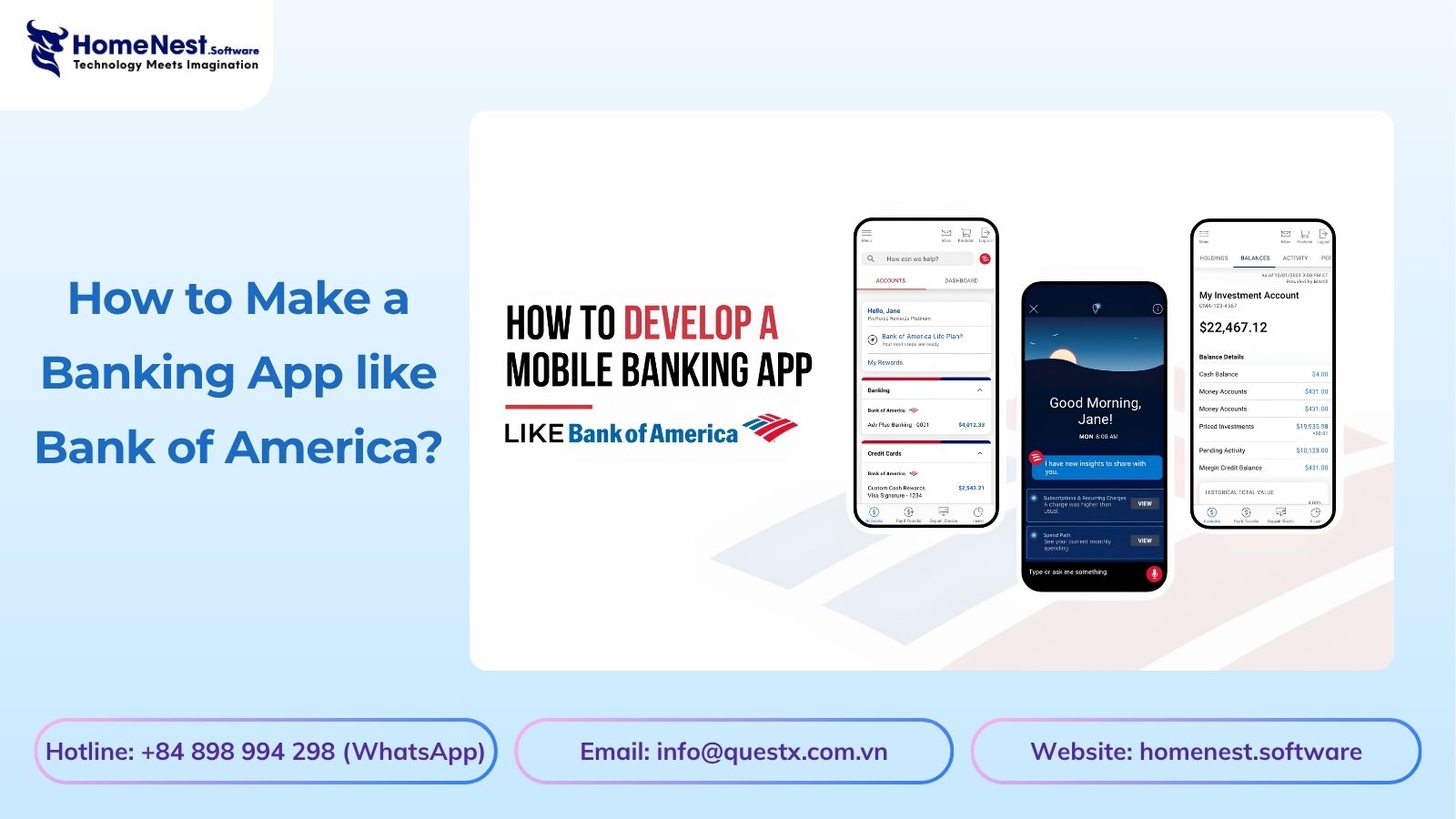
How to Make a Banking App like Bank of America?
Developing a mobile banking application like Bank of America extends far beyond basic UI design; it requires engineering a fault-tolerant backend capable of real-time ledger synchronization, biometric authentication, and high-volume data processing under strict regulatory frameworks. Drawing from HomeNest Software’s deep experience in architecting enterprise-grade fintech solutions, this guide strips away theoretical jargon to focus entirely on operational and technical execution. What you will find in this guide: We break down the precise development roadmap, from mapping out microservices and ensuring PCI-DSS compliance to estimating MVP development costs and securing absolute data sovereignty through 100% source code ownership. If you are preparing to build, scale, or audit a financial platform, this blueprint provides the exact framework you need.
Banking App Development Cost
Building a banking application is rarely a simple process; it’s a complex technical challenge requiring a balance between complying with stringent financial regulations, handling large transaction volumes, and a scalable cloud architecture. Miscalculating these technical requirements from the outset often leads to significant technical debt and budget overruns. Based on HomeNest Software’s practical experience in designing enterprise-grade fintech solutions, this guide bypasses generic estimates to provide a realistic analysis of banking application development costs. What you’ll find in this guide: We analyze the true cost factors, from technology selection and API integration to the hidden costs of regulatory compliance and security infrastructure. Whether you’re launching a minimum viable product or expanding an existing financial platform, this analysis provides the precise operational data you need to plan your budget effectively.
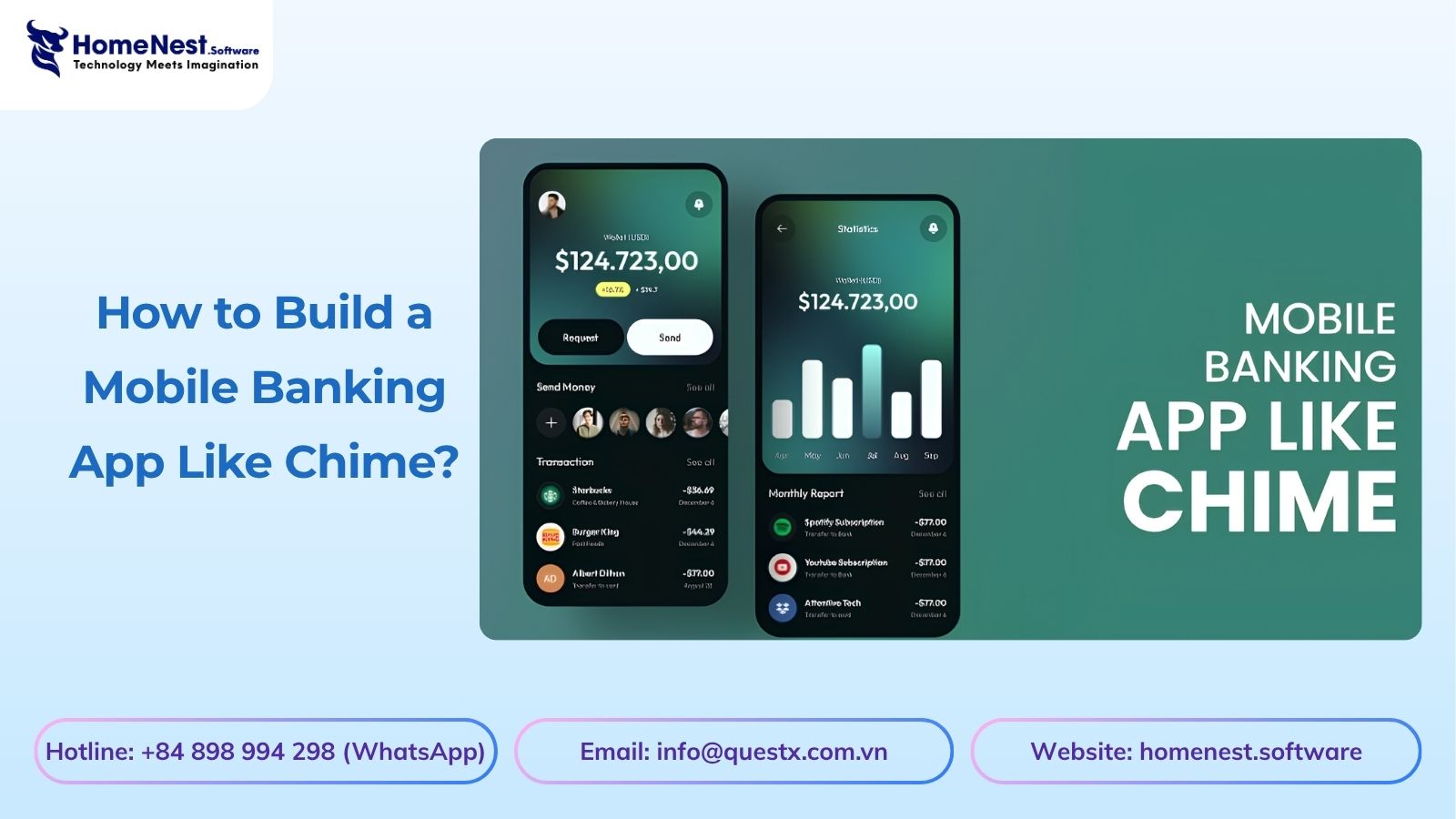
How to Build a Mobile Banking App Like Chime?
Building a mobile banking app like Chime is not just about features, it is about delivering a secure, scalable, and user-centric financial experience. From planning the right architecture to optimizing mobile banking app development cost, every decision directly impacts your product’s success. Leveraging Fintech app development services, starting with MVP app development, and scaling through on-demand app development solutions allows businesses to reduce risk and accelerate time to market. To stay competitive, combining Android app development services and iOS app development solutions ensures wider reach, while continuous updates through maintenance software development services keep your app secure and future-ready.

How to Build a Banking App Like Barclays: A Complete Entrepreneur’s Guide
Building a banking app like Barclays requires more than just development. It demands a strong product vision, secure architecture, and a clear monetization strategy. From optimizing cost and selecting the right tech stack to ensuring compliance and scalability, every decision impacts long-term success. Partnering with an experienced team like HomeNest Software helps accelerate development, reduce risks, and deliver a high-quality fintech product that can compete in today’s fast-evolving digital banking landscape.