
Top Fintech Trends To Accelerate Business
The fintech industry in 2026 is driven by rapid technological innovation, shifting customer expectations, and increasing regulatory demands. Technologies like AI, blockchain, and open banking are not just enhancing financial services, they are fundamentally redefining how the entire ecosystem operates. To stay competitive, businesses must move beyond reactive adoption and take a strategic approach to innovation, focusing on scalability, security, and user-centric design. Those that remain agile, invest in the right capabilities, and embrace collaboration will be best positioned to lead in the next era of digital finance.
Scope of Work
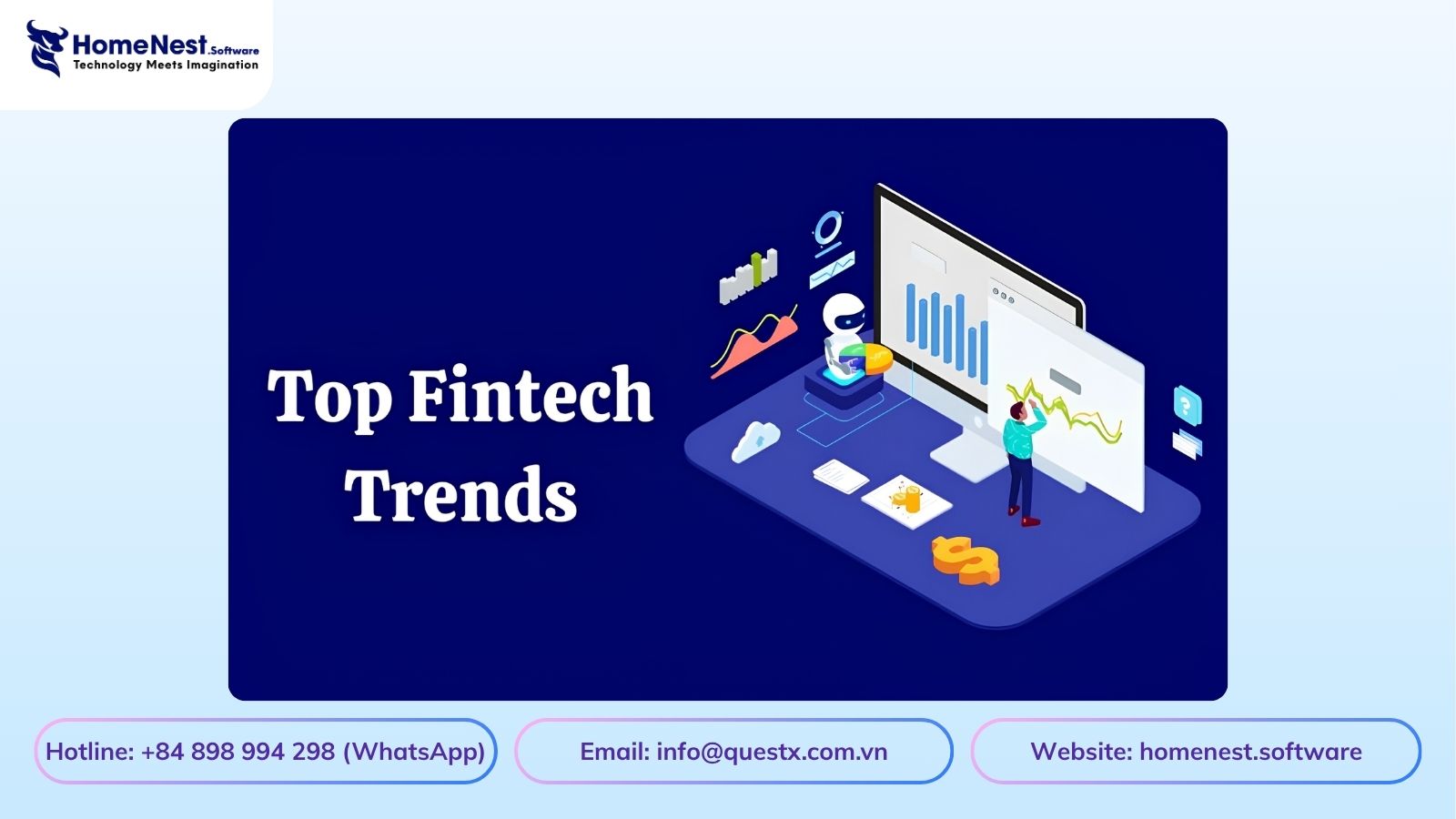
The fintech landscape in 2026 is no longer just about digital convenience; it is a highly regulated, data-driven ecosystem. As financial institutions and startups scale, the focus has shifted toward building fault-tolerant architectures, integrating AI securely, and complying with stringent open banking standards. This guide explores the top fintech trends reshaping the industry and the core technical requirements necessary to implement them successfully.
Global Financial Market Landscape
According to a report by Fortune Business Insights, the global fintech market reached a valuation of approximately $394.88 billion in 2025. It is projected to grow to $460.76 billion in 2026 and is expected to surpass $1.18 trillion by 2034, reflecting a strong compound annual growth rate (CAGR) of 18.20% between 2027 and 2034.
Key Market Trends & Insights
- Regional Leadership: North America led the fintech as a service market in 2026, accounting for more than 34% of total revenue.
- Fastest Growing Region: Asia Pacific is anticipated to record the highest growth rate during the forecast period, driven by rapid digital adoption and expanding financial inclusion.
- By Segment: The payments segment remained the dominant category in 2026, contributing over 40% of the market share.
- By Technology: Blockchain emerged as the leading technology, also capturing more than 40% of total revenue, highlighting its growing role in financial infrastructure.
- By Application: Compliance and regulatory support solutions accounted for over 31% of global revenue, reflecting increasing demand for secure and compliant financial operations.
These trends underscore the rapid expansion of fintech and its evolving role in shaping the global financial ecosystem.
20 Fintech Trends to Watch in 2026
The fintech landscape in 2026 is evolving at unprecedented speed, driven by rapid technological innovation and shifting user expectations. As businesses race to build smarter, faster, and more secure financial solutions, one factor continues to shape every strategic decision: fintech app development cost. Understanding how emerging trends influence development complexity, scalability, and long term investment is essential for any organization looking to stay competitive.
Below are the key fintech trends defining 2026 and how they connect to the broader conversation around fintech app development cost and digital product strategy:
Embedded Finance and Microservices Architecture
Embedded finance is redefining service delivery by integrating financial products directly into non-financial platforms. From a technical perspective, this requires a robust microservices architecture and seamless integration with Open Banking APIs (such as Plaid or Tink). Ensuring low-latency data synchronization and deploying secure API gateways are critical for maintaining system performance under high transaction volumes.
AI Infrastructure and Machine Learning
Artificial intelligence is now the core of real-time fraud detection, automated credit scoring, and algorithmic trading. However, deploying enterprise-grade AI involves significant infrastructure overhead. When evaluating fintech app development cost, organizations must account for the computational power (GPUs) required to train machine learning models, as well as the implementation of Big Data cores to process real-time transaction streams accurately.
Open Banking and API Ecosystems
Open banking enables secure data sharing between financial institutions through APIs, fostering innovation and competition. It allows businesses to create highly personalized financial experiences. However, building secure, scalable API ecosystems requires careful planning, which directly impacts fintech app development cost, especially in regulated markets.
Web3 and Smart Contract Auditing
Decentralized Finance (DeFi) continues to evolve, introducing programmable finance through blockchain technology. For institutions adopting Web3, the primary engineering challenge shifts from basic deployment to rigorous smart contract auditing. Identifying and resolving code vulnerabilities before deployment is non-negotiable to prevent exploitation and ensure compliance with emerging digital asset regulations.
RegTech and Smart Compliance
As regulations around data privacy, KYC, and AML continue to tighten, RegTech solutions are becoming essential. Automation and machine learning help organizations stay compliant while reducing manual effort. However, compliance requirements remain a major factor in fintech app development cost, especially for global platforms operating across multiple jurisdictions.
Biometric and Behavioral Security
Security is evolving beyond passwords to include biometrics and behavioral analytics. Face recognition, fingerprint scanning, and usage pattern analysis are becoming standard in financial applications. These advanced security layers enhance user trust but also contribute to fintech app development cost due to integration and testing requirements.
Next Generation Payments
Instant payments and seamless cross border transactions are now baseline expectations. Innovations in blockchain and digital currencies are making transactions faster and more cost efficient. Building such systems requires high performance infrastructure and robust integrations, both of which play a key role in determining fintech app development cost.
Buy Now, Pay Later (BNPL)
BNPL continues to expand beyond retail into industries like healthcare, travel, and B2B services. AI powered credit evaluation is making lending more accessible and accurate. As these systems become more sophisticated, they introduce additional considerations around risk modeling and scalability, impacting overall fintech app development cost.
ESG and Sustainable Finance
Environmental, Social, and Governance (ESG) considerations are increasingly integrated into fintech platforms. Users now expect transparency and the ability to invest in sustainable initiatives. Supporting ESG metrics and reporting requires additional data layers and analytics capabilities, influencing fintech app development cost.
Asset Tokenization
Blockchain is enabling the tokenization of real world assets, allowing fractional ownership of real estate, art, and equities. This democratizes investment opportunities but also introduces regulatory and technical challenges that must be considered when estimating fintech app development cost.
Quantum Computing (Emerging)
While still in early stages, quantum computing presents both opportunities and risks for fintech. It has the potential to revolutionize risk analysis and optimization but also raises concerns around encryption and security. Forward thinking companies are already considering its implications in long term fintech app development cost planning.
Digital Identity Platforms
Secure digital identity solutions streamline onboarding and reduce fraud. They eliminate repetitive verification processes and enhance user experience. However, integrating identity verification systems and ensuring compliance adds another layer to fintech app development cost.
Smart Contracts and Automation
Smart contracts automate financial transactions based on predefined conditions, reducing manual intervention in processes like lending and insurance claims. While they improve efficiency, they also require careful design, testing, and auditing factors that influence fintech app development cost.
InsurTech Growth
Technology is transforming the insurance sector through real time risk assessment, usage based models, and automated claims processing. As InsurTech platforms evolve, their complexity continues to impact fintech app development cost, particularly in data modeling and system integration.
Financial Inclusion Through Mobile Banking
Mobile banking is expanding access to financial services in emerging markets, bringing millions into the formal financial system. Building scalable, mobile first platforms that work across diverse environments requires thoughtful architecture, which directly affects fintech app development cost.
AI Driven WealthTech
WealthTech platforms are leveraging AI to deliver personalized investment strategies and automated portfolio management. These intelligent systems require sophisticated algorithms and data processing capabilities, making them a key contributor to fintech app development cost.
Advanced Cybersecurity
As digital financial transactions grow, cybersecurity becomes a top priority. Zero trust architectures, encryption, and secure data processing are essential to protect user data and maintain trust. Security investments are a critical component of fintech app development cost.
Subscription Based Banking
Banking as a Service (BaaS) and subscription models are redefining how financial services are packaged and monetized. These models require flexible billing systems and scalable architectures, which influence fintech app development cost.
Conversational Banking
AI powered chatbots and voice assistants are making financial services more accessible and user friendly. These interfaces improve engagement but also require natural language processing capabilities, contributing to fintech app development cost.
Adaptive Risk Scoring
Modern credit scoring models are evolving to include alternative data sources such as mobile usage and online behavior. This improves lending accuracy and expands access to credit, but also increases data complexity impacting fintech app development cost.
In 2026, fintech innovation is no longer just about adopting new technologies it’s about making strategic decisions that balance innovation, scalability, and cost. Every trend outlined above plays a role in shaping fintech app development cost, making it a critical consideration for businesses planning to build or scale financial products.
Organizations that understand this relationship will be better equipped to invest wisely, accelerate time to market, and build resilient fintech solutions in an increasingly competitive landscape.
What Are the Emerging Technologies in the Fintech Industry in 2026?

The fintech industry continues to evolve through the integration of advanced technologies that enhance both backend infrastructure and customer facing experiences. In 2026, several key innovations are driving this transformation reshaping how financial services are built, delivered, and scaled.
Artificial Intelligence and Machine Learning
Artificial intelligence and machine learning remain at the core of fintech innovation. These technologies enable hyper personalization, advanced risk assessment, fraud detection, and predictive analytics. By continuously learning from new data, machine learning models improve accuracy over time, helping financial institutions make faster and more informed decisions.
Blockchain and Distributed Ledger Technology (DLT)
Blockchain and distributed ledger technology (DLT) provide a secure, transparent, and tamper resistant framework for financial transactions. These technologies support decentralized finance (DeFi), digital asset tokenization, and smart contracts that automate business logic without intermediaries. As adoption grows, blockchain is becoming a foundational layer in modern financial systems.
Cloud Computing and Edge Infrastructure
Cloud computing enables fintech companies to scale rapidly without heavy upfront infrastructure investment. It provides flexible, on demand resources that support secure application deployment and global accessibility. At the same time, edge computing enhances real time processing by bringing computation closer to the data source critical for latency sensitive applications like payments and fraud detection.
Quantum Resistant Cryptography
As quantum computing advances, traditional encryption methods may become vulnerable. In response, fintech organizations are exploring quantum resistant cryptographic algorithms to protect sensitive financial data against future threats. This proactive approach is essential for long term security and resilience.
Natural Language Processing (NLP)
Natural Language Processing (NLP) is enabling more advanced conversational experiences in fintech. From AI powered chatbots to voice enabled banking, NLP allows users to interact with financial platforms using everyday language. This improves accessibility, enhances customer support, and streamlines transaction processes.
These emerging technologies are not only enhancing financial services they are redefining how the entire ecosystem operates. Organizations that adopt them strategically will be better positioned to deliver innovative, secure, and user centric financial experiences in the years ahead.
How Emerging Technologies Help Fintech Startups Overcome Challenges
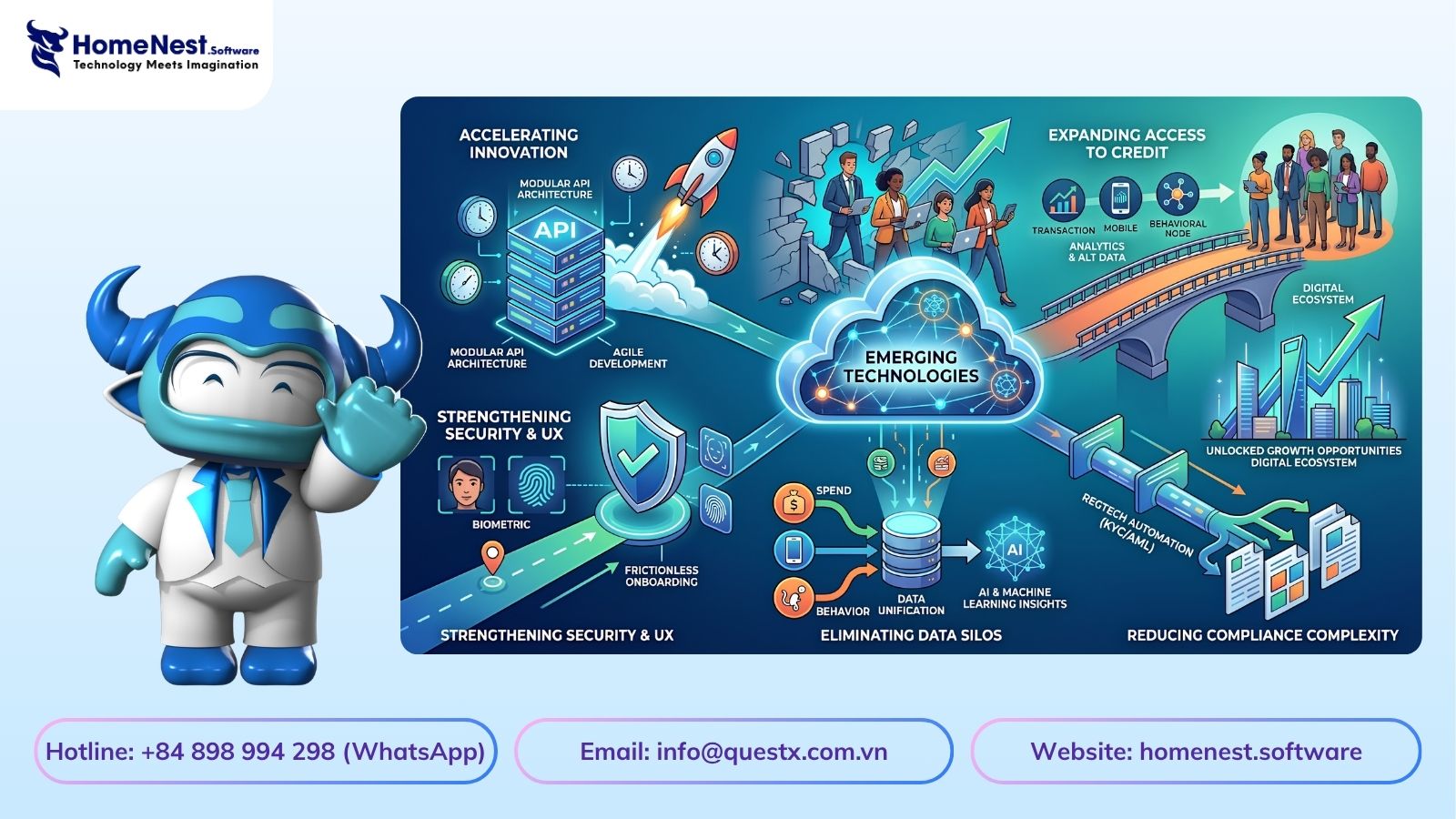
As fintech startups navigate a highly competitive and regulated environment, emerging technologies are playing a critical role in helping them overcome operational, technical, and market entry challenges. These innovations enable startups to move faster, operate more securely, and scale more efficiently.
Accelerating Innovation Cycles
Cloud platforms and modular API architectures allow startups to build, test, and launch products at unprecedented speed. By removing the constraints of legacy infrastructure, teams can adopt agile development practices, iterate quickly, and bring new features to market faster. This agility is essential for staying competitive in the fast moving fintech landscape.
Strengthening Security Without Compromising User Experience
Modern security technologies such as advanced encryption, biometric authentication, and anomaly detection enable startups to protect user data while maintaining a seamless experience. Features like passwordless login and frictionless onboarding help improve accessibility without weakening security, allowing startups to build trust from the first user interaction.
Eliminating Data Silos
Artificial intelligence and machine learning help fintech startups unify and analyze data across multiple sources. By breaking down data silos, organizations gain deeper insights into customer behavior, enabling better decision making, improved personalization, and stronger customer retention. At the same time, operational efficiency is enhanced through data driven automation.
Reducing Compliance Complexity
Regulatory technology (RegTech) solutions automate key compliance processes, including KYC (Know Your Customer), AML (Anti Money Laundering), and reporting requirements. This reduces manual effort, minimizes errors, and lowers regulatory risk allowing startups to scale without being overwhelmed by compliance overhead.
Expanding Access to Credit and Risk Insights
Advanced analytics and alternative data sources such as transaction history, mobile usage, and behavioral patterns are transforming how creditworthiness is assessed. This enables fintech startups to extend financial services to underserved populations, broadening their customer base while improving the accuracy of risk evaluation.
Emerging technologies are not just tools for innovation they are strategic enablers that allow fintech startups to overcome traditional barriers, operate more efficiently, and unlock new growth opportunities in an increasingly digital financial ecosystem.
How Businesses Can Prepare for Future Fintech Trends

“Integrating emerging technologies into fintech requires more than just following a trend. It demands a highly secure cloud architecture and rigorous data governance. Deploying AI or open banking APIs without a scalable, fault-tolerant backend will inevitably lead to critical security vulnerabilities and massive technical debt.” — Nguyễn Tiến, Co-Founder of HomeNest Software
Fintech trends are reshaping the entire financial ecosystem, not only impacting startups but also transforming traditional banks, enterprises, investors, and policymakers. To remain competitive and future ready, businesses must take a proactive and strategic approach to innovation, talent, and collaboration.
Embrace Open Banking Ecosystems
Participating in open banking enables organizations to integrate with third party services through secure APIs, unlocking new opportunities for innovation. By leveraging external fintech solutions, businesses can enhance customer experiences, deliver more personalized services, and accelerate product development.
Build a Culture of Innovation
Organizations must foster an environment that encourages experimentation, cross functional collaboration, and rapid iteration. Establishing innovation labs, partnering with fintech startups, and organizing internal hackathons can help teams test new ideas quickly and adapt to market changes with greater agility.
Invest in Workforce Transformation
As financial services become increasingly technology driven, upskilling the workforce is essential. Businesses should equip employees with capabilities in areas such as data science, cybersecurity, AI governance, and digital product management. A well trained team ensures smoother adoption of new technologies and strengthens long term competitiveness.
Strengthen Ethical and Regulatory Awareness
With the growing use of data and automation, businesses must prioritize ethical considerations and regulatory compliance. Establishing clear governance frameworks for data usage, AI decision making, and risk management helps build trust with customers and regulators while reducing long term risks.
Leverage Strategic Partnerships
Collaboration is key to accelerating innovation. By working with fintech companies, technology providers, and industry consortia, businesses can access new capabilities, share expertise, and bring products to market faster. Strategic partnerships also open doors to new markets and business models.
Preparing for future fintech trends is not just about adopting new technologies it’s about transforming how organizations think, operate, and deliver value. Businesses that invest in innovation, talent, and collaboration today will be best positioned to lead in the next wave of financial transformation.
Conclusion
By 2026, the fintech landscape will be defined by rapid innovation, deep integration, and continuous transformation. Technologies such as artificial intelligence, blockchain, and big data are reshaping every layer of financial services from how products are delivered to how customers interact and how regulations are enforced. At the same time, evolving user expectations, stricter regulatory environments, and increasing competition are accelerating the pace of change across the industry.
Whether you are a startup founder, enterprise leader, financial professional, or industry observer, understanding these shifts is essential to navigating the future of finance. Success will depend on the ability to adopt technology responsibly, foster innovation, and prepare strategically for ongoing disruption. Organizations that embrace this mindset will not only adapt but also gain a competitive advantage in a market driven by speed, personalization, security, and global connectivity.
The opportunities ahead are substantial. Those who remain informed, agile, and forward thinking will be best positioned to lead the next wave of financial transformation.

FAQs About Fintech Trends in 2026
1. What are the biggest fintech trends in 2026?
The most impactful trends include AI driven financial services, embedded finance, open banking, blockchain and DeFi, advanced cybersecurity, and personalized digital banking experiences.
2. Why are fintech trends important for businesses?
Fintech trends help businesses stay competitive, improve customer experience, optimize operations, and unlock new revenue streams through innovation and technology adoption.
3. How is AI transforming the fintech industry?
AI enhances fraud detection, credit scoring, customer support, and personalized financial services by analyzing large datasets and enabling faster, more accurate decision making.
4. What is embedded finance and why is it growing?
Embedded finance integrates financial services into non financial platforms, such as e commerce or ride hailing apps. It is growing because it offers seamless user experiences and increases customer engagement.
5. How does blockchain impact fintech?
Blockchain improves transparency, security, and efficiency by enabling decentralized transactions, smart contracts, and digital asset management without intermediaries.
6. What challenges do fintech companies face in 2026?
Key challenges include regulatory compliance, data security, integration complexity, customer trust, and the need to scale technology while controlling costs.
7. How can businesses prepare for future fintech trends?
Businesses should invest in digital transformation, adopt open banking strategies, upskill their workforce, strengthen cybersecurity, and build strategic partnerships with fintech providers.
8. What role does cybersecurity play in fintech?
Cybersecurity is critical to protect sensitive financial data, prevent fraud, and maintain customer trust, especially as digital transactions and online services continue to grow.
9. Are fintech trends only relevant to startups?
No. Fintech trends impact startups, traditional banks, enterprises, and even regulators, as the entire financial ecosystem is undergoing digital transformation.
10. Do I own the source code of my fintech software if I work with HomeNest Software?
Yes. HomeNest Software guarantees 100% source code ownership and intellectual property transfer upon project deployment. This eliminates vendor lock-in risks, allowing your internal teams to scale, modify, or audit the application independently.
11. What is the future of fintech beyond 2026?
Fintech will continue evolving toward more intelligent, automated, and personalized systems, with deeper integration across industries and stronger emphasis on security, compliance, and global connectivity.
Latest Articles
View All
Criteria For Choosing The Right App Design Agency
UI/UX design is the logical foundation of a system, not merely a visual element. Choosing the wrong partner will directly lead to technical debt, budget overruns, and disruptions in the development process. This article provides a 6-step evaluation framework and a list of operational risks, helping businesses eliminate subjective design advice and accurately assess agency capabilities based on developer handoff standards and practical business performance.
How Does AI in Banking Industry Impact the Future?
Artificial intelligence (AI) has transitioned from a supplementary tool to a core infrastructure of financial data management, optimizing profitability through real-time fraud detection, natural language processing (NLP), and high-speed credit scoring models. “Deploying AI in the financial sector requires more than just algorithmic accuracy, it demands a highly secure cloud architecture and rigorous data governance,” commented Nguyen Tien, co-founder of HomeNest Software. Why read this guide? We skip the theoretical jargon to focus entirely on technical implementation. Whether you’re evaluating a vendor or planning a system overhaul, this article will detail: Operational Efficiency: Automating unstructured data workflows at scale. Risk Architecture: Implementing real-time threat detection and AML compliance. Data ownership: The essential need for 100% ownership of the source code to ensure full algorithm auditability.

How to Make a Banking App like Bank of America?
Developing a mobile banking application like Bank of America extends far beyond basic UI design; it requires engineering a fault-tolerant backend capable of real-time ledger synchronization, biometric authentication, and high-volume data processing under strict regulatory frameworks. Drawing from HomeNest Software’s deep experience in architecting enterprise-grade fintech solutions, this guide strips away theoretical jargon to focus entirely on operational and technical execution. What you will find in this guide: We break down the precise development roadmap, from mapping out microservices and ensuring PCI-DSS compliance to estimating MVP development costs and securing absolute data sovereignty through 100% source code ownership. If you are preparing to build, scale, or audit a financial platform, this blueprint provides the exact framework you need.
Banking App Development Cost
Building a banking application is rarely a simple process; it’s a complex technical challenge requiring a balance between complying with stringent financial regulations, handling large transaction volumes, and a scalable cloud architecture. Miscalculating these technical requirements from the outset often leads to significant technical debt and budget overruns. Based on HomeNest Software’s practical experience in designing enterprise-grade fintech solutions, this guide bypasses generic estimates to provide a realistic analysis of banking application development costs. What you’ll find in this guide: We analyze the true cost factors, from technology selection and API integration to the hidden costs of regulatory compliance and security infrastructure. Whether you’re launching a minimum viable product or expanding an existing financial platform, this analysis provides the precise operational data you need to plan your budget effectively.
How to Build a Mobile Banking App Like Chime?
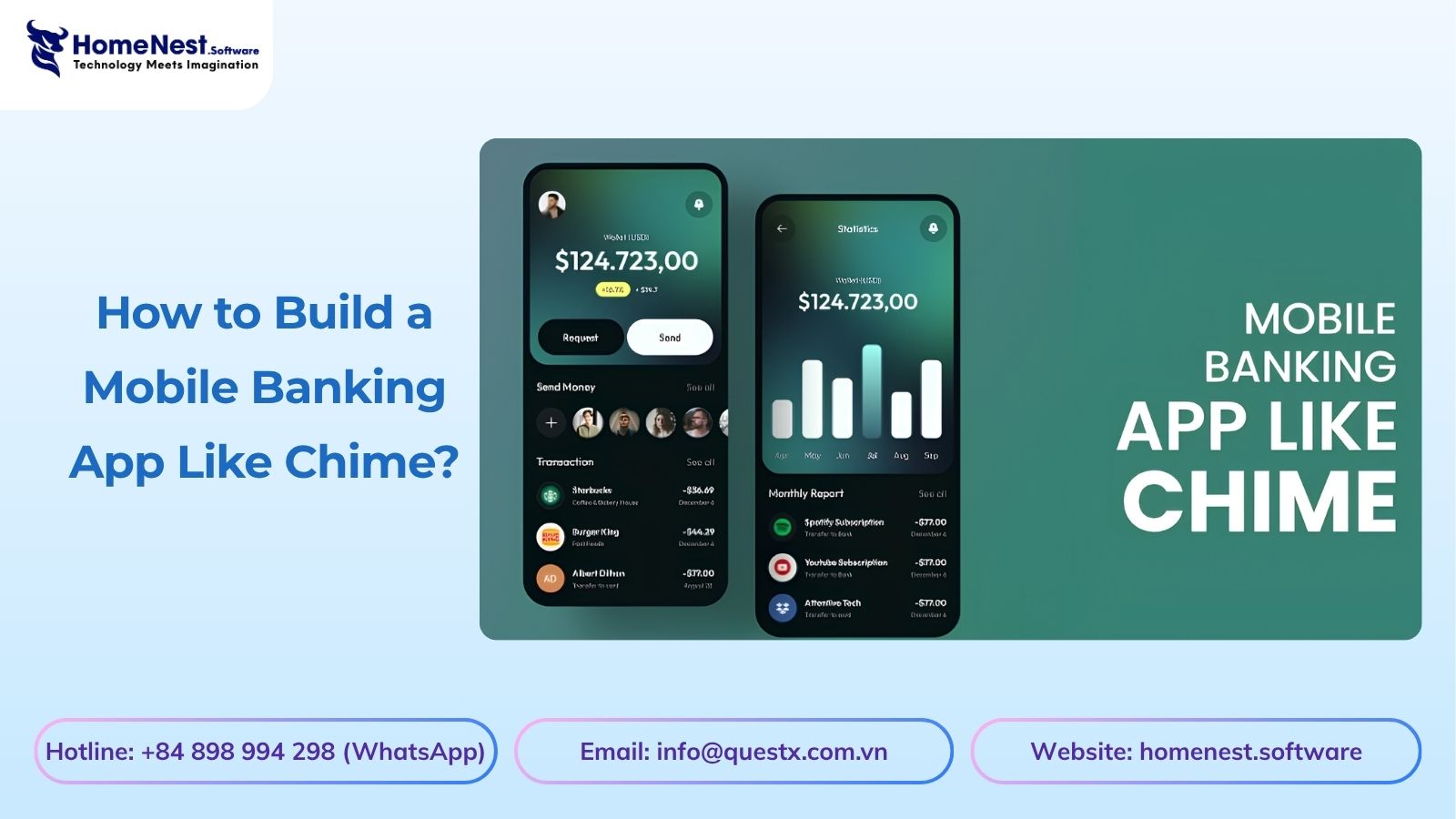
Building a mobile banking app like Chime is not just about features, it is about delivering a secure, scalable, and user-centric financial experience. From planning the right architecture to optimizing mobile banking app development cost, every decision directly impacts your product’s success. Leveraging Fintech app development services, starting with MVP app development, and scaling through on-demand app development solutions allows businesses to reduce risk and accelerate time to market. To stay competitive, combining Android app development services and iOS app development solutions ensures wider reach, while continuous updates through maintenance software development services keep your app secure and future-ready.

How to Build a Banking App Like Barclays: A Complete Entrepreneur’s Guide
Building a banking app like Barclays requires more than just development. It demands a strong product vision, secure architecture, and a clear monetization strategy. From optimizing cost and selecting the right tech stack to ensuring compliance and scalability, every decision impacts long-term success. Partnering with an experienced team like HomeNest Software helps accelerate development, reduce risks, and deliver a high-quality fintech product that can compete in today’s fast-evolving digital banking landscape.