
Top 10 Software Development Trends Businesses Should Watch
Scope of Work
The software development landscape continues to evolve at an unprecedented pace, and 2026 is expected to introduce even more groundbreaking innovations. For businesses aiming to remain competitive in the digital economy, staying informed about emerging software development trends is no longer optional it’s a strategic necessity.
In this article, we highlight the top 10 software development trends shaping 2026 that forward thinking organizations should closely monitor. Whether you are preparing to launch a new digital product or enhancing an existing platform, understanding these trends can help guide smarter technology decisions in an increasingly digital first business environment.
Current State of the Software Industry

The global software industry continues to experience strong and sustained growth, driven by rapid digital transformation, enterprise modernization, and the expanding adoption of cloud based technologies. According to Statista, the worldwide software market is expected to generate approximately $740.89 billion in revenue by 2025, reflecting the increasing reliance of businesses on digital solutions.
Among the various segments within the industry, enterprise software is projected to remain the largest contributor, with an estimated market value of around $315 billion by 2026. This growth is largely fueled by rising investments in ERP systems, CRM platforms, and cloud native enterprise applications that help organizations improve efficiency, manage operations, and enhance customer engagement.
Looking further ahead, the market is forecast to continue expanding steadily, with an estimated compound annual growth rate (CAGR) of about 4.87% between 2026 and 2029. By the end of this period, the global software market could reach nearly $896.17 billion, highlighting the industry’s long term growth potential and increasing importance in the global economy.
At a regional level, the United States remains the dominant force in the software market, with projected revenues of approximately $379.29 billion in 2026 alone. This leadership is supported by a strong ecosystem of technology companies, a thriving startup culture, and continued innovation in enterprise software and cloud computing. In addition, substantial investments in digital infrastructure and large scale digital transformation initiatives further strengthen the country’s position as a global technology leader.
Top 10 Software Development Trends in 2026
As the software industry continues to expand rapidly, keeping up with emerging technologies has become essential for businesses aiming to stay competitive and innovative. Below are ten key software development trends in 2026 that organizations should monitor to remain agile, future ready, and capable of adapting to the evolving digital landscape.
AI & Machine Learning Integration

Artificial Intelligence (AI) and Machine Learning (ML) have moved beyond experimental technologies and are now deeply embedded in modern software systems. These technologies power applications capable of recognizing speech, analyzing images, generating predictions, and automating complex workflows across multiple industries.
AI and ML are transforming how software is developed and scaled:
-
In retail and healthcare, virtual assistants and intelligent chatbots enhance customer interaction and support services.
-
In e commerce, AI driven analytics predict user behavior and deliver personalized shopping experiences.
-
In manufacturing, machine learning models monitor equipment performance to enable predictive maintenance.
-
In enterprise platforms, AI helps detect anomalies, strengthen cybersecurity, and automate decision making.
According to Statista, the global AI market is expected to reach $243.72 billion by 2025 and could grow to $826.73 billion by 2030, reflecting a CAGR of approximately 27.67%. As AI capabilities expand, developers increasingly rely on these technologies to automate repetitive coding tasks and focus more on innovation and user experience.
Read more: AI vs Machine Learning: Key Differences and Which One Your Business Needs
Low Code / No Code Development
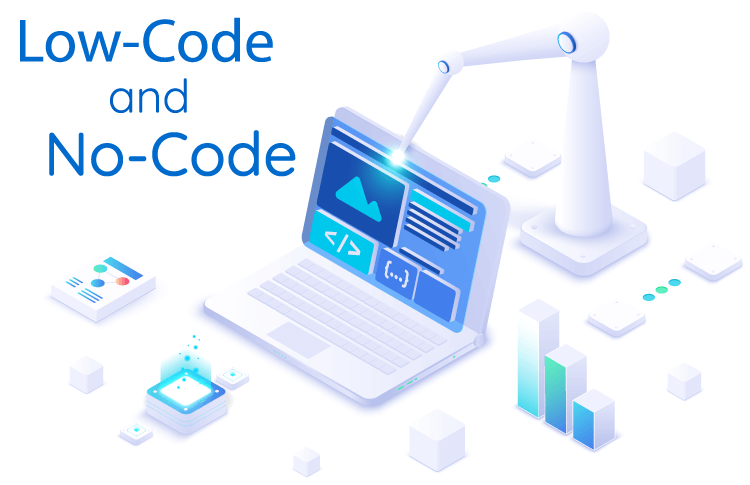
Low code and no code platforms are revolutionizing how applications are built by enabling both developers and non technical users to create software solutions. Through visual interfaces, drag and drop tools, and prebuilt components, these platforms significantly reduce development complexity.
By simplifying application creation, LCNC platforms allow organizations to:
-
Accelerate digital product development
-
Empower non technical teams to build internal tools
-
Reduce dependency on large engineering teams
-
Bridge the global IT talent shortage
Research suggests that around 70% of new business applications will be developed using low code or no code technologies by 2026. The global LCNC market is projected to reach $46.4 billion, growing at roughly 25% annually, making it one of the most influential trends in modern software development.
Cloud Native and Serverless Architectures
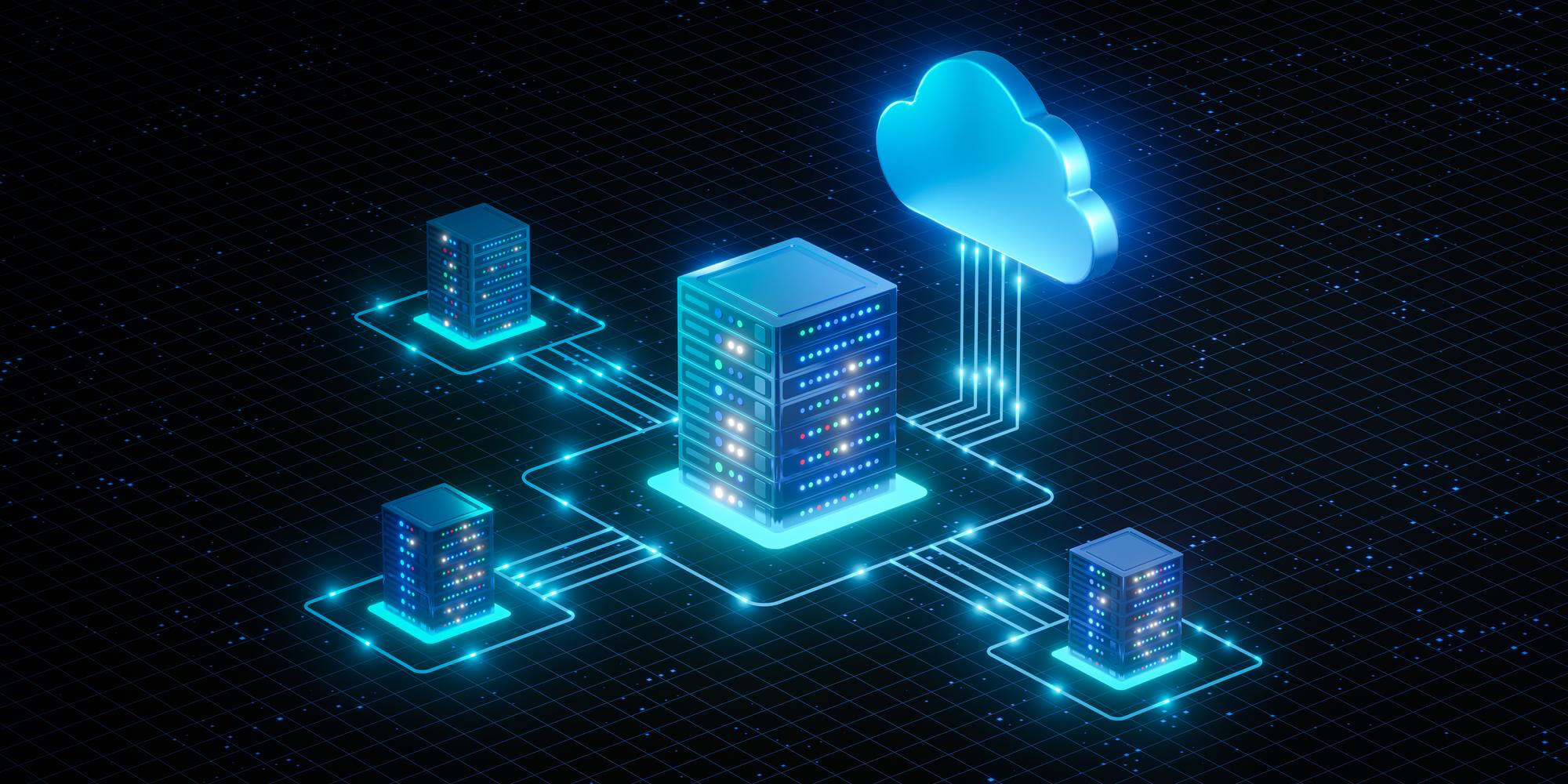
Cloud native development continues to dominate modern software engineering strategies. Organizations increasingly build applications designed specifically for cloud environments to achieve greater scalability, faster deployment, and improved reliability.
Key principles of cloud native development include:
-
DevOps practices to streamline collaboration between development and operations teams
-
Continuous delivery for faster and more reliable software releases
-
Microservices architecture to break applications into independent components
-
Containerization for consistent deployment across environments
Serverless architecture further enhances cloud efficiency by eliminating infrastructure management. Developers can deploy functions triggered by events using platforms such as AWS Lambda, Azure Functions, and Google Cloud Functions.
Industry research indicates the serverless computing market could grow at a CAGR of about 22.7% through 2026, driven by demand for flexible and cost efficient cloud platforms.
DevSecOps and Shift Left Security
DevOps has transformed software delivery by integrating development and operations into a unified workflow that improves speed, collaboration, and reliability.
Building on this foundation, DevSecOps integrates security directly into the development lifecycle. Instead of addressing security only at the final stage, the “shift left” approach embeds vulnerability testing, compliance checks, and security scanning early in the development process.
This strategy enables companies to:
-
Detect security issues earlier
-
Reduce remediation costs
-
Accelerate product releases
-
Ensure regulatory compliance
By 2026, DevSecOps has become essential for organizations building secure, scalable, and cloud native applications.
Progressive Web Apps (PWAs) and Microservices
Progressive Web Apps combine the advantages of mobile and web technologies, delivering fast, reliable, and app like experiences directly through web browsers.
PWAs offer several benefits:
-
Offline access and improved performance
-
No need for app store downloads
-
Faster loading times
-
Better user engagement
Businesses adopting PWAs report significant improvements in user engagement and lower bounce rates.
On the backend, microservices architecture complements PWAs by enabling applications to be built as modular services rather than a single monolithic system. Each component can be developed, deployed, and scaled independently.
Market forecasts suggest the microservices architecture market may grow from $7.7 billion in 2024 to $30 billion by 2032, reflecting strong industry adoption.
Internet of Things (IoT) and Edge Computing
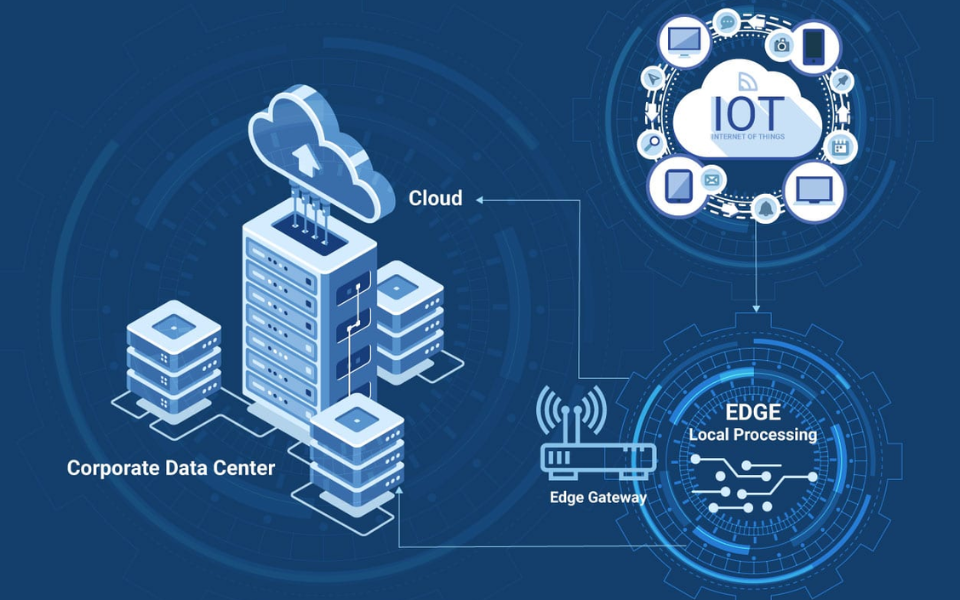
The Internet of Things (IoT) continues to expand rapidly, connecting billions of devices across industries such as smart homes, healthcare, manufacturing, and transportation.
IoT applications rely heavily on intelligent software to manage devices, analyze real time data, and automate processes. The global IoT market is expected to surpass $1 trillion in value, demonstrating the massive scale of this ecosystem.
However, the enormous amount of data generated by connected devices requires efficient processing. This is where edge computing becomes crucial.
Edge computing processes data closer to its source, reducing latency and improving system responsiveness. According to Grand View Research, the edge computing market could grow at a CAGR of 36.9% between 2024 and 2030.
Together, IoT and edge computing enable faster analytics, improved privacy, and smarter digital ecosystems.
Blockchain Beyond Cryptocurrency
While blockchain is widely associated with cryptocurrencies, its applications extend far beyond digital currencies. Businesses are increasingly using blockchain to improve data integrity, transparency, and trust across decentralized systems.
Key blockchain use cases include:
-
Supply chain tracking for end to end product transparency
-
Digital identity verification to reduce fraud
-
Smart contracts for automated agreements
-
Secure data sharing across healthcare and finance platforms
Unlike centralized databases, blockchain relies on distributed ledgers that are resistant to tampering and unauthorized modification.
According to Statista, the global blockchain market is expected to reach $39.7 billion by 2026, demonstrating growing demand for decentralized software solutions.
Read more: How to Hire Blockchain Developers
AR, VR, and Immersive Technologies
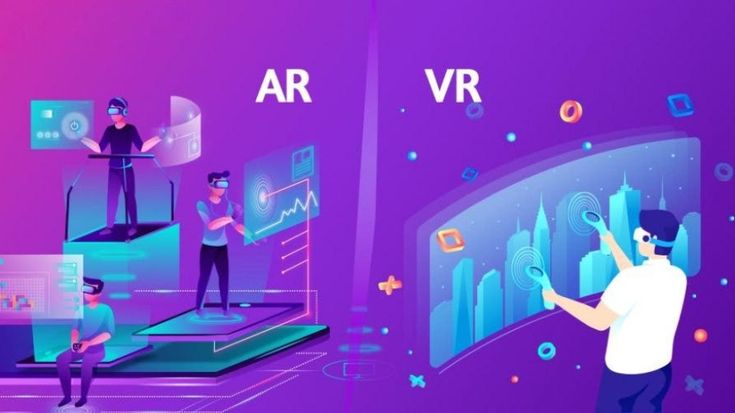
Augmented Reality (AR) and Virtual Reality (VR) are transforming how people interact with digital environments. These immersive technologies are no longer limited to gaming; they are now widely used in education, training, retail, and enterprise collaboration.
Businesses use AR and VR for:
-
Virtual training and simulation environments
-
Product visualization and virtual showrooms
-
Remote collaboration and immersive meetings
-
Interactive educational experiences
Market forecasts estimate the global AR and VR market could generate $46.6 billion in revenue by 2025, highlighting strong growth in immersive technology adoption.
Read more: Virtual Property Tours and AR/VR Apps
Agile Development and Continuous Delivery
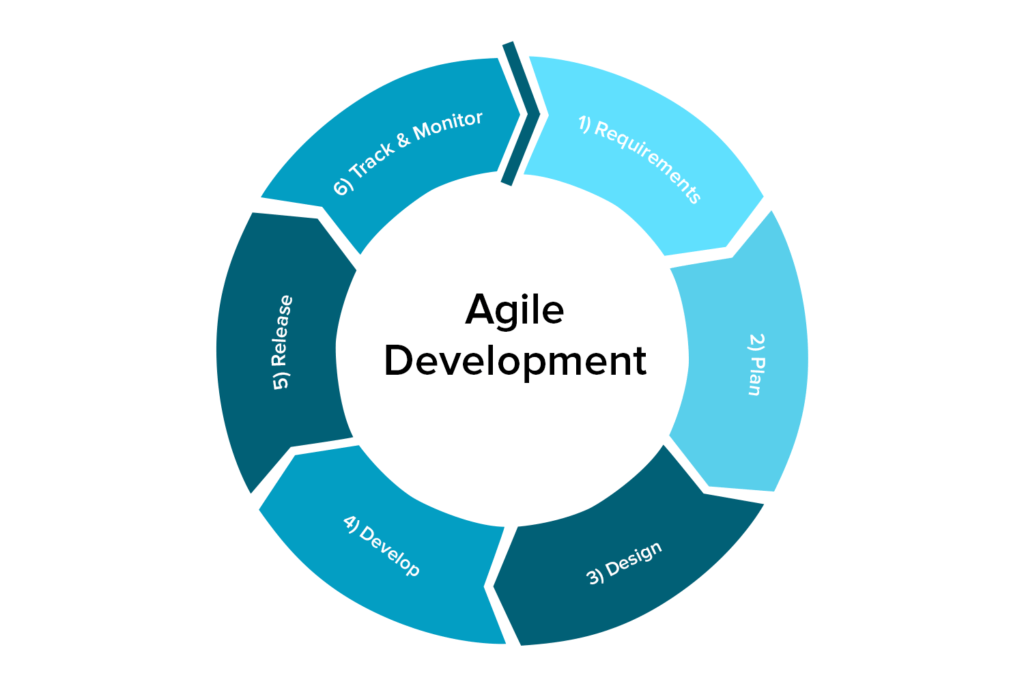
Agile development methodologies continue to dominate modern software engineering practices. Frameworks such as Scrum, Kanban, and Extreme Programming emphasize flexibility, iterative development, and close collaboration between teams and stakeholders.
Organizations adopting Agile often experience:
-
Higher project success rates
-
Faster development cycles
-
Better alignment with customer needs
-
Improved team productivity
Continuous Delivery (CD) complements Agile by automating build, testing, and deployment pipelines. Together, these practices allow teams to release software quickly, reliably, and frequently, enabling faster innovation.
Outsourcing as a Strategic Lever

Software outsourcing has evolved from a cost saving measure into a strategic growth strategy. In 2026, companies increasingly rely on outsourcing to access global talent, accelerate product development, and scale their engineering capabilities.
By partnering with experienced development providers, businesses can:
-
Accelerate development timelines
-
Access specialized expertise in AI, cloud, and cybersecurity
-
Reduce operational costs while maintaining quality
-
Allow internal teams to focus on core business innovation
Technology hubs such as Vietnam, India, and Eastern Europe are becoming popular outsourcing destinations due to their strong engineering talent pools and competitive pricing.
Additionally, outsourcing supports 24 hour development cycles, enabling faster product releases and continuous support for global businesses.
Read more: Top IT Outsourcing Companies in Vietnam
Why Choose HomeNest Software as Your Software Development Partner
In today’s rapidly evolving technology landscape, selecting the right development partner is essential to staying competitive. At HomeNest Software, we combine deep technical expertise with a client centric approach to deliver scalable, innovative, and cost effective software solutions tailored to modern business needs.
Proven Industry Experience
With 100+ successful projects delivered for clients across Japan, Singapore, Europe, Australia, Canada, the United States, and other global markets, we bring extensive experience across industries such as fintech, e commerce, healthcare, and manufacturing. This allows us to understand complex business challenges and deliver solutions that create real impact.
End to End Development Services
We provide full cycle software development, covering everything from idea validation and UI/UX design to development, testing, deployment, and ongoing maintenance. Our holistic approach ensures seamless execution aligned with your business goals.
Expertise in Advanced Technologies
Our engineering team specializes in cutting edge technologies, including AI, cloud native architectures, IoT, blockchain, AR/VR, and low code/no code platforms. This makes us a trusted partner for businesses looking to adopt the latest software development trends and build future ready solutions.
Agile, Scalable, and Globally Ready
With a team of 300+ skilled professionals and flexible engagement models, we scale resources based on your needs while maintaining transparency, speed, and collaboration throughout the development process.
Cost Effective Development Advantage
Headquartered in Vietnam, HomeNest Software offers high quality engineering at competitive costs, helping businesses innovate efficiently without exceeding their budgets.
Whether you’re launching a new digital product, modernizing legacy systems, or extending your internal team, HomeNest Software is a strategic partner committed to delivering results on time, within budget, and beyond expectations.
Conclusion
As the software industry continues to evolve, staying ahead of emerging trends is no longer optional it is a strategic necessity. From AI integration and cloud native development to low code platforms and immersive technologies, the key trends of 2026 are reshaping how businesses build, scale, and deliver digital solutions.
By embracing these innovations, organizations can achieve faster development cycles, enhanced user experiences, and more secure, intelligent applications. Whether you are a startup or an enterprise, aligning your technology strategy with these trends will help you remain agile and competitive in an increasingly digital world.
Looking for a reliable technology partner to guide your next step? HomeNest Software is ready to turn your ideas into powerful, scalable solutions with proven expertise and a strong commitment to long term success.

Contact Information:
- Address: The Sun Avenue, 28 Mai Chi Tho Street, Binh Trung Ward, Ho Chi Minh City
- Hotline: +84 898 994 298 ( WhatsApp )
- Website: homenest.software
FAQs
Why is choosing the right software development partner important?
A reliable partner ensures high quality delivery, reduces project risks, and helps align technology solutions with long term business goals. The right partner also brings expertise, scalability, and strategic guidance.
What services does HomeNest Software provide?
HomeNest Software offers full cycle development services, including consulting, UI/UX design, custom software development, testing, deployment, and ongoing maintenance.
Which technologies does HomeNest Software specialize in?
The company specializes in modern technologies such as AI, machine learning, cloud computing, IoT, blockchain, AR/VR, and low code/no code platforms.
How does outsourcing to Vietnam benefit businesses?
Vietnam offers a strong pool of skilled developers, competitive pricing, and high quality delivery standards, making it an ideal destination for cost effective software outsourcing.
Can HomeNest Software support both startups and enterprises?
Yes, HomeNest Software provides flexible solutions tailored to both startups and large enterprises, ensuring scalability and alignment with different business needs.
Latest Articles
View All
Criteria For Choosing The Right App Design Agency
UI/UX design is the logical foundation of a system, not merely a visual element. Choosing the wrong partner will directly lead to technical debt, budget overruns, and disruptions in the development process. This article provides a 6-step evaluation framework and a list of operational risks, helping businesses eliminate subjective design advice and accurately assess agency capabilities based on developer handoff standards and practical business performance.
How Does AI in Banking Industry Impact the Future?
Artificial intelligence (AI) has transitioned from a supplementary tool to a core infrastructure of financial data management, optimizing profitability through real-time fraud detection, natural language processing (NLP), and high-speed credit scoring models. “Deploying AI in the financial sector requires more than just algorithmic accuracy, it demands a highly secure cloud architecture and rigorous data governance,” commented Nguyen Tien, co-founder of HomeNest Software. Why read this guide? We skip the theoretical jargon to focus entirely on technical implementation. Whether you’re evaluating a vendor or planning a system overhaul, this article will detail: Operational Efficiency: Automating unstructured data workflows at scale. Risk Architecture: Implementing real-time threat detection and AML compliance. Data ownership: The essential need for 100% ownership of the source code to ensure full algorithm auditability.
How to Make a Banking App like Bank of America?
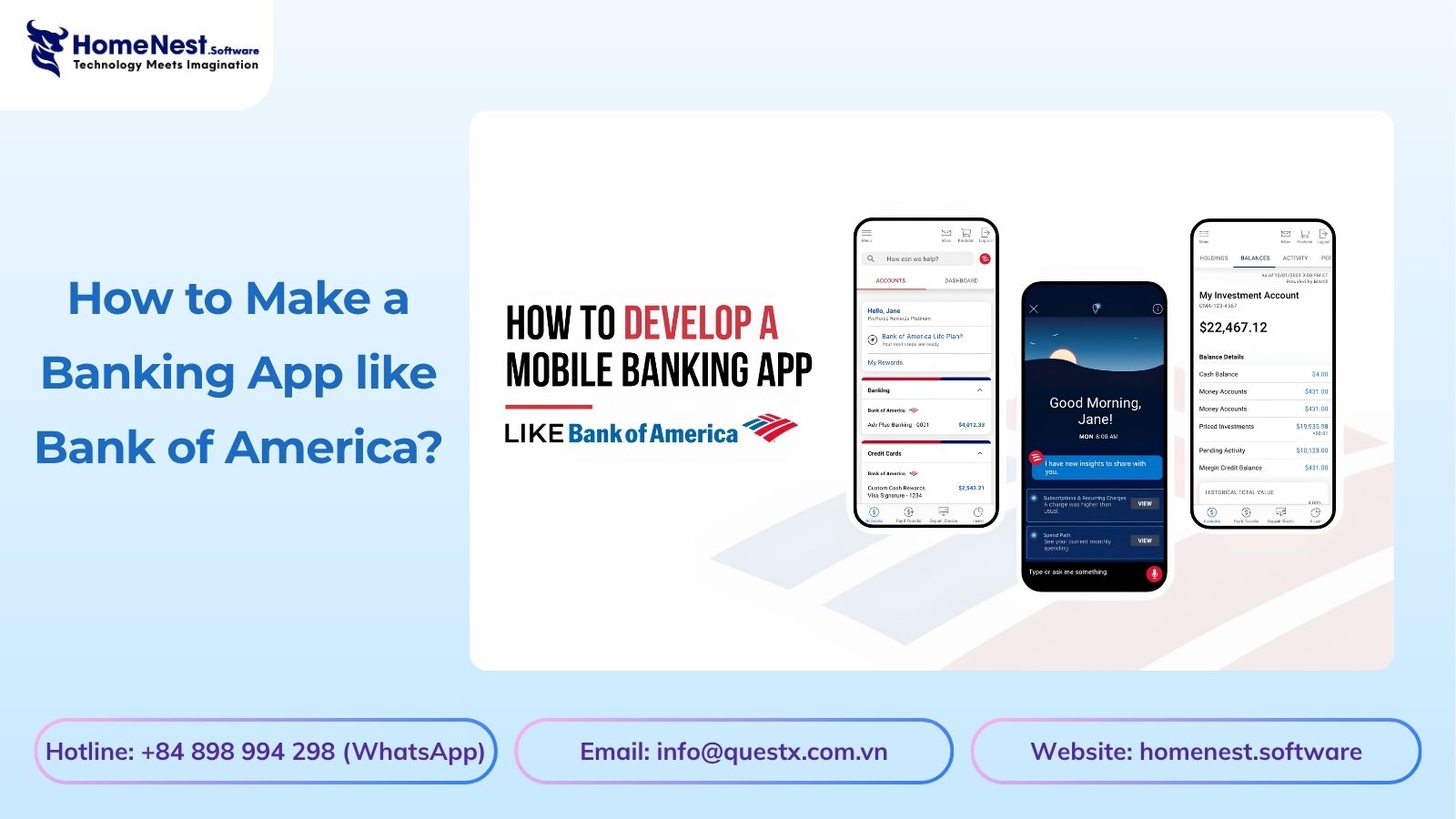
Developing a mobile banking application like Bank of America extends far beyond basic UI design; it requires engineering a fault-tolerant backend capable of real-time ledger synchronization, biometric authentication, and high-volume data processing under strict regulatory frameworks. Drawing from HomeNest Software’s deep experience in architecting enterprise-grade fintech solutions, this guide strips away theoretical jargon to focus entirely on operational and technical execution. What you will find in this guide: We break down the precise development roadmap, from mapping out microservices and ensuring PCI-DSS compliance to estimating MVP development costs and securing absolute data sovereignty through 100% source code ownership. If you are preparing to build, scale, or audit a financial platform, this blueprint provides the exact framework you need.
Banking App Development Cost
Building a banking application is rarely a simple process; it’s a complex technical challenge requiring a balance between complying with stringent financial regulations, handling large transaction volumes, and a scalable cloud architecture. Miscalculating these technical requirements from the outset often leads to significant technical debt and budget overruns. Based on HomeNest Software’s practical experience in designing enterprise-grade fintech solutions, this guide bypasses generic estimates to provide a realistic analysis of banking application development costs. What you’ll find in this guide: We analyze the true cost factors, from technology selection and API integration to the hidden costs of regulatory compliance and security infrastructure. Whether you’re launching a minimum viable product or expanding an existing financial platform, this analysis provides the precise operational data you need to plan your budget effectively.
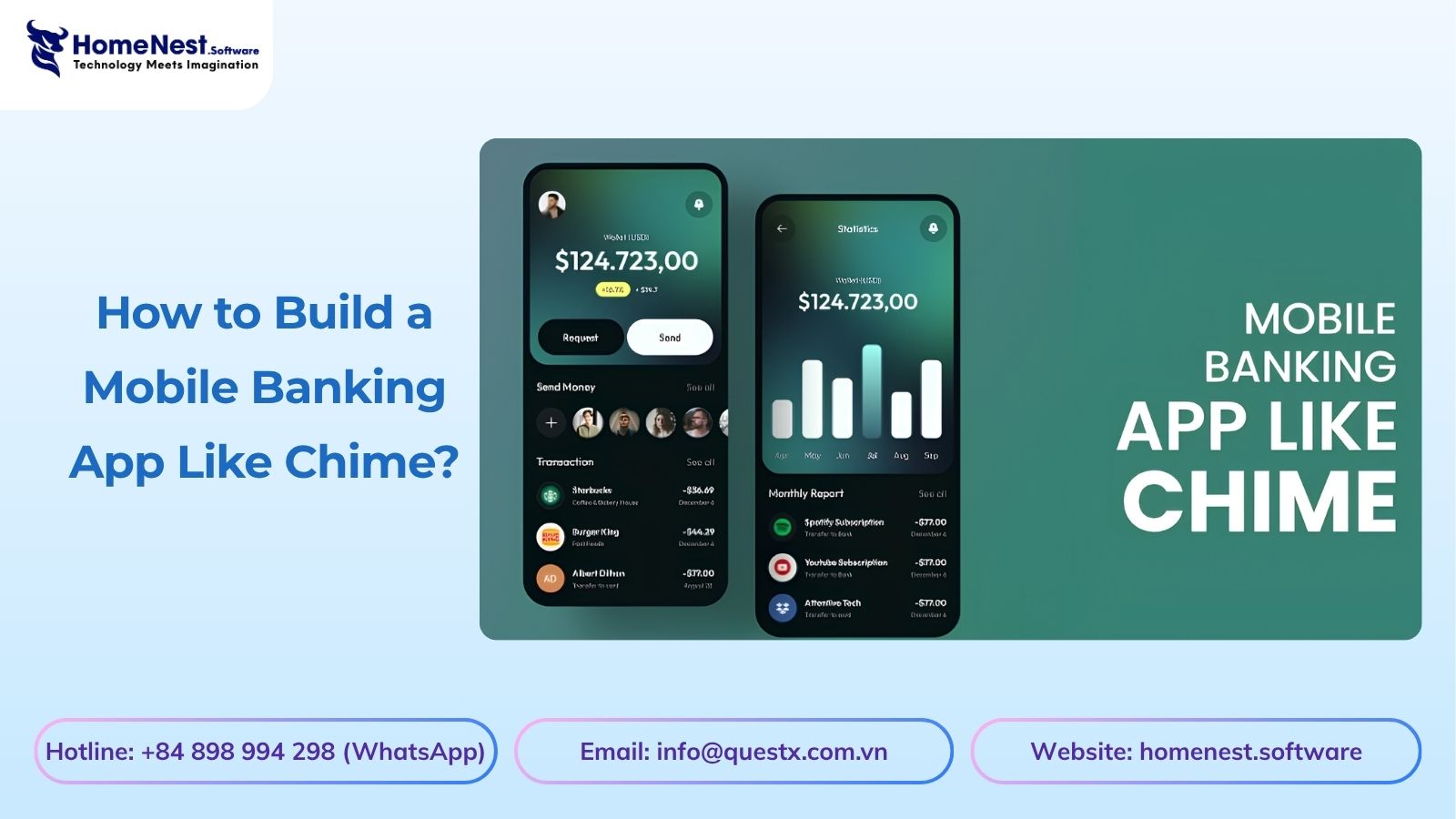
How to Build a Mobile Banking App Like Chime?
Building a mobile banking app like Chime is not just about features, it is about delivering a secure, scalable, and user-centric financial experience. From planning the right architecture to optimizing mobile banking app development cost, every decision directly impacts your product’s success. Leveraging Fintech app development services, starting with MVP app development, and scaling through on-demand app development solutions allows businesses to reduce risk and accelerate time to market. To stay competitive, combining Android app development services and iOS app development solutions ensures wider reach, while continuous updates through maintenance software development services keep your app secure and future-ready.

How to Build a Banking App Like Barclays: A Complete Entrepreneur’s Guide
Building a banking app like Barclays requires more than just development. It demands a strong product vision, secure architecture, and a clear monetization strategy. From optimizing cost and selecting the right tech stack to ensuring compliance and scalability, every decision impacts long-term success. Partnering with an experienced team like HomeNest Software helps accelerate development, reduce risks, and deliver a high-quality fintech product that can compete in today’s fast-evolving digital banking landscape.