
What Is SaaS Software Development? Key Benefits, Trends, and Insights
Building a Software as a Service product is one of the most effective ways to scale your business and generate predictable recurring revenue. In this comprehensive guide, we explore the fundamentals of SaaS software development, key business benefits, and the future trends that will help you launch a successful cloud platform.
Scope of Work

Organizations today face a familiar challenge: maintaining agility while controlling costs and ensuring their technology investments remain future ready. Traditional on premises software often burdened by high maintenance expenses and slow upgrade cycles frequently struggles to meet these demands.
As a result, SaaS software development has emerged as the dominant software delivery model. According to Market Growth Report, SaaS now powers over 70% of the global cloud software market. In this insight, HomeNest Software explores the fundamentals of SaaS development, the key business advantages it offers, and the major industry trends shaping its future.
What Is SaaS (Software as a Service)?
SaaS (Software as a Service) is a cloud based software delivery model in which applications are hosted by a provider and accessed over the internet through a web browser or mobile device. Instead of installing software locally on individual machines or maintaining complex infrastructure, users can simply log in and start using the application on demand.
Unlike traditional software models that require lengthy installations, expensive licenses, and ongoing IT maintenance, SaaS eliminates much of the operational burden. This allows businesses to focus more on innovation, scalability, and business growth rather than managing infrastructure.
To better understand the role of SaaS, it is useful to compare it with other software delivery models:
| Model | Definition | Key Characteristics |
|---|---|---|
| On premises software | Applications installed and managed within an organization’s internal IT infrastructure. | High upfront investment (CAPEX), reliance on local servers, manual updates, limited scalability. |
| Custom software | Tailor made applications developed specifically for a company’s internal processes and systems. | Highly customized functionality, longer development timelines, higher development costs, unique maintenance requirements. |
| SaaS (Software as a Service) | Cloud hosted applications delivered via subscription and accessed online, managed entirely by the service provider. | Predictable operating costs (OPEX), scalable cloud infrastructure, browser based access, and continuous updates maintained by the vendor. |
Compared with traditional on premises or fully custom built systems, SaaS offers a model built for flexibility, scalability, and continuous innovation. According to industry forecasts from Gartner, the global SaaS market is expected to reach around $300 billion by 2025, accounting for more than 70% of total cloud software adoption. This trend reflects how businesses increasingly prioritize SaaS solutions to support digital transformation, improve cost efficiency, and maintain long term competitiveness.
How Does SaaS Work?
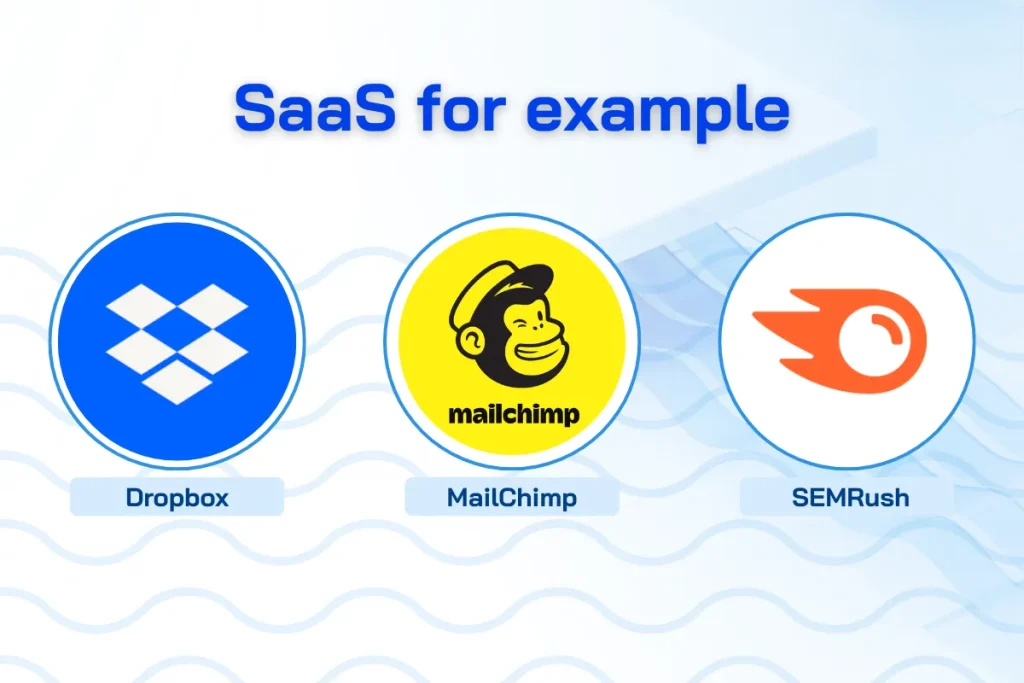
SaaS for example
SaaS works by shifting software from local computers or internal company servers to cloud infrastructure. Instead of purchasing, installing, and maintaining software on your own devices, users simply access the application through the internet usually via a web browser or mobile app.
This model fundamentally changes how software is delivered, updated, managed, and paid for. A helpful analogy is the shift from buying DVDs to streaming movies through platforms like Netflix users access the service instantly without managing the underlying infrastructure.
Below are the core principles that make SaaS possible.
Cloud Hosting for Easy Access
In a SaaS environment, software applications run on remote cloud servers located in global data centers rather than on individual computers. Users connect to these servers through the internet to access the software.
This approach provides several advantages:
- No installation or manual updates required
- Access applications from any device with an internet connection
- Enterprise grade infrastructure with high reliability
- High availability ensured by cloud providers such as AWS or Microsoft Azure
Because the infrastructure is managed by the provider, businesses avoid the complexity of maintaining servers, managing storage, or dealing with compatibility issues.
Multi Tenant Architecture
Most SaaS platforms operate using a multi tenant architecture, meaning a single software system serves multiple customers simultaneously while keeping each customer’s data completely isolated and secure.
This structure offers several benefits:
- Reduced costs because infrastructure resources are shared
- Faster onboarding for new users
- Automatic scaling as more customers join the platform
- Consistent functionality and performance across all users
Although multiple organizations use the same application environment, each company’s data remains private and securely separated.
Subscription Based Pricing
Unlike traditional software that requires large upfront purchases, SaaS typically follows a subscription pricing model. Customers pay a recurring fee monthly or annually to access the service.
Common pricing structures include:
- Per user pricing: Charges based on the number of active users
- Feature based plans: Different pricing tiers depending on features
- Usage based billing: Costs based on actual usage or consumption
This model lowers initial investment for businesses while providing software vendors with predictable recurring revenue.
Continuous Updates and Improvements
SaaS platforms are continuously updated and improved by the provider. Because the application is centrally hosted, updates can be deployed automatically to all users without requiring manual installation.
Modern SaaS platforms often rely on CI/CD (Continuous Integration and Continuous Deployment) practices, which allow developers to release new features, security patches, and performance improvements frequently.
For users, this means:
- Always using the latest version of the software
- No manual upgrades or compatibility issues
- Faster innovation and feature rollout
Easy Integration with Other Tools (API First Design)
Modern SaaS applications are designed to integrate easily with other software systems through APIs (Application Programming Interfaces). APIs allow different platforms to communicate and exchange data securely.
This enables businesses to connect multiple tools within their technology ecosystem for example:
- Integrating CRM platforms with email marketing systems
- Connecting accounting tools with payment gateways
- Automating workflows across business applications
With API based integration, what once required complex custom development can now be implemented quickly and efficiently.
Built In Scalability
Another major advantage of SaaS is automatic scalability. As user demand increases such as during rapid company growth or seasonal spikes the platform can dynamically allocate additional computing resources through cloud infrastructure.
Technologies such as auto scaling and content delivery networks (CDNs) ensure fast performance regardless of user location or system load.
This allows businesses to grow from dozens to thousands of users without rebuilding infrastructure.
Strong Security and Compliance
Security is a top priority for reputable SaaS providers. Most platforms implement robust security measures that include:
- Data encryption during transmission and storage
- Detailed audit logs tracking system activity
- Role based access controls for user permissions
- Compliance with standards such as SOC 2, GDPR, or HIPAA
Because SaaS providers specialize in maintaining secure infrastructure, they often invest more heavily in security than most individual organizations could independently.
In summary, SaaS works by combining cloud infrastructure, subscription based access, automated updates, scalable architecture, and secure integrations. This model allows businesses to access powerful software tools without the complexity of managing technology internally.
Read more: Outsourcing SaaS Development: A Complete Guide to Outsourcing Smarter, Not Cheaper
SaaS Benefits and Challenges
Benefits
Predictable Cost Structure (CAPEX → OPEX)
SaaS shifts spending from large upfront infrastructure investments to flexible subscription based operating costs. This transition can reduce total ownership costs by 30–40% while improving financial predictability.
Faster Time to Market
Cloud native architectures, automated testing, and CI/CD pipelines allow SaaS products to launch significantly faster than traditional software often up to 40% quicker.
On Demand Scalability
SaaS platforms run on cloud infrastructure that automatically scales as demand grows. Businesses can expand from hundreds to millions of users without major system redesigns.
Better User Adoption and Experience
Because SaaS applications are browser based and accessible across multiple devices, onboarding is easier and users can work from anywhere, improving productivity and reducing training requirements.
Continuous Innovation
SaaS providers can roll out updates, security patches, and new features continuously. Users always access the latest version of the software without manual upgrades.
Stable Recurring Revenue (for SaaS Providers)
Subscription pricing models generate predictable recurring revenue and help companies maintain steady cash flow, with mature SaaS platforms often achieving low churn rates.
Supports Digital Transformation
SaaS integrates easily with other enterprise systems and enables real time collaboration, automation, and data driven decision making across organizations.
Proven Business ROI
Many companies report measurable improvements after adopting SaaS architectures. For instance, implementing microservices in SaaS platforms has reduced downtime by up to 60% in some organizations.
Challenges
Data Security and Compliance
Handling sensitive data requires strict security measures and compliance with regulations such as GDPR, HIPAA, or SOC 2. SaaS providers must implement encryption, monitoring, and strong access controls.
Performance at Scale
Global SaaS platforms must support large numbers of users simultaneously. This requires load balancing, auto scaling infrastructure, and content delivery networks (CDNs) to maintain performance.
Integration Complexity
Although SaaS systems typically use APIs for integration, connecting them with legacy systems or multiple third party platforms can still be technically challenging.
Customer Retention Pressure
Because SaaS relies on subscription revenue, companies must consistently deliver value. Poor user experience or service interruptions can quickly lead to customer churn.
Vendor Dependency
Many SaaS platforms rely heavily on major cloud providers such as AWS or Azure. This dependency can create vendor lock in risks if not managed carefully.
Strong Competitive Pressure
The SaaS market evolves rapidly, requiring companies to continuously introduce new features, improve performance, and innovate to stay competitive.
Read more: Top IT Outsourcing Companies in Vietnam
What Is Necessary for Building SaaS Applications?
1. Multi Tenant Architecture as the Core Foundation
A successful SaaS application must be built on a multi tenant architecture, where a single software instance serves multiple customers simultaneously while keeping each tenant’s data fully isolated and secure.
Think of it like a modern apartment building: residents share the same infrastructure utilities, structure, and security but each has their own private space. In SaaS systems, customers share the same platform while their data remains completely separated.
This approach delivers several key advantages:
- Efficient resource usage across all customers
- Lower operational costs compared to single tenant deployments
- Instant scalability for onboarding new users
- Simplified maintenance and updates for the entire platform
Multi tenancy is essential for making SaaS platforms economically viable and technically scalable.
2. Seamless Integration and Customization Capabilities
Modern organizations rely on multiple digital tools, so SaaS applications must be designed to integrate smoothly with existing systems while allowing flexibility for different users.
API First Integration
SaaS platforms should be designed with an API first architecture, enabling them to connect easily with external services such as CRM systems, payment platforms, marketing tools, and collaboration apps. APIs act like universal connectors that allow different applications to exchange data securely and efficiently.
Customization and White Labeling
Customers often need to adapt the platform to their brand or workflows. SaaS products should therefore provide safe customization features such as:
- Brand personalization (logos, colors, themes)
- Configurable workflows and user settings
- Feature toggles for specific customers
- White label capabilities for partners who want to resell the platform under their own brand
These options enhance customer satisfaction while expanding potential revenue streams.
3. Data Insights and Universal Accessibility
A modern SaaS platform must deliver value through both actionable insights and flexible accessibility.
Analytics and Business Intelligence
Integrated analytics dashboards transform raw data into visual insights. By incorporating reporting tools and real time metrics, SaaS platforms help users track performance, identify trends, and make informed business decisions directly within the application.
Mobile First and Responsive Design
Users now access software from multiple devices. A mobile first design approach ensures that SaaS applications function smoothly on smartphones, tablets, and desktops. Technologies such as responsive design and Progressive Web Apps (PWAs) further enhance usability and accessibility.
4. High Reliability and Strong Security
Reliability and security are critical pillars of any SaaS product. Businesses rely on SaaS platforms to run daily operations, making uptime and data protection essential.
High Availability and Disaster Recovery
SaaS infrastructure must include redundancy across servers, databases, and data centers. Automated failover systems and regular backups ensure the platform remains operational even during unexpected failures. High quality SaaS platforms often aim for 99.9% or higher uptime availability.
Role Based Access Control and Security Measures
Protecting sensitive data requires strong security frameworks. Role based access control (RBAC) limits access based on user roles, ensuring individuals can only view the information necessary for their responsibilities.
Additional security measures typically include:
- End to end data encryption
- Continuous security monitoring
- Regular vulnerability testing
- Compliance with standards such as SOC 2, GDPR, or HIPAA
Building SaaS applications is not just about software development it involves creating a secure, scalable, service oriented platform capable of supporting many users simultaneously. By focusing on multi tenant architecture, seamless integrations, data driven insights, and robust security from the start, businesses can create SaaS products that scale effectively and deliver long term value.
Read more: IT Outsourcing Costs: What Businesses Should Expect
Agile in SaaS Development
Agile plays a critical role in modern SaaS development, enabling teams to build, test, and release features quickly while adapting to changing market needs. Instead of relying on long development cycles, Agile breaks projects into smaller iterations, allowing teams to deliver functional improvements continuously and respond rapidly to feedback.
One of the biggest advantages of Agile is its ability to accelerate time to market. By releasing features in short development sprints, companies can introduce updates and improvements within weeks rather than waiting months for large releases. This approach allows SaaS products to evolve alongside customer expectations and industry trends.
Agile also improves visibility and collaboration across teams. Regular sprint reviews, progress tracking, and feedback loops keep stakeholders aligned and help identify potential issues early in the development process. Detecting problems sooner reduces costly rework and ensures smoother delivery.
Another key benefit is efficient resource management. Agile teams prioritize high impact features and adjust development priorities as new insights emerge. This flexibility helps organizations optimize budgets, allocate resources effectively, and scale development efforts as the SaaS platform grows.
Ultimately, Agile supports continuous improvement. Through frequent iterations, testing, and user feedback, SaaS applications can refine their functionality, enhance user experience, and maintain a competitive edge in rapidly evolving digital markets.
Read more: Top 15 Agile Software Outsourcing Companies in Vietnam
How to Develop a SaaS Software
1. Discovery and Strategic Planning
The first stage of SaaS development focuses on defining the product vision and validating the business opportunity.
What happens:
Teams analyze business objectives, identify the target audience, and clearly define the problem the SaaS product will solve. Market research and competitor analysis are conducted to validate product market fit. During this phase, security and compliance requirements such as GDPR, HIPAA, or SOC 2 are also considered early to prevent costly redesign later.
Why it matters:
A well defined strategy ensures that development efforts align with real business needs. This stage creates the product roadmap and reduces the risk of building features that do not deliver value.
2. Architecture Design and Technology Selection
Once the product vision is defined, the next step is designing the technical foundation of the platform.
What happens:
Architects choose the appropriate technology stack, including cloud infrastructure providers (such as AWS, Azure, or Google Cloud), databases, backend frameworks, and development tools. Modern SaaS applications typically adopt microservices architecture and use DevOps tools like container orchestration and infrastructure automation.
Why it matters:
A strong architecture ensures the system can scale efficiently, handle high user demand, and remain stable over time. These early decisions directly impact long term performance and maintainability.
3. User Experience (UX) and Interface Design (UI)
The usability of a SaaS product is a major factor in its success.
What happens:
Design teams create wireframes, prototypes, and user journey maps to visualize how users interact with the platform. A consistent design system is established to maintain visual and functional consistency across the product.
Why it matters:
An intuitive interface improves user satisfaction and adoption. In competitive SaaS markets, a well designed user experience often becomes a key differentiator.
4. Agile Development and Feature Implementation
This phase transforms design concepts into working software.
What happens:
Development teams follow an Agile methodology, building features through short development cycles known as sprints. Each sprint delivers a small but functional component of the product. Continuous integration practices ensure that new code is regularly tested and merged into the main system.
Why it matters:
Agile development allows teams to release features quickly, gather feedback early, and adapt to changing requirements without disrupting the overall project.
5. Testing and Quality Assurance
Ensuring software quality is essential before releasing the product to users.
What happens:
Quality assurance teams perform multiple testing types, including functional testing, performance testing, security testing, and usability testing. These tests ensure the system works correctly, performs under heavy load, and remains secure against vulnerabilities.
Why it matters:
Comprehensive testing protects the platform from critical failures, enhances user trust, and reduces the cost of fixing issues after launch.
6. Deployment and Cloud Launch
After development and testing, the SaaS platform is deployed to production environments.
What happens:
Automated CI/CD pipelines handle deployment to cloud servers. Monitoring systems and auto scaling mechanisms are implemented to maintain performance and system reliability as user demand grows.
Why it matters:
Automated deployment processes minimize human error and allow teams to release updates quickly without disrupting users.
7. Continuous Maintenance and Optimization
Launching the SaaS platform is only the beginning of its lifecycle.
What happens:
Development teams continuously monitor system performance, release new features, optimize infrastructure costs, and respond to user feedback. Performance improvements, security updates, and feature enhancements are regularly introduced.
Why it matters:
SaaS products must evolve continuously to remain competitive. Ongoing optimization ensures long term performance, customer satisfaction, and sustainable growth.
By following this structured process from strategic planning to continuous improvement organizations can build SaaS applications that are scalable, secure, and capable of delivering long term value to their users.
The Rise of AI Powered SaaS
Artificial intelligence is rapidly transforming SaaS software development, turning traditional cloud applications into intelligent platforms capable of learning, adapting, and delivering deeper insights. Instead of functioning as static tools, modern SaaS solutions increasingly integrate AI to automate workflows, personalize user experiences, and support smarter decision making.
AI Driven Personalization
One of the most visible impacts of AI in SaaS is personalized user experiences. By analyzing user behavior, preferences, and usage patterns, AI algorithms can recommend relevant actions, content, or features. This type of personalization significantly improves engagement and user satisfaction by tailoring the platform to each individual user’s needs.
Workflow Automation and Productivity
AI powered SaaS platforms increasingly include intelligent assistants and automation tools that streamline repetitive tasks. Features such as smart copilots, automated document generation, and workflow optimization help teams reduce manual work and focus on higher value activities. As a result, organizations can improve productivity and operational efficiency.
Predictive Analytics and Data Intelligence
AI enables SaaS platforms to move beyond simple reporting toward predictive analytics. By processing large volumes of data, AI models can forecast trends, detect anomalies, and generate actionable insights. In industries such as finance and healthcare, these capabilities help organizations reduce risks, improve decision making, and optimize operational outcomes.
Higher Customer Retention and Product Adoption
AI powered features often increase product adoption because they deliver continuous value to users. Intelligent recommendations, automated insights, and proactive alerts encourage deeper engagement with the platform, helping SaaS companies improve customer retention and long term growth.
The Future: AI First SaaS Platforms
The next generation of SaaS solutions is shifting toward AI first architectures, where artificial intelligence is embedded at the core of the product rather than added as a secondary feature. These platforms will provide proactive insights, automate complex processes, and enable more autonomous software operations.
As AI technologies continue to evolve, AI powered SaaS will play a key role in helping businesses operate more intelligently, scale efficiently, and unlock new digital opportunities.
HomeNest Software – Your Trusted SaaS Development Partner
Selecting the right SaaS development partner can make the difference between launching a functional product and building a platform that truly drives business growth. At HomeNest Software, we focus on more than just writing code we design scalable, secure, and future ready SaaS platforms that help companies innovate faster and compete effectively in a digital first world.
With over 14 years of experience and recognition as one of the leading software development companies in Vietnam, HomeNest Software combines industry expertise, modern technologies, and proven development practices to deliver reliable SaaS solutions for global clients.
Industry Expertise Across Multiple Sectors
Our team builds tailored SaaS platforms for various industries, including FinTech, HealthTech, EdTech, logistics, and e commerce. This experience allows us to understand complex business requirements and deliver solutions aligned with each sector’s specific challenges.
Advanced Technology and Cloud Native Architecture
We develop SaaS platforms using modern technologies such as AWS, Microsoft Azure, and Google Cloud, combined with microservices architecture, DevOps pipelines, and AI powered integrations. These technologies ensure high scalability, performance, and long term maintainability.
Reliable and Structured Delivery Process
HomeNest Software follows Agile development methodologies, supported by standardized processes and a security first mindset. This structured approach ensures transparent communication, predictable delivery timelines, and consistent product quality.
Trusted by Global Clients
Our development teams have delivered successful projects for businesses in Japan, the United States, Europe, and other international markets. This global experience helps us understand diverse business environments and maintain high professional standards.
End to End SaaS Development Services
We support the entire SaaS lifecycle from product consulting and architecture design to development, deployment, and ongoing optimization. Our long term partnership model ensures your platform continues to evolve as your business grows.
SaaS development today is more than just a technology investment it is a critical driver of digital transformation. By partnering with HomeNest Software, you gain a team dedicated to turning your ideas into scalable digital products that deliver measurable results and long term value.
If you are planning your next SaaS initiative, connect with HomeNest Software to explore how our SaaS development services can help bring your vision to life.
Contact Information:
- Address: The Sun Avenue, 28 Mai Chi Tho Street, Binh Trung Ward, Ho Chi Minh City
- Hotline: +84 898 994 298 ( WhatsApp )
- Website: homenest.software
FAQ – SaaS Software Development
1. What is SaaS software development?
SaaS software development is the process of building cloud based applications that users access through the internet, typically via subscription. These platforms are designed to support multiple users simultaneously while ensuring data security, scalability, and continuous updates.
2. How is SaaS different from traditional software?
Traditional software usually requires installation on local devices or servers and often involves large upfront costs. SaaS applications are hosted in the cloud and accessed through a browser, offering subscription pricing, automatic updates, and easier scalability.
3. What technologies are commonly used in SaaS development?
Modern SaaS platforms typically use cloud infrastructure (AWS, Azure, Google Cloud), microservices architecture, containerization tools like Docker, DevOps pipelines, and scalable databases to ensure high performance and reliability.
4. How long does it take to develop a SaaS product?
Development time depends on the product’s complexity and features. A basic Minimum Viable Product (MVP) may take around 3–6 months, while a fully developed enterprise SaaS platform may require 6–12 months or longer.
5. What are the biggest benefits of SaaS for businesses?
SaaS solutions provide several advantages, including lower infrastructure costs, faster deployment, easy scalability, continuous updates, and improved accessibility across devices.
6. Is SaaS secure for handling sensitive business data?
Yes, when built correctly. Modern SaaS platforms use data encryption, role based access control, continuous monitoring, and compliance frameworks such as GDPR, SOC 2, or HIPAA to ensure strong data protection.
7. Why is Agile important in SaaS development?
Agile development allows SaaS teams to release features quickly, gather feedback early, and continuously improve the product. This approach helps companies adapt to changing market needs while reducing development risks.
8. How does AI improve SaaS platforms?
AI enables SaaS platforms to deliver automation, predictive analytics, intelligent recommendations, and personalized user experiences, helping businesses make smarter decisions and improve operational efficiency.
9. What industries benefit most from SaaS solutions?
SaaS platforms are widely used across industries such as finance, healthcare, education, retail, logistics, marketing, and enterprise management, where scalability and remote accessibility are essential.
10. Why choose an experienced SaaS development partner?
An experienced partner helps ensure proper architecture design, secure infrastructure, efficient development processes, and long term scalability, reducing risks and accelerating time to market for your SaaS product.
Latest Articles
View All
Essential Tips To Develop A Music Streaming App
Discover expert tips to develop a successful music streaming app with HomeNest Software. This guide covers essential features, legal licensing, and scalable technology stacks. Learn how to build a robust, cross-platform application with AI personalization to stand out in the 2026 competitive audio market.

How to Build a Language Learning App Like Cake
Discover how to build a successful language learning app like Cake with this comprehensive guide from HomeNest Software. We explore market research, essential MVP features, advanced AI integrations, tech stack selection, and estimated development costs. Partner with HomeNest Software to create a scalable, gamified, and highly engaging educational platform tailored to your business goals. Start your app development journey with us today.
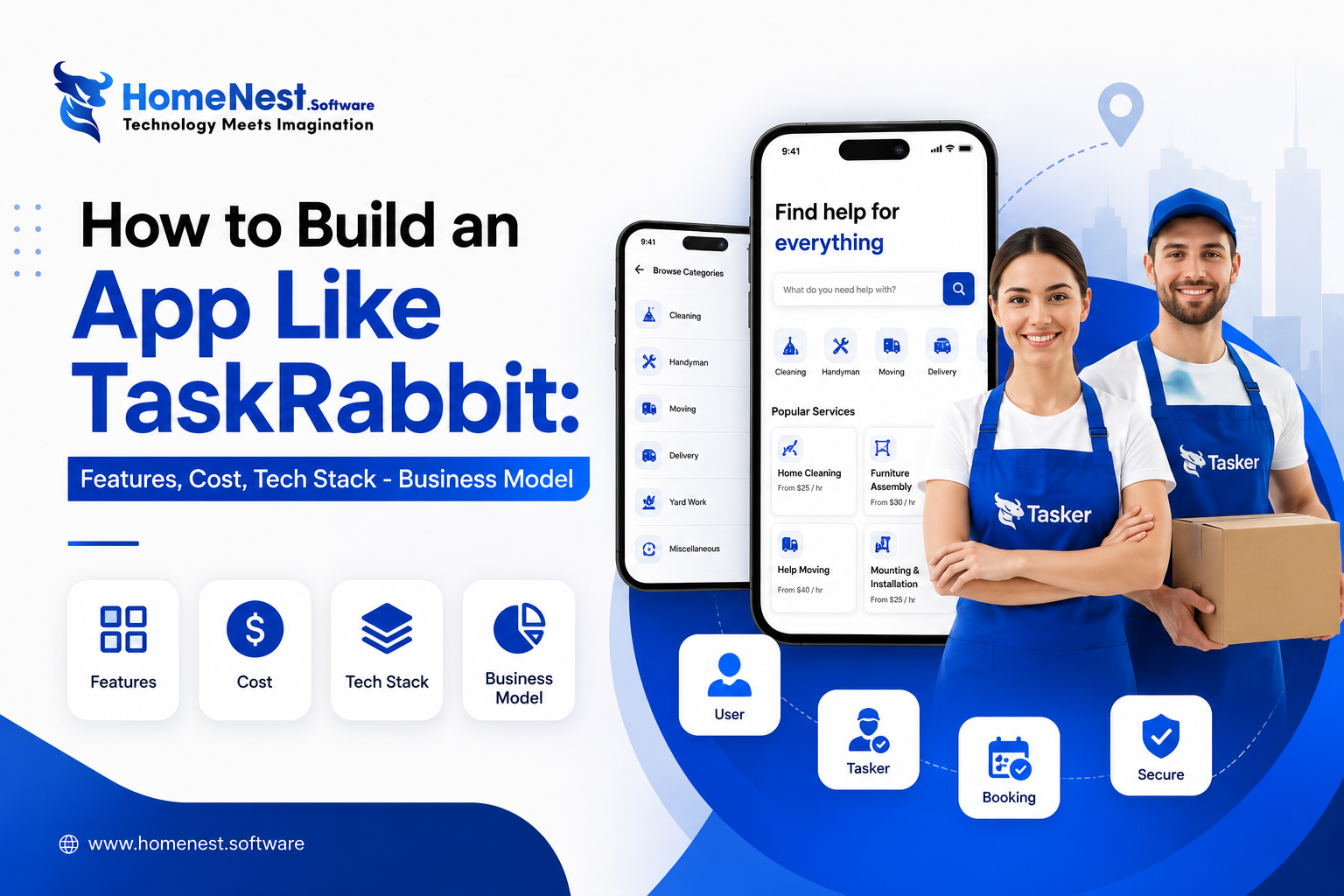
How to Build an App Like TaskRabbit: Features, Cost, Tech Stack – Business Model
Building an app like TaskRabbit is more than replicating existing features—it’s about creating a trusted marketplace that seamlessly connects customers with skilled service providers. By combining an intuitive user experience, secure payment systems, scalable architecture, and the right business model, you can launch a competitive on-demand platform. Partnering with an experienced app development company like HomeNest Software ensures your product is built with the technology, flexibility, and long-term scalability needed to succeed in the rapidly growing gig economy.
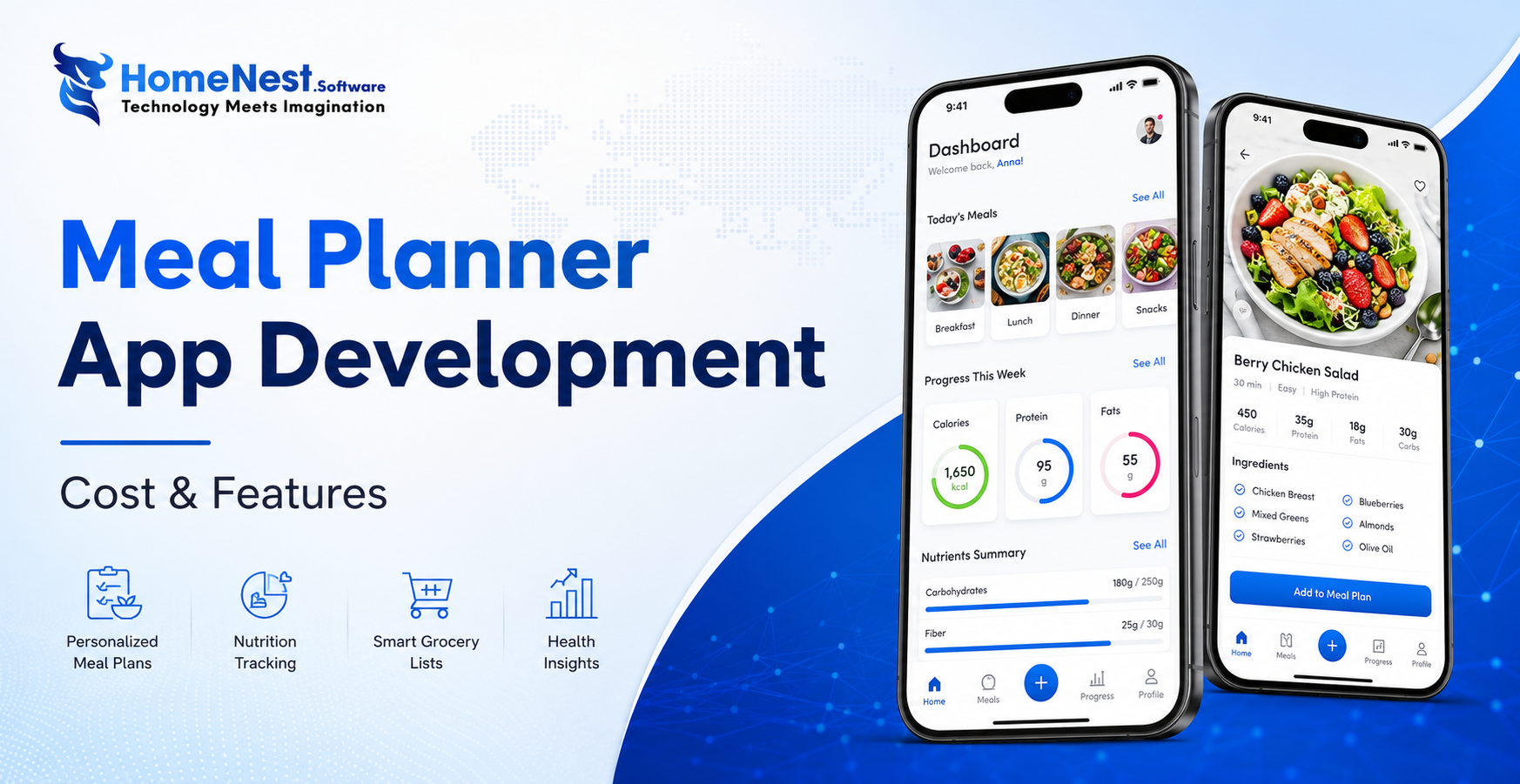
How to Build a Meal Planning App: A Complete Step-by-Step Guide
Building a successful meal planning app goes beyond creating an attractive interface it requires a clear business strategy, personalized user experiences, and scalable technology. By combining essential features like AI-powered meal recommendations, nutrition tracking, grocery list automation, and wearable integration, businesses can deliver lasting value to users while capitalizing on the growing digital health market. Partnering with an experienced mobile app development company ensures your solution is secure, future-ready, and designed to succeed in an increasingly competitive health-tech industry.
How Much Does It Cost to Build a Shopping App Like Temu?
Temu’s meteoric rise to over 900 million global downloads proves the power of combining AI, gamification, and social commerce, but building a similar viral shopping platform requires careful financial and technical planning. Developing an app like Temu typically costs anywhere from $40,000 for a basic Minimum Viable Product (MVP) to over $300,000 for a fully-featured platform. This guide breaks down every cost category, analyzes the core features driving Temu’s success, highlights the best technology stacks, and offers practical strategies to optimize your development budget without compromising on quality.

Criteria For Choosing The Right App Design Agency
UI/UX design is the logical foundation of a system, not merely a visual element. Choosing the wrong partner will directly lead to technical debt, budget overruns, and disruptions in the development process. This article provides a 6-step evaluation framework and a list of operational risks, helping businesses eliminate subjective design advice and accurately assess agency capabilities based on developer handoff standards and practical business performance.