
How AI in App Development Delivers Measurable Business Impact
Successful AI implementation depends on strategic execution and financial alignment. While many organizations invest in the technology, few achieve measurable business results. This guide provides the specific frameworks required for effective integration, including cost benchmarks starting at $20,000 and the build versus buy decision matrix. It serves as a practical resource for leaders looking to prioritize ROI and scale their digital capabilities.
Scope of Work

AI has rapidly evolved into a foundational element of modern app development, enabling businesses to deliver smarter, more adaptive, and highly personalized digital experiences. In competitive markets like Singapore where user expectations continue to rise AI is no longer a “nice to have,” but a critical strategic capability.
Yet, despite growing investment, many organizations struggle to translate AI initiatives into tangible business outcomes. The real challenge lies in execution identifying the right use cases, aligning AI with business goals, and managing implementation complexity and costs effectively.
This guide examines how AI is applied in app development, highlighting its key benefits, real world use cases, cost considerations, and best practices for implementation helping businesses turn AI from a technical investment into measurable impact.
What Is AI in App Development?

AI in app development refers to the integration of intelligent, data driven models into applications, enabling them to learn from data, adapt to user behavior, and make decisions with minimal human intervention. Rather than relying solely on fixed logic, AI powered applications continuously improve their performance by analyzing patterns, context, and real time inputs.
In essence, traditional applications execute predefined instructions, while AI enabled applications evolve dynamically based on data.
Key distinctions:
- Traditional applications
Operate on static rules and predefined logic
→ Example: A search feature that returns identical results for the same query every time - AI powered applications
Adapt based on user behavior, contextual data, and learned patterns
→ Example: An eCommerce app that delivers personalized product recommendations for each individual user
This shift transforms applications into intelligent, responsive, and user centric systems capable of delivering more relevant experiences and continuously optimizing outcomes over time.
Why Singapore Businesses Are Investing in AI Apps (Key Statistics in 2026)
Singapore has established itself as one of Asia’s leading hubs for AI adoption, with enterprises across sectors accelerating investments in AI powered applications to remain competitive in a digital first economy.
AI adoption is already widespread. Approximately 78% of companies in Singapore have implemented AI technologies, and 56% are scaling initiatives beyond pilot stages signaling a clear transition from experimentation to enterprise wide deployment.
Investment momentum is also outpacing global benchmarks. Around 44% of organizations are actively investing in advanced AI capabilities, compared to 34% globally, while an additional 25% plan to invest within the next 12 months. This underscores a broader shift: AI is no longer an emerging trend, but a core driver of business growth and innovation.
AI is further accelerating the next wave of automation. Research indicates that 72% of companies intend to deploy AI agents across their operations within the next two years, and 84% expect to integrate AI driven automation into workflows particularly in sectors such as finance, logistics, and manufacturing.
This rapid adoption is reinforced by strong government backing. Singapore has committed over $785 million in AI investment through 2030, supported by national initiatives like Smart Nation Singapore and SGInnovate, creating a robust ecosystem for innovation and large scale implementation.
However, despite high adoption and investment levels, achieving measurable ROI remains a significant challenge. Only 33% of businesses report tangible returns from AI, with many seeing less than 5% financial impact highlighting a persistent gap between AI adoption and the realization of real business value.
What Are the Key Benefits of AI in App Development?

AI is more than a technical enhancement it is a strategic capability that fundamentally improves how applications deliver value, operate at scale, and compete in modern digital ecosystems. Below are the core benefits that make AI a powerful driver of growth and efficiency in app development.
Improved User Experience
AI enables applications to deliver highly personalized, context aware, and responsive user experiences. By leveraging real time data and behavioral insights, AI powered apps can dynamically tailor content, recommendations, and features to individual users moving beyond one size fits all interfaces.
This has a direct impact on business performance. According to McKinsey & Company, personalization can drive 5–15% revenue growth, with top performers achieving up to 40% higher revenue. Additionally, more than 70% of users expect personalized experiences, making it a critical factor for engagement and retention.
AI also enhances usability through intelligent search, predictive interactions, and streamlined navigation reducing friction and creating more intuitive user journeys.
Increased Efficiency
AI significantly improves operational efficiency by automating repetitive tasks, optimizing workflows, and minimizing manual intervention. From customer support to data processing, AI powered systems execute tasks faster, more accurately, and at scale.
For example, chatbots can handle high volumes of routine inquiries, while intelligent automation processes large datasets in real time. According to IBM, AI driven automation can reduce operational costs by up to 30%, while improving service speed and consistency.
As a result, teams can shift focus from routine operations to higher value, strategic activities boosting productivity and accelerating decision making.
Lower Barrier to Entry
Advancements in AI tooling have significantly reduced the complexity of building intelligent applications. Previously, AI implementation required deep expertise, extensive infrastructure, and large datasets. Today, businesses can leverage pre trained models, APIs, and cloud based AI services to integrate advanced capabilities efficiently.
Platforms such as Microsoft Azure, Google Cloud, and OpenAI provide ready to use AI services including chatbots, image recognition, and NLP enabling faster development with lower upfront investment.
This democratization of AI allows startups and SMEs to experiment, launch MVPs, and scale AI features without heavy infrastructure constraints.
Data Driven Decision Making
AI empowers applications to convert large volumes of data into actionable insights, enabling faster and more informed decision making. By analyzing user behavior, historical data, and usage patterns, AI can identify trends, predict outcomes, and support real time business decisions.
For instance, AI can forecast demand, detect anomalies, and recommend next best actions based on user activity. Organizations that effectively leverage data are significantly more likely to improve customer acquisition, retention, and overall profitability.
Embedding these capabilities directly into applications allows businesses to shift from reactive operations to proactive, insight driven strategies.
Competitive Advantage
AI provides a critical edge in highly competitive markets by enabling smarter features, faster responsiveness, and deeper personalization. Capabilities such as real time recommendations, predictive analytics, and intelligent automation allow applications to continuously learn, adapt, and improve.
By integrating AI into their products, businesses can not only meet rising user expectations but also accelerate innovation cycles and respond more effectively to market dynamics. Organizations that successfully leverage AI and data are consistently better positioned to outperform competitors in both growth and long term value creation.
6 Key Use Cases of AI in App Development (With Real Examples)
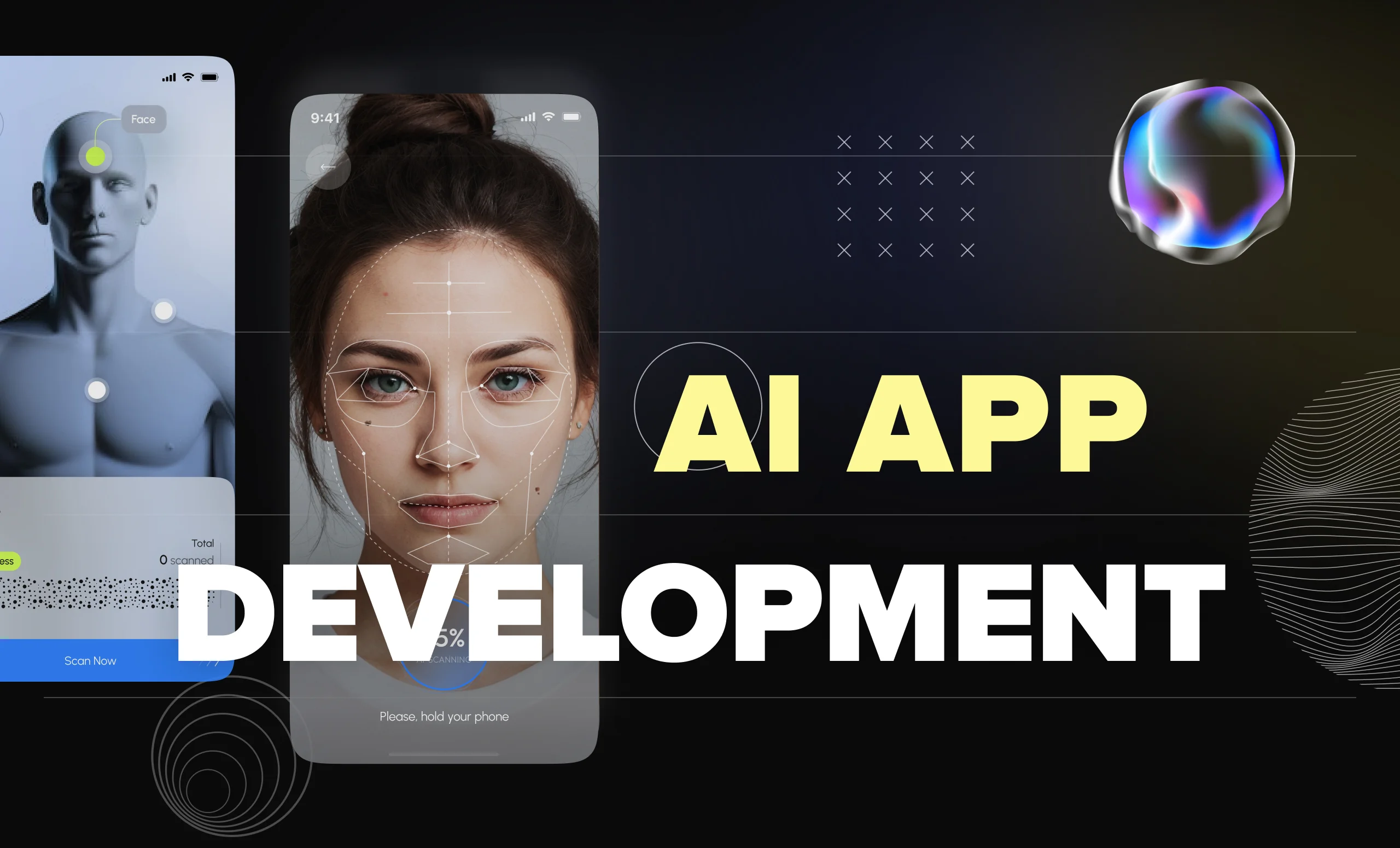
AI is already embedded in many of the most impactful features of modern applications from intelligent automation to hyper personalized user experiences. Below are six high value use cases that demonstrate how AI in app development delivers measurable business outcomes across industries.
AI Chatbots & Customer Support
AI powered chatbots enable applications to deliver instant, 24/7 support by automating responses, guiding users, and resolving routine queries. Leveraging Natural Language Processing, these systems can interpret user intent and provide consistent, real time assistance.
Use cases:
- Automating FAQs and internal support
- Providing instant access to knowledge bases
- Supporting onboarding and process guidance
Real example (HomeNest Software):
HomeNest Software developed an internal AI chatbot for a SaaS system integrator, centralizing fragmented knowledge across departments. Built on AWS (Lex, Lambda, S3), the solution delivers real time answers from internal documents.
Business impact: Reduced reliance on manual support, faster knowledge access, and improved internal productivity.
Personalization & Recommendation Engines
AI driven personalization enables applications to deliver tailored content, products, and experiences based on user behavior and preferences.
Use cases:
- Product recommendations in eCommerce
- Personalized content feeds
- Dynamic promotions and user journeys
Real example:
Platforms like Netflix and Amazon Prime Video use AI to analyze viewing behavior and deliver highly relevant content recommendations.
Business impact: Increased engagement, higher conversion rates, and stronger customer retention.
Predictive Analytics
Predictive analytics allows applications to anticipate future outcomes by analyzing historical data and behavioral patterns.
Use cases:
- Demand forecasting
- Customer churn prediction
- Next best action recommendations
Real example:
Grab’s AI powered “GrabRideGuide” predicts high demand areas using real time and historical data, helping drivers optimize routes and reduce idle time.
Business impact: Better resource allocation, improved user experience, and increased operational efficiency.
Image & Voice Recognition
AI powered image and voice recognition enable applications to interpret visual and spoken inputs, creating more natural and intuitive interactions.
Use cases:
- Facial recognition for authentication
- OCR and document scanning
- Voice commands and virtual assistants
- Visual search in eCommerce
Real example:
Tools like Google Lens and voice assistants such as Siri allow users to interact with apps through images and speech.
Business impact: Faster interactions, improved accessibility, and enhanced user experience.
Workflow Automation & AI Agents
AI agents and automation systems streamline operations by handling repetitive tasks and coordinating multi step workflows with minimal human intervention.
Use cases:
- Automating internal processes (approvals, reporting)
- Intelligent task prioritization in CRM systems
- AI agents managing cross system workflows
Real example:
Salesforce’s Einstein AI automates sales processes, recommends next best actions, and prioritizes leads.
Business impact: Reduced manual workload, increased productivity, and scalable operations.
Fraud Detection & Security
AI plays a critical role in enhancing security by detecting anomalies and preventing fraudulent activities in real time.
Use cases:
- Identifying suspicious transactions
- Detecting unusual login behavior
- Preventing payment fraud
Real example:
Financial platforms like Mastercard use AI to assess transaction risk within milliseconds, minimizing fraud while maintaining a seamless user experience.
Business impact: Stronger security, reduced financial losses, and increased user trust.
When Should You Use AI in Your App (And When You Shouldn’t)
AI is most effective when applied to the right problems. Misuse can lead to unnecessary complexity and cost.
When You Should Use AI
- You have large volumes of data to analyze
- You need personalization at scale
- Your app involves repetitive or data intensive tasks
- You require predictive or intelligent capabilities
When You Shouldn’t Use AI
- Your logic is simple and rule based
- You lack sufficient or high quality data
- Budget or timeline is highly constrained
- There is no clearly defined business objective
Key takeaway: AI should be implemented with purpose not as a trend. Organizations that focus on high impact use cases and clear business goals are far more likely to achieve meaningful ROI.
How to Implement AI in Your App (Step by Step)
Implementing AI in application development doesn’t have to be overly complex but it does require a structured, outcome driven approach. The priority is to align AI initiatives with clear business objectives and integrate them incrementally to deliver measurable value.
Step 1: Define the Business Problem
Begin by identifying a specific, high impact problem that AI can solve. Avoid adopting AI for novelty; instead, focus on use cases that directly improve performance such as enhancing user experience, automating workflows, or increasing conversion rates.
Example: Reducing customer support workload using AI powered chatbots.
Step 2: Choose the Right AI Approach
Determine whether to leverage existing solutions or build custom models:
- Pre built APIs (fast, cost efficient): Ideal for common use cases like chatbots, recommendation systems, or OCR
- Custom AI models (flexible, scalable): Suitable for complex, domain specific requirements
Most organizations begin with APIs to validate concepts quickly before investing in custom development.
Step 3: Prepare and Manage Data
AI performance depends heavily on data quality. Ensure your datasets are:
- Clean and well structured
- Relevant to the target use case
- Sufficient in volume and diversity
Poor data quality can significantly reduce model accuracy and reliability.
Step 4: Develop and Integrate AI Features
Embed AI capabilities into your application architecture, including:
- Backend systems: Models, APIs, and data pipelines
- Frontend interfaces: Chat interfaces, recommendation modules, or predictive features
Seamless integration between AI components and existing systems is critical for a consistent user experience.
Step 5: Test, Optimize, and Scale
AI systems require continuous iteration. After deployment:
- Evaluate model accuracy and user experience
- Optimize based on real world usage data
- Scale infrastructure to handle increasing demand
Effective AI implementation is not about building the most complex model it’s about solving the right problem, starting with a focused scope, and continuously improving based on real world feedback and performance.
AI App Development Cost in Singapore (2026 Guide)

The cost of AI app development in Singapore varies significantly based on project complexity, scope, and technical requirements. In 2026, businesses can expect investments ranging from S$20,000 for basic AI features to S$500,000+ for enterprise scale solutions, with additional costs for data management, infrastructure, and continuous optimization.
Typical Cost Ranges
- Basic AI applications (e.g., chatbots, simple automation):
~S$20,000 – S$40,000 - Mid level AI solutions (e.g., predictive analytics, recommendation engines):
~S$40,000 – S$120,000 - Advanced AI systems (e.g., computer vision, complex AI platforms):
~S$120,000 – S$350,000+ - Enterprise scale AI transformation:
Can exceed S$500,000+, depending on scope and integration complexity
What Drives AI Development Costs?
Several factors directly influence the total investment required:
- AI feature complexity – Simple chatbots vs. advanced predictive or autonomous systems
- Data requirements – Collection, labeling, cleaning, and model training
- Integration scope – APIs, legacy systems, and third party services
- Infrastructure and cloud usage – Platforms like Amazon Web Services, Microsoft Azure, GPU compute, and storage
- Team expertise – AI engineers, data scientists, and DevOps specialists
Hidden Costs to Consider
Beyond initial development, AI projects involve ongoing operational expenses:
- Model retraining and performance optimization
- System monitoring and maintenance
- Continuous data updates and security management
Typically, organizations allocate 15–25% of the initial development cost annually for maintenance and improvements.
How to Optimize AI Development Costs
To control budget while maximizing ROI:
- Start with an MVP (Minimum Viable Product) to validate use cases
- Leverage pre trained AI APIs instead of building models from scratch
- Prioritize high impact use cases that deliver measurable value
- Consider outsourcing to cost efficient development partners
A strategic, phased approach allows businesses to adopt AI efficiently balancing cost, performance, and long term scalability.
Build vs Buy vs Outsource – Which Approach Is Right for You?
When integrating AI into your application, selecting the right development strategy is a critical decision. Whether you choose to build in house, adopt off the shelf solutions, or partner with an external vendor depends on factors such as budget, timeline, technical capabilities, and long term business objectives.
Comparison Overview
| Approach | Best For | Cost | Time to Market | Customization | Risk Level |
|---|---|---|---|---|---|
| Build (In house) | Large enterprises with strong technical teams | High | Slow | High | Medium–High |
| Buy (Off the shelf) | MVPs, simple or standardized use cases | Low–Medium | Fast | Low | Low |
| Outsource | SMEs, startups, scaling businesses | Medium | Medium–Fast | Medium–High | Medium |
Build (In House Development)
Developing AI solutions internally provides full ownership over architecture, data, and intellectual property. This approach is best suited for organizations with mature engineering teams and long term AI strategies.
Advantages:
- Full control and deep customization
- Strong alignment with internal systems and workflows
- Builds long term internal capabilities
Limitations:
- High investment in talent and infrastructure
- Longer development cycles
- Ongoing maintenance and resource requirements
Buy (Off the Shelf Solutions)
This approach involves leveraging pre built AI tools, platforms, or APIs such as chatbot frameworks or recommendation engines to accelerate implementation.
Advantages:
- Fast deployment and quick validation
- Lower upfront costs
- Minimal technical overhead
Limitations:
- Limited flexibility and customization
- Dependency on third party vendors
- Potential scalability and integration constraints
Outsource (Technology Partner)
Outsourcing enables businesses to collaborate with experienced AI development partners to design and implement solutions efficiently. This is a widely adopted model among SMEs and startups.
Advantages:
- More cost effective than building in house
- Faster delivery with experienced teams
- Access to specialized AI and domain expertise
Limitations:
- Requires careful partner selection
- Less direct control compared to in house development
Key Takeaways
- Choose Build if you have strong internal capabilities and require full control over your AI systems
- Choose Buy if you need to validate ideas quickly with minimal investment
- Choose Outsource if you want to balance cost, speed, and access to expertise
For many organizations especially in fast paced markets like Singapore outsourcing offers the most practical balance between speed, cost efficiency, and scalability.
Tip: If you’re uncertain which approach best fits your needs, start with a small MVP and consult with an experienced AI partner like HomeNest Software to validate your strategy and reduce implementation risks early.
Why Do Many AI App Projects Fail to Deliver ROI?
Despite increasing investment in AI, many application initiatives fall short of delivering meaningful returns. The root cause is rarely the technology itself, but rather how it is applied, executed, and aligned with business objectives.
- Unclear Business Objectives
AI is often implemented without a well defined problem statement or success metrics, making it difficult to measure impact or justify investment. - Poor Data Quality and Availability
Incomplete, inconsistent, or unstructured data leads to inaccurate models and unreliable outputs undermining the effectiveness of AI systems. - Over Engineering the Solution
Teams frequently build overly complex models when simpler, more practical solutions could deliver faster and more cost effective results. - Lack of Expertise and Execution Strategy
Without the right combination of technical skills and domain knowledge, AI projects often struggle during development, integration, or deployment. - Absence of Continuous Optimization
AI systems require ongoing monitoring, retraining, and refinement. Without this, model performance degrades over time, reducing long term value.
In practice, successful AI adoption depends less on sophistication and more on clarity, execution discipline, and continuous improvement aligned with business outcomes.
Why Choose HomeNest Software for Your AI App Project in Singapore?
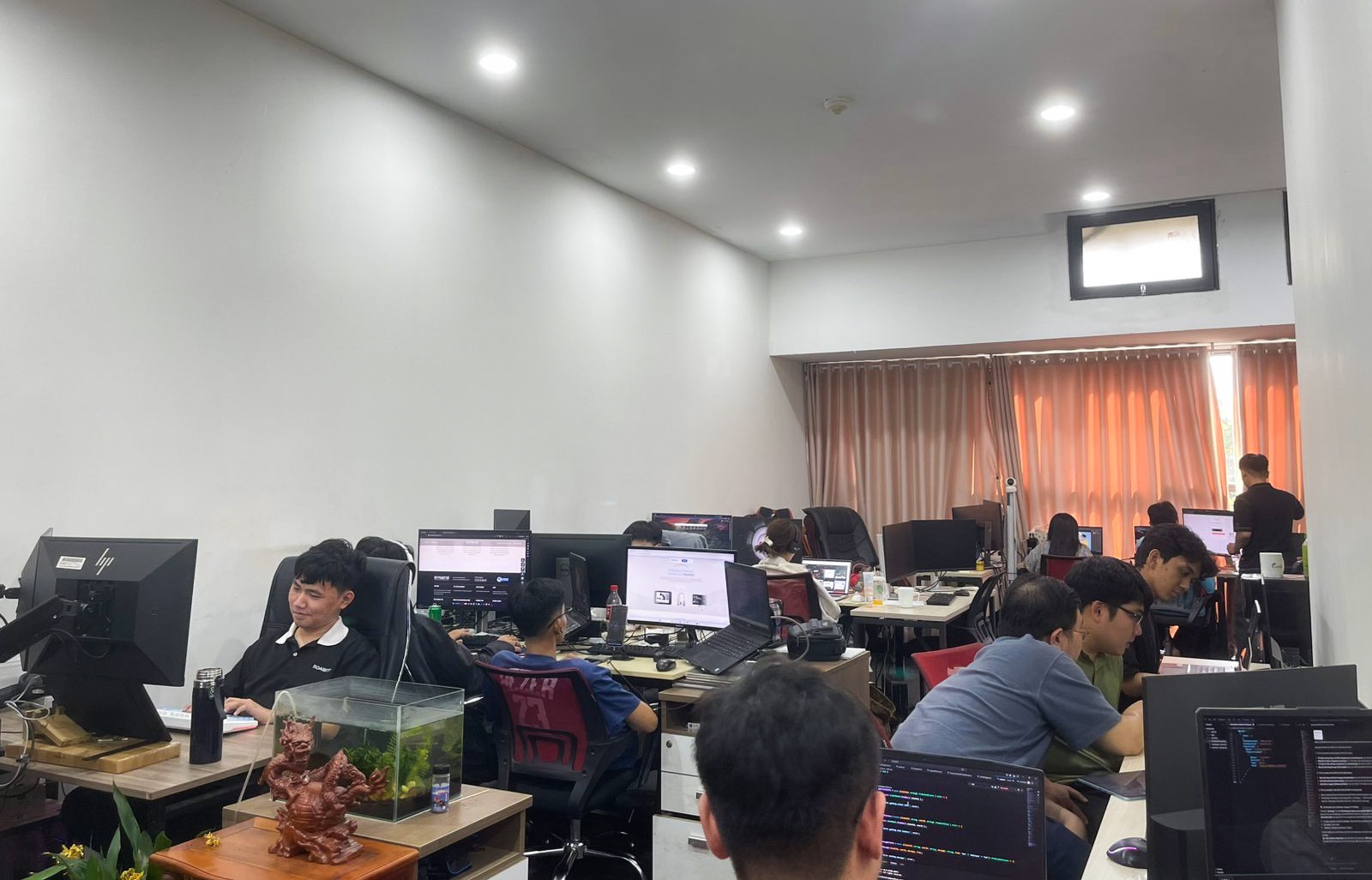
HomeNest Software is a trusted technology partner for businesses looking to build scalable, high impact applications with a clear focus on measurable outcomes. With over a decade of experience and a global delivery model, we combine deep technical expertise with cost efficient execution to help organizations turn AI investments into real business value.
What Sets HomeNest Software Apart
- 10+ years of experience in software development and IT outsourcing
- 250+ successful projects delivered across international markets
- 100+ engineers, including specialists in AI, data, and cloud technologies
- Strategic presence in Singapore and Vietnam, ensuring both local alignment and cost efficiency
- Up to 40–60% cost savings compared to fully local development teams
Our AI & Technical Capabilities
- AI/ML solutions: Chatbots, recommendation engines, predictive analytics
- Generative AI & LLMs: Copilots, AI agents, workflow automation
- Computer vision & NLP: Image recognition, document processing, voice enabled applications
- Cloud & data platforms: Expertise in Amazon Web Services and Microsoft Azure for scalable AI infrastructure
- End to end delivery: From ideation and MVP development to production deployment and scaling
Our Delivery Approach
- MVP first mindset to validate ideas quickly and reduce implementation risk
- Flexible engagement models including dedicated teams, project based delivery, and staff augmentation
- Strong focus on ROI, scalability, and long term partnership
Partner with HomeNest Software to build AI powered applications that are not only innovative but also practical, scalable, and designed to deliver measurable results.
Conclusion
AI is fundamentally reshaping how modern applications are designed and delivered enabling businesses to create more personalized experiences, automate complex operations, and make faster, data driven decisions. From chatbots and recommendation engines to predictive analytics and intelligent automation, AI unlocks tangible opportunities to enhance efficiency and accelerate growth.
However, realizing these benefits requires more than technology adoption alone. Success depends on selecting the right use cases, aligning AI initiatives with business goals, and executing with a clear, structured strategy. Organizations that prioritize ROI, start with focused implementations, and scale based on real world results are best positioned to turn AI into a sustainable competitive advantage.
FAQs
What is AI in app development?
AI in app development refers to integrating intelligent systems into applications so they can learn from data, adapt to user behavior, and make decisions automatically enhancing functionality beyond fixed, rule based logic.
What are the most common use cases of AI in apps?
Typical use cases include chatbots, recommendation engines, predictive analytics, fraud detection, workflow automation, and image or voice recognition.
How much does it cost to build an AI powered app in Singapore?
Costs typically range from S$20,000–S$40,000 for basic solutions to S$500,000+ for enterprise scale platforms, depending on complexity, data requirements, and infrastructure.
How long does it take to develop an AI app?
A basic AI feature can take 2–4 months, while more advanced solutions may require 6–12 months or longer, depending on scope and integration complexity.
When should businesses use AI in their app?
AI is most valuable when handling large datasets, enabling personalization, automating repetitive tasks, or providing predictive insights that traditional logic cannot efficiently achieve.
When is AI not necessary for an app?
AI may not be needed if the application relies on simple, rule based workflows, lacks sufficient data, or does not require automation or predictive capabilities.
What are the biggest challenges in AI app development?
Key challenges include poor data quality, model bias, integration complexity, high costs, and a shortage of skilled AI talent.
How can businesses ensure ROI from AI investments?
To achieve ROI, businesses should start with clear objectives, focus on high impact use cases, build MVPs first, and continuously monitor and optimize AI performance.
Should you build, buy, or outsource AI development?
- Build if you have strong internal expertise and need full control
- Buy if you want quick deployment for simple use cases
- Outsource if you want a balance of cost, speed, and access to expertise
Why choose HomeNest Software for AI app development?
HomeNest Software offers end to end AI development, combining technical expertise, cost efficiency, and an ROI driven approach to deliver scalable and practical AI solutions tailored to business needs.
Latest Articles
View All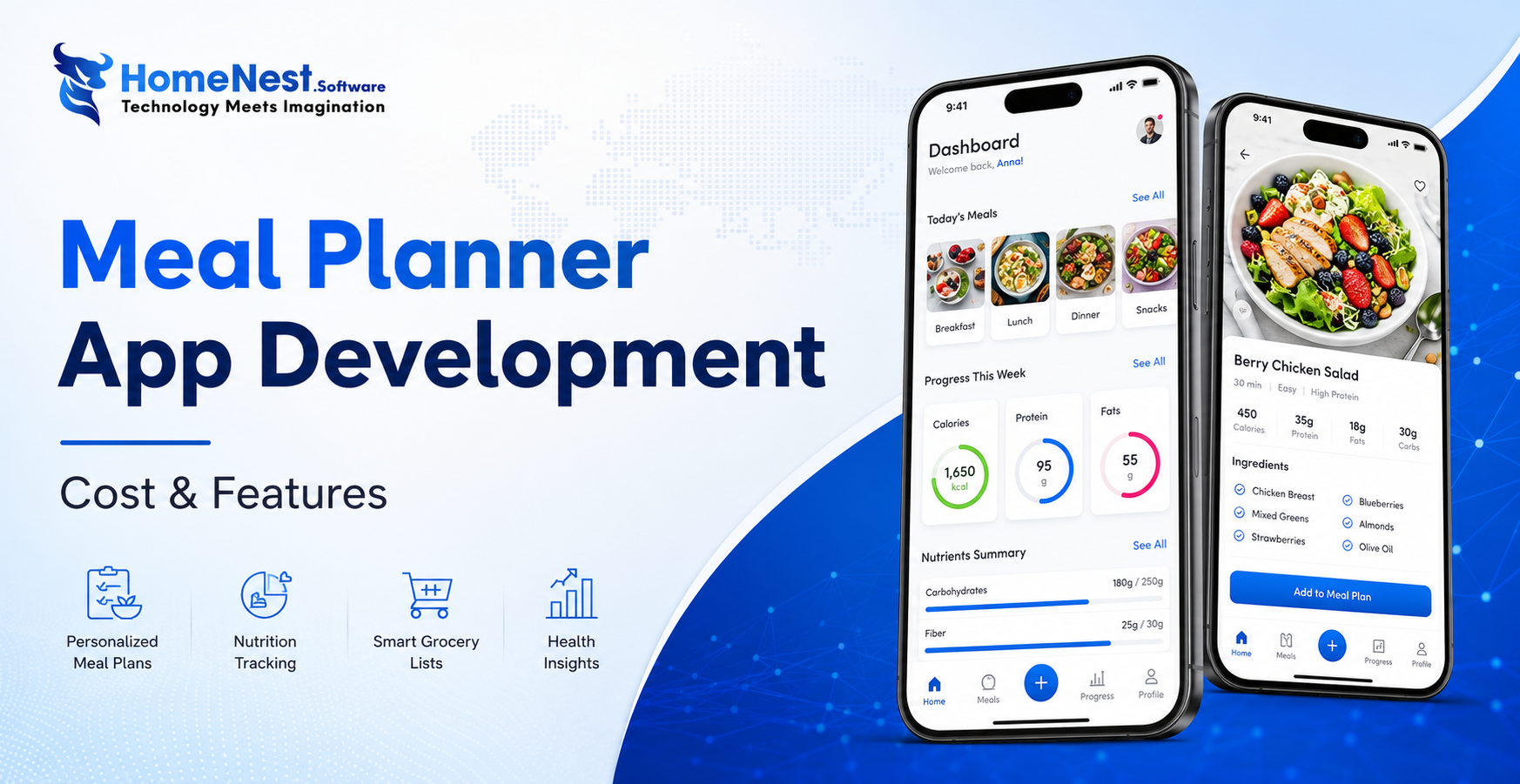
How to Build a Meal Planning App: A Complete Step-by-Step Guide
Building a successful meal planning app goes beyond creating an attractive interface it requires a clear business strategy, personalized user experiences, and scalable technology. By combining essential features like AI-powered meal recommendations, nutrition tracking, grocery list automation, and wearable integration, businesses can deliver lasting value to users while capitalizing on the growing digital health market. Partnering with an experienced mobile app development company ensures your solution is secure, future-ready, and designed to succeed in an increasingly competitive health-tech industry.

How Much Does It Cost to Build a Shopping App Like Temu?
Temu’s meteoric rise to over 900 million global downloads proves the power of combining AI, gamification, and social commerce, but building a similar viral shopping platform requires careful financial and technical planning. Developing an app like Temu typically costs anywhere from $40,000 for a basic Minimum Viable Product (MVP) to over $300,000 for a fully-featured platform. This guide breaks down every cost category, analyzes the core features driving Temu’s success, highlights the best technology stacks, and offers practical strategies to optimize your development budget without compromising on quality.

Criteria For Choosing The Right App Design Agency
UI/UX design is the logical foundation of a system, not merely a visual element. Choosing the wrong partner will directly lead to technical debt, budget overruns, and disruptions in the development process. This article provides a 6-step evaluation framework and a list of operational risks, helping businesses eliminate subjective design advice and accurately assess agency capabilities based on developer handoff standards and practical business performance.
How Does AI in Banking Industry Impact the Future?
Artificial intelligence (AI) has transitioned from a supplementary tool to a core infrastructure of financial data management, optimizing profitability through real-time fraud detection, natural language processing (NLP), and high-speed credit scoring models. “Deploying AI in the financial sector requires more than just algorithmic accuracy, it demands a highly secure cloud architecture and rigorous data governance,” commented Nguyen Tien, co-founder of HomeNest Software. Why read this guide? We skip the theoretical jargon to focus entirely on technical implementation. Whether you’re evaluating a vendor or planning a system overhaul, this article will detail: Operational Efficiency: Automating unstructured data workflows at scale. Risk Architecture: Implementing real-time threat detection and AML compliance. Data ownership: The essential need for 100% ownership of the source code to ensure full algorithm auditability.

How to Make a Banking App like Bank of America?
Developing a mobile banking application like Bank of America extends far beyond basic UI design; it requires engineering a fault-tolerant backend capable of real-time ledger synchronization, biometric authentication, and high-volume data processing under strict regulatory frameworks. Drawing from HomeNest Software’s deep experience in architecting enterprise-grade fintech solutions, this guide strips away theoretical jargon to focus entirely on operational and technical execution. What you will find in this guide: We break down the precise development roadmap, from mapping out microservices and ensuring PCI-DSS compliance to estimating MVP development costs and securing absolute data sovereignty through 100% source code ownership. If you are preparing to build, scale, or audit a financial platform, this blueprint provides the exact framework you need.
Banking App Development Cost
Building a banking application is rarely a simple process; it’s a complex technical challenge requiring a balance between complying with stringent financial regulations, handling large transaction volumes, and a scalable cloud architecture. Miscalculating these technical requirements from the outset often leads to significant technical debt and budget overruns. Based on HomeNest Software’s practical experience in designing enterprise-grade fintech solutions, this guide bypasses generic estimates to provide a realistic analysis of banking application development costs. What you’ll find in this guide: We analyze the true cost factors, from technology selection and API integration to the hidden costs of regulatory compliance and security infrastructure. Whether you’re launching a minimum viable product or expanding an existing financial platform, this analysis provides the precise operational data you need to plan your budget effectively.