
Custom Mobile App Development Services in Singapore
Custom mobile app development in Singapore is not just a technical decision it is a strategic investment in long-term scalability, operational efficiency, and competitive differentiation. Businesses that move beyond off-the-shelf limitations can unlock tailored workflows, seamless system integrations, and superior user experiences while ensuring PDPA compliance and security. Although the upfront cost is higher, the long-term ROI is significantly stronger when the solution is aligned with business goals. To maximize success, organizations should focus on three core factors: choosing the right technology stack, adopting a structured development process, and partnering with a reliable development team that understands both local market dynamics and scalable delivery models.
Scope of Work
Singapore’s rapidly evolving digital economy has made mobile applications a strategic necessity for businesses across all segments. From SMEs streamlining internal operations to large enterprises integrating with complex legacy infrastructures, organizations increasingly require custom mobile app development that extends beyond the constraints of off the shelf solutions.
However, going custom introduces critical considerations. What does “custom” truly entail in a business context? When is it the right investment? What are the realistic development costs in Singapore? Which technology stack aligns with your scalability and performance goals? And how do you identify a reliable development partner?
This 2026 guide delivers clear, actionable insights. It explores the strategic advantages of custom mobile apps, outlines the end to end development process, benchmarks cost expectations, and highlights common pitfalls. You’ll also see how HomeNest Software supports Singapore based businesses in building secure, scalable, and PDPA compliant mobile applications that drive measurable business outcomes.
Custom Mobile App Development Overview

What Is Custom Mobile App Development?
Custom mobile app development refers to the end to end process of designing, building, and deploying mobile applications tailored to a company’s specific business requirements, workflows, and user journeys. Unlike off the shelf solutions, which impose predefined structures, custom applications are developed from scratch giving organizations full control over features, integrations, architecture, and user experience.
This approach enables businesses to align technology directly with operational goals. A custom mobile app can streamline internal processes, enhance customer engagement, or enable entirely new digital services. It also provides flexibility across UI/UX design, backend systems, scalability, and security frameworks.
For businesses in Singapore, custom development is particularly valuable when addressing PDPA compliance, integrating with systems such as CRM, ERP, or POS, and delivering high performance applications that meet the expectations of a digitally mature market .
Who Needs Custom Mobile App Development in Singapore?
Custom mobile applications are best suited for organizations that require tailored digital solutions aligned with their operational complexity, user expectations, and regulatory requirements.
SMEs & Growing Businesses
- Digitizing manual processes and automating workflows
- Building branded customer facing apps (booking, ordering, loyalty, e commerce)
- Scaling systems as the business grows
Enterprises & Regulated Industries (Finance, Healthcare, Logistics, Education)
- Meeting strict PDPA and data security requirements
- Integrating deeply with enterprise systems (CRM, ERP, SAP, Oracle, legacy platforms)
- Managing complex, multi layered operational workflows
Product Led Startups
- Developing unique features not available in template based apps
- Supporting rapid iteration, MVP development, and scaling
- Building a strong mobile foundation to attract users and investors
In essence, any organization seeking flexibility, control, and long term scalability in Singapore’s mobile first ecosystem can benefit from a custom built mobile application.
When Do Businesses Need a Custom App?
A custom mobile app becomes necessary when standardized solutions no longer meet operational or strategic requirements. Common scenarios include:
- Complex or unique workflows: When business processes cannot be supported by generic tools
- Deep system integration needs: Seamless connectivity with CRM, ERP, POS, payment gateways, or legacy systems
- Regulatory compliance requirements: Especially in industries governed by PDPA or sector specific regulations
- Differentiated customer experience goals: Personalized journeys, loyalty systems, or omni channel engagement
- Scalability limitations of current tools: When existing platforms cannot support growth or performance demands
- Innovation driven product requirements: AI, IoT, real time tracking, or advanced analytics
- Operational efficiency goals: Reducing manual work and optimizing internal workflows in a high cost labor market
The 5 Types of Custom Mobile Applications
Custom mobile apps vary based on business objectives and user groups. The most common categories include:
1. Customer Facing Applications
Designed for end users, featuring e commerce, booking systems, loyalty programs, and digital payments. Common in retail, F&B, and service industries.
2. Internal Workflow Applications
Built for employees to manage operations such as task tracking, reporting, scheduling, and inventory. Ideal for logistics, construction, and SMEs.
3. Industry Specific Applications
Tailored for regulated sectors with strict compliance and integration requirements, including healthcare, fintech, and education.
4. Product Led / Consumer Applications
Focused on scalability and user growth, often including unique features, subscriptions, and social engagement. Popular among startups and digital platforms.
5. IoT, AI & Data Driven Applications
Advanced apps integrating connected devices, machine learning, OCR, or automation. Used in manufacturing, smart home, and enterprise innovation.
Custom Mobile Apps vs Off the Shelf Solutions
Choosing between custom development and off the shelf software depends on business priorities and long term strategy.
- Flexibility: Custom apps offer full control over features and UX, while off the shelf tools are limited
- Integration: Custom solutions integrate deeply with existing systems; packaged tools often have constraints
- Scalability: Custom apps evolve with the business; off the shelf tools may become bottlenecks
- Compliance & Security: Custom development enables full regulatory alignment; vendor solutions limit control
- Ownership: Custom apps provide full ownership of code and data; off the shelf relies on vendor policies
- Cost Structure: Custom apps require higher upfront investment but lower long term costs; off the shelf tools have ongoing subscription fees
- Time to Market: Off the shelf is faster to deploy; custom requires development time
Conclusion:
Custom apps deliver long term value for businesses with complex needs, while off the shelf solutions are suitable for simple, short term use cases.
7 Key Benefits of Custom Mobile App Development
Custom mobile applications provide a strong competitive advantage for Singapore businesses operating in a digital first environment:
- Tailored to Business Needs: Built specifically for your workflows and objectives
- Superior User Experience: Optimized UI/UX for engagement and retention
- Seamless Integration: Works smoothly with CRM, ERP, POS, and other systems
- Strong Security & PDPA Compliance: Full control over data governance and protection
- Scalable Architecture: Supports growth without requiring major rework
- Competitive Differentiation: Enables unique digital experiences not replicable with generic tools
- Long Term Cost Efficiency: Reduces dependency on subscriptions and manual workarounds
Overall, custom mobile app development equips Singapore organizations with the flexibility, performance, and compliance capabilities required to thrive in an increasingly competitive and regulated digital landscape
The 5 Step Custom Mobile App Development Process in 2026
Step 1: Strategic Discovery & Validation
Every successful custom mobile app begins with a well defined strategic foundation. This phase focuses on understanding the business problem, identifying user needs, and aligning the product vision with measurable outcomes. Development teams collaborate closely with stakeholders to ensure the app is built around real business value not assumptions.
Key activities include:
- Defining business objectives and core challenges
- Mapping user personas and end to end user journeys
- Evaluating technical feasibility, integrations, and constraints
- Prioritizing features for MVP and future releases
- Validating assumptions through workshops, interviews, or rapid prototyping
A strong discovery phase minimizes risks, optimizes budget allocation, and ensures the project starts with clarity critical for Singapore businesses operating in competitive, compliance driven environments .
Step 2: Prototyping and UI/UX Design
With a clear direction in place, the next step is transforming ideas into tangible product concepts. Prototyping and UI/UX design allow teams to visualize how the application will function before development begins, reducing uncertainty and aligning stakeholders early.
This phase includes:
- Creating wireframes and low fidelity prototypes to define structure and flow
- Designing high fidelity interfaces aligned with branding and usability standards
- Optimizing user journeys for intuitive, frictionless interactions
- Iterating designs based on stakeholder and user feedback
- Validating usability and information architecture prior to development
In Singapore’s mobile first market, intuitive design is a competitive differentiator. A well executed UI/UX phase accelerates development and ensures a seamless, engaging user experience.
Step 3: Agile Development & Continuous Integration (CI/CD)
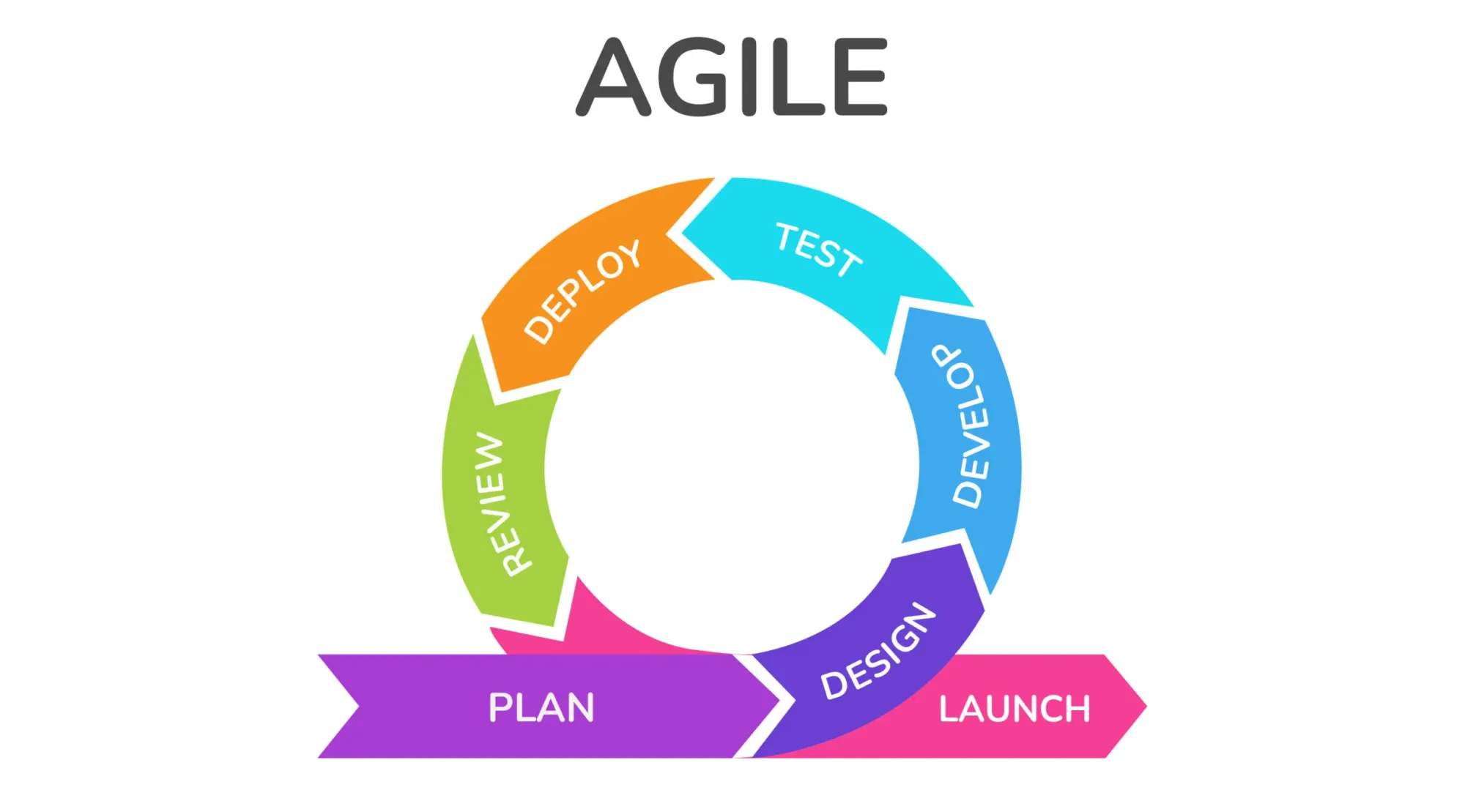
Once designs are validated, development proceeds using Agile methodologies. This enables iterative delivery, continuous feedback, and greater adaptability throughout the project lifecycle.
Core practices include:
- Sprint based development cycles (typically 1–2 weeks per sprint)
- Regular demos and reviews to maintain alignment between business and technical teams
- Continuous Integration (CI) to merge and test code frequently
- Continuous Deployment (CD) pipelines to automate builds, testing, and releases
- Rapid adjustment to changing requirements without disrupting progress
This approach ensures faster time to market, improved product quality, and the flexibility needed for Singapore’s fast paced digital landscape.
Step 4: Comprehensive Quality Assurance (QA) and Testing
Quality Assurance is embedded throughout the development lifecycle to ensure the application performs reliably under real world conditions. Rather than being a final step, QA is continuous and iterative.
Testing activities include:
- Functional testing to validate all features
- Usability testing to ensure intuitive user interaction
- Performance and load testing for scalability under real traffic
- Security testing to identify vulnerabilities and ensure PDPA compliance
- Cross device and cross platform compatibility testing
- Ongoing bug tracking and resolution
Rigorous QA safeguards product stability, protects user data, and ensures a smooth launch especially critical in regulated industries such as finance and healthcare.
Step 5: Deployment & Continuous Improvement
After passing all quality checks, the application is deployed to production environments or published on platforms such as the App Store and Google Play. This stage involves configuring infrastructure, preparing release builds, and ensuring compliance with platform guidelines.
However, deployment is only the beginning. Continuous improvement is essential to maintain performance and relevance over time.
Post launch activities include:
- Monitoring performance and user behavior through analytics
- Resolving issues and optimizing stability
- Releasing updates based on user feedback and business needs
- Maintaining security patches and regulatory compliance
- Scaling infrastructure to support growing demand
By continuously iterating and improving, businesses ensure their mobile applications remain competitive, secure, and aligned with evolving user expectations supporting long term digital success.
Technology Stack for Custom Mobile Applications
Choosing the Right Technology Foundation
Selecting the appropriate technology stack is a critical decision in custom mobile app development. It directly influences application performance, scalability, security, development efficiency, and long term maintainability. The optimal stack should align with your business objectives, user expectations, and system integration requirements particularly in Singapore, where mobile performance, data protection, and regulatory compliance are top priorities.
Native vs Cross Platform Development
One of the first architectural decisions is whether to build native applications or adopt a cross platform framework.
Native Development (Swift for iOS, Kotlin for Android)
- Delivers superior performance and responsiveness
- Provides full access to device hardware and OS level capabilities
- Offers stronger security controls, ideal for regulated industries
- Requires separate codebases, resulting in higher development cost and longer timelines
- Best suited for complex, high performance, or mission critical applications
Cross Platform Development (Flutter, React Native)
- Enables near native performance with modern UI frameworks
- Uses a single codebase for both iOS and Android, accelerating development
- More cost efficient, particularly for SMEs and startups
- May require plugins or native modules for advanced features
- Ideal for MVPs, consumer apps, and mid complexity solutions
Key takeaway:
Native development is optimal for performance intensive, security critical applications, while cross platform development provides speed and cost advantages for faster market entry. The right choice depends on your performance requirements, budget constraints, timeline, and system complexity.
Backend Architecture, Cloud, and Integrations
A robust backend infrastructure is essential to support business logic, data processing, and system connectivity. It acts as the operational core of any custom mobile application.
Core backend components include:
- Backend frameworks: Node.js, .NET, Java, Python
- Databases: PostgreSQL, MySQL, MongoDB, Firebase, DynamoDB
- Cloud platforms: AWS, Microsoft Azure, Google Cloud
- API architectures: REST, GraphQL, gRPC
- Scalable architectures: Microservices and serverless computing
Common integrations for Singapore businesses:
- Enterprise systems: Salesforce, SAP, Oracle, Microsoft Dynamics
- POS and inventory management systems
- Payment gateways: PayNow, Stripe, GrabPay
- Legacy or proprietary enterprise platforms
A well architected backend ensures high availability, seamless integrations, and scalable performance as the application grows.
Security and PDPA Compliance
Security is a foundational requirement in Singapore’s digital ecosystem. Custom mobile applications must be designed with PDPA compliance and enterprise grade security embedded from the outset.
Essential security practices include:
- End to end encryption for sensitive data
- Secure authentication and authorization (OAuth2, JWT, multi factor authentication)
- Role Based Access Control (RBAC) for permission management
- Regular vulnerability assessments and penetration testing
- Audit trails and activity logging for traceability
- Secure API communication and protection against common attack vectors
Industries such as finance, healthcare, and government operate under stricter regulatory frameworks, making security architecture a core component rather than an afterthought. A well designed technology stack ensures data integrity, regulatory compliance, and long term system resilience.
How Much Does Custom Mobile App Development Cost in Singapore?
Custom mobile app development in Singapore typically ranges from SGD 10,000 to SGD 200,000+, depending on the application’s complexity, feature set, and integration requirements.
At the entry level, a basic mobile app with standard features and minimal customization usually costs between SGD 10,000–30,000, with a development timeline of approximately 1–2 months.
For mid level applications that include custom workflows, third party integrations, and enhanced UI/UX design, costs generally fall within SGD 30,000–80,000, requiring around 2–4 months to complete.
More advanced enterprise grade solutions especially those involving complex architectures, high scalability, or strict compliance requirements can range from SGD 80,000 to over SGD 200,000, with development timelines extending to 4–6 months or longer.
Important note:
These estimates are indicative. Actual costs may vary based on factors such as vendor expertise, team location, design complexity, system integrations, and long term scalability requirements.
Optimizing Cost with a Hybrid Delivery Model
To balance cost efficiency with quality, many Singapore companies adopt a hybrid delivery model combining local product strategy and business analysis with offshore engineering execution.
This approach can reduce development costs by 40–60% while maintaining strong communication, domain alignment, and delivery standards. It offers a practical advantage over purely local teams (higher cost) or fully offshore models (potential communication gaps).
If you’re looking to optimize budget without compromising quality, a Singapore–Vietnam hybrid model provides a scalable, high value path to accelerate your mobile app development.
Common Challenges in Mobile App Projects & How to Avoid Them
Even well planned mobile app projects can encounter obstacles that affect budget, timeline, and overall product quality. Many of these challenges are not technical in nature they stem from unclear requirements, integration issues, or underestimating long term maintenance needs. Understanding these risks helps businesses avoid costly setbacks and build a more successful, scalable app.
| Common Challenge | Impact on the Project | How to Avoid It |
|---|---|---|
| Unclear requirements & scope changes | Delays, rework, increased costs | Conduct structured discovery, prioritize features, validate with prototypes |
| Poor UX/UI & lack of user testing | Low user adoption, poor engagement | Invest in UX research, test prototypes, gather early feedback |
| Integration difficulties with existing systems | Technical bottlenecks, instability | Assess feasibility early, use API first design, involve IT teams |
| Security gaps & PDPA non compliance | Data breaches, legal risks, user trust issues | Implement strong authentication, encryption, security testing, PDPA compliance checks |
| Underestimating QA & device fragmentation | Bugs across devices, poor performance | Test on multiple devices/OS, follow structured QA, use automation tools |
| Lack of post launch maintenance | Declining performance, user frustration, security risks | Allocate maintenance budget, monitor analytics, schedule updates |
| Choosing the wrong development partner | Misalignment, delays, quality issues | Review portfolio, check expertise, confirm PDPA and integration experience |
By understanding these challenges early, Singapore businesses can make informed decisions, reduce project risks, and ensure their mobile app delivers long term value.
Choosing the Right Development Partner for Your Custom App
Selecting the right development partner is a decisive factor in the success of any custom mobile application. Beyond technical capability, the ideal partner must understand your business objectives, navigate Singapore’s regulatory landscape, and demonstrate a consistent track record of delivering scalable, high quality solutions.
When evaluating a custom mobile app development provider, consider the following criteria:
- Proven portfolio and domain expertise: Experience in similar industries or use cases ensures faster alignment and fewer execution risks
- Structured development process: Clear workflows, defined milestones, and transparent communication throughout the project lifecycle
- Full stack capabilities: Strong expertise across UI/UX design, backend architecture, APIs, and system integrations
- Security and compliance readiness: Ability to design and implement solutions aligned with PDPA and industry specific regulations
- Post launch support and scalability: Ongoing maintenance, performance optimization, and the ability to evolve the product over time
A reliable iOS or Android development partner should operate as a strategic extension of your team guiding you from initial discovery through to deployment and continuous improvement. The goal is not just to deliver an app, but to build a scalable digital product aligned with your long term business vision.
Why Choose HomeNest Software as Your Custom Mobile App Development Partner in Singapore
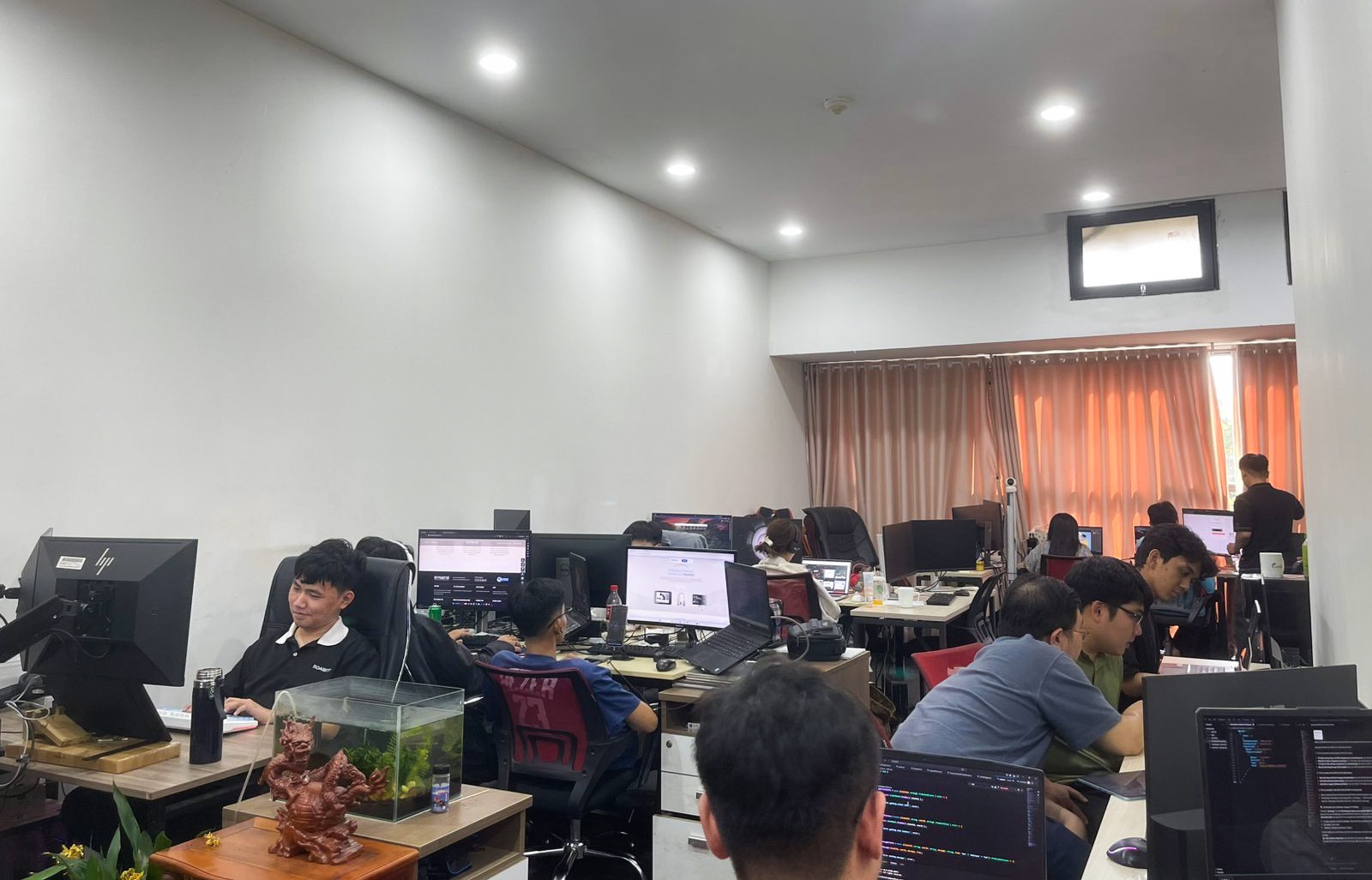
With an established presence in Singapore and a 100+ engineering workforce in Vietnam, HomeNest Software delivers custom mobile app development through a distinctive hybrid delivery model combining local business alignment with scalable, cost efficient engineering execution. We have supported 250+ businesses in building secure, high performance, and user centric mobile applications tailored to Singapore’s regulatory standards and digital expectations.
HomeNest Software positions itself not just as a vendor, but as a long term technology partner helping organizations move from concept to scalable product with clarity, speed, and reliability.
What Sets HomeNest Software Apart
Singapore centric delivery approach
Our local product consultants work closely with your stakeholders to ensure seamless communication, faster decision making, and alignment with your strategic goals.
100+ engineers and cross functional expertise
Gain access to a deep talent pool spanning mobile development, backend engineering, QA, DevOps, AI/ML, and cloud allowing us to deliver projects of varying scale and complexity with confidence.
Proven experience in regulated industries
We have extensive experience building secure, PDPA compliant applications for sectors such as fintech, healthcare, education, and enterprise systems where compliance and data protection are critical.
Strong product thinking and UX/UI design
Beyond functionality, we focus on crafting intuitive, high quality user experiences tailored to Singapore’s mobile first audience driving engagement and retention.
Scalable and cost efficient delivery model
Our Singapore–Vietnam hybrid model ensures enterprise grade quality while optimizing cost, accelerating delivery timelines, and enabling flexible scaling of resources.
Long term partnership mindset
We go beyond initial development providing continuous optimization, maintenance, and support to ensure your application evolves alongside your business and market demands.
Conclusion
Custom mobile app development has evolved into a strategic enabler for businesses in Singapore empowering organizations to optimize operations, deliver superior user experiences, and meet stringent regulatory requirements such as PDPA. Whether you are an SME digitizing internal processes, an enterprise integrating complex systems, or a startup building a scalable digital product, a thoughtfully designed custom application can generate sustained long term value.
By gaining a clear understanding of the development process, cost drivers, technology stack decisions, and potential challenges, businesses are better positioned to make informed investments and to select the right custom mobile app development partner aligned with their strategic objectives.
FAQs
What is custom mobile app development?
Custom mobile app development is the process of building applications tailored to a business’s specific workflows, goals, and user experience instead of using generic, pre built solutions.
Who should invest in a custom mobile app?
SMEs, enterprises, and startups that require scalability, system integration, regulatory compliance, or differentiated user experiences benefit most from custom solutions.
When should businesses choose custom over off the shelf software?
When workflows are complex, integrations are required, compliance is critical, or unique features are needed that off the shelf tools cannot support.
How much does it cost to build a custom mobile app in Singapore?
Costs typically range from SGD 10,000 to SGD 200,000+, depending on complexity, features, and integrations.
How long does it take to develop a custom mobile app?
Timelines range from 1–2 months for basic apps to 4–6+ months for enterprise grade solutions.
What are the main stages of custom app development?
The process includes discovery, UI/UX design, Agile development, QA testing, and deployment with continuous improvement.
Should I choose native or cross platform development?
Native is best for performance and security, while cross platform is faster and more cost efficient for MVPs and mid level apps.
What technologies are commonly used?
Popular stacks include Flutter, React Native, Swift, Kotlin (frontend), and Node.js, .NET, Java, Python with AWS, Azure, or Google Cloud (backend).
Can custom apps integrate with existing systems?
Yes, custom apps can integrate with CRM, ERP, POS, payment gateways, and legacy systems via APIs.
Why is backend architecture important?
It handles data processing, authentication, integrations, and ensures scalability and performance.
What security measures are required?
Encryption, secure authentication (OAuth2, MFA), RBAC, API security, and regular testing are essential for protecting data.
What is PDPA and why is it important?
PDPA is Singapore’s data protection law that governs how personal data is collected and managed, making compliance mandatory for most apps.
What are common challenges in custom app development?
Scope creep, unclear requirements, poor UX design, integration complexity, and underestimating maintenance.
How can businesses optimize development costs?
Define a clear MVP, prioritize features, use Agile delivery, and consider hybrid development models.
What is a hybrid development model?
It combines local product management with offshore engineering to reduce costs while maintaining quality and communication.
What happens after the app is launched?
Ongoing monitoring, bug fixes, updates, performance optimization, and scaling are required.
How do I choose the right development partner?
Evaluate experience, technical expertise, communication, compliance capabilities, and long term support.
Is custom development worth the investment?
Yes, it delivers better long term ROI through scalability, flexibility, and competitive advantage.
Which industries benefit most from custom mobile apps?
Fintech, healthcare, logistics, education, retail, and any sector requiring secure, scalable, tailored solutions.
Can a custom app scale as my business grows?
Yes, custom apps are designed with scalable architectures that allow expansion in features, users, and integrations over time.
Latest Articles
View All
Criteria For Choosing The Right App Design Agency
UI/UX design is the logical foundation of a system, not merely a visual element. Choosing the wrong partner will directly lead to technical debt, budget overruns, and disruptions in the development process. This article provides a 6-step evaluation framework and a list of operational risks, helping businesses eliminate subjective design advice and accurately assess agency capabilities based on developer handoff standards and practical business performance.
How Does AI in Banking Industry Impact the Future?
Artificial intelligence (AI) has transitioned from a supplementary tool to a core infrastructure of financial data management, optimizing profitability through real-time fraud detection, natural language processing (NLP), and high-speed credit scoring models. “Deploying AI in the financial sector requires more than just algorithmic accuracy, it demands a highly secure cloud architecture and rigorous data governance,” commented Nguyen Tien, co-founder of HomeNest Software. Why read this guide? We skip the theoretical jargon to focus entirely on technical implementation. Whether you’re evaluating a vendor or planning a system overhaul, this article will detail: Operational Efficiency: Automating unstructured data workflows at scale. Risk Architecture: Implementing real-time threat detection and AML compliance. Data ownership: The essential need for 100% ownership of the source code to ensure full algorithm auditability.
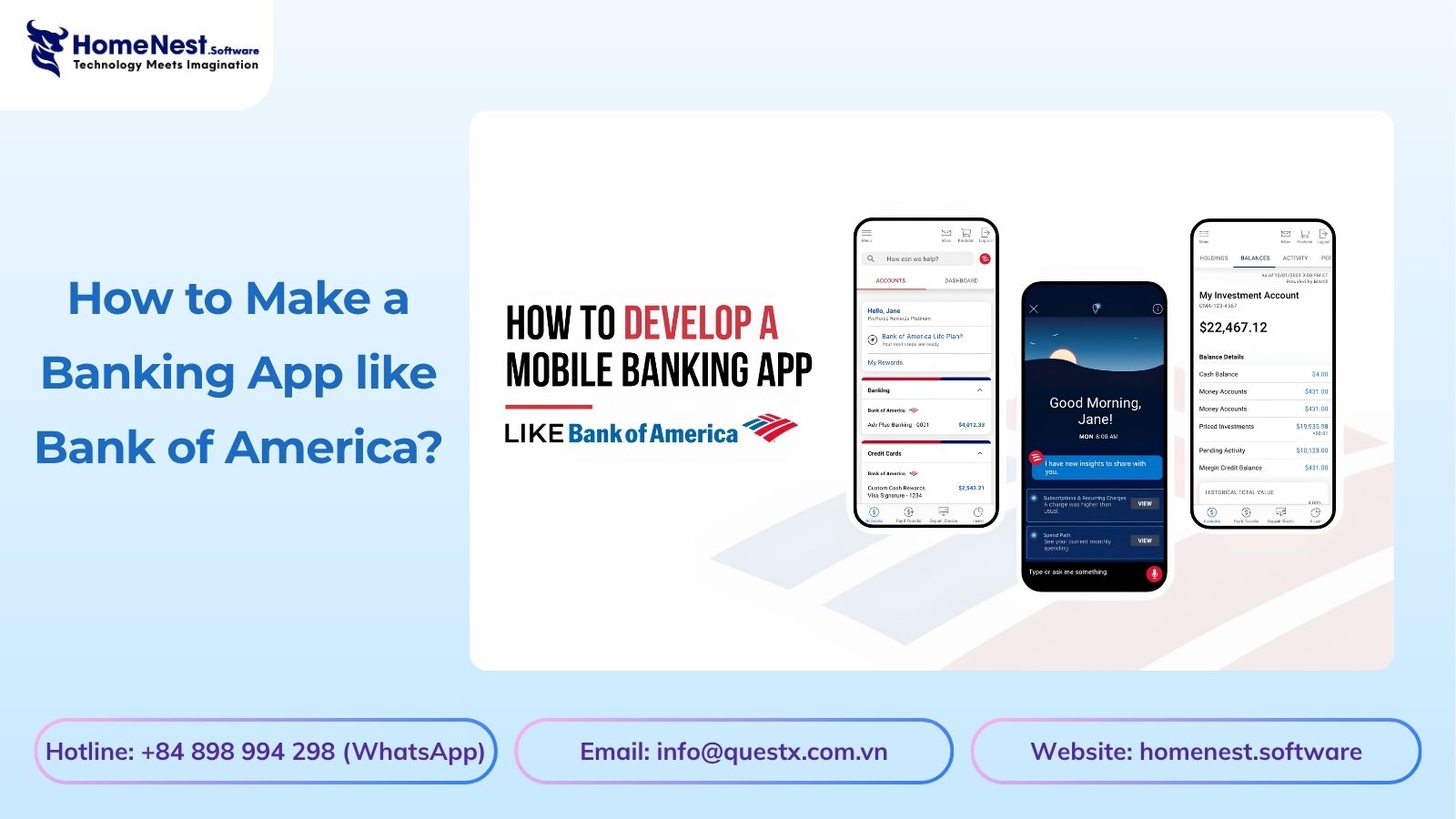
How to Make a Banking App like Bank of America?
Developing a mobile banking application like Bank of America extends far beyond basic UI design; it requires engineering a fault-tolerant backend capable of real-time ledger synchronization, biometric authentication, and high-volume data processing under strict regulatory frameworks. Drawing from HomeNest Software’s deep experience in architecting enterprise-grade fintech solutions, this guide strips away theoretical jargon to focus entirely on operational and technical execution. What you will find in this guide: We break down the precise development roadmap, from mapping out microservices and ensuring PCI-DSS compliance to estimating MVP development costs and securing absolute data sovereignty through 100% source code ownership. If you are preparing to build, scale, or audit a financial platform, this blueprint provides the exact framework you need.
Banking App Development Cost
Building a banking application is rarely a simple process; it’s a complex technical challenge requiring a balance between complying with stringent financial regulations, handling large transaction volumes, and a scalable cloud architecture. Miscalculating these technical requirements from the outset often leads to significant technical debt and budget overruns. Based on HomeNest Software’s practical experience in designing enterprise-grade fintech solutions, this guide bypasses generic estimates to provide a realistic analysis of banking application development costs. What you’ll find in this guide: We analyze the true cost factors, from technology selection and API integration to the hidden costs of regulatory compliance and security infrastructure. Whether you’re launching a minimum viable product or expanding an existing financial platform, this analysis provides the precise operational data you need to plan your budget effectively.
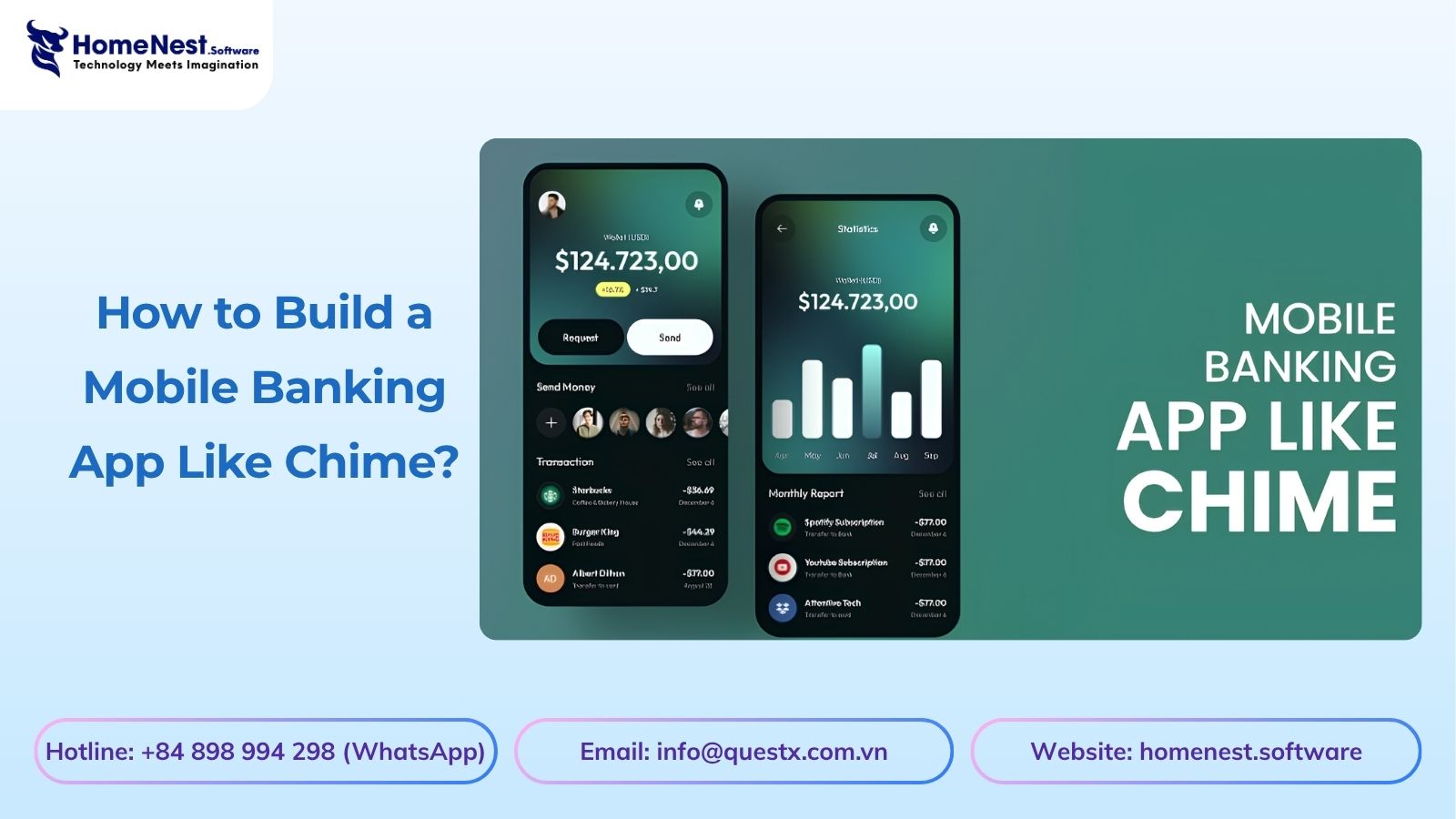
How to Build a Mobile Banking App Like Chime?
Building a mobile banking app like Chime is not just about features, it is about delivering a secure, scalable, and user-centric financial experience. From planning the right architecture to optimizing mobile banking app development cost, every decision directly impacts your product’s success. Leveraging Fintech app development services, starting with MVP app development, and scaling through on-demand app development solutions allows businesses to reduce risk and accelerate time to market. To stay competitive, combining Android app development services and iOS app development solutions ensures wider reach, while continuous updates through maintenance software development services keep your app secure and future-ready.
How to Build a Banking App Like Barclays: A Complete Entrepreneur’s Guide
Building a banking app like Barclays requires more than just development. It demands a strong product vision, secure architecture, and a clear monetization strategy. From optimizing cost and selecting the right tech stack to ensuring compliance and scalability, every decision impacts long-term success. Partnering with an experienced team like HomeNest Software helps accelerate development, reduce risks, and deliver a high-quality fintech product that can compete in today’s fast-evolving digital banking landscape.