
How to Build an Online Marketplace Like Amazon
Scope of Work
Online shopping is booming, and multi vendor marketplaces are reshaping the way people buy and sell products online. Industry leaders such as Amazon, eBay, and Etsy have revolutionized traditional retail by creating scalable, user focused eCommerce ecosystems that set global standards. With the ability to generate substantial revenue, offer unlimited product choices, and enable third party sellers to thrive, building an online marketplace like Amazon has become an attractive and profitable opportunity for entrepreneurs and enterprises alike.
So, how do you create an online marketplace like Amazon that can truly compete and replicate its success? In this blog, we’ll walk you through the core steps, recommended technology stack, and proven strategies required to build a multi vendor marketplace website like Amazon from the ground up. Whether you’re a startup founder, business owner, or tech enthusiast, this in depth guide to building an Amazon like website will give you a clear understanding of what it takes to turn your marketplace idea into a scalable digital platform.
Amazon’s Growth Story: What Drives Amazon’s Remarkable Success?
Amazon began as a modest online bookstore operating out of a garage, yet over time it has evolved into the world’s largest online marketplace. Through an unwavering commitment to innovation, exceptional customer experience, and operational efficiency, Amazon has fundamentally transformed global retail. Its ability to scale at speed, support millions of third party sellers, and deliver an unparalleled range of products has positioned the company as a dominant force in the digital economy.
For anyone looking to build a website like Amazon, understanding the factors behind this extraordinary growth is essential. By analyzing the strategies, technologies, and guiding principles that powered Amazon’s expansion, entrepreneurs and businesses can uncover valuable lessons for succeeding in today’s highly competitive online marketplace landscape. In this blog, we’ll break down the key drivers of Amazon’s success and show how you can adapt these insights to develop a successful B2C eCommerce app like Amazon for your own venture.
Reasons to Invest in Building a Marketplace Like Amazon
Building a multi vendor marketplace similar to Amazon may sound complex, but it is also one of the most strategic and future proof investments for modern businesses. Amazon style marketplaces have transformed online shopping behavior and continue to experience rapid global growth, unlocking massive opportunities for startups and enterprises alike. Below are the key reasons why investing in Amazon like eCommerce app development makes strong business sense.
1. Multiple Revenue Streams
An Amazon like marketplace goes far beyond earning revenue from direct product sales. You can monetize your platform through seller commissions, paid subscriptions, featured listings, in platform advertising, and even logistics or fulfillment services. These diversified income sources create financial stability and support sustainable eCommerce business growth.
2. Reduced Inventory Risk
Unlike traditional eCommerce models, a multi vendor marketplace does not require you to own or manage inventory. Third party sellers handle product listings, storage, and shipping, allowing you to focus on platform operations, customer experience, and scaling without the burden of inventory or warehouse management.
3. High Scalability Through Network Effects
Marketplaces like Amazon scale rapidly by connecting buyers and sellers within a single ecosystem. As more sellers join the platform, product variety increases, attracting more customers. This powerful network effect accelerates growth and makes long term scalability far more achievable.
4. Global Market Access
With the right technology and infrastructure, your marketplace can serve customers worldwide. You’re no longer confined to a local or regional market. Amazon like eCommerce website development opens the door to international expansion and long term global growth potential.
5. Long Term Brand Value
A well built marketplace fosters trust, credibility, and customer loyalty. Over time, your platform can become a preferred shopping destination within a specific niche or region just as Amazon did globally. This growing brand equity significantly enhances your business valuation and investor appeal.
6. Data Driven Business Growth
Amazon style eCommerce platforms generate valuable insights into user behavior, purchasing patterns, pricing trends, and demand cycles. Leveraging this data enables smarter decision making, personalized user experiences, and continuous optimization of features, marketing strategies, and revenue models.
Steps to Create an eCommerce Website Like Amazon
Building an eCommerce website like Amazon may seem ambitious, but with a solid strategy, the right team, and suitable technology, it’s completely achievable. Amazon operates as a multi vendor marketplace, allowing multiple sellers to list and sell products on a single platform. If you’re planning to create a multi vendor marketplace website like Amazon, follow this step by step guide to get started.
1. Define Your Business Model
Before diving into website or app development, clearly outline how your marketplace will operate. Will you sell products yourself, enable third party sellers, or combine both approaches? Decide whether your revenue will come from commissions, subscriptions, listing fees, or advertising. A well defined business model sets the foundation for all future decisions.
2. Select a Focused Niche
Although Amazon serves almost every product category, it’s smarter to begin with a specific niche. Popular options include electronics, fashion, handmade items, or eco friendly products. Starting small helps you attract early sellers and customers more easily and refine your platform before expanding.
3. Plan Core Marketplace Features
When developing an Amazon like marketplace, your platform should cater to three main user groups: customers, sellers, and administrators.
-
For Customers: product search, filters, reviews, shopping cart, wishlist, secure checkout, multiple payment options, and order tracking.
-
For Sellers: seller dashboard, product management, order handling, analytics, and payout settings.
-
For Admins: platform configuration, user and seller management, product approvals, commission rules, and performance reports.
4. Choose the Right Technology Stack
You can either build your marketplace from scratch or use existing multi vendor solutions such as Magento, WooCommerce (with plugins), Shopify Plus, or Sharetribe. For custom development, a common tech stack includes:
-
Frontend: HTML, CSS, JavaScript (React or Vue.js)
-
Backend: Node.js, Laravel, or Django
-
Database: MySQL, PostgreSQL, or MongoDB
-
Cloud & Hosting: AWS, Google Cloud, or DigitalOcean
5. Hire an Experienced Development Team
If you’re not a developer, partnering with the right professionals is critical. Look for a team skilled in web development, UI/UX design, and marketplace architecture. A trusted eCommerce development company like HomeNest Software can help you build a scalable and high performance Amazon like platform.
6. Integrate Secure Payment Solutions
Reliable payment gateways such as Stripe, PayPal, Razorpay, or Cashfree are essential for smooth and secure transactions. Make sure to consider regional payment regulations and payout limitations so both sellers and customers can transact confidently on your platform.
7. Test and Launch the Marketplace
Before launch, thoroughly test every feature from seller onboarding to checkout and order fulfillment. Fix bugs, optimize performance, and ensure your website works seamlessly across mobile and desktop devices. A soft or beta launch is highly recommended to collect real user feedback before full scale rollout.
8. Promote and Scale Your Platform
Once live, focus on growth through SEO, digital marketing, paid advertising, and social media campaigns. Referral programs, introductory discounts, and promoted listings can help attract users and encourage long term engagement.
How Much Does It Cost to Build a Website Like Amazon?
The cost to create an online marketplace like Amazon typically ranges from $15,000 to $49,000+, depending on several key factors such as feature set, design complexity, development timeline, and the expertise and geographic location of your development team. Building a scalable, Amazon like eCommerce platform requires careful planning and investment to ensure long term performance and growth.
Below is an estimated cost breakdown to give you a clearer picture of the budget required for different levels of marketplace development:
| App Type | Estimated Cost |
|---|---|
| MVP Version (Basic Features) | $15,000 – $30,000 |
| Full Featured Amazon like App | $20,000 – $40,000 |
| Enterprise Grade Marketplace Platform | $30,000 – $49,000+ |
An MVP is ideal for validating your idea quickly, while a full featured or enterprise grade platform is better suited for businesses aiming for rapid scaling, advanced integrations, and long term competitiveness in the eCommerce market.
Nếu bạn muốn, mình có thể chuyển chi phí sang VND, bổ sung timeline phát triển, hoặc phân tích chi phí theo từng tính năng (payments, sellers, logistics, AI, v.v.) để bài viết chi tiết hơn.
Key Features of a Multi Vendor Marketplace Like Amazon

To build a successful marketplace like Amazon, simply listing products is not enough. Your platform must deliver a seamless shopping experience for customers, powerful management tools for sellers, and full control for administrators. Below is a structured overview of the essential features required to build an Amazon like marketplace.
Customer Features
These features define how users browse, shop, and interact with your marketplace.
-
User Registration & Login
Quick and secure sign up using email, phone number, or social logins such as Google, Facebook, and Apple. -
Advanced Search & Smart Filters
Robust search functionality with filters for category, price range, brand, ratings, availability, and more. -
Product Listings
Detailed product pages with high quality images, clear descriptions, pricing, discounts, specifications, and stock status. -
Cart & Wishlist
Allow users to add products to their cart or save items for future purchases in a wishlist. -
Secure Checkout & Multiple Payment Options
Support for credit/debit cards, UPI, net banking, digital wallets, PayPal, and cash on delivery to ensure convenience and trust. -
Order Tracking & Notifications
Real time order tracking with automated notifications from confirmation to final delivery. -
Ratings & Reviews
Enable customers to leave honest feedback, helping other buyers make informed decisions. -
Personalized Product Recommendations
AI powered suggestions based on browsing behavior, purchase history, and preferences. -
Multi Language & Multi Currency Support
Essential for marketplaces targeting international customers and cross border sellers. -
Customer Support & Live Chat
In app chat or AI powered chatbots to provide instant assistance and resolve issues quickly.
Seller (Vendor) Features
These tools help third party sellers efficiently manage their stores and grow their business.
-
Seller Registration & KYC Verification
Secure onboarding with identity verification to ensure trust and compliance. -
Seller Dashboard
Centralized view of sales performance, earnings, inventory levels, and recent activities. -
Product Management
Simple product upload, editing, pricing updates, and inventory control. -
Order & Return Management
Tools to accept, process, cancel orders, and manage returns or refunds. -
Sales Reports & Analytics
Data driven insights with charts and reports to help sellers optimize their strategy. -
Customer Communication
Direct interaction with buyers to answer questions or respond to reviews. -
Commission Tracking & Payout Management
Transparent tracking of platform fees, earnings, and withdrawal requests.
Admin Panel Features
The admin panel gives full control over the marketplace ecosystem.
-
Dashboard Overview
Real time snapshot of total sales, active sellers, customer activity, and system alerts. -
User Management
Manage buyers, sellers, delivery partners, and support staff with role based access. -
Product & Category Control
Approve or reject listings, manage categories, tags, and search filters. -
Commission, Tax & Fee Settings
Configure seller commissions, taxes, shipping fees, and payout rules. -
Content Management System (CMS)
Easily update banners, landing pages, announcements, blogs, and promotional content. -
Advanced Reports & Insights
Export detailed reports on sales, refunds, traffic, inventory, and user behavior. -
Security & Fraud Prevention
Monitor login activity, detect fraud, suspend users, and safeguard platform data.
Top 5 Amazon Alternatives to Study
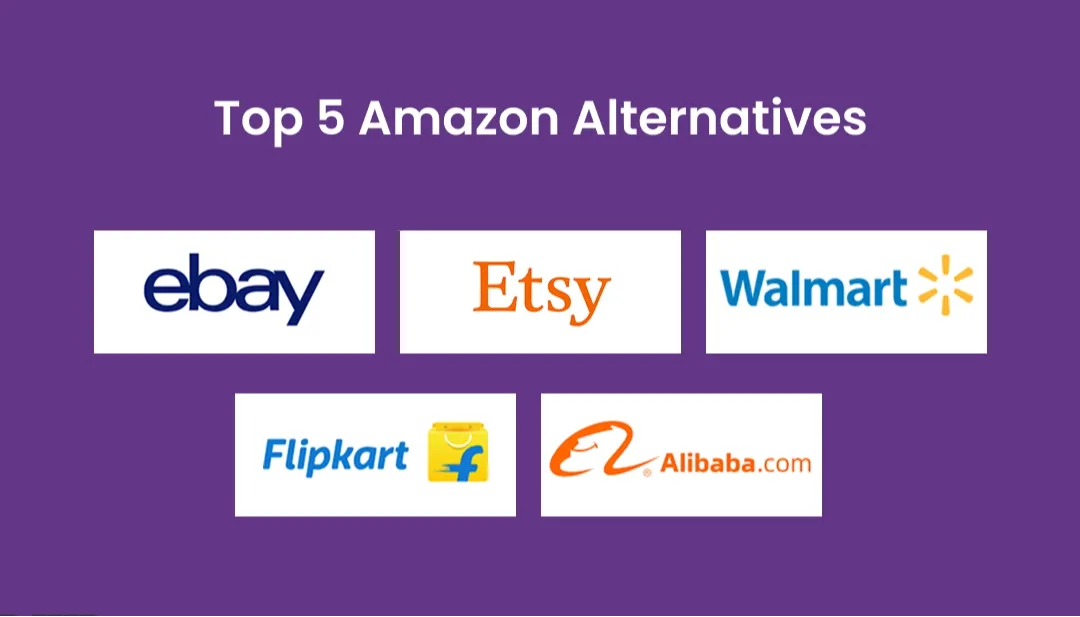
Before building your own eCommerce marketplace, it’s essential to analyze other successful platforms beyond Amazon. These marketplaces showcase different business models, feature sets, and customer engagement strategies that can inspire smarter decisions for your own project.
Here are five leading Amazon alternatives worth studying closely:
1. eBay
-
Business Model: Auction based marketplace + Buy It Now
-
Key Takeaway: eBay pioneered the peer to peer marketplace model, proving that a platform can scale successfully without owning inventory by simply connecting buyers and sellers.
-
Learn From: Seller rating systems, buyer protection policies, and global shipping frameworks.
2. Walmart Marketplace
-
Business Model: Retail combined with third party sellers
-
Key Takeaway: Walmart has positioned itself as a strong Amazon competitor by leveraging brand trust and its extensive physical store network to grow online rapidly.
-
Learn From: Omnichannel strategies, fast delivery partnerships, and aggressive pricing models.
3. Etsy
-
Business Model: Niche marketplace for handmade, vintage, and unique products
-
Key Takeaway: Etsy proves that targeting a specific niche audience can be more effective than offering a broad product catalog.
-
Learn From: Community driven growth, seller empowerment, and personalized product experiences.
4. Alibaba
-
Business Model: Large scale B2B and B2C global marketplace
-
Key Takeaway: Alibaba dominates international and wholesale commerce, offering powerful lessons in global scalability and bulk transaction management. Platforms like AliExpress further demonstrate how Amazon style marketplaces can succeed worldwide.
-
Learn From: Supplier onboarding, cross border payments, and end to end logistics solutions.
5. Flipkart
-
Business Model: Full scale eCommerce marketplace with third party sellers
-
Key Takeaway: Flipkart is a leading Amazon alternative in India, excelling through localization, regional language support, and customer focused features tailored for emerging markets.
-
Learn From: Localized marketing, flexible payment options such as cash on delivery, and high impact festive sales campaigns.
How Does Amazon Make Money?
What began as a simple online bookstore has evolved into a diversified revenue powerhouse. Today, eCommerce platforms like Amazon generate income from multiple streams, going far beyond direct product sales. Amazon has built a vast ecosystem of services that collectively drive sustained growth and profitability. Below are the primary ways Amazon earns revenue.
1. Online Retail Sales
This is Amazon’s most recognizable business model. The company sells millions of products directly to consumers from books and apparel to electronics and home essentials. While retail margins are relatively thin, the sheer volume of transactions contributes a significant share of Amazon’s overall revenue.
2. Third Party Seller Services
Amazon enables third party merchants to sell on its platform using tools for listings, fulfillment, advertising, and customer service. In return, Amazon collects commissions and service fees. This model is highly profitable because Amazon earns without managing inventory or shipping for those products.
3. Amazon Web Services (AWS)
Amazon Web Services is Amazon’s cloud infrastructure arm, providing computing power, data storage, and advanced cloud services to businesses worldwide. Major organizations such as Netflix and Airbnb rely on AWS. It is one of Amazon’s most profitable divisions, generating billions in annual revenue and driving long term enterprise growth.
4. Subscription Services
Amazon earns consistent recurring income through subscriptions like Amazon Prime, which offers fast shipping, streaming content, and exclusive deals. Additional subscriptions such as Kindle Unlimited and Audible further strengthen predictable monthly revenue.
5. Advertising Revenue
Advertising has become a rapidly growing income stream. Sponsored product listings appear prominently in search results, allowing brands to pay Amazon for increased visibility. This high margin business continues to expand as sellers compete for attention on the platform.
6. Physical Stores & Smart Devices
Amazon also generates revenue through physical retail locations like Whole Foods and Amazon Go, along with proprietary devices such as Alexa, Kindle, and Fire TV. While these contribute a smaller portion of total revenue, they enhance brand presence and ecosystem integration.
Why Choose HomeNest Software to Build a Marketplace Like Amazon?
If you’re planning to create a multi vendor marketplace website like Amazon, HomeNest Software is a trusted technology partner to turn your idea into reality. With extensive experience in eCommerce marketplace development, we deliver secure, scalable, and user centric platforms tailored to your business goals.
From UI/UX design and mobile app development to third party integrations and post launch support, our team manages the entire development lifecycle. Whether you’re targeting a niche market or aiming for large scale expansion, HomeNest Software ensures your Amazon like marketplace performs seamlessly across all devices helping buyers and sellers connect effortlessly through a high performance digital platform.
HomeNest Software – Empowering Long Term Growth for Modern Businesses.

Contact Information:
- Address: The Sun Avenue, 28 Mai Chi Tho Street, Binh Trung Ward, Ho Chi Minh City
- Hotline: +84 898 994 298 ( WhatsApp )
- Website: homenest.software
HomeNest Services: Website Design – App Design – Software Development – Digital Marketing.
Frequently Asked Questions (FAQs)
1. How does Amazon make most of its money today?
While online retail sales generate a large portion of revenue, Amazon earns most of its profits from high margin segments such as third party seller services, advertising, and Amazon Web Services (AWS). These businesses allow Amazon to scale without directly managing inventory.
2. Is Amazon profitable from product sales alone?
Not entirely. Direct product sales usually have low profit margins. Amazon relies on volume to drive revenue, while profitability mainly comes from services like seller fees, subscriptions, ads, and cloud computing.
3. How do third party sellers help Amazon grow?
Third party sellers expand product variety without increasing inventory risk for Amazon. In return, Amazon earns commissions, fulfillment fees, and advertising revenue making this one of its most scalable and profitable business models.
4. Why is AWS so important to Amazon’s business model?
AWS provides cloud infrastructure to millions of businesses worldwide and generates consistent, high margin revenue. It plays a critical role in funding Amazon’s expansion, innovation, and long term profitability beyond eCommerce.
5. Can a small marketplace copy Amazon’s revenue model?
Yes but not all at once. Startups can adopt parts of Amazon’s model, such as seller commissions, subscriptions, or ads, and gradually expand as the platform scales. Most successful marketplaces begin with one or two core revenue streams.
6. How long does it take to build a marketplace like Amazon?
An MVP version typically takes 3–5 months, while a full featured Amazon like marketplace may require 6–9 months or more, depending on features, integrations, and scalability requirements.
7. Is it necessary to build AWS like services to succeed?
No. AWS is a long term diversification strategy. For new marketplaces, the focus should be on building a strong buyer–seller ecosystem, smooth payments, reliable logistics integrations, and a great user experience.
8. How does Amazon advertising benefit sellers and the platform?
Sponsored listings help sellers gain visibility and boost sales, while Amazon earns high margin advertising revenue. This creates a win win model that fuels platform growth and competition.
Latest Articles
View All
How Much Does It Cost to Build a Shopping App Like Temu?
Temu’s meteoric rise to over 900 million global downloads proves the power of combining AI, gamification, and social commerce, but building a similar viral shopping platform requires careful financial and technical planning. Developing an app like Temu typically costs anywhere from $40,000 for a basic Minimum Viable Product (MVP) to over $300,000 for a fully-featured platform. This guide breaks down every cost category, analyzes the core features driving Temu’s success, highlights the best technology stacks, and offers practical strategies to optimize your development budget without compromising on quality.

Criteria For Choosing The Right App Design Agency
UI/UX design is the logical foundation of a system, not merely a visual element. Choosing the wrong partner will directly lead to technical debt, budget overruns, and disruptions in the development process. This article provides a 6-step evaluation framework and a list of operational risks, helping businesses eliminate subjective design advice and accurately assess agency capabilities based on developer handoff standards and practical business performance.

How Does AI in Banking Industry Impact the Future?
Artificial intelligence (AI) has transitioned from a supplementary tool to a core infrastructure of financial data management, optimizing profitability through real-time fraud detection, natural language processing (NLP), and high-speed credit scoring models. “Deploying AI in the financial sector requires more than just algorithmic accuracy, it demands a highly secure cloud architecture and rigorous data governance,” commented Nguyen Tien, co-founder of HomeNest Software. Why read this guide? We skip the theoretical jargon to focus entirely on technical implementation. Whether you’re evaluating a vendor or planning a system overhaul, this article will detail: Operational Efficiency: Automating unstructured data workflows at scale. Risk Architecture: Implementing real-time threat detection and AML compliance. Data ownership: The essential need for 100% ownership of the source code to ensure full algorithm auditability.
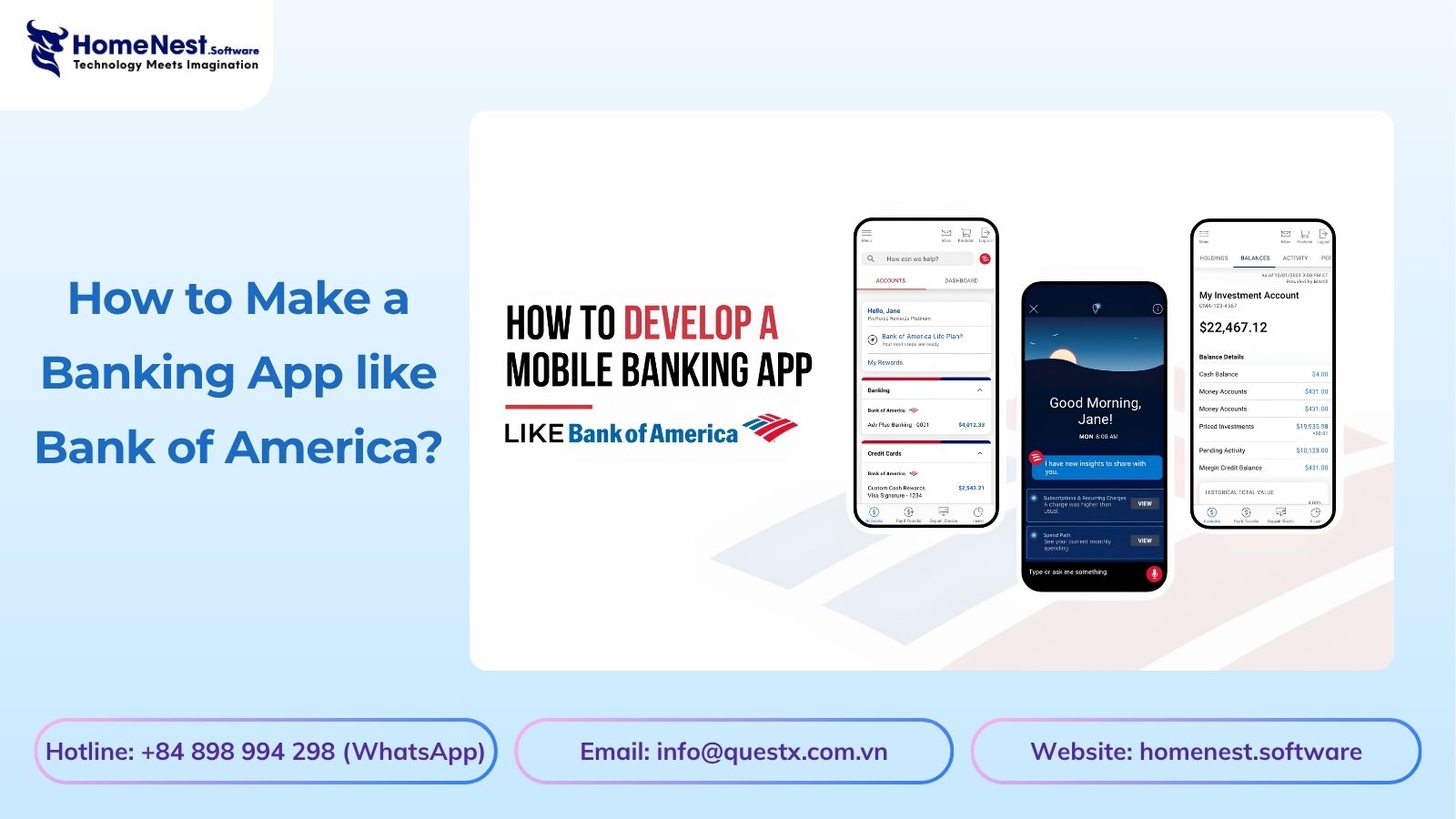
How to Make a Banking App like Bank of America?
Developing a mobile banking application like Bank of America extends far beyond basic UI design; it requires engineering a fault-tolerant backend capable of real-time ledger synchronization, biometric authentication, and high-volume data processing under strict regulatory frameworks. Drawing from HomeNest Software’s deep experience in architecting enterprise-grade fintech solutions, this guide strips away theoretical jargon to focus entirely on operational and technical execution. What you will find in this guide: We break down the precise development roadmap, from mapping out microservices and ensuring PCI-DSS compliance to estimating MVP development costs and securing absolute data sovereignty through 100% source code ownership. If you are preparing to build, scale, or audit a financial platform, this blueprint provides the exact framework you need.
Banking App Development Cost
Building a banking application is rarely a simple process; it’s a complex technical challenge requiring a balance between complying with stringent financial regulations, handling large transaction volumes, and a scalable cloud architecture. Miscalculating these technical requirements from the outset often leads to significant technical debt and budget overruns. Based on HomeNest Software’s practical experience in designing enterprise-grade fintech solutions, this guide bypasses generic estimates to provide a realistic analysis of banking application development costs. What you’ll find in this guide: We analyze the true cost factors, from technology selection and API integration to the hidden costs of regulatory compliance and security infrastructure. Whether you’re launching a minimum viable product or expanding an existing financial platform, this analysis provides the precise operational data you need to plan your budget effectively.
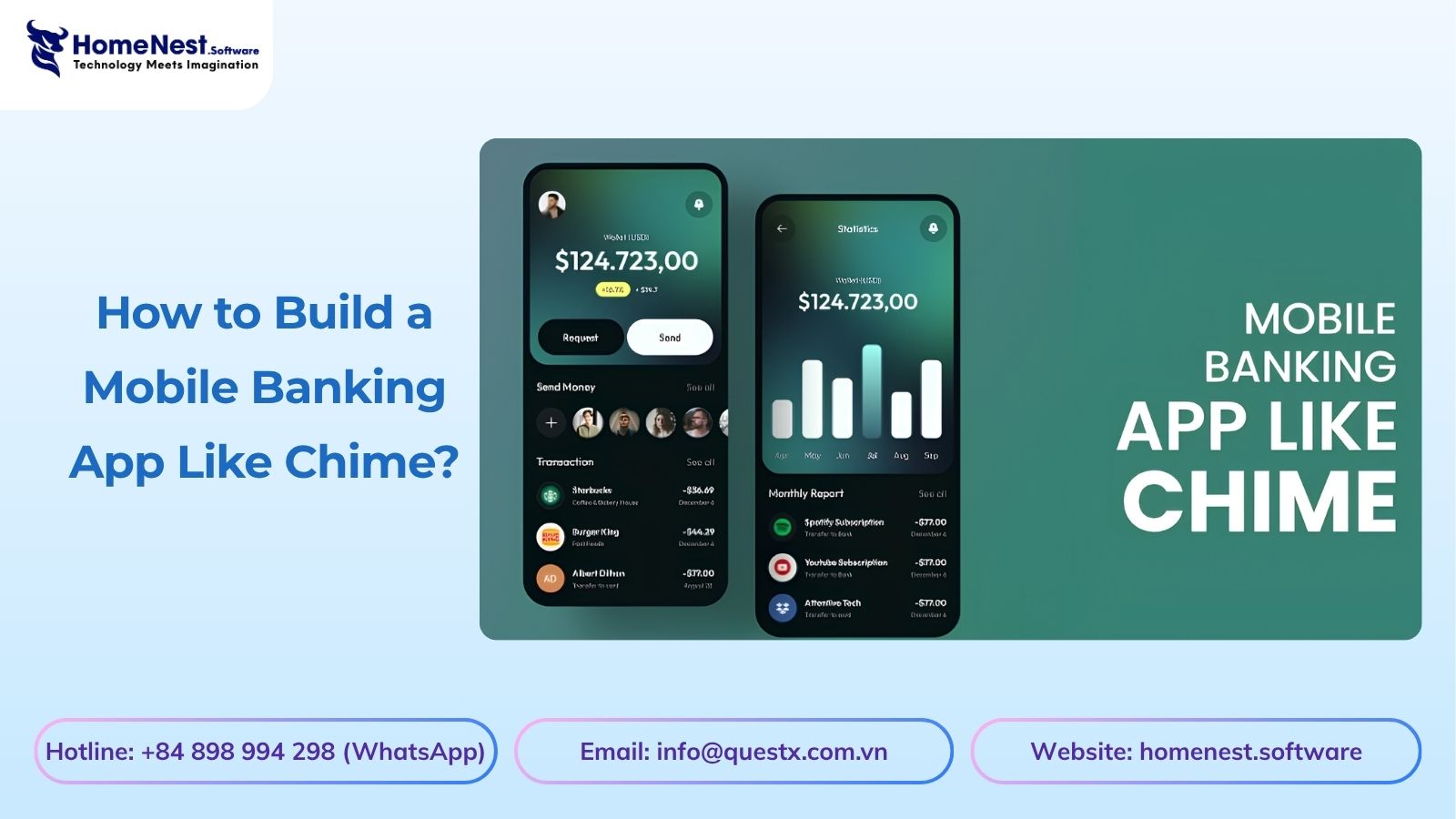
How to Build a Mobile Banking App Like Chime?
Building a mobile banking app like Chime is not just about features, it is about delivering a secure, scalable, and user-centric financial experience. From planning the right architecture to optimizing mobile banking app development cost, every decision directly impacts your product’s success. Leveraging Fintech app development services, starting with MVP app development, and scaling through on-demand app development solutions allows businesses to reduce risk and accelerate time to market. To stay competitive, combining Android app development services and iOS app development solutions ensures wider reach, while continuous updates through maintenance software development services keep your app secure and future-ready.