
Ride-Sharing App Development: A Complete End-to-End Guide
Building a successful ride sharing app requires more than just coding it demands a clear business model, scalable architecture, and a strong focus on user experience. By starting with the right features, leveraging modern technologies, and partnering with an experienced development team, businesses can launch a competitive platform, optimize costs, and scale efficiently in the fast-growing global mobility market.
Scope of Work

Urban mobility has been reshaped by ride sharing apps, which have become a core part of modern transportation thanks to widespread smartphone adoption and evolving consumer expectations. As a result, building a ride sharing solution is now seen as a highly attractive investment opportunity.
However, entering this market requires more than just a strong idea. With established platforms like Uber, Lyft, and Grab dominating the landscape, creating a competitive and scalable ride sharing app demands a well structured strategy. This includes in depth market research, competitor analysis, defining core features, estimating development costs, and selecting the right technology stack.
This guide provides a comprehensive overview of the ride sharing ecosystem covering car and bike sharing models, key benefits, must have features, development steps, and cost considerations to help you successfully plan and build a high performance ride sharing application.
Market Overview of Ride Sharing Apps
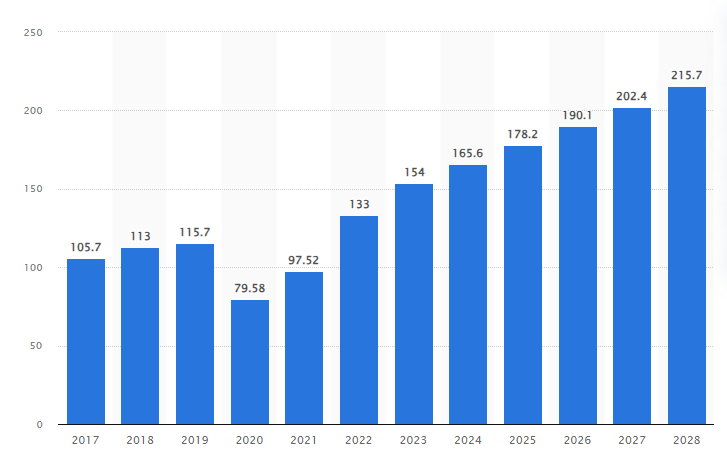
The global ride sharing industry continues to grow at a strong pace, fueled by rapid urbanization, widespread smartphone adoption, and increasing demand for convenient, on demand transportation. According to recent market reports, the worldwide ride sharing (carpooling and ride hailing) market is projected to reach approximately $185.1 billion by 2026, expanding at a CAGR of 16.6%.
User adoption is also accelerating globally. Ride hailing platforms are expected to reach hundreds of millions of active users by 2029, with steady increases in market penetration as more consumers shift away from traditional transport options. At the same time, the average revenue per user (ARPU) continues to stabilize, reflecting sustainable monetization models across regions.
From a competitive standpoint, the market is dominated by major global players such as Uber and Lyft, alongside strong regional platforms like Grab. These companies have set high standards for user experience, real time tracking, pricing transparency, and service reliability.
Overall, these trends underscore a clear and growing demand for ride sharing solutions worldwide. As digital mobility ecosystems continue to evolve, this presents a significant opportunity for businesses to invest in taxi app development and build scalable, user centric platforms that meet modern transportation needs.
Why Invest in Ride Sharing App Development?
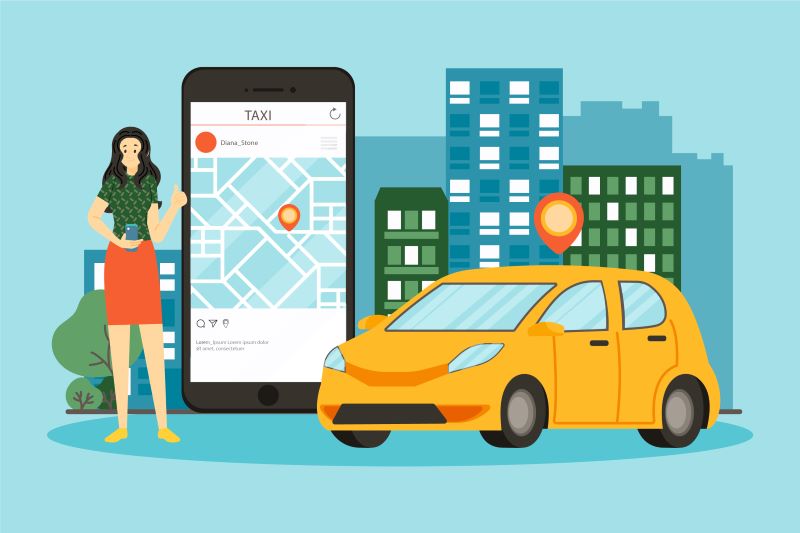
With demand for fast, flexible, and on demand transportation at an all time high, building a ride sharing platform presents a compelling opportunity for entrepreneurs and investors. Beyond convenience, this market offers strong growth potential, diversified revenue models, and long term scalability.
Here are the key reasons why investing in ride sharing app development is a strategic move:
1. Strong and Growing Market Demand
Modern consumers increasingly prefer on demand mobility solutions over traditional transportation. As urban populations expand and traffic congestion worsens, ride sharing apps provide a more efficient and flexible alternative to public transit and private vehicle ownership.
Platforms like Uber and Lyft have already validated this demand globally, making it clear that the market still has room for innovation and new entrants.
2. Multiple Revenue Streams
Ride sharing platforms support a variety of monetization strategies, including:
- Commission fees per ride
- Subscription plans for drivers or users
- Surge pricing during peak hours
- In app advertising and partnerships
This diversified revenue structure enables businesses to generate consistent and scalable income while optimizing profitability over time.
3. High Scalability Potential
A well architected ride sharing app can scale rapidly as demand grows. Businesses can expand into new cities, introduce additional services (such as bike sharing, carpooling, or delivery), and onboard more users without fundamentally changing the platform.
This scalability allows companies to capture new markets efficiently while maintaining operational control and cost effectiveness.
4. Opportunity for Advanced Technology Integration
Ride sharing apps are ideal platforms for integrating advanced technologies such as:
- AI and machine learning for demand prediction and route optimization
- Real time data analytics for pricing and fleet management
- GPS and geolocation services for accurate tracking
- Automation for dispatching and customer support
By leveraging these technologies, businesses can deliver personalized, efficient, and intelligent user experiences, creating a strong competitive advantage in the market.
Overall, ride sharing app development is not just about building a transportation solution it’s about creating a scalable digital mobility platform that aligns with future urban trends and evolving user expectations.
Must Have Features of a Ride Sharing Application

A successful ride sharing platform must be designed around three core components: rider, driver, and admin panels. Each plays a distinct role in ensuring smooth operations, high user satisfaction, and scalable growth.
Rider Panel Features
The rider interface should prioritize simplicity, speed, and convenience to deliver a seamless booking experience:
- Intuitive User Interface
Clean, easy to navigate design with quick access to ride booking, saved locations, and trip history.
- Real Time Tracking
Live GPS tracking of drivers enhances transparency, reduces uncertainty, and improves user trust.
- Multiple Payment Options
Support for cards, digital wallets, and cash to accommodate diverse user preferences.
- Ride Scheduling
Allows users to pre book rides for specific times, ideal for daily commutes or planned trips.
- In App Chat
Secure communication between rider and driver without exposing personal contact details.
- Promotions & Discounts
Promo codes and offers help drive user acquisition, retention, and overall engagement.
Driver Panel Features
The driver module should focus on efficiency, earnings visibility, and operational support:
- Driver Dashboard
Centralized view of trips, earnings, and performance metrics for better work management.
- Navigation & Route Optimization
Integrated GPS navigation to suggest optimal routes, reducing travel time and fuel costs.
- Ratings & Reviews
Feedback system to maintain service quality and encourage continuous improvement.
- Earnings Tracker
Transparent tracking of daily, weekly, and monthly income.
- Driver Support System
In app assistance to resolve issues quickly and improve driver confidence.
- Ride History & Analytics
Detailed trip records and insights to help drivers optimize performance.
Admin Panel Features
The admin panel acts as the control center of the entire platform, enabling monitoring, optimization, and governance:
- User Management
Manage rider and driver accounts, verify identities, and enforce platform policies.
- Analytics & Reporting
Access real time data on usage, revenue, and performance to support strategic decisions.
- Marketing & Engagement Tools
Launch campaigns, push notifications, and promotions to boost user activity.
- Commission & Pricing Management
Configure commission structures and implement dynamic pricing strategies.
- Incident & Dispute Management
Handle complaints, disputes, and safety issues efficiently to maintain trust.
- Content Management System (CMS)
Manage app content such as FAQs, guides, and updates to ensure consistent communication.
Overall, these features form the foundation of a scalable and competitive ride sharing ecosystem, ensuring a balanced experience for users, drivers, and platform operators alike.
Step by Step Process to Develop a Ride Sharing App
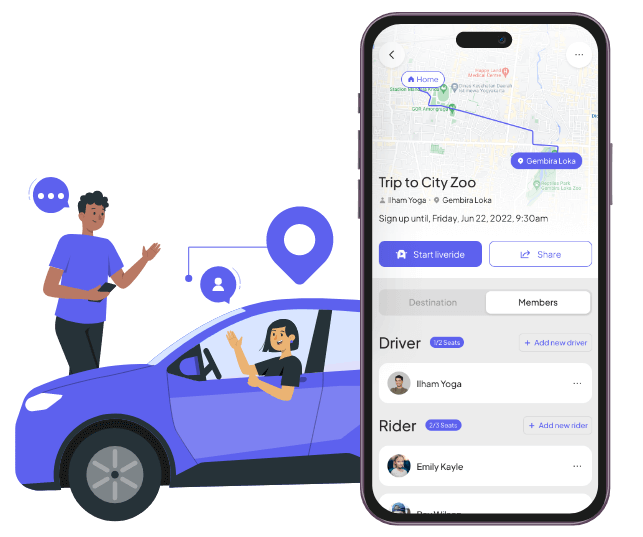
Building a successful ride sharing application requires a structured approach from validating your idea to launching and scaling the platform. Each phase plays a critical role in ensuring performance, usability, and long term growth.
1. Market Research
Start with in depth market analysis to understand your target users, competitors, and industry gaps. Evaluate platforms like Uber and Grab to identify opportunities for differentiation. This step helps define your unique value proposition and informs both product design and go to market strategy.
2. Define Your Business Model
Select a business model that aligns with your target market and growth goals. You can focus on:
- Car ride hailing, bike sharing, or hybrid services
- Commission per ride
- Subscription plans
- Surge pricing or premium services
A clear monetization strategy ensures sustainable revenue and scalability.
3. UI/UX Design
Design an intuitive, user friendly interface that simplifies the booking experience. Focus on:
- Clean navigation and fast booking flow
- Real time map integration
- Minimal friction for onboarding
Early stage prototyping and user testing are essential to refine usability and improve retention.
4. Backend Development
Build a robust backend infrastructure capable of handling:
- Real time ride requests and tracking
- High concurrency and data processing
- Secure payment integrations
- GPS and mapping services
Cloud based architecture (e.g., AWS, Azure) and scalable APIs are key to ensuring performance and reliability.
5. Testing and Quality Assurance
Before launch, conduct comprehensive testing, including:
- Functional testing (features work correctly)
- Usability testing (smooth user experience)
- Performance testing (handles high traffic)
- Security testing (protects user data)
Fix all identified issues to ensure a stable and secure product.
6. Launch and Marketing
Once the app is ready, execute a strong go to market strategy:
- Social media campaigns
- Influencer partnerships
- Paid advertising
- Launch promotions and discounts
These efforts help drive initial traction, downloads, and user engagement.
7. Maintenance and Continuous Improvement
Post launch, ongoing maintenance is essential. Monitor performance, gather user feedback, and release regular updates to:
- Fix bugs and improve stability
- Add new features
- Optimize performance
Continuous iteration ensures your app remains competitive in a rapidly evolving market.
By following this structured process, businesses can build a ride sharing app that is not only functional but also scalable, user centric, and ready for long term success.
How Much Does It Cost to Develop a Ride Sharing App?
Estimating the cost of building a ride sharing app is a critical step for businesses entering this highly competitive market. The total investment depends on several key factors, including feature complexity, platform selection (iOS, Android, or both), development team location, and the technologies used.
Beyond initial development, businesses should also account for ongoing costs such as maintenance, updates, cloud infrastructure, and security enhancements to ensure a stable and scalable user experience.
In general, the cost to develop a ride sharing app falls within the following ranges:
| App Complexity | Estimated Cost |
|---|---|
| Basic App | $5,000 – $8,000 |
| Mid Complexity App | $10,000 – $15,000 |
| Advanced App | $15,000+ |
- Basic apps typically include core features like user registration, ride booking, and basic tracking.
- Mid level apps add functionalities such as real time tracking, multiple payment options, and notifications.
- Advanced apps involve AI based routing, dynamic pricing, analytics dashboards, and high scalability.
Ultimately, the final cost will vary based on your business requirements, customization level, and long term product vision.
Benefits of Ride Sharing Apps for Businesses & Users
Ride sharing applications go beyond simple transportation they are technology driven platforms that enhance convenience, operational efficiency, and revenue generation for both businesses and end users.
For Businesses
- Scalable Revenue Streams: Generate income through ride commissions, surge pricing, subscription models, and in app advertising.
- Data Driven Decision Making: Leverage trip data to optimize routes, monitor driver performance, and better understand customer behavior.
- Enhanced Brand Presence: Establish a strong digital footprint with a custom mobile platform that delivers on demand services.
- Improved Customer Retention: Loyalty programs, referral incentives, and personalized offers help increase user engagement and retention.
- Operational Cost Efficiency: Minimize traditional fleet management costs by adopting a digital first, asset light model.
For Users
- On Demand Convenience: Book rides anytime, anywhere with a seamless mobile experience.
- Cost Effective Travel: Transparent pricing and shared ride options make commuting more affordable.
- Real Time Tracking: Monitor trips live and share ride details for added safety and peace of mind.
- Flexible Payment Options: Pay via cards, digital wallets, or cash depending on regional availability.
- Trust Based Rating System: Two way rating and review systems foster transparency and improve overall service quality.Overall, ride sharing apps create a win win ecosystem, delivering value through efficiency, personalization, and scalability for all stakeholders involved.
Top 5 Ride Sharing Apps
Below are some of the leading ride sharing apps globally that have transformed urban mobility by making transportation faster, more convenient, and accessible.
| Ride Sharing App | Downloads | Rating |
|---|---|---|
| Uber | 1B+ | 4.4★ |
| Lyft | 50M+ | 4.2★ |
| Bolt | 100M+ | 4.8★ |
| Grab | 100M+ | 4.8★ |
| DiDi | 1M+ | 3.9★ |
These platforms set industry benchmarks in user experience, real time tracking, pricing models, and scalability, making them strong references for businesses looking to build their own ride sharing applications.
Why Choose HomeNest Software for Ride Sharing App Development?
Looking to build a high performance ride sharing platform? You need more than just developers you need a strategic technology partner who understands both product and market dynamics.
At HomeNest Software, we specialize in delivering custom ride sharing solutions designed to compete and scale in a fast moving digital mobility landscape.
Here’s how we support your success:
Strategic Consulting & Product Thinking
We start with business analysis, market validation, and product strategy ensuring your app aligns with user expectations, industry trends, and revenue goals from day one.
Cross Platform Development
Our team builds seamless applications across iOS, Android, and web, using modern frameworks to maximize reach while optimizing development time and cost.
Scalable Architecture
We design systems with scalability at the core, allowing your platform to handle growing user demand, expand to new markets, and integrate additional services without rework.
End to End Quality Assurance
From development to deployment, we implement rigorous testing processes covering performance, security, and usability to ensure a stable, reliable product.
Continuous Maintenance & Support
Post launch, we provide ongoing support, monitoring, and updates to keep your app aligned with user feedback, market changes, and evolving technology standards.
With a focus on performance, scalability, and user experience, HomeNest Software helps businesses transform ideas into robust, market ready ride sharing platforms.
Conclusion
The ride sharing industry presents significant opportunities for entrepreneurs and businesses ready to innovate in the mobility space.
Success, however, requires more than just launching an app. It depends on understanding market trends, identifying real user needs, implementing the right features, and following a structured development approach from planning to deployment.
Whether you’re building a car ride sharing platform or partnering with an experienced development team, careful preparation and strategic execution will position your product above the competition.
As the market continues to expand globally, the potential to scale, innovate, and create meaningful impact through a ride sharing application has never been greater.
FAQs
What is a ride sharing app?
A ride sharing app is a digital platform that connects passengers with drivers for on demand transportation, enabling users to book, track, and pay for rides directly through a mobile application.
How much does it cost to build a ride sharing app?
The cost typically ranges from $5,000 to $15,000+, depending on app complexity, features, platform (iOS, Android, or both), and the development team’s location.
How long does it take to develop a ride sharing app?
A basic app can take 4–6 weeks, while a more advanced platform with real time tracking, payments, and analytics may take 8–12 weeks or more.
What are the essential features of a ride sharing app?
Core features include user registration, ride booking, real time GPS tracking, payment integration, driver management, ratings & reviews, and notifications.
Which technologies are used in ride sharing app development?
Common technologies include React Native or Flutter (frontend), Node.js or Python (backend), GPS/Map APIs, cloud platforms like AWS/Azure, and payment gateways.
How do ride sharing apps make money?
Revenue models include commission per ride, surge pricing, subscription plans, in app advertising, and partnerships with drivers or businesses.
Is it better to build a native or cross platform app?
Cross platform frameworks (like Flutter or React Native) reduce cost and time, while native apps offer better performance. The choice depends on your budget and performance requirements.
What are the biggest challenges in building a ride sharing app?
Key challenges include real time data processing, scalability, driver user matching, security, and ensuring a seamless user experience under high demand.
How can I scale my ride sharing app?
You can scale by expanding to new locations, adding services (bike sharing, delivery), optimizing infrastructure, and using cloud based architecture.
Why should I work with a professional development company?
An experienced partner ensures faster development, better architecture, strong security, compliance, and long term scalability, reducing risks and improving your chances of success.
Latest Articles
View All
Criteria For Choosing The Right App Design Agency
UI/UX design is the logical foundation of a system, not merely a visual element. Choosing the wrong partner will directly lead to technical debt, budget overruns, and disruptions in the development process. This article provides a 6-step evaluation framework and a list of operational risks, helping businesses eliminate subjective design advice and accurately assess agency capabilities based on developer handoff standards and practical business performance.

How Does AI in Banking Industry Impact the Future?
Artificial intelligence (AI) has transitioned from a supplementary tool to a core infrastructure of financial data management, optimizing profitability through real-time fraud detection, natural language processing (NLP), and high-speed credit scoring models. “Deploying AI in the financial sector requires more than just algorithmic accuracy, it demands a highly secure cloud architecture and rigorous data governance,” commented Nguyen Tien, co-founder of HomeNest Software. Why read this guide? We skip the theoretical jargon to focus entirely on technical implementation. Whether you’re evaluating a vendor or planning a system overhaul, this article will detail: Operational Efficiency: Automating unstructured data workflows at scale. Risk Architecture: Implementing real-time threat detection and AML compliance. Data ownership: The essential need for 100% ownership of the source code to ensure full algorithm auditability.
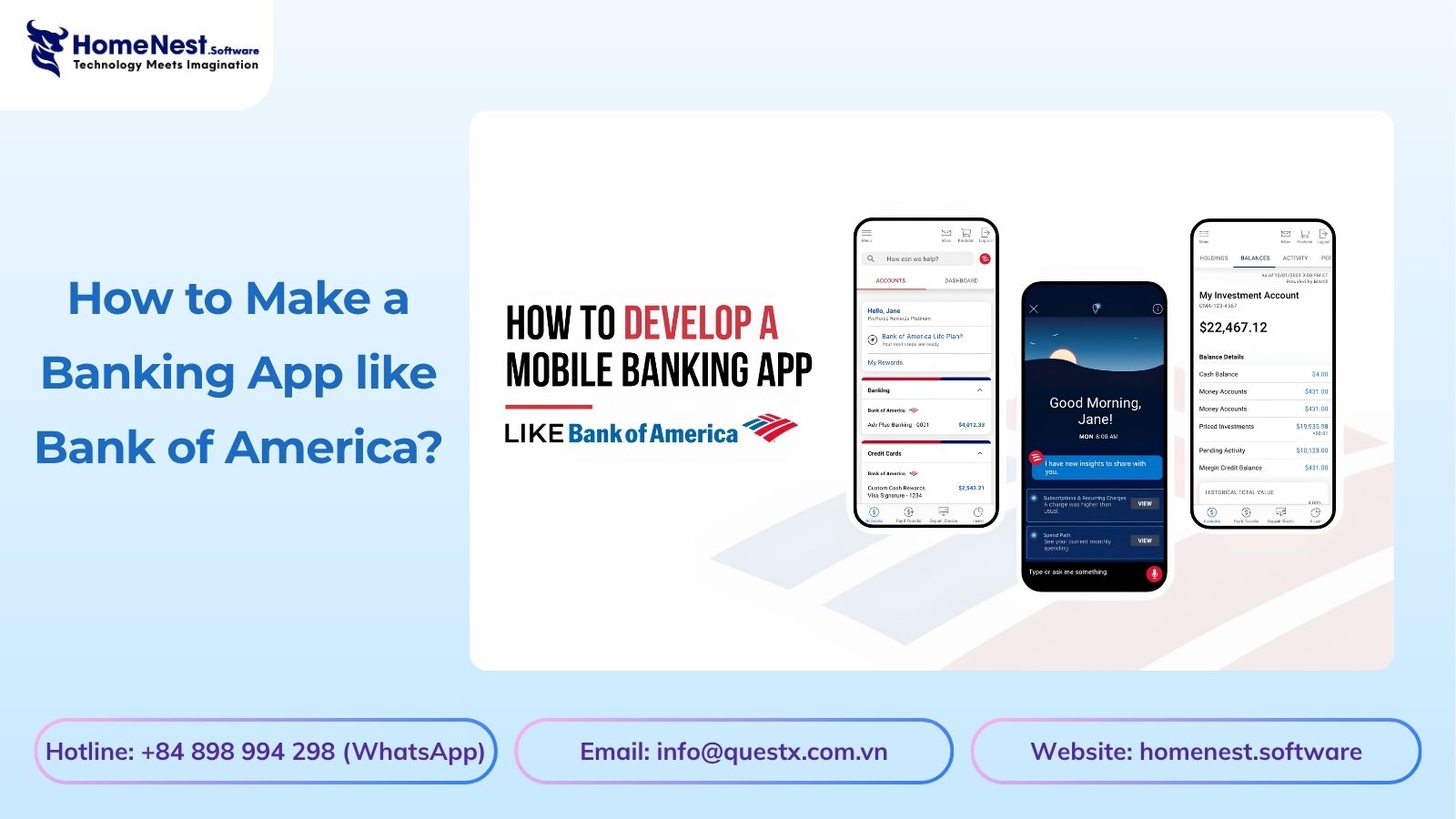
How to Make a Banking App like Bank of America?
Developing a mobile banking application like Bank of America extends far beyond basic UI design; it requires engineering a fault-tolerant backend capable of real-time ledger synchronization, biometric authentication, and high-volume data processing under strict regulatory frameworks. Drawing from HomeNest Software’s deep experience in architecting enterprise-grade fintech solutions, this guide strips away theoretical jargon to focus entirely on operational and technical execution. What you will find in this guide: We break down the precise development roadmap, from mapping out microservices and ensuring PCI-DSS compliance to estimating MVP development costs and securing absolute data sovereignty through 100% source code ownership. If you are preparing to build, scale, or audit a financial platform, this blueprint provides the exact framework you need.
Banking App Development Cost
Building a banking application is rarely a simple process; it’s a complex technical challenge requiring a balance between complying with stringent financial regulations, handling large transaction volumes, and a scalable cloud architecture. Miscalculating these technical requirements from the outset often leads to significant technical debt and budget overruns. Based on HomeNest Software’s practical experience in designing enterprise-grade fintech solutions, this guide bypasses generic estimates to provide a realistic analysis of banking application development costs. What you’ll find in this guide: We analyze the true cost factors, from technology selection and API integration to the hidden costs of regulatory compliance and security infrastructure. Whether you’re launching a minimum viable product or expanding an existing financial platform, this analysis provides the precise operational data you need to plan your budget effectively.
How to Build a Mobile Banking App Like Chime?
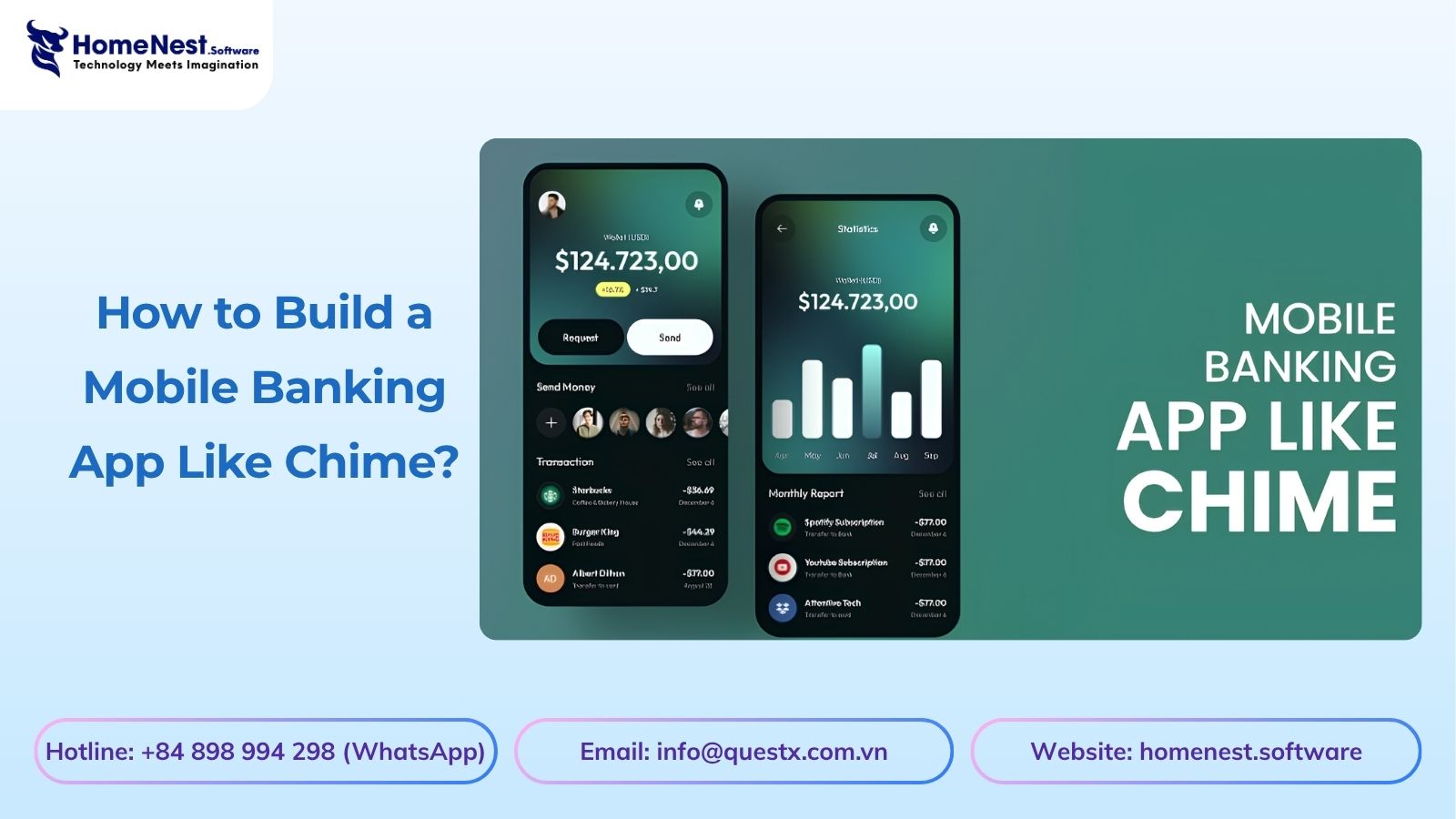
Building a mobile banking app like Chime is not just about features, it is about delivering a secure, scalable, and user-centric financial experience. From planning the right architecture to optimizing mobile banking app development cost, every decision directly impacts your product’s success. Leveraging Fintech app development services, starting with MVP app development, and scaling through on-demand app development solutions allows businesses to reduce risk and accelerate time to market. To stay competitive, combining Android app development services and iOS app development solutions ensures wider reach, while continuous updates through maintenance software development services keep your app secure and future-ready.

How to Build a Banking App Like Barclays: A Complete Entrepreneur’s Guide
Building a banking app like Barclays requires more than just development. It demands a strong product vision, secure architecture, and a clear monetization strategy. From optimizing cost and selecting the right tech stack to ensuring compliance and scalability, every decision impacts long-term success. Partnering with an experienced team like HomeNest Software helps accelerate development, reduce risks, and deliver a high-quality fintech product that can compete in today’s fast-evolving digital banking landscape.