
Top Android App Development Trends to Watch
Scope of Work
Android continues to lead the global mobile operating system market, powering billions of devices worldwide from smartphones and tablets to smart TVs, wearables, and in-vehicle systems. As user expectations grow and technologies evolve at unprecedented speed, Android app development is entering a new era defined by intelligence, performance, scalability, and innovation.
Looking ahead to 2026 and beyond, developers, startups, and enterprises must proactively adapt to the emerging trends shaping the Android ecosystem. Advances such as AI-driven personalization, 5G-enabled performance, Kotlin’s expanding dominance, and the rapid growth of IoT are redefining what modern Android applications can achieve. Today’s apps are not only faster and smarter, but also more intuitive, secure, and future-ready.
In this blog, we explore the top Android app development trends that are transforming how applications are designed, built, and scaled—while revolutionizing user experiences across industries. Whether you’re planning to launch a new Android app or modernize an existing one, these insights will help shape a forward-thinking Android app development strategy built for long-term success.
Android App Development Market Insights

The Android ecosystem has firmly established itself as the backbone of the global mobile app development market. With more than 3 billion active devices worldwide and over 70% share of the mobile operating system market, Android continues to outperform competitors in terms of global reach, flexibility, and developer adoption.
As reported by Statista, the Google Play Store is home to over 3.5 million apps as of 2026—highlighting sustained growth in both developer participation and user demand. From eCommerce and healthcare to fintech and on-demand services, Android applications now power virtually every industry. This widespread adoption is driven by Android’s open-source framework, highly customizable user experience, and broad compatibility across devices and manufacturers.
Key Market Trends in Android App Development
-
Emerging Markets Fueling Expansion
Rapid growth in regions such as India, Brazil, and Southeast Asia is accelerating Android adoption. Affordable smartphones and expanding internet access continue to position Android as the preferred platform in developing economies. -
Rising Enterprise Adoption
Enterprises are increasingly investing in Android-based mobility solutions to support field operations, logistics management, workforce productivity, and customer engagement platforms. -
Growing Revenue on Google Play
While Apple has traditionally dominated app revenue, Google Play is rapidly closing the gap. In-app purchases, subscriptions, and advertising now generate billions of dollars in annual revenue, making Android a highly lucrative platform. -
Expanding Cross-Device Ecosystem
Android has evolved far beyond smartphones. Its presence across smart TVs, Wear OS devices, Android Auto, foldable phones, and other connected devices creates new opportunities for developers to innovate and monetize across multiple platforms. -
Strong Developer Community and Ecosystem
Supported by a vast global developer community and continuous investment from Google, Android remains a top choice for startups and enterprises seeking scalable, secure, and future-ready mobile solutions.
Top Android App Development Trends in 2026
1. AI & Machine Learning Powering Intelligent Apps
Artificial Intelligence (AI) and Machine Learning (ML) have evolved from optional enhancements into core pillars of modern Android applications. Today, developers leverage AI to enable voice recognition, intelligent chatbots, predictive analytics, recommendation engines, and advanced user behavior analysis.
For instance, eCommerce apps apply ML algorithms to deliver highly personalized product recommendations, while fitness and wellness apps rely on AI to monitor user progress and suggest customized workout routines. With tools such as Google ML Kit and TensorFlow Lite, implementing AI-driven features directly into Android apps has become more accessible and scalable than ever.
2. 5G Adoption Redefining Android App Performance
The global expansion of 5G networks is fundamentally reshaping Android app performance. Offering speeds up to 100 times faster than 4G, 5G enables ultra-low latency, real-time interactions, high-quality streaming, and seamless cloud-based experiences.
As a result, developers are building performance-intensive Android apps that support immersive AR/VR experiences, real-time video communication, multiplayer gaming, and smart device ecosystems—without compromising speed or responsiveness.
3. Kotlin Multiplatform Accelerating Cross-Platform Development
Kotlin continues to strengthen its position as the preferred language for Android development. With Kotlin Multiplatform, developers can share core business logic across Android, iOS, web, and desktop platforms, significantly reducing development time and costs.
This approach is particularly valuable for startups and development agencies aiming to build cross-platform applications while maintaining native performance, flexibility, and platform-specific user experiences.
4. Android Jetpack and Modular App Architecture
Android Jetpack provides a comprehensive set of libraries, tools, and architectural guidance that helps developers build scalable, high-quality applications more efficiently. Components such as ViewModel, LiveData, Navigation, and WorkManager improve code maintainability and app lifecycle management.
In parallel, modular app architecture is gaining momentum—especially for large-scale and enterprise applications—enabling faster build times, improved testing, and easier long-term maintenance.
5. IoT Integration with Android Applications
As the Internet of Things (IoT) continues to transform both consumer and industrial environments, Android has emerged as a central platform for controlling and monitoring connected devices. From smart homes to industrial automation, Android apps now serve as intuitive interfaces for IoT ecosystems.
By leveraging connectivity technologies such as Wi-Fi, Bluetooth, and NFC—along with Google Home APIs and Android Things—developers can seamlessly integrate smart features into applications for home automation, healthcare monitoring, and wearable synchronization.
6. Instant Apps and Android App Bundles Enhancing UX
Google Instant Apps allow users to experience app functionality without full installation, reducing friction during app discovery and improving engagement rates. Meanwhile, Android App Bundles optimize app size by delivering only the necessary resources to each device.
Together, these innovations enhance user experience—particularly in regions with limited connectivity or storage constraints—while improving install conversion rates.
7. AR & VR Innovation with ARCore
Augmented Reality (AR) and Virtual Reality (VR) are becoming integral to next-generation Android experiences. From immersive retail previews and interactive learning platforms to advanced gaming environments, AR and VR are redefining user engagement.
Google’s ARCore empowers developers with features such as motion tracking, environmental understanding, and object detection, opening new possibilities across industries including retail, education, entertainment, and real estate.
8. App Security and Data Privacy as Core Priorities
Security and privacy are now mission-critical in Android app development. With regulations such as GDPR, HIPAA, and Google Play’s Data Safety requirements, developers are implementing stronger encryption, biometric authentication, secure APIs, and granular permission management.
As users become increasingly privacy-conscious, applications that prioritize data protection and transparency gain higher trust, retention, and long-term adoption.
9. Voice Technology and Conversational Interfaces
Voice-enabled interactions are transforming how users engage with Android apps. By integrating tools such as Google Assistant, Dialogflow, and Voice Actions APIs, developers can enable voice-based search, navigation, and control.
This trend is especially impactful in hands-free environments such as driving (via Android Auto), smart homes, and accessibility-focused applications for visually impaired users.
10. Sustainable and Energy-Efficient Android Apps
Sustainability is emerging as a key consideration in software development. Developers are increasingly focused on building “green apps” that optimize background processes, minimize resource consumption, and reduce battery drain.
Google-provided tools such as Android Vitals and Battery Historian help identify performance bottlenecks and energy inefficiencies—supporting the development of eco-friendly apps that benefit both users and the environment.
11. Blockchain Integration Beyond Cryptocurrency
Blockchain technology is expanding beyond cryptocurrency use cases into areas such as digital identity, supply chain transparency, smart contracts, and secure payment systems.
By using frameworks like Web3j, Ethereum SDKs, and wallet APIs, Android developers are building blockchain-powered applications for finance, healthcare, real estate, and logistics—enhancing security, trust, and decentralization.
12. Low-Code and No-Code Development Platforms
Low-code and no-code platforms such as FlutterFlow, Kodular, and AppGyver are democratizing Android app development. These tools allow non-technical teams and entrepreneurs to rapidly prototype and launch functional applications with minimal coding effort.
As a result, small businesses and startups can enter the mobile market faster, reduce development costs, and validate ideas more efficiently.
13. Predictive Analytics and Behavior-Driven UI Design
Behavior-aware Android apps are gaining traction as predictive analytics enables applications to anticipate user needs. By analyzing usage patterns, apps can suggest relevant actions, optimize navigation flows, and dynamically adapt the interface.
This data-driven approach results in more intuitive user experiences, higher engagement, and improved long-term retention.
Why Choose Android App Development for Your Business?
In today’s mobile-first economy, a strong digital presence is no longer a competitive advantage—it is a business necessity. When investing in a mobile application, Android app development emerges as a strategic and future-proof choice for companies of all sizes. From fast-growing startups to large enterprises undergoing digital transformation, Android delivers unmatched reach, flexibility, and long-term value.
Here’s why Android app development is a smart investment for your business:
1. Unmatched Global Market Reach
Android dominates the global smartphone market with more than 70% market share. Its presence spans across developed and emerging markets alike—from North America and Europe to Asia, Africa, and Latin America—allowing businesses to reach a vast and diverse global audience.
2. Open-Source and Cost-Efficient Development
Built on an open-source framework, Android provides developers with extensive libraries and tools without expensive licensing fees. This significantly reduces development costs while offering greater freedom to customize applications based on specific business needs.
3. High Customization and Scalability
Android offers full control over UI/UX design, features, and backend architecture. Whether you’re launching a lightweight MVP or scaling a feature-rich enterprise solution, Android enables seamless customization and long-term scalability aligned with your business goals.
4. Faster Time-to-Market
Compared to other platforms, Google Play Store offers a more streamlined and developer-friendly publishing process. This allows businesses to launch applications faster, release updates frequently, and respond to user feedback with greater agility.
5. Seamless Integration with the Google Ecosystem
Android applications integrate effortlessly with Google’s powerful ecosystem—including Google Maps, Firebase, Google Pay, Google Assistant, and Google Drive. These integrations empower businesses to deliver advanced features such as real-time analytics, location-based services, secure payments, and intelligent automation.
6. Robust Developer Community and Advanced Tooling
Supported by a massive global developer community and continuous innovation from Google, Android offers mature tools like Android Studio, Jetpack, Kotlin, and comprehensive documentation—ensuring faster development cycles and high-quality app performance.
7. Multi-Device and Cross-Platform Compatibility
Android extends far beyond smartphones. It powers tablets, smart TVs, wearables (Wear OS), and automotive systems. This multi-device support enables businesses to create consistent, connected experiences across multiple digital touchpoints.
8. Flexible and Scalable Monetization Options
Android supports diverse monetization models, including in-app purchases, subscriptions, advertising, and freemium strategies. With multi-currency and global payment support on Google Play, businesses can easily scale revenue across international markets.
9. Continuous Innovation and Future Readiness
Android evolves rapidly with regular updates and native support for cutting-edge technologies such as 5G, foldable devices, AR/VR, artificial intelligence, and blockchain. Choosing Android ensures your application remains competitive, secure, and ready for future advancements.
Conclusion
The Android app development landscape is evolving at an unprecedented pace driven by innovations in AI, 5G, AR/VR, and user-centric design. For businesses, startups, and digital agencies, embracing Android is not just about keeping up with trends, but about building sustainable competitive advantage in a mobile-driven world.
By investing in Android app development, you gain access to a platform that delivers global reach, continuous innovation, and flexible development capabilities. Whether you’re launching a new product or scaling an existing application, aligning your strategy with Android’s evolving ecosystem will drive long-term success, superior user experiences, and measurable ROI.
HomeNest Software – Empowering Long-Term Growth for Modern Businesses.

Contact Information:
- Address: The Sun Avenue, 28 Mai Chi Tho Street, Binh Trung Ward, Ho Chi Minh City
- Hotline: +84 898 994 298 ( WhatsApp )
- Website: homenest.software
HomeNest Services: Website Design – App Design – Software Development.
Frequently Asked Questions (FAQ)
1. Is Android app development suitable for small businesses and startups?
Yes. Android app development is highly suitable for startups and small businesses due to its open-source nature, lower development costs, and faster time-to-market. Businesses can launch MVPs quickly, validate ideas, and scale features as they grow without heavy upfront investment.
2. How much does it cost to develop an Android app?
The cost of Android app development depends on factors such as app complexity, features, UI/UX design, integrations, and development timeline. A basic Android app may cost between $8,000–$15,000, while more complex or enterprise-level apps can range from $25,000 to $50,000 or more.
3. How long does it take to build an Android application?
On average, developing an Android app takes 2–4 months for a basic version and 6–9 months for a feature-rich or enterprise-grade application. The timeline varies based on requirements, third-party integrations, and testing scope.
4. Why is Android better than iOS for global market reach?
Android holds over 70% of the global mobile OS market and is widely used in both developed and emerging economies. Its compatibility with affordable devices makes it ideal for businesses targeting large, diverse, and international audiences.
5. Can Android apps be monetized effectively?
Absolutely. Android apps support multiple monetization models, including in-app purchases, subscriptions, advertisements, and freemium strategies. Google Play’s global payment support enables businesses to generate revenue across multiple regions and currencies.
6. Is Android app development secure for business applications?
Yes, when built following best practices. Android supports advanced security features such as data encryption, biometric authentication, secure APIs, and granular permission controls. Compliance with regulations like GDPR and Google Play Data Safety policies further enhances app security.
7. Can Android apps integrate with existing business systems?
Android apps can easily integrate with existing enterprise systems such as CRM, ERP, payment gateways, analytics tools, and cloud platforms using APIs. This makes Android a strong choice for digital transformation and enterprise mobility solutions.
8. Does Android support emerging technologies like AI and IoT?
Yes. Android natively supports modern technologies such as artificial intelligence, machine learning, IoT, AR/VR, and 5G. Tools like ML Kit, TensorFlow Lite, and Google Home APIs enable businesses to build intelligent and connected applications.
9. Can one Android app run on multiple devices?
Android apps can be optimized to run across smartphones, tablets, smart TVs, wearables, and automotive systems. This multi-device compatibility allows businesses to deliver consistent experiences across multiple platforms.
10. How do I choose the right Android app development partner?
Look for an Android app development company with proven experience, strong technical expertise, transparent processes, and post-launch support. Reviewing case studies, client testimonials, and technical capabilities can help ensure long-term success.
Latest Articles
View All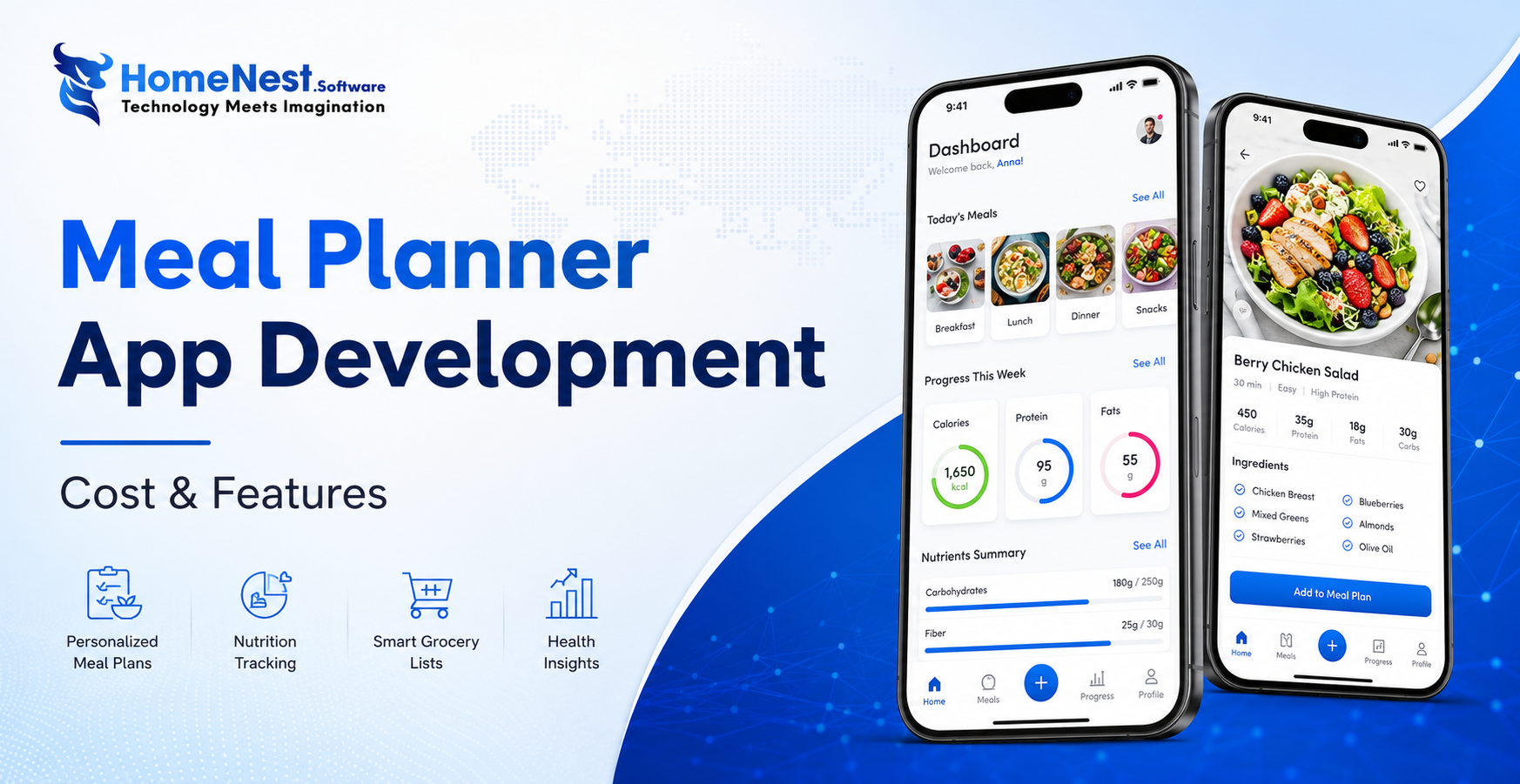
How to Build a Meal Planning App: A Complete Step-by-Step Guide
Building a successful meal planning app goes beyond creating an attractive interface it requires a clear business strategy, personalized user experiences, and scalable technology. By combining essential features like AI-powered meal recommendations, nutrition tracking, grocery list automation, and wearable integration, businesses can deliver lasting value to users while capitalizing on the growing digital health market. Partnering with an experienced mobile app development company ensures your solution is secure, future-ready, and designed to succeed in an increasingly competitive health-tech industry.
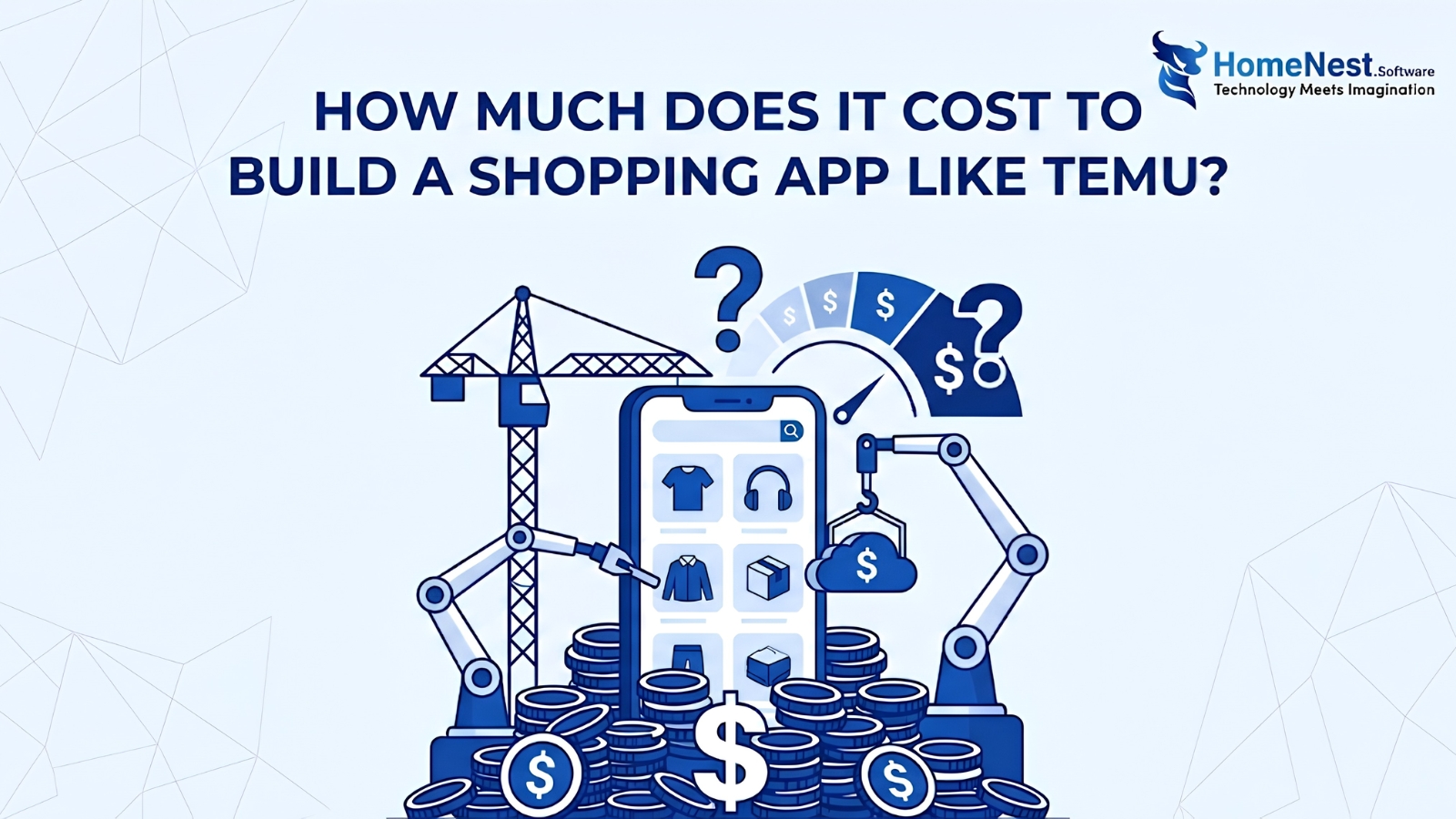
How Much Does It Cost to Build a Shopping App Like Temu?
Temu’s meteoric rise to over 900 million global downloads proves the power of combining AI, gamification, and social commerce, but building a similar viral shopping platform requires careful financial and technical planning. Developing an app like Temu typically costs anywhere from $40,000 for a basic Minimum Viable Product (MVP) to over $300,000 for a fully-featured platform. This guide breaks down every cost category, analyzes the core features driving Temu’s success, highlights the best technology stacks, and offers practical strategies to optimize your development budget without compromising on quality.

Criteria For Choosing The Right App Design Agency
UI/UX design is the logical foundation of a system, not merely a visual element. Choosing the wrong partner will directly lead to technical debt, budget overruns, and disruptions in the development process. This article provides a 6-step evaluation framework and a list of operational risks, helping businesses eliminate subjective design advice and accurately assess agency capabilities based on developer handoff standards and practical business performance.
How Does AI in Banking Industry Impact the Future?
Artificial intelligence (AI) has transitioned from a supplementary tool to a core infrastructure of financial data management, optimizing profitability through real-time fraud detection, natural language processing (NLP), and high-speed credit scoring models. “Deploying AI in the financial sector requires more than just algorithmic accuracy, it demands a highly secure cloud architecture and rigorous data governance,” commented Nguyen Tien, co-founder of HomeNest Software. Why read this guide? We skip the theoretical jargon to focus entirely on technical implementation. Whether you’re evaluating a vendor or planning a system overhaul, this article will detail: Operational Efficiency: Automating unstructured data workflows at scale. Risk Architecture: Implementing real-time threat detection and AML compliance. Data ownership: The essential need for 100% ownership of the source code to ensure full algorithm auditability.
How to Make a Banking App like Bank of America?
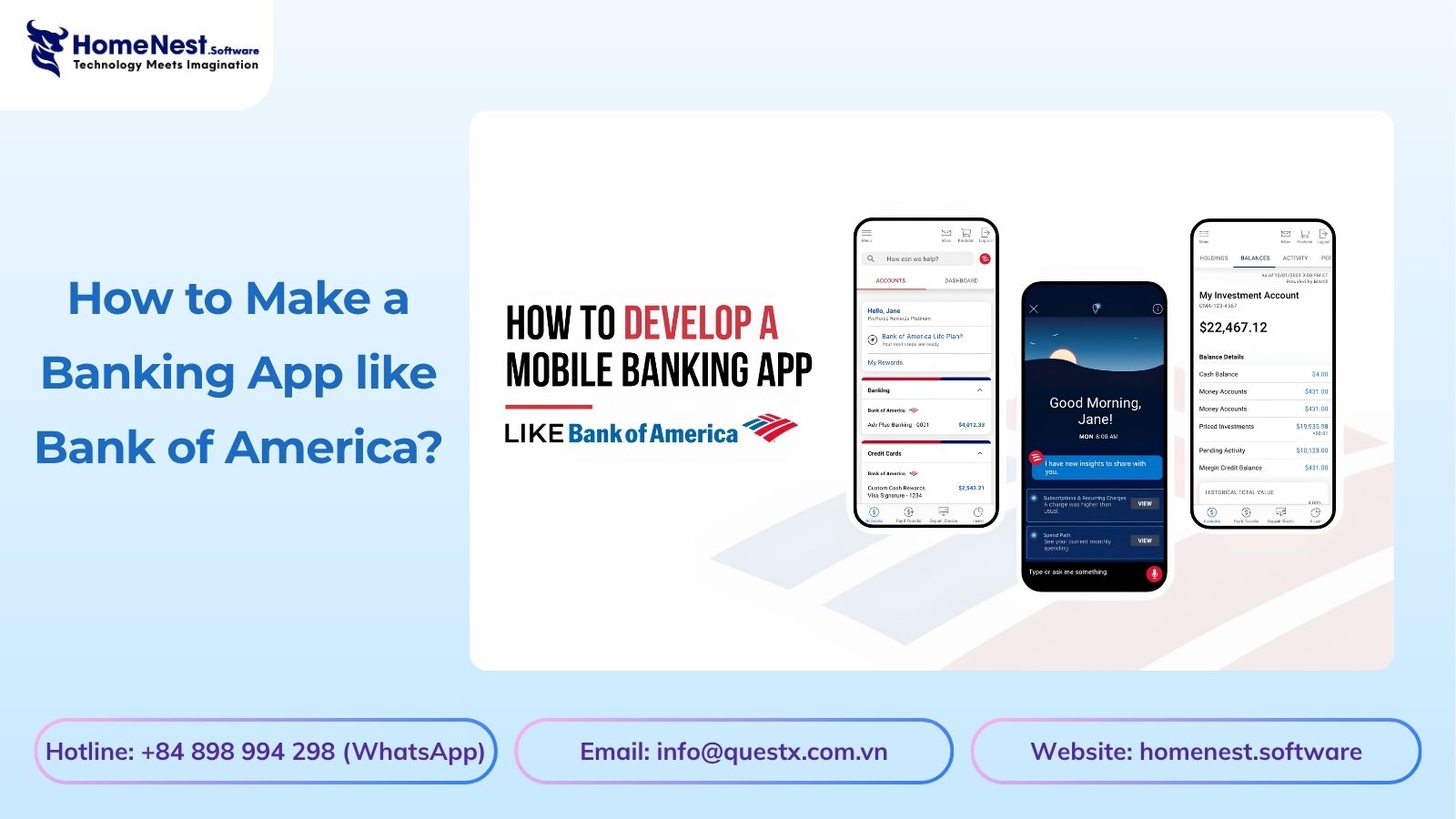
Developing a mobile banking application like Bank of America extends far beyond basic UI design; it requires engineering a fault-tolerant backend capable of real-time ledger synchronization, biometric authentication, and high-volume data processing under strict regulatory frameworks. Drawing from HomeNest Software’s deep experience in architecting enterprise-grade fintech solutions, this guide strips away theoretical jargon to focus entirely on operational and technical execution. What you will find in this guide: We break down the precise development roadmap, from mapping out microservices and ensuring PCI-DSS compliance to estimating MVP development costs and securing absolute data sovereignty through 100% source code ownership. If you are preparing to build, scale, or audit a financial platform, this blueprint provides the exact framework you need.
Banking App Development Cost
Building a banking application is rarely a simple process; it’s a complex technical challenge requiring a balance between complying with stringent financial regulations, handling large transaction volumes, and a scalable cloud architecture. Miscalculating these technical requirements from the outset often leads to significant technical debt and budget overruns. Based on HomeNest Software’s practical experience in designing enterprise-grade fintech solutions, this guide bypasses generic estimates to provide a realistic analysis of banking application development costs. What you’ll find in this guide: We analyze the true cost factors, from technology selection and API integration to the hidden costs of regulatory compliance and security infrastructure. Whether you’re launching a minimum viable product or expanding an existing financial platform, this analysis provides the precise operational data you need to plan your budget effectively.