
What Is Agile Methodology? A Clear Guide to Agile in Project Management
Successful Agile adoption requires aligning people, processes, and tools—starting small, defining clear roles, and continuously iterating to scale effectively across the organization.
Scope of Work

In today’s fast paced business environment, organizations must remain flexible and responsive to stay competitive. Agile methodology has become a widely adopted approach in both software development and project management, enabling teams to work more efficiently, collaborate effectively, and continuously deliver value aligned with customer needs.
At its core, Agile is not just a process but a mindset one that prioritizes adaptability, iterative progress, and the consistent delivery of high quality outcomes.
This article explores Agile methodology, including its core principles, leading frameworks, and practical benefits. It also highlights how Agile helps teams navigate uncertainty, overcome common challenges, and implement best practices for successful project delivery.
Adapting to Uncertainty
In dynamic environments, uncertainty is inevitable. Agile addresses this by emphasizing adaptive planning and iterative execution. Instead of attempting to define every detail upfront, projects are broken into smaller, manageable increments that can be continuously refined.
This iterative approach allows teams to respond quickly to changing requirements, reduce risks, and improve outcomes over time. According to industry reports, a majority of organizations adopt Agile specifically to better manage shifting priorities and evolving business needs.
Unlike traditional models such as the Waterfall approach, which follow a rigid sequence of phases, Agile enables ongoing adjustments. This flexibility makes it particularly effective for environments where requirements are not fully defined from the start.
Agile in Project Management
Agile project management extends beyond software development and is now widely used across various industries. It is built on iterative workflows, cross functional collaboration, and self organizing teams.
By working in short cycles and delivering incremental value, Agile teams can gather feedback early, improve continuously, and adapt quickly. This approach enhances transparency, accelerates delivery, and ensures that outcomes remain aligned with business objectives.
Key Agile Methodologies
Several frameworks bring Agile principles into practice, with Scrum and Kanban being the most widely used.
- Scrum focuses on structured, time boxed iterations called sprints, typically lasting two to four weeks. Teams regularly review progress, gather feedback, and refine their processes to improve performance over time.
- Kanban emphasizes continuous workflow and visual task management. By limiting work in progress (WIP), teams can maintain efficiency, reduce bottlenecks, and handle changing priorities more effectively.
Both approaches promote continuous improvement, transparency, and adaptability key elements of a successful Agile implementation.
By adopting Agile principles and frameworks, organizations can build a more resilient, responsive, and high performing team capable of delivering consistent value in an ever changing business landscape.
What Is Agile Development?
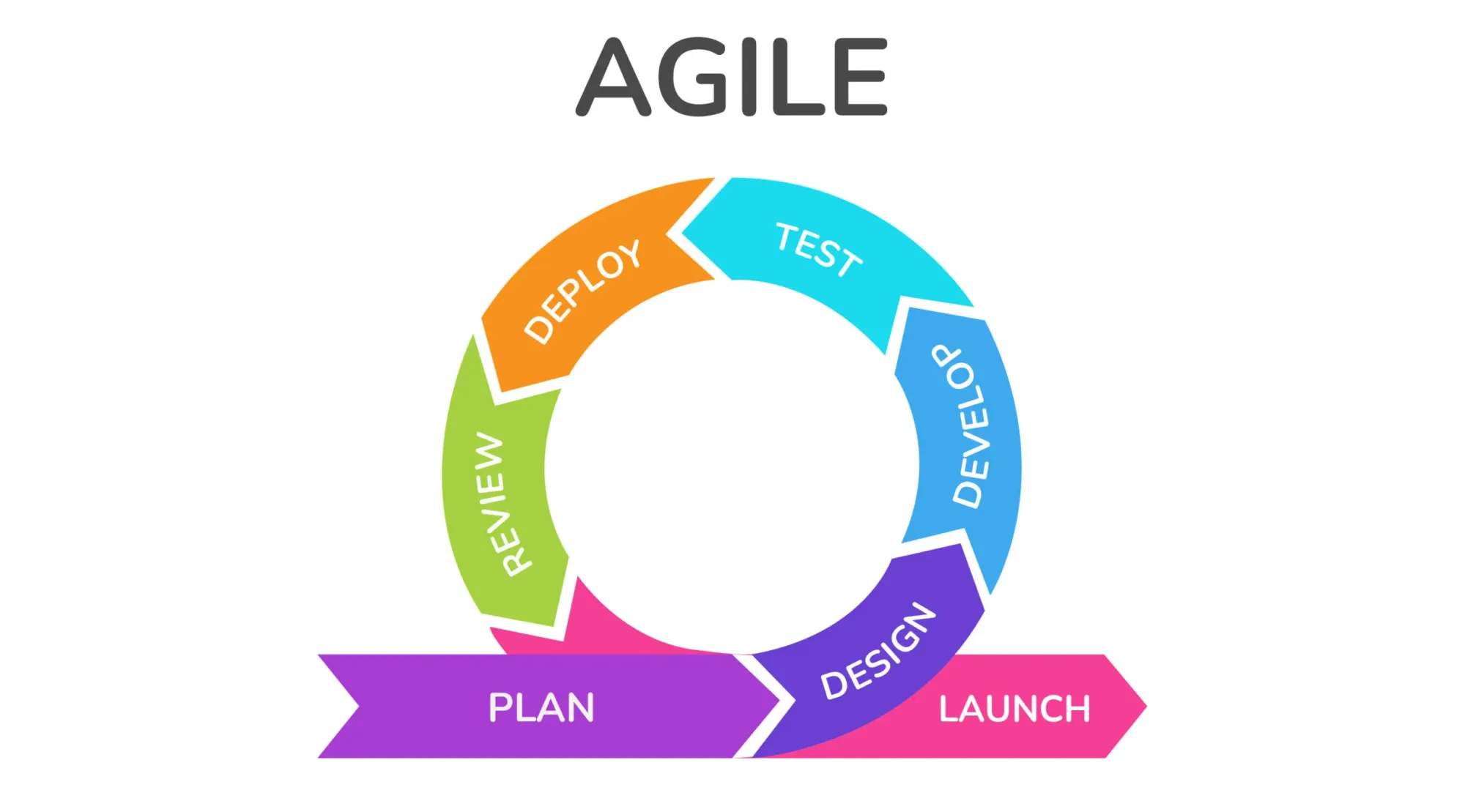
Agile Overview
Agile methodology is a modern, flexible approach to software development and project management that prioritizes adaptability, collaboration, and continuous value delivery. Instead of treating development as a fixed, linear process, Agile views it as an evolving cycle where requirements, solutions, and priorities can change over time.
Traditional models like Waterfall rely on a sequential structure requirements, design, development, testing, and deployment executed in order with minimal room for change. Agile, on the other hand, breaks projects into smaller increments, allowing teams to deliver working software continuously and refine it based on feedback.
This shift is critical in today’s environment, where customer expectations, market conditions, and technologies evolve rapidly. Agile enables organizations to respond to these changes without disrupting the entire project lifecycle.
Agile as a Project Management Approach
Agile is not just a development method it is a project management philosophy centered around iterative delivery and continuous improvement.
Projects are divided into short cycles (often called iterations or sprints), where each cycle delivers a functional piece of the product. This allows teams to:
- Validate ideas early
- Reduce risks before scaling
- Adjust priorities based on real world feedback
In frameworks like Scrum, teams are cross functional, including developers, testers, designers, and product owners. The Product Owner ensures that development aligns with business priorities, while the team focuses on delivering value incrementally.
Agile also integrates seamlessly with DevOps practices, combining automation, collaboration, and continuous delivery to shorten release cycles and improve software quality.
Agile vs. Waterfall: A Strategic Comparison
Agile and Waterfall represent two fundamentally different approaches:
Agile Approach
- Iterative and incremental delivery
- Continuous feedback and improvement
- Flexible scope and evolving requirements
- Faster time to market
- Strong focus on customer value
Waterfall Approach
- Linear, phase by phase execution
- Fixed requirements defined upfront
- Limited flexibility once development begins
- Longer delivery cycles
- Best suited for predictable, stable projects
In practice, Agile is ideal for digital products and environments with uncertainty, while Waterfall works better for industries like construction or manufacturing, where requirements are stable and clearly defined.
Team Collaboration and Self Organization
One of the defining characteristics of Agile is its emphasis on self organizing teams. Instead of relying on rigid hierarchies, Agile empowers teams to make decisions collaboratively.
This approach brings several advantages:
- Faster decision making
- Greater accountability
- Higher team engagement
Agile teams are typically cross functional, meaning they include all the skills required to deliver a product from development to testing to design. This eliminates handoff delays and improves overall efficiency.
Trust, communication, and transparency are essential. Daily stand ups, sprint reviews, and retrospectives ensure everyone stays aligned and continuously improves.
Flexibility in Agile Frameworks
Agile is not a single framework it is an umbrella concept supported by multiple methodologies. The most widely used include:
- Scrum: Structured, time boxed sprints (2–4 weeks) with defined roles and ceremonies
- Kanban: Continuous workflow with visual task management and work in progress limits
- Hybrid models: Combining Scrum and Kanban (e.g., Scrumban) for greater flexibility
These frameworks allow organizations to adapt Agile principles to their specific needs, whether they require structured iterations or continuous delivery.
The key is not rigidly following a framework, but applying Agile principles effectively to improve outcomes.
Core Practices in Agile Development
Successful Agile implementation depends on a set of technical and operational practices:
- Test Driven Development (TDD): Writing tests before code to ensure quality
- Continuous Integration (CI): Regularly merging code changes to detect issues early
- Continuous Delivery (CD): Automating deployment for faster releases
- Code reviews: Maintaining code quality and consistency
- Daily stand ups: Keeping teams aligned on progress and blockers
These practices ensure that Agile is not just fast but also reliable and scalable.
People Centered Approach
Agile is fundamentally human centric. It prioritizes:
- Individuals and interactions over processes
- Collaboration over rigid documentation
- Learning and improvement over strict control
This creates a culture where teams are encouraged to experiment, share knowledge, and continuously improve.
Organizations that adopt Agile successfully often see improvements not only in productivity, but also in employee satisfaction and innovation.
The Role of Leadership in Agile
Leadership in Agile environments shifts from command and control to servant leadership.
Instead of directing every action, leaders focus on:
- Removing obstacles
- Supporting team autonomy
- Facilitating collaboration
- Encouraging continuous learning
Agile leaders act as enablers rather than controllers, helping teams reach their full potential.
Technical Excellence in Agile
Agile emphasizes not just speed, but technical excellence. High quality software is achieved through:
- Automated testing
- CI/CD pipelines
- Regular refactoring
- Strong architecture design
These practices ensure that systems remain scalable, secure, and maintainable over time preventing technical debt from accumulating.
Iterative Development and Continuous Improvement
Agile is inherently iterative. Each cycle includes:
- Planning
- Development
- Testing
- Review
- Retrospective
This loop allows teams to:
- Identify bottlenecks
- Improve workflows
- Adapt to feedback
- Increase efficiency over time
Rather than aiming for perfection upfront, Agile focuses on continuous progress and refinement.
Agile Development Philosophy
At its core, Agile is guided by principles from the Agile Manifesto, which emphasize:
- Customer collaboration
- Responding to change
- Delivering working software frequently
- Maintaining sustainable development
This philosophy ensures that teams focus on delivering real value not just completing tasks.
Agile Beyond Software
Although Agile originated in software development, its principles are now widely applied across industries, including:
- Product development
- Marketing and operations
- Manufacturing and hardware design
Agile enables organizations to become more adaptive, innovative, and customer focused regardless of industry.
Bottom Line
Agile development is more than a methodology it is a strategic approach to building products in uncertain, fast changing environments. By combining flexibility, collaboration, and continuous improvement, Agile empowers organizations to deliver better outcomes, faster, and with greater alignment to customer needs.
Top Agile Methodologies Explained
1. Scrum
Scrum is one of the most widely adopted Agile frameworks, known for its structured yet flexible approach. Work is organized into time boxed iterations called Sprints, typically lasting 2–4 weeks. Each sprint delivers a usable increment of the product, allowing teams to gather feedback and improve continuously.
Scrum operates with clearly defined roles:
- Product Owner: Represents business needs and prioritizes features
- Scrum Master: Facilitates the process and removes obstacles
- Development Team: Delivers the product increment
Key components include:
- Product Backlog: A prioritized list of features and tasks
- Sprint Backlog: Tasks selected for the current sprint
- Product Increment: The working output delivered after each sprint
Scrum emphasizes regular ceremonies such as daily stand ups, sprint reviews, and retrospectives to maintain alignment and continuous improvement.
Use case: Ideal for teams building digital products where requirements evolve frequently.
2. Kanban
Kanban is a visual workflow management system designed to optimize efficiency and reduce bottlenecks. Unlike Scrum, it does not rely on fixed iterations but focuses on continuous delivery.
Core principles include:
- Visualizing work through Kanban boards (To Do, In Progress, Done)
- Limiting Work in Progress (WIP) to avoid overload
- Managing flow to improve efficiency
- Pull based system where teams take on work only when ready
Kanban helps teams identify bottlenecks and improve cycle time, making it particularly effective for operations and support teams.
Use case: Best for teams handling ongoing tasks with unpredictable workloads.
3. Extreme Programming (XP)
Extreme Programming (XP) focuses on technical excellence and high quality code. It uses short development cycles and emphasizes continuous feedback and improvement.
Key practices include:
- Test Driven Development (TDD): Writing tests before code
- Pair Programming: Two developers working together
- Continuous Integration (CI): Frequent code integration
- Refactoring: Improving code without changing functionality
- Frequent releases: Delivering small updates regularly
XP is particularly effective in environments where product quality and reliability are critical.
Use case: Startups or teams that need rapid development with strong code quality.
4. Lean Software Development
Inspired by lean manufacturing principles, Lean focuses on eliminating waste and maximizing value.
Core concepts include:
- Removing non value adding activities
- Continuous improvement (Kaizen)
- Optimizing workflow efficiency
- Delivering fast with minimal overhead
Lean encourages teams to focus only on what truly matters to users, reducing unnecessary features and improving speed.
Use case: Organizations aiming to optimize efficiency and reduce costs.
5. Feature Driven Development (FDD)
FDD organizes development around building specific features in short, iterative cycles. It breaks large systems into smaller, manageable components.
Key elements:
- Clearly defined feature list
- Feature based teams
- Incremental delivery
- Strong client collaboration
FDD provides structure while still allowing iterative development, making it suitable for large scale projects.
Use case: Enterprise systems with clearly defined feature sets.
6. Dynamic Systems Development Method (DSDM)
DSDM focuses on rapid delivery and active user involvement. It combines structured governance with Agile flexibility.
Key practices include:
- Time boxing: Fixed deadlines for each phase
- MoSCoW prioritization: Must have, Should have, Could have, Won’t have
- Continuous user feedback
- Built in quality assurance
DSDM ensures that critical features are delivered first while maintaining control over scope and quality.
Use case: Projects requiring strong governance and frequent stakeholder input.
7. Crystal
Crystal is a people centric Agile methodology that prioritizes communication, collaboration, and adaptability over strict processes.
Its main principles:
- Focus on team dynamics
- Adapt processes based on project size
- Encourage clear communication
- Promote flexibility and collaboration
Crystal is highly customizable, making it suitable for smaller teams that value flexibility.
Use case: Small to mid sized teams needing lightweight processes.
8. Agile Unified Process (AUP)
AUP is an Agile adaptation of the traditional Rational Unified Process. It combines structure with flexibility.
Key characteristics:
- Iterative development cycles
- Strong architectural focus
- Continuous integration
- Use of best practices
AUP balances discipline and adaptability, making it suitable for complex systems requiring strong architecture.
Use case: Large enterprises needing both structure and flexibility.
9. Disciplined Agile Delivery (DAD)
DAD is a hybrid Agile framework designed for enterprise scale projects. It integrates elements from Scrum, XP, and other methodologies.
Key features:
- Flexible process decision framework
- Cross team collaboration
- Support for scaling Agile across organizations
- Emphasis on governance and adaptability
DAD helps organizations manage complexity while maintaining Agile principles.
Use case: Large organizations with multiple teams and complex workflows.
10. Agile Modeling
Agile Modeling focuses on using visual models to improve communication between teams and stakeholders while minimizing documentation.
Core principles:
- Just enough documentation
- Use of diagrams for clarity
- Iterative modeling
- Strong stakeholder involvement
It ensures that teams maintain clarity without overloading documentation.
Use case: Teams needing better communication and design clarity.
Each Agile methodology serves a different purpose. Scrum and Kanban dominate modern software teams, while frameworks like XP, Lean, and DAD address specific technical or organizational needs.
Choosing the right methodology depends on your project complexity, team structure, and business goals not on trends.
Read more: Top 15 Agile Software Outsourcing Companies in Vietnam
Fundamental Principles of Agile Methodology
1. Customer Satisfaction Through Continuous Delivery
Agile places customer satisfaction at the center of development by delivering valuable software early and consistently. Instead of waiting until the end of a project, teams release functional increments frequently and gather feedback in real time.
This continuous feedback loop allows teams to refine the product iteratively, ensuring it aligns closely with user needs. Practices such as CI/CD pipelines, rapid prototyping, and MVP development enable teams to validate ideas quickly and improve them continuously.
2. Embracing Changing Requirements
Unlike traditional approaches that resist change, Agile welcomes it even in later stages of development. Changing requirements are treated as opportunities to improve the product rather than disruptions.
Through adaptive planning and dynamic prioritization, teams can respond to new insights without derailing progress. Effective change management ensures flexibility while maintaining project stability.
3. Frequent Delivery of Working Software
Agile emphasizes delivering functional software in short cycles, typically every 1–4 weeks. This approach maintains momentum and provides regular opportunities for validation.
By breaking work into smaller increments, teams reduce risk and ensure continuous progress. Sprint reviews and demos allow stakeholders to evaluate outcomes and provide feedback early.
4. Close Collaboration Between Stakeholders and Teams
Agile encourages continuous collaboration between business stakeholders and development teams. This ensures that technical decisions align with business objectives and user expectations.
Regular communication supported by tools like project management platforms and collaboration systems helps prevent misunderstandings and keeps all parties aligned throughout the project lifecycle.
5. Building Around Motivated Individuals
Agile recognizes that successful projects depend on motivated, empowered teams. Providing autonomy, trust, and opportunities for growth leads to higher engagement and productivity.
Teams that feel ownership over their work are more likely to deliver high quality outcomes and innovate effectively.
6. Prioritizing Direct Communication
Face to face communication is considered the most effective way to share information and resolve issues quickly. In modern distributed teams, video calls and real time collaboration tools help replicate this level of interaction.
Daily stand up meetings play a key role in maintaining alignment, identifying blockers, and ensuring smooth progress.
7. Working Software as the Primary Measure of Progress
In Agile, progress is measured by delivering functional, usable software not by documentation or task completion alone.
This ensures that teams remain focused on delivering real value to users. While documentation still exists, it is kept lean and practical to support development rather than slow it down.
8. Maintaining a Sustainable Pace
Agile promotes a sustainable work environment where teams can maintain consistent productivity over time. Avoiding burnout is critical for long term success.
Practices such as sprint planning, workload estimation, and retrospectives help teams balance effort and maintain a healthy pace.
9. Commitment to Technical Excellence
High quality code and strong system design are essential in Agile development. Practices such as:
- Code reviews
- Test Driven Development (TDD)
- Continuous integration
- Refactoring
ensure that software remains scalable, maintainable, and reliable over time.
10. Simplicity and Efficiency
Agile emphasizes simplicity focusing on delivering only what is necessary to create value. This often involves prioritizing the Minimum Viable Product (MVP) and eliminating unnecessary complexity.
By applying principles like the 80/20 rule, teams can maximize impact while minimizing effort.
11. Self Organizing Teams
Agile teams are self organizing, meaning they take ownership of decisions and execution. This autonomy fosters accountability, innovation, and faster problem solving.
Well known models like Spotify’s squad structure demonstrate how empowered teams can drive high performance and adaptability.
12. Continuous Improvement Through Reflection
Regular reflection is a core part of Agile. Through retrospectives and feedback loops, teams evaluate their performance and identify opportunities for improvement.
This iterative learning process enables teams to refine workflows, address challenges, and continuously enhance efficiency and outcomes.
Agile principles create a foundation for delivering high quality software in dynamic environments. By combining flexibility, collaboration, and continuous improvement, organizations can adapt faster, reduce risk, and consistently deliver value to their customers.
Effective Agile Practices and Techniques for Successful Project Management
1. Daily Stand ups
Daily stand ups (or Scrum meetings) are short, focused sessions where team members align on progress, plans, and blockers. These meetings typically follow a simple structure: what was completed, what will be done next, and any obstacles encountered.
The goal is not reporting it’s alignment and visibility. Effective stand ups keep teams synchronized and prevent small issues from becoming major blockers.
For distributed teams, tools like Zoom or Microsoft Teams help maintain real time communication. In cases where time zones differ, asynchronous updates can supplement live meetings.
2. Sprint Planning
Sprint planning is where teams define what will be delivered in the next iteration. This session sets the direction for the sprint by aligning business goals with technical execution.
Key elements include:
- Defining clear sprint objectives
- Breaking work into user stories with acceptance criteria
- Estimating effort using techniques like Planning Poker
A well planned sprint balances business priorities, team capacity, and technical dependencies, ensuring achievable and meaningful outcomes.
3. Retrospectives
Retrospectives are held at the end of each sprint to evaluate performance and identify improvements. This is where Agile teams evolve.
A common framework is Start – Stop – Continue:
- Start: new practices to adopt
- Stop: ineffective activities to eliminate
- Continue: successful practices to maintain
The focus should be on learning and improvement, not blame. Clear action items ensure that insights translate into measurable progress in future sprints.
4. Backlog Refinement
Backlog refinement (or grooming) ensures that the product backlog remains clear, prioritized, and actionable.
This involves:
- Reviewing and updating user stories
- Prioritizing high impact features
- Balancing new features, bug fixes, and technical debt
A well maintained backlog reduces confusion during sprint planning and ensures that teams always work on the most valuable tasks.
5. Kanban Boards
Kanban boards provide a visual representation of work, helping teams track progress and identify bottlenecks. Tasks are typically organized into columns such as “To Do,” “In Progress,” and “Done.”
Advanced practices include:
- Setting Work In Progress (WIP) limits to avoid overload
- Using swimlanes to separate priorities or task types
- Monitoring workflow to improve efficiency
This visualization improves transparency and keeps teams focused on delivering value.
6. Velocity Tracking
Velocity measures how much work a team completes in each sprint, typically using story points. Over time, it helps teams:
- Predict future delivery capacity
- Improve sprint planning accuracy
- Identify performance trends
Rather than focusing on short term fluctuations, teams should analyze velocity trends to make informed planning decisions.
7. Test Driven Development (TDD)
Test Driven Development follows a test first approach, where tests are written before the actual code. This ensures that functionality is validated from the beginning.
Benefits include:
- Higher code quality
- Fewer defects
- Easier maintenance
When combined with automated testing and CI/CD pipelines, TDD creates a strong foundation for reliable software.
8. Continuous Integration (CI)
Continuous Integration involves frequently merging code changes into a shared repository. Each integration triggers automated testing to detect issues early.
Tools like Jenkins or GitHub Actions support automated pipelines, ensuring consistent quality and faster delivery.
CI reduces integration risks and enables teams to release updates more frequently and confidently.
9. Pair Programming
Pair programming involves two developers working together on the same task one writes code while the other reviews it in real time.
This approach:
- Improves code quality
- Encourages knowledge sharing
- Reduces defects early
By rotating roles regularly, teams maintain engagement and build stronger collaboration skills.
10. Behavior Driven Development (BDD)
BDD focuses on defining system behavior in simple, human readable language. It bridges the gap between technical teams and business stakeholders.
Example structure:
- Given (initial context)
- When (action occurs)
- Then (expected outcome)
Tools like Cucumber help automate these scenarios, ensuring that software aligns with user expectations.
11. Incremental Delivery
Agile emphasizes delivering software in small, usable increments rather than large releases. This approach allows teams to:
- Gather feedback early
- Reduce risk
- Improve continuously
Each release builds on the previous one, gradually evolving the product into a complete solution.
12. Value Stream Mapping
Value Stream Mapping is a Lean technique used to analyze workflows and identify inefficiencies.
It helps teams:
- Visualize the entire process
- Identify bottlenecks
- Eliminate waste
By optimizing flow, teams can deliver faster and more efficiently.
13. Scaled Agile Framework (SAFe)
The Scaled Agile Framework is designed to scale Agile practices across large organizations.
Key components include:
- Program Increment (PI) Planning
- Agile Release Trains (ARTs)
- Cross team coordination
SAFe helps enterprises maintain alignment while managing complex, multi team projects.
14. Agile Metrics
Agile metrics provide insights into team performance and project progress. Key metrics include:
- Lead time
- Cycle time
- Burnup and burndown charts
These metrics should be used to drive improvement, not just reporting. Avoid vanity metrics and focus on actionable insights that enhance delivery.
Effective Agile implementation is not about following ceremonies it’s about combining the right practices to create a high performing, adaptive, and continuously improving team.
When applied correctly, these techniques enable faster delivery, better quality, and stronger alignment with business goals turning Agile from a process into a true competitive advantage.
Mastering Team Collaboration and Role Dynamics in Agile Software Development
Key Roles in Agile Teams
A successful Agile team relies on clearly defined roles, each contributing to alignment, delivery, and continuous improvement:
1. Product Owner
The Product Owner is responsible for managing the product backlog and ensuring that development priorities align with business goals. Acting as the bridge between stakeholders and the development team, they define requirements, prioritize features, and ensure the team is always working on the highest value tasks.
2. Scrum Master
The Scrum Master serves as a facilitator and coach, ensuring that Agile principles are properly followed. They remove blockers, support team collaboration, and guide the team through key Agile ceremonies such as sprint planning, daily stand ups, and retrospectives.
3. Development Team
The development team consists of cross functional professionals including developers, testers, and designers who collaboratively build and deliver the product in increments. They work closely with the Product Owner to ensure user stories are clearly understood and effectively implemented.
4. Stakeholders
Stakeholders play a critical role by providing feedback, validating outcomes, and influencing product direction. Their input helps refine the backlog and ensures the final product meets business and user expectations.
Fostering Effective Collaboration
Cross Functional Teams
Agile teams are built around diverse skill sets, allowing members to collaborate across disciplines. This structure reduces dependencies, speeds up delivery, and ensures that all aspects of development from design to testing are handled efficiently.
Communication Tools and Transparency
Clear communication is essential in Agile environments. Tools such as Kanban boards, project management platforms, and instant messaging systems help teams stay aligned, track progress, and maintain transparency throughout the workflow.
Role Accountability and Ownership
Defined responsibilities ensure that every team member understands their role and contribution. This clarity fosters accountability, builds trust, and encourages a strong sense of ownership key drivers of continuous improvement and high performing teams.
Effective Agile delivery is not just about processes it’s about people. Strong collaboration, clear roles, and open communication create the foundation for teams to work efficiently, adapt quickly, and consistently deliver high quality results.
Benefits and Challenges of Agile Methodology
Key Benefits of Agile Methodology
1. Faster Time to Market
Agile enables organizations to deliver products more quickly by breaking development into smaller, incremental releases. Instead of waiting months for a full product launch, teams can release functional features frequently and gather real time feedback.
This approach accelerates delivery through:
- Launching a Minimum Viable Product (MVP) early
- Leveraging CI/CD pipelines for automated builds and deployments
- Applying Lean principles to focus only on high value features
As a result, businesses can respond faster to market demands and gain a competitive edge.
2. Improved Collaboration
Agile fosters strong collaboration across teams and stakeholders. By working in cross functional teams, individuals with different expertise collaborate closely, reducing silos and improving problem solving.
Key drivers of collaboration include:
- Daily stand ups and sprint ceremonies
- Real time communication tools
- Continuous stakeholder involvement
This collaborative environment improves alignment, transparency, and overall team efficiency.
3. Higher Product Quality
Agile emphasizes continuous testing and quality assurance throughout the development lifecycle. Instead of testing at the end, issues are identified and resolved early.
Best practices that improve quality include:
- Test Driven Development (TDD)
- Regular code reviews
- Continuous refactoring
- Automated testing pipelines
These practices ensure that the final product is more stable, reliable, and maintainable.
4. Greater Flexibility and Adaptability
One of Agile’s strongest advantages is its ability to adapt to change. Requirements can evolve based on user feedback, market trends, or business priorities.
Teams achieve this through:
- Continuous backlog refinement
- Iterative development cycles
- Customer centric feedback loops
This flexibility ensures that the final product remains relevant and aligned with real user needs.
5. Stronger Stakeholder Engagement
Agile promotes ongoing communication with stakeholders, ensuring they remain involved throughout the project.
This includes:
- Regular demos and sprint reviews
- Transparent progress tracking
- Continuous feedback loops
As a result, stakeholders have better visibility and can influence the product direction early, reducing the risk of misalignment.
6. Reduced Risk
Agile minimizes project risk through incremental delivery and continuous evaluation. Instead of discovering issues late, teams identify and resolve them early.
Risk reduction is achieved by:
- Frequent testing and validation
- Iterative feedback cycles
- Adaptive planning
This approach reduces the likelihood of major failures and costly rework.
Common Challenges in Agile Methodology
1. Resistance to Change
Adopting Agile often requires a cultural shift, which can face resistance especially in organizations used to traditional hierarchical structures.
Solution:
- Implement structured change management
- Provide training and clear communication
- Encourage early wins to build confidence
- Ensure leadership actively supports Agile adoption
2. Lack of Clear Roles and Responsibilities
Without clearly defined roles, Agile teams can experience confusion, reduced accountability, and inefficiencies.
Solution:
- Define roles such as Product Owner, Scrum Master, and Development Team
- Use responsibility matrices to clarify ownership
- Maintain a clear product roadmap and backlog
3. Difficulty in Scaling Agile
While Agile works well for small teams, scaling it across large organizations introduces complexity in coordination and alignment.
Solution:
- Adopt frameworks like Scaled Agile Framework or LeSS
- Use Agile portfolio management for oversight
- Align teams through shared planning cycles (e.g., PI Planning)
4. Inconsistent Stakeholder Engagement
Agile relies heavily on continuous stakeholder involvement. Without consistent engagement, teams risk misalignment and missed expectations.
Solution:
- Establish regular communication schedules
- Involve stakeholders early and throughout the process
- Create structured feedback loops
5. Misaligned Expectations and Scope Creep
Unclear goals or changing expectations can lead to scope creep, delays, and frustration among teams.
Solution:
- Maintain a well prioritized backlog
- Use clear acceptance criteria for user stories
- Implement change control processes
- Ensure continuous communication across all stakeholders
Agile methodology offers significant advantages speed, flexibility, collaboration, and quality but it is not without challenges.
Organizations that succeed with Agile are those that combine strong processes, clear communication, and cultural alignment. When implemented correctly, Agile becomes more than a methodology it becomes a strategic advantage for delivering better products in a rapidly changing environment.
How to Successfully Implement Agile in Your Organization
1. Assess Organizational Readiness
Before adopting Agile, organizations must evaluate whether they are prepared for the cultural and operational shift it requires. Agile is not just a process change it demands a new mindset centered on collaboration, flexibility, and continuous improvement.
Start by conducting an Agile readiness assessment to understand team maturity, openness to change, and potential resistance points. Identify areas where traditional practices may conflict with Agile principles and address them proactively through change management initiatives.
A practical approach is to begin with a pilot program, applying Agile to a small team or project. This allows the organization to test, learn, and refine before scaling.
2. Define Clear Roles and Responsibilities
Agile succeeds when every team member understands their role and contribution. Core roles typically include:
- Product Owner: Defines priorities and aligns development with business goals
- Scrum Master: Facilitates Agile practices and removes blockers
- Development Team: Delivers product increments
Using tools like a RACI matrix helps clarify accountability and ownership. Providing role specific training ensures each function operates effectively, while regular Agile ceremonies reinforce alignment and responsibility.
3. Choose the Right Agile Framework
Agile is an umbrella concept that includes multiple frameworks. Selecting the right one depends on your organization’s size, complexity, and workflow.
- Scrum: Best for structured, sprint based development
- Kanban: Ideal for continuous workflows
- Lean: Focuses on efficiency and waste reduction
For larger organizations, scaling frameworks such as the Scaled Agile Framework or LeSS help maintain alignment across multiple teams while preserving agility.
4. Build Cross Functional Teams
Agile teams should be cross functional, bringing together diverse expertise such as development, design, and testing. This structure reduces dependencies and accelerates delivery.
To enhance collaboration:
- Encourage knowledge sharing across disciplines
- Use tools like Jira, Slack, or Trello
- Invest in team building activities to strengthen trust and communication
Strong collaboration is a core driver of Agile success.
5. Establish Agile Ceremonies
Agile ceremonies provide structure and ensure continuous alignment. These include:
- Daily stand ups: Track progress and identify blockers
- Sprint planning: Define goals and scope
- Sprint reviews: Demonstrate outcomes to stakeholders
- Retrospectives: Reflect and improve processes
These meetings should be time boxed, focused, and outcome driven to maintain efficiency and avoid unnecessary overhead.
6. Implement CI/CD and Automation
Agile promotes frequent and reliable releases, which are enabled by Continuous Integration and Continuous Delivery (CI/CD).
Organizations should:
- Automate testing and deployment pipelines
- Adopt Test Driven Development (TDD)
- Release smaller, more frequent updates
This reduces risk, improves quality, and accelerates delivery cycles.
7. Foster Strong Stakeholder Engagement
Active stakeholder involvement ensures the product remains aligned with business goals and user needs.
Best practices include:
- Regular sprint reviews and demos
- Continuous feedback loops
- Clear communication of priorities and expectations
Early and consistent engagement minimizes misalignment and improves decision making.
8. Monitor Performance and Adapt
Agile is built on continuous improvement. Teams should regularly evaluate performance using key metrics such as:
- Velocity
- Burndown charts
- Cycle time
Retrospectives provide insights into what’s working and what needs adjustment. This feedback loop allows teams to refine processes and improve efficiency over time.
9. Invest in Training and Support
Successful Agile adoption requires ongoing learning and support. Organizations should:
- Provide Agile training through workshops or certifications
- Engage experienced Agile coaches
- Encourage knowledge sharing across teams
Building internal expertise ensures sustainable Agile implementation.
10. Scale Agile Across the Organization
Once Agile proves effective within initial teams, it can be scaled across the organization.
Key steps include:
- Refining processes based on pilot results
- Standardizing best practices
- Applying scaling frameworks for consistency
Scaling should be gradual and data driven to maintain quality and alignment.
Final Thoughts
Agile methodology offers significant advantages from faster delivery to improved collaboration and adaptability. However, successful implementation requires more than adopting new tools or processes. It demands a cultural shift, strong leadership, and continuous commitment to improvement.
Organizations should start small, learn quickly, and scale strategically. When executed effectively, Agile becomes a powerful driver of innovation, efficiency, and long term business success.
Latest Articles
View All
Essential Tips To Develop A Music Streaming App
Discover expert tips to develop a successful music streaming app with HomeNest Software. This guide covers essential features, legal licensing, and scalable technology stacks. Learn how to build a robust, cross-platform application with AI personalization to stand out in the 2026 competitive audio market.

How to Build a Language Learning App Like Cake in 2026
Discover how to build a successful language learning app like Cake with this comprehensive guide from HomeNest Software. We explore market research, essential MVP features, advanced AI integrations, tech stack selection, and estimated development costs. Partner with HomeNest Software to create a scalable, gamified, and highly engaging educational platform tailored to your business goals. Start your app development journey with us today.
How to Build an App Like TaskRabbit: Features, Cost, Tech Stack – Business Model
Building an app like TaskRabbit is more than replicating existing features—it’s about creating a trusted marketplace that seamlessly connects customers with skilled service providers. By combining an intuitive user experience, secure payment systems, scalable architecture, and the right business model, you can launch a competitive on-demand platform. Partnering with an experienced app development company like HomeNest Software ensures your product is built with the technology, flexibility, and long-term scalability needed to succeed in the rapidly growing gig economy.
How to Build a Meal Planning App: A Complete Step-by-Step Guide
Building a successful meal planning app goes beyond creating an attractive interface it requires a clear business strategy, personalized user experiences, and scalable technology. By combining essential features like AI-powered meal recommendations, nutrition tracking, grocery list automation, and wearable integration, businesses can deliver lasting value to users while capitalizing on the growing digital health market. Partnering with an experienced mobile app development company ensures your solution is secure, future-ready, and designed to succeed in an increasingly competitive health-tech industry.

How Much Does It Cost to Build a Shopping App Like Temu?
Temu’s meteoric rise to over 900 million global downloads proves the power of combining AI, gamification, and social commerce, but building a similar viral shopping platform requires careful financial and technical planning. Developing an app like Temu typically costs anywhere from $40,000 for a basic Minimum Viable Product (MVP) to over $300,000 for a fully-featured platform. This guide breaks down every cost category, analyzes the core features driving Temu’s success, highlights the best technology stacks, and offers practical strategies to optimize your development budget without compromising on quality.

Criteria For Choosing The Right App Design Agency
UI/UX design is the logical foundation of a system, not merely a visual element. Choosing the wrong partner will directly lead to technical debt, budget overruns, and disruptions in the development process. This article provides a 6-step evaluation framework and a list of operational risks, helping businesses eliminate subjective design advice and accurately assess agency capabilities based on developer handoff standards and practical business performance.