
8 Essential Tips for Choosing the Right Custom Software Development Company
Scope of Work
Making the right choice from the very beginning is a critical factor in determining the overall success of your product. Every decision requires careful evaluation and thorough research especially when it comes to developing a software solution for your business. Such a product not only supports internal operations but also delivers significant value to customers and the broader market.
If you’re unsure how to identify the most suitable development partner, the following 8 tips will guide you in selecting the right custom software development company for your upcoming project.
Advantages
Software has become increasingly essential in today’s world, especially with the rapid acceleration of digital transformation following the global pandemic. According to a global Statista CIO survey, 64% of respondents identified software application development as a key hiring trend in the IT industry. In addition, research from Technavio projected that the global IT market would grow by approximately $98 billion between 2020 and 2024, highlighting strong momentum not only for the tech sector but also for the global economy.
In everyday life, software is deeply integrated into how we live and work. From communication tools like messaging apps and social networks, to entertainment platforms for photo and video sharing, and even healthcare applications that track calories, hydration, and sleep quality software plays a central role in modern lifestyles.
As software continues to expand across industries, its importance becomes even more evident. This growing demand has led to a surge in companies offering development services at various price points. However, this abundance of options can also make it more challenging for businesses to identify the right partner and choose the most suitable solution.
8 Tips to Choose the Right Company
With countless custom software development companies in the market, it’s no surprise that businesses often feel overwhelmed when making a choice. However, increased competition also means higher service quality and more advanced capabilities. To help you navigate this landscape, here are 8 practical tips to choose the right development partner.
1. Seek Recommendations and Real Feedback
Start by asking for referrals from your network colleagues, partners, or industry peers. First hand recommendations not only save time but also provide honest insights into a company’s reliability, communication, and delivery quality.
2. Review Portfolio and Technology Expertise
Carefully evaluate each company’s portfolio to understand their experience, past projects, and industry focus. Look for case studies that align with your business needs.
Also, pay attention to the technologies and tools they use. Modern, well supported tech stacks often result in better performance, scalability, and security. Make sure their expertise matches your project scope and budget.
Read more: How To Hire Mobile App Developers In Vietnam?
3. Understand Relevant Technologies
Before selecting a vendor, invest time in learning the basics of software technologies relevant to your project (e.g., web, mobile, cloud platforms). This helps you make more informed decisions and choose a partner capable of delivering the right technical solution.
4. Define Clear Goals and Budget
Clarify your business objectives, target users, and required features before starting. Ask yourself:
-
What problem does the software solve?
-
Who will use it internal teams or external customers?
-
What is your budget and timeline?
Having clear answers will help you communicate effectively with vendors and avoid costly misunderstandings.
5. Prioritize Security and Data Protection
Security should be a top priority from day one. Ensure your development partner follows strict security practices, such as:
-
Role based access control
-
Data protection policies
-
Secure communication and storage
It’s also recommended to sign a Non Disclosure Agreement (NDA) to safeguard sensitive business and customer data.
6. Evaluate Post Development Support
A reliable partner should offer ongoing support after deployment. This includes:
-
Maintenance and updates
-
Bug fixing and optimization
-
System monitoring and backups
Strong after launch support ensures your software remains stable and scalable over time.
7. Check Delivery Track Record
Choose a company with a proven history of delivering projects on time. Timely delivery allows your team to properly test the product, identify issues, and prepare for launch without unnecessary delays.
8. Consider Cultural Fit and Time Zone Alignment
Effective collaboration goes beyond technical skills. Cultural compatibility and time zone overlap play a crucial role in communication and productivity.
Make sure both teams can coordinate meetings, share updates efficiently, and maintain a smooth workflow even if working across different regions.
By following these tips, you can reduce risks, improve collaboration, and choose a development partner that aligns with your long term business goals.
Read more: Choosing the Right Outsourcing Partner: A Complete Strategic Guide
We Are Here to Support You!
With nearly a decade of experience and continuous growth in the IT industry, HomeNest Software has established itself as one of the top outsourced software development companies in Asia, particularly in Vietnam.
Looking to turn your idea into a high quality digital product? Get a free consultation and quote by leaving your project details here we’ll get back to you shortly.

Contact Information:
- Address: The Sun Avenue, 28 Mai Chi Tho Street, Binh Trung Ward, Ho Chi Minh City
- Hotline: +84 898 994 298 ( WhatsApp )
- Website: homenest.software
FAQs
Why should I choose HomeNest Software as my development partner?
HomeNest Software stands out for its proven experience, skilled engineering team, and strong track record in delivering high quality outsourcing solutions across global markets.
What industries does HomeNest Software serve?
HomeNest Software works with a wide range of industries, including fintech, healthcare, e commerce, manufacturing, and more, providing tailored solutions based on specific business needs.
Does HomeNest Software offer a free consultation?
Yes. You can receive a free consultation and project estimate by submitting your requirements. The team will review your needs and get back to you with suitable recommendations.
What services does HomeNest Software provide?
Services include custom software development, mobile app development, web development, UI/UX design, QA & testing, and ongoing maintenance and support.
How does HomeNest ensure project quality?
The team follows industry best practices such as Agile methodologies, rigorous testing processes, and continuous communication to ensure high quality outcomes.
Can HomeNest Software handle international projects?
Yes. HomeNest Software has experience working with clients from various countries, ensuring smooth collaboration across different time zones and business environments.
What happens after the project is completed?
HomeNest provides post development support, including maintenance, updates, and performance optimization to ensure long term success of your software.
How do I get started with HomeNest Software?
Simply submit your project details through the contact form. The team will reach out to discuss your requirements and guide you through the next steps.
Latest Articles
View All
Criteria For Choosing The Right App Design Agency
UI/UX design is the logical foundation of a system, not merely a visual element. Choosing the wrong partner will directly lead to technical debt, budget overruns, and disruptions in the development process. This article provides a 6-step evaluation framework and a list of operational risks, helping businesses eliminate subjective design advice and accurately assess agency capabilities based on developer handoff standards and practical business performance.

How Does AI in Banking Industry Impact the Future?
Artificial intelligence (AI) has transitioned from a supplementary tool to a core infrastructure of financial data management, optimizing profitability through real-time fraud detection, natural language processing (NLP), and high-speed credit scoring models. “Deploying AI in the financial sector requires more than just algorithmic accuracy, it demands a highly secure cloud architecture and rigorous data governance,” commented Nguyen Tien, co-founder of HomeNest Software. Why read this guide? We skip the theoretical jargon to focus entirely on technical implementation. Whether you’re evaluating a vendor or planning a system overhaul, this article will detail: Operational Efficiency: Automating unstructured data workflows at scale. Risk Architecture: Implementing real-time threat detection and AML compliance. Data ownership: The essential need for 100% ownership of the source code to ensure full algorithm auditability.
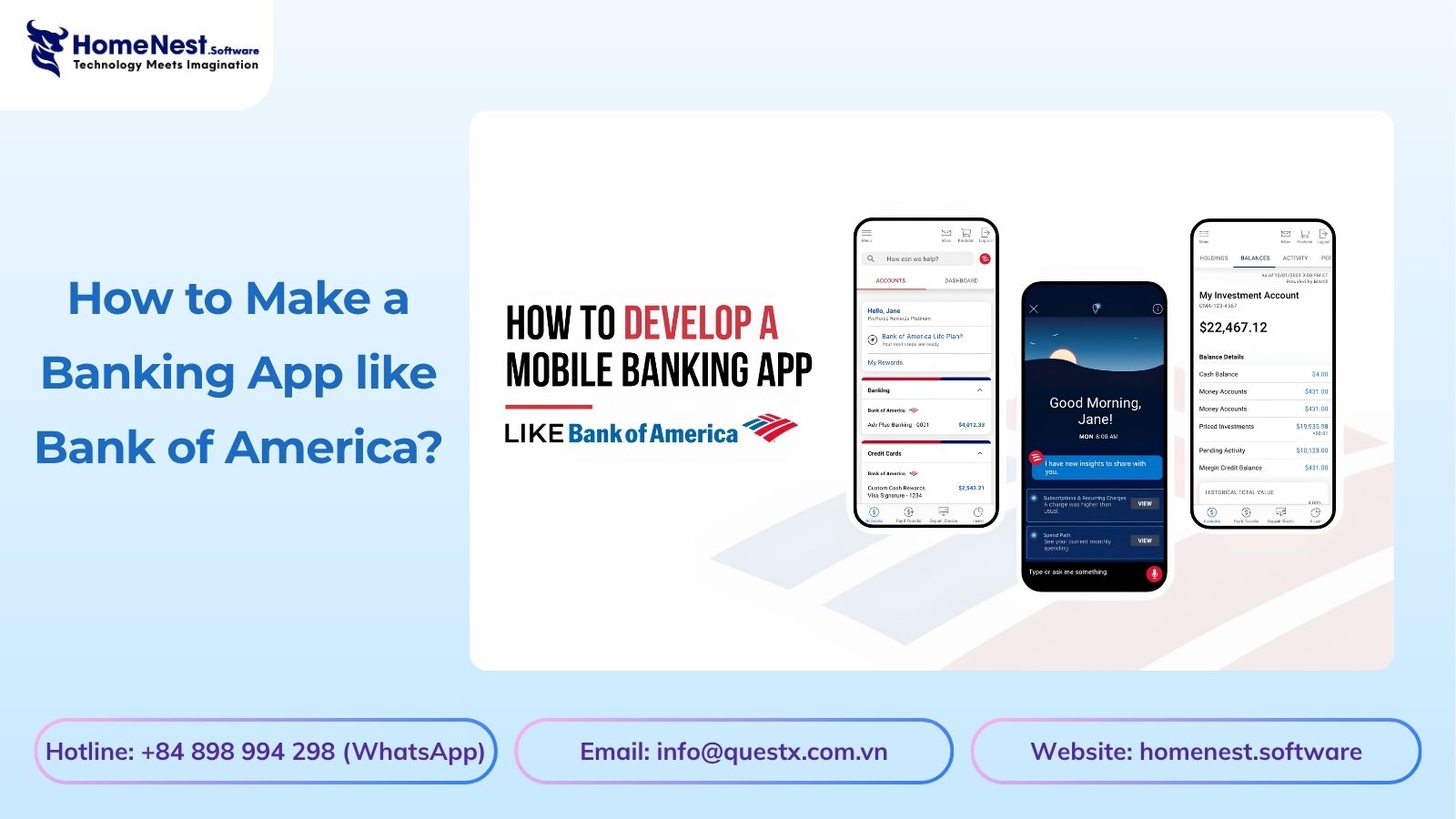
How to Make a Banking App like Bank of America?
Developing a mobile banking application like Bank of America extends far beyond basic UI design; it requires engineering a fault-tolerant backend capable of real-time ledger synchronization, biometric authentication, and high-volume data processing under strict regulatory frameworks. Drawing from HomeNest Software’s deep experience in architecting enterprise-grade fintech solutions, this guide strips away theoretical jargon to focus entirely on operational and technical execution. What you will find in this guide: We break down the precise development roadmap, from mapping out microservices and ensuring PCI-DSS compliance to estimating MVP development costs and securing absolute data sovereignty through 100% source code ownership. If you are preparing to build, scale, or audit a financial platform, this blueprint provides the exact framework you need.
Banking App Development Cost
Building a banking application is rarely a simple process; it’s a complex technical challenge requiring a balance between complying with stringent financial regulations, handling large transaction volumes, and a scalable cloud architecture. Miscalculating these technical requirements from the outset often leads to significant technical debt and budget overruns. Based on HomeNest Software’s practical experience in designing enterprise-grade fintech solutions, this guide bypasses generic estimates to provide a realistic analysis of banking application development costs. What you’ll find in this guide: We analyze the true cost factors, from technology selection and API integration to the hidden costs of regulatory compliance and security infrastructure. Whether you’re launching a minimum viable product or expanding an existing financial platform, this analysis provides the precise operational data you need to plan your budget effectively.
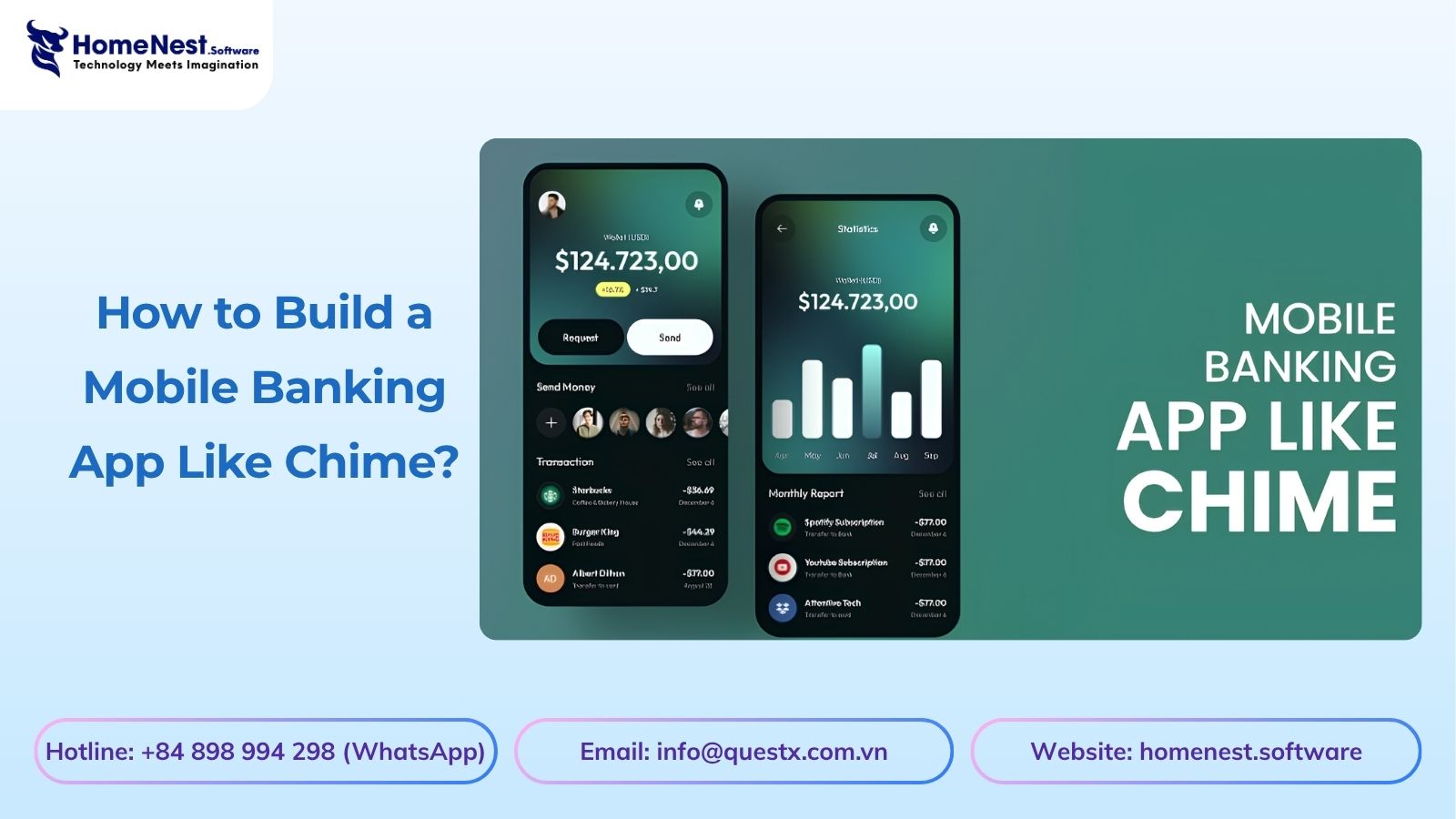
How to Build a Mobile Banking App Like Chime?
Building a mobile banking app like Chime is not just about features, it is about delivering a secure, scalable, and user-centric financial experience. From planning the right architecture to optimizing mobile banking app development cost, every decision directly impacts your product’s success. Leveraging Fintech app development services, starting with MVP app development, and scaling through on-demand app development solutions allows businesses to reduce risk and accelerate time to market. To stay competitive, combining Android app development services and iOS app development solutions ensures wider reach, while continuous updates through maintenance software development services keep your app secure and future-ready.

How to Build a Banking App Like Barclays: A Complete Entrepreneur’s Guide
Building a banking app like Barclays requires more than just development. It demands a strong product vision, secure architecture, and a clear monetization strategy. From optimizing cost and selecting the right tech stack to ensuring compliance and scalability, every decision impacts long-term success. Partnering with an experienced team like HomeNest Software helps accelerate development, reduce risks, and deliver a high-quality fintech product that can compete in today’s fast-evolving digital banking landscape.