
AI Chatbot Development in Singapore: Costs, Use Cases, and Complete Guide
AI chatbot development in Singapore is rapidly shifting from an experimental initiative to a core business capability. Companies that adopt it effectively can automate up to 70–80% of repetitive interactions, deliver 24/7 customer support, and scale operations without increasing headcount. However, success depends on choosing the right approach (build, buy, or outsource), ensuring high-quality data, and implementing a solution that is secure, scalable, and well-integrated with existing systems. Businesses that get this right will gain a clear competitive advantage in efficiency, customer experience, and long term growth.
Scope of Work
AI chatbot development has quickly become a strategic priority for businesses in Singapore, driven by the need to scale operations, enhance customer experience, and reduce dependence on manual workflows. With the rise of advanced AI and large language models, today’s chatbots go far beyond basic FAQ automation they can manage complex conversations, streamline business processes, and integrate seamlessly with enterprise systems.
That said, many organizations are still navigating key questions:
- What does AI chatbot development actually involve?
- What are the typical costs in Singapore?
- Should you build in house, purchase a solution, or outsource?
- What are the most practical use cases and the common challenges?
This guide offers a clear, business oriented perspective on AI chatbot development in Singapore, covering core use cases, development approaches, technology stacks, cost considerations, and implementation strategies equipping you to make well informed decisions.
Why AI Chatbots Are Becoming a Business Necessity in Singapore
AI adoption in Singapore is accelerating at pace, with organizations increasingly embedding AI into core business operations. According to PERSOLKELLY, 45% of businesses in Singapore are already using AI, while another 38% plan to adopt it in the near term a clear signal that AI is moving from experimentation to mainstream deployment.
Within the workplace, AI chatbots and virtual assistants are the most widely adopted tools (27%), ahead of AI writing solutions (23%) and Robotic Process Automation (19%). This trend underscores the role of conversational AI as one of the most practical and accessible entry points for companies beginning their AI journey.
Globally, momentum is equally strong. More than 987 million users interact with AI chatbots worldwide, with the market surpassing $9 billion. As customer expectations shift toward instant, always available service, Singapore based businesses operating in a high cost labor environment are increasingly leveraging AI chatbots to automate workflows, accelerate response times, and scale operations without expanding headcount.
As a result, AI chatbots are no longer viewed as optional support tools they are rapidly becoming a core layer of modern digital infrastructure, enabling businesses to operate more efficiently, responsively, and at scale.
What Is AI Chatbot Development?
AI chatbot development refers to the creation of intelligent conversational systems that can understand, interpret, and respond to human language using technologies such as Natural Language Processing (NLP) and Large Language Models (LLMs).
At its core, it involves building systems that can automate conversations and execute business workflows, rather than simply replying to predefined questions.
Modern AI chatbots are capable of handling complex queries, delivering context aware responses, and improving performance over time through continuous learning. In practical terms, the development process typically includes:
- Interpreting user intent and natural language inputs
- Connecting to business data sources (e.g., FAQs, internal systems, databases)
- Designing structured and adaptive conversation flows
- Integrating with platforms such as websites, CRM systems, and messaging applications
For businesses, AI chatbot development enables process automation, faster response cycles, and scalable customer engagement, making it an essential component of modern digital operations.
AI Chatbots vs. Traditional Chatbots: What Has Changed in 2026?
The defining shift in 2026 is the transition from rule based chatbots to AI driven, context aware assistants. Traditional chatbots operate on predefined scripts and keyword matching, whereas modern AI chatbots leverage large language models (LLMs) to interpret intent, generate natural responses, and manage more sophisticated interactions.
| Criteria | AI Chatbots | Traditional Chatbots |
|---|---|---|
| Understanding | Interpret intent and context | Rely on keywords and predefined rules |
| Responses | Dynamic, human like responses | Fixed, scripted replies |
| Conversation | Handle multi turn, complex interactions | Limited to simple, linear flows |
| Learning | Continuously improve with data and feedback | Require manual updates |
| Flexibility | Adapt to varied inputs and scenarios | Break with unexpected inputs |
| Integration | Seamlessly connect with CRM, APIs, databases | Limited integration capabilities |
| Scalability | Built for enterprise scale deployment | Best for repetitive, low complexity tasks |
As customer expectations evolve toward instant, personalized, and intelligent experiences, AI powered chatbots have become the default rather than the exception.
In essence, the shift is from basic automation to intelligent interaction enabling businesses to scale operations efficiently while delivering significantly improved user experiences.
When Does Your Business Actually Need an AI Chatbot?
Not every organization requires an AI chatbot. However, as operations scale and manual processes begin to create bottlenecks, chatbots often shift from optional to essential.
User behavior already reflects widespread adoption. A significant majority rely on chatbots to search for information (81.2%) and support work or study (61%), while others use them for career guidance (18.7%), personal needs (21.6%), and even emotional support (10.2%). This growing familiarity signals a broader shift users increasingly expect businesses to offer fast, intelligent, and conversational interactions.
Your business likely needs an AI chatbot if:
- You handle a high volume of repetitive inquiries
Common questions such as FAQs, order tracking, and basic support requests consume significant time and resources. - Response times are becoming a problem
Delays in replying can negatively impact customer satisfaction, retention, and conversion rates. - You want to offer 24/7 support without scaling headcount
This is particularly critical in high cost markets like Singapore, where labor efficiency directly affects margins. - Your business is growing and needs to scale efficiently
Managing increasing customer demand without proportional hiring requires automation. - You already have structured data available
Existing FAQs, knowledge bases, or internal documentation can be leveraged to power effective chatbot responses. - You aim to automate internal workflows
Use cases include HR inquiries, IT support, onboarding assistance, and internal knowledge retrieval.
AI chatbots deliver the most value when they address real operational constraints, not just as a “nice to have” feature. When implemented effectively, they reduce workload, accelerate response times, and improve user experience across both customer facing and internal functions.
If your organization is experiencing scaling pressure or rising operational costs, it is often the right time to seriously evaluate AI chatbot adoption.
Key Use Cases of AI Chatbot Development Across Industries
The adoption of AI chatbots is no longer driven solely by technological advancement it is increasingly shaped by evolving user expectations. As both customers and employees rely more on AI for information, support, and decision making, businesses must adapt to deliver faster, more intelligent, and always available interactions.
Across industries, AI chatbots are being deployed to automate repetitive tasks, accelerate response times, and deliver scalable user experiences.
Logistics & Supply Chain
In logistics, AI chatbots play a critical role in managing high volumes of inquiries related to shipment tracking, delivery updates, and operational coordination. By providing real time responses and automating communication, they significantly reduce manual workload and improve visibility across the supply chain.
Real world example:
A global logistics provider implemented an AI chatbot integrated with its tracking system to handle customer inquiries, booking requests, and cross time zone support.
Key outcomes:
- Scaled to handle up to 100x more tracking inquiries
- Increased customer satisfaction by ~50% through faster, personalized responses
- Reduced response times by up to 70% with 24/7 automation
This highlights how AI chatbots can streamline complex logistics operations while delivering real time, scalable support.
Healthcare & Wellness
In healthcare, AI chatbots are widely used for appointment scheduling, patient inquiries, and basic symptom guidance. They help reduce administrative overhead while improving accessibility for non critical interactions.
Real world example:
Platforms like Ada Health deploy AI driven medical chatbots to support symptom checking and health information access. These systems can handle up to 80% of common patient inquiries with high accuracy.
Key benefits:
- Reduce call volumes for medical and administrative staff (up to 50%)
- Improve patient engagement through faster, consistent responses
- Free up healthcare professionals to focus on critical cases
- Provide 24/7 access to personalized health information
AI chatbots, therefore, enhance both operational efficiency and patient experience in modern healthcare environments.
Retail & E commerce
For retail and e commerce businesses, AI chatbots enable real time, personalized customer journeys from product discovery to post purchase support. This reduces friction and improves conversion rates.
Real world example:
Sephora implemented AI powered chatbots and virtual assistants to assist with product recommendations and virtual try ons, helping customers make more informed purchasing decisions.
Key outcomes:
- Supported significant e commerce growth, with revenue rising from $580M to $3B over time
- Increased customer engagement through interactive, personalized experiences
- Reduced return rates by improving product selection accuracy
This demonstrates how AI chatbots can drive higher conversions, stronger engagement, and scalable personalization.
Fintech
In the financial sector, AI chatbots are used to manage large volumes of customer interactions while ensuring speed, accuracy, and consistency. They automate routine tasks such as account inquiries, transactions, and support requests.
Real world example:
ICICI Bank deployed an AI assistant (iPal) integrated with its core banking systems to handle customer queries and transactions in real time.
Key outcomes:
- Processed over 1 million customer queries daily
- Reduced call center workload by 40%+
- Delivered responses in under 2 seconds
- Achieved 85%+ customer satisfaction
This illustrates how AI chatbots can transform financial services by enabling efficient, scalable, and highly responsive customer support, while maintaining trust and accuracy.
Across all industries, the pattern is clear: AI chatbots are not just improving efficiency they are redefining how businesses interact, operate, and scale in a digital first environment.
AI Chatbot Development Process: How to Build a Secure & Scalable Solution

Developing an AI chatbot goes beyond selecting the right technology it requires aligning business objectives, data strategy, and system integration to deliver measurable impact. A structured approach ensures the solution is both secure, scalable, and fit for purpose.
1. Define Business Objectives and Use Cases
Start by clearly identifying what the chatbot is expected to achieve whether it’s reducing support costs, improving response times, or automating internal processes. Well defined objectives help prioritize features and establish measurable success metrics.
2. Identify Users and Key Interaction Scenarios
Determine who will use the chatbot (customers, employees, or partners) and map out the most common interaction scenarios. This ensures the solution is designed around real user needs, not assumptions.
3. Prepare and Structure Data
High quality data is the foundation of any effective AI chatbot. This includes FAQs, knowledge bases, internal documentation, and historical conversation logs. Proper structuring and cleaning of data significantly improve response accuracy and consistency.
4. Select AI Models and Technology Stack
Choose the appropriate technologies based on the required level of complexity and scale. This may involve LLMs, NLP models, Retrieval Augmented Generation (RAG), and cloud infrastructure to ensure performance, security, and scalability.
5. Design Conversation Flow and User Experience
Define how the chatbot interacts with users, including conversation logic, tone of voice, and fallback mechanisms. A well designed conversational UX ensures interactions feel natural, intuitive, and efficient.
6. Develop, Integrate, and Test
Build the chatbot and integrate it with existing systems such as CRM, ERP, APIs, and messaging platforms. Rigorous testing is critical to validate accuracy, reliability, and performance across different scenarios.
7. Deploy, Monitor, and Continuously Optimize
After deployment, track performance using analytics and user feedback. Continuous optimization allows you to improve response quality, expand capabilities, and maintain long term effectiveness as business needs evolve.
A disciplined development process not only reduces implementation risks but also ensures your AI chatbot delivers sustainable value at scale.
Popular AI Chatbot Development Tools (And When to Use Them)
Selecting the right tools is a foundational step in AI chatbot development. The optimal stack depends on your business objectives, required level of customization, and system complexity. In practice, most production grade solutions combine multiple components spanning AI models, orchestration frameworks, and cloud infrastructure.
| Category | Examples | When to Use | Best For |
|---|---|---|---|
| LLM Providers | OpenAI, Anthropic, Google Gemini | Handling natural conversations, complex queries, multi turn interactions | Advanced AI chatbots with strong reasoning capabilities |
| AI Frameworks & Orchestration | LangChain, LlamaIndex | Connecting AI to data sources, building RAG systems, managing workflows | Custom chatbot solutions with deep data integration |
| No code / Low code Platforms | Dialogflow, Microsoft Bot Framework, Chatbot.com | Rapid deployment, MVPs, simple automation use cases | Teams with limited technical resources |
| Cloud Infrastructure & AI Services | Amazon Web Services (Lex, Lambda), Microsoft Azure AI, Google Cloud AI | Building scalable, secure, enterprise grade systems | Production ready chatbot deployments |
Key Takeaways
There is no universal “best” toolset only the one that fits your specific requirements:
- Simple use cases → No code or low code platforms are often sufficient for quick wins
- Advanced, enterprise scenarios → Require custom development using LLMs, orchestration frameworks, and cloud infrastructure
- Hybrid approaches → Most common in practice, combining multiple tools to achieve both flexibility and scalability
In short, the right architecture is not about choosing a single platform, but about assembling a stack that aligns with your long term business and technical goals.
What Is the Cost of Developing an AI Chatbot in Singapore (2026)?
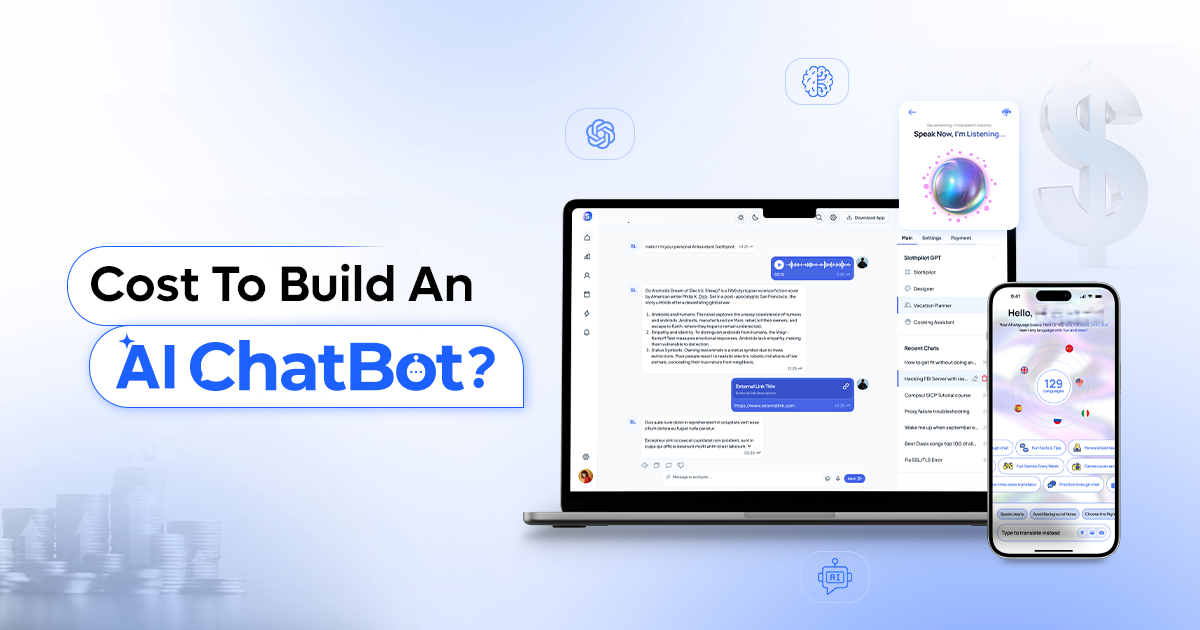
The cost of AI chatbot development in Singapore varies significantly depending on complexity, features, and integration requirements. In most cases, businesses can expect an investment ranging from SGD 8,000 to SGD 150,000+, depending on the scope and sophistication of the solution.
| Type of Chatbot | Estimated Cost (SGD) | Timeline | Description |
|---|---|---|---|
| Simple FAQ Bot | SGD 8,000 – SGD 12,000 | 3–4 weeks | Handles basic queries using a structured knowledge base |
| Lead Qualification Bot | SGD 12,000 – SGD 18,000 | 4–6 weeks | Captures and qualifies leads with basic automation workflows |
| Customer Support Bot | SGD 15,000 – SGD 22,000 | 6–8 weeks | Manages support inquiries and integrates with backend systems |
| Enterprise AI Chatbot | SGD 20,000 – SGD 50,000+ | 8–12+ weeks | Advanced, scalable solution with deep system integration and AI capabilities |
For more sophisticated implementations such as custom AI models, multilingual support, or complex system integrations costs can exceed SGD 100,000+.
Key Factors That Influence Cost
Several variables directly impact the total investment:
- Use case complexity: Simple FAQs vs. multi step workflows and decision logic
- System integration: CRM, ERP, payment gateways, and internal databases
- Data readiness: Structured knowledge bases vs. unstructured data sources
- Customization level: Off the shelf solutions vs. fully tailored development
- Security and compliance: Especially critical in regulated industries
ROI Perspective for Singapore Businesses
In a high cost market like Singapore, AI chatbots offer strong long term ROI by shifting operations from labor intensive processes to scalable automation.
Organizations adopting AI chatbots have reported:
- Automating 70–80% of repetitive inquiries
- Reducing dependency on customer support teams
- Delivering 24/7 service without increasing headcount
Over time, this transforms operational cost structures replacing recurring staffing expenses with a one time development investment and lower ongoing costs.
Need a precise estimate? Engage with AI specialists to get a tailored cost breakdown aligned with your specific business requirements and technical scope.
Build vs. Buy vs. Outsource: Which Approach Is Right for Your Business?
When implementing an AI chatbot, one of the most critical decisions is choosing the right delivery model: build in house, buy a ready made platform, or outsource development. Each option involves trade offs across cost, speed, flexibility, and scalability.
| Approach | Pros | Cons | Best For |
|---|---|---|---|
| Build (In house) | Full control, highly tailored to business needs | High cost, longer timelines, requires strong AI expertise | Large enterprises with established AI/engineering teams |
| Buy (SaaS / Platform) | Fast deployment, lower upfront cost, easy to implement | Limited customization, reduced flexibility, scalability constraints | SMEs with simple, standardized use cases |
| Outsource (Dev Partner) | Balanced cost, faster time to market, access to specialized expertise | Requires vendor selection and coordination | Businesses needing scalable, customized solutions |
When to Build In house
Building internally is a strong fit if your organization:
- Has an experienced AI and engineering team
- Requires full ownership of data, models, and infrastructure
- Sees AI as a core strategic capability
However, this path typically demands significant investment in hiring, training, and long term maintenance.
When to Buy a Ready made Solution
A SaaS chatbot platform is suitable when:
- You need a quick deployment for straightforward use cases
- Requirements are limited (e.g., FAQs, lead capture)
- You want minimal setup and lower initial cost
The trade off is restricted flexibility, especially when scaling or integrating with complex enterprise systems.
When to Outsource AI Chatbot Development
Outsourcing is often the most practical option for businesses that:
- Need a custom solution aligned with specific workflows
- Require integration with systems like CRM, ERP, or databases
- Lack in house AI capabilities
- Want faster delivery with controlled costs
By partnering with an experienced vendor such as HomeNest Software, businesses can access deep technical expertise without building internal teams from scratch often reducing development costs by 40–60%.
Key Takeaway
There is no universal best approach only what fits your business context:
- Build → Maximum control, highest investment
- Buy → Fastest setup, limited flexibility
- Outsource → Best balance of cost, speed, and customization
For most businesses in Singapore, outsourcing offers a scalable and cost efficient path to implement AI chatbots while retaining the flexibility to evolve as requirements grow.
Key Challenges in Developing AI Chatbots (And How to Overcome Them)
While AI chatbots can deliver substantial business value, building a reliable and effective solution comes with real challenges. Identifying and addressing these early is critical to avoiding costly mistakes and ensuring long term success.
| Challenge | Description | How to Overcome |
|---|---|---|
| Data Quality & Availability | Incomplete or unstructured data leads to inconsistent and inaccurate outputs | Consolidate data sources, clean and structure data, and maintain regular updates |
| Understanding User Intent | Variations in how users phrase queries can cause misinterpretation | Leverage advanced NLP/LLMs, train on real user queries, and implement fallback flows |
| System Integration | сложности in connecting with CRM, ERP, or internal systems | Use APIs, define architecture early, and prioritize high impact integrations |
| Security & Data Privacy | Sensitive data handling requires strict compliance and protection | Apply encryption, enforce access controls, and comply with regulations (e.g., PDPA) |
| User Experience & Adoption | Poor UX leads to low engagement and limited effectiveness | Design intuitive conversation flows, enable human handover, and continuously optimize UX |
| Maintenance & Optimization | Performance degrades without ongoing updates and tuning | Monitor usage, retrain models, and iterate based on real user interactions |
Key Takeaway
Successful AI chatbot development requires balancing data quality, system integration, security, and user experience. Organizations that proactively address these areas can build chatbot solutions that are accurate, scalable, and aligned with long term business objectives.
Why Choose HomeNest Software for AI Chatbot Development in Singapore
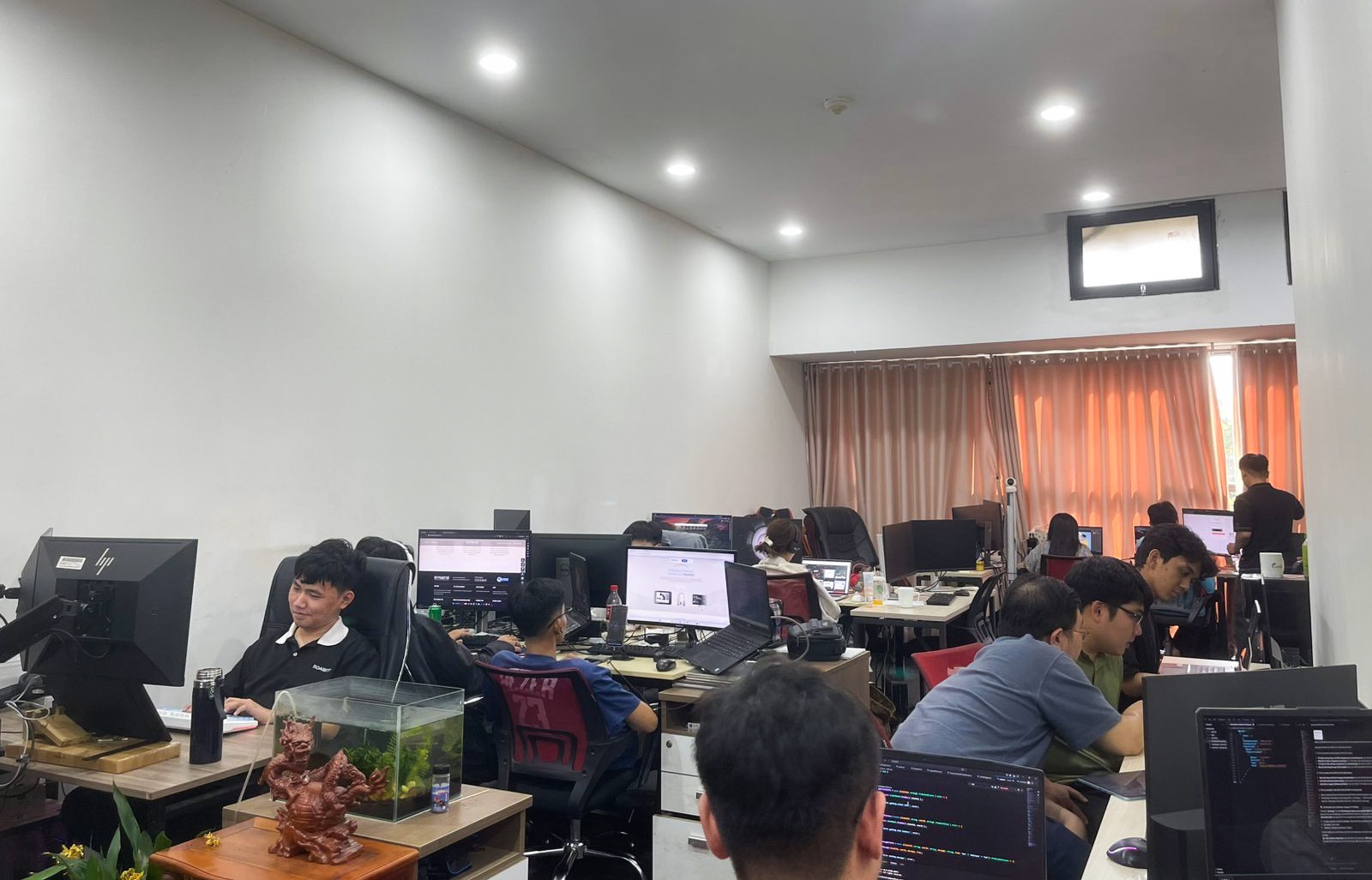
Selecting the right development partner is a decisive factor in the success of any AI chatbot initiative. Beyond technical delivery, it requires a team that understands business use cases, system integration, and long term scalability.
At HomeNest Software, we combine AI expertise, strong engineering capabilities, and real world implementation experience to deliver enterprise grade chatbot solutions tailored for businesses in Singapore and across APAC.
What Sets HomeNest Software Apart
We don’t just build chatbots we deliver end to end AI solutions aligned with measurable business outcomes.
1. Proven engineering scale and delivery track record
With a team of 1,00+ engineers, we have successfully delivered 250+ projects for 250+ global clients, enabling us to handle projects of varying complexity with consistent quality and speed.
2. End to end AI chatbot development
From use case consulting and solution architecture to development, deployment, and continuous optimization we support the full lifecycle.
3. Strong system integration expertise
Deep experience integrating with CRM, ERP, internal databases, and third party platforms, enabling seamless automation across business workflows.
4. Scalable, cloud native architecture
We build on leading platforms such as AWS, Azure, and Google Cloud, ensuring high availability, flexibility, and future scalability.
5. Security first, compliance driven approach
Our solutions follow international standards, with experience supporting clients in regulated industries requiring strict data protection and compliance (e.g., PDPA).
6. Cost efficient delivery model (40–60% savings)
Leveraging Vietnam based engineering teams, we help businesses access top tier talent while significantly reducing development costs compared to local hiring in Singapore.
7. Fast time to market
MVP chatbot solutions can typically be delivered within 4–8 weeks, enabling early validation and faster ROI.
8. Cross industry implementation experience
Proven delivery across logistics, healthcare, fintech, retail, and enterprise internal systems, allowing rapid adaptation to diverse business needs.
Case Study: AI Chatbot for Internal Knowledge Automation
Client context
A SaaS and system integration company needed to improve internal efficiency by automating knowledge access and reducing dependency on manual processes.
Business Challenges
- Fragmented knowledge across multiple departments and documents
- Difficulty accessing accurate information quickly
- High reliance on individuals for process related queries
- Limited internal experience with AI tools
Our Solution
HomeNest Software developed a custom AI chatbot to centralize knowledge and automate internal support:
- Built on AWS infrastructure (Amazon Lex, Lambda, S3) for scalability
- Trained on internal documents and business workflows
- Integrated directly into the company’s internal portal
- Implemented a centralized knowledge base system for continuous updates
- Delivered internal training on AI usage and prompt design
Results
- Enabled 24/7 internal support through AI automation
- Reduced dependency on individual employees
- Improved access to organizational knowledge and workflows
- Accelerated AI adoption through structured training
- Established a scalable foundation for future expansion
This case illustrates how AI chatbots can transform internal operations improving knowledge accessibility, reducing manual workload, and enabling scalable growth.
With HomeNest Software, you gain a partner capable of delivering secure, scalable, and business aligned AI solutions tailored to your specific needs.
Looking to build a secure and scalable AI chatbot? Connect with our team to explore a solution designed for your business.
Conclusion
AI chatbot development is no longer a forward looking initiative it has become a business imperative for organizations aiming to scale efficiently, enhance customer experience, and remain competitive in Singapore’s rapidly evolving digital landscape.
From automating customer support and streamlining operations to enabling real time, personalized interactions, AI chatbots deliver tangible, measurable value across industries. However, achieving this value requires more than implementation alone. Success depends on selecting the right approach, building on a strong data foundation, and ensuring scalability, security, and seamless integration with existing systems.
FAQs
What is AI chatbot development?
AI chatbot development is the process of building intelligent conversational systems using technologies like NLP and large language models (LLMs). These chatbots can understand user intent, automate interactions, and integrate with business systems to support both customer facing and internal workflows.
How much does it cost to build an AI chatbot in Singapore?
Costs typically range from SGD 8,000 to SGD 150,000+, depending on complexity, features, and integrations. Simple FAQ bots are more affordable, while enterprise grade solutions with advanced AI and system integration require higher investment.
How long does it take to develop an AI chatbot?
Development timelines vary from 3–4 weeks for basic bots to 8–12+ weeks for enterprise solutions. The timeline depends on scope, data readiness, and integration complexity.
Should I build, buy, or outsource AI chatbot development?
- Build: Best for enterprises with in house AI expertise and need full control
- Buy: Suitable for simple use cases and fast deployment
- Outsource: Ideal for most businesses needing scalable, customized solutions with faster time to market
What are the most common use cases for AI chatbots?
Common use cases include:
- Customer support automation
- Lead generation and qualification
- Internal knowledge management
- Appointment booking and scheduling
- E commerce assistance and product recommendations
Can AI chatbots integrate with existing systems?
Yes. Modern AI chatbots can integrate with systems such as CRM, ERP, databases, APIs, and messaging platforms, enabling seamless automation across business processes.
Are AI chatbots secure and compliant in Singapore?
They can be, if implemented correctly. Businesses must ensure data encryption, access control, and compliance with regulations like PDPA when handling sensitive information.
What are the biggest challenges in AI chatbot development?
Key challenges include:
- Poor data quality
- Misunderstanding user intent
- Complex system integration
- Security and compliance requirements
- Ongoing maintenance and optimization
These can be mitigated with proper planning, the right technology stack, and experienced implementation partners.
How do AI chatbots improve ROI for businesses?
AI chatbots improve ROI by:
- Automating 70–80% of repetitive tasks
- Reducing reliance on support staff
- Enabling 24/7 customer service
- Scaling operations without proportional cost increases
When should a business consider implementing an AI chatbot?
A business should consider AI chatbot adoption when:
- Customer inquiries become too frequent to handle manually
- Response times are impacting customer experience
- Operational costs are rising due to manual processes
- There is a need to scale without increasing headcount
Latest Articles
View All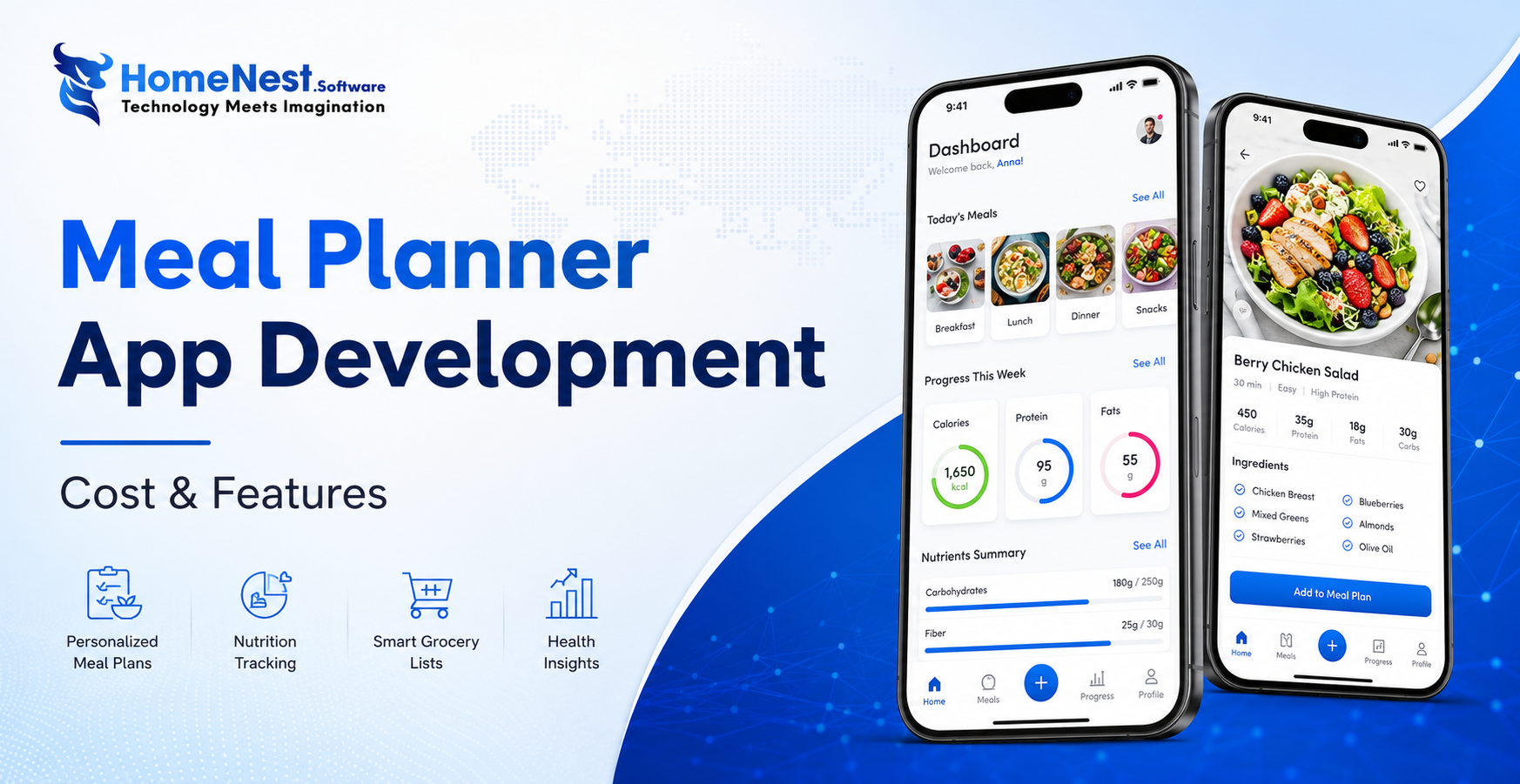
How to Build a Meal Planning App: A Complete Step-by-Step Guide
Building a successful meal planning app goes beyond creating an attractive interface it requires a clear business strategy, personalized user experiences, and scalable technology. By combining essential features like AI-powered meal recommendations, nutrition tracking, grocery list automation, and wearable integration, businesses can deliver lasting value to users while capitalizing on the growing digital health market. Partnering with an experienced mobile app development company ensures your solution is secure, future-ready, and designed to succeed in an increasingly competitive health-tech industry.
How Much Does It Cost to Build a Shopping App Like Temu?
Temu’s meteoric rise to over 900 million global downloads proves the power of combining AI, gamification, and social commerce, but building a similar viral shopping platform requires careful financial and technical planning. Developing an app like Temu typically costs anywhere from $40,000 for a basic Minimum Viable Product (MVP) to over $300,000 for a fully-featured platform. This guide breaks down every cost category, analyzes the core features driving Temu’s success, highlights the best technology stacks, and offers practical strategies to optimize your development budget without compromising on quality.

Criteria For Choosing The Right App Design Agency
UI/UX design is the logical foundation of a system, not merely a visual element. Choosing the wrong partner will directly lead to technical debt, budget overruns, and disruptions in the development process. This article provides a 6-step evaluation framework and a list of operational risks, helping businesses eliminate subjective design advice and accurately assess agency capabilities based on developer handoff standards and practical business performance.
How Does AI in Banking Industry Impact the Future?
Artificial intelligence (AI) has transitioned from a supplementary tool to a core infrastructure of financial data management, optimizing profitability through real-time fraud detection, natural language processing (NLP), and high-speed credit scoring models. “Deploying AI in the financial sector requires more than just algorithmic accuracy, it demands a highly secure cloud architecture and rigorous data governance,” commented Nguyen Tien, co-founder of HomeNest Software. Why read this guide? We skip the theoretical jargon to focus entirely on technical implementation. Whether you’re evaluating a vendor or planning a system overhaul, this article will detail: Operational Efficiency: Automating unstructured data workflows at scale. Risk Architecture: Implementing real-time threat detection and AML compliance. Data ownership: The essential need for 100% ownership of the source code to ensure full algorithm auditability.
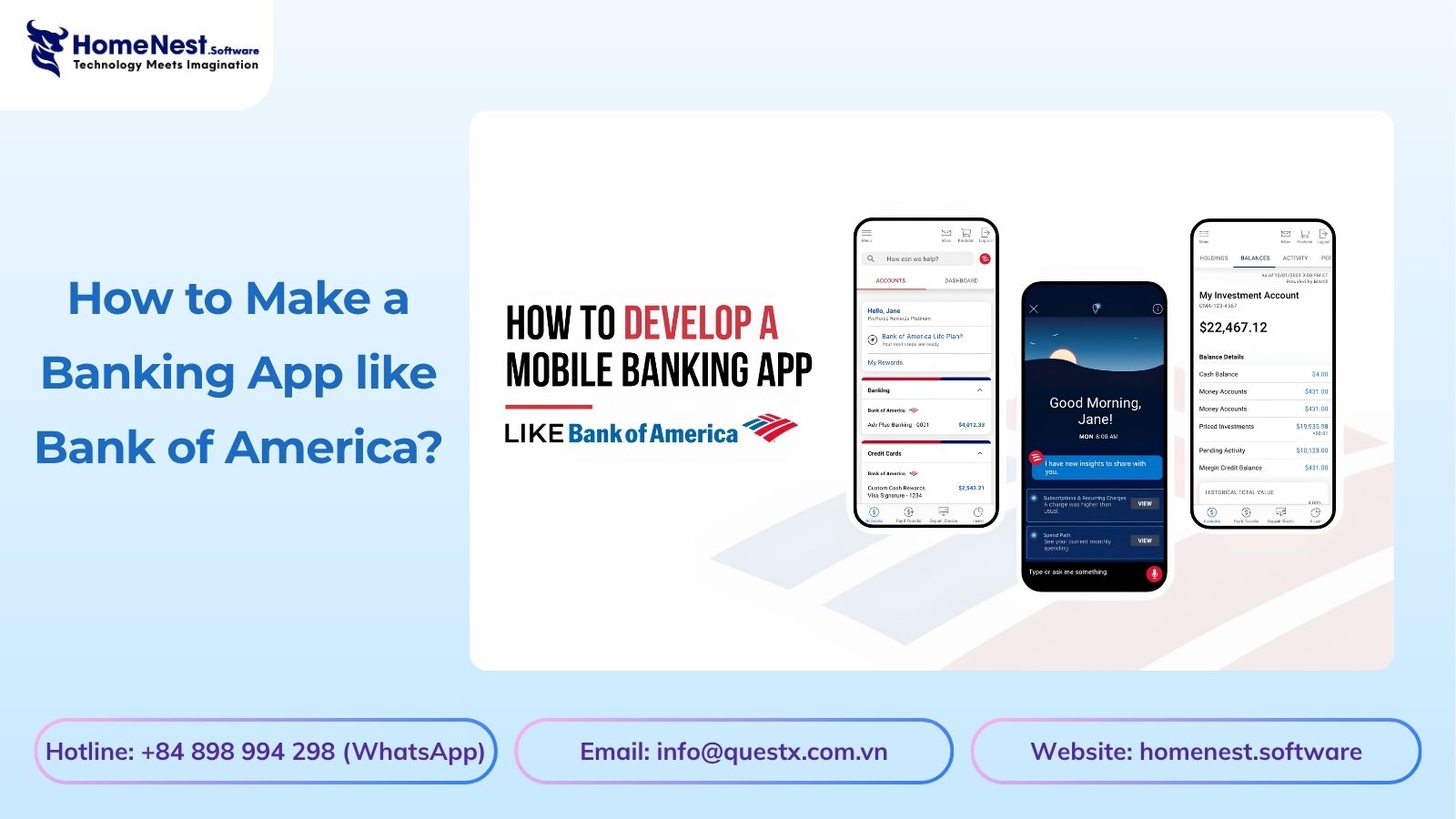
How to Make a Banking App like Bank of America?
Developing a mobile banking application like Bank of America extends far beyond basic UI design; it requires engineering a fault-tolerant backend capable of real-time ledger synchronization, biometric authentication, and high-volume data processing under strict regulatory frameworks. Drawing from HomeNest Software’s deep experience in architecting enterprise-grade fintech solutions, this guide strips away theoretical jargon to focus entirely on operational and technical execution. What you will find in this guide: We break down the precise development roadmap, from mapping out microservices and ensuring PCI-DSS compliance to estimating MVP development costs and securing absolute data sovereignty through 100% source code ownership. If you are preparing to build, scale, or audit a financial platform, this blueprint provides the exact framework you need.
Banking App Development Cost
Building a banking application is rarely a simple process; it’s a complex technical challenge requiring a balance between complying with stringent financial regulations, handling large transaction volumes, and a scalable cloud architecture. Miscalculating these technical requirements from the outset often leads to significant technical debt and budget overruns. Based on HomeNest Software’s practical experience in designing enterprise-grade fintech solutions, this guide bypasses generic estimates to provide a realistic analysis of banking application development costs. What you’ll find in this guide: We analyze the true cost factors, from technology selection and API integration to the hidden costs of regulatory compliance and security infrastructure. Whether you’re launching a minimum viable product or expanding an existing financial platform, this analysis provides the precise operational data you need to plan your budget effectively.