
How Much Does Healthcare App Development Cost?
Scope of Work

Healthcare apps have become essential to how hospitals, clinics, and digital health startups deliver care in 2025. From telemedicine and remote patient monitoring to ePrescriptions and wellness management, nearly every healthcare organization is adopting digital solutions to improve patient outcomes and operational efficiency.
According to Fortune Business Insights, the global mHealth app market is expected to grow from USD 40.65 billion in 2025 to USD 88.70 billion by 2032 a clear indicator of rising demand for digital healthcare innovations. But before investing in a new solution, one question consistently comes up: How much does it cost to build a healthcare app?
This guide provides a complete breakdown of healthcare app development costs, covering app types, feature complexity, compliance requirements, and development approaches. You’ll also learn what influences the budget, how to optimize costs, and whether partnering with a healthcare app development company or building in-house is the most cost-effective strategy.
Healthcare App Development Pricing Overview
Healthcare app development costs typically range from $30,000–$80,000 for a basic MVP and $150,000–$500,000 for advanced, enterprise-level healthcare solutions. Because these applications handle highly sensitive patient information, they require robust architecture, strict security, and full regulatory compliance factors that significantly influence development costs from planning to post-launch support.
Healthcare app development differs from standard mobile app projects in several critical ways:
1. Security Requirements Are Non-Negotiable
Traditional apps safeguard general user data. Healthcare apps must protect medical records, diagnoses, treatment plans, and other PHI.
Compliance frameworks like HIPAA require:
-
End-to-end encryption
-
Audit logs and access tracking
-
Multi-factor authentication
These are mandatory requirements not optional enhancements.
2. Regulatory Compliance Is Mandatory
Most apps can launch quickly and improve with updates.
Healthcare apps cannot.
Before release, you must prove compliance with:
A telemedicine or ePrescription app cannot legally launch without passing compliance validation.
3. Testing Requirements Are Much More Intensive
Standard apps undergo functional and performance testing.
Healthcare apps require:
-
Security testing
-
Penetration testing
-
Compliance testing
-
Usability testing for patients & clinicians
Security penetration testing alone can take 2–4 weeks.
4. Integration Complexity Is Far Higher
Consumer apps may sync with a smartwatch.
Healthcare apps must often integrate with:
-
EMR/EHR systems
-
Lab information systems
-
Pharmacy systems
-
Insurance and billing platforms
Each integration demands custom API development, strict data validation, and compliance-specific security protocols.
5. Hidden Costs Are Often Overlooked
Most founders focus only on development but healthcare apps have ongoing expenses:
-
Annual compliance audits
-
Security patching & threat monitoring
-
Server hosting for protected health data
-
Long-term maintenance
Many healthcare projects struggle because ongoing costs exceed planned budgets not because development itself was too expensive.
Understanding these factors is essential before estimating your total investment. Now that you know what drives healthcare app costs, let’s break down realistic pricing across different healthcare app types.
Build Your Healthcare App Within Budget
Get a detailed cost estimate and a development roadmap tailored to your goals.
Work with HomeNest Software to build secure, compliant, and scalable healthcare applications without unnecessary overspending.
Read more: How to Choose the Best Healthcare Software Development Partner
Healthcare App Development Cost by Complexity
The cost of developing a healthcare app depends largely on the complexity of its features, integrations, and regulatory requirements. Below are three key tiers of healthcare app complexity, each with different timelines, team sizes, and investment levels.
| App Complexity | Cost Range | Timeline | Examples |
|---|---|---|---|
| Basic Healthcare App | $30,000 – $80,000 | 3 – 4 months | Wellness tracker, basic appointment booking, health tips app, fitness habit tracker |
| Mid-Level Healthcare App | $80,000 – $250,000 | 5 – 8 months | Teleconsultation app, ePrescription app, doctor discovery, basic patient portal |
| Complex Healthcare App | $250,000 – $500,000+ | 9 – 14+ months | Full telemedicine platform, EHR-integrated system, remote patient monitoring, AI-powered diagnostic app |
Below is a deeper look at what each tier includes and when you should choose it.
Tier 1: Basic Healthcare Apps $30,000 to $80,000
Timeline: 3–4 months
Best for: Idea validation, early-stage startups, proof-of-concept launches
Choose this tier if:
You are working with a limited budget, want to validate one of your healthcare app ideas, or plan to attract investors with a functional MVP.
Common Features:
-
User registration and basic profiles
-
Appointment scheduling or simple health tracking
-
Push notifications and reminders
-
Basic HIPAA-compliant security
-
Single platform (iOS or Android)
-
Development team of 2–3 people
This tier is ideal for gaining early traction without heavy upfront investment. Many successful healthcare apps started with a basic MVP and scaled after securing funding.
Tier 2: Mid-Level Healthcare Apps $80,000 to $250,000
Timeline: 5–8 months
Best for: Market-ready healthcare products with monetization potential
Choose this tier if:
You have funding, want a full-featured solution for patients and providers, or are aiming to launch a subscription-based healthcare service. This tier fits 80% of healthcare app requirements.
Core Features:
-
Cross-platform development (iOS + Android)
-
Real-time appointment/order tracking with GPS
-
Secure video consultations (standard implementation)
-
Encrypted messaging
-
Basic EHR or third-party API integration
-
Strong HIPAA-compliant architecture
-
Analytics and reporting dashboards
-
Development team of 5–7 people
This level delivers a professional-grade healthcare solution, trusted by patients and usable for commercial launch or partnerships with clinics.
Tier 3: Enterprise Healthcare Apps $250,000 to $500,000+
Timeline: 9–14+ months
Best for: Hospitals, enterprise healthcare systems, and complex clinical workflows
Choose this tier if:
You are an established healthcare provider, have significant funding, or need advanced features like AI diagnostics or multi-system integration.
Core Features:
-
AI/ML-powered diagnostic tools
-
Real-time IoT and wearable device integrations
-
Deep EHR/HIS integration across multiple hospital systems
-
Advanced telemedicine infrastructure
-
Blockchain-based data security and verification
-
Enterprise-grade compliance and data governance
-
5+ third-party integrations
-
Specialized team of 8–12+ developers, architects, and data scientists
This tier supports enterprise-scale healthcare delivery, handling large user bases and mission-critical medical operations.
Now that you understand how complexity influences cost, let’s explore the different types of healthcare apps and where they fit within these pricing ranges.
Read more:
- Doctor Appointment App Development
- Pharmacy App Development
- A Complete Guide to Medicine Delivery App Development
- AI Virtual Health Assistant
Popular Healthcare App Types and Their Development Costs
Understanding the type of healthcare app you want to build is the first step toward estimating your development budget. Each category comes with unique technical requirements, compliance needs, and integration complexities that directly affect the total cost.
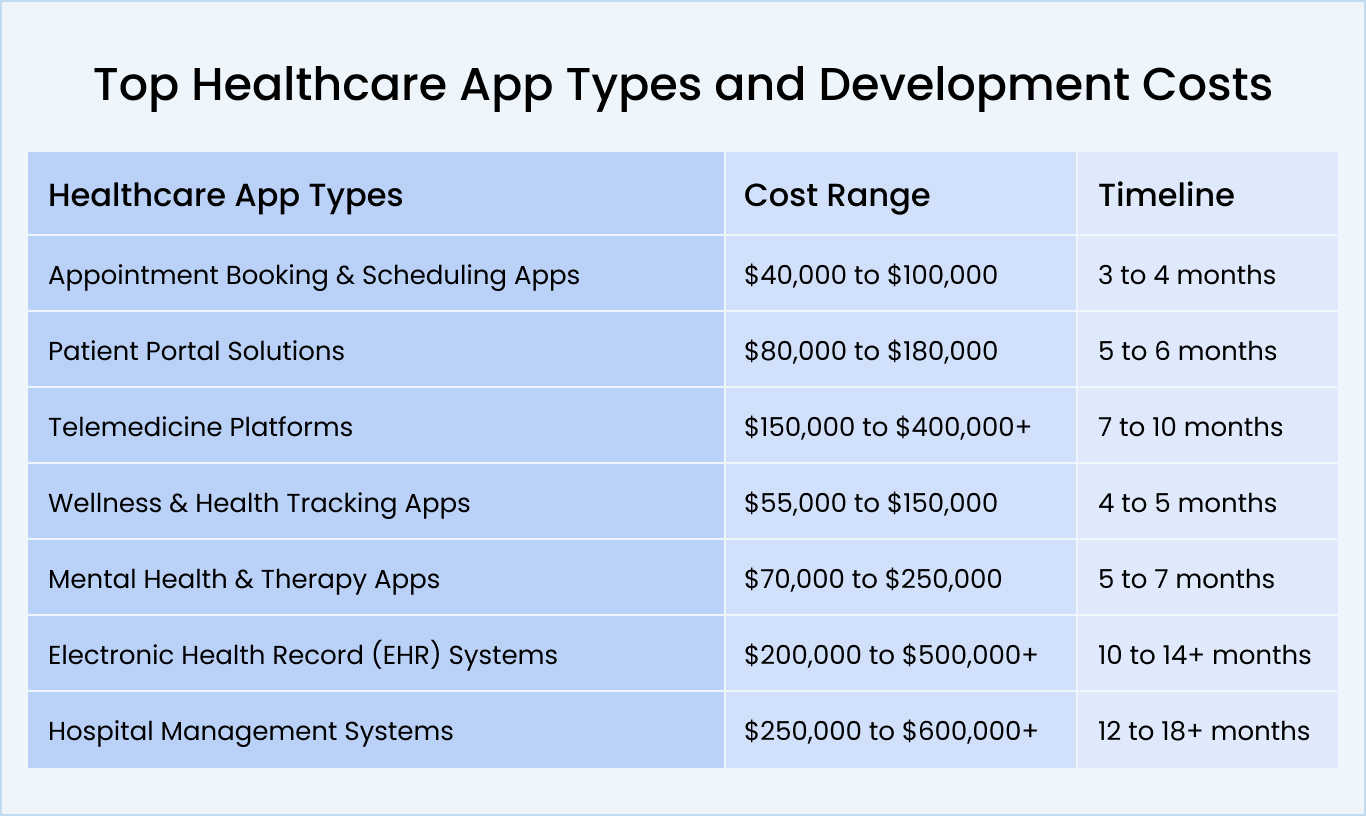
1. Appointment Booking & Scheduling Apps $40,000 to $100,000
These are among the simplest healthcare applications. Users can search for available appointment slots, book instantly, and receive automated reminders.
Why it’s affordable:
Minimal backend complexity and straightforward workflows make this the ideal starting point for startups entering the healthcare market.
What’s included:
-
Calendar sync
-
Notification system
-
Patient profiles
-
Basic HIPAA-compliant security
2. Patient Portal Solutions $80,000 to $180,000
Patient portals let users securely access medical records, request prescriptions, view lab results, and manage appointments from one place.
Why it costs more:
These apps must integrate with provider systems and follow strict security rules to protect patient data.
Key cost drivers:
-
EHR integration
-
Role-based access
-
Encrypted data exchange
-
HIPAA-aligned infrastructure
What’s included:
-
Secure data storage
-
MFA & audit trails
-
Encrypted communications
3. Telemedicine Platforms $150,000 to $400,000+
Telemedicine platforms support real-time virtual consultations, digital prescriptions, and appointment management.
Why it’s complex:
You are handling real-time video, payments, medical privacy compliance, and multi-user coordination simultaneously.
Key cost drivers:
-
HD video SDKs
-
Prescription verification
-
HIPAA-compliant messaging
-
Real-time communication systems
What’s included:
-
Secure video calls
-
Appointment scheduling
-
Digital prescription tools
4. Wellness & Health Tracking Apps $55,000 to $150,000
These apps help users track activity, monitor health metrics, sync with wearables, and receive personalized recommendations.
Why costs vary:
Wearable integrations and real-time data syncing require specialized work, even though regulatory requirements are lighter.
Key cost drivers:
-
Wearable APIs
-
Data visualization
-
Analytics engine
What’s included:
-
Multi-device sync
-
Fitness dashboards
-
Push notifications
5. Mental Health & Therapy Apps $70,000 to $250,000
These platforms connect patients with therapists through secure communication channels and session tracking.
Why costs increase:
Mental health data requires heightened confidentiality and stronger encryption measures.
Key cost drivers:
-
Therapist-patient matching
-
End-to-end encrypted video
-
Clinical notes & progress tracking
What’s included:
-
Therapist verification
-
Secure video sessions
-
Mood tracking & analytics
6. Electronic Health Record (EHR) Systems $200,000 to $500,000+
EHR systems are highly complex and power entire medical workflows, from patient records to prescriptions and lab integrations.
Why it’s expensive:
They must connect with multiple hospital systems and ensure cross-department compliance.
Key cost drivers:
-
Lab & pharmacy integrations
-
Insurance claim processing
-
Custom workflow automation
What’s included:
-
Clinical documentation
-
Prescription management
-
Role-based staff access
7. Hospital Management Systems $250,000 to $600,000+
These enterprise-scale platforms manage hospital operations end-to-end, including admissions, bed allocation, staff scheduling, inventory, billing, and more.
Why it’s the costliest category:
These systems require extreme scalability, real-time user management, and dozens of integrated modules.
Key cost drivers:
-
Multi-department workflows
-
Real-time user concurrency
-
Billing & revenue cycle integrations
What’s included:
-
Bed & staff management
-
Inventory control
-
Billing & revenue systems
Now that you’ve identified the type of healthcare app you want to build, let’s move on to the six key factors that influence healthcare app development cost helping you prepare a precise budget and avoid unexpected expenses.
Get a Transparent Estimate for Your Healthcare App
No hidden fees. No surprises.
Receive a detailed cost breakdown, realistic timelines, and a development roadmap tailored to your healthcare app vision directly from expert healthcare app developers.
The 6 Factors That Drive Healthcare App Development Costs
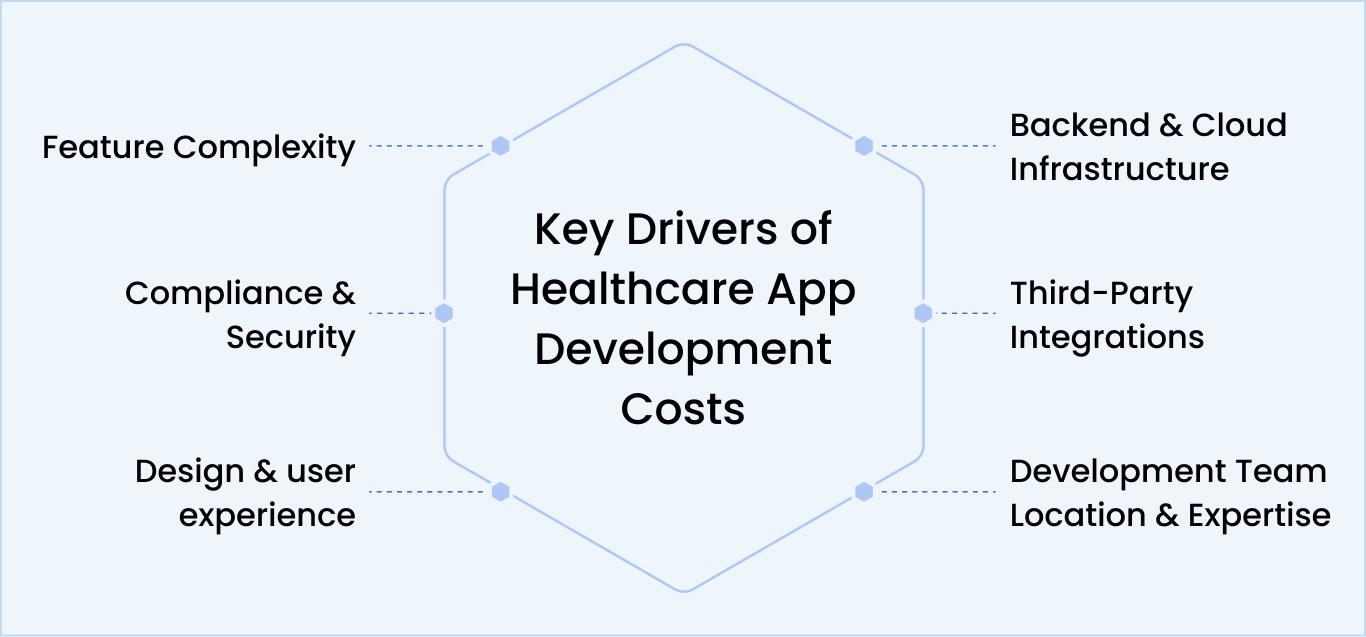
To accurately estimate your healthcare app development budget, you must understand the factors that influence pricing the most. These six elements account for nearly 90% of all cost variations across healthcare app projects.
By examining each one, you’ll gain clarity on where your investment is going and where you can optimize without sacrificing security, compliance, or performance.
1. Feature Complexity (30–40% of Total Cost)
Healthcare features are far more demanding than those in standard apps. Each feature must pass:
-
Rigorous security validation
-
Regulatory compliance checks
-
Data protection requirements
Complexity rises exponentially not linearly.
For example:
-
A basic login may take 1 week to develop.
-
A secure teleconsultation module can require 4–6 weeks, due to encryption, real-time communication, and compliance workflows.
This is why feature complexity consumes the largest share of development cost.
2. Regulatory Compliance & Security (15–30% of Total Cost)
Healthcare apps manage PHI medical histories, diagnoses, treatment plans making compliance mandatory from day one.
Security architecture must support:
-
HIPAA compliance
-
Data encryption
-
Access logs
-
MFA and role-based permissions
-
Secure storage of protected health information
Retrofitting compliance after launch can cost 10x more, often requiring full system rewrites. A single breach can permanently damage your organization’s reputation.
3. Design & User Experience (15–20% of Total Cost)
Healthcare apps must serve a diverse user base:
-
Elderly patients
-
Clinicians under time pressure
-
Tech-savvy younger users
Design isn’t just about aesthetics it prevents harmful user mistakes.
Poor UX can lead to:
-
Missed appointments
-
Medication errors
-
Low adoption rates
High-quality UX ensures clarity, accessibility, and intuitive workflows for all user types.
4. Backend & Cloud Infrastructure (20–30% of Total Cost)
The backend determines reliability, scalability, and patient safety.
A strong backend ensures:
-
Real-time data processing
-
Automatic scaling during peak usage
-
Fail-safe operations
A telemedicine app crash isn’t just inconvenient it may cause a patient to miss critical care. Data loss in a monitoring app may hide life-threatening symptoms. This makes backend infrastructure a crucial cost driver.
5. Third-Party Integrations (15–25% of Total Cost)
Healthcare apps must connect with multiple systems:
-
Payment processors
-
Video conferencing APIs
-
EHR/EMR systems
-
Pharmacy and lab systems
-
Insurance verification services
Each integration:
-
Uses different data formats
-
Requires custom API work
-
Has its own compliance requirements
-
Introduces new failure points
Ensuring all systems communicate securely and reliably requires highly specialized development time.
6. Development Team Location & Expertise (20–40% of Total Cost)
Team location affects hourly rates, communication efficiency, and compliance familiarity.
-
US-based teams: Highest cost, strongest compliance knowledge
-
Offshore teams: Low cost, but require precise requirements and strong project oversight
Cheap isn’t always cheaper in healthcare.
A team unfamiliar with healthcare regulations may build a non-compliant product, leading to costly rework or legal exposure. Meanwhile, a seasoned healthcare development team can prevent costly mistakes early.
Development costs are only the beginning.
After launch, recurring expenses hosting, security updates, compliance audits, and long-term maintenance represent the real, ongoing financial commitment that many founders underestimate.
Understanding these six cost drivers helps you plan a budget that’s realistic, sustainable, and aligned with industry standards.
Hidden Costs and Ongoing Healthcare App Development Expenses
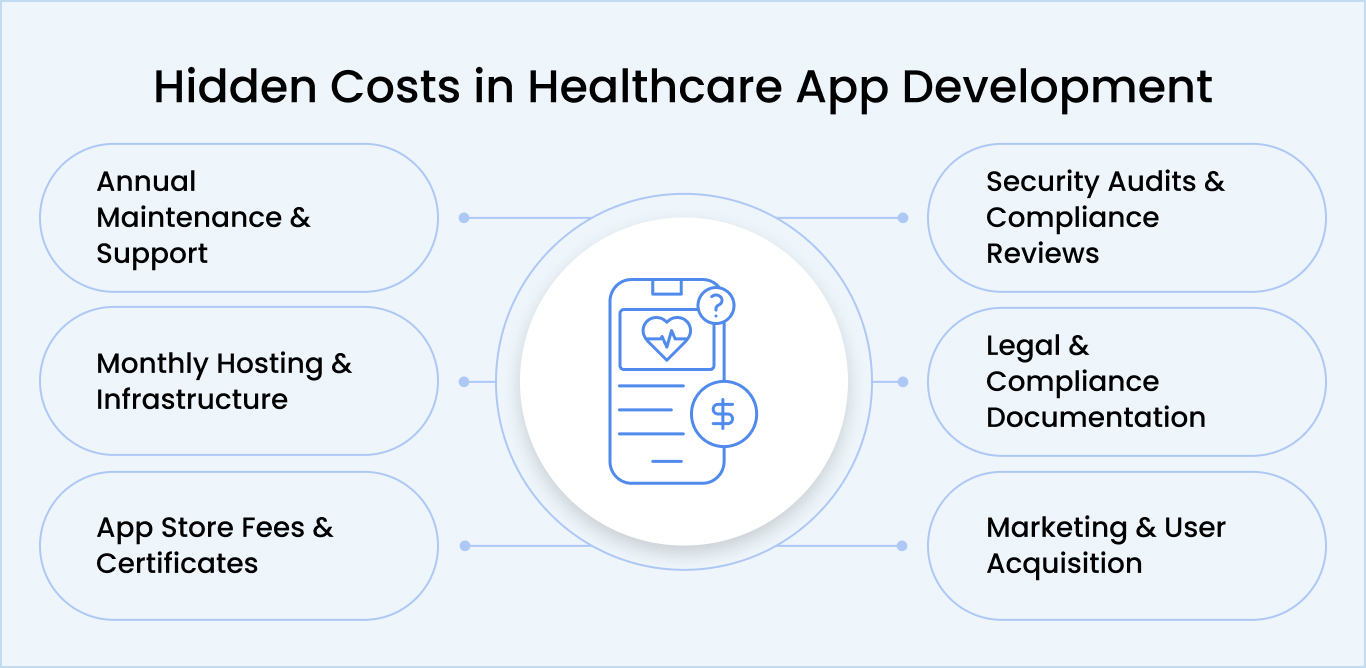
Healthcare mobile apps require continuous monitoring, frequent updates, strict compliance maintenance, and long-term improvements. These recurring expenses are often overlooked during initial planning but they significantly impact the total cost of ownership.
Below are the most common hidden and ongoing costs associated with healthcare app development.
1. Annual Maintenance & Support
Estimated cost: $22,500–$37,500 per year (15–25% of initial development cost)
Ongoing maintenance covers:
-
Bug fixes
-
Security updates
-
Compatibility updates for new iOS/Android releases
-
Performance optimization as the user base grows
While maintenance may seem costly, it ensures your healthcare app remains functional, secure, and compliant year-round.
2. Monthly Hosting & Infrastructure
Estimated cost: $100–$5,000 per month
Healthcare apps rely heavily on cloud infrastructure to:
-
Store and process sensitive patient data
-
Support real-time features like video consultations
-
Ensure uptime during critical healthcare interactions
Infrastructure costs scale with user traffic, data storage, and feature complexity and often become your largest recurring expense.
3. App Store Fees & Certificates
Estimated cost: $150–$500 per year
Essential recurring fees include:
-
Apple App Store and Google Play developer accounts
-
SSL certificates (renewed every 1–2 years)
These fees are small but unavoidable and critical for maintaining app availability and secure data transmission.
4. Security Audits & Compliance Reviews
Estimated cost: $5,000–$20,000 per year
Because healthcare apps handle PHI (Protected Health Information), annual compliance and security testing is mandatory. This includes:
-
Penetration testing
-
HIPAA compliance reviews
-
Vulnerability assessments
These audits protect against data breaches, maintain trust with healthcare partners, and ensure regulatory adherence.
5. Legal & Compliance Documentation
Estimated cost: $1,000–$5,000 per year
(Initial setup typically $3,000–$10,000)
Healthcare regulations evolve constantly. Legal teams must update:
-
Privacy policies
-
Business Associate Agreements (BAAs)
-
Consent forms and compliance documentation
Regular updates reduce liability and ensure alignment with new standards.
6. Marketing & User Acquisition
Estimated cost: $500–$3,000 per month
(Initial launch campaigns: $5,000–$20,000)
Even the best healthcare apps fail without visibility. Long-term success requires:
-
App Store Optimization (ASO)
-
Paid advertising
-
Healthcare-specific user acquisition strategies
-
Ongoing engagement campaigns
Consistent marketing ensures your app reaches patients, providers, and healthcare organizations.
These costs are real but manageable. Successful healthcare organizations reduce long-term expenses by choosing the right development team, starting with a well-planned MVP, and designing scalable infrastructure from day one. Small strategic choices early can save tens of thousands later.
Build Secure and Scalable Healthcare Apps at the Right Cost
Partner with HomeNest Software to build HIPAA-compliant, high-performance healthcare applications tailored to your budget and growth goals. Let our experts guide you from concept to launch and beyond.
Smart Ways to Reduce Healthcare App Development Costs
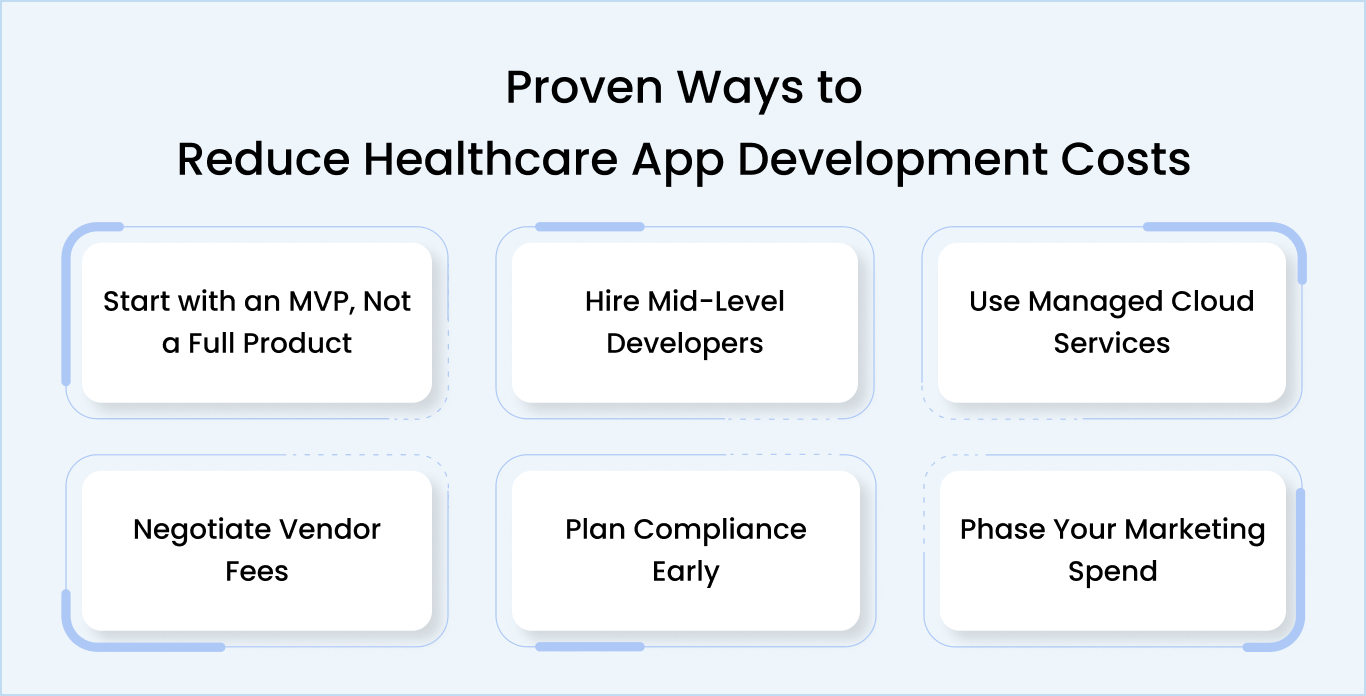
The difference between a costly healthcare app and a profitable one often comes down to smart planning and strategic decision-making. Here are practical ways to lower development expenses without compromising security, quality, or compliance.
1. Start With an MVP Instead of a Full Product
Begin by launching only the core features such as patient registration, basic search, and appointment booking. Advanced capabilities like AI-driven recommendations, telemedicine, or analytics can be added after validating demand.
A healthcare MVP can cut your initial investment by 40–50% while helping you test real market traction before scaling.
2. Hire Mid-Level Developers With Healthcare Experience
Developer costs vary widely based on experience level. Mid-level developers with relevant healthcare expertise:
-
Deliver reliable, production-ready code
-
Require less supervision
-
Cost significantly less than senior engineers
Most projects can be built efficiently with a balanced team of 5–6 developers, avoiding unnecessary payroll expenses.
3. Use Managed Cloud Services
Platforms like AWS, Azure, and Google Cloud manage scalability, backups, security patches, uptime, and infrastructure resilience.
While self-hosting may appear cheaper upfront, it:
-
Requires continuous DevOps support
-
Increases risk of downtime
-
Becomes more expensive as your user base grows
Managed cloud services prevent catastrophic failures and reduce long-term infrastructure costs.
4. Negotiate Vendor and API Provider Fees
Many third-party services including hosting providers, analytics APIs, payment processors, and communication SDKs offer:
-
Volume discounts
-
Startup-friendly pricing
-
Multi-year contract incentives
Strategic negotiation can lower your monthly operational expenses significantly.
5. Build Compliance Into Your Architecture Early
HIPAA, GDPR, and other healthcare regulations should be considered from day one. Retrofitting compliance later is:
-
Time-consuming
-
Expensive
-
Risky
Secure-by-design architecture avoids costly rewrites, delays, and potential penalties while ensuring your app is legally launch-ready.
6. Phase Your Marketing Budget
Avoid spending your full marketing budget before validating product-market fit. Instead:
-
Start with $5,000 in targeted campaigns
-
Measure user behavior and engagement
-
Optimize messaging and positioning
-
Scale only when traction is proven
This approach protects cash flow and ensures every marketing dollar delivers meaningful ROI.
By applying these strategies, healthcare organizations and startups can significantly reduce development costs while building secure, scalable, and compliant healthcare apps.
If you’d like, I can also create a cost-saving checklist or a step-by-step budget optimization plan tailored to your healthcare app idea.
Develop Cost-Efficient Healthcare Solutions With HomeNest Software
Healthcare app development demands smart financial decisions from the very beginning. The most successful healthcare organizations aren’t the ones that spend the least they’re the ones that spend strategically, prioritizing features wisely and selecting scalable, cost-effective infrastructure early in the process. This is where partnering with an experienced healthcare development team becomes invaluable.
With years of proven expertise, HomeNest Software is a leading healthcare app development agency capable of turning complex healthcare requirements into secure, profitable digital solutions. Our team of 100+ experienced developers has built applications that serve hundreds of thousands of patients daily, demonstrating our ability to deliver high-performance, real-world healthcare products.
Our track record speaks for itself:
-
Zero data breaches
-
98% client satisfaction
-
Consistent delivery of HIPAA-compliant solutions
-
Projects completed on time and within budget
We don’t just build applications we engineer sustainable healthcare platforms that drive revenue, enhance patient care, and scale effortlessly from launch to enterprise growth.
Explore our portfolio to see how we’ve modernized telemedicine systems, clinical workflows, patient engagement solutions, and other mission-critical healthcare platforms.
Ready to Build Your Healthcare App With a Trusted Partner?
Partner with a team that understands healthcare, technology, and budgets.
Schedule a free consultation today to discuss your vision and receive a clear, realistic cost breakdown.
Contact HomeNest Software today for a free consultation and inquire about our all-inclusive App Design package offers!
HomeNest Software – Empowering Long-Term Growth for Modern Businesses.

Contact Information:
- Address: The Sun Avenue, 28 Mai Chi Tho Street, Binh Trung Ward, Ho Chi Minh City
- Hotline: +84 898 994 298 ( WhatsApp )
- Website: homenest.software
FAQs
1. How much does it cost to develop a healthcare mobile app?
Healthcare app development typically ranges from $30,000 to $500,000+, depending on app type, complexity, features, compliance requirements (like HIPAA/GDPR), and integration needs.
2. How long does it take to build a healthcare app?
Development timelines vary based on complexity:
-
Basic apps: 3–4 months
-
Mid-level apps: 5–8 months
-
Enterprise healthcare systems: 9–14+ months
3. Do all healthcare apps require HIPAA compliance?
Apps that store, process, or transmit Protected Health Information (PHI) must follow HIPAA. Wellness and fitness apps may not require HIPAA unless they handle sensitive medical data.
4. What makes healthcare app development more expensive than standard apps?
Several factors increase cost:
-
Security and encryption
-
HIPAA/GDPR compliance
-
Complex integrations with EHR/EMR systems
-
Advanced features like telemedicine, AI diagnostics, or IoT monitoring
-
Extensive testing and certification requirements
5. Can I reduce healthcare app development costs?
Yes. Cost-saving strategies include:
-
Starting with an MVP
-
Using cross-platform frameworks (Flutter/React Native)
-
Leveraging cloud services
-
Negotiating vendor/API pricing
-
Planning compliance early
-
Hiring mid-level healthcare developers
6. What technologies are used to build healthcare apps?
Popular tech stacks include:
-
Front-end: React Native, Flutter, Swift, Kotlin
-
Back-end: Node.js, .NET, Java, Python
-
Cloud: AWS, Google Cloud, Azure
-
Integrations: HL7, FHIR APIs, Twilio, Stripe, Zoom SDKs
7. Can HomeNest Software integrate my app with hospital systems?
Yes. We integrate healthcare apps with EHR/EMR systems, pharmacy databases, insurance verification platforms, lab systems, and wearable medical IoT devices.
8. Do you offer post-launch maintenance?
Absolutely. We provide long-term:
-
Security monitoring
-
Compliance updates
-
Bug fixes
-
Feature enhancements
-
Performance optimization
9. Is my healthcare app idea protected if I share it with you?
Yes. We sign NDAs (Non-Disclosure Agreements) before discussing any sensitive details, ensuring your concept and IP remain fully protected.
10. How do I get started with building a healthcare app?
Simply schedule a consultation with our experts. We’ll review your requirements, suggest the right features and tech stack, and provide a clear timeline and cost estimate.
Latest Articles
View All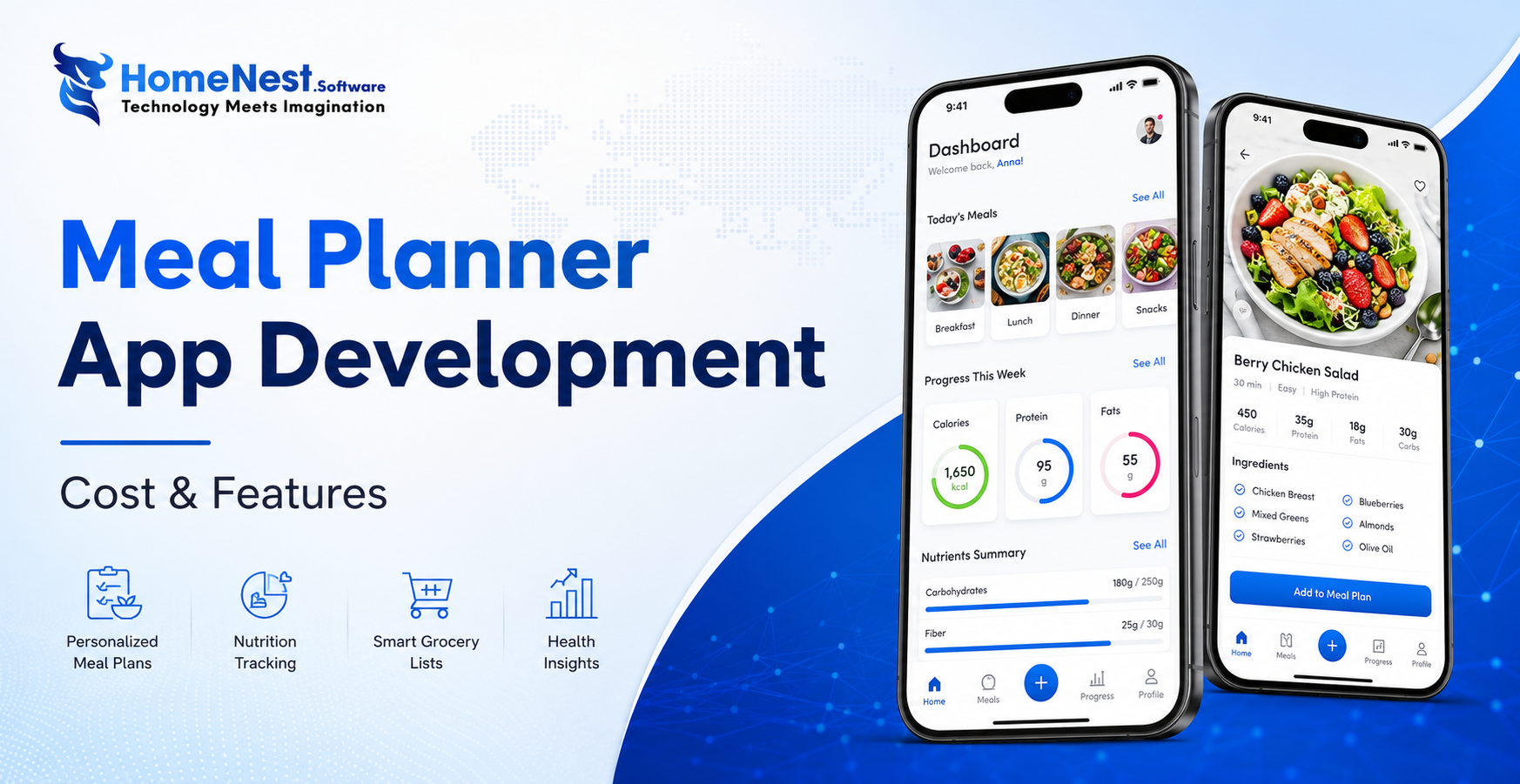
How to Build a Meal Planning App: A Complete Step-by-Step Guide
Building a successful meal planning app goes beyond creating an attractive interface it requires a clear business strategy, personalized user experiences, and scalable technology. By combining essential features like AI-powered meal recommendations, nutrition tracking, grocery list automation, and wearable integration, businesses can deliver lasting value to users while capitalizing on the growing digital health market. Partnering with an experienced mobile app development company ensures your solution is secure, future-ready, and designed to succeed in an increasingly competitive health-tech industry.
How Much Does It Cost to Build a Shopping App Like Temu?
Temu’s meteoric rise to over 900 million global downloads proves the power of combining AI, gamification, and social commerce, but building a similar viral shopping platform requires careful financial and technical planning. Developing an app like Temu typically costs anywhere from $40,000 for a basic Minimum Viable Product (MVP) to over $300,000 for a fully-featured platform. This guide breaks down every cost category, analyzes the core features driving Temu’s success, highlights the best technology stacks, and offers practical strategies to optimize your development budget without compromising on quality.

Criteria For Choosing The Right App Design Agency
UI/UX design is the logical foundation of a system, not merely a visual element. Choosing the wrong partner will directly lead to technical debt, budget overruns, and disruptions in the development process. This article provides a 6-step evaluation framework and a list of operational risks, helping businesses eliminate subjective design advice and accurately assess agency capabilities based on developer handoff standards and practical business performance.

How Does AI in Banking Industry Impact the Future?
Artificial intelligence (AI) has transitioned from a supplementary tool to a core infrastructure of financial data management, optimizing profitability through real-time fraud detection, natural language processing (NLP), and high-speed credit scoring models. “Deploying AI in the financial sector requires more than just algorithmic accuracy, it demands a highly secure cloud architecture and rigorous data governance,” commented Nguyen Tien, co-founder of HomeNest Software. Why read this guide? We skip the theoretical jargon to focus entirely on technical implementation. Whether you’re evaluating a vendor or planning a system overhaul, this article will detail: Operational Efficiency: Automating unstructured data workflows at scale. Risk Architecture: Implementing real-time threat detection and AML compliance. Data ownership: The essential need for 100% ownership of the source code to ensure full algorithm auditability.
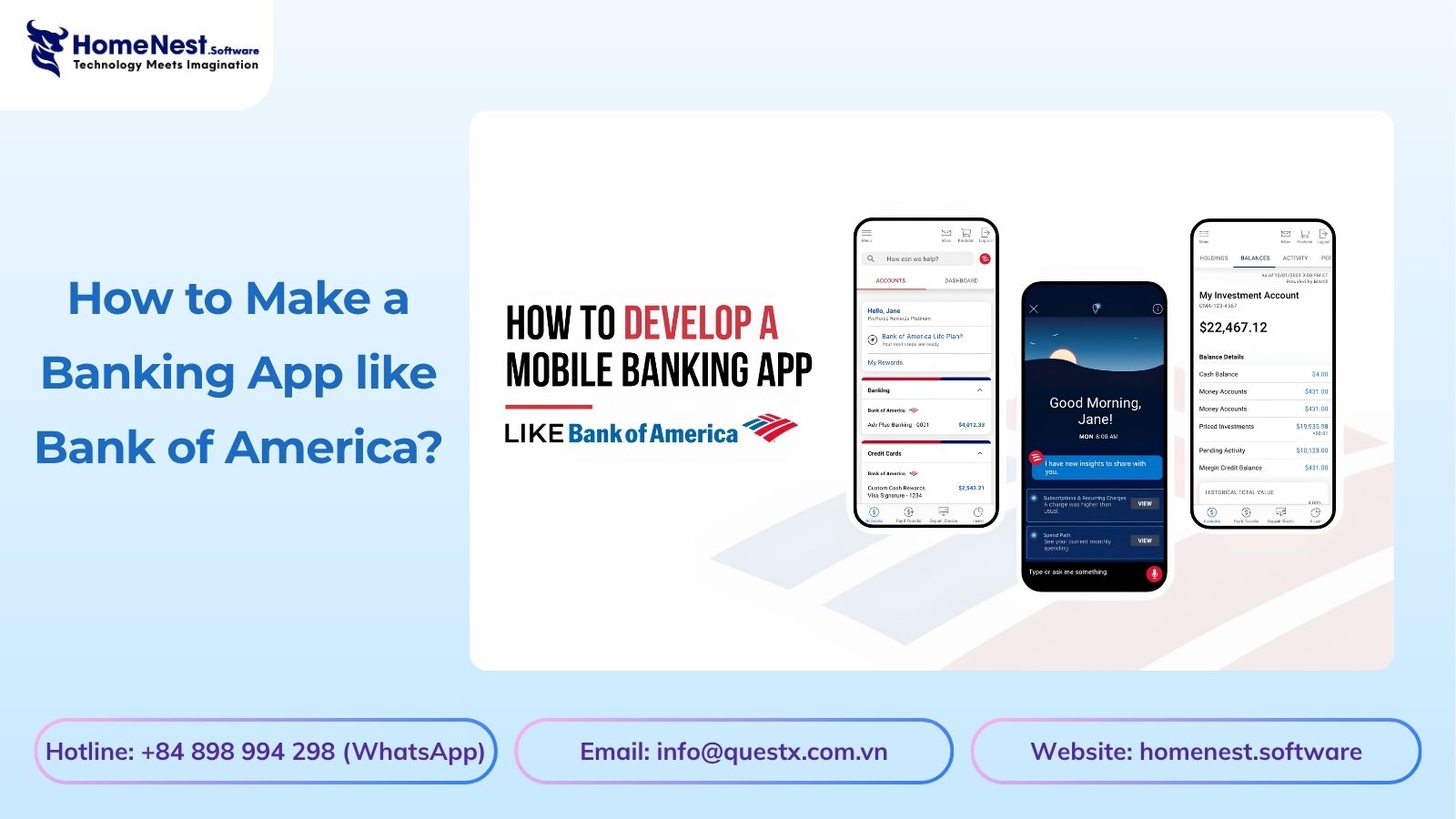
How to Make a Banking App like Bank of America?
Developing a mobile banking application like Bank of America extends far beyond basic UI design; it requires engineering a fault-tolerant backend capable of real-time ledger synchronization, biometric authentication, and high-volume data processing under strict regulatory frameworks. Drawing from HomeNest Software’s deep experience in architecting enterprise-grade fintech solutions, this guide strips away theoretical jargon to focus entirely on operational and technical execution. What you will find in this guide: We break down the precise development roadmap, from mapping out microservices and ensuring PCI-DSS compliance to estimating MVP development costs and securing absolute data sovereignty through 100% source code ownership. If you are preparing to build, scale, or audit a financial platform, this blueprint provides the exact framework you need.
Banking App Development Cost
Building a banking application is rarely a simple process; it’s a complex technical challenge requiring a balance between complying with stringent financial regulations, handling large transaction volumes, and a scalable cloud architecture. Miscalculating these technical requirements from the outset often leads to significant technical debt and budget overruns. Based on HomeNest Software’s practical experience in designing enterprise-grade fintech solutions, this guide bypasses generic estimates to provide a realistic analysis of banking application development costs. What you’ll find in this guide: We analyze the true cost factors, from technology selection and API integration to the hidden costs of regulatory compliance and security infrastructure. Whether you’re launching a minimum viable product or expanding an existing financial platform, this analysis provides the precise operational data you need to plan your budget effectively.