
AI solutions for Healthcare: 10 Real-world Examples to Watch
AI solutions for healthcare are no longer experimental—they are becoming a core driver of modern healthcare transformation. Organizations that invest early and implement AI strategically can achieve better clinical outcomes, higher efficiency, and more personalized patient care, while building a foundation for long-term innovation and growth.
Scope of Work
Hospitals are increasingly adopting AI solutions for healthcare to reduce staff workload, accelerate diagnosis, and improve patient outcomes. Healthcare leaders are actively seeking tools that address real operational challenges and provide practical support for care teams.
This guide from HomeNest Software explores ten real world use cases, showing how AI is transforming workflows and reshaping modern healthcare delivery.
What Are AI Solutions for Healthcare?
AI solutions for healthcare refer to the use of technologies such as machine learning, natural language processing, and deep learning to support both medical professionals and patients in real world scenarios. These systems analyze large volumes of healthcare data to identify patterns, generate insights, and assist with decision making and daily operations.
With AI powered solutions in place, hospitals can process information faster, reduce manual workload, and improve efficiency across care delivery.
In practice, this means:
- Doctors can make faster and more accurate clinical decisions
- Administrators can access electronic health records quickly and efficiently
- Patients receive more timely and personalized care
Overall, AI helps create a healthcare system that is more responsive, data driven, and patient centered, improving both treatment quality and operational experience.
10 Real World Examples of AI Solutions in Healthcare
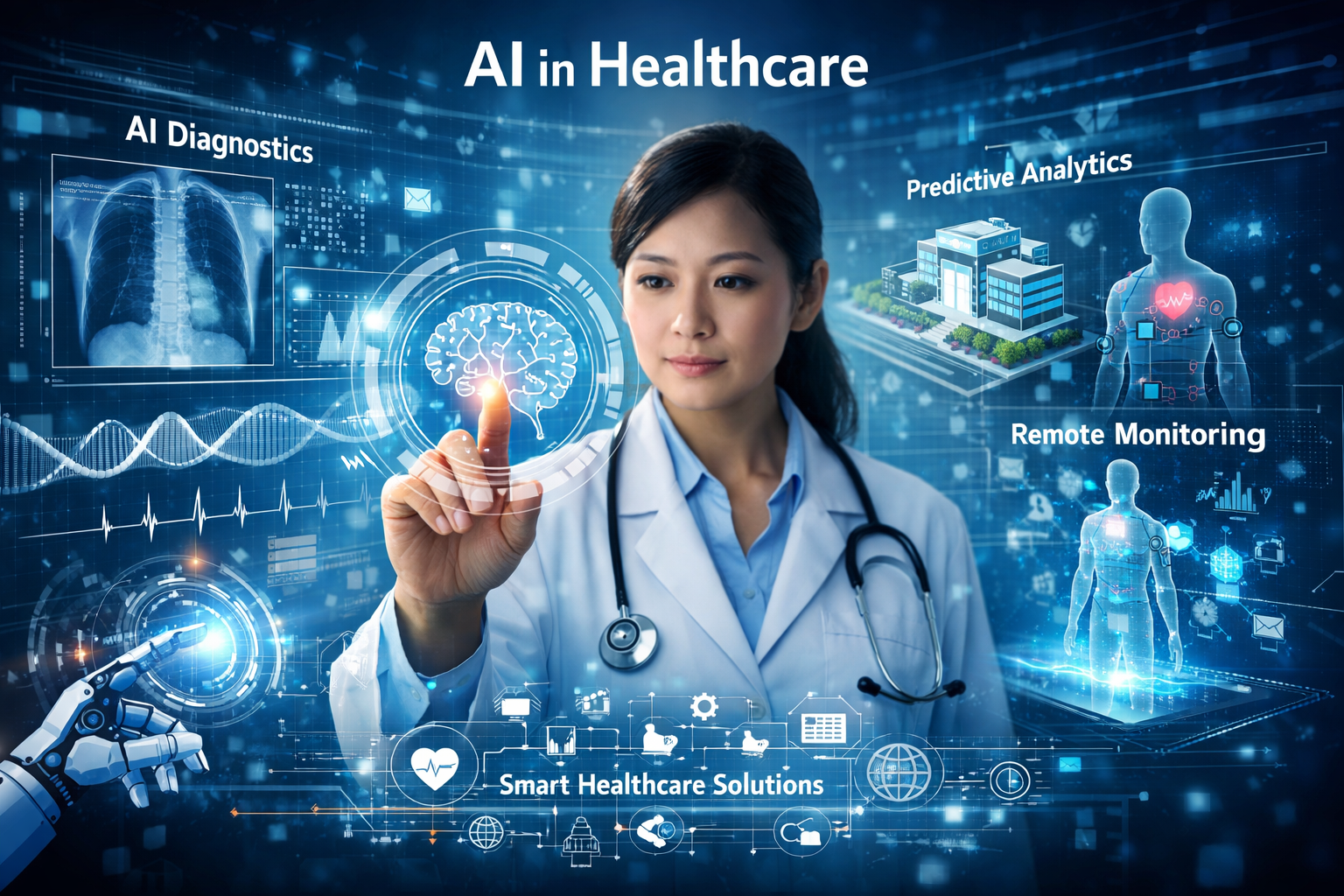
Artificial intelligence is rapidly transforming healthcare, moving from experimentation to practical, high impact applications. Today, AI supports the entire care journey from early detection to treatment and post care monitoring helping both medical teams and patients achieve better outcomes.
Enhancing CT Scans with Better Positioning and Image Quality
AI helps radiology teams improve CT workflows by ensuring accurate patient positioning and optimizing image reconstruction. This reduces radiation exposure, minimizes noise, and delivers clearer images for more confident diagnosis.
Accelerating MRI for Faster Diagnosis
AI powered reconstruction tools shorten MRI scan times while maintaining high image quality. This increases throughput, reduces costs, and improves patient comfort, especially for those who struggle with long scan durations.
Automating Ultrasound Measurements
Ultrasound results often depend on operator skill. AI automates repetitive measurements, delivering faster and more consistent results, while still allowing clinicians to review and adjust outputs when needed.
Supporting Radiologists with Faster Image Analysis
AI acts as a second set of eyes, highlighting abnormalities and reducing reading time. For example, AI models have improved diagnostic accuracy for conditions like multiple sclerosis and increased detection rates for lung nodules, even under heavy workloads.
Integrating Data for Better Cancer Treatment Decisions
AI connects data from multiple sources radiology, pathology, EHRs, and genomics to create a comprehensive patient profile. This enables more informed decisions and supports personalized cancer treatment strategies.
Assisting in Minimally Invasive Procedures
During procedures such as stroke intervention, AI analyzes imaging data in real time to identify blockages and guide physicians. This improves precision, speed, and procedural outcomes.
Detecting Patient Deterioration Early
AI systems continuously monitor vital signs and calculate early warning scores. This allows care teams to detect deterioration sooner, reducing complications and improving patient safety in general wards.
Predicting Equipment Failures
AI enables predictive maintenance by monitoring system performance and identifying early signs of failure. This reduces downtime, ensures continuity of care, and improves operational efficiency.
Optimizing Patient Flow and Hospital Operations
By analyzing real time and historical data, AI helps hospitals forecast demand, allocate resources, and manage patient flow more effectively. This leads to better bed utilization and smoother care delivery.
Remote Heart Monitoring with Wearables
AI powered systems analyze data from wearable devices to detect conditions like atrial fibrillation. This enables early intervention and continuous care, even outside hospital settings.
These real world applications show that AI is no longer optional it is becoming a core driver of efficiency, accuracy, and patient centered care in modern healthcare systems.
Companies Advancing AI Solutions for Healthcare

A growing number of organizations are driving innovation in healthcare by applying AI in practical, real world scenarios. Below are some of the leading companies shaping the future of care through advanced technologies.
Pfizer
Location: New York
Pfizer leverages AI to accelerate drug discovery and development. During the development of COVID 19 treatment PAXLOVID, the company used multimodal AI models and machine learning to analyze large datasets and identify the most promising compounds, significantly improving research efficiency.
Neuralink
Location: Fremont, California
Founded by Elon Musk, Neuralink is developing brain computer interface technology. Its implants use AI to interpret neural signals, helping restore movement for patients with paralysis. The company began human trials in 2023.
Butterfly Network
Location: Burlington, Massachusetts
Butterfly Network builds portable ultrasound devices that connect to smartphones. Powered by AI, these tools deliver fast, high quality imaging and real time insights, supporting multiple specialties such as emergency care and primary care.
Augmedix
Location: San Francisco, California
Augmedix provides AI driven clinical documentation solutions. Using natural language processing and speech recognition, it reduces administrative workload and improves workflow efficiency for healthcare providers.
Valo Health
Location: Boston, Massachusetts
Valo Health uses its Opal platform to combine clinical and biological data, enabling data driven drug discovery. This approach helps identify patterns across patient data and reduces reliance on traditional testing methods.
H2O.ai
Location: Mountain View, California
H2O.ai develops AI tools that support predictive analytics in healthcare. Hospitals use its solutions to forecast ICU demand, detect early signs of sepsis, and improve operational workflows.
ClosedLoop
Location: Austin, Texas
ClosedLoop provides end to end AI platforms that identify high risk patients and recommend personalized care plans. Its solutions support providers, insurers, and life sciences organizations in improving patient outcomes.
Laudio
Location: Boston, Massachusetts
Laudio focuses on improving workforce management in healthcare. Its AI powered platform helps frontline leaders optimize staff engagement, productivity, and care delivery.
Viz.ai
Location: San Francisco, California
Viz.ai uses AI to detect critical conditions such as stroke and send real time alerts to clinicians. This enables faster diagnosis and treatment, improving patient survival rates.
Cohere Health
Location: Boston, Massachusetts
Cohere Health applies AI to streamline prior authorization processes. Its platform helps align providers and payers, enabling faster approvals and more efficient care coordination.
These companies demonstrate how AI is being applied across the healthcare ecosystem from drug discovery and diagnostics to operations and patient engagement driving faster, smarter, and more efficient care delivery.
Challenges of AI Solutions for Healthcare

Despite clear advantages, AI solutions in healthcare must operate within strict regulatory and ethical boundaries. Frameworks such as HIPAA set high standards for how patient data is handled. Any organization adopting AI must carefully manage data collection, storage, security, and usage to ensure compliance and protect patient safety.
To implement AI effectively, healthcare providers need to address several critical areas:
Data Transparency and Governance
Organizations must clearly understand how AI systems process data, which algorithms are used, and how outputs are generated. Strong governance ensures accountability and gives patients visibility into how their data is being used.
Secure Data Lifecycle Management
Medical data flows through multiple stages from collection to storage to analysis. Each stage must be protected with robust security controls to prevent data loss, tampering, or unauthorized exposure.
Protection Against Unauthorized Access
Strict access control is essential. Hospitals must ensure that only authorized personnel and systems can access sensitive records. This includes role based permissions, authentication mechanisms, and continuous monitoring to reduce breach risks.
Algorithmic Fairness and Bias Prevention
AI models must deliver fair and unbiased outcomes across all patient groups. If trained on incomplete or skewed datasets, systems may produce inaccurate or discriminatory results. Regular validation and testing are required to ensure equitable performance.
Balancing innovation with responsibility is key. While AI can significantly improve efficiency, accuracy, and patient outcomes, it must be implemented with strong governance and ethical oversight. When done correctly, healthcare organizations can deliver trusted, secure, and equitable AI driven care at scale.
What the Future Holds for AI Solutions in Healthcare
The next phase of AI in healthcare will be defined by more adaptive models and wider adoption of connected medical devices (IoMT). As these technologies mature, they will improve diagnostic accuracy, accelerate clinical decision making, and create more seamless experiences for both patients and care teams.
With access to larger datasets and more powerful computing infrastructure, hospitals will be able to deliver care with greater precision, speed, and consistency. This reflects the rapid expansion of AI across the healthcare ecosystem.
Smarter Clinical Decision Support
The MedTech sector is advancing toward systems that combine automated diagnostics with intelligent clinical decision support. These platforms help clinicians interpret complex data faster and recommend treatment pathways tailored to each patient.
As a result, medical teams can offload routine analytical tasks to AI, allowing them to focus more on patient interaction and critical decision making.
Real World Innovations Driving the Future
Several solutions already demonstrate how far AI has progressed:
- IBM Watson Health enables advanced analysis of complex medical data
- Huna supports early breast cancer detection through image analysis
- Neomed automates medical documentation to reduce administrative burden
These innovations highlight a broader trend: AI is not just improving individual tasks it is reshaping how healthcare systems operate, enabling better outcomes and opening new opportunities for digital health solutions.
Looking ahead, AI will continue to evolve into a core layer of healthcare infrastructure, supporting more predictive, personalized, and efficient care delivery.
Partner With HomeNest Software for Scalable Healthcare AI Solutions
Hospitals and healthcare organizations are increasingly adopting AI to accelerate diagnostics, streamline data processes, and improve patient experience. However, healthcare AI is inherently complex. It must handle sensitive data, integrate with legacy systems, operate reliably in clinical environments, and scale without compromising patient safety.
This is why many providers choose to work with experienced technology partners who understand real world healthcare workflows and regulatory requirements.
How HomeNest Software Supports Healthcare Organizations
HomeNest Software delivers end to end healthcare AI solutions across three core areas:
- Custom AI application development for hospitals and clinics, from telehealth platforms to advanced analytics systems
- AI consulting services to guide integration across diagnostics, operations, and patient management
- Full cycle development, including business analysis, UX design, engineering, testing, and long term maintenance
Real World Implementation Examples
Integrated Healthcare Management System
A large healthcare organization required a unified platform to automate operations, manage patient and staff data, and connect with medical devices. HomeNest Software developed the system using Java Spring, ReactJS, and AWS to ensure scalability and performance.
The result is a real time data platform that supports flexible workflows and enables faster, more accurate clinical decisions.
Telehealth Consultation Platform
A leading clinic group in Japan aimed to launch a digital healthcare service connecting patients, doctors, and pharmacies. HomeNest Software built a mobile app for patients and a web platform for providers, integrating AI to improve system reliability and reduce errors.
Patients can now book appointments, attend video consultations, access records, and receive prescriptions seamlessly.
Healthcare Workforce Platform
A Japanese healthcare company needed a solution to help nurses evaluate workplace conditions and explore new opportunities. HomeNest Software developed a scalable platform with AI driven spam detection to maintain data quality, supported by AWS infrastructure for future growth.
The system now delivers a trusted, data driven environment for thousands of users.
These projects highlight a critical point: AI in healthcare succeeds only when built by teams that understand clinical workflows, data sensitivity, and long term system reliability.
HomeNest Software combines technical expertise with proven delivery processes to create secure, scalable, and practical AI solutions that deliver real value to healthcare providers.
Conclusion
AI solutions for healthcare are advancing rapidly, and organizations that adopt them early will gain a clear advantage in diagnostics, operations, and patient care. The examples above demonstrate how leading hospitals are already using AI to solve real world challenges and improve outcomes.
If your organization is looking to build reliable and scalable healthcare AI systems, HomeNest Software can support you at every stage from strategy and consulting to full cycle development.
Contact us to start building solutions that empower medical teams, reduce operational pressure, and deliver better patient outcomes.
Frequently Asked Questions (FAQ)
What are AI solutions in healthcare?
AI solutions in healthcare use technologies like machine learning and NLP to analyze medical data, support diagnosis, automate workflows, and improve patient care.
How are hospitals using AI today?
Hospitals apply AI in areas such as medical imaging, patient monitoring, workflow automation, telehealth, and predictive analytics to improve efficiency and outcomes.
What are the main benefits of AI in healthcare?
Key benefits include faster diagnosis, reduced administrative workload, improved accuracy, better patient experience, and optimized resource management.
Is AI in healthcare safe and compliant?
Yes, when implemented correctly. AI systems must comply with regulations like HIPAA and GDPR, ensuring secure data handling and patient privacy.
What challenges should organizations consider before adopting AI?
Common challenges include data privacy, system integration, accuracy validation, bias prevention, and upfront investment costs.
Can AI replace doctors in healthcare?
No. AI is designed to support clinicians, not replace them. A human in the loop approach ensures that critical decisions remain under professional medical supervision.
How long does it take to implement AI solutions in healthcare?
Depending on complexity, implementation can range from 3–6 months for smaller systems to 6–12+ months for fully integrated enterprise platforms.
What is the ROI of AI in healthcare?
AI delivers ROI through cost reduction, improved efficiency, better patient outcomes, and optimized resource utilization, often within the first year of deployment.
Latest Articles
View All
Criteria For Choosing The Right App Design Agency
UI/UX design is the logical foundation of a system, not merely a visual element. Choosing the wrong partner will directly lead to technical debt, budget overruns, and disruptions in the development process. This article provides a 6-step evaluation framework and a list of operational risks, helping businesses eliminate subjective design advice and accurately assess agency capabilities based on developer handoff standards and practical business performance.
How Does AI in Banking Industry Impact the Future?
Artificial intelligence (AI) has transitioned from a supplementary tool to a core infrastructure of financial data management, optimizing profitability through real-time fraud detection, natural language processing (NLP), and high-speed credit scoring models. “Deploying AI in the financial sector requires more than just algorithmic accuracy, it demands a highly secure cloud architecture and rigorous data governance,” commented Nguyen Tien, co-founder of HomeNest Software. Why read this guide? We skip the theoretical jargon to focus entirely on technical implementation. Whether you’re evaluating a vendor or planning a system overhaul, this article will detail: Operational Efficiency: Automating unstructured data workflows at scale. Risk Architecture: Implementing real-time threat detection and AML compliance. Data ownership: The essential need for 100% ownership of the source code to ensure full algorithm auditability.

How to Make a Banking App like Bank of America?
Developing a mobile banking application like Bank of America extends far beyond basic UI design; it requires engineering a fault-tolerant backend capable of real-time ledger synchronization, biometric authentication, and high-volume data processing under strict regulatory frameworks. Drawing from HomeNest Software’s deep experience in architecting enterprise-grade fintech solutions, this guide strips away theoretical jargon to focus entirely on operational and technical execution. What you will find in this guide: We break down the precise development roadmap, from mapping out microservices and ensuring PCI-DSS compliance to estimating MVP development costs and securing absolute data sovereignty through 100% source code ownership. If you are preparing to build, scale, or audit a financial platform, this blueprint provides the exact framework you need.
Banking App Development Cost
Building a banking application is rarely a simple process; it’s a complex technical challenge requiring a balance between complying with stringent financial regulations, handling large transaction volumes, and a scalable cloud architecture. Miscalculating these technical requirements from the outset often leads to significant technical debt and budget overruns. Based on HomeNest Software’s practical experience in designing enterprise-grade fintech solutions, this guide bypasses generic estimates to provide a realistic analysis of banking application development costs. What you’ll find in this guide: We analyze the true cost factors, from technology selection and API integration to the hidden costs of regulatory compliance and security infrastructure. Whether you’re launching a minimum viable product or expanding an existing financial platform, this analysis provides the precise operational data you need to plan your budget effectively.
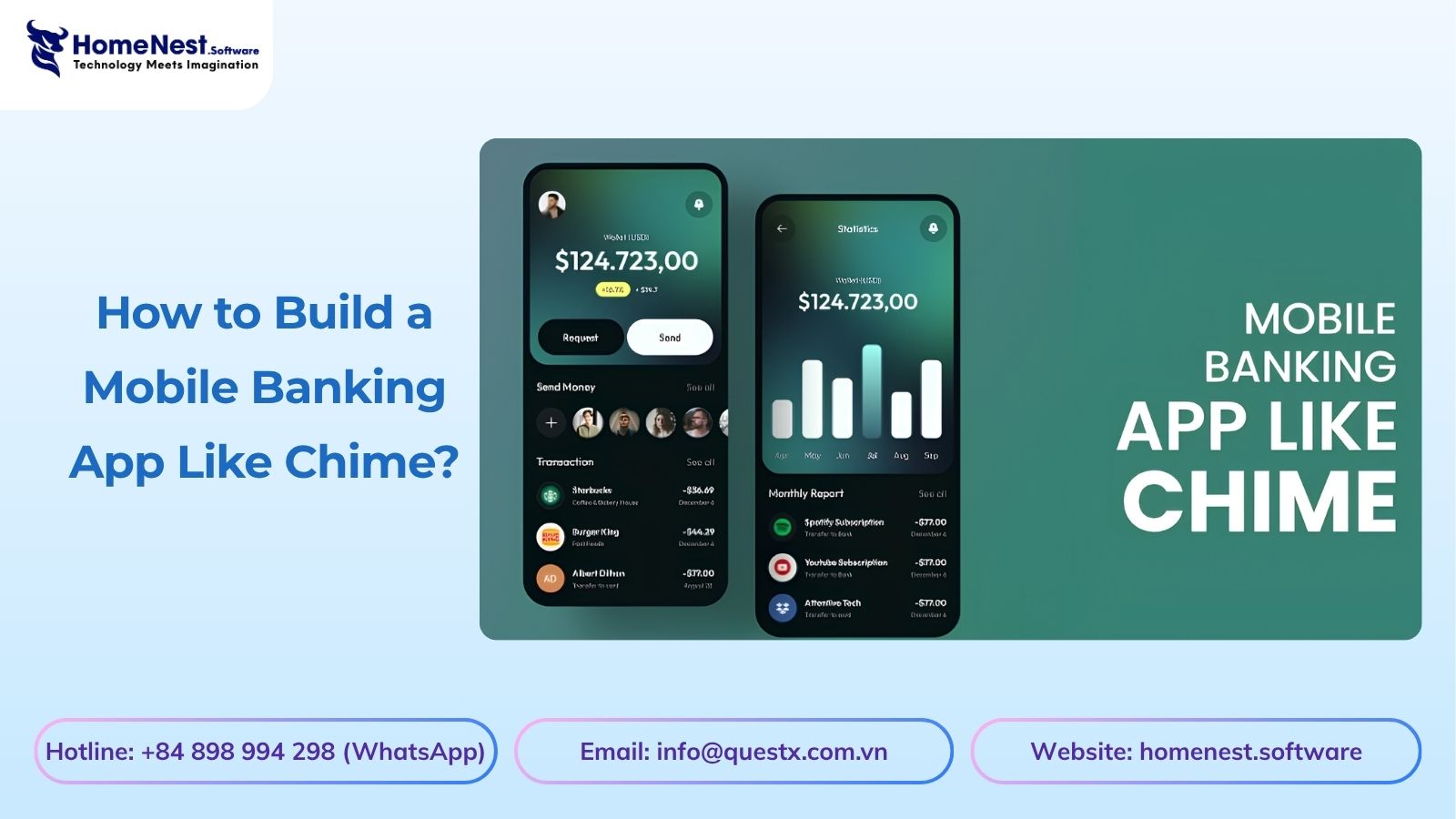
How to Build a Mobile Banking App Like Chime?
Building a mobile banking app like Chime is not just about features, it is about delivering a secure, scalable, and user-centric financial experience. From planning the right architecture to optimizing mobile banking app development cost, every decision directly impacts your product’s success. Leveraging Fintech app development services, starting with MVP app development, and scaling through on-demand app development solutions allows businesses to reduce risk and accelerate time to market. To stay competitive, combining Android app development services and iOS app development solutions ensures wider reach, while continuous updates through maintenance software development services keep your app secure and future-ready.

How to Build a Banking App Like Barclays: A Complete Entrepreneur’s Guide
Building a banking app like Barclays requires more than just development. It demands a strong product vision, secure architecture, and a clear monetization strategy. From optimizing cost and selecting the right tech stack to ensuring compliance and scalability, every decision impacts long-term success. Partnering with an experienced team like HomeNest Software helps accelerate development, reduce risks, and deliver a high-quality fintech product that can compete in today’s fast-evolving digital banking landscape.