
How Much Does Mobile App Development Cost in Canada?
Scope of Work

Have you ever considered building a mobile app that could transform your business or simplify everyday workflows? Canada’s tech ecosystem is home to many highly skilled app developers—but before getting started, one critical question always comes up: how much does mobile app development cost in Canada?
This article serves as a practical guide to navigating the mobile app development cost landscape in Canada. We’ll break down the key factors that affect pricing, such as app complexity, features, development approach, and team structure. You’ll also find estimated cost ranges for different types of mobile applications, helping you set realistic expectations from the start.
Let’s dive in.
What Is the Mobile App Development Cost in Canada?
Determining the exact mobile app development cost in Canada can be challenging, as pricing depends on multiple factors such as app features, design requirements, target platforms, overall complexity, and the hourly rates of the development team. However, it’s still possible to provide a general cost overview based on common development scenarios.
Below are the key factors that directly influence the total cost.
1. App Complexity
App complexity is one of the most significant cost drivers. Simple apps with limited functionality require less development time and resources, making them more affordable. In contrast, complex applications involve advanced features, backend logic, and integrations that substantially increase development effort.
-
Simple apps typically include basic functions such as calculators or informational content.
-
Medium-complexity apps may include user authentication, databases, and standard APIs.
-
Complex apps often feature real-time data synchronization, third-party integrations, advanced security, and custom workflows.
| App Complexity | Estimated Cost (USD) |
|---|---|
| Simple | $10,000 – $15,000 |
| Medium | $15,000 – $20,000 |
| Complex | $25,000+ |
2. Platform Selection
Developing an app for a single platform—either iOS or Android—is generally more cost-effective than building for both platforms simultaneously. However, businesses targeting a broader user base often opt for cross-platform or dual-platform development, which increases overall costs.
Cost variations also depend on:
-
Programming languages used
-
Development frameworks
-
Platform-specific guidelines and testing requirements
Choosing the right platform strategy is essential for balancing budget and market reach.
3. Design and User Interface (UI/UX)
A high-quality UI/UX design plays a critical role in user engagement and long-term retention. While investing in professional design can raise the initial development cost, it significantly improves usability and overall app performance.
Factors that affect design-related costs include:
-
Level of design customization
-
Use of animations and transitions
-
Custom icons, illustrations, and branding elements
A visually appealing, intuitive interface often leads to higher user satisfaction and better conversion rates.
Read more: Best Countries to Outsource Software Development
How Much Does It Cost to Maintain a Mobile App?
The cost of maintaining a mobile app varies depending on several factors, including app complexity, functionality, target platform, and the size of the user base. On average, annual app maintenance costs range from 15% to 20% of the initial development cost.
For a simple app with basic features, maintenance expenses typically fall between $1,000 and $3,000 per year. In contrast, more advanced applications—those with complex features, frequent updates, and a larger user base—may require up to $5,000 or more annually.
Ongoing maintenance is essential to keep an app stable, secure, and competitive. Regular updates, performance optimizations, bug fixes, and feature enhancements help ensure user satisfaction and long-term retention. As a result, maintenance planning should be considered a core component of the total cost of owning a mobile app.
Additionally, preparing for scalability and future upgrades is critical as user demands evolve. Working with dedicated developers allows businesses to adapt quickly, support growth, and maintain a sustainable mobile app presence over time.
Read more: How Much Does It Cost To Build A Mobile App?
How HomeNest Software Assists in Mobile App Development
As a trusted technology partner, HomeNest Software specializes in delivering end-to-end mobile app development services. Their approach is strongly client-focused, ensuring that each solution is tailored to meet specific business objectives.
The process begins with an in-depth analysis of client requirements, including business goals, target users, and project scope. This discovery phase helps define a clear development roadmap and reduces risks throughout the project lifecycle.
Leveraging modern technologies and industry best practices, HomeNest Software’s experienced development team builds secure, scalable, and high-performance mobile applications. With expertise in both Android and iOS app development, they help clients reach a wider audience while ensuring consistent quality across platforms.
HomeNest Software – Empowering Long-Term Growth for Modern Businesses.

Contact Information:
- Address: The Sun Avenue, 28 Mai Chi Tho Street, Binh Trung Ward, Ho Chi Minh City
- Hotline: +84 898 994 298 ( WhatsApp )
- Website: homenest.software
HomeNest Services: Website Design – App Design – Software Development.
Frequently Asked Questions (FAQs)
How often should a mobile app be maintained?
Mobile apps should be maintained on an ongoing basis, with minor updates released monthly and major updates every 3–6 months. Regular maintenance helps fix bugs, improve performance, enhance security, and ensure compatibility with new OS versions.
What does mobile app maintenance include?
Mobile app maintenance typically covers:
-
Bug fixes and performance optimization
-
OS and device compatibility updates
-
Security patches
-
Server and backend maintenance
-
UI/UX improvements
-
Feature enhancements based on user feedback
Is app maintenance mandatory after launch?
Yes. Without proper maintenance, apps may experience crashes, security vulnerabilities, and declining user retention. App store policies from Apple and Google also require regular updates to remain compliant.
Can I reduce mobile app maintenance costs?
Yes. You can reduce costs by:
-
Using scalable architecture from the beginning
-
Choosing cross-platform frameworks
-
Prioritizing essential updates
-
Partnering with a dedicated development team instead of hiring in-house
How does scalability affect app maintenance costs?
As your user base grows, maintenance costs typically increase due to higher server loads, data management, and performance optimization needs. Planning scalability early helps avoid unexpected expenses later.
Does HomeNest Software provide post-launch app maintenance?
Yes. HomeNest Software offers ongoing maintenance and support services after app launch, including performance monitoring, feature upgrades, and long-term scalability planning to ensure your app remains stable and competitive.
Is it better to hire dedicated developers for app maintenance?
Hiring dedicated developers is often more efficient for long-term maintenance. It ensures faster response times, better system understanding, and consistent updates compared to ad-hoc or freelance support.
Latest Articles
View All
Criteria For Choosing The Right App Design Agency
UI/UX design is the logical foundation of a system, not merely a visual element. Choosing the wrong partner will directly lead to technical debt, budget overruns, and disruptions in the development process. This article provides a 6-step evaluation framework and a list of operational risks, helping businesses eliminate subjective design advice and accurately assess agency capabilities based on developer handoff standards and practical business performance.
How Does AI in Banking Industry Impact the Future?
Artificial intelligence (AI) has transitioned from a supplementary tool to a core infrastructure of financial data management, optimizing profitability through real-time fraud detection, natural language processing (NLP), and high-speed credit scoring models. “Deploying AI in the financial sector requires more than just algorithmic accuracy, it demands a highly secure cloud architecture and rigorous data governance,” commented Nguyen Tien, co-founder of HomeNest Software. Why read this guide? We skip the theoretical jargon to focus entirely on technical implementation. Whether you’re evaluating a vendor or planning a system overhaul, this article will detail: Operational Efficiency: Automating unstructured data workflows at scale. Risk Architecture: Implementing real-time threat detection and AML compliance. Data ownership: The essential need for 100% ownership of the source code to ensure full algorithm auditability.
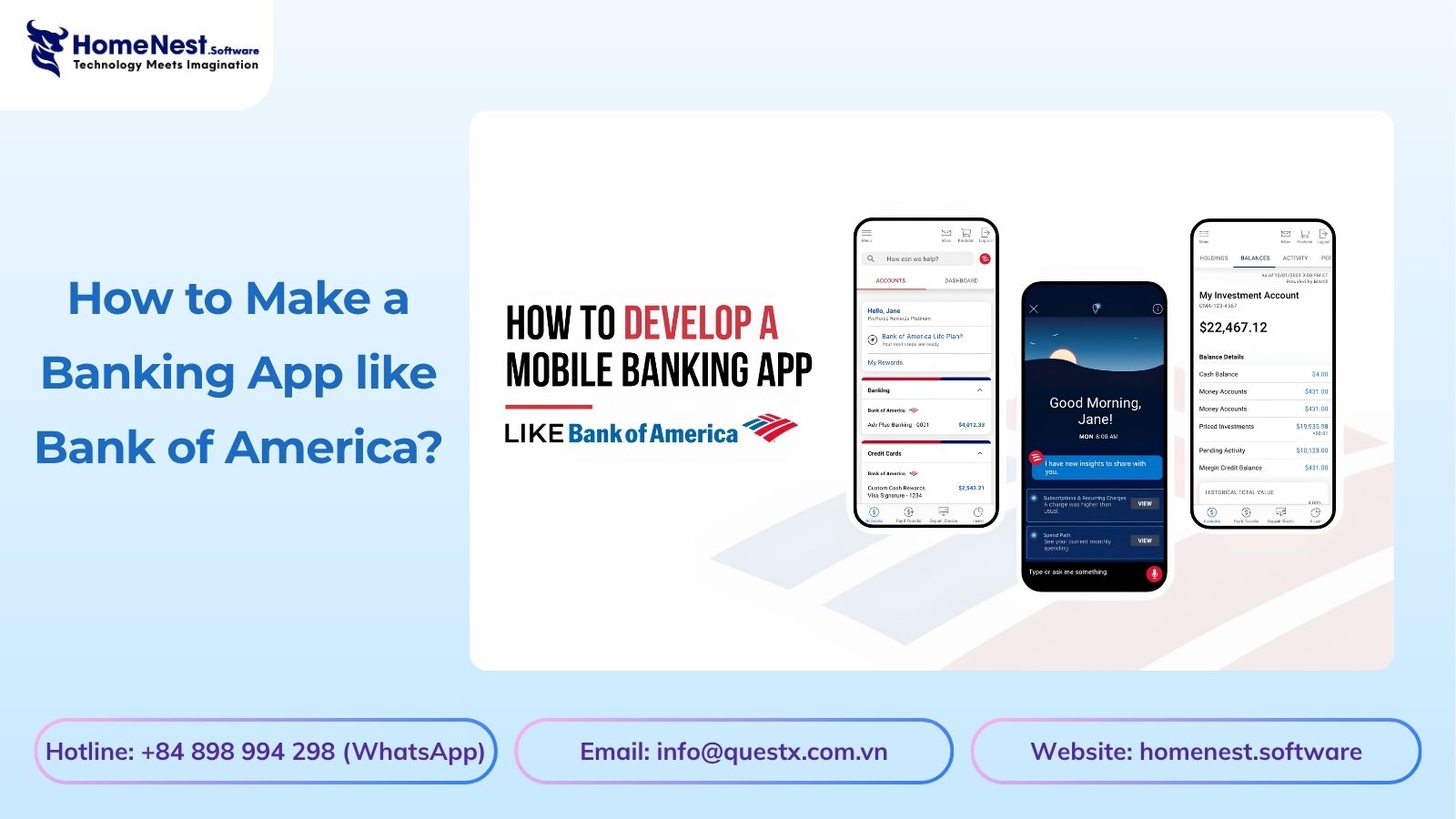
How to Make a Banking App like Bank of America?
Developing a mobile banking application like Bank of America extends far beyond basic UI design; it requires engineering a fault-tolerant backend capable of real-time ledger synchronization, biometric authentication, and high-volume data processing under strict regulatory frameworks. Drawing from HomeNest Software’s deep experience in architecting enterprise-grade fintech solutions, this guide strips away theoretical jargon to focus entirely on operational and technical execution. What you will find in this guide: We break down the precise development roadmap, from mapping out microservices and ensuring PCI-DSS compliance to estimating MVP development costs and securing absolute data sovereignty through 100% source code ownership. If you are preparing to build, scale, or audit a financial platform, this blueprint provides the exact framework you need.
Banking App Development Cost
Building a banking application is rarely a simple process; it’s a complex technical challenge requiring a balance between complying with stringent financial regulations, handling large transaction volumes, and a scalable cloud architecture. Miscalculating these technical requirements from the outset often leads to significant technical debt and budget overruns. Based on HomeNest Software’s practical experience in designing enterprise-grade fintech solutions, this guide bypasses generic estimates to provide a realistic analysis of banking application development costs. What you’ll find in this guide: We analyze the true cost factors, from technology selection and API integration to the hidden costs of regulatory compliance and security infrastructure. Whether you’re launching a minimum viable product or expanding an existing financial platform, this analysis provides the precise operational data you need to plan your budget effectively.
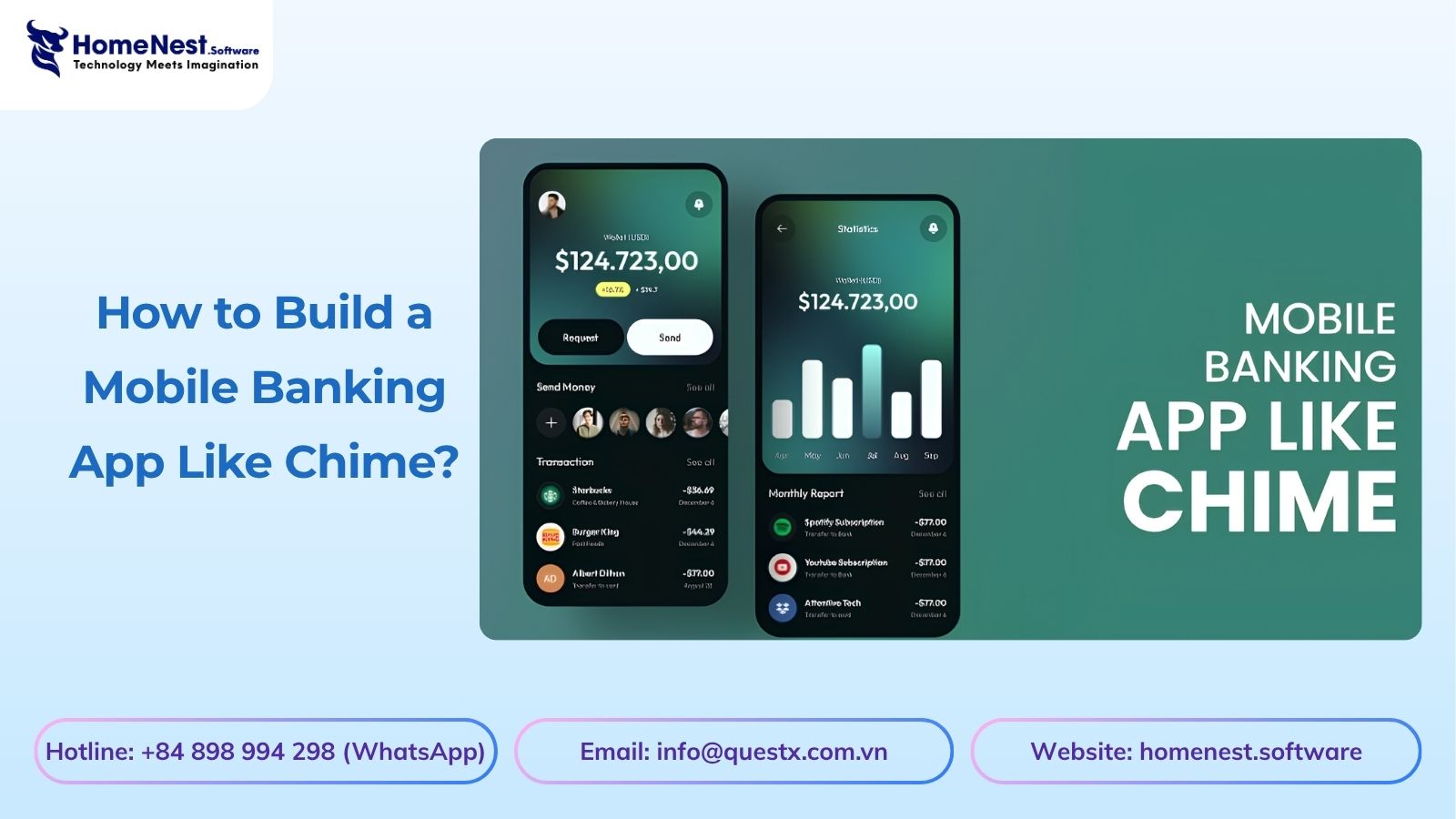
How to Build a Mobile Banking App Like Chime?
Building a mobile banking app like Chime is not just about features, it is about delivering a secure, scalable, and user-centric financial experience. From planning the right architecture to optimizing mobile banking app development cost, every decision directly impacts your product’s success. Leveraging Fintech app development services, starting with MVP app development, and scaling through on-demand app development solutions allows businesses to reduce risk and accelerate time to market. To stay competitive, combining Android app development services and iOS app development solutions ensures wider reach, while continuous updates through maintenance software development services keep your app secure and future-ready.
How to Build a Banking App Like Barclays: A Complete Entrepreneur’s Guide
Building a banking app like Barclays requires more than just development. It demands a strong product vision, secure architecture, and a clear monetization strategy. From optimizing cost and selecting the right tech stack to ensuring compliance and scalability, every decision impacts long-term success. Partnering with an experienced team like HomeNest Software helps accelerate development, reduce risks, and deliver a high-quality fintech product that can compete in today’s fast-evolving digital banking landscape.