
How to Build a Grocery Delivery App Like Instacart
Building an app like Instacart is not just about replicating features it’s about creating a scalable ecosystem that connects users, vendors, and delivery operations efficiently. Start with a lean MVP to validate demand, focus on core user experience, and then scale with the right architecture, technology stack, and monetization strategy. In a fast-growing market, success comes to businesses that move quickly but build strategically.
Scope of Work
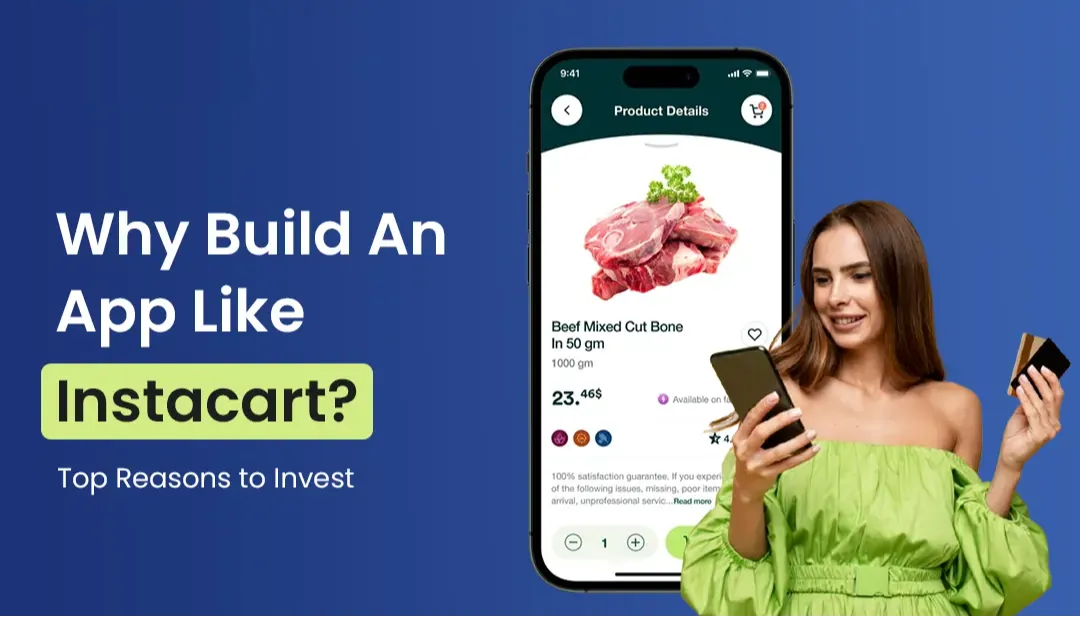
The rapid growth of digitalization has fundamentally changed the way people shop and grocery shopping is no exception. Online grocery delivery platforms like Instacart have successfully capitalized on this shift, turning convenience into a scalable business model. Alongside players like Kroger, these platforms are setting new standards for how consumers access everyday essentials.
If you’re considering entering this high growth market, the timing couldn’t be better. Demand for online grocery services is expected to continue rising through 2026, driven by changing consumer behavior and increasing reliance on digital convenience.
So, how do you build an app like Instacart?
In this article, we’ll walk you through key insights, market trends, business models, and essential steps to help you successfully launch and scale your own grocery delivery app.
Why Build an App Like Instacart? Top Reasons to Invest
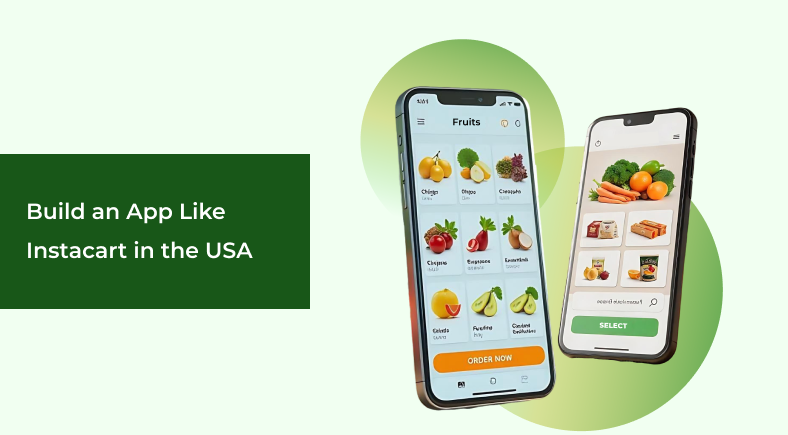
During the global lockdown, Instacart became an essential service for millions of households across the United States. Even as competition from platforms like DoorDash continues to grow, Instacart has maintained its strong market position.
By the end of 2024, Instacart reported revenues of approximately $852 million, with over 14 million active users and access to more than 500 million products on its platform. These numbers clearly highlight the scale and potential of the online grocery delivery industry.
The Surge in Online Grocery Delivery
Consumer behavior has permanently shifted toward convenience and digital first shopping. Online grocery delivery is no longer a trend it’s becoming a standard expectation in urban markets worldwide.
Growing Consumer Demand
Busy lifestyles, urbanization, and mobile first habits are driving consistent demand for grocery delivery services. Users increasingly prefer fast, reliable, and on demand access to everyday essentials.
High Revenue Potential
Grocery delivery apps offer multiple monetization streams, including:
- Delivery fees
- Subscription models
- Vendor commissions
- In app promotions and advertising
This creates strong opportunities for sustainable and scalable revenue.
Enhanced Customer Experience with Technology
Modern apps leverage technologies such as:
- AI based recommendations
- Real time tracking
- Smart logistics optimization
These features significantly improve user experience and operational efficiency.
Competitive Advantage in a Growing Market
Entering the market early with a well designed platform allows businesses to establish brand presence, build customer loyalty, and scale effectively before saturation increases.
Investing in an Instacart like grocery delivery app is not just about following a trend it’s about positioning your business in a rapidly expanding digital ecosystem with long term growth potential.
The Booming On Demand Grocery Delivery Market in 2026
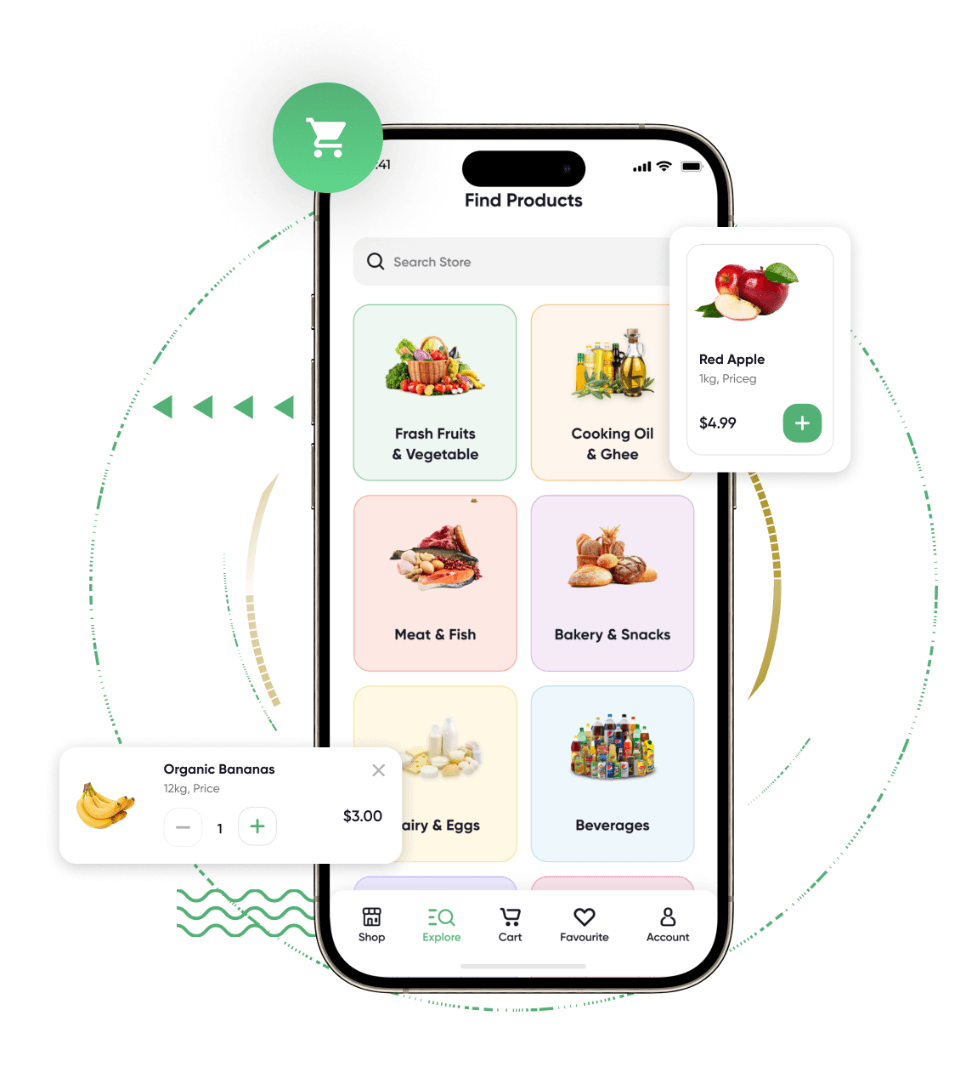
The online grocery market continues to expand rapidly, driven by changing consumer behavior and digital adoption. In the United States alone, the online grocery customer base has reached approximately 138 million users, and total revenue is projected to hit $422 billion in the coming years.
This growth signals a clear opportunity: investing in on demand grocery delivery app development is no longer optional it’s a strategic move for businesses looking to stay competitive in the digital economy.
Platforms like Instacart, DoorDash, and Kroger are leading this transformation by delivering convenience, speed, and personalized experiences at scale.
Convenience Driven Consumer Behavior
Modern consumers prioritize convenience above all. Grocery delivery apps allow users to order anytime, anywhere eliminating the need for time consuming in store visits.
Busy Lifestyles and Urban Living
As work schedules become more demanding, traditional grocery shopping becomes less practical. On demand apps solve this by offering quick, reliable delivery that fits into busy daily routines.
The Smartphone and Mobile App Revolution
The widespread adoption of smartphones has accelerated digital commerce. With just a few taps, users can browse, select, and purchase groceries within seconds making mobile apps the backbone of this industry.
Lasting Impact of the Pandemic
The pandemic permanently changed how people shop. Contactless delivery, safety concerns, and convenience have made online grocery ordering a long term habit rather than a temporary solution.
Expanding Service Models and Features
Modern grocery apps now offer:
- Instant and same day delivery
- Scheduled pickups
- Personalized recommendations
- Flexible payment options
These innovations continue to attract and retain users at scale.
Market Outlook
Fueled by these factors, the global grocery delivery market is expected to reach approximately $1,381 billion by 2029, growing at a CAGR of 10.07% (2026–2029).
The momentum behind on demand grocery delivery is not slowing down. Businesses that invest early in scalable, user centric platforms will be best positioned to capture long term value in this rapidly growing market.
Understanding the Business Model of an Instacart like App
Before launching a grocery delivery platform like Instacart, it’s critical to understand how the business model works. A successful platform is not just about technology it’s about how different components come together to create value for users, partners, and the business itself.
Key Partners
Instacart operates through a strong ecosystem of partners, including:
- Local grocery stores
- Supermarkets and retail chains
- Suppliers and vendors
These partnerships allow the platform to offer a wide product range without owning inventory.
Customer Segments
The platform serves two primary groups:
- Consumers: Users who value convenience, speed, and flexibility in grocery shopping
- Retail partners: Stores looking to expand their reach and increase sales through digital channels
Value Proposition
What makes Instacart effective is its ability to deliver value on multiple levels:
- Access to a wide network of stores and products
- Fast, on demand delivery
- No need for warehouse management
- Flexible and convenient shopping experience
Channels
Instacart reaches users through multiple digital and operational channels:
- Mobile apps (iOS and Android)
- Website platform
- Digital marketing and advertising
- Delivery personnel (shoppers)
Key Activities
To keep the platform running efficiently, core activities include:
- Managing users, vendors, and store partnerships
- Maintaining and upgrading the platform
- Processing payments securely
- Coordinating logistics and delivery
- Training and managing shoppers
Customer Relationships
Customer engagement is maintained through:
- Reliable service quality
- Partnerships with trusted local stores
- Community engagement and social media
- Personalized offers and communication
Key Resources
The platform relies on several critical resources:
- Strong partnerships with grocery retailers
- A scalable technology platform
- A network of delivery personnel (shoppers)
Revenue Streams
Apps like Instacart generate revenue through multiple channels:
- Commission from partner stores
- Delivery fees
- Service charges
- Subscription plans (e.g., premium memberships)
- In app advertising and promotions
Competitive Landscape
Instacart operates in a competitive market alongside players such as:
- Amazon Fresh
- Walmart
- DoorDash
- Shipt, FreshDirect, and others
What Sets Instacart Apart?
So what makes apps like Instacart stand out in such a competitive space?
- High customer retention rates
- Personalized offers and recommendations
- Fast and reliable delivery
- Clear and effective communication
- Incentives for both users and shoppers
The strength of an Instacart like business model lies in its ability to connect supply and demand efficiently without owning inventory while continuously optimizing user experience and operational performance.
End to End App Workflow to Build a Platform Like Instacart
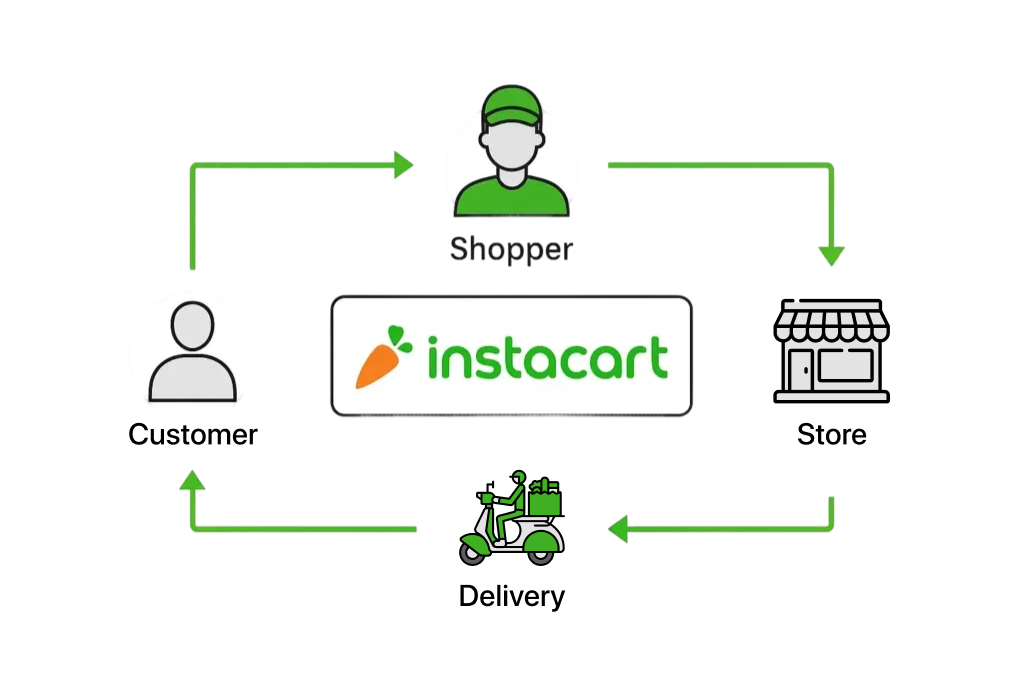
Launching a grocery delivery platform like Instacart requires a structured, end to end approach. Whether you’re starting with Mobile App Development Services or planning to scale into a full Enterprise Software Development ecosystem, understanding the complete workflow is essential for long term success.
Business Planning and Strategy
Every successful app starts with a solid foundation.
This stage focuses on:
- Defining your target audience
- Analyzing market demand and competitors
- Choosing the right business model (commission, subscription, etc.)
A well defined strategy ensures your product is aligned with real market needs from day one.
UI/UX Design for User Centric Experience
User experience plays a critical role in adoption and retention.
Professional UI/UX design helps you:
- Create intuitive navigation
- Reduce friction in the ordering process
- Deliver a seamless shopping experience across devices
Investing in design early helps differentiate your app in a competitive market.
App Development and Technology Implementation
This is where your product comes to life.
By leveraging Mobile App Development Services, you can:
- Build scalable mobile applications (iOS, Android, or cross platform)
- Integrate essential features like real time tracking, payments, and notifications
- Incorporate advanced technologies such as AI and automation
As your platform grows, transitioning into Enterprise Software Development ensures scalability, performance, and system reliability.
Growth Marketing and User Acquisition
A well built app needs a strong go to market strategy.
Key activities include:
- Performance marketing campaigns
- App Store Optimization (ASO)
- Referral and loyalty programs
Effective marketing drives user acquisition and builds long term engagement.
AI Powered Analytics and Optimization
Data is the backbone of modern platforms.
Using AI driven analytics, you can:
- Understand customer behavior
- Optimize delivery routes and logistics
- Personalize user experiences
- Improve inventory and demand forecasting
These insights help continuously refine and scale your business.
Investor Pitch and Business Expansion
To scale your platform, securing investment is often essential.
This stage involves:
- Building a compelling investor pitch deck
- Demonstrating traction and growth potential
- Connecting with strategic investors
With the right funding and strategy, your app can evolve into a large scale digital platform.
Building an app like Instacart is not a one step process it’s a continuous journey from idea validation to scalable execution. Starting with the right Mobile App Development Services and evolving into Enterprise Software Development ensures your platform can grow sustainably in a highly competitive market.
Advanced Features for a Customized Instacart like Grocery Delivery App
A successful grocery delivery platform like Instacart is built on a multi panel architecture. Each component customer app, admin dashboard, delivery agent app, and vendor panel plays a critical role in delivering a seamless and scalable experience.
Customer App & Website
The customer facing interface is designed to maximize convenience and usability.
Core features include:
- Easy Login & Signup: Register via email, phone number, or social accounts
- Product Browsing: Explore a wide range of products with intuitive navigation
- Advanced Search & Filters: Quickly find items using keywords, categories, and filters
- Real Time Order Tracking: Monitor delivery status, driver location, and ETA
- Order History: Access past purchases for easy reordering and tracking
- Multiple Payment Options: Support for cards, digital wallets, and online banking
- Scheduled Delivery: Choose preferred delivery or pickup time slots
- Wishlist: Save products for future purchases
- Offers & Coupons: Access discounts and personalized deals
- Ratings & Reviews: Share feedback on products and services
Admin Dashboard
The admin panel acts as the control center for the entire platform.
Key capabilities:
- Centralized Management: Monitor and manage all operations from a single dashboard
- Order Management: Track and process all incoming and completed orders
- Payments & Commissions: Configure pricing, commissions, and delivery fees
- Delivery Monitoring: Assign tasks and track delivery performance in real time
- Business Analytics: Gain insights into orders, cancellations, delays, and performance metrics using AI driven analytics
Delivery Agent App
The delivery app ensures efficient and accurate order fulfillment.
Essential features:
- Easy Onboarding: Quick registration and verification process
- Instant Order Notifications: Real time alerts with detailed order information
- Route Optimization: AI powered navigation for faster and more efficient delivery
- Proof of Delivery: Capture signatures or images upon successful delivery
- Earnings Tracking: Monitor daily, weekly, or monthly income
- In App Navigation: GPS based tracking for precise delivery routes
- In App Chat: Direct communication with customers
- Push Notifications: Updates on orders, changes, and system alerts
- Ratings & Reviews: Ability to rate customers and view feedback
Vendor Panel
The vendor panel empowers stores and suppliers to manage their operations effectively.
Key features include:
- Order Dashboard: View, process, and manage incoming orders
- Order Alerts: Receive real time notifications for new orders
- Payment Tracking: Monitor earnings, payouts, and transaction history
- Product Listing Management: Update inventory, pricing, and promotions
- Multi Location Management: Manage multiple store locations from one interface
- Order Approval System: Accept or reject orders based on stock availability
A high performing grocery delivery app is not defined by a single feature but by how well these systems work together. When designed correctly, this multi panel architecture enables seamless coordination between users, vendors, and delivery agents, forming the foundation of a scalable and efficient platform.
How Do Apps Like Instacart Make Money?
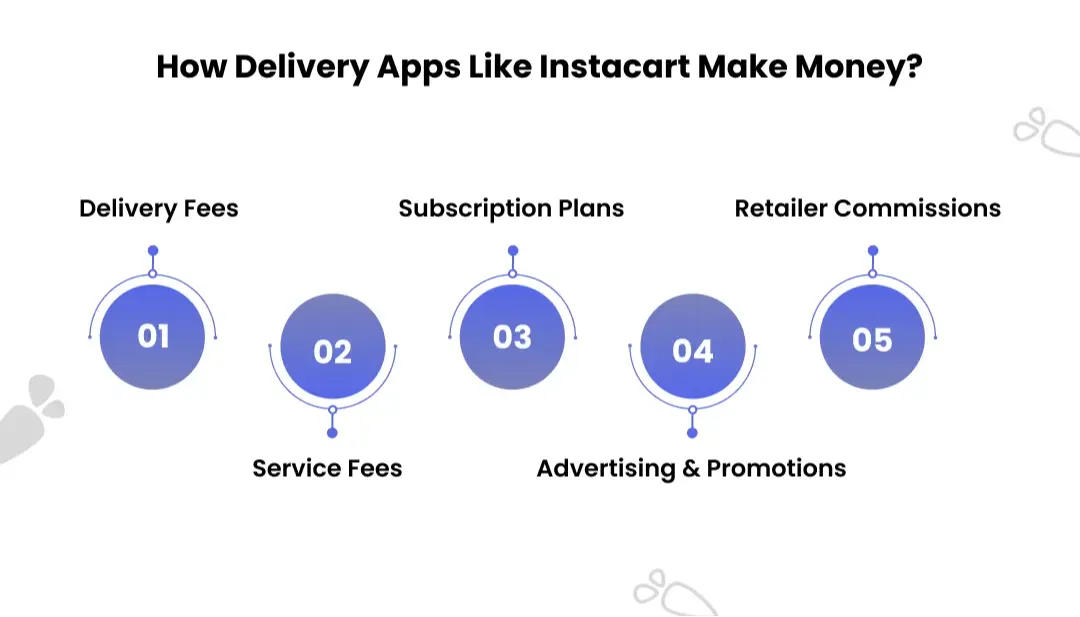
Building an on demand grocery app like Instacart is only one part of the equation. To ensure long term success, it’s essential to understand how these platforms generate revenue through multiple scalable streams.
Delivery Fees
One of the primary revenue sources is the delivery fee charged to customers for each order.
- Typically ranges from $3.99 to $9.99
- May vary based on distance, time, demand, or external factors (e.g., peak hours, weather conditions)
This model ensures consistent income from daily transactions.
Service Fees
In addition to delivery charges, platforms apply a service fee on each order.
- Usually 5%–10% of the total order value
- May include extra charges for heavy items or special handling
This fee contributes to operational costs and platform maintenance.
Subscription Plans
Subscription models provide recurring revenue and improve customer retention.
- Example: Instacart+ (formerly Instacart Express)
- Annual fee around $99/year
- Benefits include free delivery on eligible orders and reduced service fees
This model encourages frequent usage and builds customer loyalty.
Advertising and Promotions
The platform monetizes its ecosystem by allowing brands and retailers to promote products.
- Sponsored listings
- Featured product placements
- In app advertising campaigns
Revenue depends on visibility and competition among brands.
Retailer Commissions
Instacart earns a percentage from partner stores for every transaction made through the platform.
- Commission rates vary based on agreements
- Scales with order volume and partner network
This is one of the most significant and scalable revenue streams.
The strength of apps like Instacart lies in their multi layered monetization strategy. By combining transaction based fees, subscriptions, and ecosystem driven revenue, these platforms create a sustainable and highly scalable business model.
Tech Stack Required to Build an App Like Instacart
To build a scalable and high performance grocery delivery platform like Instacart, choosing the right technology stack is critical. The tech stack directly impacts your app’s performance, scalability, security, and long term maintainability.
Below is a recommended technology stack for developing a feature rich grocery delivery application.
Frontend (User Interface Development)
The frontend layer defines the user experience across mobile and web platforms.
Mobile App Development:
- Flutter
- React Native
- Swift (iOS)
- Kotlin (Android)
Web Application:
- React.js
- Angular
- Vue.js
These technologies help deliver responsive, fast, and user friendly interfaces.
Backend Development
The backend powers core functionalities such as order processing, user management, and real time operations.
Programming Languages:
- Node.js
- Python
- Ruby on Rails
- Java
Frameworks:
- Express.js (Node.js)
- Django (Python)
- Spring Boot (Java)
A robust backend ensures smooth performance and scalability as user demand grows.
Database Management
Efficient data storage and retrieval are essential for handling large volumes of transactions.
Relational Databases:
- PostgreSQL
- MySQL
NoSQL Databases:
- MongoDB
- Firebase
The choice depends on your data structure and scalability requirements.
Cloud & Hosting Solutions
Cloud infrastructure enables flexibility, scalability, and high availability.
- Amazon Web Services (AWS)
- Google Cloud Platform (GCP)
- Microsoft Azure
These platforms support auto scaling, load balancing, and secure deployment.
Payment Gateway Integration
Secure and seamless payment processing is a must for any eCommerce platform.
- Stripe
- Razorpay
- PayPal
These gateways support multiple payment methods and ensure transaction security.
Real Time Notifications & Communication
Real time communication enhances user engagement and operational efficiency.
- Firebase Cloud Messaging (FCM)
- Twilio (SMS and calls)
- SendGrid (email notifications)
Analytics & Performance Monitoring
Tracking user behavior and system performance helps optimize the platform.
- Google Analytics
- Mixpanel
- Firebase Crashlytics
These tools provide insights into usage patterns and app stability.
DevOps & CI/CD
Automation and continuous delivery are essential for maintaining quality and speed.
- Docker & Kubernetes
- Jenkins
- GitHub Actions
These tools streamline deployment, testing, and infrastructure management.
A well chosen tech stack is the foundation of any successful grocery delivery app. It ensures your platform can scale efficiently, handle real time operations, and deliver a seamless experience as your business grows.
Cost Estimation for an Instacart like Grocery Delivery App
By now, you’ve explored the key elements required to launch a grocery delivery platform. The next logical question is: How much does it cost to build an app like Instacart?
The answer depends on several critical factors that directly influence the overall development budget.
Feature Complexity
Feature scope is one of the most significant cost drivers.
- Basic apps with core functionalities (ordering, payments) → lower cost
- Advanced apps with real time tracking, AI recommendations, and automation → higher cost
Simply put, the more complex the feature set, the higher the investment required.
UI/UX Design Requirements
Design plays a major role in shaping user experience and cost.
- Simple, functional design → more cost efficient
- Custom, interactive, and branded design → higher cost due to additional effort and iterations
A well designed interface improves user engagement but requires more time and resources.
Technology Stack
The choice of technology impacts both initial development and long term scalability.
- Open source technologies → lower upfront cost
- Licensed tools and advanced integrations → higher cost
Selecting the right stack is essential for balancing performance and budget.
Development Team Location
Developer rates vary significantly by region.
- US/Western Europe → higher cost
- Eastern Europe → mid range
- Asia (e.g., Vietnam, India) → cost effective
Choosing the right team can significantly optimize your total investment.
App Maintenance and Support
Post launch costs are often underestimated but essential.
These include:
- Regular updates and feature improvements
- Bug fixing and performance optimization
- Security upgrades and monitoring
Ongoing maintenance ensures your app remains stable and competitive.
Estimated Development Cost
On average, the cost to build an Instacart like app ranges from $5,000 to $15,000+, depending on your specific requirements, feature set, and development approach.
There is no one size fits all cost. The final investment depends on how you prioritize features, design, and scalability. Working with an experienced development partner helps you define the right scope and avoid unnecessary expenses while building a product that can grow with your business.
Conclusion: Start Your Grocery Delivery Business Today
The online grocery delivery market is growing rapidly, with platforms like Instacart and DoorDash leading the way by redefining convenience for modern consumers.
At the same time, the market is far from saturated. There are still significant opportunities for businesses that can deliver better user experiences, faster services, or more localized solutions.
If you’re planning to build an Instacart like application, you’re entering the market at the right time. The key is not just launching fast but building a solution that is scalable, reliable, and aligned with real user needs.
At HomeNest Software, we bring years of experience in delivering end to end eCommerce and on demand platforms for global clients. From initial idea validation to full scale development, our team focuses on creating solutions that are both technically robust and business driven.
If you’re ready to turn your grocery delivery idea into a real product, the next step is simple: define your requirements, validate your concept, and start building with the right team.
FAQs
What is an Instacart like grocery delivery app?
An Instacart like app is an on demand platform that allows users to browse products from local stores, place orders, and receive deliveries in real time. It connects customers, vendors, and delivery agents in a single ecosystem.
How much does it cost to build a grocery delivery app?
The average cost ranges from $5,000 to $15,000+, depending on:
- Feature complexity
- Design requirements
- Technology stack
- Development team location
Advanced features like AI recommendations or real time logistics can increase the total cost.
How long does it take to develop an app like Instacart?
Development time depends on the scope:
- MVP version: 1–3 months
- Mid level app: 3–6 months
- Full scale platform: 6+ months
Starting with an MVP helps reduce time to market and validate your idea faster.
What are the essential features of a grocery delivery app?
Key features include:
- User registration and profile management
- Product browsing and search
- Cart and checkout system
- Real time order tracking
- Payment integration
- Ratings and reviews
Additional features like AI analytics and personalized offers can be added later.
What is the business model of apps like Instacart?
Apps like Instacart generate revenue through multiple streams:
- Delivery fees
- Service charges
- Subscription plans (e.g., Instacart+)
- Retailer commissions
- Advertising and promotions
This multi stream model ensures scalability and consistent revenue.
Should I build a native or cross platform app?
- Cross platform (Flutter, React Native): cost effective, faster development
- Native (iOS, Android): better performance, higher cost
Most startups begin with cross platform and scale later.
What technologies are used to build a grocery delivery app?
Common technologies include:
- Frontend: React Native, Flutter, Swift, Kotlin
- Backend: Node.js, Python, Java
- Database: PostgreSQL, MongoDB
- Cloud: AWS, GCP, Azure
The right tech stack ensures performance, scalability, and security.
Is it better to start with an MVP?
Yes. Starting with an MVP helps you:
- Validate market demand
- Reduce initial investment
- Gather real user feedback
- Improve product market fit before scaling
How do grocery delivery apps handle logistics?
They use:
- Real time GPS tracking
- Route optimization algorithms
- Delivery agent apps
- Automated order assignment systems
These technologies ensure fast and efficient deliveries.
What are the ongoing costs after launching the app?
Post launch costs include:
- App maintenance and updates
- Cloud hosting and infrastructure
- Security monitoring
- Customer support and operations
These are essential for long term stability and growth.
How can I monetize my grocery delivery app?
You can generate revenue through:
- Delivery and service fees
- Subscription plans
- Commission from vendors
- In app advertising
A combination of these models creates sustainable growth.
How do I choose the right development partner?
Look for a company that:
- Has experience in on demand or eCommerce platforms
- Understands both business and technology
- Offers scalable architecture
- Provides long term support
Choosing the right partner significantly impacts your product’s success.
Latest Articles
View All
Criteria For Choosing The Right App Design Agency
UI/UX design is the logical foundation of a system, not merely a visual element. Choosing the wrong partner will directly lead to technical debt, budget overruns, and disruptions in the development process. This article provides a 6-step evaluation framework and a list of operational risks, helping businesses eliminate subjective design advice and accurately assess agency capabilities based on developer handoff standards and practical business performance.
How Does AI in Banking Industry Impact the Future?
Artificial intelligence (AI) has transitioned from a supplementary tool to a core infrastructure of financial data management, optimizing profitability through real-time fraud detection, natural language processing (NLP), and high-speed credit scoring models. “Deploying AI in the financial sector requires more than just algorithmic accuracy, it demands a highly secure cloud architecture and rigorous data governance,” commented Nguyen Tien, co-founder of HomeNest Software. Why read this guide? We skip the theoretical jargon to focus entirely on technical implementation. Whether you’re evaluating a vendor or planning a system overhaul, this article will detail: Operational Efficiency: Automating unstructured data workflows at scale. Risk Architecture: Implementing real-time threat detection and AML compliance. Data ownership: The essential need for 100% ownership of the source code to ensure full algorithm auditability.
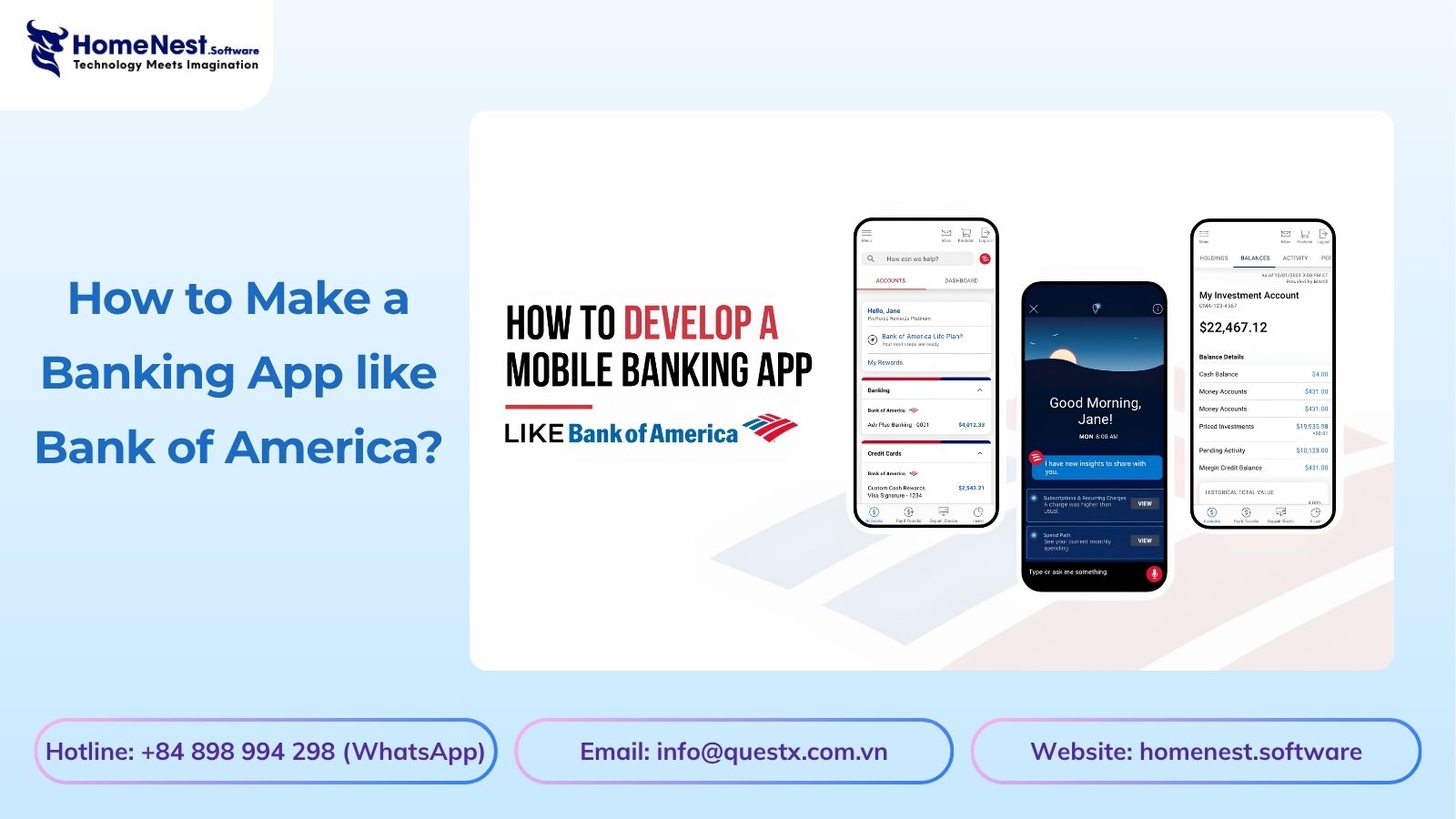
How to Make a Banking App like Bank of America?
Developing a mobile banking application like Bank of America extends far beyond basic UI design; it requires engineering a fault-tolerant backend capable of real-time ledger synchronization, biometric authentication, and high-volume data processing under strict regulatory frameworks. Drawing from HomeNest Software’s deep experience in architecting enterprise-grade fintech solutions, this guide strips away theoretical jargon to focus entirely on operational and technical execution. What you will find in this guide: We break down the precise development roadmap, from mapping out microservices and ensuring PCI-DSS compliance to estimating MVP development costs and securing absolute data sovereignty through 100% source code ownership. If you are preparing to build, scale, or audit a financial platform, this blueprint provides the exact framework you need.
Banking App Development Cost
Building a banking application is rarely a simple process; it’s a complex technical challenge requiring a balance between complying with stringent financial regulations, handling large transaction volumes, and a scalable cloud architecture. Miscalculating these technical requirements from the outset often leads to significant technical debt and budget overruns. Based on HomeNest Software’s practical experience in designing enterprise-grade fintech solutions, this guide bypasses generic estimates to provide a realistic analysis of banking application development costs. What you’ll find in this guide: We analyze the true cost factors, from technology selection and API integration to the hidden costs of regulatory compliance and security infrastructure. Whether you’re launching a minimum viable product or expanding an existing financial platform, this analysis provides the precise operational data you need to plan your budget effectively.
How to Build a Mobile Banking App Like Chime?
Building a mobile banking app like Chime is not just about features, it is about delivering a secure, scalable, and user-centric financial experience. From planning the right architecture to optimizing mobile banking app development cost, every decision directly impacts your product’s success. Leveraging Fintech app development services, starting with MVP app development, and scaling through on-demand app development solutions allows businesses to reduce risk and accelerate time to market. To stay competitive, combining Android app development services and iOS app development solutions ensures wider reach, while continuous updates through maintenance software development services keep your app secure and future-ready.
How to Build a Banking App Like Barclays: A Complete Entrepreneur’s Guide
Building a banking app like Barclays requires more than just development. It demands a strong product vision, secure architecture, and a clear monetization strategy. From optimizing cost and selecting the right tech stack to ensuring compliance and scalability, every decision impacts long-term success. Partnering with an experienced team like HomeNest Software helps accelerate development, reduce risks, and deliver a high-quality fintech product that can compete in today’s fast-evolving digital banking landscape.