
Food Delivery App Development: Step-by-Step Guide for Businesses
The success of a food delivery app depends on selecting the right business model, building a seamless user experience, and leveraging strong Mobile App Development and Enterprise Software Development capabilities to ensure scalability, performance, and long-term growth—supported by a reliable partner like HomeNest Software.
Scope of Work
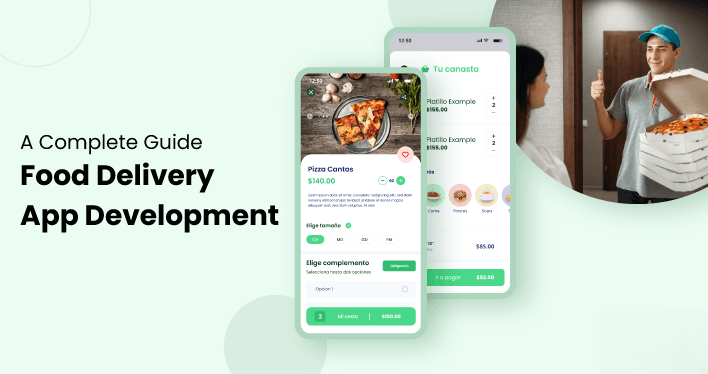
Investing in a food ordering app can significantly elevate your restaurant business but only if it performs flawlessly. A poorly built application doesn’t just inconvenience users; it directly undermines customer experience and, ultimately, business growth. In many cases, startups struggle not because of flawed business models, but due to unreliable app performance.
Consider this: 34% of global users cite slow delivery times as their top frustration when ordering food. The root cause often goes beyond logistics. Orders fail to reach the restaurant, delivery partners lose time due to malfunctioning maps, and system delays create friction at every step. These technical breakdowns lead to missed orders, dissatisfied customers, and tangible revenue loss.
This is why a high performing, feature rich, and intuitive application is not optional it’s a critical business asset. From seamless order placement to accurate, real time delivery tracking, every touchpoint must work in sync to ensure a smooth and reliable user experience.
In this guide, we’ll walk you through everything that truly matters in food delivery app development from essential features and system architecture to selecting the right development team. No fluff just practical insights to help you build a product that performs.
Market Share of Food Delivery Apps and Key Statistics
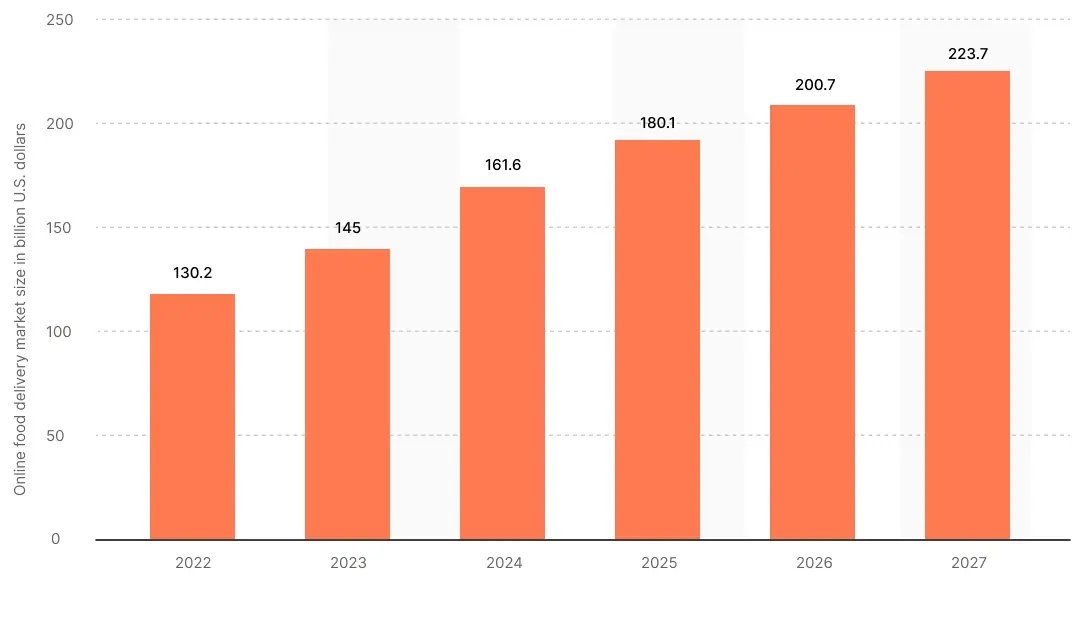
The global food delivery app market continues to expand at a rapid pace, driven by shifting consumer behavior and the growing reliance on digital platforms.
- In 2026, the global online food delivery industry is projected to reach $191 billion USD, with forecasts indicating growth to $223.7 billion USD by 2027 (Statista).
- The broader food delivery app market is expected to generate approximately $401 billion USD in revenue, supported by a strong compound annual growth rate (CAGR) of 10.4%.
- In the United States alone, the user base is estimated to surpass 135 million users in 2026, fueled by mobile first habits and increasing digital adoption across all age groups.
- By the end of 2023, the U.S. app based food delivery market was valued at $24.4 billion USD, and this figure has continued to rise in 2026 as order frequency and restaurant partnerships expand.
- From an infrastructure perspective, digital platforms and food delivery applications have experienced a 30% increase in adoption in recent years, largely driven by improved UI/UX, contactless delivery options, and real time tracking features.
At its core, the success of food delivery apps lies in one key value proposition: speed and convenience. Customers increasingly prefer the ability to order food instantly, track deliveries in real time, and enjoy a seamless, hassle free experience making these platforms an essential part of modern dining behavior.
How Does a Food Delivery Mobile App Work?
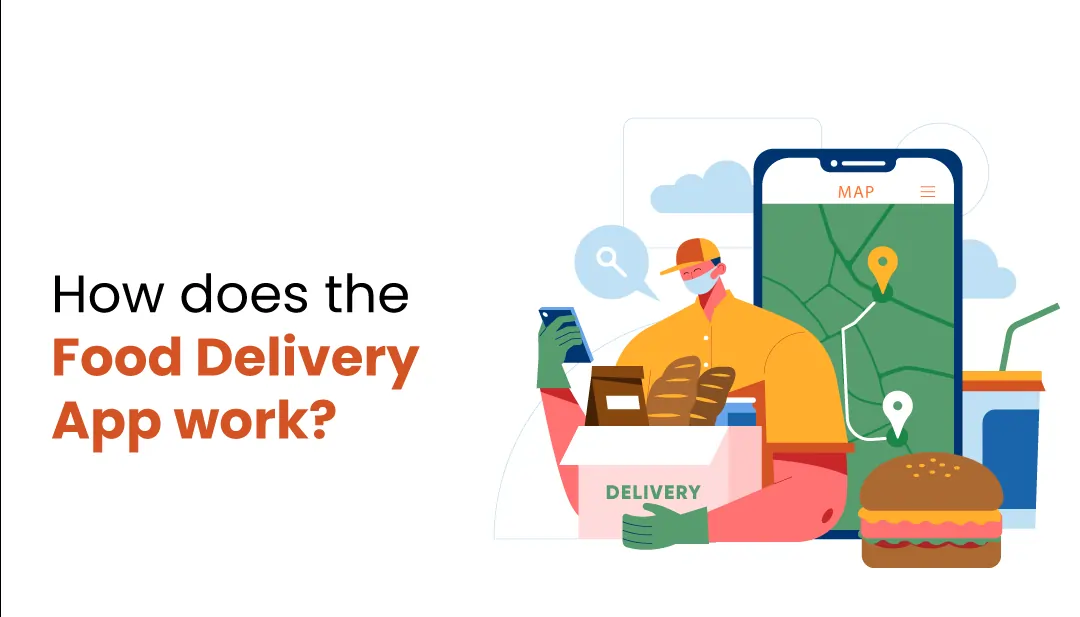
1. User Search & Selection
Users browse available restaurants, explore menus, and choose their preferred dishes. Smart filters such as cuisine type, pricing, ratings, and delivery time help simplify decision making and improve the overall experience.
2. Order Placement & Payment Confirmation
After selecting items, users place the order and confirm payment. Most apps support multiple payment methods, including cash on delivery (COD), credit/debit cards, e wallets, or in app wallets, ensuring flexibility and convenience.
3. Restaurant Order Acceptance
The restaurant receives the order instantly, reviews the request, and confirms it. At this stage, an estimated preparation and delivery time is provided to the customer.
4. Food Preparation
Once confirmed, the restaurant begins preparing the order, aligning with the promised timeline to ensure freshness and quality.
5. Delivery Partner Assignment & Pickup
A delivery partner is assigned automatically. After the food is ready, the driver collects the order from the restaurant and prepares for delivery.
6. Real Time Delivery & Tracking
The order is delivered to the customer’s location. During this process, users can track their order in real time, receive status updates, and communicate via in app chat or calls.
7. Order Completion & Settlement
The delivery is completed at the customer’s doorstep. The platform then handles payment processing and revenue distribution between the app owner and the restaurant.
Future Trends in Food Delivery Apps
Artificial Intelligence is increasingly being integrated to optimize operations from demand forecasting to route optimization and personalized recommendations. Emerging technologies such as drones and autonomous delivery robots are also being explored to reduce delivery time and operational costs. Additionally, features like image based delivery confirmation are improving transparency and customer trust.
Food Delivery App Business Models
- Aggregator Model (No Delivery): The platform connects users with restaurants, but the restaurants handle their own deliveries.
- Full Stack Model (On Demand Delivery): The platform manages the entire process, including logistics and last mile delivery.
Selecting the right model is essential, as it directly impacts operational complexity, cost structure, and scalability.
Food Delivery App Business Models: Which One Is the Best Fit for Your Business?
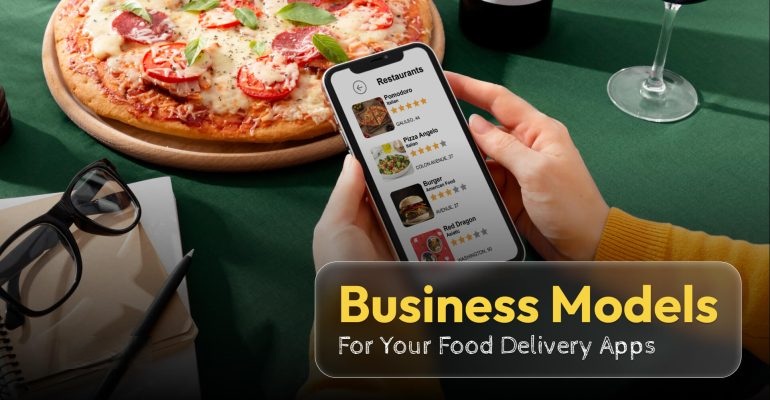
The food delivery landscape has evolved into a multi model ecosystem, driven by changing consumer expectations, digital adoption, and operational innovation. Choosing the right business model is not a superficial decision it directly influences your platform architecture, monetization strategy, operational complexity, and long term scalability.
To build a successful food delivery app, you need a clearly defined vision aligned with the right model. Below is a detailed breakdown of the most widely adopted food delivery business models, how they operate, and when each makes strategic sense.
1. Aggregator Model
The aggregator model acts as a digital marketplace that connects users with a wide range of restaurants. The platform focuses on discovery and ordering, while restaurants remain responsible for fulfillment and delivery.
How It Works:
- Users browse restaurant listings and menus within the app.
- Orders are placed through the platform and forwarded to the restaurant.
- The restaurant prepares and delivers the food independently.
Revenue Streams:
- Restaurant listing fees
- Commission per order
- Featured placements or promotions
Best For:
Startups looking for a low asset, low operational entry into the market without managing logistics.
Example: Just Eat (UK)
2. Logistics Supported Model (Multi Vendor Marketplace)
This model builds upon the aggregator approach by integrating logistics. The platform not only facilitates ordering but also manages last mile delivery through its own fleet or third party partners.
How It Works:
- Users place orders through the app.
- Restaurants prepare the food.
- The platform assigns delivery personnel to handle fulfillment.
Revenue Streams:
- Commission on each order
- Delivery fees
- Service charges
Best For:
Businesses aiming to provide a full stack user experience with greater control over delivery quality and timing.
Example: Deliveroo (UK, UAE)
3. Single Restaurant Model
In this model, a single restaurant or chain develops its own dedicated application, eliminating dependency on third party platforms.
How It Works:
- Customers order directly via the restaurant’s app.
- The restaurant manages preparation and delivery (in house or outsourced).
- All customer interactions happen within the brand’s ecosystem.
Revenue Streams:
- Direct sales (no commission sharing)
- Upselling, loyalty programs, and promotions
Best For:
Established brands seeking full control over customer data, pricing, and brand experience.
Example: Domino’s (Global)
4. Cloud Kitchen Model (Virtual Restaurants)
Cloud kitchens, also known as virtual kitchens or ghost kitchens, operate without dine in facilities. They are optimized purely for delivery and often run multiple brands from a single location.
How It Works:
- Orders are placed online through apps or platforms.
- Food is prepared in centralized kitchen facilities.
- Delivery is handled via in house fleets or third party services.
Revenue Streams:
- Direct food sales
- Platform commissions (if listed on aggregators)
Best For:
Entrepreneurs looking for a cost efficient, scalable model with lower overhead (no physical storefronts).
Example: Reef Technology (USA)
5. Subscription Based Model
This model introduces a recurring revenue layer by offering premium memberships with added benefits such as free or discounted delivery.
How It Works:
- Users subscribe monthly or annually.
- Subscribers receive perks like zero delivery fees, exclusive discounts, or priority service.
Revenue Streams:
- Subscription fees
- Increased order frequency and retention
Best For:
Platforms focused on customer loyalty, retention, and predictable recurring revenue.
Example: DashPass by DoorDash (USA)
6. Meal Kit Delivery Model
Unlike traditional food delivery, this model delivers pre portioned ingredients along with recipes, enabling users to cook meals at home.
How It Works:
- Customers order meal kits instead of ready made food.
- Ingredients and instructions are delivered to their doorstep.
- Partnerships with suppliers or grocery chains are common.
Revenue Streams:
- Subscription plans
- Product sales
- Delivery fees
Best For:
Businesses targeting health conscious or experience driven users who prefer home cooking with convenience.
Example: HelloFresh (USA, UK)
7. Hyperlocal Delivery Model
Hyperlocal platforms focus on delivering within a limited geographic area, typically neighborhoods or small urban zones, emphasizing speed and local vendor integration.
How It Works:
- Users order from nearby restaurants or vendors within a defined radius.
- Delivery is handled quickly by local riders or merchants.
Revenue Streams:
- Commission per order
- Delivery charges
Best For:
Startups targeting specific local markets with a strong focus on speed and community based services.
Example: Zomato (India, UAE)
8. Corporate Food Delivery Model
This model is tailored for businesses, offices, and enterprises that require bulk or recurring meal solutions for employees and events.
How It Works:
- Companies subscribe or place bulk orders via a centralized platform.
- Meals are delivered for meetings, events, or employee programs.
Revenue Streams:
- Enterprise contracts
- Bulk order pricing
- Subscription plans for businesses
Best For:
Platforms targeting B2B opportunities with higher order volumes and long term contracts.
Example: ezCater (USA, UK)
There is no one size fits all model in food delivery. The optimal choice depends on your business goals, operational capacity, target market, and long term strategy.
- If you want speed to market → Aggregator
- If you want control over delivery → Logistics supported
- If you want brand ownership → Single restaurant
- If you want scalability with low cost → Cloud kitchen
- If you want recurring revenue → Subscription
A well chosen business model becomes the foundation for everything from feature design to revenue optimization so making the right decision early can significantly impact your success trajectory.
How to Choose the Right Model for Your Restaurant
Selecting the right food delivery business model is a strategic decision that should align with your operational capabilities, target market, and long term growth objectives. Rather than following trends, businesses should evaluate the following critical factors:
Market Demand
Clearly define your target audience. Are you serving mass market consumers, corporate clients, or niche segments such as health conscious users or families? Each segment has different expectations in terms of pricing, delivery speed, and service experience.
Logistics Capabilities
Assess whether you have the infrastructure to manage deliveries in house. If not, partnering with third party logistics or adopting a marketplace model may be more efficient. Delivery operations directly impact customer satisfaction and scalability.
Revenue Objectives
Determine your primary goal whether it’s maximizing order volume, building recurring revenue through subscriptions, or strengthening brand ownership. Your monetization strategy should guide your choice of model.
Investment Capacity
Different models require varying levels of upfront investment. For example, cloud kitchens and full stack delivery platforms demand higher capital for infrastructure and operations, while aggregator models offer a more cost effective entry point with lower initial risk.
Strategic Fit
Ultimately, the best model is one that aligns with your business vision, operational readiness, and growth roadmap. A well matched model not only improves efficiency but also positions your restaurant for sustainable success in a competitive market.
Features to Consider in Food Ordering App Development
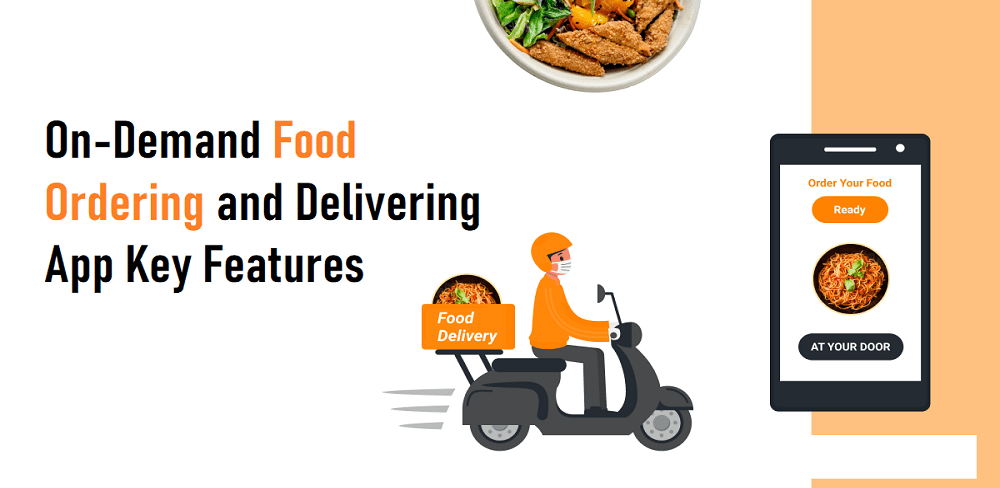
Building a high performing food delivery app requires a well structured feature set across all stakeholders: users, restaurants, and delivery partners. Each panel must be designed to ensure seamless interaction, operational efficiency, and a superior user experience. Below is a refined and detailed breakdown of essential features:
1. User Panel (Customer App)
The user panel is the core touchpoint that directly impacts engagement, retention, and conversion rates. It must be intuitive, fast, and feature rich.
User Registration & Login
Enable quick onboarding through multiple options such as social login (Google, Facebook) or OTP based mobile verification to reduce friction.
Location Detection & Management
Leverage GPS to automatically detect user location or allow manual input. This ensures accurate restaurant listings and delivery estimates based on proximity.
Homepage & Discovery Experience
Display nearby restaurants, trending dishes, and personalized recommendations. A well optimized homepage significantly improves user engagement.
Menu & Order Review
Provide detailed menus with images, pricing, customization options, and a clear order summary before checkout.
Search & Advanced Filters
Include a robust search bar and filtering options (price, ratings, delivery time, offers) to help users find exactly what they want quickly.
Cart & Secure Payment Options
Support multiple payment methods such as COD, credit/debit cards, e wallets, and in app wallets. Ensure a smooth and secure checkout process.
Real Time Order Tracking
Allow users to track their orders live with GPS integration, including delivery partner movement and estimated arrival time.
Push Notifications & Offers
Send real time updates on order status, promotions, discounts, and personalized deals to boost engagement.
Reviews & Ratings
Enable users to leave feedback, rate restaurants, and share their experiences to build trust and improve service quality.
Order History & Reordering
Maintain a history of past orders to allow quick reordering and improve user convenience.
2. Restaurant Panel
The restaurant panel enables vendors to efficiently manage operations, orders, and customer interactions.
Registration & Verification
Restaurants must onboard by submitting business details, licenses, menus, and branding assets for verification.
Dashboard & Order Management
A centralized dashboard to monitor incoming, ongoing, and completed orders, providing real time operational visibility.
Order Acceptance & Processing
Restaurants can accept or reject orders based on availability. Efficient order handling is critical to maintaining delivery timelines and customer satisfaction.
Menu & Profile Management
Allow restaurants to update menus, pricing, images, operational hours, and promotional offers dynamically.
Revenue & Payment Management
Provide access to earnings reports, transaction history, and seamless fund transfers to bank accounts or digital wallets.
Performance Insights
Analytics on order volume, customer preferences, and ratings to help restaurants optimize operations and marketing strategies.
3. Rider Panel (Delivery App)
The rider panel ensures efficient last mile delivery and smooth coordination between restaurants and customers.
Secure Login & Profile Access
Delivery partners receive credentials from the admin to access the platform securely.
Order Assignment & Management
Orders are assigned based on location and availability. Riders can accept or decline requests depending on their capacity.
Delivery Status Updates
Riders can update order statuses (picked up, on the way, delivered), ensuring transparency across the system.
Navigation & GPS Tracking
Integration with map services enables real time navigation and allows customers and restaurants to track delivery progress.
In App Communication (Call/Chat)
Facilitates direct communication between riders and customers to resolve issues quickly and improve delivery accuracy.
Order History & Earnings Tracking
Riders can access past deliveries, track earnings, and review transaction history for transparency.
Payment & Wallet System
Supports flexible payout models, including weekly/monthly payments or in app wallet systems with direct bank transfers.
Push Notifications
Instant alerts for new orders, updates, or changes ensure riders can respond quickly.
Support System
Built in support features allow riders to contact the platform team in case of issues during delivery.
A successful food delivery app is not just about listing restaurants it’s about creating a synchronized ecosystem where users, restaurants, and delivery partners interact seamlessly. Every feature should be designed with scalability, performance, and user experience in mind to ensure long term success in a highly competitive market.
Advanced Features of a Food Ordering App
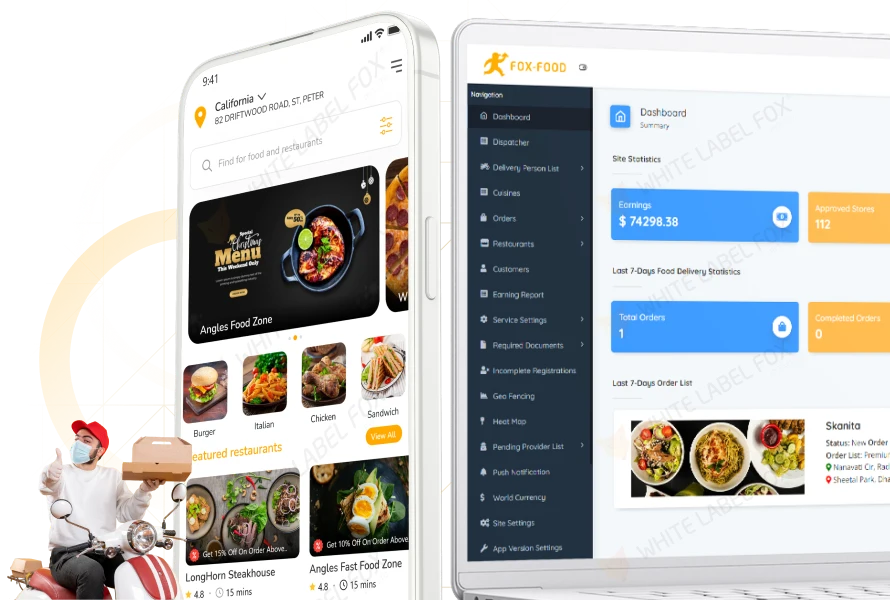
To stay competitive in today’s fast moving market, food delivery platforms must go beyond basic functionality. Advanced capabilities powered by Mobile App Development and robust Enterprise Software Development enable scalability, automation, and data driven decision making. Below are the key advanced features that define a high performance food ordering system:
Queue Based Order Assignment Algorithm
A smart queue algorithm automatically assigns orders to the nearest available delivery partner based on real time location data. This improves delivery efficiency, reduces wait times, and optimizes resource utilization. Administrators can configure service zones and adjust assignment logic to match operational needs.
Intelligent Push Notifications
Push notifications are a critical component of modern Mobile App Development. They keep users informed at every stage from order confirmation to delivery updates ensuring transparency and engagement. Timely alerts also help reduce order anxiety and improve customer satisfaction.
Real Time Analytics & Reporting
An advanced analytics dashboard, powered by enterprise grade databases and algorithms, provides real time insights into operations. Businesses can monitor revenue, track order trends, and identify bottlenecks instantly. This level of visibility enabled by Enterprise Software Development supports data driven decisions and accurate forecasting.
CMS for News & Content Management
A built in Content Management System (CMS) allows administrators to publish updates, highlight new restaurants, promote featured dishes, or share announcements. This adds a dynamic marketing layer to the platform without requiring technical intervention.
Value Added & Engagement Features
To enhance user experience and retention, modern apps often include:
- Coupons, vouchers, and promotional discounts
- Floating window for live order tracking (P2P tracking experience)
- Smartwatch integration for quick notifications
- Lock screen widgets for instant updates
- Social sharing of food orders
- Flexible options for delivery and pickup
- Social discovery (see what nearby users or friends are ordering)
- Table reservation at nearby restaurants
These features not only improve usability but also create a more interactive and personalized experience.
Smart Search by Meal Type
Instead of limiting users to restaurant based browsing, advanced apps categorize food by meal type such as breakfast, lunch, dinner, fast food, or healthy options. This simplifies navigation and aligns with user intent.
For example:
- A “Fast Delivery” section highlights meals that can be prepared quickly.
- A “Healthy & Diet” category targets health conscious users.
Users can further customize their orders by selecting variations, add ons, or beverages, creating a flexible and tailored experience.
Personalization & Customization
Modern food delivery apps leverage user behavior and preferences to offer personalized recommendations. From preferred cuisines to dietary needs, customization enhances satisfaction and increases repeat orders.
Advanced features are no longer optional they are a competitive necessity. By combining strong Mobile App Development practices with scalable Enterprise Software Development architecture, businesses can build intelligent, efficient, and future ready food delivery platforms that drive both user satisfaction and operational excellence.
How to Create a Food Delivery App
Building a successful food delivery app requires more than just coding it demands a well structured team, strong product vision, and seamless collaboration across design, development, and operations. At the core, a clean and intuitive user interface is what differentiates a high performing on demand app from the rest.
A well designed UI/UX ensures that users can browse, order, and track deliveries effortlessly. Investing in experienced designers is critical, as user experience directly impacts retention and conversion rates.
From a development perspective, a lean but capable team can effectively deliver a robust product. Typically, a combination of backend engineers and mobile app developers is sufficient to build and scale the platform. However, quality assurance must not be overlooked rigorous testing is essential to prevent failures that could disrupt operations and damage user trust.
Key Roles in Food Delivery App Development
Project Manager
Oversees the entire development lifecycle, ensuring timelines, scope, and communication are aligned with business objectives.
UX/UI Designers
Responsible for crafting a seamless, user friendly interface that enhances usability and engagement.
Mobile App Developers (iOS/Android)
Develop the front end applications, ensuring performance, responsiveness, and compatibility across devices.
Backend Developers
Build the core system, including APIs, databases, order management, and integrations that power the app.
QA & Testing Team
Ensures the application is stable, secure, and bug free through continuous testing and validation.
Delivery/Operations Manager
Manages logistics workflows, delivery operations, and coordination between restaurants and riders.
A successful food delivery app is the result of strong collaboration between design, engineering, and operations. With the right team structure and a focus on user experience, businesses can build scalable, reliable platforms that meet both customer expectations and operational demands.
What Does It Cost to Build an App Like Uber Eats or Zomato?
The cost of developing a food delivery app similar to Uber Eats or Zomato varies significantly based on the scope, feature set, and level of system complexity you aim to achieve.
At a baseline, a simple food delivery app with core features (user panel, basic ordering, and payment integration) can cost anywhere from $5,000 to $15,000. For more advanced platforms featuring real time tracking, multi vendor support, analytics dashboards, and scalable backend systems the cost typically starts from $15,000 and can scale much higher depending on requirements.
Developer Rates by Region
Development costs are also heavily influenced by the geographic location of your development team:
- United States: $15 – $25 per hour
- Eastern Europe: $15 – $25 per hour
- Vietnam: $12 – $25 per hour
These rates reflect general outsourcing trends, where businesses often balance cost efficiency with technical expertise.
Key Cost Drivers
To estimate your total investment more accurately, consider how costs are distributed across different development stages:
- UI/UX Design: Creating intuitive and engaging user interfaces
- Mobile App Development: Building Android and/or iOS applications
- Backend Development: APIs, database architecture, and system logic
- Third Party Integrations: Payment gateways, maps, notifications
- Testing & QA: Ensuring performance, security, and stability
- Deployment & Maintenance: Ongoing updates, bug fixes, and scaling
Each of these components contributes to the final budget, especially as you move toward a more enterprise grade solution.
Android vs iOS Development Cost
One important consideration is platform choice:
- Android apps may require more extensive testing due to device fragmentation, which can increase development effort.
- iOS apps often have a more controlled environment, potentially reducing testing complexity and, in some cases, overall cost.
However, for maximum market reach, many businesses ultimately invest in cross platform or dual platform development.
The cost of building a food delivery app is not fixed it scales with your ambition. A lean MVP can get you to market quickly, while a full featured platform requires a larger investment but delivers long term scalability and competitive advantage. The key is to align your budget with your business goals and growth strategy.
Choose HomeNest Software as Your Food Delivery App Development Partner
Selecting the right technology partner is a decisive factor in the success of any food delivery platform. As a trusted provider in both Mobile App Development and Enterprise Software Development, HomeNest Software delivers tailored solutions that align precisely with your business model whether you’re building a multi vendor marketplace, launching a cloud kitchen, or developing a dedicated app for a single restaurant brand.
Our approach goes beyond just development. We act as a long term technology partner supporting you through every stage of the product lifecycle. From post launch maintenance and performance optimization to continuous feature enhancements, we ensure your platform remains scalable, secure, and competitive in a rapidly evolving market.
With a strong track record of delivering projects on time and within budget, HomeNest Software combines agile methodologies with cost effective execution. The result is a high quality, future ready solution that balances innovation, performance, and reliability without unnecessary complexity or overhead.
Frequently Asked Questions (FAQs)
What is a food delivery app and how does it work?
A food delivery app is a platform that connects users, restaurants, and delivery partners. Customers browse menus, place orders, make payments, and track deliveries in real time, while restaurants prepare food and delivery partners handle fulfillment.
How long does it take to develop a food delivery app?
The timeline depends on complexity. A basic MVP can take 2–3 months, while a full featured, scalable platform may require 4–8+ months, including design, development, testing, and deployment.
What are the must have features in a food delivery app?
Essential features include user registration, restaurant listings, menu browsing, order placement, payment integration, real time tracking, push notifications, and admin dashboards. Advanced features may include AI based recommendations and analytics.
Which business model is best for a food delivery app?
There is no single “best” model. Aggregator models are ideal for low investment, while logistics supported models offer full control over delivery. Cloud kitchens and subscription models are better for scalability and recurring revenue.
How much does it cost to build a food delivery app?
Costs typically range from $5,000 to $15,000 for a basic app and $15,000+ for advanced solutions. The final budget depends on features, platform choice, and development team location.
Should I build for Android, iOS, or both?
For maximum market reach, businesses usually develop for both platforms. Alternatively, cross platform technologies can help reduce cost and time while maintaining performance.
How do food delivery apps make money?
Revenue streams include commissions from restaurants, delivery fees, subscription plans, featured listings, and in app advertising.
What technologies are used in food delivery app development?
Modern apps use technologies such as React Native, Flutter, Node.js, and cloud platforms like AWS or Azure, along with integrations for maps, payments, and notifications.
How important is real time tracking in food delivery apps?
Real time tracking is critical for user experience. It improves transparency, reduces uncertainty, and enhances trust by allowing customers to monitor their orders live.
Why choose HomeNest Software for food delivery app development?
HomeNest Software provides end to end solutions across Mobile App Development and Enterprise Software Development, delivering scalable, high performance apps tailored to your business model, with ongoing support and optimization after launch.
Latest Articles
View All
Criteria For Choosing The Right App Design Agency
UI/UX design is the logical foundation of a system, not merely a visual element. Choosing the wrong partner will directly lead to technical debt, budget overruns, and disruptions in the development process. This article provides a 6-step evaluation framework and a list of operational risks, helping businesses eliminate subjective design advice and accurately assess agency capabilities based on developer handoff standards and practical business performance.
How Does AI in Banking Industry Impact the Future?
Artificial intelligence (AI) has transitioned from a supplementary tool to a core infrastructure of financial data management, optimizing profitability through real-time fraud detection, natural language processing (NLP), and high-speed credit scoring models. “Deploying AI in the financial sector requires more than just algorithmic accuracy, it demands a highly secure cloud architecture and rigorous data governance,” commented Nguyen Tien, co-founder of HomeNest Software. Why read this guide? We skip the theoretical jargon to focus entirely on technical implementation. Whether you’re evaluating a vendor or planning a system overhaul, this article will detail: Operational Efficiency: Automating unstructured data workflows at scale. Risk Architecture: Implementing real-time threat detection and AML compliance. Data ownership: The essential need for 100% ownership of the source code to ensure full algorithm auditability.
How to Make a Banking App like Bank of America?
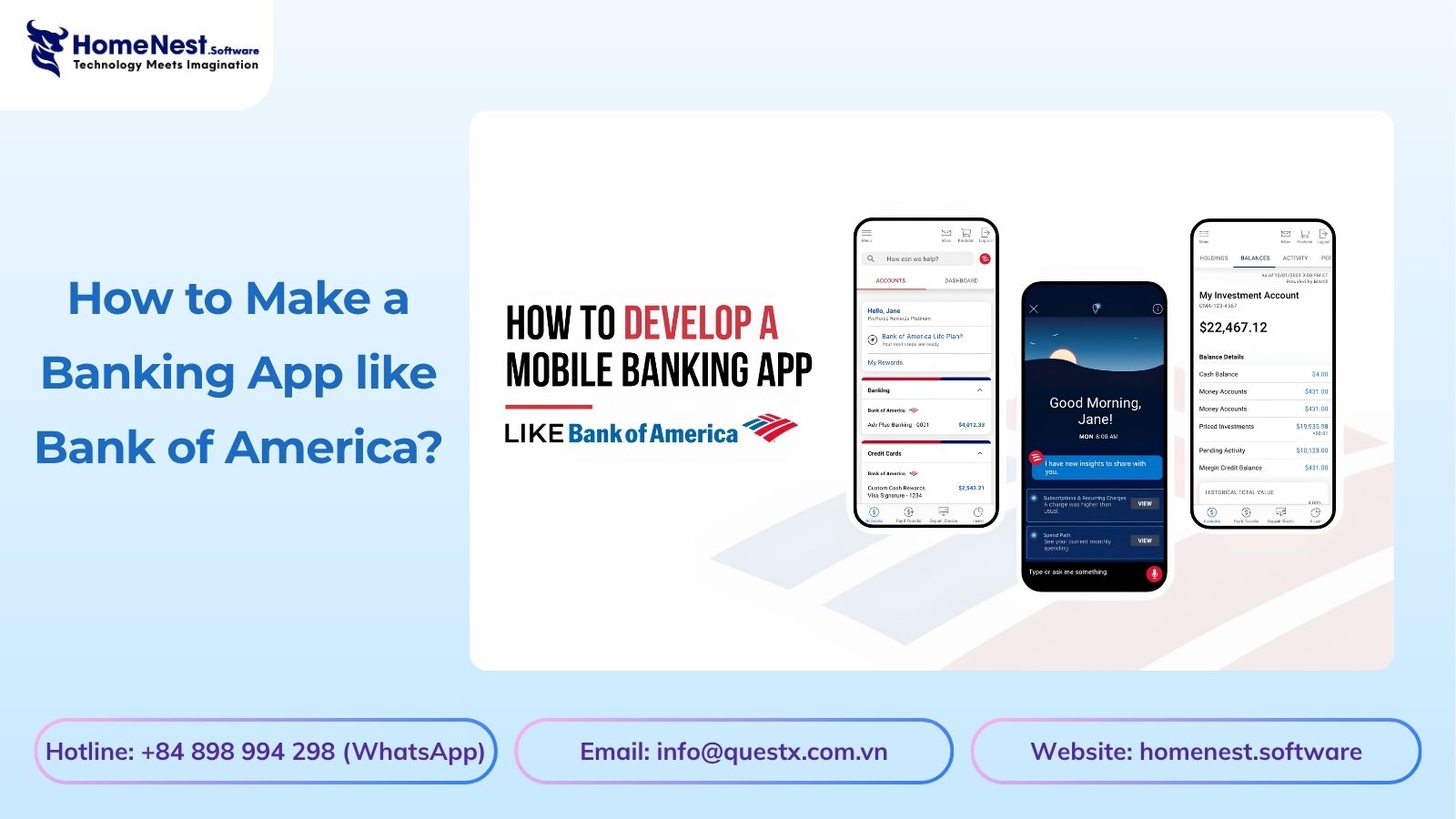
Developing a mobile banking application like Bank of America extends far beyond basic UI design; it requires engineering a fault-tolerant backend capable of real-time ledger synchronization, biometric authentication, and high-volume data processing under strict regulatory frameworks. Drawing from HomeNest Software’s deep experience in architecting enterprise-grade fintech solutions, this guide strips away theoretical jargon to focus entirely on operational and technical execution. What you will find in this guide: We break down the precise development roadmap, from mapping out microservices and ensuring PCI-DSS compliance to estimating MVP development costs and securing absolute data sovereignty through 100% source code ownership. If you are preparing to build, scale, or audit a financial platform, this blueprint provides the exact framework you need.
Banking App Development Cost
Building a banking application is rarely a simple process; it’s a complex technical challenge requiring a balance between complying with stringent financial regulations, handling large transaction volumes, and a scalable cloud architecture. Miscalculating these technical requirements from the outset often leads to significant technical debt and budget overruns. Based on HomeNest Software’s practical experience in designing enterprise-grade fintech solutions, this guide bypasses generic estimates to provide a realistic analysis of banking application development costs. What you’ll find in this guide: We analyze the true cost factors, from technology selection and API integration to the hidden costs of regulatory compliance and security infrastructure. Whether you’re launching a minimum viable product or expanding an existing financial platform, this analysis provides the precise operational data you need to plan your budget effectively.
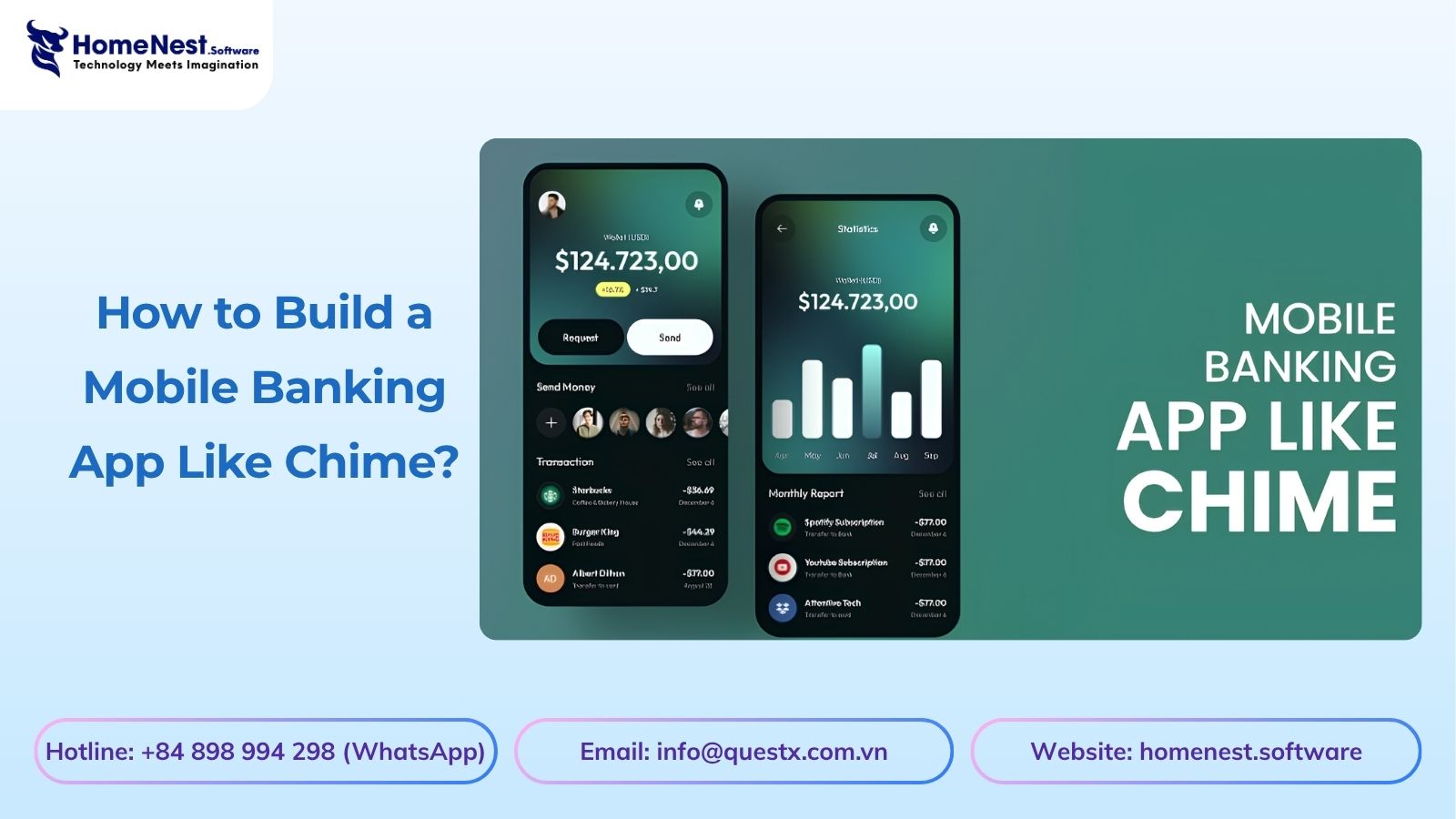
How to Build a Mobile Banking App Like Chime?
Building a mobile banking app like Chime is not just about features, it is about delivering a secure, scalable, and user-centric financial experience. From planning the right architecture to optimizing mobile banking app development cost, every decision directly impacts your product’s success. Leveraging Fintech app development services, starting with MVP app development, and scaling through on-demand app development solutions allows businesses to reduce risk and accelerate time to market. To stay competitive, combining Android app development services and iOS app development solutions ensures wider reach, while continuous updates through maintenance software development services keep your app secure and future-ready.
How to Build a Banking App Like Barclays: A Complete Entrepreneur’s Guide
Building a banking app like Barclays requires more than just development. It demands a strong product vision, secure architecture, and a clear monetization strategy. From optimizing cost and selecting the right tech stack to ensuring compliance and scalability, every decision impacts long-term success. Partnering with an experienced team like HomeNest Software helps accelerate development, reduce risks, and deliver a high-quality fintech product that can compete in today’s fast-evolving digital banking landscape.