The rapid evolution of the digital landscape has made accessing services faster and more convenient than ever. This shift has transformed how people interact with real estate platforms, with leading apps like Property Finder and Bayut setting new standards for ease of use and efficiency. These platforms deliver exceptional value to property seekers and agents through advanced search filters, real-time listing updates, and high-quality property data.
As demand for digital real estate solutions continues to rise, new apps are emerging to address unmet market needs—creating strong opportunities for startups and established businesses alike. If you’re planning to build a real estate app similar to Property Finder or Bayut, this guide is for you. It’s designed to help entrepreneurs and companies develop a user-friendly, scalable real estate platform tailored to modern customer expectations.
Overview of Property Finder & Bayut
Property Finder
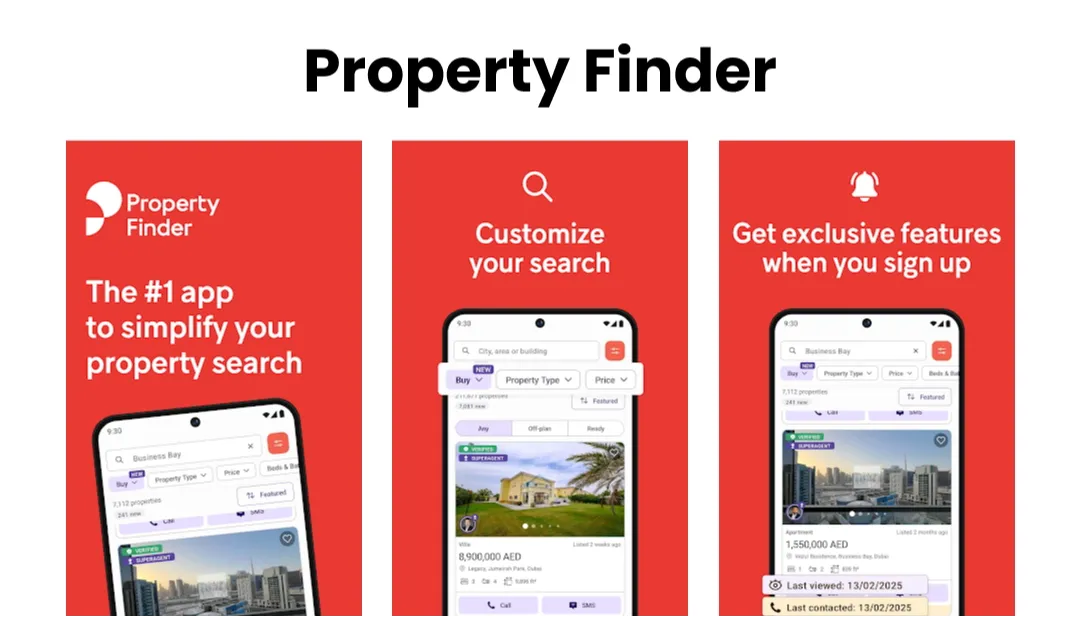
Founded in Dubai in 2007, Property Finder is one of the leading real estate platforms in the MENA region. The platform allows users to buy, sell, and rent a wide range of residential and commercial properties. Known for its comprehensive and high-quality listings, Property Finder provides detailed property information including images, location maps, agent profiles, pricing insights, and market trends—making it a trusted destination for both property seekers and real estate professionals.
Bayut
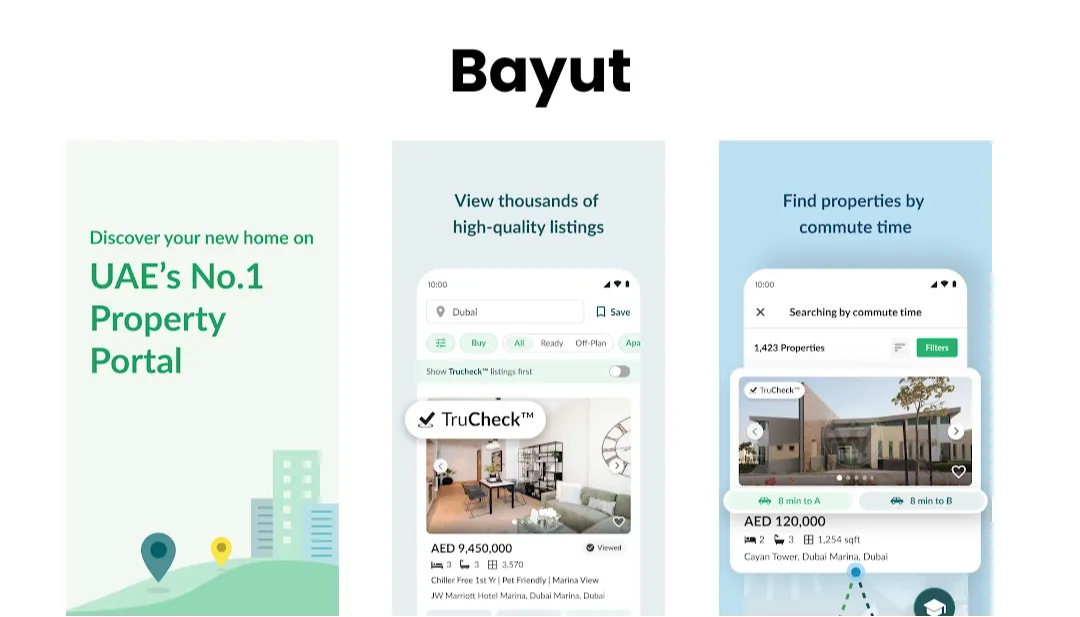
Launched in 2008 and operating under the Emerging Markets Property Group (EMPG), Bayut has become one of the most popular property portals in the UAE. The platform is widely recognized for its intuitive user interface and accurate, up-to-date listings. In addition to advanced search filters, Bayut offers features such as 3D virtual tours, detailed floor plans, and in-depth market insights. Serving buyers, sellers, and agents across the region, Bayut delivers a seamless and informative real estate experience throughout the entire property journey.
Why Build a Real Estate App Like Property Finder & Bayut?
Strong User Demand and Rapid Market Growth
The widespread adoption of smartphones and the growing preference for digital property searches have reshaped how people buy, rent, and sell real estate. Users now expect on-demand access to listings, real-time updates, and seamless mobile experiences—driving strong demand for feature-rich real estate apps available anytime, anywhere.
Enhanced User Experience and Higher Lead Conversion
Modern features such as advanced search filters, virtual property tours, real-time chat, and instant inquiries empower users to make informed decisions faster. These capabilities not only increase engagement but also improve lead quality and conversion rates for agents, brokers, and real estate businesses.
Profitable and Scalable Business Model
Real estate apps like Property Finder and Bayut operate on highly scalable monetization models. Revenue streams such as subscriptions, featured listings, in-app advertising, and premium agent tools enable consistent income while supporting long-term growth as the user base expands.
Market Demand and Growth of Digital Real Estate Platforms
The digital real estate ecosystem is growing at an exceptional pace, supported by increasing investor interest and technology adoption:
-
Valued at USD 35.4 billion in 2024, the market is projected to reach USD 114.8 billion by 2033, growing at a 13.25% CAGR.
-
Another forecast estimates growth from USD 45.2 billion in 2026 to USD 104 billion by 2030, reflecting an even higher 18.1% CAGR.
-
A key sub-sector was valued at USD 12.2 billion in 2024 and is expected to reach USD 28.2 billion by 2033, growing at 9.3% CAGR.
-
Platform-driven digital asset management is projected to grow from USD 2.69 billion in 2024 to USD 4 billion by 2033, signaling a shift toward tech-enabled property management.
-
Metaverse-driven and immersive real estate platforms reached USD 2.99 billion in 2024 and are expected to surge to USD 67.4 billion by 2034, at a 36.6% CAGR.
-
Another projection estimates growth from USD 1.69 billion in 2024 to USD 59.8 billion by 2034, highlighting rising investment in virtual and immersive property experiences.
Building a real estate app like Property Finder or Bayut is no longer just a competitive move—it’s a strategic opportunity. With strong market demand, proven monetization models, and rapid digital adoption, real estate apps offer scalable growth, high ROI potential, and a chance to lead innovation in a fast-evolving property ecosystem.
Key Features of Property Finder & Bayut
Before diving into the real estate app development process, it’s essential to understand the core features that make platforms like Property Finder and Bayut so successful. These features are designed to enhance user experience, improve lead conversion, and simplify property discovery.
Advanced Search Filters
Users can refine property searches based on criteria such as property type, location, budget, number of bedrooms, amenities, and more. These intelligent filters ensure highly relevant results tailored to individual needs and preferences.
Interactive Map View
The map-based property view allows users to explore listings geographically while viewing nearby landmarks, transport links, schools, and lifestyle amenities. This feature helps users assess connectivity and neighborhood suitability before making a decision.
Virtual Property Tours
High-quality video walkthroughs and 360° virtual tours enable users to explore properties remotely. This significantly reduces the need for physical visits, saves time, and helps users shortlist properties more efficiently.
User & Agent Profiles
Detailed agent and agency profiles include ratings, reviews, past listings, and contact details. This transparency builds trust, improves credibility, and facilitates smoother communication between property seekers and agents.
Saved Searches & Favorites
Users can bookmark listings and save custom search preferences to revisit later. This ensures they don’t miss attractive opportunities and can easily track properties that match their criteria.
Push Notifications
Real-time alerts notify users about new listings, price changes, and updates to saved properties. These notifications help users stay engaged and respond quickly in a fast-moving real estate market.
Mortgage Calculator
An integrated mortgage calculator allows users to estimate monthly payments based on loan amount, interest rate, and tenure. This helps users plan finances directly within the app without relying on external tools.
In-App Chat & Calling
Built-in chat and calling features enable instant communication between users and agents. This reduces friction, accelerates lead generation, and helps close deals faster.
These features form the backbone of successful real estate platforms like Property Finder and Bayut. When combined with intuitive design and scalable architecture, they create a seamless, trustworthy, and efficient property-search experience that benefits both users and real estate professionals.
Business & Revenue Model of Property Finder and Bayut
Property Finder and Bayut operate highly scalable and profitable marketplace models tailored to the real estate industry. Both platforms connect buyers, sellers, renters, and agents through intuitive web and mobile experiences, while monetizing traffic, data, and visibility in smart ways.
Below are the core revenue streams that power these real estate apps.
1. Subscription-Based Plans
A primary revenue driver for both platforms is subscription packages offered to real estate agents, brokers, and developers. These plans vary by listing limits, exposure levels, analytics access, and promotional tools. Premium tiers typically include featured placements and priority search visibility—delivering higher-quality leads and stronger ROI for subscribers.
2. Featured Listings & Advertising
Agents and agencies can pay to promote listings at the top of search results or within high-visibility sections of the app. These featured listings attract more clicks and inquiries, increasing conversion potential. In addition, both platforms monetize banner ads and sponsored placements for brands seeking targeted exposure within the real estate ecosystem.
3. Lead Generation Fees
Another key revenue stream is lead monetization. When users submit inquiries for properties, agencies are charged based on lead volume and quality—often influenced by subscription level and listing performance. This pay-for-performance model aligns platform revenue with agent outcomes.
4. Data Analytics & Market Intelligence
Leveraging vast amounts of user behavior and property data, both platforms offer premium analytics, insights, and market reports. Developers, investors, and agencies pay for access to these data-driven insights to inform pricing, demand forecasting, and investment strategies—turning data into a high-margin product.
Key Takeaway
Property Finder and Bayut succeed by combining subscriptions, visibility-based advertising, lead monetization, and premium data services into a diversified, scalable revenue model. This approach not only ensures steady income but also creates strong network effects—making the platforms more valuable as usage grows.
Steps to Develop an App Like Property Finder & Bayut

Building a successful real estate app like Property Finder or Bayut requires careful planning, strong technical execution, and a deep understanding of the real estate market. To accelerate development and reduce risk, partnering with an experienced real estate app development company is highly recommended. The process typically follows these six key stages:
1. Discovery & Requirement Analysis
The journey begins with discovery sessions to understand your business objectives, target audience, and core app functionality. During this phase, the development team conducts market research, competitor analysis, and feasibility studies to define a clear project roadmap aligned with your vision and market needs.
2. UI/UX Design & Prototyping
Once requirements are finalized, designers create wireframes and interactive prototypes that focus on usability and engagement. A successful real estate app should feature intuitive navigation, responsive layouts, interactive maps, and clean property listing interfaces. This phase ensures a seamless user experience before development begins.
3. Backend & Frontend Development
In this stage, developers build the app’s core architecture using an appropriate technology stack. Both frontend and backend components are developed with scalability, performance, and security in mind. Best coding practices are followed to ensure the platform can handle large data volumes and growing user traffic.
4. Integration of Advanced Features
Beyond essential features, advanced functionalities help differentiate your app in a competitive market. These may include AI-powered property recommendations, virtual property tours, mortgage calculators, 3D floor plans, push notifications, and CRM tools for agents and sellers—bringing the platform closer to market leaders.
5. Testing & Quality Assurance
Quality assurance specialists rigorously test the app for bugs, performance bottlenecks, security vulnerabilities, and cross-device compatibility. Functional, usability, load, and security testing ensure the app delivers a smooth, reliable experience across all devices and user scenarios.
6. Launch & Post-Launch Support
After successful testing, the app is launched on the Apple App Store and Google Play Store. Post-launch, the development team provides continuous monitoring, updates, and maintenance to keep the platform optimized, secure, and competitive in the evolving real estate market.
By following a structured development approach—from discovery to post-launch support—you can build a scalable, feature-rich real estate app that competes with leading platforms like Property Finder and Bayut, while delivering real value to users, agents, and businesses alike.
Cost of Developing a Real Estate App Like Property Finder & Bayut
The cost to build a real estate app similar to Property Finder or Bayut typically ranges from $15,000 to $50,000+, depending on factors such as app complexity, feature set, design quality, technology stack, and the location of your development partner.
Below are the key considerations that directly influence overall real estate app development costs:
1. App Features & Functionalities
Feature scope is the biggest cost driver. Basic apps with core functions—property listings, search, and filters—are more affordable. Adding advanced capabilities such as virtual tours, geolocation, mortgage calculators, in-app chat, AI recommendations, and CRM tools significantly increases development time and cost.
2. Design & User Experience (UI/UX)
High-quality UI/UX is essential for smooth navigation and strong engagement. Custom designs, interactive maps, animations, and user-centric flows require experienced designers and additional effort, making them more expensive than template-based interfaces—but they deliver higher conversion and retention.
3. Platform Choice (iOS, Android, or Both)
Developing for a single platform (iOS or Android) costs less than building for both. If your goal is wider reach, a cross-platform or dual native approach will increase the budget but ensures broader market coverage.
4. Technology Stack
Your choice of backend frameworks, frontend tools, databases, and cloud infrastructure affects both upfront and long-term costs. Modern stacks (e.g., Node.js, React Native, AWS, MongoDB) may cost more initially but offer better scalability, performance, and flexibility over time.
5. Location of the Development Team
Developer rates vary widely by region. Teams in North America or Western Europe often charge $100–$150/hour, while equally skilled teams in South Asia or Eastern Europe typically charge $20–$50/hour. Choosing the right location can significantly optimize your budget without compromising quality.
6. Third-Party Integrations
Integrations such as Google Maps, analytics tools, CRM systems, payment gateways, and messaging services enhance functionality but add to development and ongoing licensing costs. Some APIs also carry monthly usage fees that should be factored into long-term budgeting.
Cost Perspective
A scalable, high-quality real estate app like Zillow, Property Finder, or Bayut should be viewed as a long-term investment rather than a one-time expense. The right architecture and features can deliver sustained ROI through subscriptions, featured listings, advertising, and data services.
Conclusion
Building a real estate app like Property Finder or Bayut requires a strategic blend of design, functionality, and technology. Every decision—from features and platform choice to tech stack and team selection—directly impacts cost and success.
To avoid unnecessary expenses and ensure efficient execution, it’s crucial to partner with an experienced real estate app development company. With the right approach, your app can achieve strong performance, scalability, and long-term value in a competitive property market.
HomeNest Software – Empowering Long-Term Growth for Modern Businesses.

Contact Information:
- Address: The Sun Avenue, 28 Mai Chi Tho Street, Binh Trung Ward, Ho Chi Minh City
- Hotline: +84 898 994 298 ( WhatsApp )
- Website: homenest.software
HomeNest Services: Website Design – App Design – Software Development – Digital Marketing.
Frequently Asked Questions (FAQ)
1. How much does it cost to build a real estate app like Property Finder or Bayut?
The average cost usually starts from $15,000 for a basic version and can go up to $50,000+ for a feature-rich, scalable platform. The final cost depends on app complexity, features, UI/UX design, technology stack, and the development team’s location.
2. How long does it take to develop a real estate app?
Development time typically ranges from 3 to 8 months:
-
Basic app: 3–4 months
-
Mid-level app with advanced features: 5–6 months
-
Enterprise-grade app (AI, virtual tours, CRM): 6–8+ months
3. What are the must-have features in a real estate app?
Essential features include:
-
Property listings with images & details
-
Advanced search & filters
-
Interactive map view
-
Agent & user profiles
-
Saved searches & favorites
-
In-app chat/call
-
Push notifications
Advanced apps may also include AI recommendations, virtual tours, mortgage calculators, and analytics dashboards.
4. Is it better to build a native or cross-platform real estate app?
-
Native apps (iOS & Android) offer better performance and UI but cost more.
-
Cross-platform apps (Flutter/React Native) are more cost-effective and faster to launch, making them ideal for startups and MVPs.
The choice depends on your budget, timeline, and performance requirements.
5. Can AI be integrated into a real estate app?
Yes. AI can significantly enhance a real estate app by enabling:
-
Smart property recommendations
-
Predictive pricing & demand analysis
-
Chatbots for customer support
-
Personalized search results
AI features increase development cost but also improve user engagement and ROI.
6. How do real estate apps like Bayut and Property Finder make money?
Common monetization models include:
These models make real estate apps highly scalable and profitable.
7. What ongoing costs should I consider after launch?
Post-launch costs usually include:
-
App maintenance & updates
-
Server & cloud hosting
-
API & third-party service fees
-
Security updates & performance optimization
On average, maintenance costs range from 15–25% of the initial development cost per year.
8. Can I start with an MVP and scale later?
Absolutely. Many successful real estate platforms start with an MVP (Minimum Viable Product) that includes only core features. Once traction is achieved, advanced features like AI, virtual tours, and analytics can be added incrementally—saving cost and reducing risk.
9. Why should I hire a specialized real estate app development company?
A specialized team understands:
-
Real estate workflows & regulations
-
Scalability and data-heavy architectures
-
Lead generation & monetization strategies
This helps avoid costly mistakes and ensures faster, more efficient development.
10. Is building a real estate app a good investment in 2026?
Yes. With increasing digital adoption and demand for property platforms, real estate apps offer strong long-term ROI, especially when combined with subscriptions, ads, and data-driven features.