
How To Develop A Food Delivery App Like Uber Eats
Scope of Work
The global food delivery market has grown rapidly, with well known platforms such as Uber Eats, Grubhub, DoorDash, Zomato, and Swiggy operating across different regions worldwide.
This continuous expansion has encouraged new players to enter the market, each introducing innovative platforms and delivery models. Startups and entrepreneurs around the globe are actively experimenting with fresh ideas to build scalable and competitive food delivery businesses.
To support those exploring this opportunity, this blog is designed to guide entrepreneurs who are interested in developing an app similar to Uber Eats. It explains the overall complexity of building a food delivery application and outlines the essential features, development costs, and resources required to create a successful Uber Eats–like platform.
Why Build an App Like Uber Eats?
Food delivery platforms such as Uber Eats, Zomato, and DoorDash have become dominant players in today’s food industry due to their simplicity, convenience, and user centric design. This shift in consumer behavior is especially evident in the U.S., where nearly 60% of customers order food delivery or takeout at least once a week.
In a fast paced, on demand lifestyle, food delivery apps have become more than a convenience they are a necessity. These platforms create a seamless ecosystem where consumers enjoy effortless ordering while restaurants expand their reach and revenue. Below are the key reasons why building an online food delivery app is a strong and scalable startup opportunity.
Improve Business Efficiency and Revenue
For restaurants, managing online orders is significantly more efficient than handling phone calls. Automated ordering systems reduce errors, save time, and streamline operations. In fact, over 60% of restaurant owners report increased profits after partnering with food delivery apps.
Strengthen Customer–Business Relationships
According to industry data, 43% of restaurant professionals agree that third party food delivery apps help build stronger connections between restaurants and customers. Modern ordering platforms enhance customer experience by offering end to end services from menu browsing and ordering to real time tracking and fast doorstep delivery.
Boost Business Promotion and Brand Visibility
On demand food delivery apps integrate seamlessly with major social media platforms such as Facebook, Instagram, and Twitter, making them powerful tools for digital marketing. In app promotions, targeted ads, and online campaigns help restaurants reach a wider audience and attract new customers effectively.
Expand and Retain the Customer Base
Studies show that customers who order food online visit restaurants up to 67% more frequently than those who do not use online ordering services. Additionally, partnering with third party delivery platforms can increase restaurant transaction volumes by 10–20%, making food delivery apps a proven driver of growth.
Key Features You Must Include in an Uber Eats–Like App
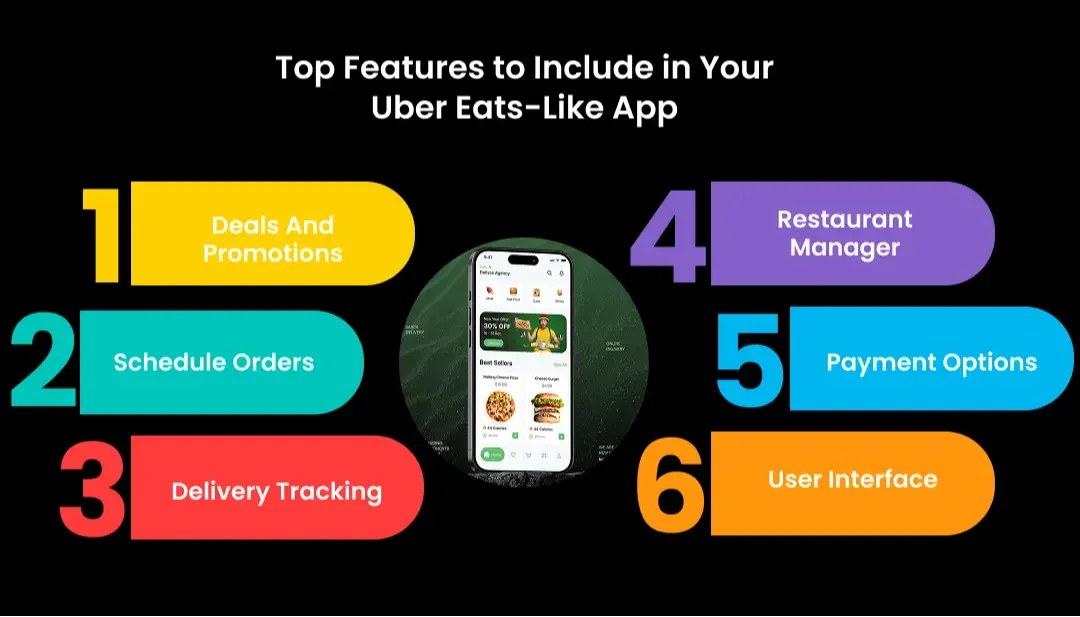
The success of Uber Eats is largely driven by its feature rich, user friendly ecosystem designed to benefit customers, restaurants, and delivery partners alike. Each feature is built to maximize convenience, improve efficiency, and ensure timely food delivery. If you plan to build an app similar to Uber Eats, the following features are essential.
Personalized Deals and Promotions
Relevance is critical for customer engagement. Your food delivery app should showcase personalized deals and promotions based on user preferences and order history. For example, a customer who frequently orders pizza is more likely to respond to pizza related discounts rather than offers on unfamiliar cuisines. Smart, data driven promotions significantly increase conversion and retention rates.
Order Scheduling
Uber Eats sets itself apart by allowing users to schedule orders in advance sometimes up to a week ahead. This feature is especially useful for busy users who want meals delivered at a specific time. Scheduled ordering helps users plan better and increases order consistency for restaurants.
Real Time Delivery Tracking
Real time GPS tracking eliminates frustration for both customers and delivery agents. Instead of repeated phone calls for directions or ETA updates, users can track their order live, while delivery partners benefit from accurate navigation and optimized routes.
Restaurant Management Dashboard
A dedicated restaurant partner panel enables vendors to manage orders, update menus, track payments, and view performance analytics. Giving restaurants full visibility and control over their operations builds trust and strengthens long term partnerships.
Multiple Secure Payment Options
A successful Uber Eats–like app must support multiple payment methods that comply with local regulations. This includes credit and debit cards, net banking, digital wallets, and trusted third party payment services such as PayPal. Offering flexible and secure payment options improves checkout experience and reduces cart abandonment.
Intuitive User Interface (UI/UX)
A clean, intuitive interface is the foundation of any successful food delivery app. Easy navigation, clear visuals, and accessible tools ensure that users, restaurants, and delivery partners can operate the app effortlessly. A well designed UI/UX enhances engagement, reduces friction, and encourages repeat usage.
Steps to Build an App Like Uber Eats
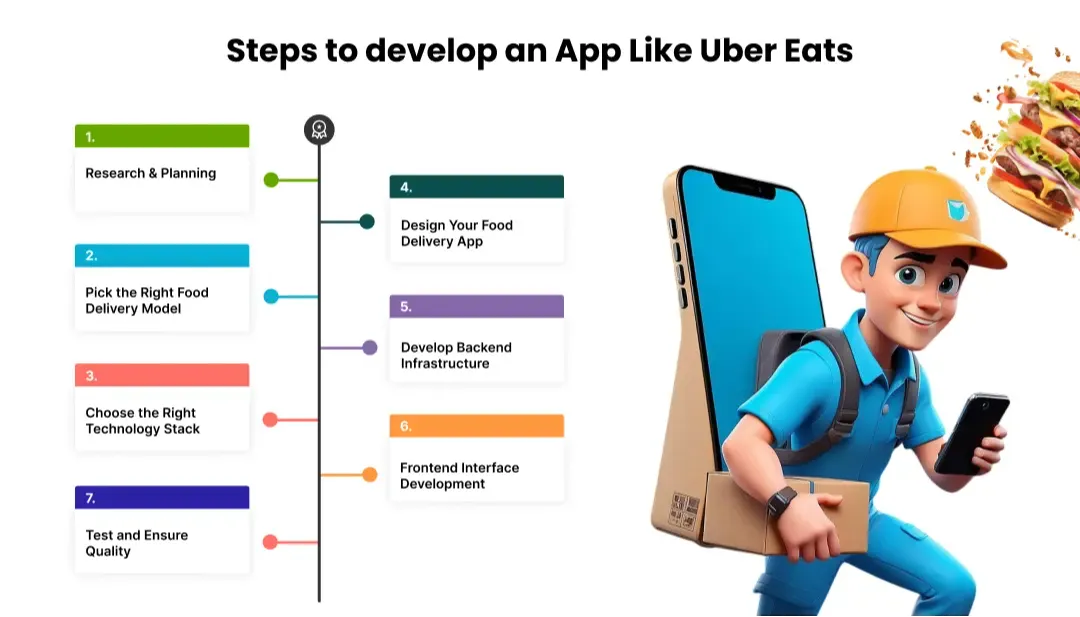
Building a food delivery app like Uber Eats requires a well defined roadmap to ensure nothing critical is overlooked. A structured development approach helps reduce complexity, streamline execution, and deliver a scalable, high performing application. Below is a step by step guide to help you navigate the development journey with confidence.
Research and Planning
Thorough market research and strategic planning are the foundation of a successful food delivery app. Analyzing competitors helps you identify market gaps, understand user behavior, and define your app’s unique value proposition. This stage also allows you to set clear goals, target the right audience, and align features with current industry trends.
Choose the Right Food Delivery Model
Selecting the right business model is crucial to meeting both business objectives and user expectations. Common food delivery models include:
-
Order Only Model – The platform manages orders, while restaurants handle deliveries.
-
Order and Delivery Model – The platform manages both orders and deliveries through its own logistics.
-
Fully Integrated Model – The platform owns the entire ecosystem, including restaurants, delivery, and operations.
Select the Right Technology Stack
Choosing the right technology stack ensures smooth performance, scalability, and long term reliability. The wrong stack can slow development and limit growth, while the right one supports efficiency and future expansion.
Common Technology Stack for an Uber Eats–Like App
| Aspect | Technologies |
|---|---|
| Front End Development | JavaScript, Redux, GraphQL |
| Back End Development | Java, Ruby, MySQL, PostgreSQL |
| Platforms | Android SDK, iOS SDK |
| Hosting | Linux, AWS, Apache |
| Infrastructure | Kafka, Cassandra |
Design the App (UI/UX)
At this stage, wireframes and mockups are created to visualize the app’s layout and user flow. A simple, intuitive design leads to a better user experience and higher engagement. Tools such as Figma, Adobe XD, and Sketch are commonly used, offering drag and drop functionality without requiring extensive coding knowledge.
Develop the Backend Infrastructure
The backend serves as the backbone of your food delivery app. It handles user authentication, order processing, payment integration, notifications, and data management. Scalability, security, and reliability are critical at this stage to ensure the app can handle growth and high traffic volumes.
Frontend Development
Frontend development focuses on building the interactive interface that users directly engage with. It integrates design elements with backend data to deliver a seamless experience for customers, restaurants, and delivery partners. A responsive and well optimized frontend is essential for usability and performance.
Testing and Quality Assurance
Continuous testing ensures that your application performs as expected across different devices, operating systems, and network conditions. Functional, performance, and security testing help identify issues early, reduce development risks, and ensure a smooth user experience on both iOS and Android platforms.
How Much Does It Cost to Build an App Like Uber Eats?
The cost of building an app like Uber Eats largely depends on several factors, including app complexity, feature set, technology stack, and the level of customization required. Development timelines also vary based on these elements.
Below is an overview of the average Uber Eats–like app development cost to help you estimate your investment:
| App Complexity | Average Cost | Estimated Timeline |
|---|---|---|
| Basic App | $10,000 – $25,000 | 2 – 4 months |
| Moderate App | $30,000 – $45,000 | 3 – 6 months |
| Advanced App | $50,000+ | 6 – 10 months |
A basic version typically includes core features such as user registration, restaurant listings, order placement, and basic payments. Moderate and advanced versions add functionalities like real time tracking, advanced analytics, AI driven recommendations, multi vendor support, and scalable infrastructure.
Challenges in Building an App Like Uber Eats
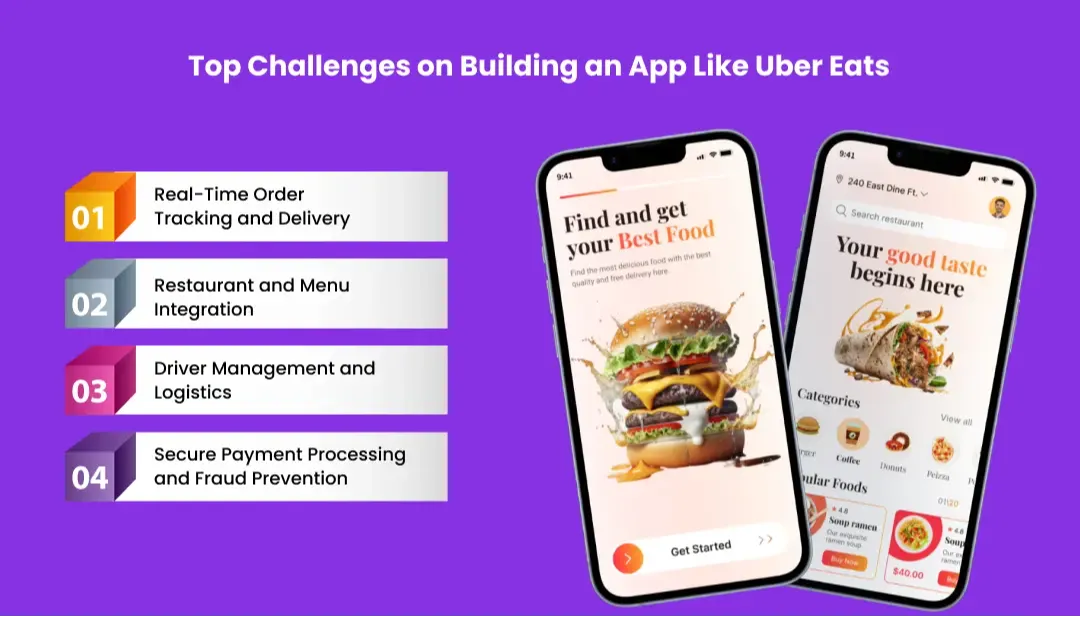
Developing a food delivery app with functionality similar to Uber Eats involves multiple technical, operational, and business challenges. Below are some of the most critical obstacles you need to address during development.
Real Time Order Tracking and Delivery
One of the biggest challenges is implementing accurate, low latency real time tracking. The system must seamlessly connect customers, restaurants, and delivery partners while maintaining near zero delays. Ensuring reliable GPS accuracy across regions, stable connectivity, and real time data synchronization significantly increases technical complexity.
Restaurant and Menu Integration
Onboarding multiple restaurants is challenging because each vendor has unique menu formats, pricing structures, and availability schedules. Maintaining consistent, up to date menu data across the platform requires a robust backend with automated synchronization, real time updates, and error handling to ensure accuracy at scale.
Driver Management and Logistics
Efficient driver allocation, route optimization, and delivery scheduling are essential but complex. The platform must balance driver availability with fluctuating demand, traffic conditions, and peak hours. Intelligent dispatch systems are required to ensure fair order distribution, faster deliveries, and minimized delays.
Secure Payment Processing and Fraud Prevention
Supporting multiple payment methods while ensuring compliance with financial regulations is a major challenge. Food delivery apps must secure sensitive user data, detect fraudulent activities in real time, and handle refunds and payouts seamlessly all without disrupting the user experience.
How HomeNest Software Can Help You Build an Uber Eats–Like App
HomeNest Software helps businesses transform food delivery ideas into scalable, high performance platforms. With experienced developers and industry proven methodologies, HomeNest delivers custom solutions designed to meet modern user expectations and competitive market demands.
End to End App Development
HomeNest manages the entire development lifecycle from ideation and UI/UX design to development, testing, and deployment. This structured approach ensures faster delivery, consistent quality, and seamless cross platform performance.
Custom Features and Scalable Architecture
The team builds tailored features such as real time tracking, multi restaurant listings, secure payment gateways, and advanced admin dashboards. A cloud ready, scalable backend ensures your app can handle rapid growth in users, orders, and partner restaurants without performance issues.
User Centric UI/UX Design
HomeNest’s design experts create intuitive user flows, visually engaging interfaces, and smooth interactions. This results in higher customer satisfaction, improved order completion rates, and a stronger brand presence in a highly competitive market.
Quality Assurance and Post Launch Support
Rigorous testing, continuous monitoring, and ongoing maintenance ensure long term stability. Post launch support includes performance optimization, security updates, and feature enhancements to keep your app reliable and future ready.
Final Thoughts
Building a food delivery app like Uber Eats requires careful planning, market research, and technical expertise. Understanding local demand, defining the right feature set, and choosing a reliable technology stack are critical to success.
Partnering with a trusted food delivery app development company can significantly reduce risk, time, and cost. While developing an Uber Eats–like app from scratch can take several months and require a substantial investment, the right development partner can help you launch faster, scale efficiently, and stay competitive in the evolving food delivery ecosystem.
Contact HomeNest Software today for a free consultation and inquire about our all inclusive App Design package offers!
HomeNest Software – Empowering Long Term Growth for Modern Businesses.

Contact Information:
- Address: The Sun Avenue, 28 Mai Chi Tho Street, Binh Trung Ward, Ho Chi Minh City
- Hotline: +84 898 994 298( WhatsApp )
- Website: homenest.software
HomeNest Services: Website Design – App Design – Software Development – Digital Marketing.
Frequently Asked Questions (FAQs)
1. How long does it take to build an app like Uber Eats?
Building an Uber Eats–like app typically takes 2 to 10 months, depending on app complexity, feature set, team size, and technology stack. A basic MVP can be launched faster, while advanced apps require longer development cycles.
2. What are the must have features in an Uber Eats–like app?
Core features include user registration, restaurant listings, menu management, order scheduling, real time delivery tracking, secure payments, and admin dashboards. Advanced apps may also include AI based recommendations and analytics.
3. How much does it cost to develop an app like Uber Eats?
The development cost usually ranges from $10,000 to $50,000+, depending on features, design complexity, backend scalability, and platform (iOS, Android, or both).
4. Can I start with an MVP before building a full scale app?
Yes. Launching an MVP (Minimum Viable Product) is a common strategy. It helps validate your idea, reduce initial costs, gather user feedback, and scale features gradually based on market demand.
5. What business model works best for a food delivery app?
The best model depends on your goals and region. Popular options include the order only model, order and delivery model, and fully integrated model. Each has different cost structures and operational requirements.
6. How do food delivery apps make money?
Food delivery apps generate revenue through commission fees from restaurants, delivery charges, surge pricing, subscription plans, in app ads, and promotional placements.
7. Is it necessary to build apps for both iOS and Android?
For maximum reach, it’s recommended to support both platforms. However, many startups begin with one platform or a cross platform solution to optimize budget and time to market.
8. How does HomeNest Software support post launch growth?
HomeNest Software provides continuous monitoring, performance optimization, security updates, feature upgrades, and long term maintenance, ensuring your app remains scalable and competitive after launch.
Latest Articles
View All
Criteria For Choosing The Right App Design Agency
UI/UX design is the logical foundation of a system, not merely a visual element. Choosing the wrong partner will directly lead to technical debt, budget overruns, and disruptions in the development process. This article provides a 6-step evaluation framework and a list of operational risks, helping businesses eliminate subjective design advice and accurately assess agency capabilities based on developer handoff standards and practical business performance.
How Does AI in Banking Industry Impact the Future?
Artificial intelligence (AI) has transitioned from a supplementary tool to a core infrastructure of financial data management, optimizing profitability through real-time fraud detection, natural language processing (NLP), and high-speed credit scoring models. “Deploying AI in the financial sector requires more than just algorithmic accuracy, it demands a highly secure cloud architecture and rigorous data governance,” commented Nguyen Tien, co-founder of HomeNest Software. Why read this guide? We skip the theoretical jargon to focus entirely on technical implementation. Whether you’re evaluating a vendor or planning a system overhaul, this article will detail: Operational Efficiency: Automating unstructured data workflows at scale. Risk Architecture: Implementing real-time threat detection and AML compliance. Data ownership: The essential need for 100% ownership of the source code to ensure full algorithm auditability.
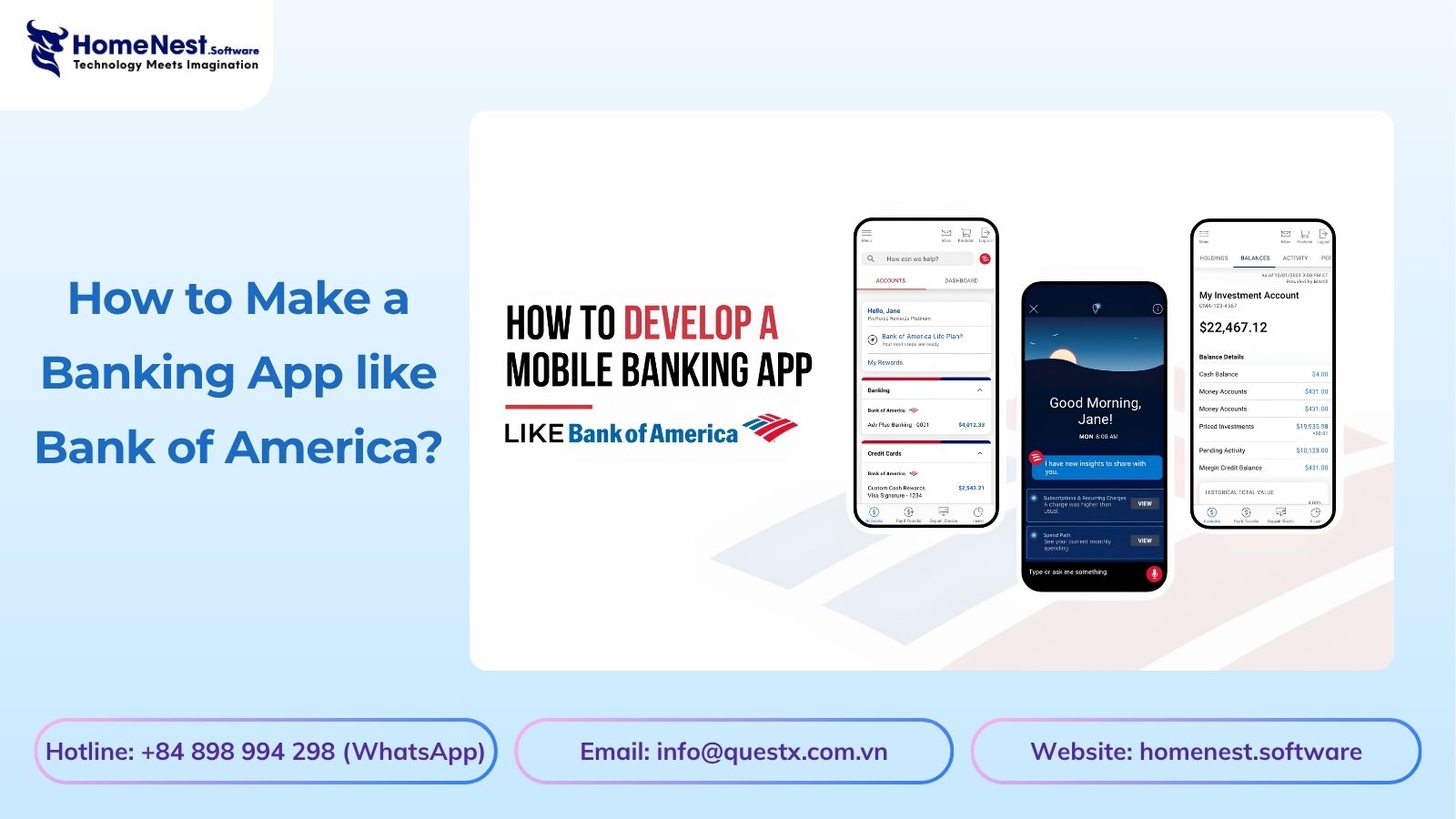
How to Make a Banking App like Bank of America?
Developing a mobile banking application like Bank of America extends far beyond basic UI design; it requires engineering a fault-tolerant backend capable of real-time ledger synchronization, biometric authentication, and high-volume data processing under strict regulatory frameworks. Drawing from HomeNest Software’s deep experience in architecting enterprise-grade fintech solutions, this guide strips away theoretical jargon to focus entirely on operational and technical execution. What you will find in this guide: We break down the precise development roadmap, from mapping out microservices and ensuring PCI-DSS compliance to estimating MVP development costs and securing absolute data sovereignty through 100% source code ownership. If you are preparing to build, scale, or audit a financial platform, this blueprint provides the exact framework you need.
Banking App Development Cost
Building a banking application is rarely a simple process; it’s a complex technical challenge requiring a balance between complying with stringent financial regulations, handling large transaction volumes, and a scalable cloud architecture. Miscalculating these technical requirements from the outset often leads to significant technical debt and budget overruns. Based on HomeNest Software’s practical experience in designing enterprise-grade fintech solutions, this guide bypasses generic estimates to provide a realistic analysis of banking application development costs. What you’ll find in this guide: We analyze the true cost factors, from technology selection and API integration to the hidden costs of regulatory compliance and security infrastructure. Whether you’re launching a minimum viable product or expanding an existing financial platform, this analysis provides the precise operational data you need to plan your budget effectively.
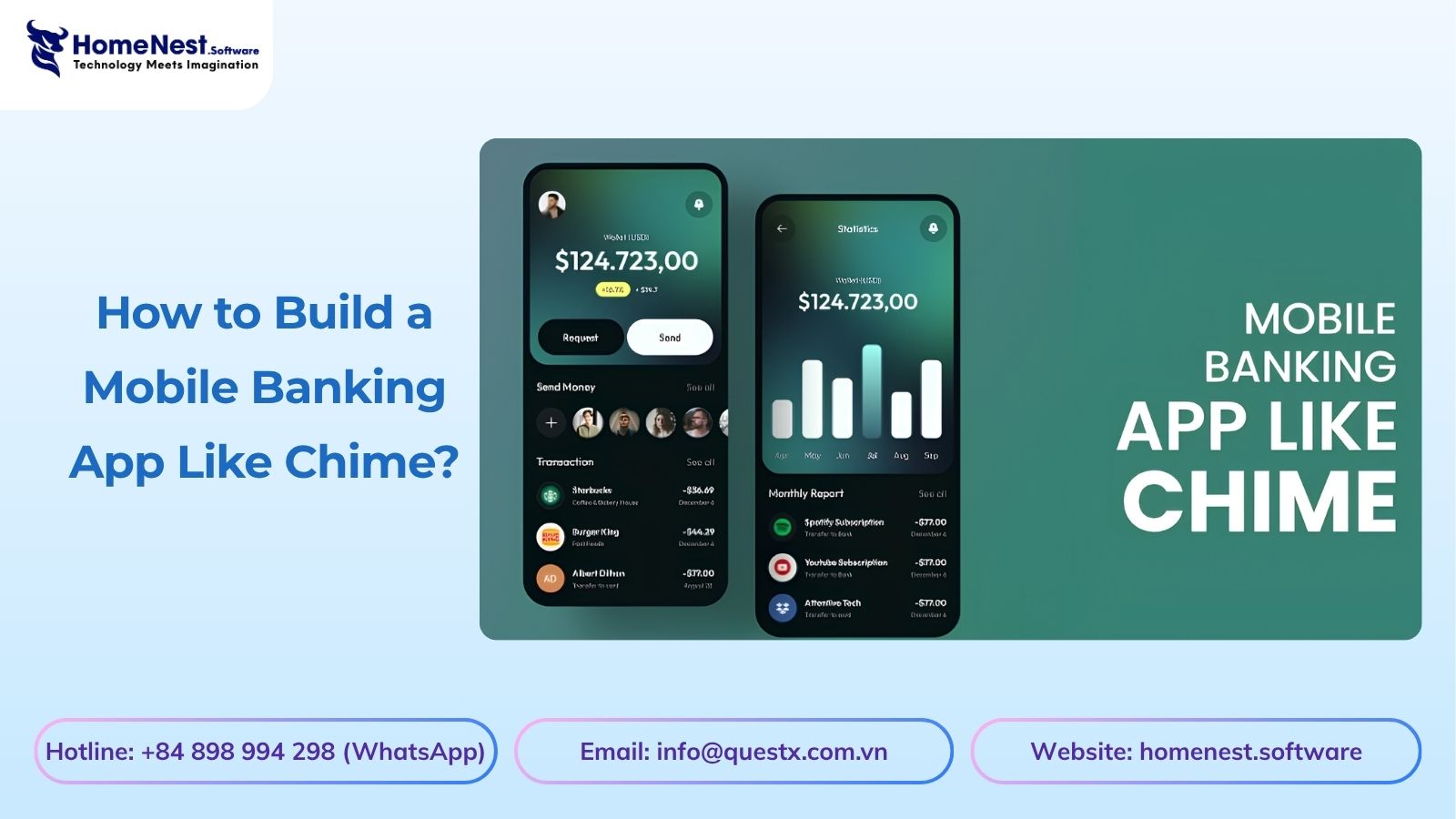
How to Build a Mobile Banking App Like Chime?
Building a mobile banking app like Chime is not just about features, it is about delivering a secure, scalable, and user-centric financial experience. From planning the right architecture to optimizing mobile banking app development cost, every decision directly impacts your product’s success. Leveraging Fintech app development services, starting with MVP app development, and scaling through on-demand app development solutions allows businesses to reduce risk and accelerate time to market. To stay competitive, combining Android app development services and iOS app development solutions ensures wider reach, while continuous updates through maintenance software development services keep your app secure and future-ready.
How to Build a Banking App Like Barclays: A Complete Entrepreneur’s Guide
Building a banking app like Barclays requires more than just development. It demands a strong product vision, secure architecture, and a clear monetization strategy. From optimizing cost and selecting the right tech stack to ensuring compliance and scalability, every decision impacts long-term success. Partnering with an experienced team like HomeNest Software helps accelerate development, reduce risks, and deliver a high-quality fintech product that can compete in today’s fast-evolving digital banking landscape.