
Mobile App Development Costs in the USA, UK, Vietnam
Scope of Work
Mobile apps have become an essential part of modern business strategy. Whether you’re a small business or a large enterprise, having a mobile presence is no longer optional—it’s a competitive requirement. Naturally, one of the first questions businesses ask is: “How much does it cost to develop a mobile app?”
The answer varies widely based on factors such as app complexity, development team location, platform choice, and long-term product goals.
Whether you’re a startup founder bringing a new idea to life or an established company looking to digitize your services, it’s important to understand the key elements that influence mobile app development costs. Clear insight into these factors helps you plan strategically and make smarter investment decisions.
Across the USA, UK, and Vietnam, the cost to develop a mobile app typically ranges from $20,000 to $180,000+, depending on scope and technical requirements. This makes careful planning and budget optimization essential parts of your development journey.
Businesses also need to consider the broader vision for their product. Will the app serve a one-time purpose, or will it evolve into a long-term platform requiring continuous improvements? Apps designed for long-term growth come with ongoing responsibilities such as updates, bug fixes, feature expansion, infrastructure scaling, and user support—all of which add to the total cost of ownership.
This article provides a detailed breakdown of mobile app development costs in the USA, UK, and Vietnam, along with an in-depth analysis of the factors that influence pricing, app types, and answers to the most common questions founders ask.
How to Estimate the Cost of Mobile App Development
The cost of developing a mobile app typically depends on two primary factors:
-
The hourly rate of the development team, and
-
The total number of hours required to build the app.
A simple formula to estimate app development cost is:
App Development Cost = Hourly Rate × Development Hours
For example, if a development company charges $50 per hour and your project requires 2,000 hours, the estimated cost would be:
$50 × 2,000 hours = $100,000
This calculation covers the development phase only and does not include post-launch expenses such as maintenance, updates, monitoring, or scaling.
Types of Mobile Apps and Their Expenses
| App Types | Description | Estimated Cost (USD) |
|---|---|---|
| Basic & Simple Apps | Simple and easy functions, no major backend requirements | $5,000 – $15,000 |
| Data-driven Apps | Requires server/databases and minute functionalities | $10,000 – $25,000 |
| E-commerce Apps | Shopping cart, payment gateway requirements | $20,000 – $60,000 |
| On-demand Apps | Real-time features, user or provider interfaces | $30,000 – $100,000+ |
| Social Media Apps | Real-time chats, content feed, user interactions & experiences | $40,000 – $150,000+ |
| Commercial Enterprise Apps | Internal business use, complex workflows management | $50,000 – $200,000+ |
Cost of Mobile App Development by Region
Regional differences play a significant role in determining the total cost of mobile app development. Factors such as labor rates, industry expertise, infrastructure, and operational overhead all influence final pricing. Development teams in the USA and UK typically charge higher rates due to their advanced technical skill sets and mature digital markets. In contrast, Vietnam has emerged as one of the most cost-effective and competitive outsourcing destinations, thanks to its expanding pool of skilled developers and strong technical capabilities.
Below is a comparative breakdown to help you understand the typical costs across these regions:
1. United States
-
Hourly Rate: $100 – $250
-
Total Project Cost: $50,000 – $250,000+
-
Pros: High-quality engineering, strong expertise, cutting-edge technology adoption.
-
Cons: Highest development costs globally.
2. United Kingdom
-
Hourly Rate: $80 – $180
-
Total Project Cost: $40,000 – $200,000+
-
Pros: Reliable market standards, consistent development quality.
-
Cons: Still relatively expensive for startups and small businesses.
3. Vietnam
-
Hourly Rate: $20 – $50
-
Total Project Cost: $5,000 – $50,000+
-
Pros: Highly cost-effective, growing talent pool, strong technical proficiency.
-
Cons: Time zone differences or communication gaps may occur (depending on the partner).
Read more: USA App Development Costs: What You Need to Know
Factors That Influence Mobile App Development Costs
Building a mobile app involves far more than writing code. It requires a coordinated effort across design, development, testing, strategy, and even marketing. This multidisciplinary approach ensures the app functions seamlessly and delivers a smooth user experience. To budget effectively, businesses must understand the key factors that drive app development expenses.
1. App Complexity
The more complex the app, the higher the cost.
-
Basic Apps:
Simple tools like calculators or timers with limited functionality fall into this category and are the least expensive to build. -
Moderate Apps:
These include features such as user authentication, databases, dashboards, and payment integrations. They require more development hours and higher costs. -
Complex Apps:
Platforms like social media apps, on-demand services, fantasy sports apps, or marketplaces require advanced backend systems, real-time processing, and multiple third-party integrations—substantially increasing the overall budget.
2. Platform (iOS, Android, or Both)
The number of platforms you target directly impacts total expenses.
-
Developing for one platform is typically more affordable.
-
Building for both iOS and Android doubles the workload unless using a cross-platform framework.
-
iOS development can sometimes cost more due to strict App Store guidelines and review requirements.
3. Design and UI/UX
Visually rich and highly interactive apps cost more to create.
-
Custom illustrations
-
Advanced animations
-
Unique user flows
All of these require additional design and development time, increasing the price.
4. Backend Infrastructure & APIs
Apps that rely heavily on backend systems incur higher costs.
This includes:
-
Cloud hosting
-
Complex API integrations
-
Real-time data syncing
-
Server-side logic
Backend-heavy apps require more architecture planning and development effort.
5. Development Team Location
Your development team’s geographic location significantly affects cost.
-
Teams in the USA or UK charge premium rates.
-
Countries like Vietnam or India offer high-quality talent at more affordable pricing.
Where you hire determines how far your budget can stretch.
6. Maintenance and Updates
Costs don’t end after launch.
-
Bug fixes
-
Performance improvements
-
OS version updates
-
New feature releases
These ongoing tasks add to the long-term cost of ownership.
7. App Security Requirements
Strong security features increase development costs.
Examples include:
-
Data encryption
-
Multi-factor authentication
-
Compliance with regulations (HIPAA, PCI-DSS, GDPR)
High-security apps—especially in finance, healthcare, or gaming—require more development time and stricter testing protocols.
Cost Breakdown by Development Stage
| Development Stage | Percentage of Total Cost |
| Planning & Research | 10% |
| UI/UX Design | 15% |
| Frontend Development | 25% |
| Backend Development | 30% |
| Testing & QA | 10% |
| Deployment & Support | 10% |
How to Reduce Mobile App Development Costs
Lowering the cost of mobile app development doesn’t mean sacrificing quality. With the right approach, businesses can optimize spending while still delivering a strong, scalable product. Here are some effective strategies:
1. Use Cross-Platform Frameworks
Technologies like Flutter and React Native allow you to build for both iOS and Android using a single codebase.
This significantly reduces development time and cost while maintaining smooth performance across platforms.
2. Start with an MVP
Building a Minimum Viable Product (MVP) helps validate your idea early.
You can launch quickly, collect real user feedback, and avoid investing heavily in features that may not be needed.
3. Outsource Smartly
Outsourcing to countries like Vietnam can greatly reduce development costs—without compromising on quality—when partnering with reputable teams.
Look for a development company with strong communication skills, proven experience, and a product-focused mindset.
4. Use Design Templates When Possible
Custom UI/UX is valuable but expensive.
Design templates can speed up the design process and reduce the cost of both design and development while still offering a clean, modern look.
5. Create a Clear Requirements Document
A detailed requirement document helps prevent scope creep, confusion, and unnecessary rework.
Clear planning upfront always results in lower costs and faster delivery.
Conclusion
Mobile app development costs vary depending on complexity, team rates, development time, and required features. Every business has unique needs, which means careful planning and smart decision-making are essential.
Cost-saving strategies—such as building an MVP, using cross-platform tools, or leveraging experienced development teams in regions like Vietnam—can help businesses stretch their budgets while still delivering high-quality products. Whether you choose a U.S. development agency for premium execution, a UK agency for reliability, or an offshore team for cost efficiency, the goal should always be value-driven development.
Ultimately, the true cost of an app is not just its development price—it’s the cost of ownership. Updates, customer support, feature enhancements, security patches, and user engagement all influence long-term investment. A well-built app can generate lasting value through revenue growth, brand trust, and improved customer experience.
With mobile technology evolving rapidly, businesses must stay agile and future-focused. Choosing the right tech stack, scalable infrastructure, and strategic development approach ensures your app becomes a foundational part of your digital strategy—not just a temporary solution.
Got a project in mind?
This is the perfect time to connect with experienced developers and request a personalized quote based on your goals and requirements.
Contact HomeNest Software today for a free consultation and inquire about our all-inclusive App Design package offers!
HomeNest Software – Empowering Long-Term Growth for Modern Businesses.

Contact Information:
- Address: The Sun Avenue, 28 Mai Chi Tho Street, Binh Trung Ward, Ho Chi Minh City
- Hotline: +84 898 994 298 ( WhatsApp )
- Website: homenest.software
FAQs
1. How much does it cost to develop a mobile app in the USA?
In the USA, mobile app development typically costs $50,000 to $250,000+, depending on complexity, platform, and required features.
2. How much does it cost to develop an app in the UK?
In the UK, app development usually ranges from £40,000 to £200,000+, with rates influenced by developer expertise, compliance requirements, and project scope.
3. Why is app development cheaper in Vietnam?
Vietnam offers highly skilled developers with lower labor costs. App projects can range from $5,000 to $50,000+, making it one of the most cost-effective outsourcing destinations.
4. What factors affect mobile app development costs?
Key cost drivers include:
-
App complexity
-
Number of features
-
UI/UX design quality
-
Platform selection (iOS, Android, or both)
-
Backend infrastructure
-
Integrations and APIs
-
Security requirements
-
Maintenance and updates
5. How long does it take to build a mobile app?
Depending on complexity:
-
Simple app: 1–3 months
-
Moderate app: 3–6 months
-
Complex app: 6–12+ months
6. Can I reduce app development costs without losing quality?
Yes. You can reduce costs by:
-
Using cross-platform frameworks (Flutter, React Native)
-
Building an MVP first
-
Outsourcing development strategically
-
Using UI templates
-
Defining clear requirements upfront
7. What is the average hourly rate for app developers in different regions?
-
USA: $100 – $250/hour
-
UK: $80 – $180/hour
-
Vietnam: $20 – $50/hour
8. Are there hidden costs in app development?
Yes. Hidden costs often include:
-
App hosting
-
Security upgrades
-
App Store fees
-
Compliance requirements (HIPAA, GDPR, PCI-DSS)
-
Ongoing maintenance
-
Marketing and user acquisition
9. Do I need to maintain my app after launch?
Absolutely. Maintenance ensures:
-
Bug fixes
-
OS compatibility updates
-
Performance improvements
-
Security patches
-
New features
Expect to spend 15–25% of the initial development cost annually.
10. Should I choose native or cross-platform development?
Choose native if you need top performance, hardware-level features, or a premium experience.
Choose cross-platform if you want a cost-effective solution that works on both iOS and Android with a single codebase.
Latest Articles
View All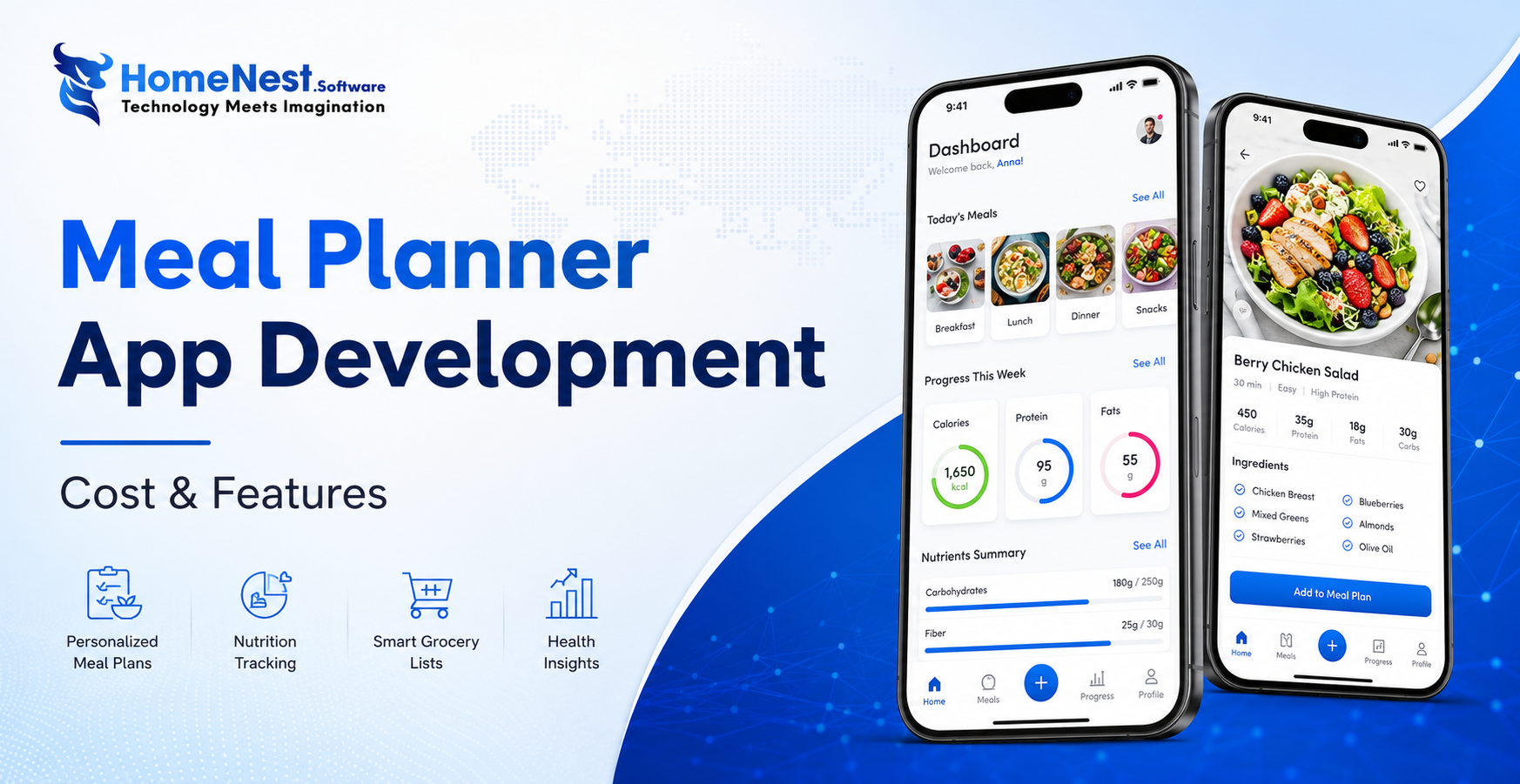
How to Build a Meal Planning App: A Complete Step-by-Step Guide
Building a successful meal planning app goes beyond creating an attractive interface it requires a clear business strategy, personalized user experiences, and scalable technology. By combining essential features like AI-powered meal recommendations, nutrition tracking, grocery list automation, and wearable integration, businesses can deliver lasting value to users while capitalizing on the growing digital health market. Partnering with an experienced mobile app development company ensures your solution is secure, future-ready, and designed to succeed in an increasingly competitive health-tech industry.
How Much Does It Cost to Build a Shopping App Like Temu?
Temu’s meteoric rise to over 900 million global downloads proves the power of combining AI, gamification, and social commerce, but building a similar viral shopping platform requires careful financial and technical planning. Developing an app like Temu typically costs anywhere from $40,000 for a basic Minimum Viable Product (MVP) to over $300,000 for a fully-featured platform. This guide breaks down every cost category, analyzes the core features driving Temu’s success, highlights the best technology stacks, and offers practical strategies to optimize your development budget without compromising on quality.

Criteria For Choosing The Right App Design Agency
UI/UX design is the logical foundation of a system, not merely a visual element. Choosing the wrong partner will directly lead to technical debt, budget overruns, and disruptions in the development process. This article provides a 6-step evaluation framework and a list of operational risks, helping businesses eliminate subjective design advice and accurately assess agency capabilities based on developer handoff standards and practical business performance.

How Does AI in Banking Industry Impact the Future?
Artificial intelligence (AI) has transitioned from a supplementary tool to a core infrastructure of financial data management, optimizing profitability through real-time fraud detection, natural language processing (NLP), and high-speed credit scoring models. “Deploying AI in the financial sector requires more than just algorithmic accuracy, it demands a highly secure cloud architecture and rigorous data governance,” commented Nguyen Tien, co-founder of HomeNest Software. Why read this guide? We skip the theoretical jargon to focus entirely on technical implementation. Whether you’re evaluating a vendor or planning a system overhaul, this article will detail: Operational Efficiency: Automating unstructured data workflows at scale. Risk Architecture: Implementing real-time threat detection and AML compliance. Data ownership: The essential need for 100% ownership of the source code to ensure full algorithm auditability.
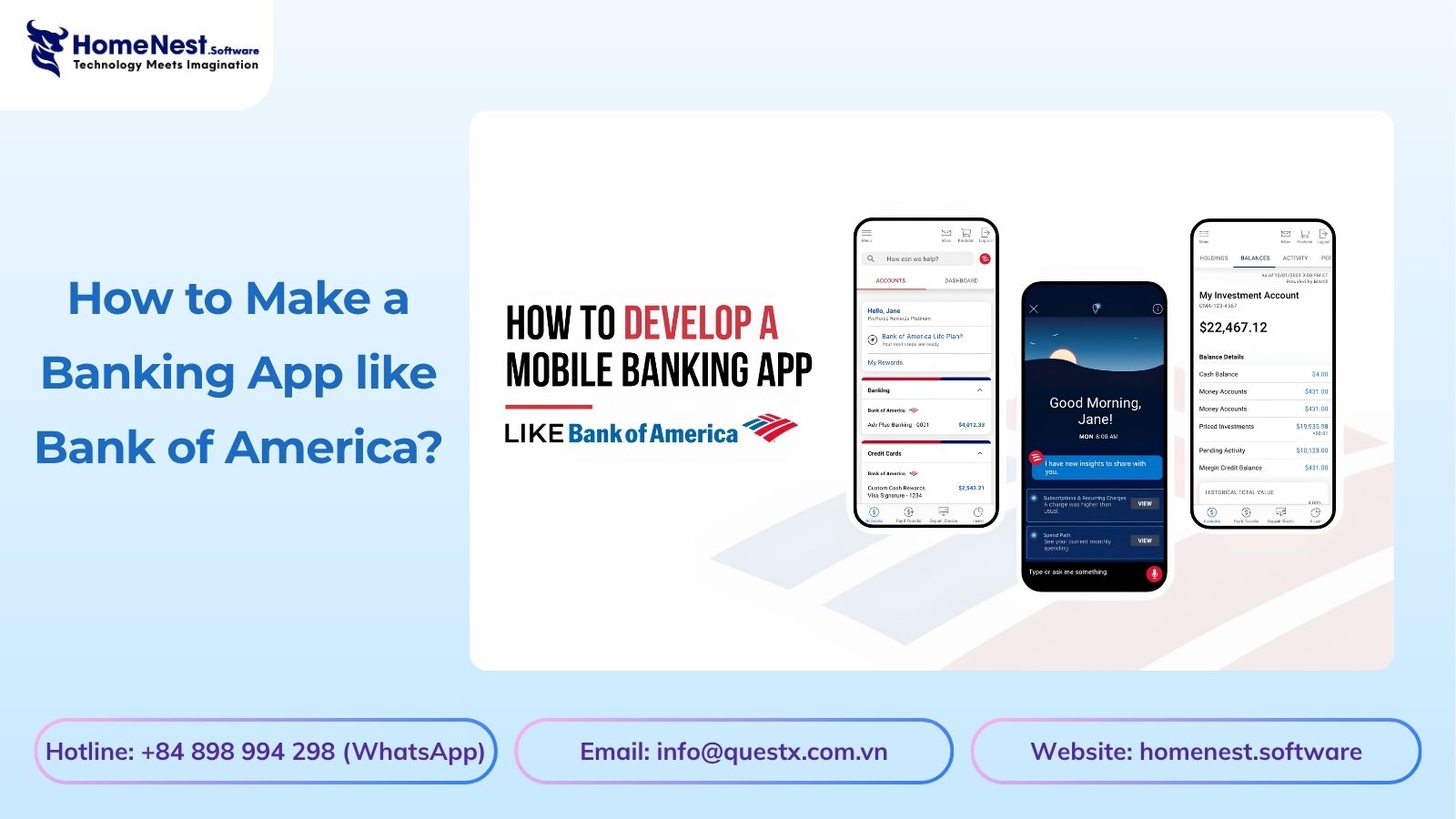
How to Make a Banking App like Bank of America?
Developing a mobile banking application like Bank of America extends far beyond basic UI design; it requires engineering a fault-tolerant backend capable of real-time ledger synchronization, biometric authentication, and high-volume data processing under strict regulatory frameworks. Drawing from HomeNest Software’s deep experience in architecting enterprise-grade fintech solutions, this guide strips away theoretical jargon to focus entirely on operational and technical execution. What you will find in this guide: We break down the precise development roadmap, from mapping out microservices and ensuring PCI-DSS compliance to estimating MVP development costs and securing absolute data sovereignty through 100% source code ownership. If you are preparing to build, scale, or audit a financial platform, this blueprint provides the exact framework you need.
Banking App Development Cost
Building a banking application is rarely a simple process; it’s a complex technical challenge requiring a balance between complying with stringent financial regulations, handling large transaction volumes, and a scalable cloud architecture. Miscalculating these technical requirements from the outset often leads to significant technical debt and budget overruns. Based on HomeNest Software’s practical experience in designing enterprise-grade fintech solutions, this guide bypasses generic estimates to provide a realistic analysis of banking application development costs. What you’ll find in this guide: We analyze the true cost factors, from technology selection and API integration to the hidden costs of regulatory compliance and security infrastructure. Whether you’re launching a minimum viable product or expanding an existing financial platform, this analysis provides the precise operational data you need to plan your budget effectively.