Do you manage or operate a hospital? Are your healthcare services fully supported by digital systems? If not, your staff may be spending a significant amount of time handling manual tasks such as patient registration, appointment scheduling, billing management, and administrative paperwork.
To simplify these operations and improve efficiency, hospitals increasingly rely on custom healthcare software an all in one digital solution designed to streamline clinical and administrative workflows.
According to recent research, around 91% of non federal acute care hospitals in the United States have already adopted certified Electronic Health Record (EHR) systems and other healthcare software solutions. This trend highlights how essential digital tools have become in modern healthcare management.
If you’re considering building custom healthcare software for your hospital but are unsure about the development process, required features, or overall cost, this guide is for you.
In this blog, we’ll walk you through everything you need to know about developing custom healthcare software, including key features, development steps, estimated costs, and important considerations.
Let’s get started.
Global Healthcare Software Market Statistics
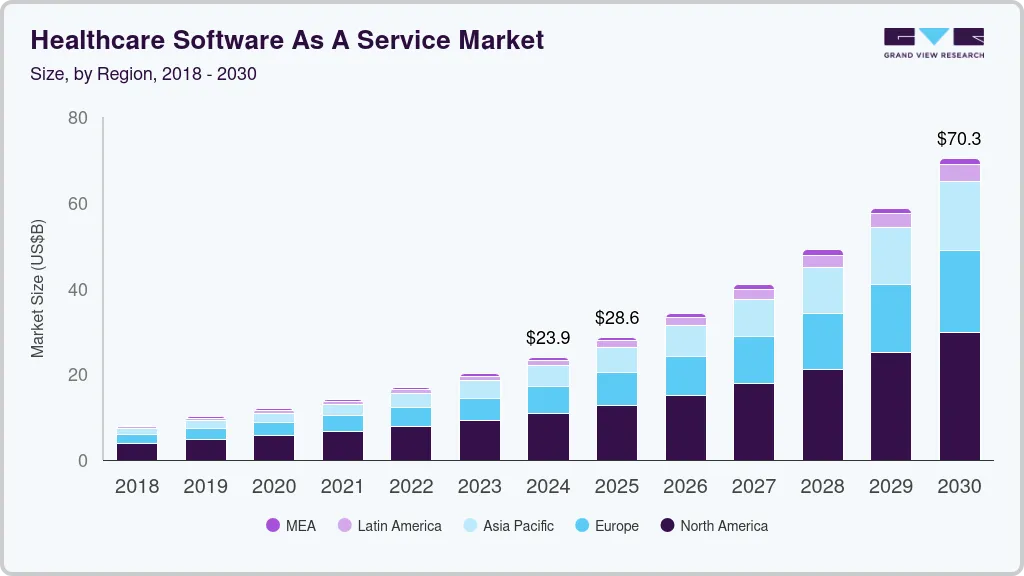
The global healthcare software market continues to grow rapidly as healthcare organizations increasingly adopt digital technologies to improve efficiency, patient care, and data management.
-
The market was valued at approximately $25.13 billion in 2024 and is projected to reach around $74.74 billion by 2030, reflecting strong growth in digital healthcare solutions worldwide.
-
In terms of applications, telemedicine platforms generated the largest revenue share, accounting for about 39% of the market in 2024, driven by the rising demand for remote healthcare services.
-
North America dominated the market regionally, holding the highest revenue share of approximately 39% in 2024, largely due to advanced healthcare infrastructure and rapid adoption of health technologies.
-
By deployment model, hybrid solutions which combine cloud and on premise infrastructure held the largest market share in 2025, as they offer both flexibility and enhanced data control for healthcare organizations.
-
Overall, the healthcare software market is expected to expand steadily with a compound annual growth rate (CAGR) of about 20% between 2025 and 2030, fueled by innovations in digital health, AI, and healthcare data analytics.
What Is Custom Healthcare Software?
Custom healthcare software is a digital solution specifically designed and developed to meet the unique needs of a particular hospital, clinic, or healthcare organization. Unlike off the shelf systems, custom software solutions are tailored to match the organization’s specific workflows, operational requirements, and strategic goals.
This type of software allows healthcare providers to integrate features, tools, and services based on their individual preferences, regulatory requirements, and patient care processes. As a result, custom healthcare software can efficiently handle large volumes of data, streamline complex medical operations, and improve overall healthcare service delivery.
Common examples of custom healthcare software include:
-
Hospital Management Systems (HMS)
-
Custom Electronic Health Record (EHR) systems
-
Patient portals and engagement platforms
-
Healthcare analytics and reporting tools
Read more: How to Choose the Best Healthcare Software Development Partner
5 Well Known Hospitals and the Software They Use
Before developing your own custom healthcare software, it can be helpful to study how leading hospitals implement digital systems to manage patient data, streamline workflows, and improve healthcare delivery. Observing existing platforms provides valuable insight into the features, architecture, and operational benefits these systems offer.
Below are examples of major hospitals and the healthcare software solutions they use:
| Hospital / Health System |
Country |
Software Name / Type |
Details |
| Mayo Clinic |
USA |
Epic Systems (EpicCare) |
Mayo Clinic uses Epic as a unified Electronic Health Record (EHR) system across its campuses, enabling seamless patient record access and improved care coordination. |
| Cleveland Clinic |
USA |
Epic Systems (MyChart, EpicCare) |
Cleveland Clinic relies on Epic’s platform for patient record management, appointment scheduling, and telehealth services, customized to support its clinical workflows. |
| Beth Israel Deaconess Medical Center (BIDMC) |
USA |
WebOMR (Online Medical Record) |
BIDMC developed its own in house EHR system called WebOMR, which was later licensed and expanded by Athenahealth. |
| Holy Name Health |
USA |
Harmony EHR |
Harmony EHR is a fully customized electronic health record system built internally to enhance usability and streamline clinician workflows. |
| Apollo Hospitals |
India |
Apollo Prism / MedMantra |
Apollo Hospitals developed proprietary hospital management and patient portal platforms integrated across its healthcare network. |
Studying these examples highlights how custom healthcare software can significantly improve operational efficiency, patient data management, and clinical decision making across modern healthcare systems.
Why Hospital Owners Choose to Build Custom Healthcare Software

Hospital owners increasingly invest in custom healthcare software to improve operational efficiency, deliver better patient care, and strengthen data security. Unlike generic systems, customized solutions are designed to match the specific workflows, operational processes, and regulatory requirements of a healthcare organization.
Custom platforms also integrate seamlessly with existing hospital systems and can scale as the organization grows. Below are some key benefits of developing custom healthcare software.
1. Improved Operational Efficiency
Custom healthcare software helps automate routine administrative tasks such as appointment scheduling, billing, patient registration, and reporting. By streamlining these processes, hospitals can reduce manual work, minimize errors, and improve overall staff productivity.
As a result, healthcare professionals can spend less time on administrative tasks and focus more on delivering high quality patient care.
2. Better Patient Care and Experience
Personalized healthcare platforms enable hospitals to offer improved patient engagement through features such as telemedicine services, patient portals, automated reminders, and digital health records.
These tools allow healthcare providers to maintain accurate medical data, communicate more effectively with patients, and coordinate care more efficiently leading to higher patient satisfaction and better treatment outcomes.
3. Strong Data Security and Regulatory Compliance
Hospitals handle highly sensitive patient information that must comply with strict healthcare regulations such as HIPAA, HL7, and GDPR. Custom healthcare software can be designed with robust security measures, including data encryption, secure authentication, and role based access control.
This helps protect patient data, maintain compliance with healthcare standards, and prevent legal risks or reputational damage.
4. Seamless Integration with Existing Systems
Custom healthcare software can integrate smoothly with existing hospital technologies such as Electronic Health Records (EHR), laboratory systems, billing platforms, and insurance databases.
This seamless integration ensures efficient data exchange across departments, reduces duplicate data entry, and enables healthcare professionals to make faster and more informed decisions.
5. Scalability and Long Term Cost Efficiency
Unlike off the shelf software, custom solutions are designed to grow with the hospital’s needs. They can easily support new departments, additional users, and emerging technologies as the organization expands.
Although the initial investment may be higher, custom healthcare software can reduce long term costs by eliminating recurring subscription fees, integration limitations, and dependency on third party platforms.
7 Essential Steps to Build Custom Healthcare Software
Developing custom healthcare software requires a well structured development process from initial market research to deployment and ongoing maintenance. By following a clear roadmap, hospitals and healthcare organizations can create secure, scalable, and user friendly digital solutions that support modern healthcare operations.
Below is a step by step guide to building custom healthcare software.
1. Conduct Market Research
The first step in building healthcare software is understanding market demands, user needs, and project requirements. This includes identifying the problems your software will solve and the goals your organization wants to achieve.
Research current industry trends and analyze successful healthcare platforms to understand which features and technologies are widely adopted. Creating a detailed list of requirements at this stage helps prevent confusion and ensures the development process remains aligned with your objectives.
2. Define Core and Advanced Features
Once the requirements are clear, the next step is to determine the essential features your healthcare software should include.
Typical features may include:
-
Appointment scheduling systems
-
Patient portals for communication and data access
-
Billing and payment management
-
Electronic Health Records (EHR) integration
-
Telemedicine capabilities
-
Strong security and authentication systems
-
Mobile accessibility for healthcare professionals and patients
Defining these features early ensures the software meets both clinical and operational needs.
3. Choose the Right Technology Stack
Selecting the appropriate technology stack is crucial for building a reliable and scalable healthcare platform. Experienced developers typically choose technologies based on performance, scalability, and security requirements.
Examples of commonly used technologies include:
-
Backend: Node.js, C#, Ruby on Rails
-
Frontend: Angular, React.js, Flutter Web
-
Databases: Cassandra, MariaDB, Redis
-
Security Protocols: OAuth 2.0, JWT, TLS/SSL
-
Cloud Infrastructure: AWS, Microsoft Azure, Oracle Cloud
The right technology combination helps ensure your software performs efficiently and remains scalable as your healthcare organization grows.
4. Design an Intuitive UI/UX
User experience is critical in healthcare applications because they are used by doctors, nurses, administrators, and patients. A well designed interface helps users navigate the system quickly and reduces operational errors.
Design teams typically use tools such as Figma, Framer, Zeplin, or Marvel to create wireframes, prototypes, and visual layouts. The design should focus on clear navigation, accessible layouts, readable typography, and consistent visual elements to enhance usability.
5. Develop the Backend Infrastructure
The development phase involves building the system’s core functionality, APIs, database architecture, and server infrastructure. Backend developers ensure the platform can process large volumes of healthcare data securely and efficiently.
During this stage, developers may also integrate third party services such as:
-
Payment gateways
-
Communication tools
-
Social login systems
-
CRM and ERP integrations
-
Analytics platforms
These integrations enhance the overall functionality of the healthcare platform.
6. Perform Testing and Quality Assurance
Before launching the software, it must go through rigorous testing and quality assurance (QA) processes to ensure reliability and security.
Common testing methods include:
These tests help identify and resolve bugs, improve system performance, and ensure all features function correctly.
7. Deployment and Ongoing Maintenance
The final stage involves deploying the software into a live environment and making it accessible to users. However, development does not end after launch.
Ongoing maintenance is essential to keep the software secure and up to date. Maintenance activities typically include:
-
Fixing bugs and security vulnerabilities
-
Performance optimization
-
Regular updates and feature enhancements
-
Compliance updates based on new healthcare regulations
Continuous support ensures the healthcare system remains reliable, scalable, and aligned with evolving industry requirements.
Essential Features to Include in Custom Healthcare Software
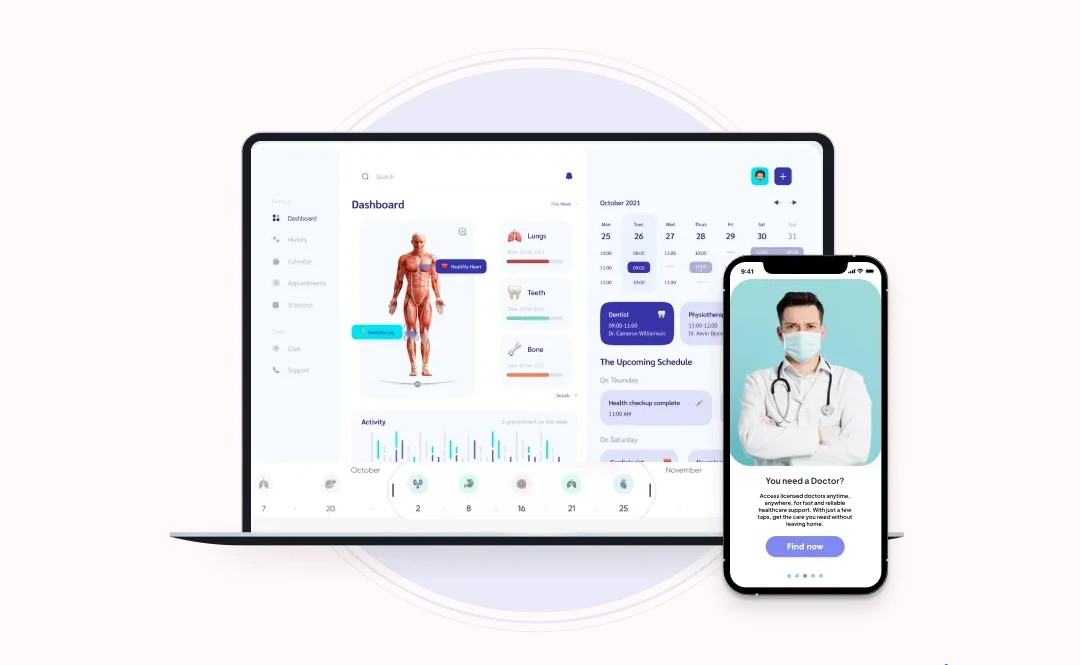
Choosing the right features is one of the most challenging parts of developing custom healthcare software. Many healthcare organizations struggle to decide which functionalities will deliver the most value for both staff and patients. To help streamline hospital operations and improve patient care, here are the must have features that modern healthcare management systems should include.
1. Patient Registration
A patient registration system allows users to create and manage their profiles by entering essential information such as personal details, demographics, medical history, and contact information. This feature simplifies patient onboarding and helps healthcare providers maintain accurate medical records.
2. Video Consultation
Video consultation features enable real time remote communication between patients and healthcare professionals. Through secure video conferencing, doctors can diagnose conditions, provide medical advice, and monitor patient health without requiring an in person visit.
3. Electronic Prescription (E Prescription)
E prescription functionality allows physicians to generate and send prescriptions digitally to pharmacies. This reduces paperwork, improves prescription accuracy, and creates a more efficient and paperless healthcare workflow.
4. Billing and Invoicing System
An integrated billing system automates invoice generation, payment processing, and financial tracking. This helps hospitals manage payments more efficiently while providing patients with a smooth and transparent billing experience.
5. Electronic Health Record (EHR) Integration
EHR integration allows healthcare providers to maintain comprehensive patient records, including diagnoses, lab results, treatment plans, and prescription history. This centralized data management improves care coordination and ensures healthcare professionals have access to accurate patient information.
6. Patient Portal
A patient portal empowers patients to manage appointments, access medical records, review prescriptions, and communicate with healthcare providers. This feature improves patient engagement and allows individuals to take a more active role in their healthcare journey.
7. Inventory and Medical Supply Management
Healthcare software can include inventory management tools to track medical equipment, medications, and hospital supplies. Automated alerts for low stock levels or approaching expiration dates help hospitals maintain adequate inventory and avoid shortages.
8. AI Powered Diagnostic Assistance
Artificial intelligence can enhance healthcare systems by analyzing patient records, medical images, and diagnostic reports to support clinical decision making. AI powered tools can help physicians identify potential conditions more quickly and reduce the risk of human error.
9. Push Notifications and Alerts
Push notification systems keep patients and healthcare staff informed about appointment reminders, medication schedules, test results, and emergency alerts. Timely notifications improve communication and help patients stay on track with their treatment plans.
10. 24/7 Support and Assistance
Modern healthcare platforms often provide round the clock support through live chat, phone assistance, or in app help centers. Continuous support ensures that both patients and healthcare staff can quickly resolve technical or service related issues.
What Is the Cost of Building Custom Healthcare Software?
The cost of developing custom healthcare software typically ranges from $8,000 to $25,000 or more, depending on several factors. These include the project’s complexity, the number of features, system integrations, technology stack, security requirements, design, and testing processes.
Since custom healthcare platforms are tailored to meet the specific needs of hospitals or healthcare organizations, the total software development cost can vary significantly. Additional integrations such as Electronic Health Records (EHR), telemedicine features, advanced analytics, or AI capabilities can further influence the overall budget.
Below is an estimated breakdown of healthcare software development costs by project stage:
| Development Stage |
Description |
Estimated Cost (USD) |
| Requirement Analysis & Planning |
Gathering business requirements, defining project scope, and identifying compliance standards. |
$1,000 – $2,000 |
| UI/UX Design |
Creating wireframes, prototypes, and user friendly interface designs. |
$1,000 – $3,000 |
| Frontend Development |
Building the user facing components for web or mobile applications. |
$5,500 – $8,000 |
| Backend Development |
Developing server infrastructure, databases, APIs, and integrations (such as EHR or HL7). |
$6,000 – $12,000 |
| Security & Compliance Setup |
Implementing encryption, secure authentication, and regulatory compliance (e.g., HIPAA). |
$800 – $2,500 |
| Testing & Quality Assurance |
Conducting functional, performance, and security testing to ensure reliability. |
$700 – $2,000 |
| Deployment & Maintenance |
Launching the application, setting up hosting infrastructure, and providing initial post launch support. |
$1,000 – $2,500 |
The final cost will depend on project requirements, development team location, and the level of customization required. Investing in well designed healthcare software can significantly improve hospital efficiency, patient management, and long term operational performance.
Read more: Software Outsourcing Costs: Key Factors and Strategic Insights
5 Key Factors That Influence Custom Healthcare Software Development Cost
Before starting a custom healthcare software development project, it’s important to understand the factors that can significantly affect the overall cost. From the complexity of features to the expertise of the development team, several elements determine how much investment is required to build a reliable healthcare platform.
Below are the major factors that typically influence the total development cost.
1. Basic vs. Advanced Features
The number and complexity of features play a major role in determining development costs. Healthcare software can include both basic functionalities and advanced capabilities depending on the needs of the hospital or healthcare organization.
Common features may include appointment scheduling, billing systems, electronic health records (EHR), telemedicine functionality, and patient engagement tools. More advanced capabilities such as AI powered analytics or wearable device integration require additional development effort and therefore increase the overall cost.
| Feature Level |
Description |
Estimated Cost (USD) |
| Basic Features |
Appointment scheduling, patient registration, and basic medical records |
$1,000 – $3,000 |
| Moderate Features |
E prescriptions, notifications, and user dashboards |
$2,500 – $5,000 |
| Premium Features |
Telemedicine platforms, AI analytics, wearable device integration |
$4,000 – $7,000 |
2. Development Team Expertise and Location
The size, expertise, and location of the development team can significantly influence the cost of healthcare software development.
Hiring developers from regions such as the United States or the United Kingdom generally involves higher development costs compared to outsourcing to skilled teams in regions like Asia Pacific. Additionally, developers with specialized experience in healthcare technologies and compliance standards may command higher rates.
| Team Type |
Description |
Estimated Cost (USD) |
| Small Local Team |
2–3 developers working on a limited project scope |
$2,000 – $5,000 |
| Mid Level Outsourced Team |
Skilled outsourced developers offering balanced cost and quality |
$3,000 – $7,000 |
| Expert In House Team |
Highly experienced developers with healthcare specialization |
$5,000 – $9,000 |
3. UI/UX Design Complexity
Designing a user friendly interface is essential for healthcare systems used by doctors, nurses, administrators, and patients. A well designed interface improves usability and reduces operational errors.
However, incorporating advanced design elements such as custom layouts, visual components, responsive interfaces, and accessibility standards can increase development costs.
| Design Level |
Description |
Estimated Cost (USD) |
| Basic Design |
Simple layouts with limited customization |
$800 – $2,000 |
| Moderate Design |
Custom color schemes and intuitive navigation |
$1,500 – $3,500 |
| Advanced Design |
High end visuals, accessibility features, and responsive UI |
$3,000 – $5,000 |
4. Third Party Integrations
Integrating third party tools and services enhances the functionality of healthcare software but can also increase development costs. These integrations may include payment gateways, communication tools, CRM systems, analytics platforms, and notification services.
Healthcare specific integrations such as EHR/EMR systems, HL7, and FHIR standards require additional development effort and may involve licensing fees.
| Integration Type |
Description |
Estimated Cost (USD) |
| Basic APIs |
Payment gateways and email notification systems |
$800 – $1,500 |
| Healthcare APIs |
EHR/EMR integration, HL7 or FHIR interoperability |
$1,500 – $3,000 |
| Complex Systems |
Wearables, AI powered tools, or insurance claim systems |
$3,000 – $5,000 |
5. Testing and Quality Assurance
Healthcare software requires extensive testing and quality assurance (QA) to ensure security, reliability, and compliance with healthcare regulations.
Testing may include functional testing, security testing, integration testing, performance testing, and user acceptance testing. Advanced QA processes, such as automated testing or security audits, may increase the overall cost but are essential for ensuring a safe and stable healthcare system.
| Testing Level |
Description |
Estimated Cost (USD) |
| Basic Testing |
Functional testing and bug fixes |
$700 – $1,500 |
| Comprehensive QA |
Security, performance, and compliance testing |
$1,500 – $3,000 |
| Advanced QA & Automation |
Automated testing, penetration testing, HIPAA compliance audits |
$2,500 – $4,000 |
Conclusion
Building custom healthcare software for hospitals requires careful planning, regulatory compliance, and a strong understanding of the needs of both patients and healthcare professionals. By selecting the right technology stack, implementing robust security measures, and ensuring seamless system integration, healthcare organizations can significantly improve operational efficiency and patient care.
Partnering with experienced healthcare software development professionals ensures the platform meets industry standards for security, compliance, and performance. A well designed custom healthcare system enables hospitals to deliver faster, smarter, and more reliable healthcare services ultimately improving overall patient outcomes.

Contact Information:
- Address: The Sun Avenue, 28 Mai Chi Tho Street, Binh Trung Ward, Ho Chi Minh City
- Hotline: +84 898 994 298 ( WhatsApp )
- Website: homenest.software
Frequently Asked Questions (FAQs)
1. What is custom healthcare software?
Custom healthcare software is a tailored digital solution designed specifically for hospitals, clinics, or healthcare organizations. Unlike off the shelf systems, it is built to match unique workflows, integrate with existing systems, and comply with healthcare regulations while improving patient care and operational efficiency.
2. Why do hospitals need custom healthcare software?
Hospitals use custom healthcare software to streamline operations, improve patient management, enhance data security, and integrate multiple healthcare systems such as EHR, billing platforms, and telemedicine services. It also allows organizations to scale their technology as their needs grow.
3. How long does it take to develop custom healthcare software?
The development timeline depends on the complexity, features, and integrations required. A basic healthcare application may take 3–4 months, while a more advanced system with EHR integration, telemedicine, and AI features may take 6–12 months or longer.
4. What technologies are commonly used in healthcare software development?
Healthcare software often uses technologies such as cloud platforms (AWS, Azure, Google Cloud), AI and machine learning, IoT devices, secure APIs, and interoperability standards like HL7 and FHIR. These technologies help improve data exchange, analytics, and patient monitoring capabilities.
5. How can hospitals ensure data security in healthcare software?
Hospitals can protect sensitive patient information by implementing data encryption, role based access control, secure authentication, and compliance with healthcare regulations such as HIPAA and GDPR. Regular security audits and testing are also essential to maintain data protection.
6. What are the main features of custom healthcare software?
Common features include patient registration, appointment scheduling, electronic health records (EHR), telemedicine consultations, billing systems, patient portals, inventory management, and AI powered diagnostics. These features help hospitals manage operations efficiently and improve patient experiences.
7. Is custom healthcare software better than off the shelf solutions?
Custom healthcare software offers greater flexibility, scalability, and integration capabilities compared to off the shelf solutions. It can be tailored to meet specific hospital requirements and workflows, making it more efficient for long term healthcare operations.
8. How much does custom healthcare software development cost?
The cost typically ranges from $8,000 to $25,000 or more, depending on factors such as features, integrations, development team expertise, design complexity, and security requirements. Larger enterprise healthcare systems may require higher investments.