
Top Benefits Of Medicine Delivery Apps In Healthcare
Medicine delivery apps are rapidly becoming a core pillar of digital healthcare, combining convenience, compliance, and data-driven intelligence into a single platform. For businesses, success depends on balancing user-centric features (like real-time tracking and adherence tools) with robust backend systems, regulatory compliance, and scalable architecture. Investing early in the right technology stack and development partner not only accelerates time-to-market but also positions your solution for long-term growth in an increasingly competitive and innovation-driven healthcare ecosystem.
Scope of Work
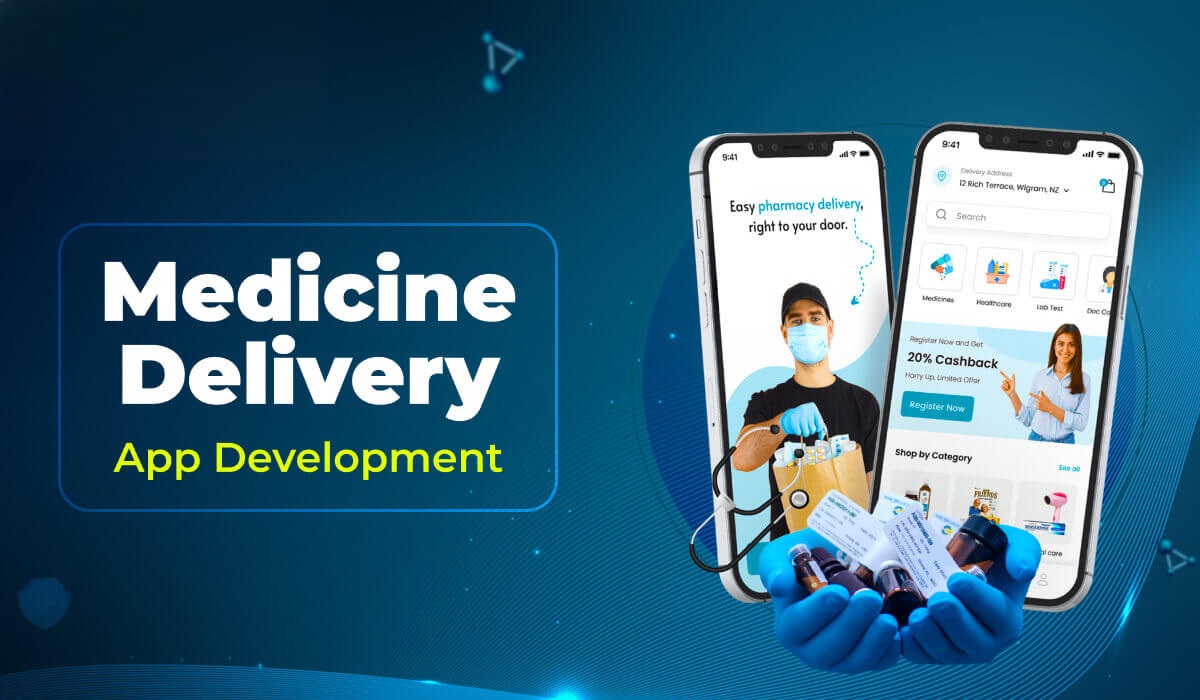
In today’s fast evolving digital landscape, the healthcare sector is undergoing a significant transformation, with medicine delivery apps playing a central role in redefining patient care. From enabling doorstep access to essential medications to simplifying prescription management and offering real time order tracking, these platforms are reshaping how healthcare services are delivered and experienced.
This article provides a comprehensive overview of the key benefits of medicine delivery apps not only for patients, but also for healthcare providers, pharmacies, and the broader healthcare ecosystem. It highlights how these solutions improve medication adherence, enhance convenience, reduce operational overhead, and expand access to care in both urban and remote areas.
Whether you are a hospital administrator, pharmacist, startup founder, or planning to invest in medicine delivery app development, understanding the strategic value of these platforms is critical. Their growing adoption is driven by factors such as increased smartphone penetration, an ageing global population, and the post pandemic shift toward contactless healthcare services.
As a result, the global online pharmacy market is experiencing rapid growth rising from USD 112.46 billion in 2024 to an estimated USD 131.65 billion in 2026, and projected to reach an impressive USD 543 billion by 2033, reflecting a strong CAGR of 17%.
For businesses exploring this opportunity, this guide also covers essential insights into medicine delivery app development cost, key features required for a competitive product, and practical guidance on selecting the right development partner to successfully bring your app vision to market.
What Is a Medicine Delivery App?
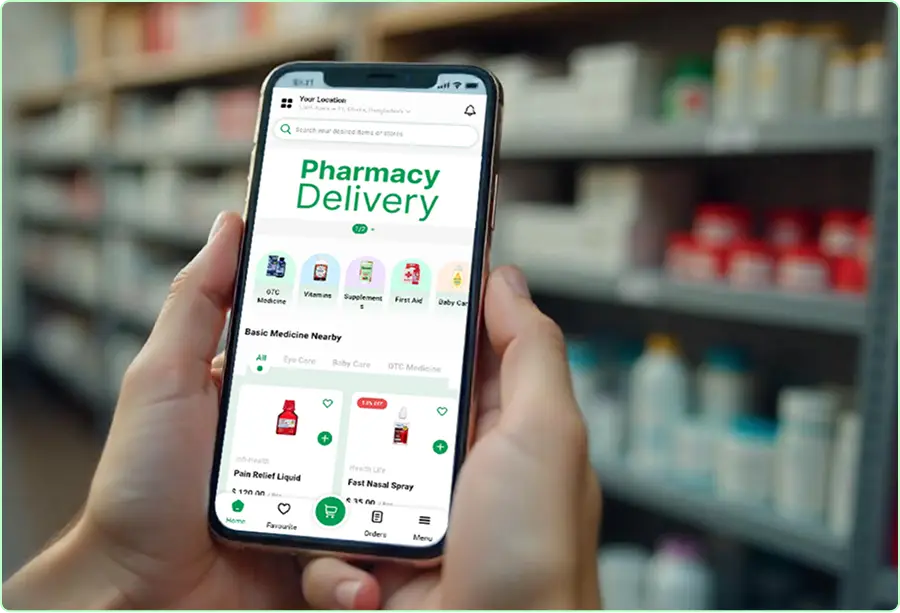
At its core, a medicine delivery app is a secure, regulation compliant digital platform (typically aligned with standards like HIPAA and GDPR) that enables patients to conveniently access medications and healthcare essentials through mobile or web interfaces.
These applications are designed to streamline the entire medication fulfillment process, allowing users to:
- Upload or scan prescriptions for verification and approval
- Browse a wide range of OTC drugs, prescription medicines, medical equipment, and wellness products
- Complete payments securely using cards, UPI, insurance coverage, or digital wallets
- Monitor order status in real time, schedule recurring refills, and receive medication reminders
- Communicate directly with pharmacists or healthcare professionals for quick guidance
On the backend, these platforms rely on robust integrations with pharmacy management systems, e prescription networks, payment gateways, and last mile delivery services. This interconnected ecosystem ensures efficient order processing, regulatory compliance, and a seamless end to end user experience.
Market Snapshot & Key Growth Drivers
The rapid adoption of medicine delivery apps is fueled by a convergence of technological, behavioral, and industry level shifts. Below is a structured view of the primary factors driving market growth and their direct impact:
| Factor | Impact on Medicine Delivery Apps |
|---|---|
| E commerce привычка (Comfort with digital shopping) | Patients increasingly expect a seamless, one click purchasing experience similar to platforms like Amazon even when ordering prescription medications. |
| Rise of telehealth | With virtual consultations becoming mainstream, doctors now issue e prescriptions digitally, enabling a frictionless transition from diagnosis to medicine delivery. |
| Expansion into rural and Tier 2 areas | These apps help close the accessibility gap in underserved regions, where physical pharmacies are limited, thereby improving medication adherence and health outcomes. |
| Big Tech entry into healthcare | Initiatives like Amazon Pharmacy offering same day delivery in major U.S. cities validate the business model and elevate user experience expectations across the industry. |
| Pharma’s direct to consumer (D2C) shift | Programs such as PfizerForAll and LillyDirect highlight how pharmaceutical companies are building direct, data driven relationships with patients. |
Together, these drivers are not only accelerating market growth but also redefining how healthcare services are accessed, delivered, and experienced in the digital age.
Stakeholders & Their Value Gains
Medicine delivery apps create measurable value across the entire healthcare value chain. Each stakeholder benefits from improved efficiency, better data visibility, and enhanced service delivery.
| Stakeholder | Key Benefits |
|---|---|
| Patients | 24/7 access to medications, discreet packaging, automated refill reminders, and personalized pricing or discounts leading to higher convenience and adherence. |
| Pharmacies | Expanded geographic coverage beyond physical locations, reduced dependency on in store traffic, and data driven insights into inventory turnover and demand patterns. |
| Hospitals / Clinics | Improved post discharge medication adherence, reduced readmission risks, and access to medication usage data that can be integrated into electronic health records (EHRs). |
| Insurers & PBMs | Enhanced formulary compliance, stronger fraud detection through digital audit trails, and richer datasets for outcomes based care and cost optimization. |
| Pharmaceutical Companies | Direct access to real world evidence (RWE), improved patient engagement, and new digital channels to promote companion apps, therapies, or connected devices. |
| Logistics Partners | Opportunities for high margin, specialized deliveries (including temperature controlled shipments), with future potential in advanced models such as drone based distribution. |
Collectively, these benefits demonstrate how medicine delivery platforms are not just consumer tools, but critical infrastructure in modern, data driven healthcare ecosystems.
How Medicine Delivery Apps Are Transforming Healthcare
Improved Access & Healthcare Equity
Medicine delivery apps help bridge accessibility gaps by ensuring that patients in rural areas or those with mobility challenges receive medications on time. This significantly reduces treatment delays and improves overall health outcomes.
Higher Medication Adherence
Through features like push notifications, AI driven dosage reminders, and automated refill scheduling, these platforms improve adherence rates by up to 30% in some studies helping patients follow prescribed treatment plans more consistently.
End to End Supply Chain Transparency
Advanced tracking systems enable full visibility of drug batches and lot numbers across the supply chain. This reduces the risk of counterfeit medications and allows for faster, more effective recall management.
Actionable Patient Data & Predictive Insights
User behavior, refill frequency, and engagement patterns generate valuable datasets. These insights support predictive analytics, enabling healthcare providers to identify potential non adherence or adverse events early and intervene proactively.
Cost Optimization & Time Efficiency
By eliminating travel, waiting times, and manual administrative processes, medicine delivery apps reduce both patient effort and operational costs. Insurers also benefit from streamlined claims processing and reduced fraud risks.
Emergency & Chronic Care Support
Same day delivery and emerging logistics innovations such as drone based distribution ensure timely access to critical medications like insulin, inhalers, and antibiotics, potentially reducing emergency room visits.
Sustainability & Environmental Impact
Optimized delivery routes and centralized distribution models lower carbon emissions compared to multiple individual trips to physical pharmacies, contributing to more sustainable healthcare logistics.
Must Have Features for Competitive Medicine Delivery App Development
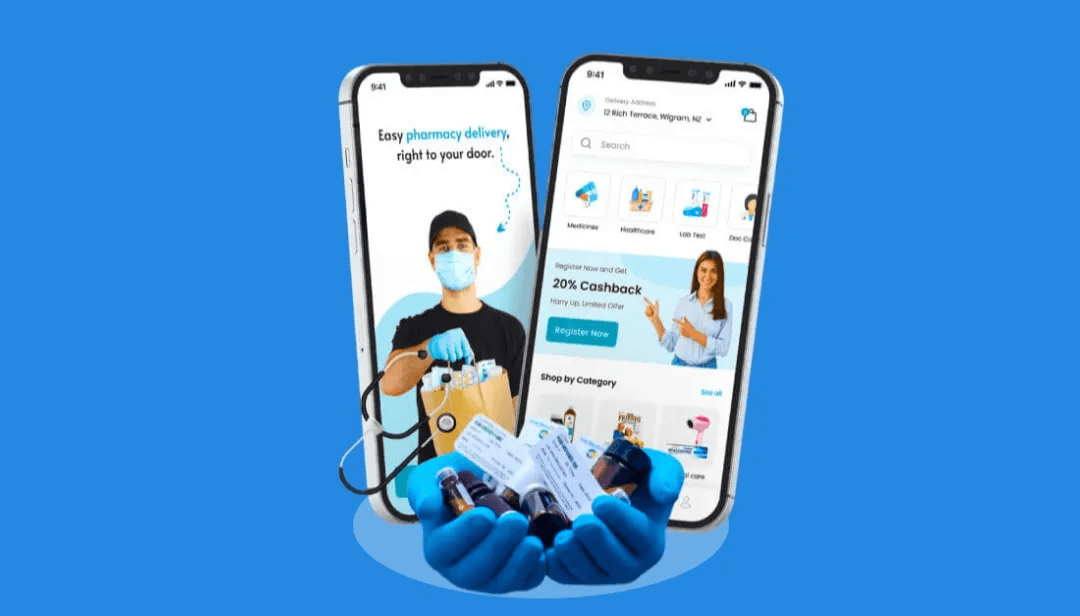
To build a scalable and market ready medicine delivery platform, it’s essential to design feature sets for both end users and backend stakeholders. Below is a structured breakdown of critical capabilities:
User Side Features
- Profile Management & e KYC
Secure onboarding with identity verification to ensure compliance and safe transactions. - Prescription Upload & OCR Verification
Users can upload prescriptions, while OCR technology extracts and validates key data for faster processing. - AI Powered Search & Generic Alternatives
Intelligent search functionality that suggests equivalent generic medicines to optimize cost and availability. - Multiple Payment Options
Support for cards, digital wallets, Buy Now Pay Later (BNPL), and insurance integrations for seamless checkout. - Real Time Order Tracking & ETA
Live tracking with accurate delivery estimates enhances transparency and user trust. - Refill Reminders & Dosage Alerts
Automated notifications help users stay consistent with their medication schedules. - In App Chat or Video Consultation
Direct communication with pharmacists or doctors for quick clarifications and guidance. - Ratings, Reviews & Easy Returns
Feedback systems and hassle free return workflows improve user experience and platform credibility.
Admin / Pharmacy Panel Features
- Order Management Dashboard
Centralized view of all orders, including prescription images and fulfillment status. - Inventory & Expiry Tracking
Real time monitoring of stock levels and expiration dates to reduce wastage and ensure compliance. - Pricing, Discounts & Loyalty Engine
Dynamic pricing controls, promotional campaigns, and reward programs to drive retention. - Fleet Tracking & Delivery Management
Live tracking of delivery personnel and route optimization for efficient last mile logistics. - Advanced Analytics & Reporting
Insights into top selling SKUs, customer segments, and demand patterns for data driven decisions. - System Integrations (PMS/EHR, CRM, ERP)
Seamless integration with healthcare and business systems for unified operations. - Role Based Access Control & Audit Logs
Secure access management with detailed activity tracking for compliance and accountability. - Compliance Reporting & Data Exports
Automated reporting tools to meet regulatory requirements and simplify audits.
A well balanced combination of these features ensures not only a seamless user experience but also efficient backend operations both critical for building a competitive medicine delivery app in today’s digital healthcare landscape.
2026 Ready Differentiators for Medicine Delivery Apps
To stay competitive in a rapidly evolving digital health landscape, modern medicine delivery apps must go beyond core functionality and incorporate advanced, future ready capabilities:
Teleconsultation Modules
Enable one tap video consultations with doctors, allowing users to receive instant medical advice and digital prescriptions within the same platform creating a seamless end to end care experience.
AI Powered Adherence Coach
Leverage conversational AI to provide personalized medication reminders, track adherence, and introduce gamified elements such as “streaks” to encourage consistent usage.
Voice & Multilingual Interfaces
Support voice commands and multiple languages to improve accessibility especially for elderly users and populations with limited digital literacy.
AR Based Pill Identification
Use augmented reality to allow patients to scan medications via their smartphone camera. The app verifies pill shape, color, and markings to minimize medication errors and enhance safety.
Smart Last Mile Delivery (Drone / EV Based)
Incorporate advanced logistics such as drone delivery or electric vehicle fleets to reduce delivery time and carbon emissions an approach already being explored by Amazon and UPS.
Open API Ecosystem
Develop an open API architecture that enables integration with third party platforms such as wearables, insurance systems, and digital health tools unlocking real time medication data exchange and broader ecosystem collaboration.
These differentiators not only enhance user experience but also position medicine delivery platforms as intelligent, connected healthcare ecosystems ready for the future.
Medicine Delivery App Development Cost: What to Expect in 2026
The cost of building a medicine delivery app in 2026 varies significantly based on feature complexity, compliance requirements, and deployment scale.
Typical Range:
A robust MVP can cost between $5,000 – $8,000, while enterprise grade, multi region platforms with advanced capabilities such as AI, telehealth, and drone logistics can exceed $15,000+.
Key Cost Drivers Breakdown
| Cost Driver | Low Tier (MVP) | Mid Tier | Enterprise |
|---|---|---|---|
| Platforms (Android / iOS / Web) | Single native platform | Cross platform (e.g., Flutter) | Separate native apps + web admin panel |
| Feature Depth | Core ordering & payment | Core + real time tracking, loyalty features | Advanced features: AI, teleconsultation, analytics |
| Compliance Scope | Local pharmacy regulations | HIPAA / GDPR + e prescription support | Multi region compliance with data residency controls |
| Design & UX | Template based UI | Custom designed interface | Research driven UX with accessibility (WCAG AA) |
| Development Location | Offshore teams (Vietnam, India) | Hybrid delivery model | Onshore teams (US/EU) |
| Timeline | 4–5 weeks | 5–8 weeks | 8–12+ weeks |
Pro Tip
Partnering with an experienced medicine delivery app development company can reduce development timelines by 20–30%. This is typically achieved by reusing pre built modules for authentication, shopping carts, payment integrations, and courier APIs accelerating time to market without compromising quality.
Business & Revenue Models for Medicine Delivery Apps
A sustainable monetization strategy is critical for scaling a medicine delivery platform. Below are the most effective revenue models adopted across the industry:
Commission / Margin Based Model
The platform earns a percentage from each transaction completed through the app. This is the most common model, aligning revenue directly with order volume.
Subscription Plans (Prime / Plus)
Users pay a recurring monthly or annual fee to access premium benefits such as free deliveries, exclusive discounts, faster shipping, or priority support driving customer retention and predictable revenue.
PBM & Insurance Partnerships
Collaborating with Pharmacy Benefit Managers (PBMs) and insurers enables white label fulfillment services. This model ensures a steady flow of prescription orders while strengthening B2B relationships.
In App Advertising & Sponsored Listings
Pharmaceutical and nutraceutical brands can promote products through sponsored placements within the app. This requires strict adherence to healthcare advertising regulations and compliance standards.
Data Insights as a Service (SaaS)
Aggregated and anonymized data can be transformed into actionable insights for pharmaceutical companies supporting demand forecasting, supply chain optimization, and market intelligence.
Regulatory & Security Essentials
Ensuring compliance and robust security is non negotiable for any medicine delivery app. These platforms handle sensitive health and financial data, requiring strict adherence to global standards and best practices:
Data Protection & Encryption
Implement end to end encryption for data both at rest and in transit, aligning with regulations such as HIPAA, GDPR, and PDPB to safeguard patient information.
e Prescription Compliance
Support region specific electronic prescription frameworks, including U.S. EPCS, EU eIDAS, and local regulations in markets like Vietnam, ensuring legal and secure prescription handling.
Two Factor Authentication (2FA)
Strengthen user authentication with multi factor verification to reduce risks of fraud, unauthorized access, and prescription misuse.
Industry Certifications & Trust Signals
Obtaining certifications such as NABP or LegitScript enhances platform credibility, improves search engine trust, and reassures users of regulatory compliance.
Audit Trails & Immutable Logging
Maintain detailed, tamper proof logs of all transactions and user actions. These are essential for regulatory audits, dispute resolution, and malpractice defense.
Security Testing & Medical Device Compliance
Conduct regular penetration testing to identify vulnerabilities. If integrated with IoMT devices (e.g., smart pill dispensers or glucometers), ensure compliance with FDA MDR and other relevant medical device regulations.
Together, these measures form the foundation of a secure, compliant, and trustworthy medicine delivery ecosystem.
Choosing the Right Medicine Delivery App Development Company
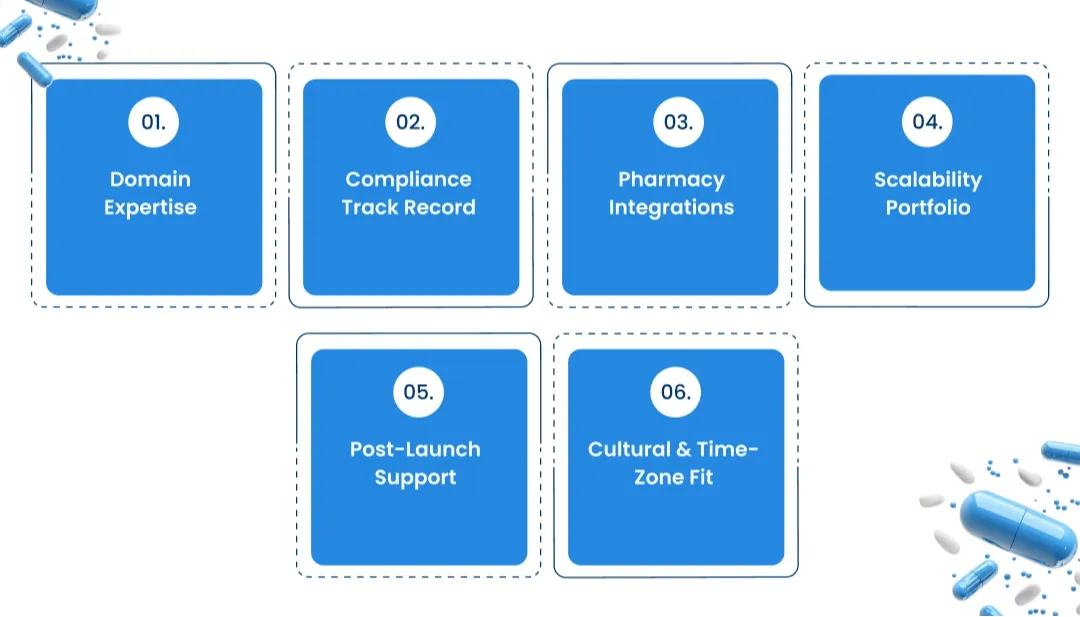
Selecting the right development partner is a strategic decision that directly impacts product quality, compliance, and long term scalability. When hiring developers or engaging a full service mobile app development partner, focus on the following criteria:
Domain Expertise
Look for proven experience in healthcare application development, particularly with standards such as HIPAA, HL7, or FHIR. This ensures the team understands clinical workflows and regulatory nuances.
Compliance & Security Track Record
Evaluate the vendor’s ability to handle documentation and governance requirements, including threat modeling, Data Processing Agreements (DPA), and Data Protection Impact Assessments (DPIA).
Pharmacy & Supply Chain Integrations
Ensure the team has experience integrating with major pharmaceutical distributors (e.g., McKesson, Cardinal Health) or local pharmacy networks to enable seamless order fulfillment.
Scalability & Architecture Capabilities
A strong portfolio in microservices architecture, containerization (Docker/Kubernetes), and CI/CD pipelines is essential for building scalable, future ready platforms.
Post Launch Support & Maintenance
Assess their Service Level Agreements (SLAs) for uptime, ongoing updates, bug fixes, and security patching critical for maintaining performance and compliance over time.
Cultural Alignment & Time Zone Compatibility
Effective collaboration depends on shared workflows (e.g., Agile/Scrum practices), clear communication, and sufficient overlap in working hours.
Case Study Perspective
For example, HomeNest Software adopts a modular development approach, allowing healthcare clients to gradually extend functionality such as teleconsultation, IoT device integration, or loyalty systems after the initial launch. This helps control upfront investment (CAPEX) while maintaining flexibility for future enhancements.
Future Outlook
Looking ahead to 2027–2028, medicine delivery apps are expected to evolve into intelligent, fully integrated healthcare platforms driven by AI, IoT, and advanced logistics innovations:
Predictive Refills
AI powered systems will proactively analyze patient behavior and prescription patterns to anticipate medication gaps automatically triggering refills before adherence is disrupted.
Integrated Care Ecosystems
Medicine delivery will become part of a unified “super app” experience, combining services such as lab test bookings, sample collection, teleconsultation, and even at home nursing care within a single platform.
Blockchain Based Drug Provenance
Blockchain technology will enable end to end traceability of medications, providing tamper proof authenticity records and significantly reducing the risk of counterfeit drugs in the supply chain.
Smart Packaging & IoT Integration
Next generation packaging such as NFC enabled blister packs will automatically track medication usage and sync adherence data back to the app, enabling real time monitoring and personalized care.
Expansion of Drone Delivery Networks
With regulatory advancements, especially in rural regions and suburban markets, drone delivery corridors are expected to expand reducing delivery times to under 30 minutes and redefining last mile healthcare logistics.
Conclusion
Medicine delivery apps have rapidly evolved from optional digital tools to mission critical infrastructure in patient centric healthcare. They enable seamless last mile access to medications, unlock real time data insights, and create sustainable revenue opportunities across the entire healthcare value chain including patients, providers, pharmacies, insurers, and pharmaceutical companies.
For organizations planning to invest in medicine delivery app development, choosing the right partner is essential. Working with an experienced medicine delivery app development company can significantly accelerate compliance readiness, system integrations, and user adoption.
With end to end capabilities from product ideation and UI/UX design to HIPAA compliant architecture and scalable cloud deployment HomeNest Software helps businesses build secure, high performance platforms that are ready to scale in a competitive digital healthcare landscape.
FAQs
What is a medicine delivery app and how does it work?
A medicine delivery app is a digital platform that allows users to order prescription and over the counter medications online. Users upload prescriptions, browse products, make payments, and receive doorstep delivery, while the backend connects pharmacies, logistics, and healthcare systems.
How much does it cost to build a medicine delivery app in 2026?
The cost typically ranges from $5,000–$8,000 for an MVP and can exceed $15,000+ for enterprise grade platforms with advanced features like AI, teleconsultation, and multi region compliance.
What features are essential for a medicine delivery app?
Core features include prescription upload, secure payments, real time tracking, refill reminders, and admin dashboards. Advanced apps also integrate AI recommendations, telehealth, and analytics systems.
Are medicine delivery apps safe and compliant?
Yes when built correctly. These apps must comply with regulations such as HIPAA, GDPR, and local healthcare laws, while implementing encryption, two factor authentication, and audit logs to protect sensitive data.
Who can benefit from medicine delivery apps?
Patients gain convenience and better adherence, while pharmacies, hospitals, insurers, and pharmaceutical companies benefit from improved operations, data insights, and expanded reach.
How do medicine delivery apps generate revenue?
Common models include commission per order, subscription plans, partnerships with insurers (PBMs), in app advertising, and monetizing anonymized data insights.
How long does it take to develop a medicine delivery app?
Development timelines vary from 4–5 weeks for basic MVPs to 8–12+ weeks for complex, enterprise level platforms depending on features, integrations, and compliance requirements.
What regulations should be considered when building such an app?
Key regulations include HIPAA (US), GDPR (EU), and local e prescription laws. Additional certifications like NABP or LegitScript can enhance credibility and compliance.
How do I choose the right medicine delivery app development company?
Look for healthcare domain expertise, compliance experience, integration capabilities, scalable architecture, and strong post launch support with clear SLAs.
What is the future of medicine delivery apps?
The future includes AI driven predictive refills, integrated healthcare ecosystems, blockchain based drug tracking, IoT enabled smart packaging, and faster delivery via drones or autonomous vehicles.
Latest Articles
View All
Criteria For Choosing The Right App Design Agency
UI/UX design is the logical foundation of a system, not merely a visual element. Choosing the wrong partner will directly lead to technical debt, budget overruns, and disruptions in the development process. This article provides a 6-step evaluation framework and a list of operational risks, helping businesses eliminate subjective design advice and accurately assess agency capabilities based on developer handoff standards and practical business performance.
How Does AI in Banking Industry Impact the Future?
Artificial intelligence (AI) has transitioned from a supplementary tool to a core infrastructure of financial data management, optimizing profitability through real-time fraud detection, natural language processing (NLP), and high-speed credit scoring models. “Deploying AI in the financial sector requires more than just algorithmic accuracy, it demands a highly secure cloud architecture and rigorous data governance,” commented Nguyen Tien, co-founder of HomeNest Software. Why read this guide? We skip the theoretical jargon to focus entirely on technical implementation. Whether you’re evaluating a vendor or planning a system overhaul, this article will detail: Operational Efficiency: Automating unstructured data workflows at scale. Risk Architecture: Implementing real-time threat detection and AML compliance. Data ownership: The essential need for 100% ownership of the source code to ensure full algorithm auditability.
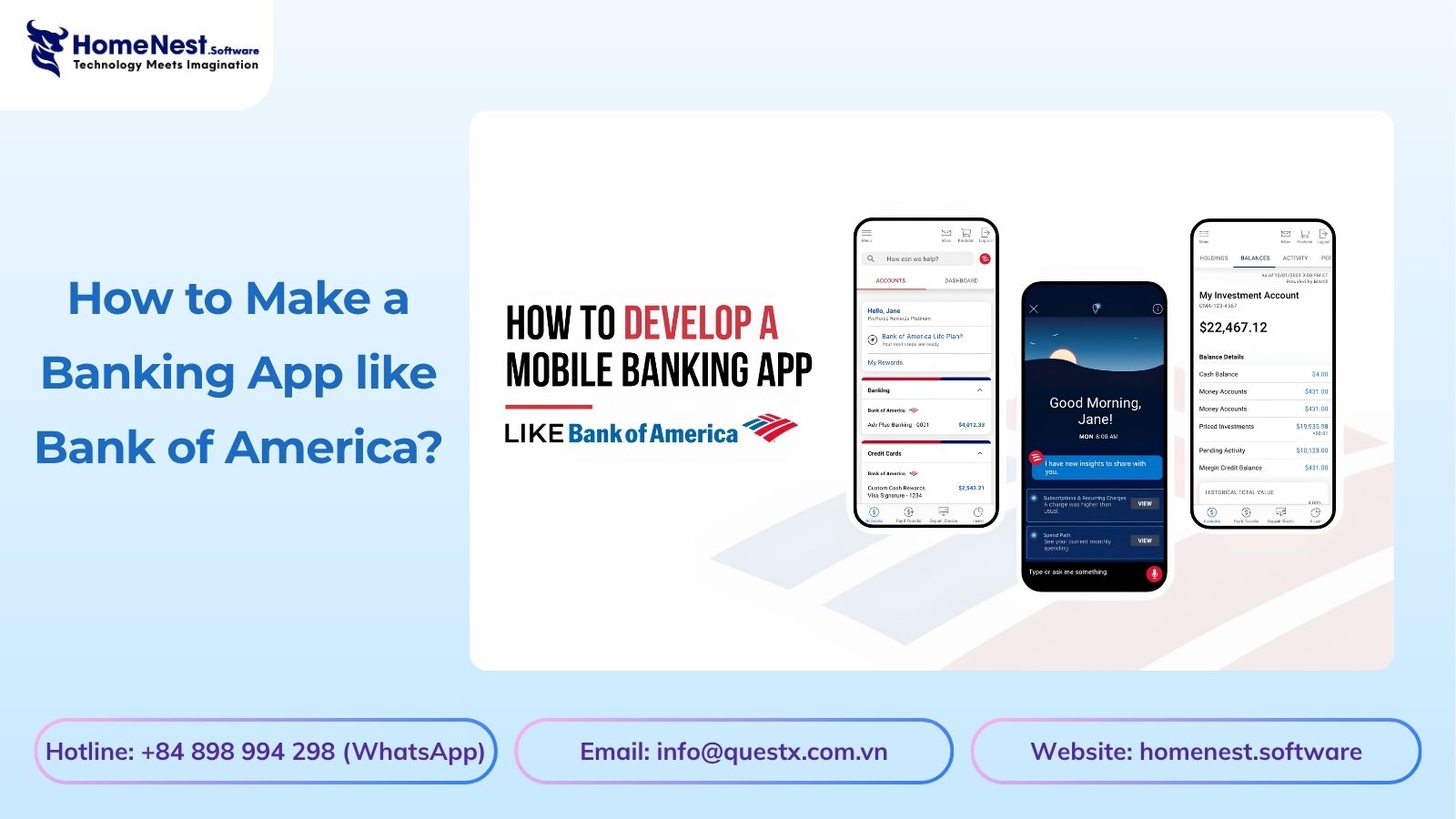
How to Make a Banking App like Bank of America?
Developing a mobile banking application like Bank of America extends far beyond basic UI design; it requires engineering a fault-tolerant backend capable of real-time ledger synchronization, biometric authentication, and high-volume data processing under strict regulatory frameworks. Drawing from HomeNest Software’s deep experience in architecting enterprise-grade fintech solutions, this guide strips away theoretical jargon to focus entirely on operational and technical execution. What you will find in this guide: We break down the precise development roadmap, from mapping out microservices and ensuring PCI-DSS compliance to estimating MVP development costs and securing absolute data sovereignty through 100% source code ownership. If you are preparing to build, scale, or audit a financial platform, this blueprint provides the exact framework you need.
Banking App Development Cost
Building a banking application is rarely a simple process; it’s a complex technical challenge requiring a balance between complying with stringent financial regulations, handling large transaction volumes, and a scalable cloud architecture. Miscalculating these technical requirements from the outset often leads to significant technical debt and budget overruns. Based on HomeNest Software’s practical experience in designing enterprise-grade fintech solutions, this guide bypasses generic estimates to provide a realistic analysis of banking application development costs. What you’ll find in this guide: We analyze the true cost factors, from technology selection and API integration to the hidden costs of regulatory compliance and security infrastructure. Whether you’re launching a minimum viable product or expanding an existing financial platform, this analysis provides the precise operational data you need to plan your budget effectively.
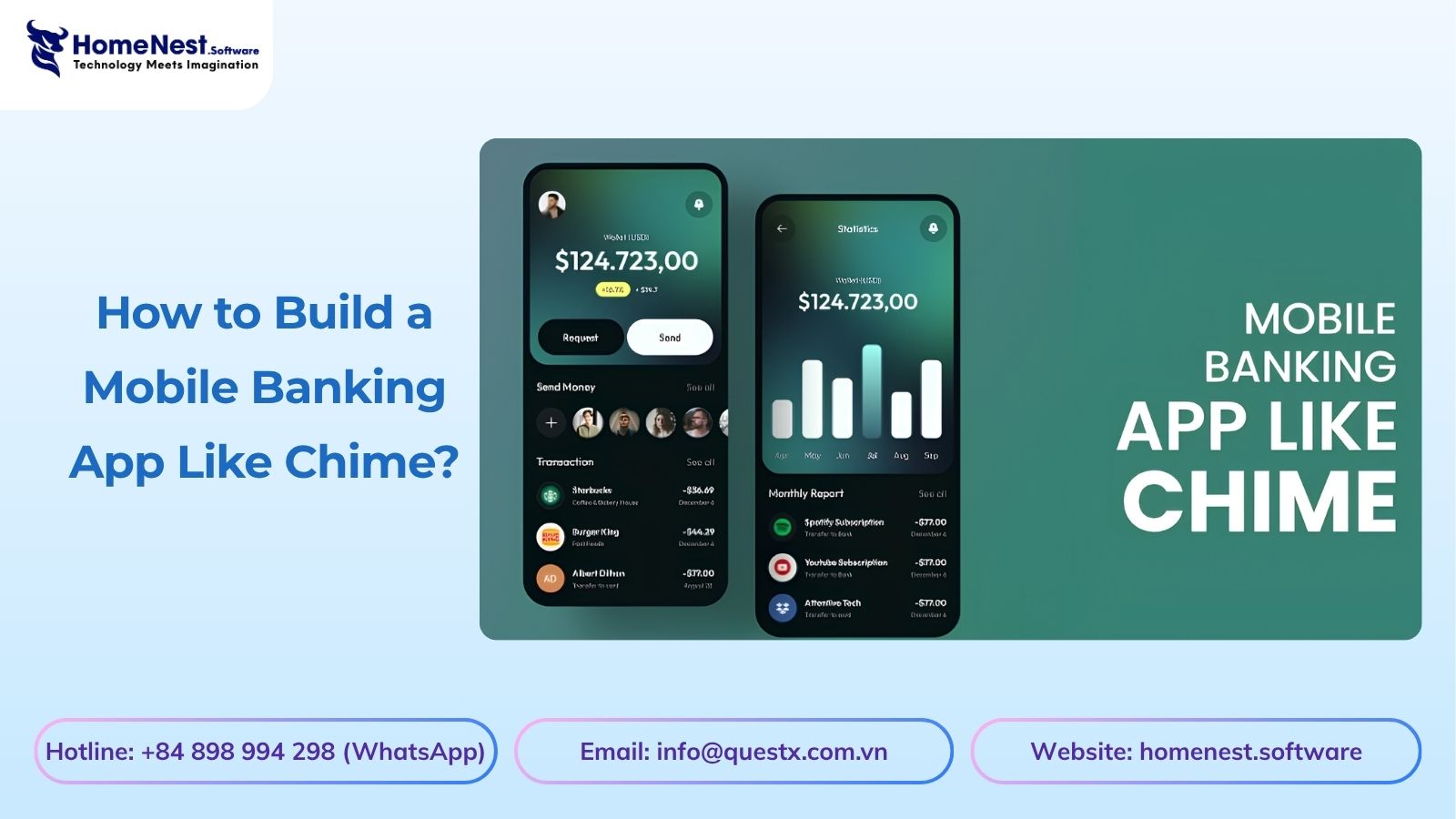
How to Build a Mobile Banking App Like Chime?
Building a mobile banking app like Chime is not just about features, it is about delivering a secure, scalable, and user-centric financial experience. From planning the right architecture to optimizing mobile banking app development cost, every decision directly impacts your product’s success. Leveraging Fintech app development services, starting with MVP app development, and scaling through on-demand app development solutions allows businesses to reduce risk and accelerate time to market. To stay competitive, combining Android app development services and iOS app development solutions ensures wider reach, while continuous updates through maintenance software development services keep your app secure and future-ready.
How to Build a Banking App Like Barclays: A Complete Entrepreneur’s Guide
Building a banking app like Barclays requires more than just development. It demands a strong product vision, secure architecture, and a clear monetization strategy. From optimizing cost and selecting the right tech stack to ensuring compliance and scalability, every decision impacts long-term success. Partnering with an experienced team like HomeNest Software helps accelerate development, reduce risks, and deliver a high-quality fintech product that can compete in today’s fast-evolving digital banking landscape.